


SignalPlus Macro Research Report (20230802): Weak macro data, BTC continues to consolidate slightly.



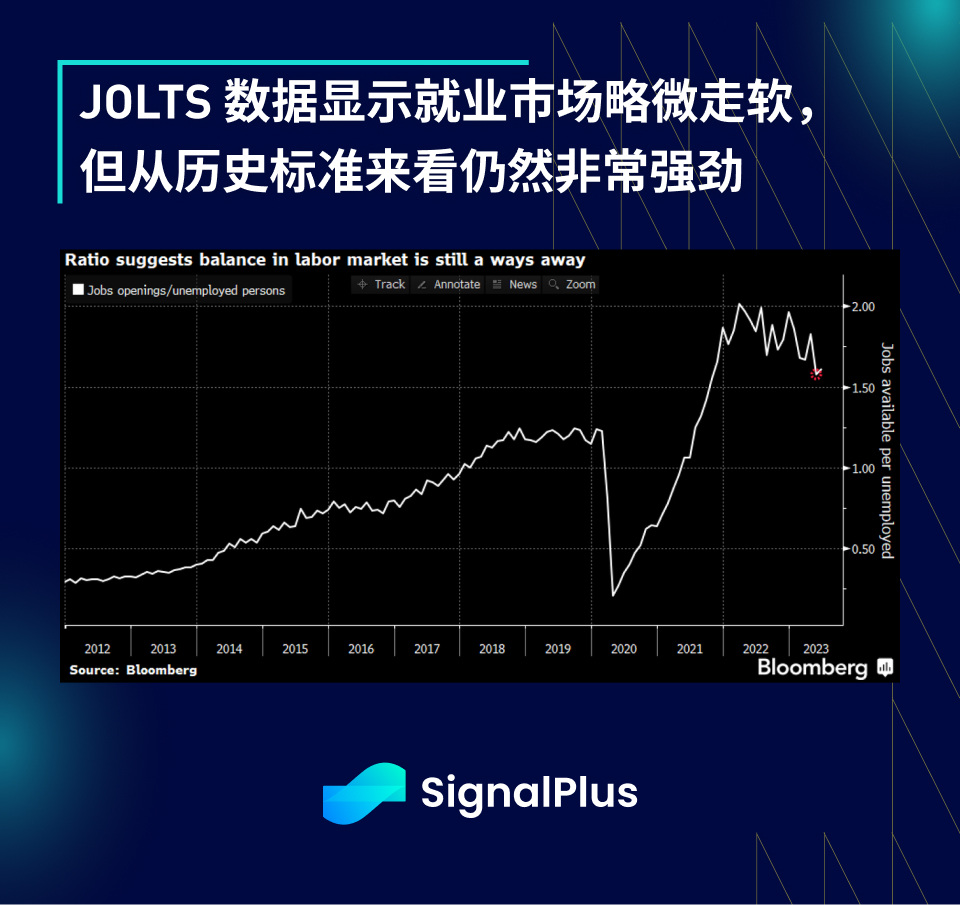
The US economic data is a bit weak. Firstly, the JOLTS job vacancies are 9.582 million people, slightly lower than the expected 9.6 million. At the same time, the resignation rate has also dropped to 2.4%, reaching a two-year low. The crucial "job vacancies to unemployed ratio" remains stable at 1.6 times, which is at a cyclical low since 2021. However, from a historical perspective, it is still at an extremely high level.
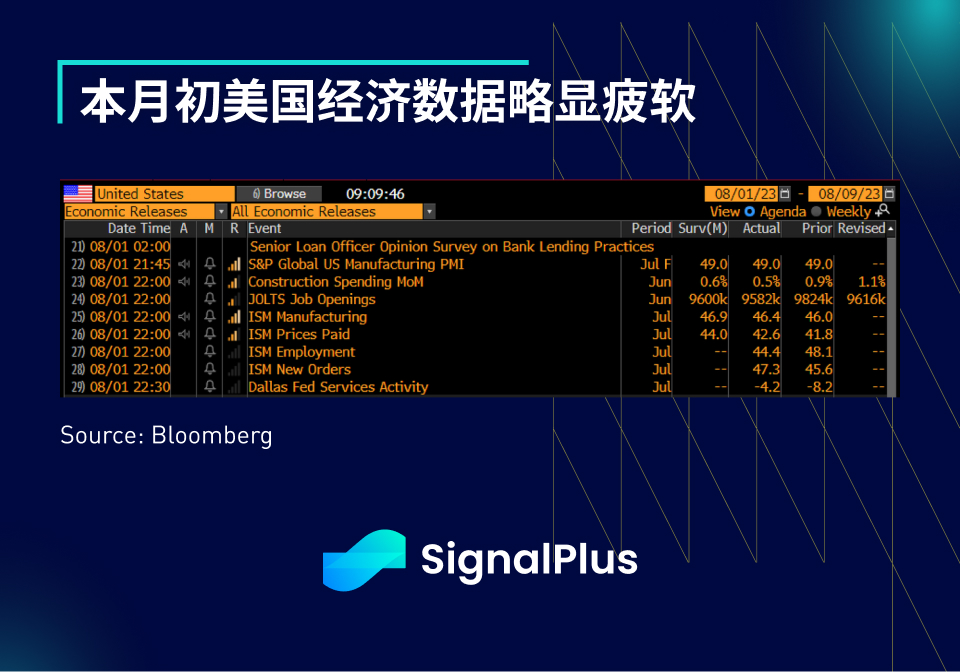
In addition, the July ISM Manufacturing Index is 46.4, lower than the expected 46.9. The components of the index show mixed performance, with growth in new orders and production but a decline in employment. However, the payment prices have dropped significantly to 42.6, which is a positive sign for market risk sentiment. Various indications of slowing inflation are welcomed by risk assets.
In terms of credit, the results of the Senior Loan Officer Opinion Survey (SLOOS) conducted by the Federal Reserve show that loan standards tightened again in the second quarter, and the tightening speed was slightly faster. 51% of banks tightened loan standards for large and medium-sized enterprises (compared to 46% in the previous quarter), while 49% of banks tightened loan standards for small enterprises (compared to 47% in the previous quarter). Banks still attribute the tightening of loan standards to the worsening economic outlook, but this seems to conflict with the recent interpretation of strong economic data in the open market. In addition, the demand for loans this quarter and the willingness to provide loans to consumers are also weak.
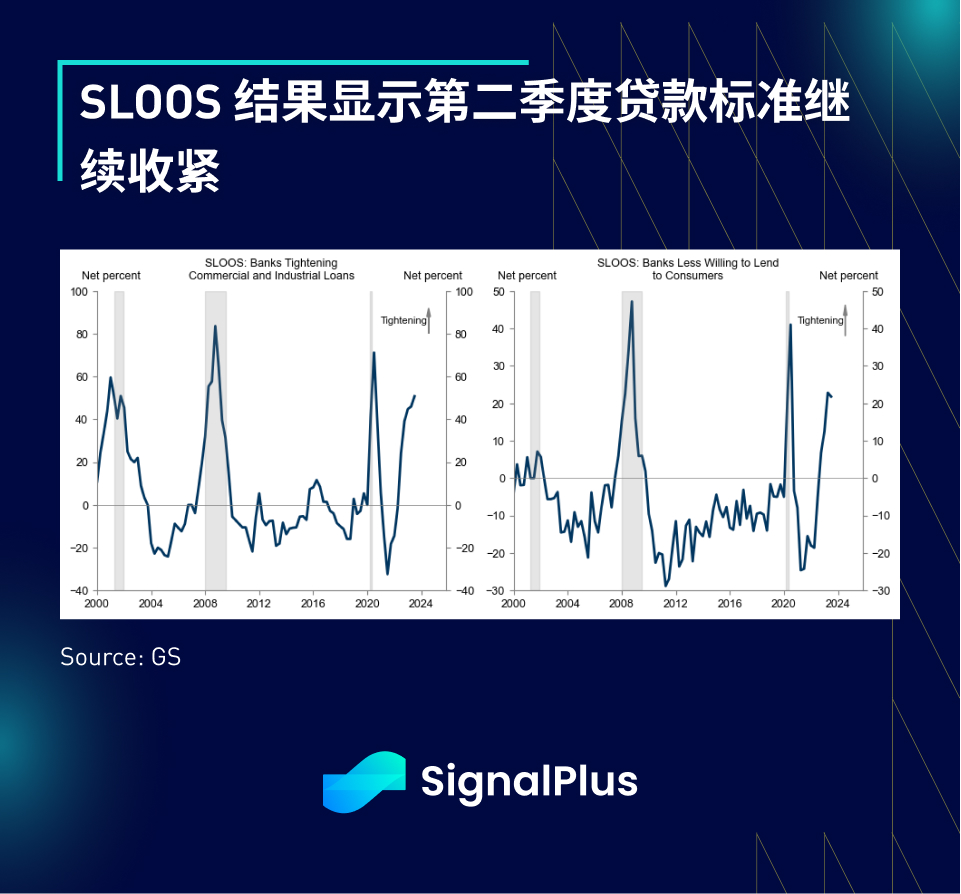
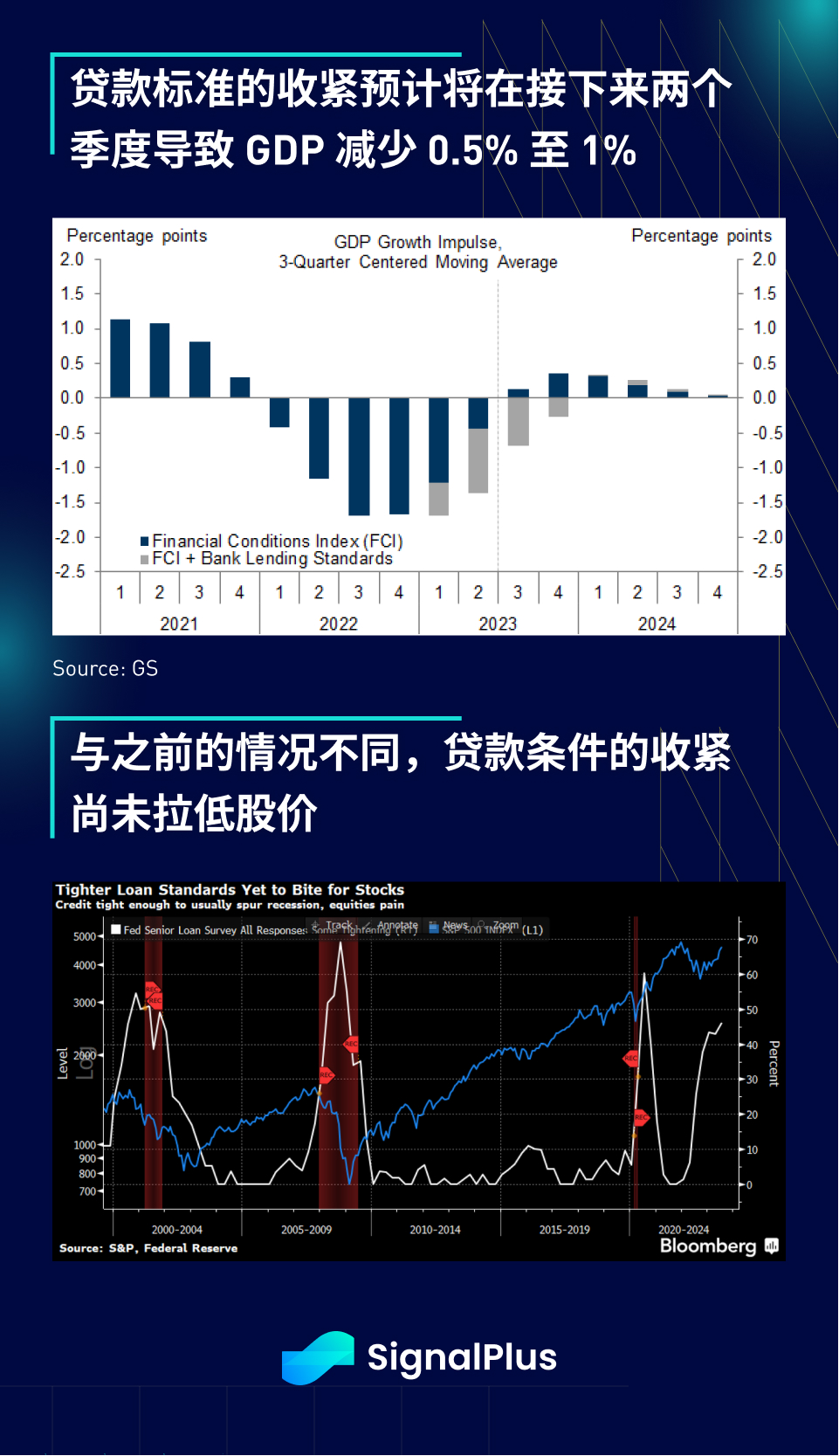
Overall, loan standards are currently at the most stringent level seen during the Internet bubble, Lehman crisis, and pandemic, and are expected to result in a GDP decrease of 0.5% to 1% in the next two quarters. However, unlike previous situations, market expectations for corporate profits remain positive and economic data results are quite good. Combined with high expectations for the Fed to start cutting rates in 2024, market risk sentiment remains high, and the stock market is almost completely unconcerned about the tightening of loans.
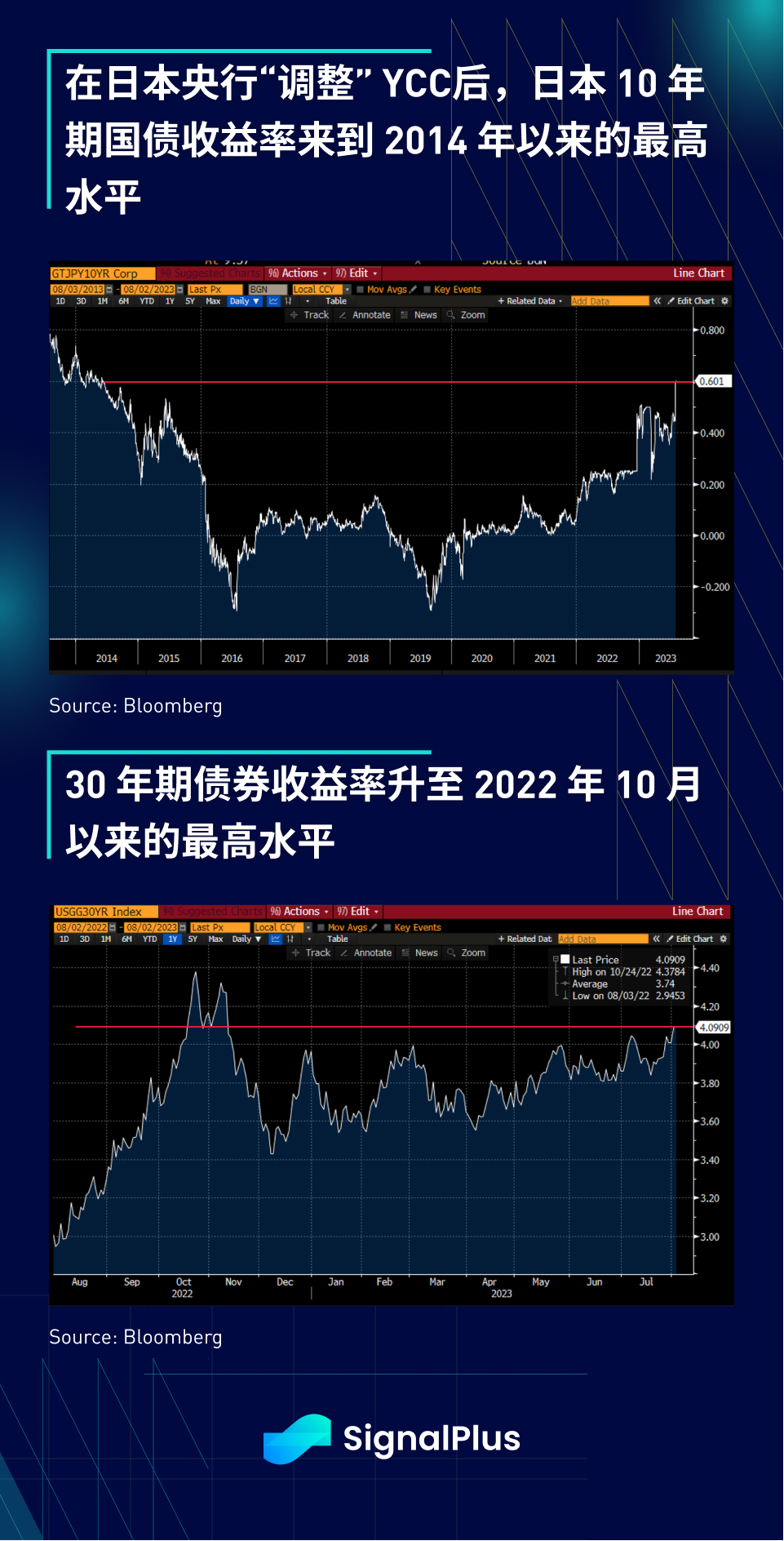
Yesterday, most of the price movements were focused on US bonds. After Japan adjusted its YCC mechanism, Japanese government bond yields continued to adjust. Additionally, the US Treasury announced a significant increase in the issuance of long-term bonds to fund its expanding budget deficit, causing the 30-year US bond yield to rise to the highest level since November. The Treasury's net borrowing forecast for the third quarter is raised to $1 trillion, far exceeding the May forecast of $733 billion. Later today, other quarterly financing information will be announced, including the scale of various auctions.
The 30-year yield broke through this year's high point of 4.08%, rising 10 basis points to 4.11%, the highest yield level since November last year. With inflation data slowing down and increased certainty about the Fed cutting rates in 2024, the recent bond market is more prone to steep bearish trends. Market attention is shifting towards the problem of digesting poorly performing long-term bond supply.
To make matters worse, Fitch Ratings announced after the close that it was downgrading the issuer rating for long-term foreign currency debt in the United States to AA+. Fitch stated that "repeated debt ceiling political deadlock and last-minute solutions have weakened confidence in fiscal management." Therefore, the United States now has AA+ ratings from both S&P and Fitch, with only Moody's retaining the AAA rating.
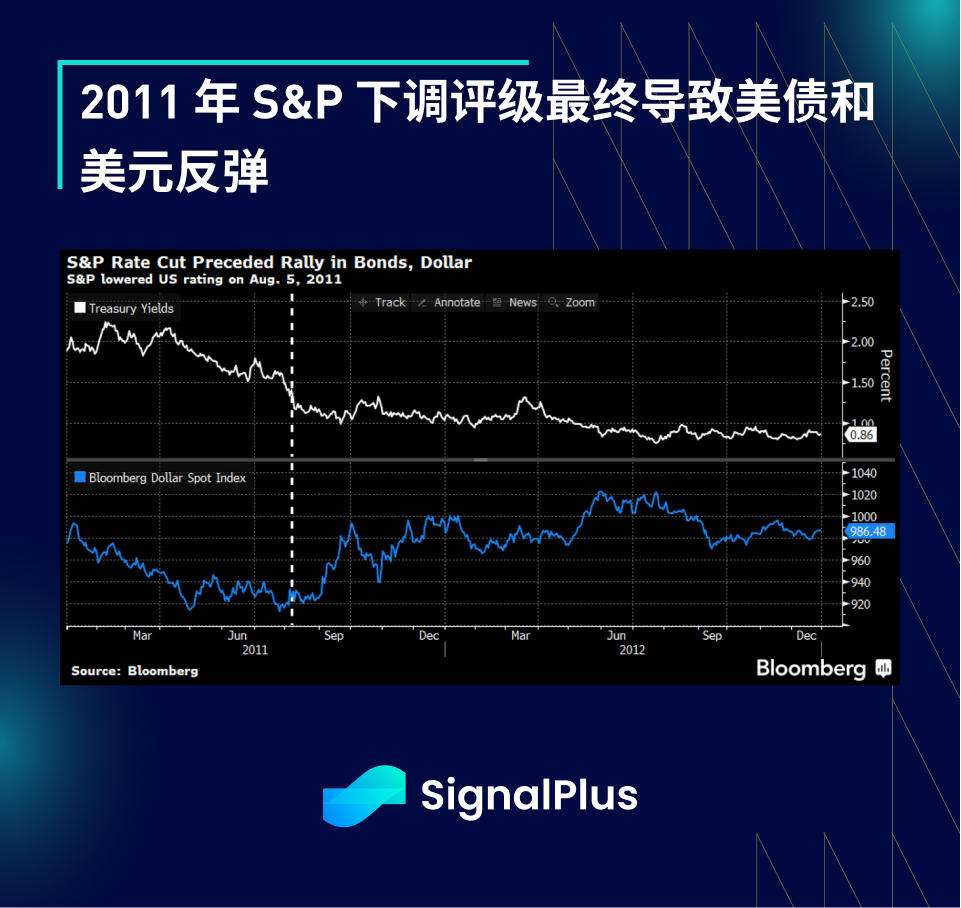
Although these news sounds quite negative, we still need to caution against overreacting to them, as the last time S&P downgraded the rating in 2011, it actually led to a decrease in US Treasury yields and an appreciation of the US dollar, contrary to intuition; modern financial markets still firmly focus on monetary policy and system liquidity, rather than US credibility, so we do not believe that this downgrade action will have a lasting negative impact on bond yields.
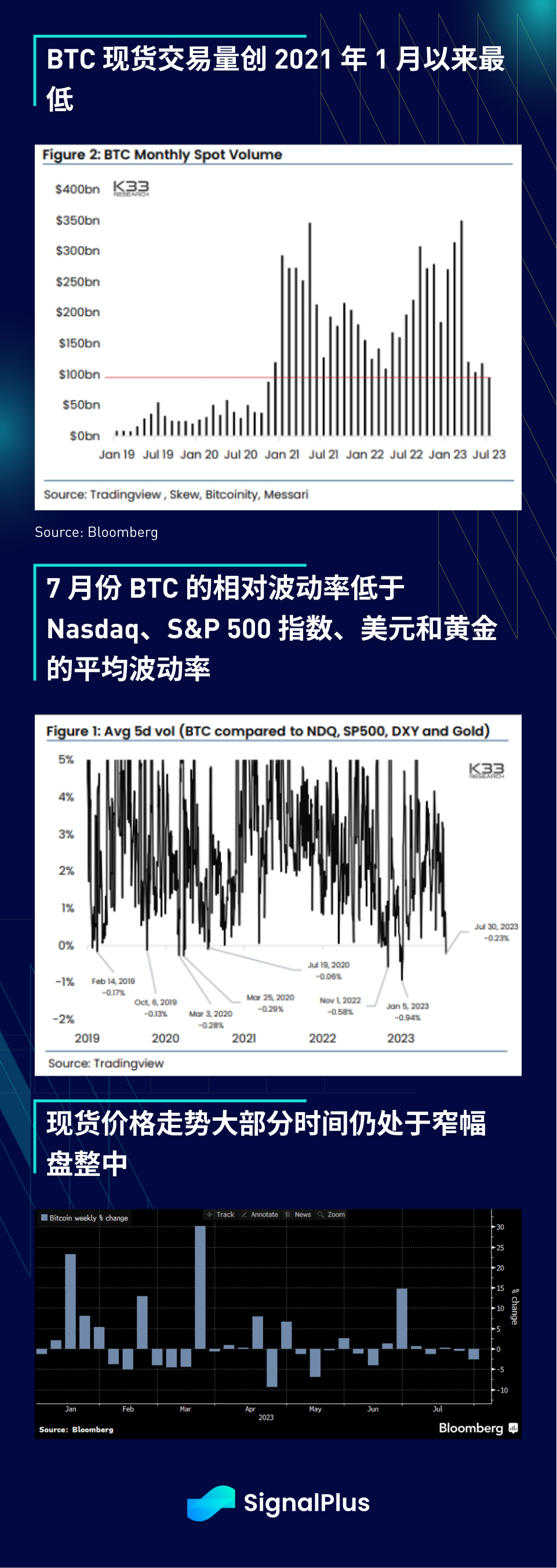
In terms of cryptocurrencies, the summer market has been quite sluggish, with Bitcoin spot trading volume in July dropping to the lowest level since early 2021, basically returning to the level of activity before cryptocurrencies entered mainstream consciousness; price volatility continues to decline under the influence of low market trading interest, with BTC's 5-day actual volatility already much lower than that of Nasdaq, S&P 500, the US dollar, and gold; historically, Bitcoin volatility is difficult to sustain at such a low level for a long time, and we hope that it will rebound as the summer ends and we gradually enter the end of the year.

You can search for SignalPlus in the Plugin Store of ChatGPT 4.0 to get real-time cryptocurrency news. If you want to receive our updates instantly, please follow our Twitter account @SignalPlus_Web 3, or join our WeChat group (add assistant WeChat: chillywzq), Telegram group, and Discord community to interact and communicate with more friends.
SignalPlus Official Website: https://www.signalplus.com





