






WealthBee Macro Monthly Report: US Economy Beats Expectations, Cryptocurrency Market Enters Consolidation Phase



The economic data released by the United States in July exceeded expectations, indicating that the US economy is very strong, which surprised the market; with Tesla and Netflix's performance falling short of expectations, technology stocks collectively retreated, and the Nasdaq index experienced its largest decline in over four months this month; the currency market in July entered a period of consolidation, with the BTC price falling below $30,000 and the ETH price falling below $1,900, but with the US passing the cryptocurrency bill, the cryptocurrency assets may enter a new stage.

On July 6th local time, the US announced that the ADP employment figure for June surged by 497,000, doubling the expected 228,000 and marking the largest monthly increase since February last year, far exceeding the previous value of 278,000. The data shows that the US labor market in June did not show any signs of slowing down.
Despite the exceptionally good ADP data, the subsequent official non-farm payroll data fell short of expectations. The Labor Department report showed that the US non-farm payroll employment increased by 209,000 in June (expected increase of 230,000), the smallest increase since December 2020. It is worth noting that the previous non-farm payroll data had exceeded market expectations for 14 consecutive times, and the streak ended at "15". The official data from the Labor Department diverged more from the ADP data, but this is not abnormal, as the ADP data mainly represents leading global enterprises, while the non-farm payroll data is relatively more comprehensive. Therefore, it does not need to be excessively interpreted. Looking at the number of people receiving unemployment benefits, the pressure on employment is also decreasing, so it is an indisputable fact that the US job market remains strong.
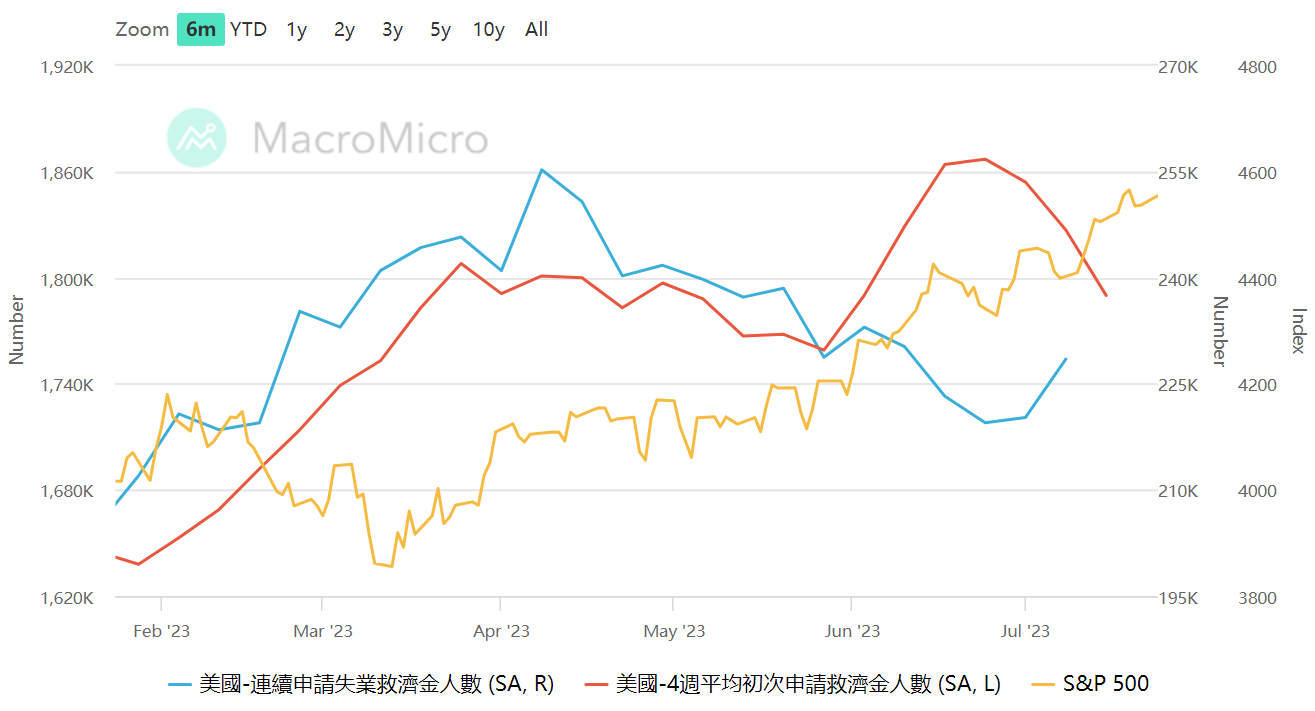
Similarly, the unexpected release of US CPI in June has also surprised the market. Data released by the US Bureau of Labor Statistics on July 12th showed that US CPI in June increased by 3% year-on-year, slightly lower than the market expectation of 3.1%. The previous value was 4%, marking the first annual decline in US CPI since it reached a 40-year peak of 9.1% in June 2022, and the smallest increase since March 2021. US core CPI in June increased by 4.8% year-on-year, lower than the market expectation of 5%, with the previous value at 5.3%. The lower-than-expected CPI indicates that US inflation has eased.
The strong employment data did not lead to an unexpected increase in CPI, indicating that the US economy is temporarily very healthy. After the CPI data was released, the FedWatch tool from the Chicago Mercantile Exchange showed that investors believed there was a 92.4% probability that the Federal Reserve would raise interest rates by 25 basis points at the July meeting, but there was a 75.8% probability that this would be the last rate hike of the year.
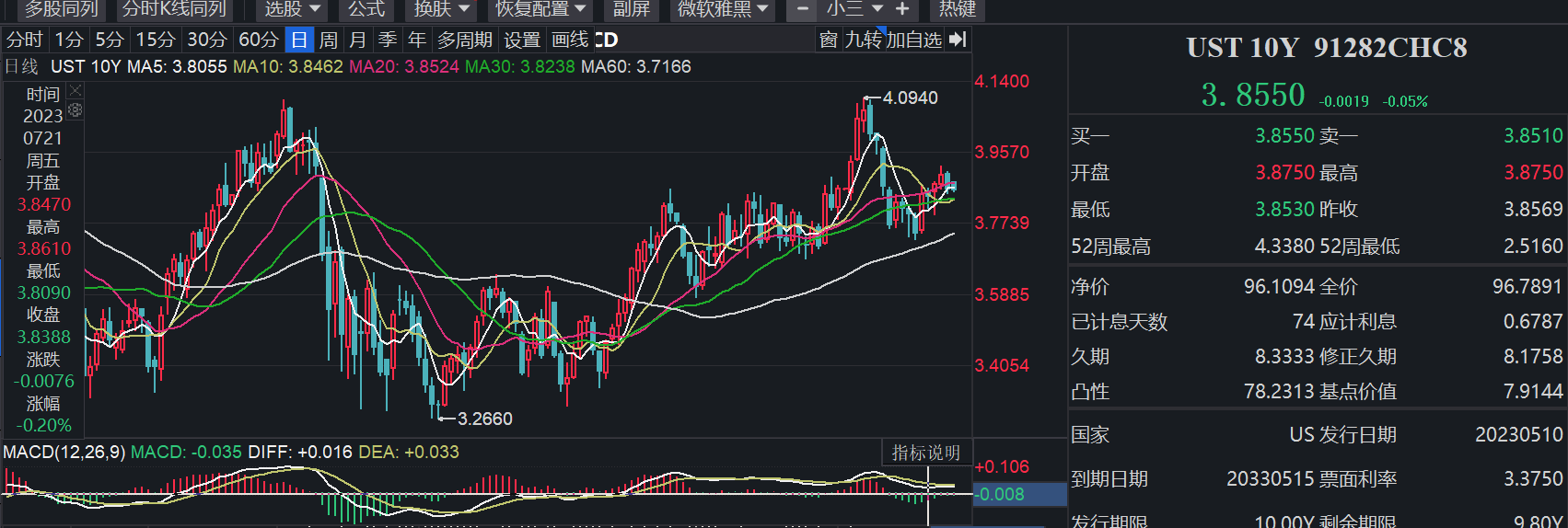
Investor expectations were very accurate. On July 26th, the Federal Reserve raised interest rates by 25 basis points, in line with market expectations, but there is some controversy as to whether this is the last rate hike. If we look at US bond yields, the yield on 10-year US Treasury bonds reached a recent high. In general, inflation is positively correlated with long-term risk-free rates. The rise in bond yields also suggests that the US may still face inflationary pressures. In addition, the inflation target set by the Federal Reserve is 2%. Although CPI has continuously lowered expectations, the target has not yet been met. Therefore, WealthBee believes that there is a high possibility that the Federal Reserve will continue to raise interest rates in the future, but the magnitude will be much weaker.
Similarly, the preliminary reading of the Markit Manufacturing PMI for the United States in July was 49, the highest level in three months, significantly higher than the expected 46.2, with a previous value of 46.3 in June. However, the preliminary reading of the Markit Services PMI for the United States in July was 52.4, the lowest level since February this year, lower than the expected 54, and a decline from the previous value of 54.4 in June. However, the services sector still achieved six consecutive months of expansion. The significant outperformance of the Manufacturing PMI and the resilience of the Services PMI also indicate that the US economy remains robust, and we maintain an optimistic outlook on the US economy going forward.

Since the beginning of this year, the Nasdaq has already risen by 38%, but this increase is mainly driven by the seven largest weighting stocks: Microsoft, Apple, Alphabet, NVIDIA, Amazon, Meta, and Tesla.
On July 20th, the earnings reports of two US technology companies, Netflix and Tesla, led tech stocks, but the results were disappointing. Although the decline in Netflix subscribers was not as severe as expected, it still experienced negative growth, causing its stock price to fall by 8%; Tesla's stock price also plummeted, with a decline of up to 6%. Although Tesla's revenue and profits exceeded expectations, the lower-than-expected profit margin and the impact of price wars are expected to further expand. Musk said during the Q2 earnings call, "If the overall economic environment deteriorates, Tesla will continue to lower prices." Musk also mentioned that, if necessary, Tesla is willing to further lower prices.
The decline in Netflix and Tesla's stock prices also dragged down other tech stocks, thereby weighing on the entire Nasdaq. The Nasdaq Composite Index fell by over 2% on July 20th, marking the largest drop in over four months.
The close connection between the Nasdaq Composite Index and tech giants has become a label for the Nasdaq. However, Nasdaq Inc. announced that on July 24th, it will conduct a "special rebalancing" of the Nasdaq-100 to ensure that the weight of the top five companies by market capitalization remains below 40%. WealthBee believes that this adjustment is purely for regulatory purposes, with the sole aim of reducing the influence of tech giants on the index, and it does not carry any other implications. Therefore, Nasdaq Inc.'s actions will not have too much negative impact on the market.
The fact that the NASDAQ Index has entered a technical bull market is undeniable. From a technical perspective, despite the recent adjustment in the index, there are no signs of a top in the technical aspect. The bull market does not indicate a top, and respecting the trend is the only thing investors can do.

On July 13, local time, U.S. Federal Judge Analisa Torres ruled that Ripple Labs Inc., by publicly trading and selling XRP tokens through algorithms, did not violate federal securities laws. This is the first favorable ruling for Ripple by a U.S. judge and may set a precedent for future token classification cases, causing cheers in the crypto community.
As a result, the coin price soared on that day, with Bitcoin reaching a high of 31830 USDT and Ethereum reaching a high of 2029.07 USDT, both hitting new highs for the period. Coinbase's stock price rose by more than 24% in a single day.
This month, the SEC continues to tug back and forth on numerous cryptocurrencies, but another piece of news may put an end to all this tugging: the United States has passed a blockchain bill, which puts BTC's global application in a countdown.
On Wednesday, the U.S. House Financial Services Committee approved the legislation "21st Century Financial Innovation and Technology Act," supported by cryptocurrency advocates, which sets clearer rules for the emerging industry. The legislation will establish rules for when cryptocurrency companies must register with the SEC or CFTC. It provides a process for digital asset issuers to prove to the SEC that the blockchain network is sufficiently decentralized, allowing the relevant tokens to be classified as commodities regulated by the CFTC. This means that only the CFTC and its exclusive agencies have regulatory authority, and the previous SEC approach may face "invalidation."
Although the Democrats are not satisfied with this bill led by the Republicans, as they believe it is the Republicans' way of catering to the giants' application for Bitcoin ETF, the bill was ultimately passed by a vote. After experiencing the Mt. Gox incident and FTX bankruptcy, after a decade, a comprehensive crypto bill has finally been released, which will play a crucial role in resolving the global crypto chaos. U.S. lawmakers stated that the United States is embarking on a new chapter in the digital era.
This month, the cryptocurrency market has been in a volatile situation, with the price of Bitcoin falling below $30,000 and the price of Ethereum falling below $1,900. In response to the passing of the cryptocurrency bill, the market has started to rebound. From a technical perspective, the prices of blue-chip cryptocurrencies have been trading sideways and have not fallen below support levels. Therefore, the recent trend can be seen as a consolidation phase and there is no need to panic. News only accelerates trends but does not change cycles. Even without news of the bill, we remain optimistic about the future trend of the cryptocurrency market. WealthBee believes that the current consolidation period in the cryptocurrency market is a favorable opportunity to enter the market, and investors can capture better investment opportunities during this stage.
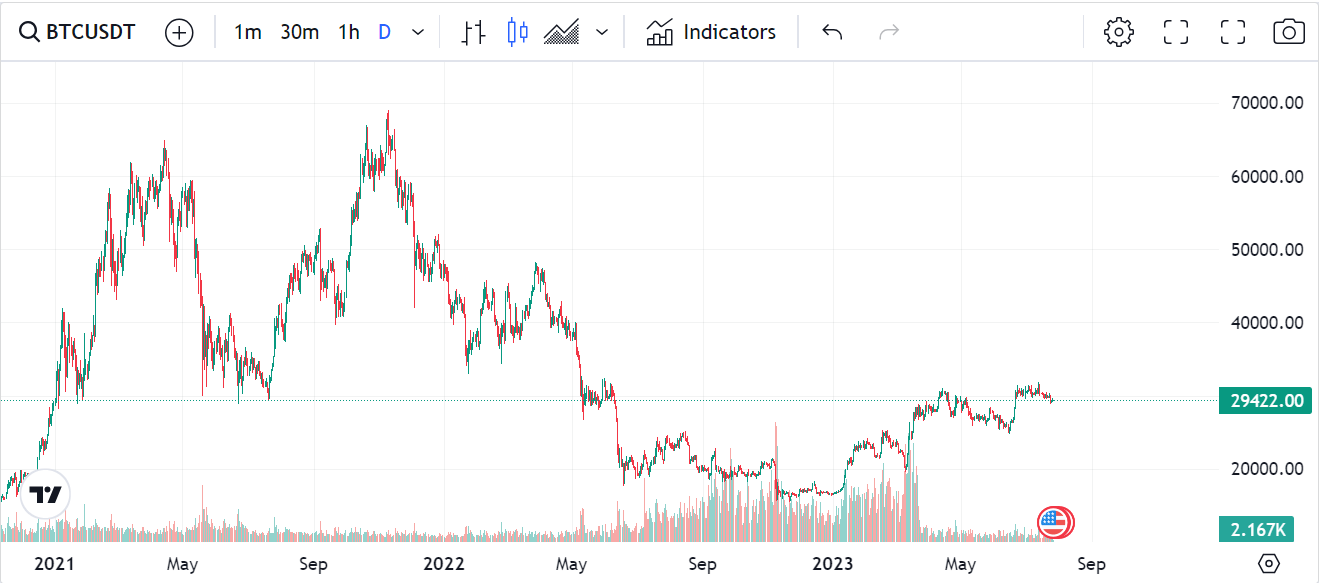

The entire month of July can be summarized as follows: The US economy remains strong, the US stock market is still in a technical bull market, and the cryptocurrency market is consolidating. In this situation, investors can choose to add positions appropriately.
Since the beginning of the year, there have been constant bearish opinions on the US economy and US stock market, but the facts have consistently exceeded our expectations. US non-farm payroll data has exceeded expectations for fourteen consecutive times, and inflationary pressures have clearly diminished, leading the US stock market to rise. Recently, the market has gradually become optimistic. However, countless experiences have taught us that markets always rise amidst skepticism, and they reach their peak when everyone is optimistic. Therefore, in the face of the rise in the US stock market, we need to remain rational, but in the face of the panic sell-off of Bitcoin, we may consider adding positions. The passing of the US cryptocurrency bill may be a milestone, although various interest groups will inevitably have their own influences, the opinions generated by these influences undoubtedly belong to noise. Investors need to filter out the noise, think independently, and find opportunities that suit themselves.
Copyright Statement: Please contact the Assistant on WeChat if you need to reprint. Unauthorized reproduction or manipulation of the content will result in legal consequences.
Disclaimer: The market carries risks, and investment should be cautious. Readers should strictly comply with local laws and regulations when considering any opinions, views, or conclusions in this article. The above content does not constitute any investment advice.





