


SignalPlus Macro Research Report: FOMC Meeting Special Edition


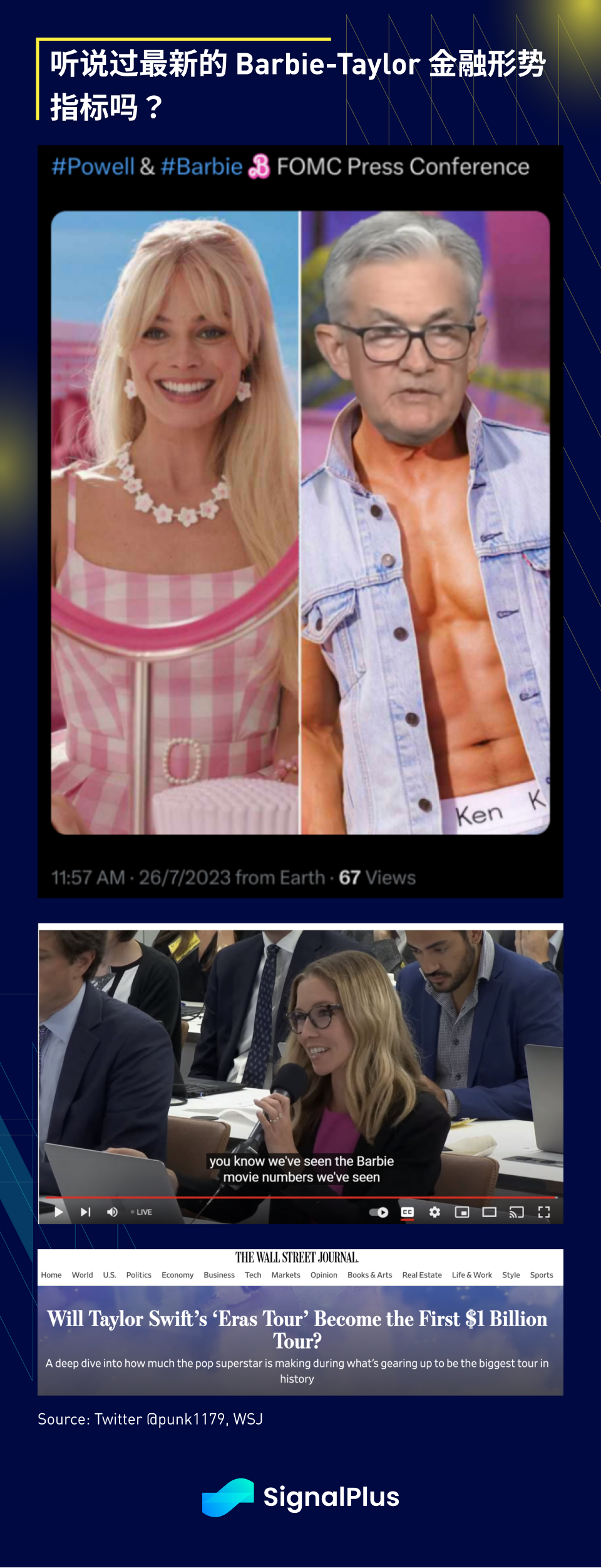
According to recent standards, the FOMC meeting was relatively uneventful, but in a comment from an audience member during the Q&A session, a new Z Generation economic indicator was introduced:
"We've seen the box office of Barbie movies, Taylor Swift's concert is also very popular, so it seems that American consumers are using their credit cards to make purchases."
Although we may not plan to watch the new Barbie movie or attend Taylor Swift's concert, we should commend Chairman Powell for answering this question seriously. He stated that consumption is "a good thing" and the Fed "will carefully observe how [consumption growth] improves over time."
Returning to the regular agenda, as expected, the Fed will raise interest rates by 25 basis points to a target upper limit of 5.50%. The July statement had no significant changes, but one notable point is:
The Fed "will continue to assess additional information" and will still rely entirely on data to determine the next steps.
They will continue to consider "additional [rate] tightening to restrain inflation", which is a somewhat hawkish signal.
The statement still maintains the argument that "inflation remains stubbornly high".
Growth has upgraded from "moderate" to "moderate".
No mention of the recent slowdown in CPI and PCE.
In the Q&A session, Powell was more scripted compared to previous meetings, there were no breakthroughs for hawks or doves, and some key points are as follows:
About the Fed's economic forecasts:
Emphasized reliance on data and flexibility in choice, Chairman pointed out that there are still eight long weeks until the next FOMC meeting (September, with 2 CPI, 2 NFP, and Jackson Hole in between).
Powell still admits that the current policy environment is "not suitable for FOMC to provide extensive forward guidance", once again emphasizing reliance on data.
That being said, he stated that the Fed no longer expects economic recession in its latest forecasts.
About rate trajectory and interest rate cuts:
Powell admits that the "changing and long-term" nature of policy lag is the reason for their slowing pace of rate hikes;
However, he also stated that when the Fed "thinks it is appropriate to cut interest rates, it will be willing to cut interest rates, I don't think it will be this year."
"Many people expect interest rate cuts to start next year, which will be a decision based on the situation at that time."
Regarding the financial situation:
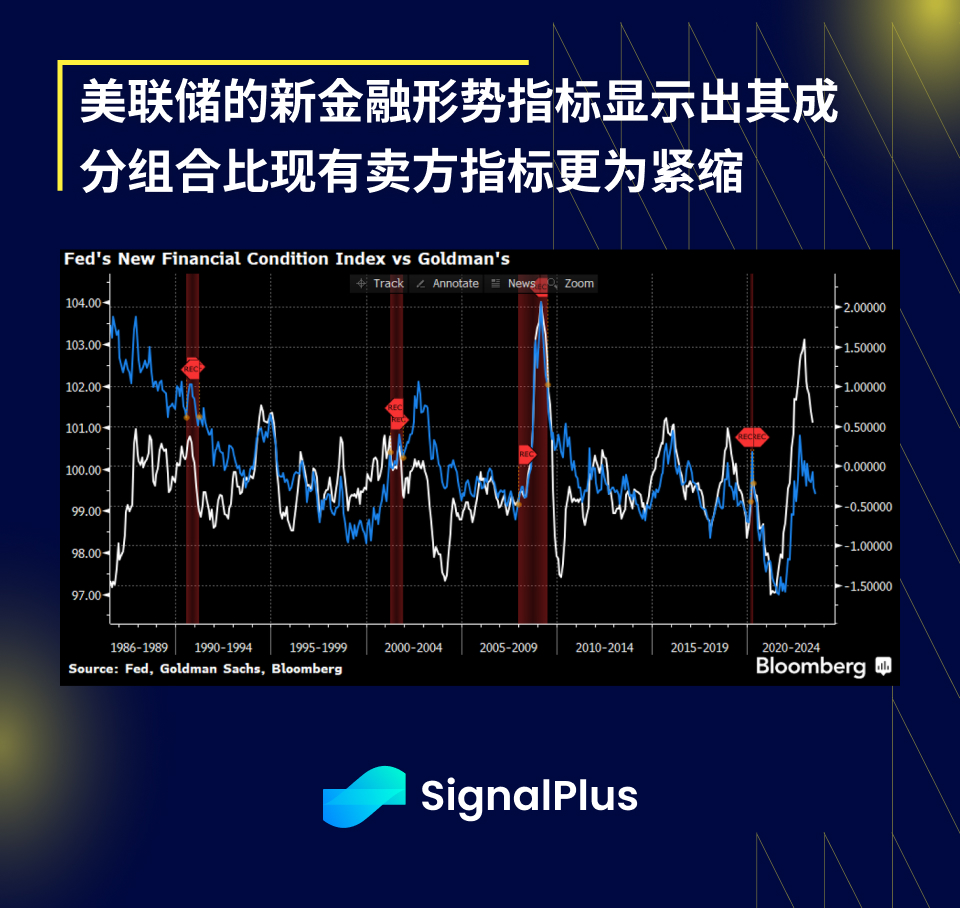
When asked about the impact of the relaxation of the financial situation, Powell once again avoided the question, but the Fed has recently released a new financial situation indicator, which has a more tightening composition than the existing seller's index. (Perhaps just need to re-measure movie consumption and concert expenditures?)
Finally, regarding inflation:
The battle against inflation is not over, Powell pointed out that inflation needs to "persistently" decline, especially "relatively high" core inflation.
The Fed welcomes the recent softening in CPI, but officials are trying not to overinterpret one month of data. In addition, the committee expects a stronger economy to bring stronger inflation.
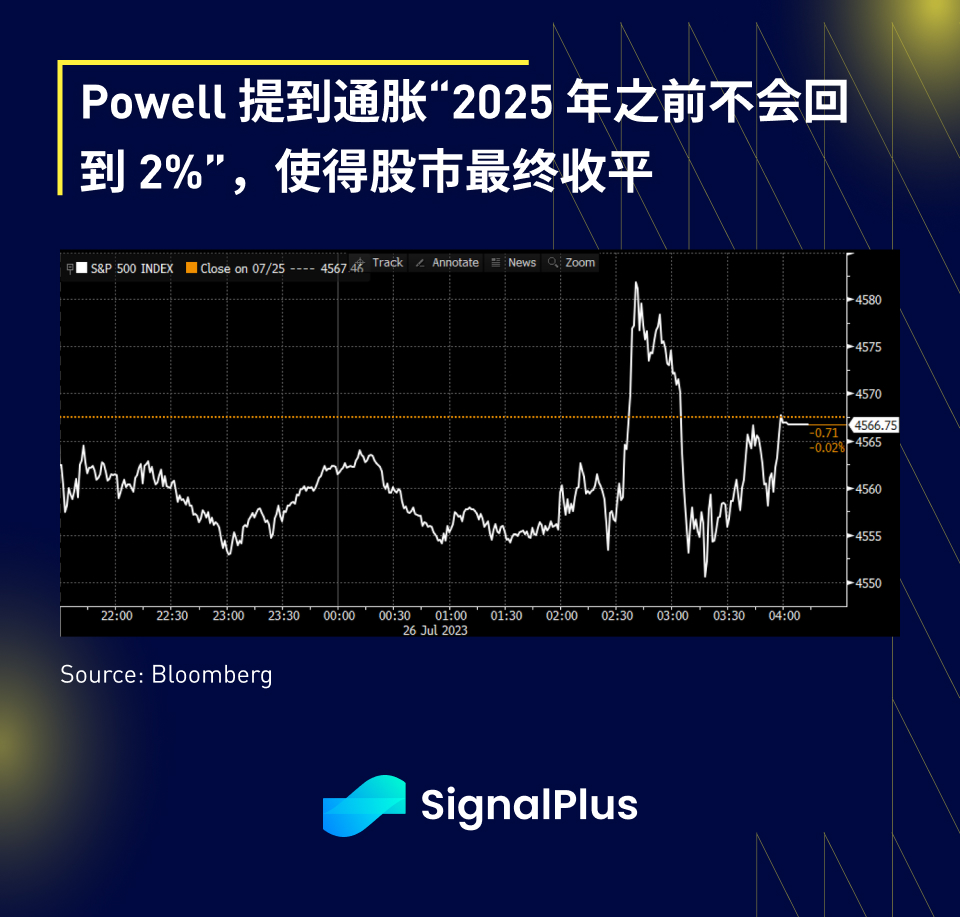
Therefore, according to the dot plot, FOMC does not expect inflation to fall to 2% before 2025 .
This final comment could be the reason for the 25 point / 0.5% drop in SPX at the end of the Q&A session, as the forecast for inflation slowdown is evidently not as optimistic as the market expected.
In conclusion, the discussion at the meeting can be summarized as "The economy is in good condition, therefore inflation still exists, we won't say we have finished raising interest rates, but now everything depends 100% on the data - Have a great summer".
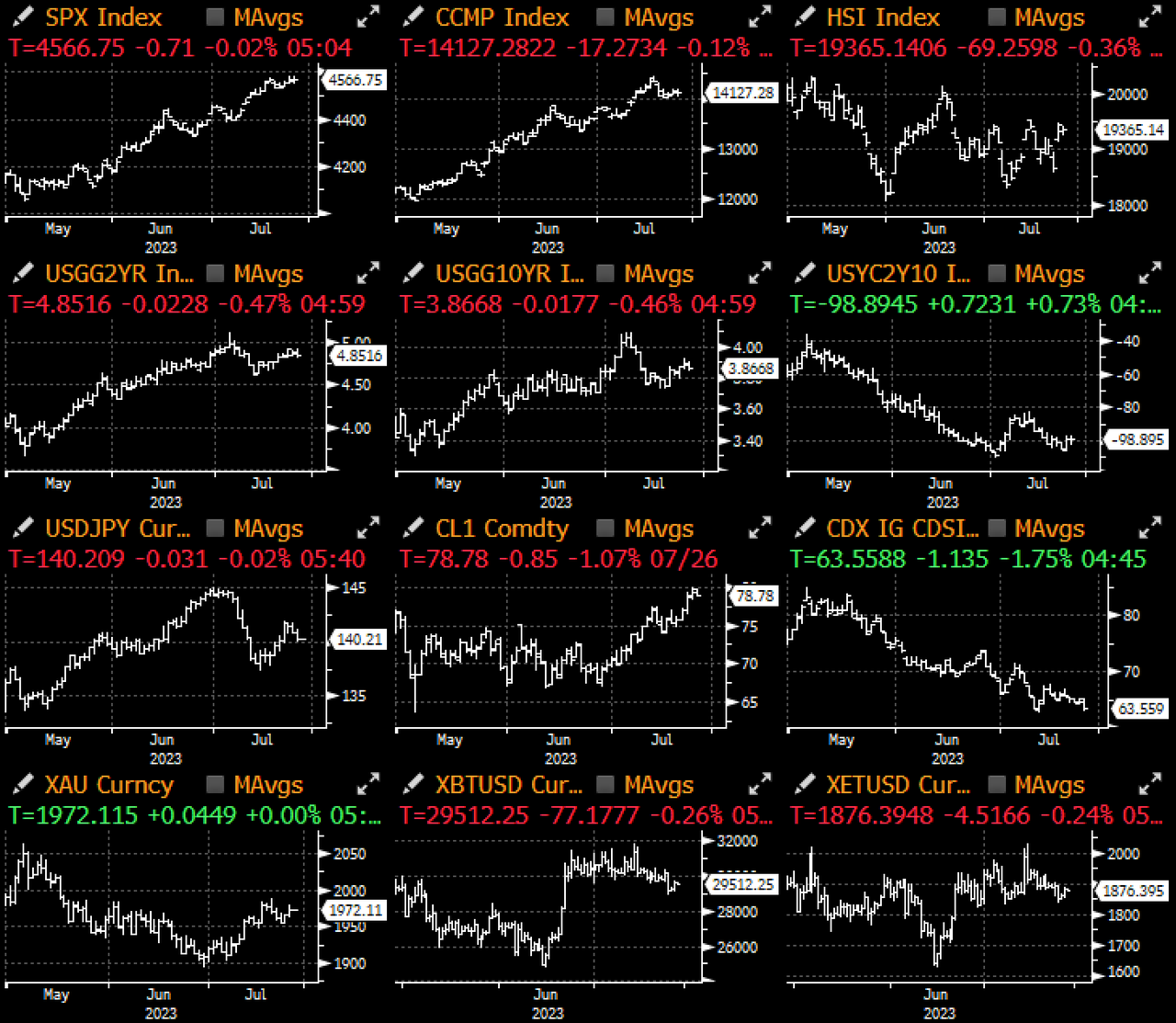
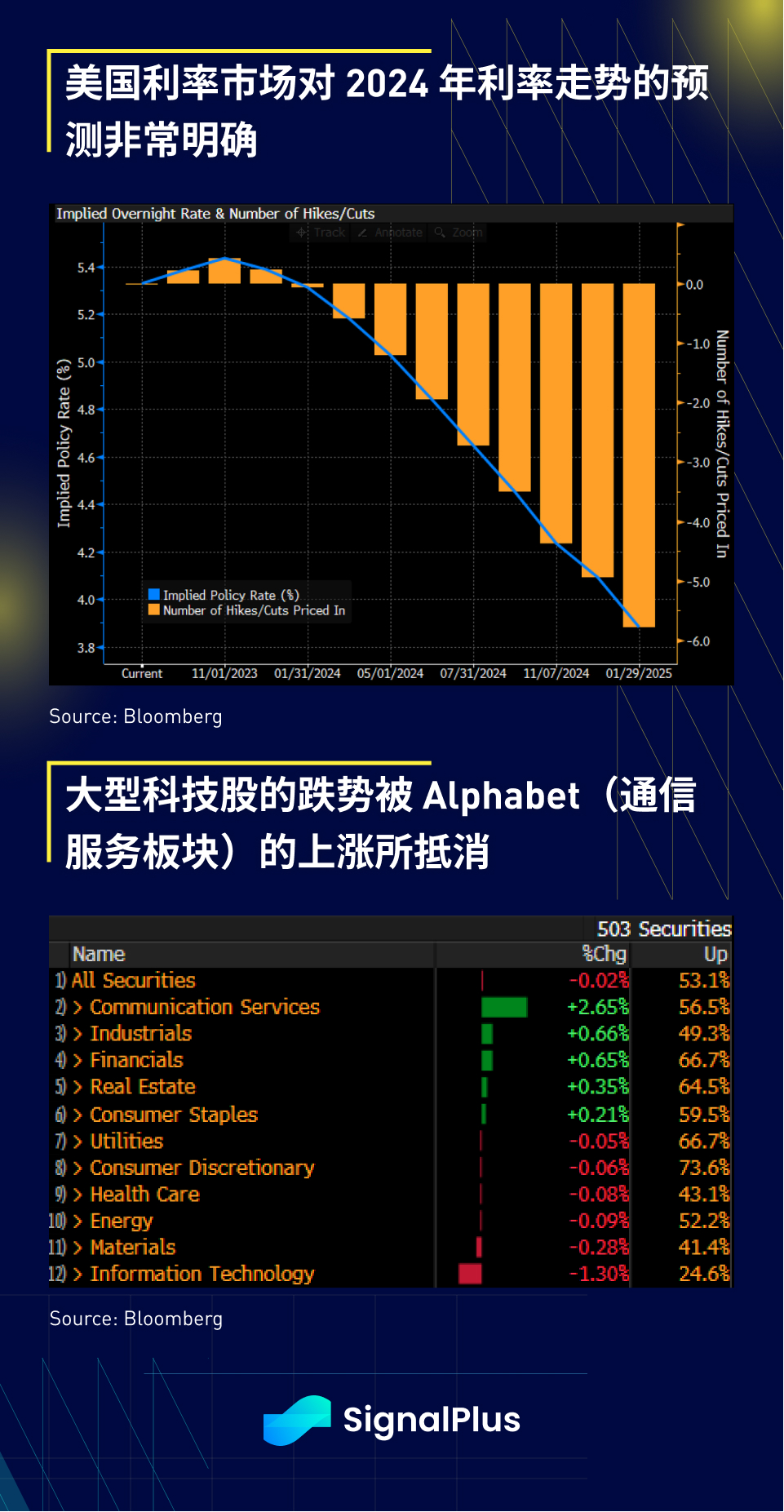
Before the FOMC decision, it is understandable that the market performance was flat. The trading volume of US Treasury bonds was only 60% of the normal level, and there was no significant volatility during the meeting. The US Treasury yield curve closed slightly steeper as the interest rate outlook became fully "data-dependent", and short-term bonds still experienced significant fluctuations.
The stock market once again tried to maintain a risk-on trading day. DJIA rose for the 12th consecutive day, but the S&P 500 index closed flat after experiencing intra-day volatility. The rise of the communication services sector (Alphabet) helped offset the decline of other large tech stocks, which experienced rapid drops after Powell's press conference.
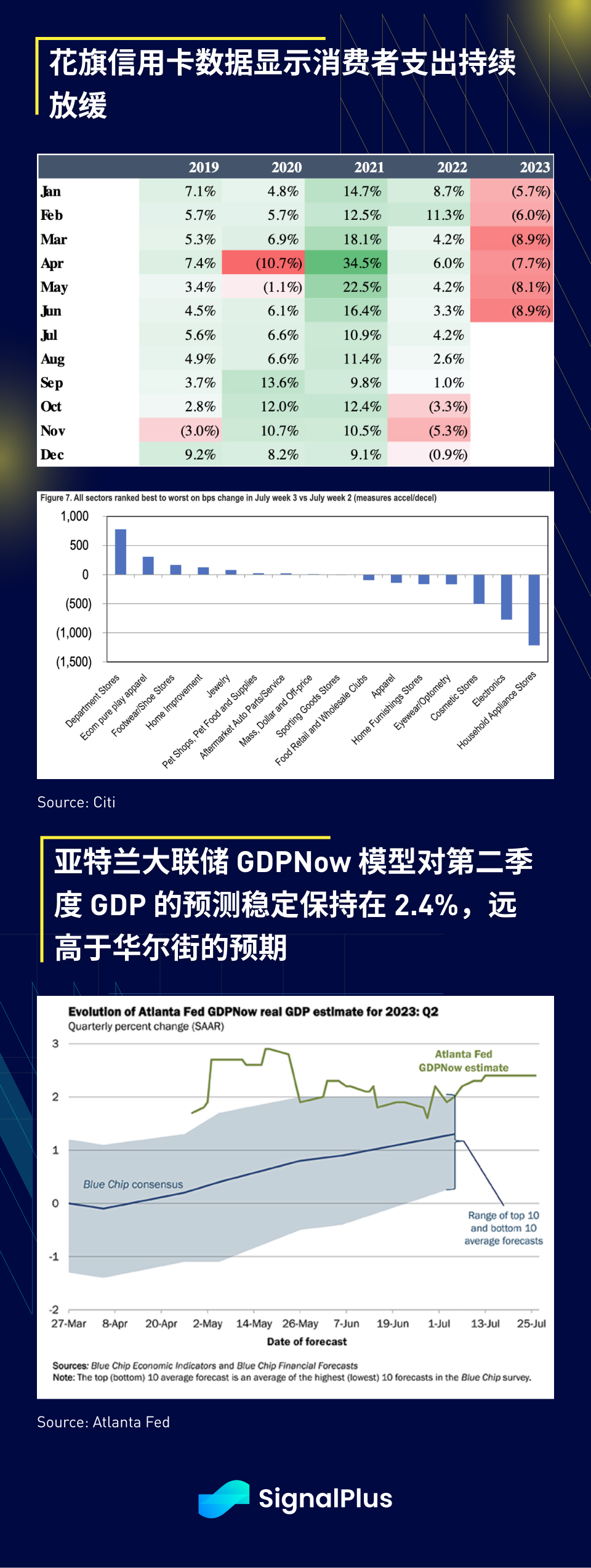
Setting aside Barbie jokes, Citigroup's credit card spending data shows that weekly consumer spending continues to slow down (YoY -8.9%), which contradicts the strong consumer confidence index and retail sales data in recent times. At the same time, the Atlanta Fed's second-quarter GDP forecast remains at the high end of investment bank expectations (QoQ growth 2.4%), confirming that the economic situation in the first half of the year is much stronger than expected by most market observers.
Looking ahead, the focus of the market this week will shift to the European Central Bank and the Bank of Japan. Although the market did not receive the expected dovish guidance from the Federal Reserve, overall sentiment remains high, and price movements will depend on the corporate earnings results to be released in the coming weeks.
With expectations for the third and fourth quarters already increased, and with AI narratives losing some momentum in recent weeks, we expect prices to fluctuate within a range in the short term. It may be necessary to wait for the release of non-farm payrolls and CPI data to set the tone for risk markets in early autumn. Wishing you all successful trades!

If you want to receive our updates in real-time, please follow our Twitter account @SignalPlus_Web3, or join our WeChat group (add assistant WeChat: chillywzq), Telegram group, and Discord community to interact and communicate with more friends.
SignalPlus Official Website: https://www.signalplus.com/





