一周漲近20%:Arbitrum的「收租」生意,因Robinhood Chain一夜盤活


- 核心觀點:Robinhood 基於 Arbitrum 技術推出的 RWA Layer2 區塊鏈(Robinhood Chain)上線後,激活了 Arbitrum 的擴展計劃(AEP)分成機制,市場對其未來潛在「收租」收入進行重新定價,推動了 ARB 代幣近期上漲近 20%。
- 關鍵要素:
- Robinhood Chain 上線一周內,交易筆數超過 1700 萬,TVL 約 2.5 億美元,展現出成為「重量級租客」的潛力。
- AEP 規則要求非結算至 Arbitrum One/Nova 的 Orbit 鏈將淨協議收入的 10%(8% 進 DAO,2% 給開發者公會)分配給 Arbitrum 生態。
- 儘管 Robinhood Chain 當前產生的協議收入僅約 14.6 萬美元,市場更看重其母公司 Robinhood 持有的 3000 多億美元總資產未來上鏈的想像空間。
- Optimism 的「房東」模式(透過 OP Stack 收租)正面臨 Base 等大租客的脫離風險,其租金收入已在縮水。
- 有分析擔憂 Robinhood Chain 可能效仿 Base 脫離底層技術棧,因其排序器收入已接近 Base,且生態更多依賴 ETH 結算。
Original Author: angelilu, Foresight News
ARB once hit $0.094 during intraday trading today, rising nearly 20% in the past week, making it one of the strongest-performing major L2 tokens over the last seven days.
The catalyst driving this rally was the launch of the "Robinhood Chain" — an RWA (Real World Assets) Layer 2 built by Robinhood using Arbitrum technology, which officially launched its mainnet at a London event on July 1st.
Behind this lies a more subtle logic: an old rule, dormant for a year and a half, has been brought back into the spotlight. Part of the revenue generated by the Robinhood Chain will automatically flow back to the Arbitrum ecosystem, with a large chunk going directly into the ArbitrumDAO treasury. This is not a new policy, but a previously lukewarm revenue-sharing mechanism that is now being seriously priced by the market for the first time, due to the entry of heavyweight TradFi brand Robinhood.
The First Major Tenant in a Year and a Half
This rule is called the Arbitrum Expansion Program (AEP), launched in January 2024 by the Arbitrum Foundation in collaboration with Offchain Labs. Simply put, it allows others to build chains using Arbitrum's technology in exchange for a revenue share.
The logic of the revenue share is straightforward: any independent chain built with Arbitrum Orbit technology that does *not* settle on Arbitrum One/Nova (e.g., settling directly on Ethereum or Base) must distribute 10% of its net protocol revenue to the Arbitrum ecosystem — 8% goes to the DAO treasury, and 2% to the developer guild. However, L3s that do settle back on Arbitrum One/Nova, like Xai and Sanko, are exempt from this fee and retain their status as first-class ecosystem members.
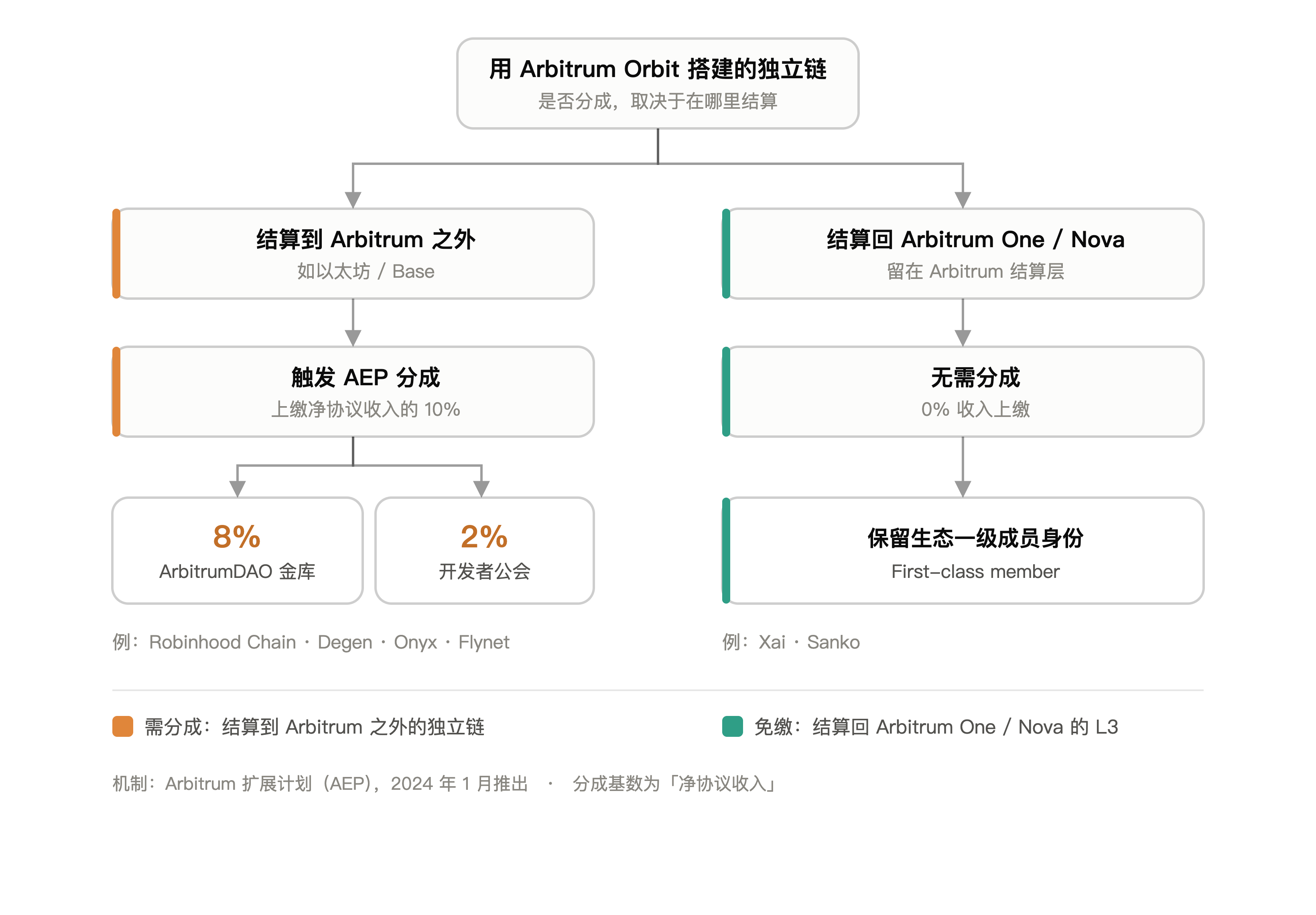
The key point is that Robinhood Chain is not the first chain to trigger the AEP. Previously, smaller chains settling on Base, like Degen Chain, Onyx, and Flynet, were already paying this fee, but their volume was too small for anyone to care. The difference with Robinhood Chain is merely that it is the first heavyweight chain to generate a meaningful scale of revenue share.
Impressive Data, But the Rent Collection is Still Small
According to the latest data disclosed by Johann, Robinhood's Head of International and Crypto Business, as of July 10th, just over a week after launch, the Robinhood Chain has processed over 17 million transactions, attracted over 350,000 addresses, achieved a TVL of approximately $250 million, and facilitated over $1 billion in DEX volume. This is certainly an impressive report card for a newly launched chain.
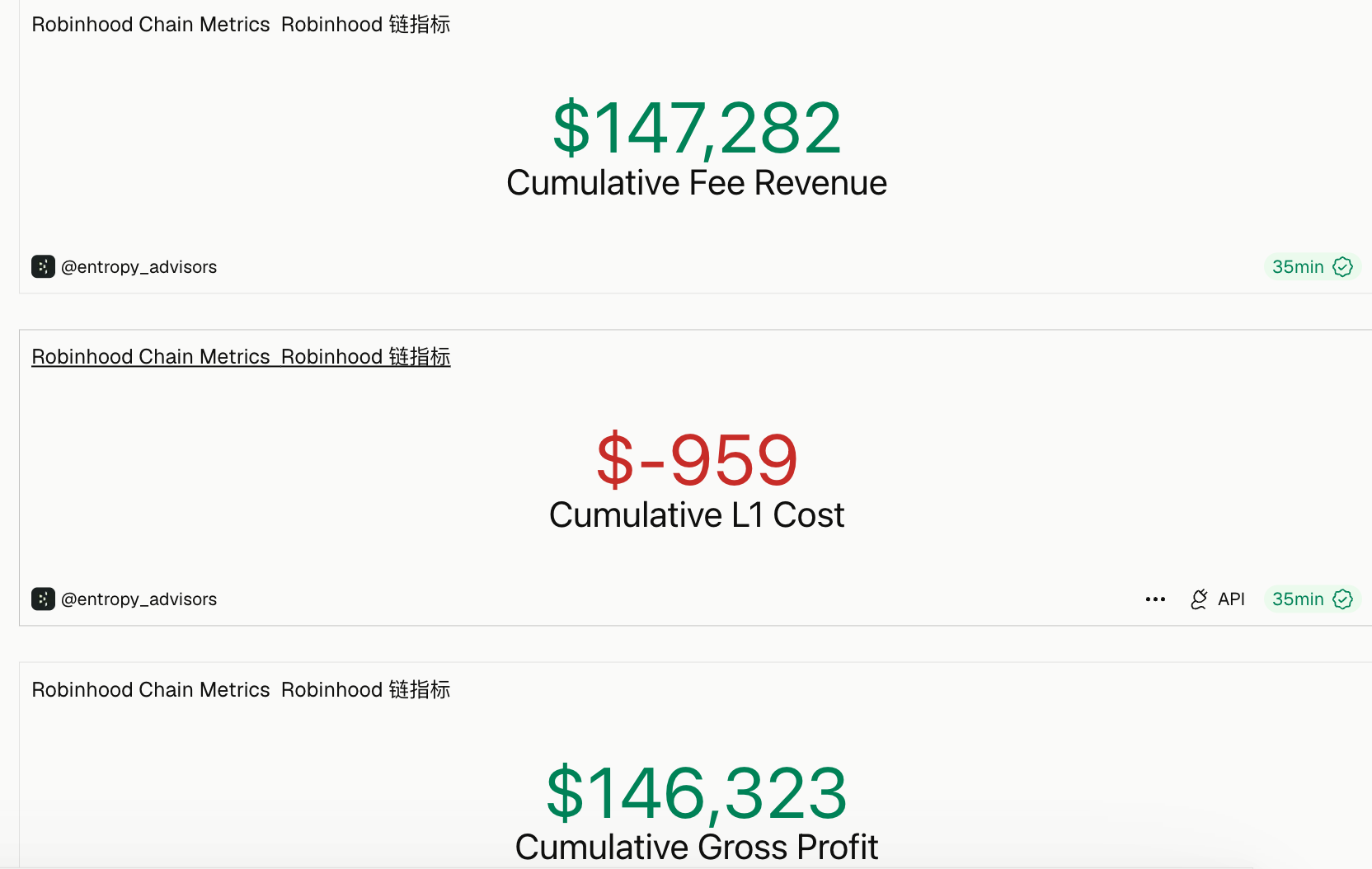
However, the rent collection pool is far smaller. According to Dune data, as of writing, the Robinhood Chain's current protocol revenue is approximately $147,000. After deducting the cost of settling data back to Ethereum L1, it's only $146,000. Even with the 10% split to the Arbitrum DAO, this amount is negligible. The recent rise in ARB reflects the market's premium valuation of the AEP protocol's future expansion potential – it's a classic narrative-driven rally.
Looking at the potential scale, the ceiling for AEP is indeed high: Robinhood's platform holds total assets of around $324 billion and custodial assets of about $143.6 billion. Its tokenized stock offering has expanded to over 2,000 tokens covering 120 countries. Most of these assets are not yet on-chain. Once settlement gradually migrates, the $57,000 fee base could stand on an entirely different level.
One Landlord May Lose Its Biggest Tenant, While Another Just Landed a Major Deal
Arbitrum's "rent collection" model isn't entirely new. Optimism has been running its "landlord" business for quite some time.
The Optimism Collective collects rent from all Superchain member chains (Base, Zora, Mode, Unichain, etc.) via the OP Stack — collecting 2.5% of sequencer revenue or 15% of net profit (whichever is higher) according to the agreement. OP Mainnet itself also contributes its net income to the treasury. However, Optimism's rent is gradually shrinking. In Q1 2026, it further dropped to approximately $2.9 million (with Base contributing about $1.4 million of that), a 21.5% sequential decline from the previous quarter's $3.7 million.
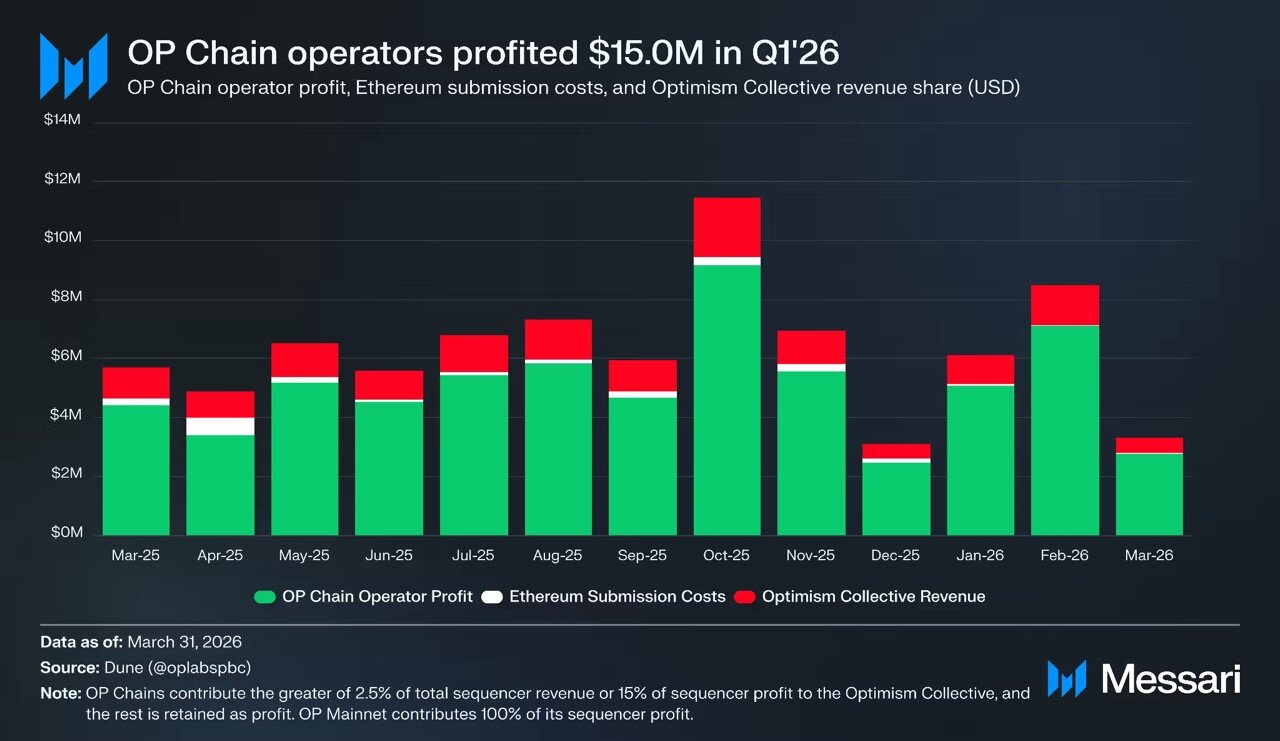
In February this year, Base officially announced its intention to break away from the OP Stack. By gas fee metrics, Base contributed approximately 96.5% of the revenue flowing into the Collective. Upon this news, the OP token fell 28% within two days.
Simultaneously, Arbitrum has leveraged the Robinhood Chain to revitalize its own landlord business from scratch. The structure is entirely parallel — both involve a base layer charging rent to external chains, with proceeds flowing into their own DAO treasuries (ArbitrumDAO vs. Optimism Collective). The difference is that while Arbitrum's AEP rules were written in 2024, it lacked a significant tenant until this week, finally giving its "rent collection" model a sense of scale.
But Can This Major Tenant Be Retained?
It is precisely Base's history that some analysts are using as a cautionary tale. Some argue that, following the same script, Robinhood Chain will inevitably break away from Arbitrum Orbit and align directly with Ethereum, just as Base left the OP Stack. According to growthepie data, Robinhood Chain's daily sequencer revenue has already reached nearly $60,000, second only to Base's $72,000 among Ethereum L2s, and nearly three times that of its parent chain, Arbitrum.
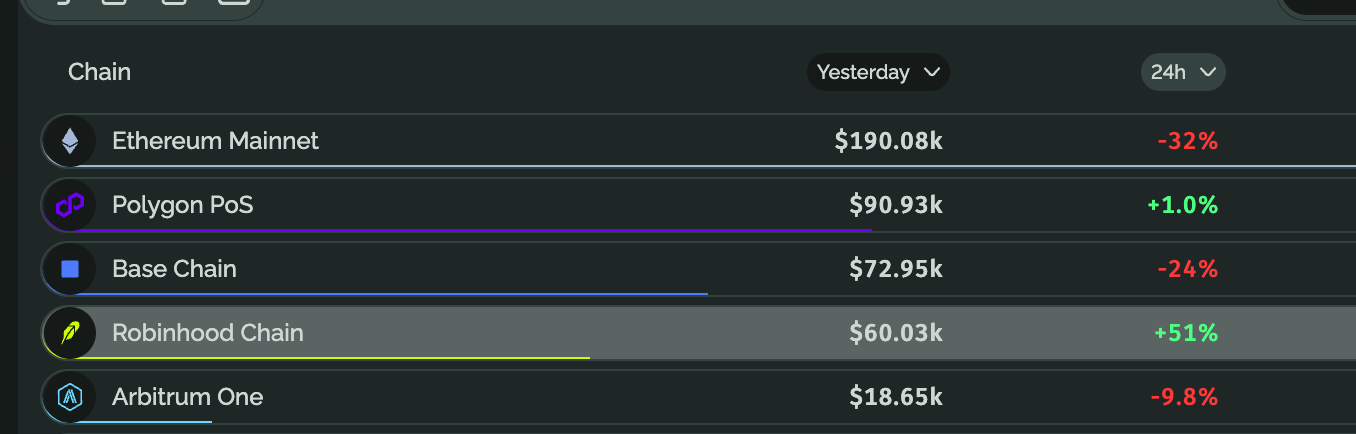
A more nuanced issue is who truly benefits. Within a week of its launch, the Robinhood Chain has become the second-largest consumer of Ethereum DA, right behind Base. Its sequencer pays blob fees, settles in ETH, and permanently burns it. Some analysts therefore believe that if this chain can only have one ecosystem currency, it is more likely to be ETH than ARB.