






CEX擁抱股票,山寨幣被放棄了嗎?


- 核心觀點:全球頭部加密貨幣交易所(幣安、Bybit、Coinbase、Kraken)因交易量下滑、鏈上流動性流失(如Hyperliquid)及監管寬鬆,正集體轉型為提供股票、衍生品等傳統金融服務的綜合平台,這可能導致山寨幣項目失去交易所流動性支持,加速行業分化。
- 關鍵要素:
- 幣安日均現貨交易量從2025年10月約450億美元峰值暴跌至77億美元,跌幅近八成,凸顯傳統手續費模式見頂。
- Hyperliquid永續合約交易量前30標的中,23個為股票與大宗商品,顯示鏈上流動性正從加密貨幣轉向傳統資產。
- 幣安通過阿布達比持牌經紀商Nest Trading間接提供美股交易,規避證券法規,並分得50%的訂單流手續費。
- Coinbase以29億美元收購Deribit,獲得約85%的加密期權市場份額,並推出零佣金股票交易,強化機構服務。
- Kraken收購NinjaTrader和Bitnomial,獲得期貨經紀商等牌照,並向美國貨幣監理署申請全國信託牌照,旨在成為聯邦加密銀行。
- 各交易所核心策略均顯示,山寨幣不再佔據發展規劃重要位置,平台資源正全面轉向傳統金融及收入多元化。
Original Authors: Henry Kim, Ryan Yoon
Original Translation: Chopper, Foresight News
TL;DR:
- The growth ceiling of cryptocurrency spot trading fee models, the rise of decentralized perpetual contract exchanges like Hyperliquid, and the increasingly relaxed regulatory environment under the Trump administration are multiple factors prompting the world's leading crypto exchanges to realign their development strategies.
- Exchanges are now expanding into traditional financial sectors such as stocks and financial derivatives, with their operational models gradually converging with those of traditional financial institutions.
- However, new issues arise. Centralized exchanges have always been the core liquidity providers of the entire crypto ecosystem. As exchanges gradually de-emphasize their core crypto business, the existing operational order of the entire crypto market could be fundamentally disrupted.
- Crypto projects now enter a phase of self-reliance. Whether they can operate independently without the support of exchanges will become a critical dividing line for project development, leading to significant divergence within the industry landscape.
Trading Apple Stock on Binance Platform
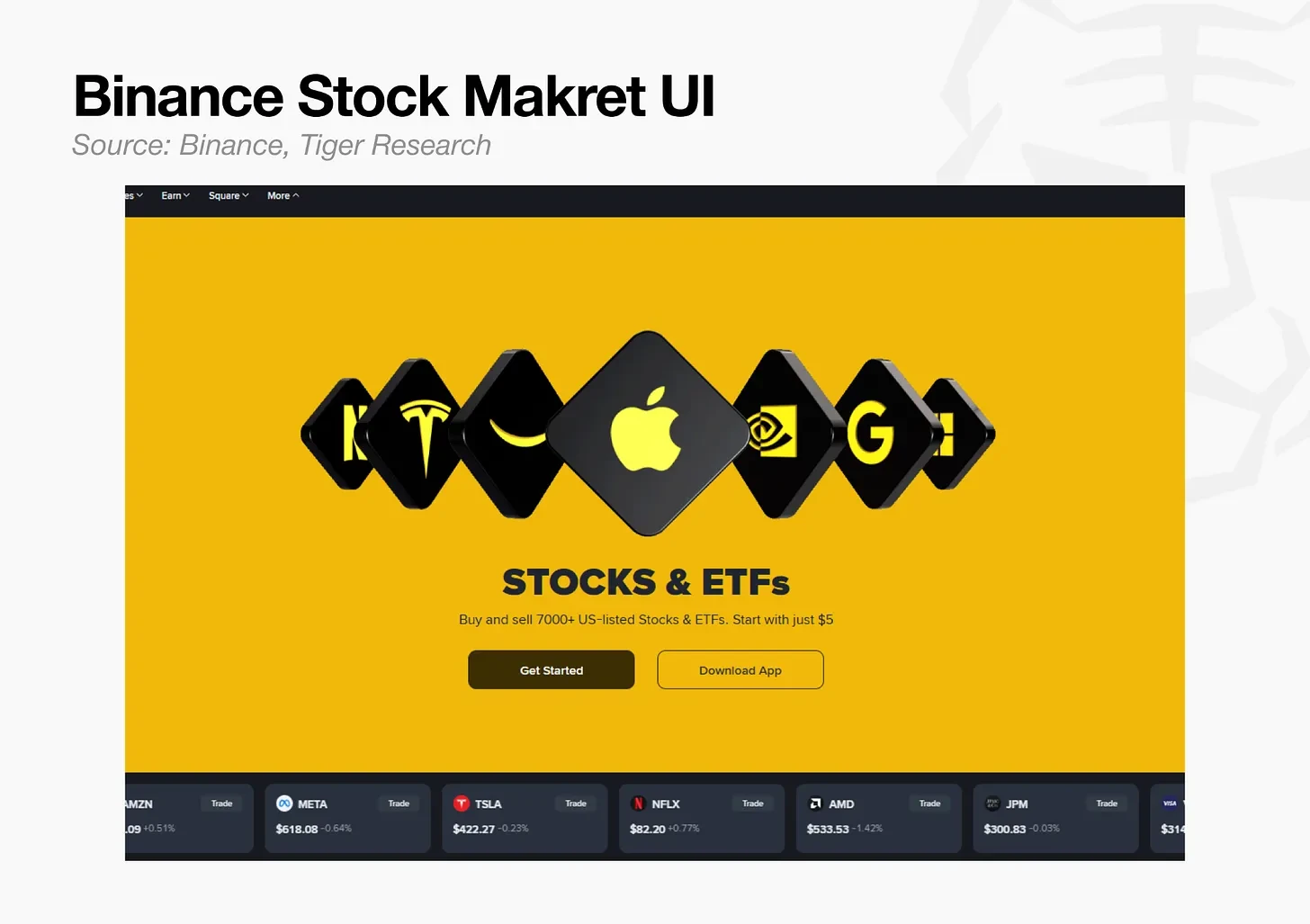
Starting June 1st, users can trade US stocks like Apple (AAPL) and Alphabet (GOOGL) directly through the Binance App. The following day, Binance announced the addition of trading for KOSPI component stocks, including the three most actively traded Korean stocks: SK Hynix, Samsung Electronics, and Hyundai Motor.
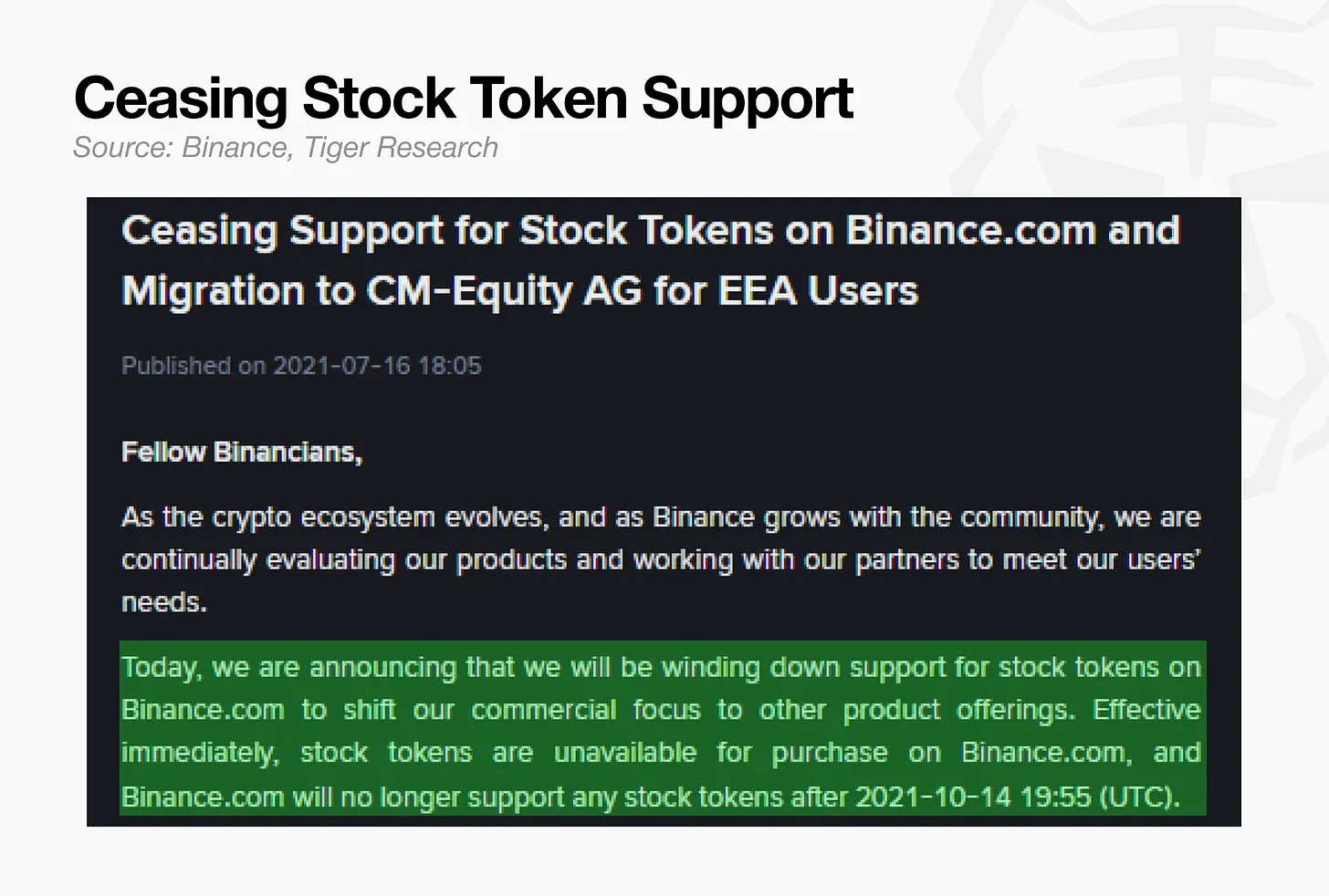
Binance's idea of venturing into stock trading dates back to 2021. That April, the platform launched tokenized stock trading, supporting stocks like Tesla (TSLA), Apple (AAPL), and Microsoft (MSFT). However, due to increasing regulatory pressure, the service was shut down entirely in July of the same year. The business faced three major structural challenges hindering its sustainability: the unclear legal classification of stock tokens (securities or derivatives), the lack of investor prospectuses required by EU regulations, and Binance's lack of direct qualifications to operate such services. Regulators like BaFin, the FCA, and the SFC raised objections based on these issues.
This relaunch of stock trading services involves a significantly adjusted architecture. Binance now executes orders through a licensed broker in the Abu Dhabi Global Market, explicitly defining the business as a securities brokerage service, thus completely avoiding the previous legal controversies. The core conflict of the 2021 shutdown – the ambiguous ownership of the underlying asset issuer – has also been largely resolved.
These industry moves exhibit a clear temporal coincidence. During the same period, Bybit also launched perpetual contract markets for traditional financial instruments, including contracts for Korean stocks like SK Hynix and Samsung Electronics, as well as a perpetual contract for SpaceX (SPCX). Coinbase quickly followed, announcing support for SPCX contract trading.
Almost simultaneously, major crypto exchanges are collectively transitioning away from a pure cryptocurrency trading model towards comprehensive traditional financial service platforms. The reasons behind this shift warrant in-depth examination.


