Both suffered huge unrealized losses exceeding $90 billion. Which is more dangerous: Strategy or Bitmine?


- Core Viewpoint: Amid the ongoing decline in the cryptocurrency market, giants Strategy and Bitmine are both facing massive unrealized losses, but their financial strategies differ significantly: Bitmine maintains flexibility through equity financing and staking yields, while Strategy faces greater liquidity risk due to high-leverage debt and dividend payment pressure.
- Key Factors:
- As of now, with BTC at approximately $63,800 and ETH at approximately $1,780, Strategy's unrealized loss is around $10 billion, while Bitmine's is about $9 billion.
- Bitmine holds approximately 5.44 million ETH (4.49% of the total supply). It supports its accumulation through equity financing (ATM program up to $24.5 billion) and staking yields (earning $1 million daily), resulting in less financial strain.
- Strategy holds around $6.7 billion in convertible bonds and $9.9 billion in preferred stock, with an annual dividend obligation of about $1.7 billion. Its cash reserve is only $871 million, sufficient to cover only six months.
- Strategy's STRC preferred stock has fallen below $95 (de-pegging by over 5%), and the company recently sold 32 BTC, shaking market confidence in its "only buy, never sell" stance.
- Bitmine plans to issue preferred stock with an annual dividend yield of 9.5% to raise $300 million, further easing financial pressure. Its biggest risk lies in equity dilution and falling share prices.
Original|Odaily Planet Daily (@OdailyChina)
Author|Wenser (@wenser 2010 )
Amid the ongoing market downturn, both Strategy and Bitmine, known as the "DAT Treasury Duo," are facing massive unrealized losses.
This morning, BTC briefly fell below $62,000 and is currently hovering around $63,800; ETH dropped below $1,800 and is now trading at approximately $1,780. At current prices, Strategy's unrealized losses have reached a staggering $10 billion, while Bitmine's unrealized losses stand at around $9 billion. For the time being, Michael Saylor and Tom Lee find themselves in the same boat, and Strategy and Bitmine have become the top two companies with the largest losses among DAT firms.
However, compared to Strategy, which must continuously pay dividends, Bitmine faces less financial pressure and retains more flexibility, such as raising funds through STRC preferred stock. Reports indicate that Bitmine plans to raise $300 million through the issuance of perpetual preferred stock with an annualized dividend of 9.5%. From this perspective, Bitmine's pace of accumulating ETH is likely to continue. Meanwhile, the Sword of Damocles hanging over Strategy is the question of where the funds to pay future STRC dividends will come from. Between the two, which one faces greater financial pressure? Odaily Planet Daily will provide an analysis for readers.
Bitmine VS Strategy: Divergent Paths of DAT Token Holdings
With today's sharp drop in BTC, community members have used AI to create a meme spoofing Saylor's "promotion" of BTC: "An elderly man personally pitches his family's BTC at a low price of just $62,000 per coin."

Returning to Bitmine and Strategy, for now, Bitmine's financial structure appears safer, while Strategy faces greater leverage pressure.
Bitmine's Equity Issuance Game: A Debt-Free DAT Strategy
As of June 1, Bitmine holds 5,416,901 ETH, accounting for approximately 4.49% of the total ETH supply, close to the "5% cap" repeatedly emphasized by Bitmine Chairman Tom Lee. Yesterday, Bitmine once again increased its holdings by 25,000 ETH via BitGo, worth $48 million at the time, bringing its total holdings to 5,441,901 ETH.
The reason Bitmine can continue to expand its holdings during a market downturn is multifaceted. The primary reason is that Bitmine's funding source is equity issuance:
- In June last year, when establishing the ETH treasury as a DAT company, Bitmine obtained initial startup capital of $250 million through financing, along with a small PIPE investment.
- After July last year, Bitmine primarily relied on ATM equity issuance, gradually increasing this amount from $2 billion to $24.5 billion.
Ample funding has given Tom Lee enough confidence, and Bitmine's book capital supports further accumulation. In its June 1 public announcement, Bitmine also noted: The company holds a stake in Beast Industries valued at $180 million and a stake in Eightco Holdings valued at $93 million. The company's total cash stands at $446 million.
Additionally, Tom Lee previously stated that Bitmine's Ethereum treasury generates $1 million in daily staking rewards. This refers to Bitmine staking approximately 87% (about 4.71 million ETH) of its ETH holdings through its MAVAN staking network, with an estimated annualized return of approximately 2.73%-3% (about $250-300 million), providing a relatively stable cash flow.
In summary, Bitmine maintains a healthy financial position, and the latest preferred stock offering with an annualized dividend of 9.5% is expected to raise $300 million, further alleviating its financial pressure. For the company, the primary risks are equity dilution (issuing new shares) and further stock price declines due to book losses; if mNAV remains below 1 for an extended period, it could trigger a stock sell-off.
Strategy's Debt Leverage Game: Convertible Bonds and Preferred Stock Dividend Pressure
Compared to Bitmine's strategy of "using investor money to buy ETH," Strategy faces greater financial pressure in purchasing BTC because it primarily "borrows money to accumulate BTC."
According to Strategy's official website, the company currently holds approximately $6.7 billion in convertible bond debt, along with approximately $9.9 billion in STRC preferred stock and varying amounts of STRD, STRK, and STRF. This requires annual payments of substantial dividends and interest. After repurchasing $1.5 billion in convertible debt in late May, Strategy's cash reserves dropped to approximately $871 million, covering only about six months of its estimated $1.7 billion annual preferred dividend obligations.
Furthermore, Strategy previously initiated a vote on "proposing to increase STRC dividend payments from once a month to twice a month," which began on April 28 and will conclude on the meeting date of June 8. If the proposal is approved, the first equity record date under the new schedule would be June 30, with the first dividend payment date on July 15. Shareholders eligible to vote (MSTR and STRC shareholders) must have held shares before April 17.
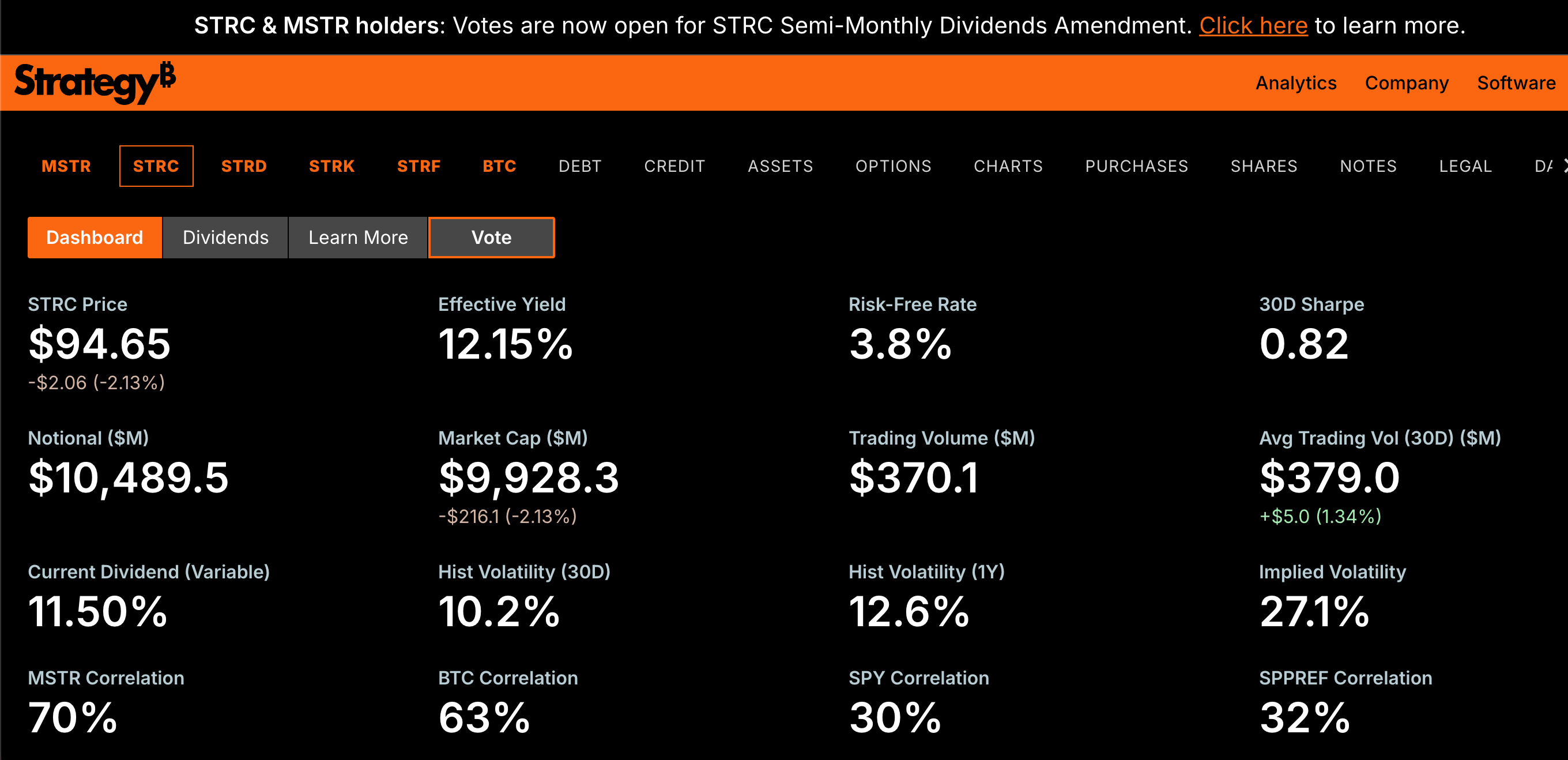
Additionally, it is worth noting that STRC's authorized issuance cap is approximately $28.3 billion. Possibly affected by BTC's continued decline and waning market confidence, STRC fell below $95 this morning and is currently trading at $94.65, deviating more than 5% from its target price of $100.
Compared to Bitmine, Strategy is currently grappling with a significant gap between the high amount of preferred stock financing and the dividend payment obligations, exacerbated by BTC's persistent downturn. Unlike ETH, which offers staking rewards, BTC lacks a comparable staking ecosystem to generate additional liquidity.
Therefore, after Strategy's sale of 32 BTC last month, the market has begun to question the "diamond hands Strategy that only buys, never sells" narrative. As BTC continues to decline, Strategy may face a series of liquidity crises, potentially leading to an inability to service debt or pay dividends, and consequently triggering further BTC sales. In essence, Strategy is playing a debt leverage game, betting that BTC prices won't fall below a certain threshold.
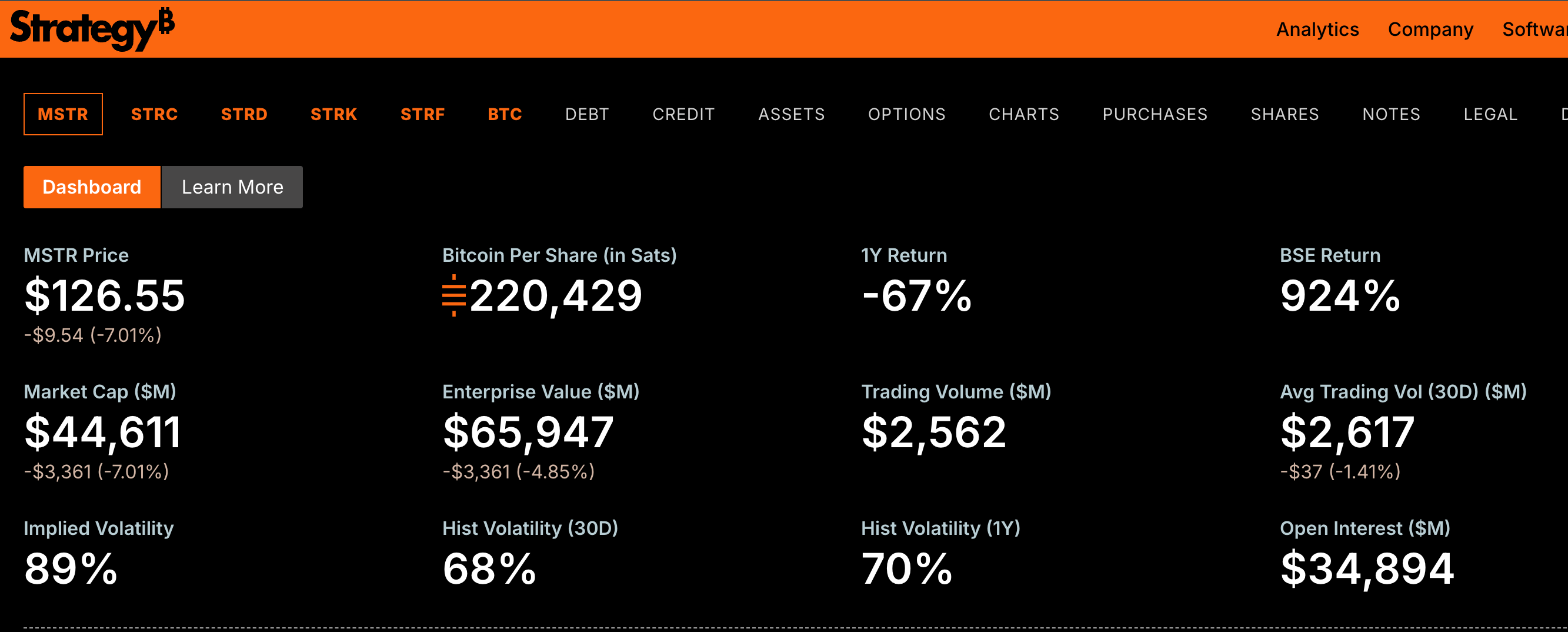
Thus, given Strategy's current mNAV value of 0.83, the market remains highly skeptical of its future stock performance. Yesterday, its market cap fell out of the top 200 U.S. companies. Currently, Strategy (MSTR) shares are trading at $126, down 7% in 24 hours, with a market cap of approximately $44.6 billion.
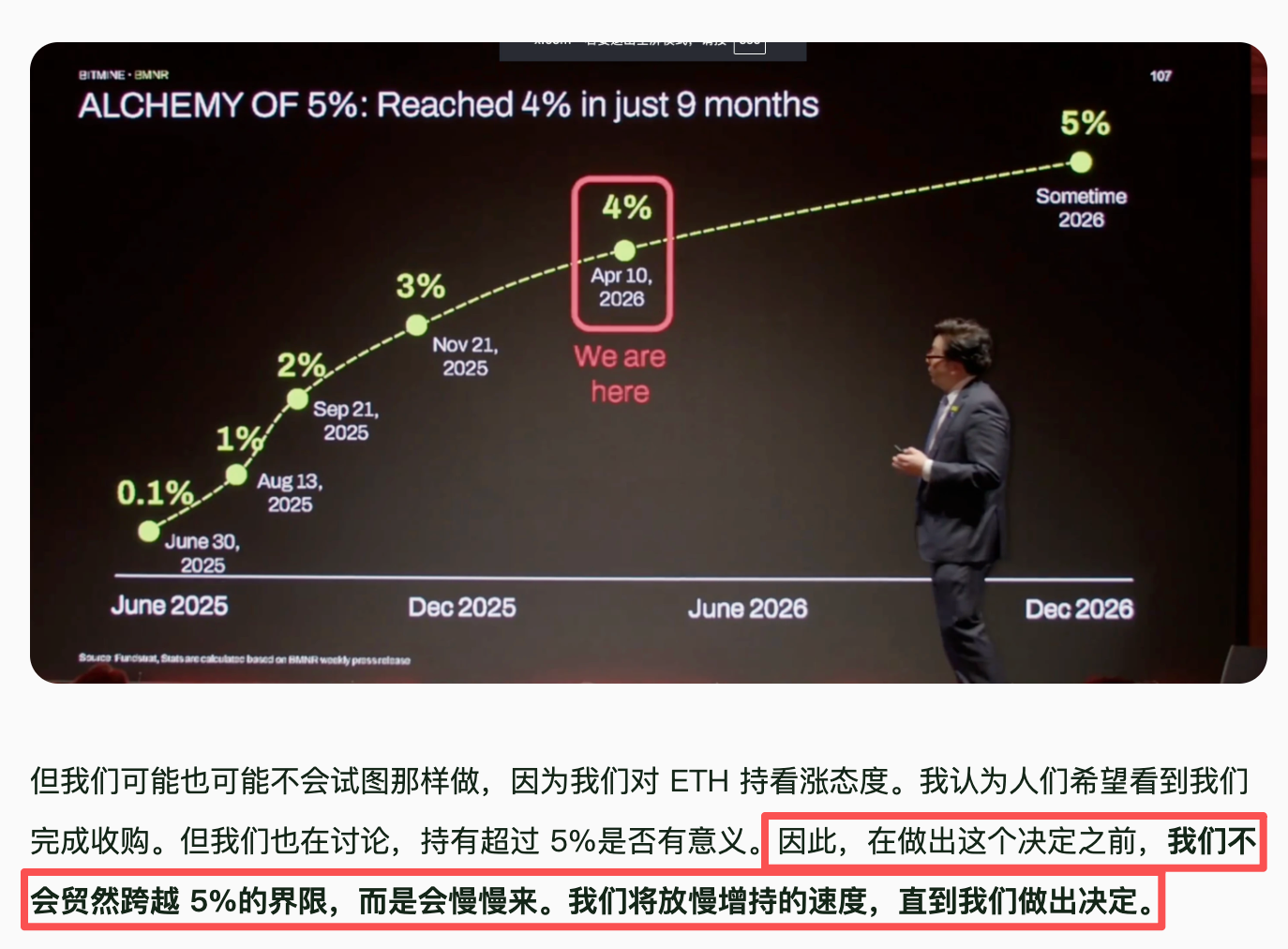
Of course, as the leading figure among DAT treasury companies, Bitmine Chairman Tom Lee remains quite optimistic about Strategy. Previously, he stated: "Strategy selling Bitcoin and ETF outflows are typical bottoming behaviors, not risk signals." More recently, at the "Proof of Talk 2026" conference at the Louvre in Paris, Tom Lee boldly predicted: "As AI and tokenization drive major transformations in financial infrastructure, ETH could eventually reach $250,000." However, when asked about "actions after Bitmine's ETH holdings reach 5% of the total supply," he expressed caution regarding further accumulation. (See "Tom Lee Recharges Belief: Crypto Spring Has Arrived, ETH Could Rise to $250,000")
For now, Bitmine and Strategy find themselves in highly similar market positions, though Bitmine's financial health is slightly better. Strategy, on the other hand, faces a choice between "selling more BTC to generate cash flow for dividend payments" or "watching BTC continue to decline while either pausing or continuing to borrow for further accumulation."