每周編輯精選 Weekly Editor's Picks(0516-0522)


- 核心觀點:本週加密市場焦點從宏觀敘事轉向具體賽道競爭,包括預測市場雙寡頭格局的鞏固、SEC 對代幣化股票的重大政策鬆綁、以及穩定幣與 DeFi 正從「高息」轉向「合規」與「渠道」之爭。
- 關鍵要素:
- SEC 預計將發布「創新豁免」政策,允許第三方在無上市公司授權下發行股票代幣,Coinbase 等平台或將合規上線美股代幣交易。
- Polymarket 與 Kalshi 已控制超 97.5% 的預測市場交易量,前者依靠鏈上交易,後者倚賴合規資質,新平台在細分領域尋找機會。
- USDC 正透過與 Hyperliquid 的深度整合,從「合規競爭」轉向「交易入口爭奪」,以對抗 USDT 的網路效應。
- DeFi 收益率降低,但 USDC、sUSDS 等低收益生息穩定幣獲得機構信用評級並被納入抵押品體系,成為新基建。
- CLARITY Act 若通過,將正式確立比特幣和以太坊的商品地位,並永久性終結 XRP 相關的 SEC 訴訟。
- WLFI 透過銷毀代幣、對接交易所等措施自救,反導致長期持幣者利用流動性窗口出貨套現。
Information flows too fast, and deep analytical articles are easily drowned out by hot topics. This "Weekly Editor's Pick" column salvages valuable judgment content from the sea of information, helping you filter out the noise, retain insights, and gain inspiration.

Macro Situation
Trump's political paradox is becoming increasingly clear: his approval rating among national voters continues to decline, yet he holds ever-stronger dominance within the Republican Party.
On one hand, he forces party candidates to pledge allegiance through endorsements, primary challenges, and political purges; on the other hand, this political screening centered on personal loyalty may weaken the Republican Party's competitiveness in the general election.
Also recommended: "South Korea's Financial Turmoil: Samsung Strikes, AI Communism, and Massive Crypto Losses".
Investment & Entrepreneurship
Also recommended: "With the World Cup Approaching, Sports Is Entering the Era of 'Fractionalized Finance'" and "After Developer Numbers Halved: Crypto Isn't Dead, It Just Ceded Talent to AI".
Prediction Markets
Polymarket and Kalshi Dominate 97.5% of Volume, Is There Still a Dark Horse in Prediction Markets?
The core landscape of the prediction market in 2026: On one side, a duopoly formed by Polymarket and Kalshi—the former expanding influence through on-chain trading, USDC settlement, and media distribution, while the latter enters mainstream financial scenarios through CFTC compliance qualifications and channels like Robinhood; on the other side, a group of new platforms seek opportunities in short-cycle trading, sports prediction, media embedding, on-chain native metrics, and infrastructure layers.
Policy
The SEC could release its tokenized stock "innovation exemption" policy as early as this week, allowing third parties to issue and trade tokens representing companies' stocks without their consent.
Crypto-native platforms like Coinbase may be able to list US stock token trading without obtaining a full broker-dealer license.
Traditional institutions like DTCC, Nasdaq, and NYSE are already accelerating their布局, with real-money trading of tokenized assets expected to begin between July and October.
What Will Happen to the Crypto Market After the CLARITY Act Passes?
The commodity status of Bitcoin and Ethereum will be written into federal law, completely eliminating the tail risk of future administrative reversals;
XRP will be one of the biggest beneficiaries of the Act, with the shadow of years-long SEC litigation receiving a permanent legal conclusion;
The passive interest-earning function of stablecoins will be restricted, but activity-linked yields tied to trading and liquidity provision will be protected.
Stablecoins
USDC's Counterattack on USDT: The Real Battlefield Is on Hyperliquid
The stablecoin competition is shifting from "who is more compliant" to "who can capture more trading gateways."
On the surface, USDC is re-establishing itself as the primary quote currency on Hyperliquid, with Hyperliquid getting a higher revenue share. But deeper down, this is a battle over distribution channels.
For Coinbase and Circle, Hyperliquid provides global reach that they would find hard to replicate themselves. Coinbase is limited by regulations and cannot cover as broad a market as Binance or Hyperliquid. Therefore, embedding USDC into Hyperliquid's trading infrastructure could be a realistic path to counter USDT's network effects.
CeFi & DeFi
220 Days After Trade.xyz Launch, Hyperliquid Is Becoming the 'New Nasdaq'
After the pre-market battle with Cerebras (CBRS), Hyperliquid has begun to play the role of a "US stock price discovery machine" and is becoming the new Nasdaq.
New Pre-IPO Battle: On the Eve of Listing, $SPCX Is Pushed to $2.5 Trillion
Because crypto's own narrative is weakening, star US IPO names are filling the gap. All players are vying for this category, and on-chain pricing for the largest IPO in human history has begun.
While sUSDe supply halved, funds flowed into lower-yielding USYC and sUSDS. This isn't capital exiting, but a change in selection criteria.
APY is no longer the dividing line for assets. More important is the ability to be adopted as collateral, a savings product, or a reserve.
S&P has given USDS the first-ever credit rating for a DeFi protocol, while assigning USDe a 1250% risk weight.
Ethena will fully overhaul its collateral structure in April 2026, transitioning from a synthetic model to a hybrid one. A single source of yield is no longer sufficient to survive in the YBS market.
DeFi is transitioning from a market that produces yield to one that imports and distributes yield from traditional finance. The stronger the foundation, the more robust the upper layers can be.
Why Is It Hard for the RWA Boom to Benefit DeFi?
The vast majority of RWA assets remain disconnected from lending markets, collateral vaults, and other scenarios that enable the free composition and interaction of crypto assets. Bonds and money market funds are the largest RWA categories, but little capital enters the DeFi market. Only the private credit track stands out, as projects like Maple Finance and Centrifuge were designed from the outset as lending instruments, naturally fitting DeFi application scenarios.
Permissioned architectures are the biggest barrier to DeFi composability.
Bullish expectation: Highly suitable products have proven their model; Bearish reality: Industry growth may be constrained by the traditional financial system.
Facing months of pressure from governance disputes, unlock concerns, and liquidity doubts, World Liberty Financial has taken multiple measures: burning WLFI tokens, engaging with exchanges, and launching a reward program linked to the stablecoin USD1, aiming to revitalize the entire WLFI ecosystem.
Although these measures boosted market sentiment, they also created a new liquidity window for long-"dormant" token holders to take profits and exit.
Also recommended: "The 'Blind Box Shareholders' in SpaceX's Wealth Wave: Russian Dolls, Who's Swimming Naked?" and "TradeXYZ's Mysterious Founder Shoku: Someone Forever Seeking Asymmetric Opportunities".
Airdrop Opportunities & Interaction Guides
$50 Million Funding Fuels Airdrop Expectations, Variational Becomes New Focus in Perp DEX
Security
Vitalik's Latest Long Read: How Can Code Be Made Safer in the Age of AI?
Facing stronger AI attackers, critical systems must be compressed into smaller, more verifiable, and more trustworthy "security cores"—formal verification.
Clear Signing was pushed further into Ethereum's open standardization process on May 12, aiming to solve an old problem: many users don't neglect security, but they simply can't understand what they are signing before clicking confirm.
The role of Verifiable UI is to ensure that what users see (webpage display) is exactly what will happen (transaction signature).
Weekly Hot Topics Catch-up
Policy & Macro Markets
National Development and Reform Commission: Never required Chinese tech companies to refuse foreign investment;
CSRC seriously investigates and penalizes illegal cross-border business cases: Plans to confiscate all illegal income from relevant entities inside and outside China, including Tiger Brokers, Futu, and Longbridge;
CSRC and eight other departments: Strengthen internet platform and information cleanup; Completely ban illegal cross-border operations of overseas securities, futures, and fund institutions;
US-Iran Agreement reaches final draft;
Iran launches digital marine insurance platform Hormuz Safe, supporting crypto settlement (Analysis);
EU launches MiCA regulatory framework assessment, global crypto regulation race accelerates;
Trump Administration awards $2 billion total to 9 quantum computing companies;
Musk lawsuit against OpenAI dismissed unanimously;
Samsung Electronics Korean union announces strike for Thursday;
Google I/O goes All in AI (Key Takeaways);
Views & Voices
New Bond King: Fed rate cuts this year are "impossible";
US Crypto Market Structure Bill enters critical phase: NYDIG warns June-August is the final legislative window;
Arthur Hayes: Hopes the Clarity Act is vetoed, crypto can survive without regulation;
Bankless Founder liquidates ETH holdings, Ethereum faith collectively shattered;
Hyperliquid Co-founder: Met with US policymakers to discuss entering the US market;
Institutions, Major Companies & Leading Projects
SpaceX files for IPO, offering size and valuation not disclosed;
OpenAI set to file for IPO soon;
Polymarket and Nasdaq partner to launch prediction markets for private companies;
Sui launches zero-gas stablecoin transfers;
Data
Trump Administration: Over 20% of officials hold crypto, Trump himself holds at least $51 million;
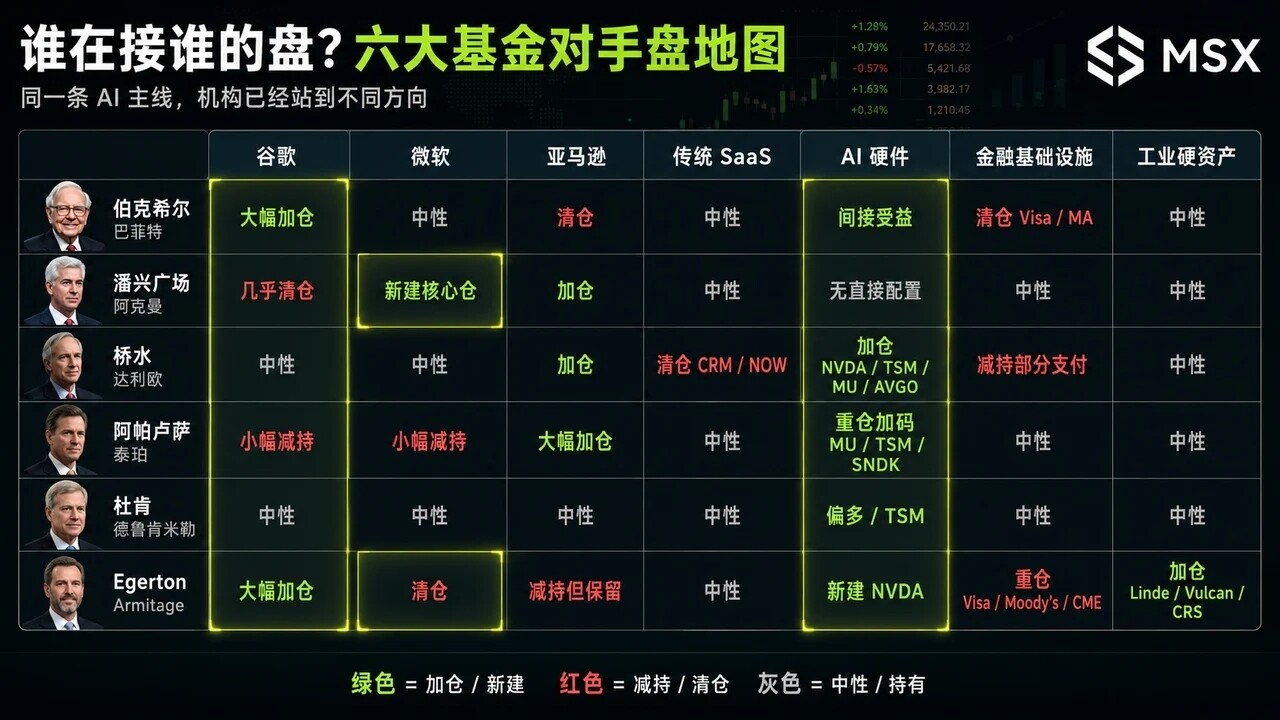
Newly minted "AI stock guru" Leopold Aschenbrenner's fund reveals holdings (Portfolio Snapshot);
ZEC surges (Analysis);
HYPE surges (Reasons), Hyperliquid FDV surpasses Solana, Institutions have differing valuations of HYPE