Liang Wenfeng không có cuộc sống, Dương Chí Lân không có đường lui


- Quan điểm cốt lõi: Bài viết so sánh quỹ đạo khởi nghiệp và tính cách nền tảng hoàn toàn khác biệt của hai nhà sáng lập chủ chốt trong lĩnh vực AI Trung Quốc – Liang Wenfeng (DeepSeek) đến từ Quảng Đông và Dương Chí Lân (Moonshot AI / Kimi) – qua đó hé lộ cách chủ nghĩa lý tưởng công nghệ, mô hình kinh doanh và áp lực vốn đã cùng nhau định hình cục diện cạnh tranh AI tại Trung Quốc.
- Các yếu tố chính:
- Liang Wenfeng (DeepSeek) khởi nghiệp từ giao dịch định lượng, tự xây dựng năng lực tính toán và dùng tài chính nuôi dưỡng nghiên cứu AI, đi theo con đường phi logic kinh doanh thông thường là “dòng tiền trước, nghiên cứu sau”. Chiến lược mã nguồn mở và chi phí thấp của ông đã làm rung chuyển thị trường toàn cầu với mô hình R1.
- Dương Chí Lân (Moonshot AI / Kimi) dựa vào nền tảng học thuật đỉnh cao và khả năng gọi vốn nhanh chóng, chiếm lĩnh tâm trí người dùng bằng sản phẩm văn bản dài Kimi. Tuy nhiên, anh phải đối mặt với chi phí quảng cáo cao ngất ngưởng và tranh chấp trọng tài từ các cổ đông cũ, từng rơi vào tình thế “lơ lửng” khó khăn.
- Mô hình R1 của DeepSeek đã lật đổ nhận thức của ngành về chi tiêu vốn, chứng minh tính khả thi của mã nguồn mở và hiệu quả thuật toán tại Trung Quốc, gián tiếp cung cấp cơ sở để Moonshot AI chuyển hướng sang mã nguồn mở và ngừng trả phí mua người dùng để “lội ngược dòng”.
- Liang Wenfeng đối mặt với thách thức nội bộ là nhân tài cốt cán ra đi do giá trị bản thân tăng vọt, trong khi Dương Chí Lân, sau áp lực vốn bên ngoài và điều chỉnh định hướng nội bộ, đã phục hồi mạnh mẽ vị thế thị trường và định giá thông qua các mô hình như K2.
- Đến năm 2026, cả hai đều hội tụ ở cùng một điểm: Dương Chí Lân bắt đầu quan tâm đến chi phí và nhịp độ như Liang Wenfeng, còn Liang Wenfeng, vì vấn đề giữ chân nhân tài, phải bước ra khỏi phòng thí nghiệm để tiếp xúc với vốn. Cả hai đều phải gánh chịu ba cái giá đắt: sự bất định của công nghệ, lòng kiên nhẫn của nhà đầu tư, và huyền thoại người sáng lập bị thử thách.
Original author: Jialiu
In the week since Kimi K3 was released, the US tech community has been collectively lamenting why an exceptional young talent like Yang Zhilin didn't stay in the US back then.
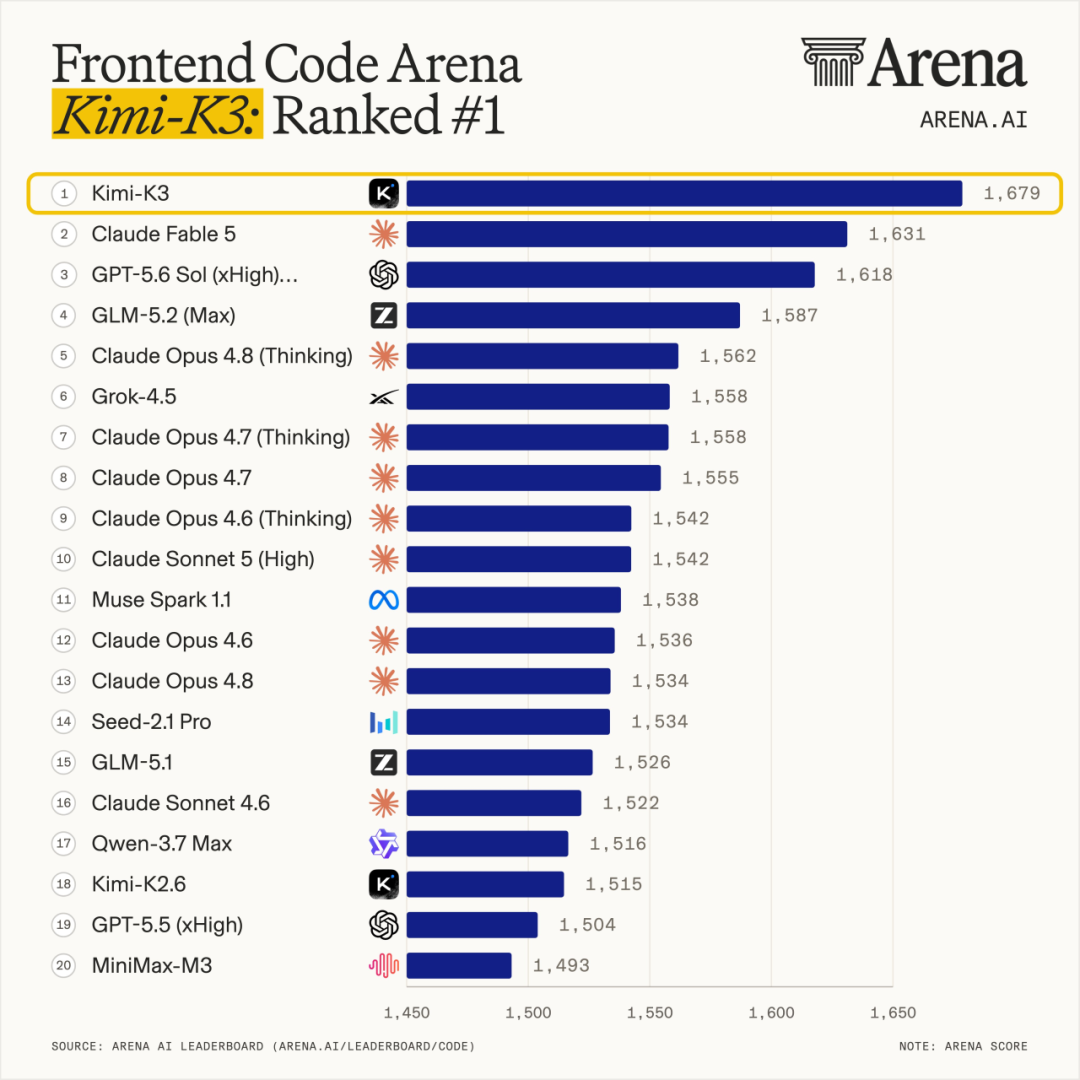
Kimi K3 surpasses all models in front-end capabilities
This topic garnered over five million views on X. David Sacks, the former White House AI lead under Trump and a close confidant, admitted he had switched from Claude to Kimi for handling a lot of work, saying, "It's just more fun because it gets things done directly instead of lecturing you." Veteran Silicon Valley venture capitalist Vinod Khosla, meanwhile, blamed immigration policies, stating that the US is actively scaring away top talent.
As speculation grew, Yang Zhilin's PhD advisor, Salakhutdinov, publicly showed off his prized student on social media while clarifying why he didn't stay in the US: "If he didn't even have the courage to try entrepreneurship, Yang said he would regret it for the rest of his life."
On the other side of the Pacific, another name from Guangdong has become widely known in China's AI circle: Liang Wenfeng.
Seven years older than Yang Zhilin, Liang Wenfeng was born in Wuchuan, Zhanjiang. A programmer who spent fifteen years in quantitative trading, he rarely gives interviews and has no social media accounts. The only personality trait his colleagues can sum up is, "Apart from programming, he has no other hobbies." After his DeepSeek R1 was released in January 2025, Nvidia's market cap evaporated nearly $600 billion in a single day, an event Silicon Valley called the Sputnik moment. While the world was searching for him, he retreated to his hometown to play soccer for a few days.
Two men from Guangdong, one born in Wuchuan and the other in Shantou, separated only by the Leizhou Peninsula. Their companies are on the same track, following nearly mirror-image trajectories, with every fork in the road stemming from their fundamental personalities.
A Radio and a Band
Liang Wenfeng was born in 1985 in Mililing Village, Tanba Town, to parents who were both primary school teachers. With few toys at home, his most important childhood possession was a Feiyue brand radio, which he took apart and reassembled countless times.
This quiet child showed his difference early on. His middle school homeroom teacher remembers he wasn't a bookworm, nor did he seem to study harder than others, but he taught himself high school math in middle school and started reading university textbooks, "as if he didn't need much time to excel in every subject."
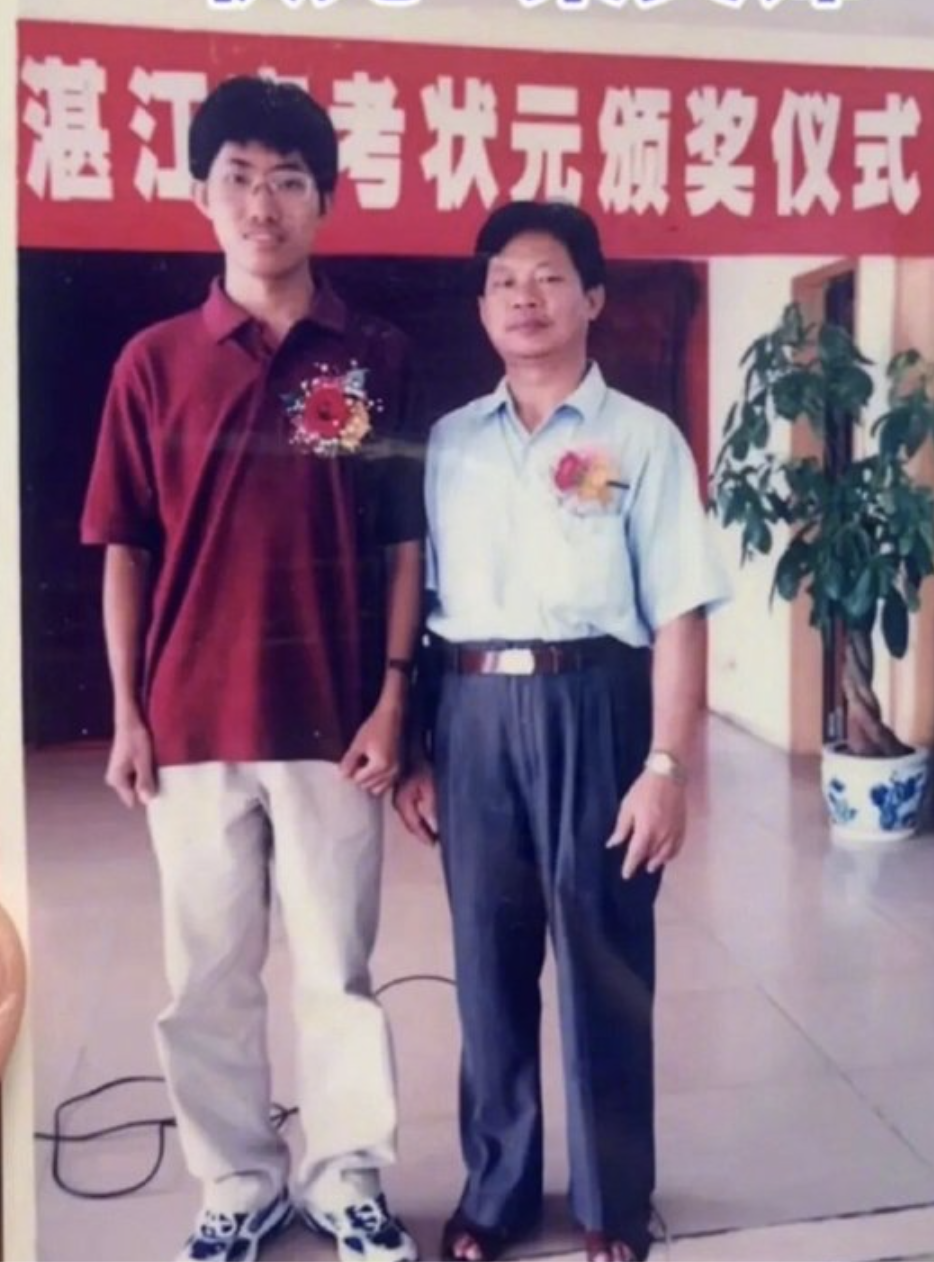
In the 2002 college entrance exam, he scored 806 out of a possible 900, becoming the top scorer in Zhanjiang City. A photo from the award ceremony can still be found online today: wearing a maroon short-sleeve shirt with a large red flower pinned on his chest, his expression stiff, clearly pushed onto the stage by a teacher. That autumn, he enrolled in Zhejiang University's Electronic Information Engineering program. But in the two decades that followed, there were no more occasions worth photographing for this man.
Seven years later in Shantou, another child from Guangdong grew up. Born in 1992, Yang Zhilin ranked first in his class for four years in Tsinghua's Computer Science department and published over twenty papers. While not the most extraordinary feat at Tsinghua, what was unique was that besides these academic achievements, he formed a rock band named Splay, after a data structure, where he played the drums.
He later explained: "At that time, I felt I had a lot to express, including the pressure from reality and the absurdity of the environment." They wrote a song about the daydream of getting rich overnight through successful entrepreneurship, "half out of empathy, half as a reminder to myself not to become too utilitarian."
Years later, this band would return to the story in an unexpected way: his bandmate Zhou Xinyu became a co-founder of Moonshot AI.
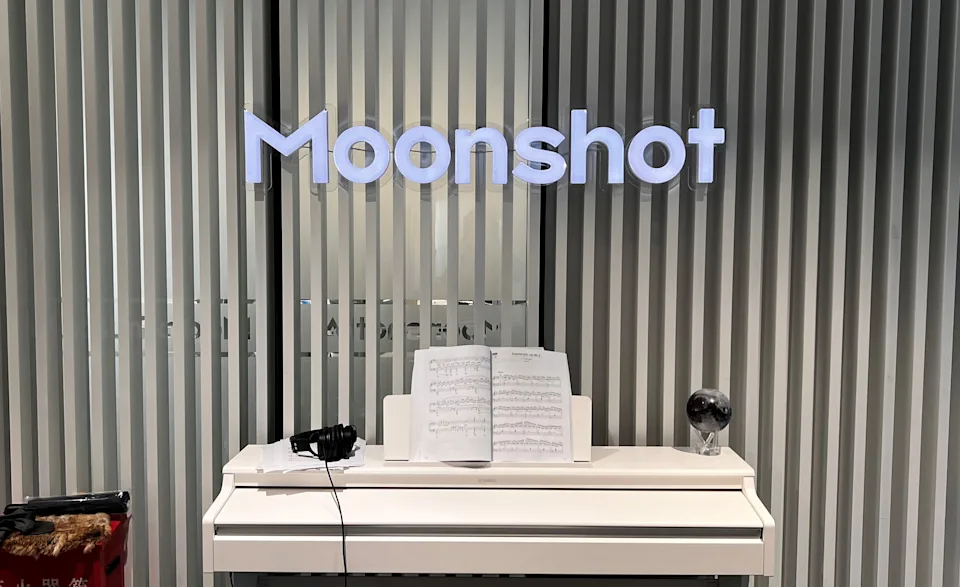
And at the entrance of Moonshot AI's office sits a white Yamaha electric piano, on which rests Pink Floyd's 1973 album, "The Dark Side of the Moon." The company's name comes from this very album.
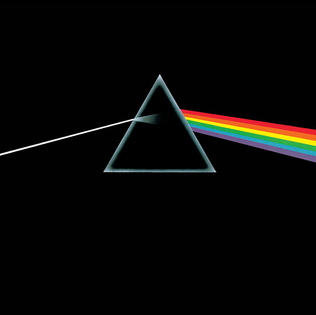
The Dark Side of the Moon album
One takes apart a radio without needing anyone to see; one plays drums because there are things that must be expressed. Almost every choice these two made in the following two decades grew from this foundation.
A Rented Room in Chengdu and the Corridors of CMU
After graduating from Zhejiang University, Liang Wenfeng didn't go to a big tech company to get a technical credential. Instead, he went to Chengdu, hid in a cheap rented room, and tried various algorithms, attempting to equip traditional industries with AI. All attempts failed. Most founding teams of China's top quantitative hedge funds had overseas hedge fund experience as a gilding on their resumes, but Liang Wenfeng figured it out on his own in that rented room.
In 2015, he co-founded High-Flyer with his Zhejiang University classmates. What followed was a series of moves that almost no one understood at the time: Investing nearly 200 million yuan in 2019 to build an in-house cluster of 1100 GPUs; adding another 1 billion yuan in 2021 to stockpile about 10,000 A100s.
Quantitative trading didn't need that many cards. Liang Wenfeng himself admitted, just for trading, a small number of cards would suffice. Someone who dealt with him early on recalled that when they saw him stockpiling cards to train models, they just thought it was a badly-dressed techie burning money.
But what he did was the exact opposite of what everyone understood. He wasn't using AI to reduce costs and increase efficiency in finance; he was using finance to fuel AI research. Most Chinese AI companies follow the order of securing funding, finding a product, then generating cash flow. He completely reversed the sequence: first build a cash flow machine, then use it to buy the freedom to do research.
Yang Zhilin took a different path, one paved with both flowers and landmines.
After graduating from Tsinghua, he went to CMU (Carnegie Mellon University) for his PhD, during which he conducted research at the AI labs of both Google and Meta. In 2017, he bet all his energy on language models, later stating this was "the only important problem." During his PhD, he published two papers. One taught AI to remember longer contexts, and the other beat Google's own strongest model in 20 tests, accumulating nearly 20,000 citations collectively.
Years later, when Kimi gained fame for handling long text inputs, many thought it was a temporary differentiation strategy from 2023. In reality, it was a direction he identified during his PhD, simply taking a different form.
In 2016, while still a PhD student, he co-founded Recurrent AI, which focused on sales call analysis, with Sequoia Capital and GSR Ventures as shareholders. This entrepreneurial experience gave him an early taste of the rough edges of technology implementation, but it also laid a landmine under his feet, which would detonate eight years later.
After graduating with his PhD in 2019, his advisor connected him with an Apple executive who reported directly to Tim Cook, asking if Yang would be interested in joining Apple, even suggesting a position at Apple China. However, Yang Zhilin turned down Apple's email and all the Silicon Valley offers, deciding to return to China.
At that time, Liang Wenfeng was stockpiling GPUs in Hangzhou, while Yang Zhilin was waiting for the wind in Beijing. Neither knew of the other's existence, nor that these two names would come to represent China's AI circle today.
A One-Month Window and a Catfish
On November 30, 2022, ChatGPT launched, causing collective sleepless nights in Silicon Valley's tech community. Yang Zhilin recalled that many friends were anxious, experiencing FOMO, unable to sleep, and many turned to entrepreneurship.
"We started focusing on the first funding round in February 2023. By April, the window was basically closed. But doing it in December 2022 or January 2023 wouldn't have worked either, because of the pandemic, people hadn't reacted yet." Yang Zhilin seized this one-month window, not resting for a single day.
In March 2023, Moonshot AI was founded, with co-founders being Tsinghua alumni Zhou Xinyu and Wu Yuxin. It reportedly raised $60 million in initial funding and gathered about 40 AI researchers in three months. What followed was the steepest funding curve in China's large model history: Sequoia Capital and ZhenFund got involved; Alibaba led a $1 billion round, followed by Tencent, Meituan, and Xiaohongshu, pushing the valuation to $3.3 billion. Kimi, with its 200,000-character long text capability, became the first large model product frequently used by many Chinese people.
During that period, Yang Zhilin lived in a dual state. Externally, he told the grandest narrative, estimating the probability of scaling laws failing as close to zero, comparing entrepreneurship to driving towards rolling snow-capped mountains, and calling the first year building a rocket prototype and touching upon some fuel formulas. Internally, he had to track the most granular algorithms: when compute power was tight, the price of one machine could be 260 one day, 340 the next, and drop again a few days later. Buy or rent? Which channel? He tracked and adjusted daily. The certainty of a scientist and the shrewdness of a small business owner were both embodied in this 31-year-old.
But everything capital gave came with a price tag. To sustain the growth curve, in October 2024, Kimi spent 220 million yuan on user acquisition in a single month, followed by another 200 million in November. Two months burned more than the entire third quarter's spending. The drummer who wrote a song satirizing overnight wealth had become the founder spending most aggressively on user acquisition in the entire industry. It wasn't that he had changed; the $3.3 billion valuation was making decisions for him.
Liang Wenfeng entered the scene in Hangzhou in a way that almost seemed deliberately contrary.
In 2023, DeepSeek was spun off from High-Flyer, seeking no external investment. The team had fewer than 140 people, almost no returnees from overseas, consisting mainly of fresh graduates from domestic universities and young people a few years out of school. There were no KPIs, no hierarchy. Anyone with an idea could directly allocate computing resources and personnel.
A former employee recalled to the Washington Post that Liang Wenfeng would delve into the details of training strategies, reading papers and writing code alongside the researchers, "completely unlike a boss, more like a geek." Explaining why he hired fresh graduates instead of poaching industry stars, he said: "Experienced people will instinctively tell you what to do, but inexperienced people will explore and experiment repeatedly."
In May 2024, DeepSeek-V2 slashed API prices to one yuan per million tokens, forcing ByteDance, Alibaba, Baidu, and Tencent to follow suit. The whole industry thought this was a long-planned business war tactic. His response was: "We didn't intend to be a catfish; we just accidentally became one."
Pricing was set to just cover costs with a small profit margin, "not subsidizing, nor making exorbitant profits." Internet people talk about market share, entry points, and network effects during price wars; he talks about cost accounting. But it is precisely this unemotional price cut that is most lethal. It dragged large model APIs directly from a high-margin narrative into the pricing logic of infrastructure.
At some point, external comparisons began between the completely different business models of Yang Zhilin and Liang Wenfeng.

The Suspended Yang Zhilin
The landmine Yang Zhilin buried eight years ago detonated in November 2024.
Five old shareholders from his previous startup, Recurrent AI, filed for arbitration in Hong Kong, accusing him of initiating fundraising for his new company before obtaining waivers from all shareholders.
On December 5th, Zhu Xiaohu fired shots on his WeChat Moments, focusing his fire on Zhang Yutong: a former partner at GSR Ventures who received an initial 14% stake in Moonshot AI, equivalent to 9 million shares, exceeding the 9.5% allocated to Recurrent AI, the "parent company." Zhu Xiaohu's proposed resolution was almost humiliating: apologize, return the shares, or have the company sever ties with Zhang Yutong.
At 9:40 PM on December 6th, Yang Zhilin published a 1,300-word statement. Instead of cutting ties, he took a definitive stand: Zhang Yutong is a co-founder, and the shares are consideration for years of future work; the procedures for leaving Recurrent AI were completed with the signatures of every board member. People close to the company relayed the internal stance: She and Moonshot AI are now one entity, inseparable.
Zhu Xiaohu publicly stated he completely didn't understand. In a purely commercial framework, it was indeed a no-win situation; cutting ties was the only rational option. But Yang Zhilin's decision-making framework included other considerations. Salakhutdinov's later clarification provided a footnote: this is the kind of person who "would regret it for the rest of their life if they didn't try." Once decided, there's no turning back, even if the cost is already on the table.
The real hammer fell over forty days later.
On January 20, 2025, R1 was released. Free, open-source, with reasoning capabilities rivaling OpenAI's o1. A team of just over a hundred in Hangzhou turned the global capital market upside down within a week. Researcher Matt Sheehan from the Carnegie Endowment made a very interesting comment: "DeepSeek was not the company China had pre-selected. Its explosive success even surprised China itself."
Meanwhile, Liang Wenfeng was spending the Lunar New Year in his hometown of Wuchuan. On the afternoon of January 27th, he played a soccer match in the village with his middle school classmates. The village entrance was crowded with tourists checking in, while the main attraction was on the field.
For Yang Zhilin, this was a double blow. With the arbitration unresolved, R1 directly condemned the strategy he had followed for the past year: users acquired through aggressive spending were insignificant against a free and stronger competitor. Public opinion turned against him. One article was titled "Yang Zhilin: The Suspension of a Post-90s Idealist." "Suspended" here means feet not touching the ground. He wrote songs fearing he would become utilitarian; now the world says he is both utilitarian and a failure.
In early 2025, Moonshot AI still had cash in the bank but very little voice.

The Comeback Against Gravity
The following year was crucial for Yang Zhilin.
Yang Zhilin essentially negated his entire past year. He stopped heavy spending on user acquisition, cut redundant business lines, shrunk the company back to focusing on the foundational model, and turned to open source. In a conversation at GeekPark, he said the inertia of an organization is to want to do more and more things, "We have to fight against this gravity."
This is easier said than done. Doing it means admitting the strategy was wrong, firing people you hired, and bowing to an opponent that nearly destroyed you. Most 33-year-old founders can't cross this hurdle. Yang Zhilin crossed it with unusual decisiveness. Perhaps because open source and long-termism were always his default settings, and closed-source with spending was just the clothes capital dressed him in, which he has now taken off.
In July 2025, K2 with a trillion parameters was open-sourced. In November, K2 Thinking surpassed GPT-5 on some of the hardest Agent benchmarks. Hugging Face co-founder Thomas Wolf asked on Twitter: "Is this another DeepSeek moment?"
In the early morning after the release, Yang Zhilin, along with Zhou Xinyu and Wu Yuxin, held an AMA on Reddit, answering 21 questions in a row. They clarified that the reported training cost of $4.6 million was not an official figure, acknowledged that their GPU count was lower than their US counterparts, "but we squeezed the maximum performance out of every single card." When asked about OpenAI burning money, Zhou Xinyu responded casually: "We don't know either. Only Sam knows. We have our own pace."
Their own pace. In 2024, Moonshot AI couldn't say those five words. Back then, its pace was dictated by investors