






Vi`


- Quan điểm cốt lõi: ChangXin Memory Technologies (CXMT), với tư cách là nhà sản xuất DRAM lớn thứ tư toàn cầu, sắp niêm yết trên Sàn giao dịch chứng khoán Khoa học Công nghệ (STAR Market). Nhờ vào di sản công nghệ từ Qimonda và sự hỗ trợ từ vốn nhà nước Hợp Phì, công ty đã đạt được sự đảo ngược lợi nhuận đáng kinh ngạc trong chu kỳ siêu tăng trưởng DRAM năm 2026, kiếm lại khoản lỗ kéo dài 9 năm chỉ trong vòng nửa năm. Tuy nhiên, lợi nhuận này chủ yếu dựa vào chu kỳ chứ không phải lợi thế cấu trúc.
- Các yếu tố then chốt:
- Trong quý 1 năm 2026, CXMT đạt doanh thu 50,8 tỷ NDT và lợi nhuận ròng 33 tỷ NDT, tương đương kiếm gần 400 triệu NDT mỗi ngày, vượt qua khả năng sinh lời của Kweichow Moutai. Kỳ vọng thị trường cho thấy vốn hóa có thể vươn lên vị trí số 1 trên thị trường chứng khoán A-share.
- Công ty được thành lập năm 2016, dựa trên các tài liệu kỹ thuật (2,8TB dữ liệu) của Qimonda và khoảng 2,5 tỷ USD chi phí thiết kế lại, đã đạt được sản xuất hàng loạt DRAM DDR4 19nm, lấp đầy khoảng trống DRAM tự chủ của Trung Quốc.
- Tính đến cuối năm 2025, lỗ lũy kế là 36,65 tỷ NDT, nhưng chỉ trong quý 1 năm 2026, lợi nhuận ròng đã đạt 33 tỷ NDT, giúp công ty hòa vốn và bù đắp khoản lỗ nhiều năm chỉ trong nửa năm, chủ yếu nhờ vào chu kỳ giá DRAM (giá hợp đồng tăng 93%-98% theo quý).
- Khách hàng bao gồm Apple, Google, Tencent (hợp đồng cung cấp trị giá hơn 20 tỷ NDT), Alibaba Cloud, ByteDance và các công ty lớn trong và ngoài nước, cho thấy mức độ công nhận của thị trường đang tăng nhanh chóng.
- IPO dự kiến huy động 29,5 tỷ NDT, là một trong những số tiền huy động lớn nhất trên STAR Market, dành cho nâng cấp công nghệ thế hệ sau và các dự án mới, với định giá neo là 158,4 tỷ NDT, nhưng các tổ chức kỳ vọng vốn hóa thị trường có thể đạt 3-4 nghìn tỷ NDT.
Original author: Jialiu
When it comes to the global storage industry, most people only know Samsung, SK Hynix, and Micron. However, many are unaware that ranking fourth globally is a Chinese company that has yet to go public, named CXMT (ChangXin Memory Technologies).
On July 9, CXMT updated its latest IPO prospectus for the STAR Market (Science and Technology Innovation Board). Looking at the timeline, subscriptions will be on July 16, payment due on the 20th, and it could be trading on the STAR Market as early as the end of the month.
China's strongest storage leader is arriving by the end of this month.
Data shows that the expected Q1 2026 revenue is 50.8 billion yuan, a year-on-year increase of 719%. Net profit stands at 33 billion yuan. Earning nearly 4 billion yuan a day, its profitability surpasses Kweichow Moutai. The market is giving it a trillion-yuan market cap, with the potential to challenge for the highest market value on the A-share market.
By the end of 2025, the company's accumulated losses were still 36.65 billion yuan.
In other words, CXMT made back nine years of losses in just half a year. This domestic chip company, which had been losing money for nearly a decade, suddenly became one of the most profitable hard-tech companies in A-shares.
Over the past week, the name CXMT has appeared frequently in global tech media. Apple is lobbying the U.S. government for a special license, planning to include CXMT in the memory supply chain for Macs and iPads. Google has also initiated procurement evaluations for CXMT's DRAM. Other reports mention that HP and Dell are verifying CXMT's DRAM, while Acer and ASUS are asking their Chinese partners to adopt more local storage chips. In the same week, Reuters disclosed that Tencent has signed a long-term supply agreement with CXMT for server DRAM worth over 20 billion yuan, with a term of three to five years. CXMT's prospectus customer list also includes Alibaba Cloud, ByteDance, Lenovo, Xiaomi, OPPO, vivo, and Honor.
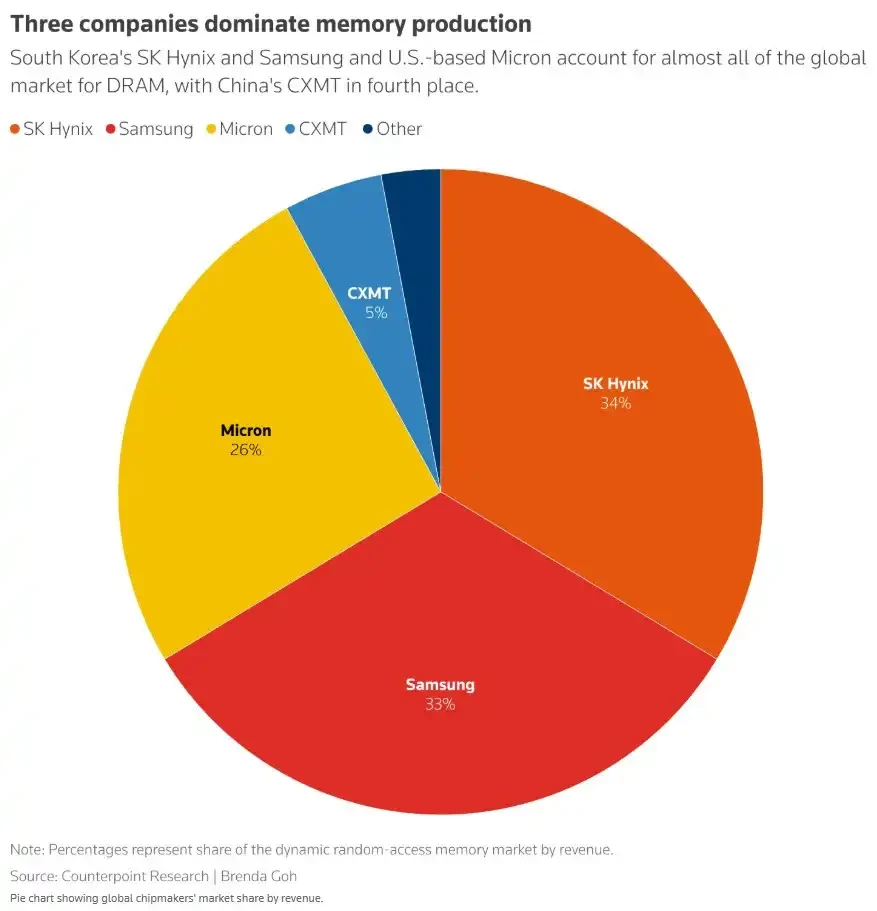
Leading companies in the global memory production field, CXMT ranks fourth globally, behind Hynix, Samsung, and Micron. Source: Reuters
Suddenly, CXMT has become the darling of almost all major domestic and international companies.
How did CXMT go from zero to fourth globally? How much of its current profit is due to strength, and how much is luck? Can its trillion-yuan valuation hold?
CXMT's Precursor: GigaDevice
The origin story of CXMT must begin with why China has always lacked DRAM.
There are many types of memory chips. NAND Flash stores data even when power is off, used in mobile hard drives, SSDs, and USB drives; DRAM is runtime memory, data disappears when power is off, but it's fast, acting as the workbench next to CPUs, GPUs, mobile SoCs, and AI accelerators.
Both NAND and DRAM are commodity semiconductors, but DRAM is more like a steel mill combined with high-precision manufacturing. Each generation of process technology pushes capacitors, transistors, word lines, and bit lines to their limits, replicating billions of highly uniform cells on a single wafer. A slight deviation leads to plummeting yields and soaring costs. When costs explode during a memory downturn, money flows out like water.
This is why the DRAM market ended up with only three giants: Samsung, SK Hynix, and Micron. This table isn't one you can easily join just by having a "tech team." You have to survive price wars, capacity wars, patent wars, equipment restrictions, and customer certifications over a cycle of more than a decade.
CXMT was launched around 2016 and established in Hefei. Its key figure is Zhu Yiming.
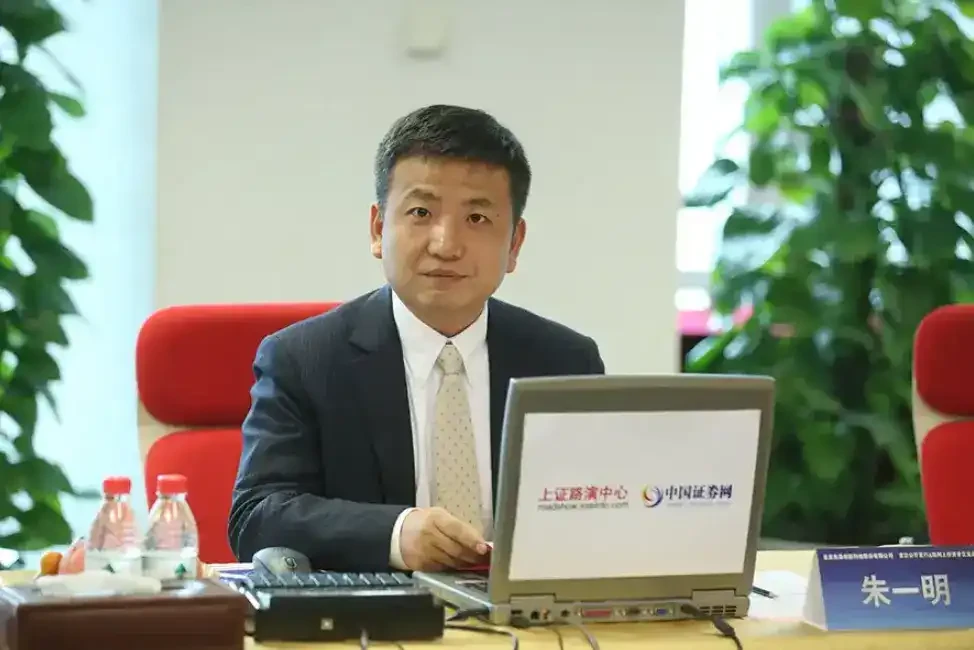
Photo of Zhu Yiming at a meeting
The name Zhu Yiming is not unfamiliar in China's semiconductor circle.
Born in 1972, Zhu Yiming is somewhat of a prodigy. He was admitted to the Physics Department at Tsinghua University at the age of 17. Although he studied physics, he was highly skilled in programming. By writing programs for other companies, he could earn over 300,000 yuan a year in the late 1990s. During this work, he learned that chips were all designed by the US. Believing chip technology to be more advanced, he went to the US to study electronic engineering and worked in Silicon Valley after graduation.
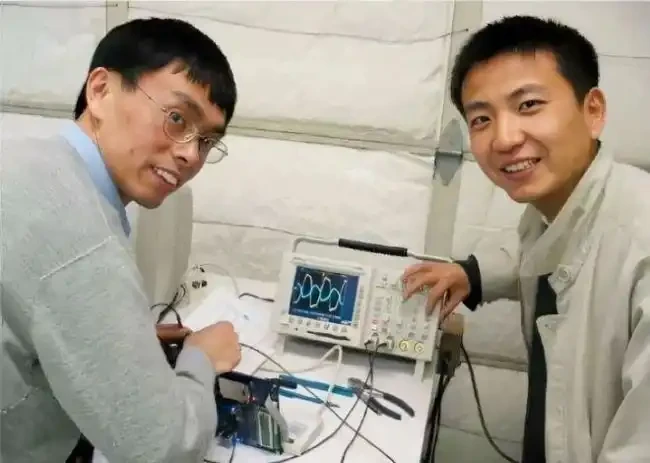
Early photo of Zhu Yiming (right)
In Silicon Valley, Zhu Yiming noticed that the storage industry had shifted from the US to Japan, and then to South Korea and Taiwan. He judged that mainland China also had a great opportunity in the future, and it was not impossible for a "Chinese version of Samsung" to emerge. He designed an SRAM (Static Random Access Memory) chip. In 2005, he returned to China to found a company called GigaDevice.
From its inception, GigaDevice was a pure design company; it didn't manufacture chips itself. All wafer fabrication was outsourced to foundries. Its main products were NOR Flash (memory chips for routers, gaming console boot programs) and MCUs (microcontrollers for refrigerators, washing machines). Zhu Yiming led his team to create China's first static memory and IP technology, first serial flash product, and first 32-bit general-purpose MCU based on the ARM Cortex-M3 architecture. By its IPO in August 2016, it was already mainland China's largest code flash memory chip design company, with revenue growing from 1.489 billion yuan in its IPO year to 9.203 billion yuan.
Light assets, high margins, no need to build your own factory. This was the smartest survival strategy for China's IC design industry at the time.
But this model had one prerequisite: ample foundry capacity and stable prices. In the second half of 2020, Zhu Yiming hit a roadblock. SMIC's 8-inch capacity became extremely tight. GigaDevice was forced to shift some NOR Flash orders to Hua Hong Semiconductor's 12-inch fab, incurring higher foundry costs. In Q4 2020, gross margin plummeted from a previously stable 37%+ to 29.49%. The consequence of the foundry capacity bottleneck directly impacted the profit and loss statement for the first time.
Around the same time, GigaDevice was also paying the price for another acquisition. In 2019, it acquired Shanghai Sinosun for 1.7 billion yuan, a 16x premium, creating 1.305 billion yuan in goodwill. Sinosun made under-screen fingerprint chips. Zhu Yiming wanted to combine memory, controllers, and sensors into three product lines to form a platform-based design company. However, SinoSun was sued by Goodix for patent infringement, leading to a price war. SinoSun only met 58% of its three-year performance commitment. From 2020 to 2023, GigaDevice booked goodwill impairment for Sinosun for four consecutive years, totaling about 900 million yuan, consuming most of the 1.3 billion goodwill. The strategy of acquiring another design company horizontally to expand product categories also proved unviable.
The lesson Zhu Yiming learned from these two events was: the ceiling for a light-asset design company isn't design capability, but production capacity. Furthermore, the real main battlefield for memory chips isn't in NOR Flash, a category representing only 2.5% of the global market, but in DRAM. However, DRAM can't be produced at generic foundries like NOR Flash. DRAM processes are highly proprietary. Each manufacturer's cell structure, capacitor design, and word line lithography are customized. Samsung, SK Hynix, and Micron all operate under an integrated design-manufacturing model. To do DRAM, there's only one path: build your own fab.
This is the background and reason for the birth of CXMT.
After BOE and NIO, Hefei's Third Big Bet
GigaDevice's financials and shareholder structure couldn't support the investment scale required for building a DRAM fab. After all, Phase 1 cost 18 billion yuan, with total investment exceeding 100 billion yuan, and continuous losses for nearly a decade. This money had to come from another kind of capital.
In 2016, the Hefei government extended an olive branch.
The market often calls Hefei the "city best at venture capital." Hefei's most famous VC success story is BOE. The starting point for BOE, the world's largest LCD panel shipper with annual revenue over 200 billion yuan and Chinese panel makers controlling 70% of the global LCD market, was in Hefei.
In September 2008, BOE and Hefei signed a framework agreement for a Gen 6 line investment. The total project investment was 17.5 billion yuan. The registered capital of 6 billion yuan was contributed by the Hefei side, injected through a BOE private placement, and then all invested in the project company. Instead of just giving BOE a simple subsidy, Hefei used local government platforms for controlling stakes, advanced funding, provided loan interest subsidies, and land/energy support, shouldering BOE's most difficult construction period. And by clustering around BOE, Hefei attracted glass substrates, polarizers, driver chips, and equipment materials, earning the city label of "Capital of New Displays."
The second typical story is NIO. In April 2020, NIO had just crawled out from the brink of death in 2019. Hefei Construction Investment and Anhui Emerging Industry Investment invested a total of 7 billion yuan in cash into NIO China. NIO China's headquarters was established in the Hefei Economic and Technological Development Zone. Later, NIO became one of the representative brands for high-end electric vehicles in China, with a market cap once exceeding 100 billion USD.
Find heavyweight asset leaders, use transaction structures replacing simple subsidies, help companies survive the construction period, and then use the leader to pull the upstream and downstream supply chain to establish roots locally.
In 2016, Hefei applied the same investment logic and placed its next big bet.
Yuan Fei, an early core figure at Hefei Industry Investment Group, later said, "Whether it was Hefei Industry Investment or the industrial side, everyone involved early on with CXMT bore unprecedented risk and pressure."
After all, DRAM is harder than panels or vehicles, with higher risks in technology, equipment, yield, patents, and export controls. But from a local industrial organization perspective, like BOE and NIO, it consumes money in the short term, but if successful in the long run, it would significantly alter the supply-demand dynamics of an entire industrial chain.
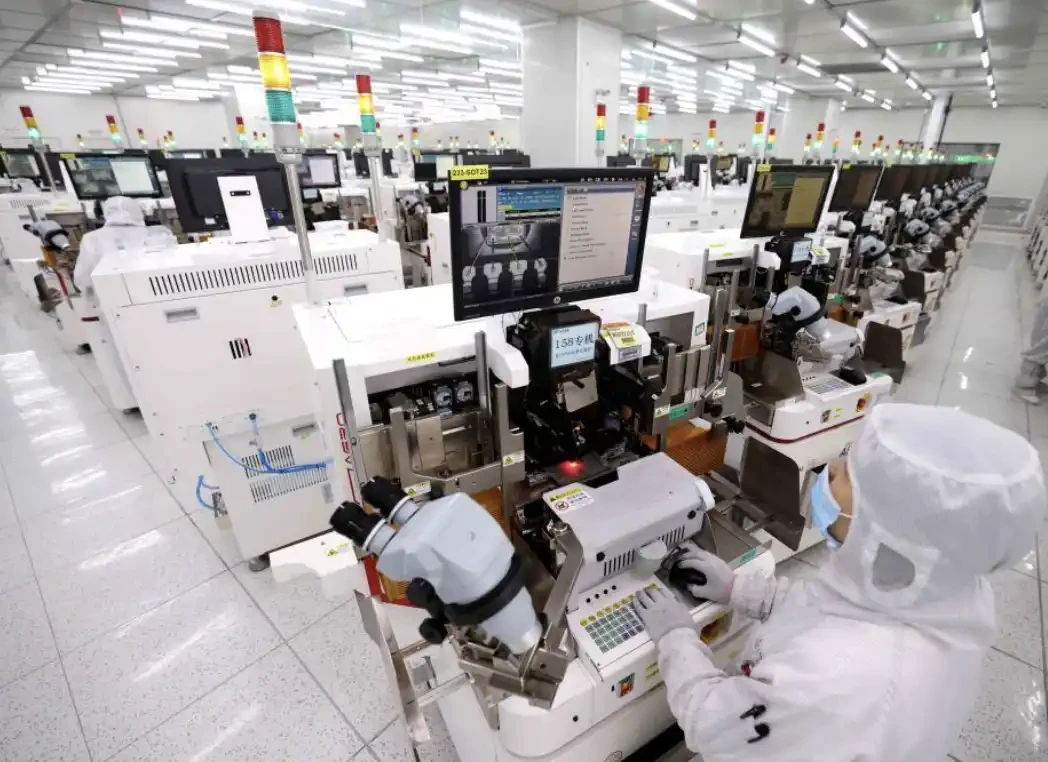
Anhui Hefei promotes the integrated circuit industry
Hefei Industry Investment Group contributed 14.4 billion yuan in CXMT's Phase 1 alone, with total project investment exceeding 100 billion yuan.
In July 2018, GigaDevice announced: Zhu Yiming resigned as General Manager, retaining only his Chairman role, and officially became Chairman and CEO of CXMT. The industry called this Zhu Yiming's "second startup."
The current shareholder list already shows the hand in this gamble. The top five shareholders are: Qinghui Jidian 21.67% (fully controlled by Hefei state assets), CXMT Jicheng 11.71%, Big Fund Phase II 8.73%, Hefei Jixin 8.37%, Anhui Investment Group 7.91%. Hefei state assets hold a combined stake exceeding 36%.
Among other shareholders, Alibaba Cloud holds 3.85% (bought in for 6.1 billion yuan, implying a valuation of 158.4 billion yuan), and GigaDevice holds 1.8%. The investor list also includes China Structural Reform Fund, CICC Capital, Legend Capital, China Merchants Capital, Yunfeng Capital, Tencent, and Alibaba.
The money and momentum were in place. But Zhu Yiming's "second startup" still lacked one thing: core technology.
The Technological Legacy of a Bankrupt German Company
Around 2016, the three giants Samsung, SK Hynix, and Micron collectively controlled over 90% of the global DRAM market share, the result of a decade-long knockout competition.
The DRAM industry has been eliminating players every few years since the 1980s.
Japan once held over 80% of global DRAM production capacity, but by the 2010s, only Elpida was left struggling, eventually being acquired by Micron in 2012. Europe once had Infineon's subsidiary Qimonda, but it went bankrupt in 2009.
Zhu Yiming's solution lay hidden within this German company that had already gone bankrupt in 2009.
The name Qimonda comes from two words. "Qi" is Chinese for "energy," the flowing vitality. "Monda" is Latin for "world." Literal meaning: the key to opening the world.
The name was beautiful. The company's fate was tragic.
Qimonda was spun off from its parent company Infineon in May 2006 and listed on the NYSE on August 9, 2006, under the ticker QI. At its IPO, it was already one of the world's leading suppliers of memory products and a leader in 300mm wafer manufacturing technology. By 2008, Qimonda had completed development of its 46nm stacked process product based on Buried Word Line, offering 100% capacity improvement over the previous 58nm generation, just short of mass production.
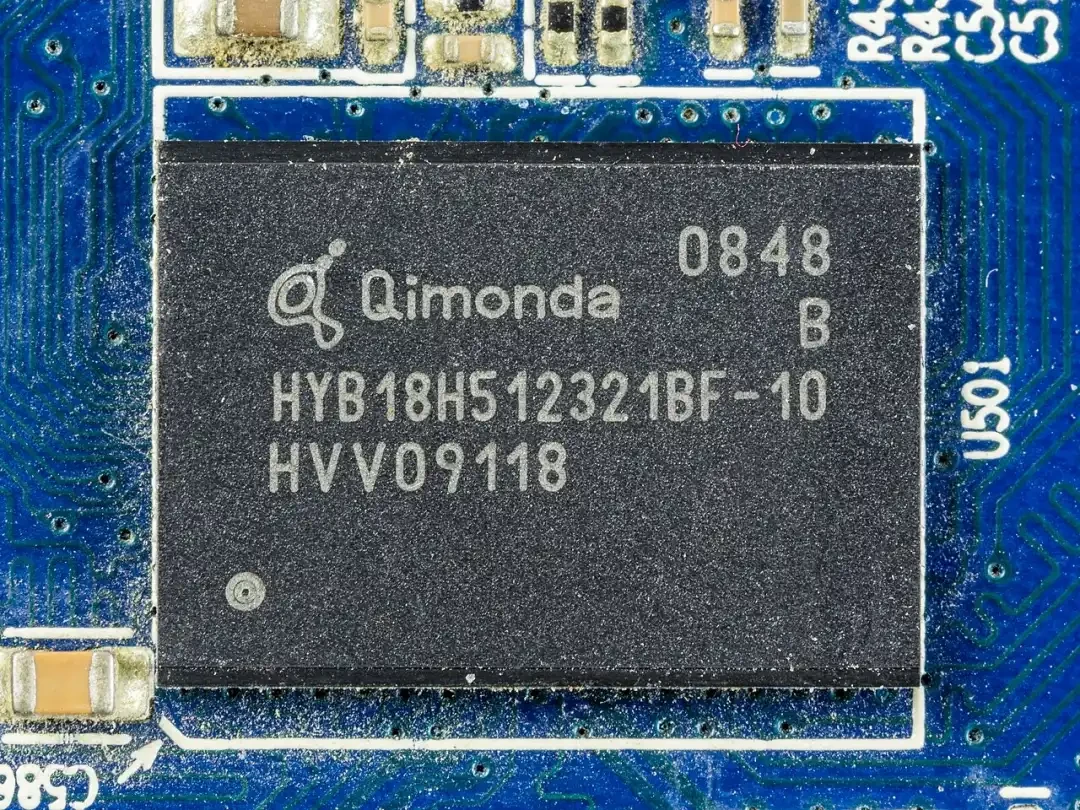
Qimonda DDR2/GDDR chip product image
But the financial crisis hit. DRAM prices fell off a cliff. Samsung aggressively expanded capacity at a loss to pressure competitors. Qimonda's new technology hadn't reached mass production yet, and its cash flow dried up. It went bankrupt in 2009. The lights went out for Europe's last major memory manufacturer. The Munich R&D center emptied, 12,000 employees scattered, absorbed by Samsung, Micron, and SK Hynix. In 2012, Qimonda's bankruptcy administrator began selling off 7,500 patents.
Zhu Yiming saw his opportunity in this history.
Qimonda died from the cycle, not from its technology. The 2.8TB of technical documents and tens of thousands of patents it left behind were a legacy frozen for nearly a decade. Traces of Qimonda's buried word line and honeycomb capacitor structures can actually be found in the DRAM products of Samsung, Micron, and SK Hynix today, indirectly flowing into the giants' process systems through partners like Inotera (Nanya) and Winbond.
But how to acquire this legacy and use it to build a fab was a massive problem, with a bloody lesson preceding it.
2016 is considered the "first year" for the resurgence of memory in China. Before that, China's DRAM industry had completely declined, facing technological monopolies from foreign companies like the US and South Korea, with China having no power to fight back.
At that time, when China initiated the national memory team, besides CXMT, there were two parallel paths: Yangtze Memory Technologies Corp (YMTC) for NAND Flash in Wuhan, and Fujian Jinhua Integrated Circuit Co. (JHICC) for DRAM.
In 2017, Micron sued UMC and JHICC simultaneously in the US and Taiwan, alleging that three employees who moved from Micron to UMC had stolen Micron's DRAM trade secrets, with one accused of stealing over 900 technical documents. In October 2018, the US Department of Commerce placed JHICC on the Entity List due to national security concerns, imposing export controls. UMC immediately announced a suspension of technical cooperation with JHICC. Equipment supply was cut off, technical cooperation frozen, and the project halted. The US Department of Justice also filed criminal charges against JHICC and UMC for economic espionage, facing potential fines of over 20 billion USD. It wasn't until the end of 2023 that Micron and JHICC reached a global settlement, with this dispute lasting six years.
The lesson from Fujian Jinhua was clear: Getting embroiled in trade secret disputes related to Micron leads to being placed on the Entity List, equipment cutoffs, and project shutdowns. A new DRAM company stepping on IP landmines would find commercial customers afraid to use its products, equipment suppliers afraid to supply, and international markets crippled by lawsuits.
So when Qimonda's bankruptcy administrator began selling the 7,500 patents, Zhu Yiming acted quickly, acquiring over 10 million DRAM technical documents (about 2.8TB of data


