






汇旺倒台7个月后,东南亚担保平台大洗牌


- 核心观点:汇旺支付倒闭后,东南亚非法担保平台市场并未消亡,反而由“新币、金贝、达利、福利来”等平台接力,继续为网络诈骗、人口贩卖和洗钱等黑灰产提供金融中介服务,形成规模更大、更隐蔽的地下金融网络。
- 关键要素:
- 汇旺集团覆灭:汇旺因太子集团被美国司法部打击而倒闭,其累计接收超240亿美元加密资金(UNODC数据),金主陈志名下127万枚BTC被没收,90万用户资金被套。
- 新币平台崛起:新币担保自2022年成立以来,总收入已超16亿USDT,其自研支付工具Newpay被用于洗白被盗加密资产,是潜在接替汇旺的最大平台。
- 领航/老虎担保涉人口贩卖:该平台公开为“强押车(绑架)”交易提供担保服务,5个月内流入押金超1亿美元,实际资金量远超此数,与跨国人口贩卖直接相关。
- 金贝/金博脱胎于赌场:原由太子集团创始人及柬埔寨权贵创立,主攻网络博彩担保,被制裁后更名运营,旗下多数园区仍可运作。
- 达利与福利来继承份额:汇旺旗下土豆担保停兑后,达利担保的OkPay及福利来的FullyLight Wallet承接了大量用户,三家支付工具在一年内收取资金超48亿USDT。
- 整体规模远超传统暗网:仅汇旺担保市场累计收款超310亿美元,汇旺支付处理超1030亿美元加密货币,使其成为有史以来规模最大的在线非法市场。
Original|Odaily Planet Daily (@OdailyChina)
Author|Wenser (@wenser 2010 )
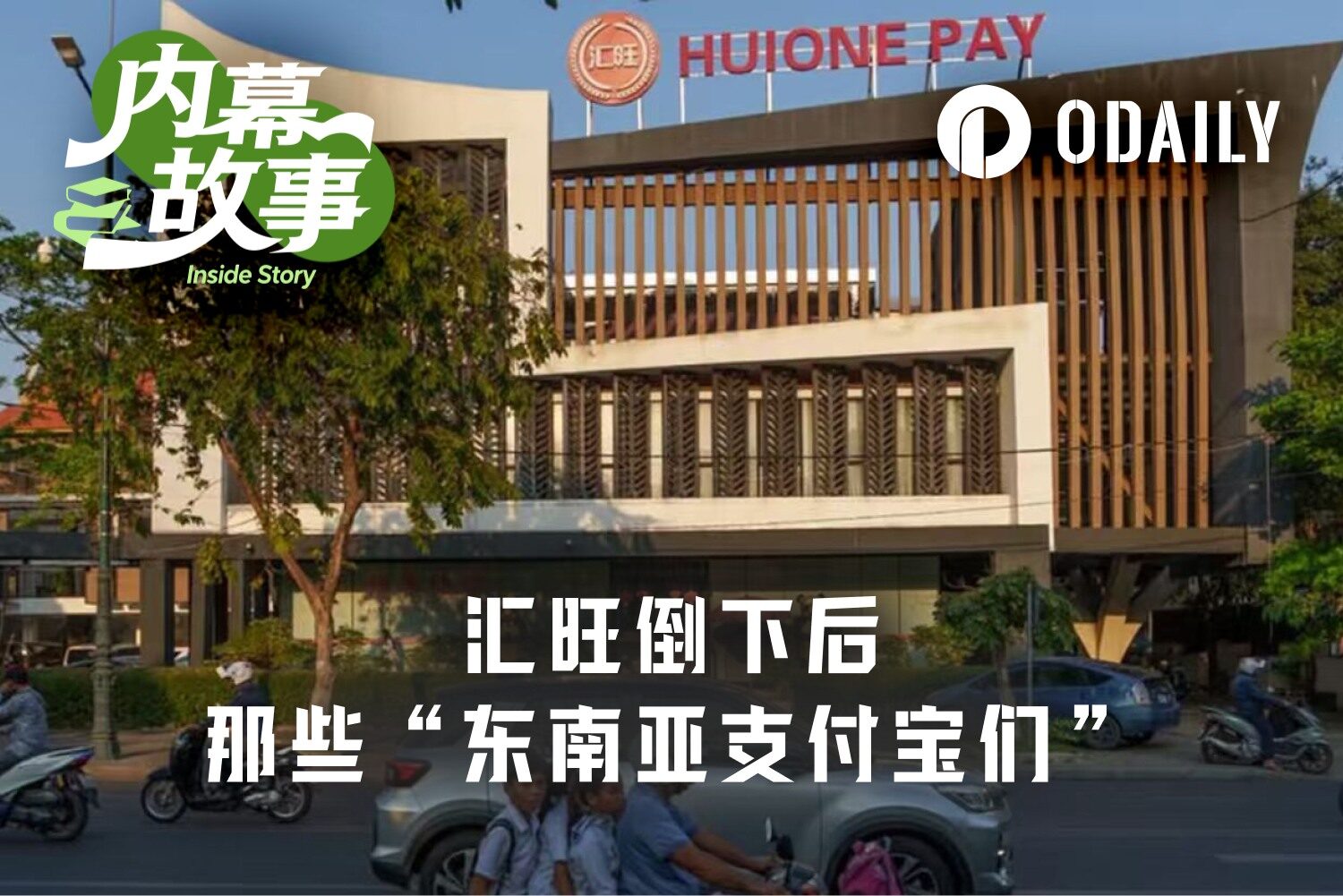
On December 1st last year, Huione Pay, often dubbed the 'Southeast Asian Alipay,' officially collapsed.
Since then, the era of the 'Southeast Asian Free Finance System' has definitively come to an end. Unexpectedly, the 'war of escrow platforms' did not conclude; instead, it sparked a new round of territorial expansion. More escrow platforms rose to seize the opportunity, absorbing the users and market share left behind by Huione, thus unveiling another grand drama interwoven with elements like 'finance and freedom, illicit activities and money laundering, trust and escrow.'
Today, escrow platforms such as XinBi, JinBei, Dali, and Fulaile have gradually stepped into the spotlight, inheriting the mantle of Huione. On one hand, they facilitate illicit activities and money laundering operations; on the other, they continue to play the business role of a 'trust intermediary.'
In Southeast Asia, a region characterized by both openness and conservatism, another storm involving money, dreams, and danger has begun.
The Fall of Huione: $15 Billion in BTC Seized by the US, 900,000 Users Left Empty-Handed
Four years ago in 2021, Huione was merely an unremarkable currency exchange platform in Cambodia, with an early peak business throughput of around $2-3 billion. Four years later, this currency exchange platform had quietly transformed and expanded into an underground financial empire centered around its escrow platform, handling tens of billions of dollars. According to the UNODC May 2025 report, it cumulatively received over $24 billion in crypto funds. Supporting this system were 900,000 registered users, 9,289 public Telegram groups, and the gray and black industry network behind these groups, woven from scam compounds, human trafficking, and romance scams.
Behind this vast network of interests stood the de facto controller of the Prince Group, Chen Zhi. In October 2025, the U.S. Department of Justice and Treasury filed criminal charges against Chen Zhi and issued a global wanted notice, seizing 127,000 Bitcoins under his name (worth approximately $15 billion at the time), setting a record for the single largest seizure of crypto assets in U.S. judicial history. The Prince Group thus became a thing of the past. (Recommended reading: '$15 Billion BTC Changes Hands: U.S. Justice Department Wipes Out Cambodia's Prince Group, Turning into the World's Largest BTC Whale'.)
The downfall of the Prince Group almost immediately impacted Huione. With its biggest financial backer and liquidity provider gone, Huione's capital chain collapsed. On December 1, 2025, Huione announced a delay in redemption payouts. Two days later, the National Bank of Cambodia claimed its license had been revoked as early as 2024 and the company had been liquidated. The bustling offline scene of 'issuing over a thousand queue numbers daily, with people lining up to withdraw cash' ultimately turned into mere numbers on ledgers, ranging from thousands to hundreds of thousands of dollars, forever unwithdrawable.
Some gray industry practitioners lamented that taking down Huione was like 'shaking the very foundation of Cambodia's gray industry.' But beneath that foundation, new escrow platforms were already growing like weeds in the dark.
After Huione, Who Are the Contenders for 'the Next Southeast Asian Alipay'?
As early as May 14, 2025, security firm Elliptic pointed out in a report that Telegram had banned thousands of groups and channels related to 'XinBi (XinBi) Escrow' crypto crimes. The platform had processed over $8.4 billion in suspicious transactions by 2024, placing it alongside the Huione group as the 'largest crypto black market.'
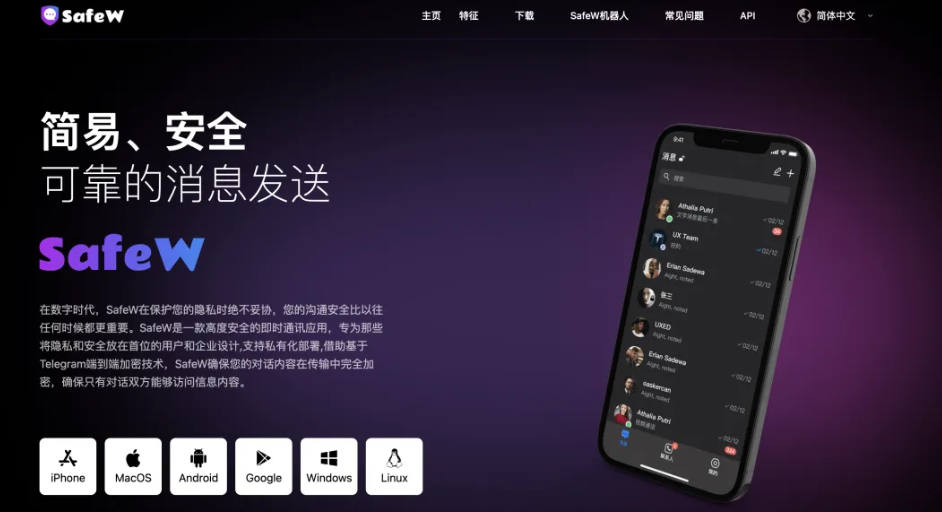
After Huione's collapse, XinBi and many other second-tier escrow platforms became more cautious, hiding their escrow operations behind various proprietary platforms.
XinBi: The Most Likely Candidate to Become the 'Second Huione,' with Total Revenue Exceeding $1.6 Billion
In early July this year, a case involving the theft of $1.7 million in user assets from a crypto exchange brought XinBi back into the public spotlight.
Security firm Bitrace, through a series of on-chain investigations, discovered that the attacker, after extracting the victim's funds, transferred the stolen money in multiple transactions to the same Newpay platform user address. It is understood that this entity is a crypto payment tool launched by XinBi Escrow, formerly known as Xinbi Wallet, a no-KYC Telegram Bot-based payment tool from 2025 (Odaily Planet Daily Note: After the Xinbipay, a self-developed application by XinBi, channel was shut down, users were migrated to mobile apps, and it was later renamed Newpay to evade regulation).
According to Bitrace monitoring, the XinBi escrow platform, established in 2022, has amassed total revenue exceeding 1.6 billion USDT. Its business growth accelerated particularly rapidly after the collapse of the Huione group.
Linghang/Tiger Escrow: An Escrow Platform for 'Human Trafficking' Under the Guise of 'Overseas Labor Dispatch'
Among the leading escrow platforms in Southeast Asia, Linghang Escrow is the only one operating 'public group and dedicated group services for overseas labor dispatch' (Odaily Planet Daily Note: Public groups refer to open groups providing long-term transaction escrow services; dedicated groups refer to private groups providing temporary transaction escrow services, similar to large and small groups within WeChat). The platform explicitly states that it provides escrow services for 'Qiangya vehicle transactions' (Odaily Planet Daily Note: Qiangya is industry jargon for kidnapping).
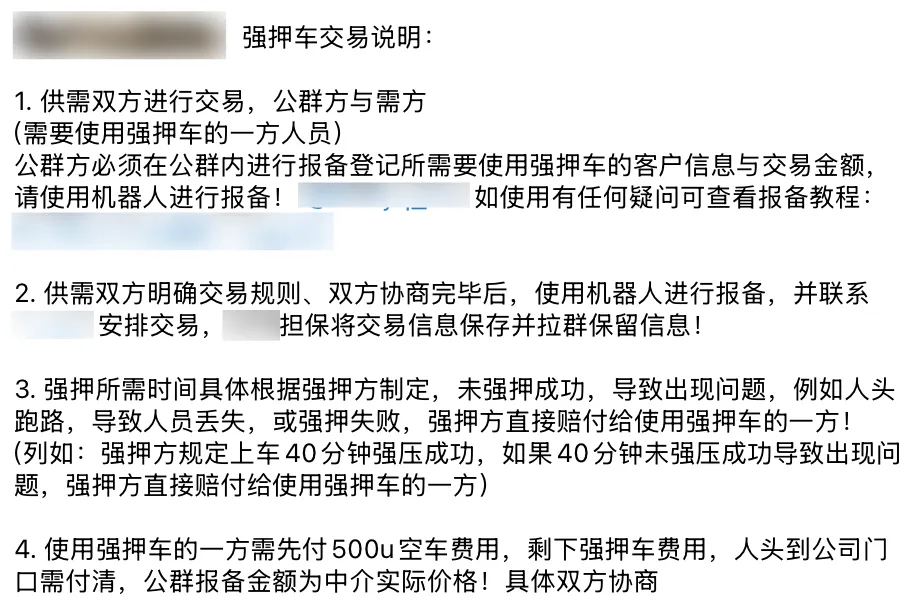
According to Bitrace monitoring, a pledge address for one of Linghang Escrow's dedicated groups was activated on February 23, 2025. In less than five months, it received over $100 million in USDT. This is merely the deposit submitted by merchants operating the 'Qiangya vehicle escrow business' under Linghang Escrow to the dedicated group address. Within this deposit cap, merchants can repeatedly execute the business. The actual transaction volume and funds related to transnational human trafficking in Southeast Asia are far larger than this figure.
JinBei/JinBo: An Escrow Platform Focused on Online Gambling
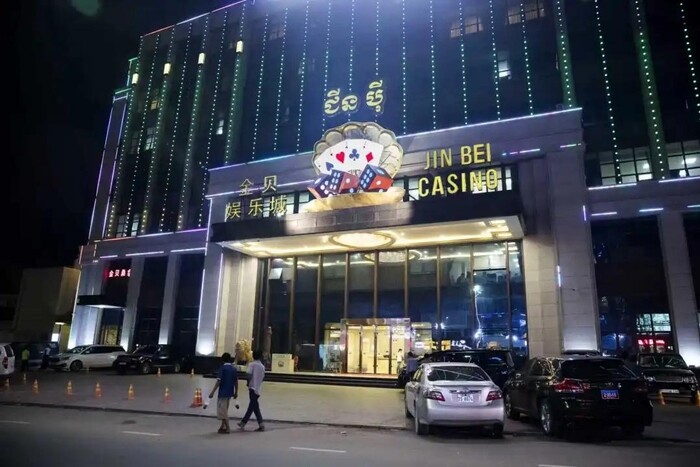
This platform was initially established by Prince Group founder Chen Zhi in partnership with children of Cambodian government officials. Its full name is Jinbei Cambodia Investment Co., Ltd. To avoid suspicion, the company is said to be closely tied to Chen Zhi's casino operations in Sihanoukville, Cambodia, thus primarily focusing on escrow services related to online gambling.
Due to events like the downfall of the Prince Group, JinBei also faced U.S. government sanctions earlier. Last year, the Cambodian Gambling Commission and police took action, cracking down and shutting down some of JinBei's casinos. However, according to sources who later spoke out: "Only JinBei 1 and JinBei 3 casinos were closed; the six affiliated compounds under JinBei continue to operate normally." Currently, JinBei has been renamed to JinBo Escrow Platform.
Dali/Tiancheng Escrow: Inheriting Huione's Toudou Escrow Business
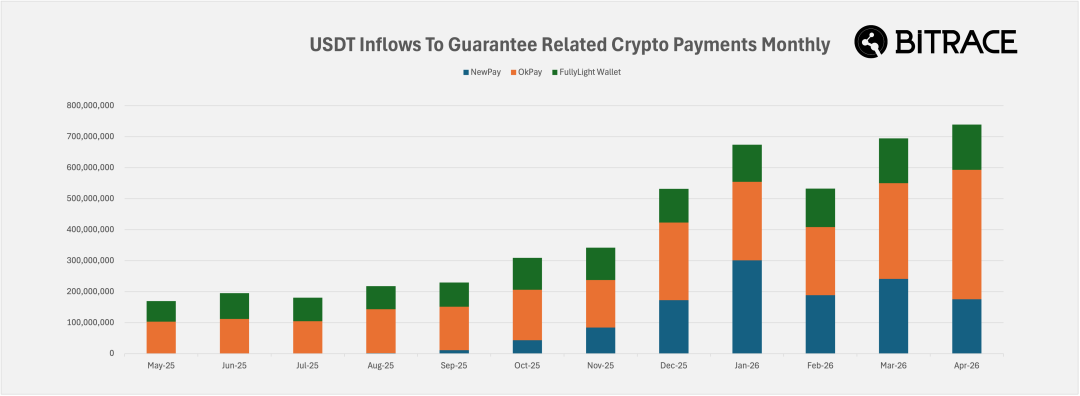
According to Bitrace monitoring, after Toudou Escrow and Huione (Haowang) Pay ceased payouts, the user base of XinBi Escrow, Dali Escrow, Fulaile Escrow, and their payment tools all saw significant increases. Dali Escrow's affiliated OkPay inherited a large number of public groups from Toudou Escrow, experiencing the largest growth.
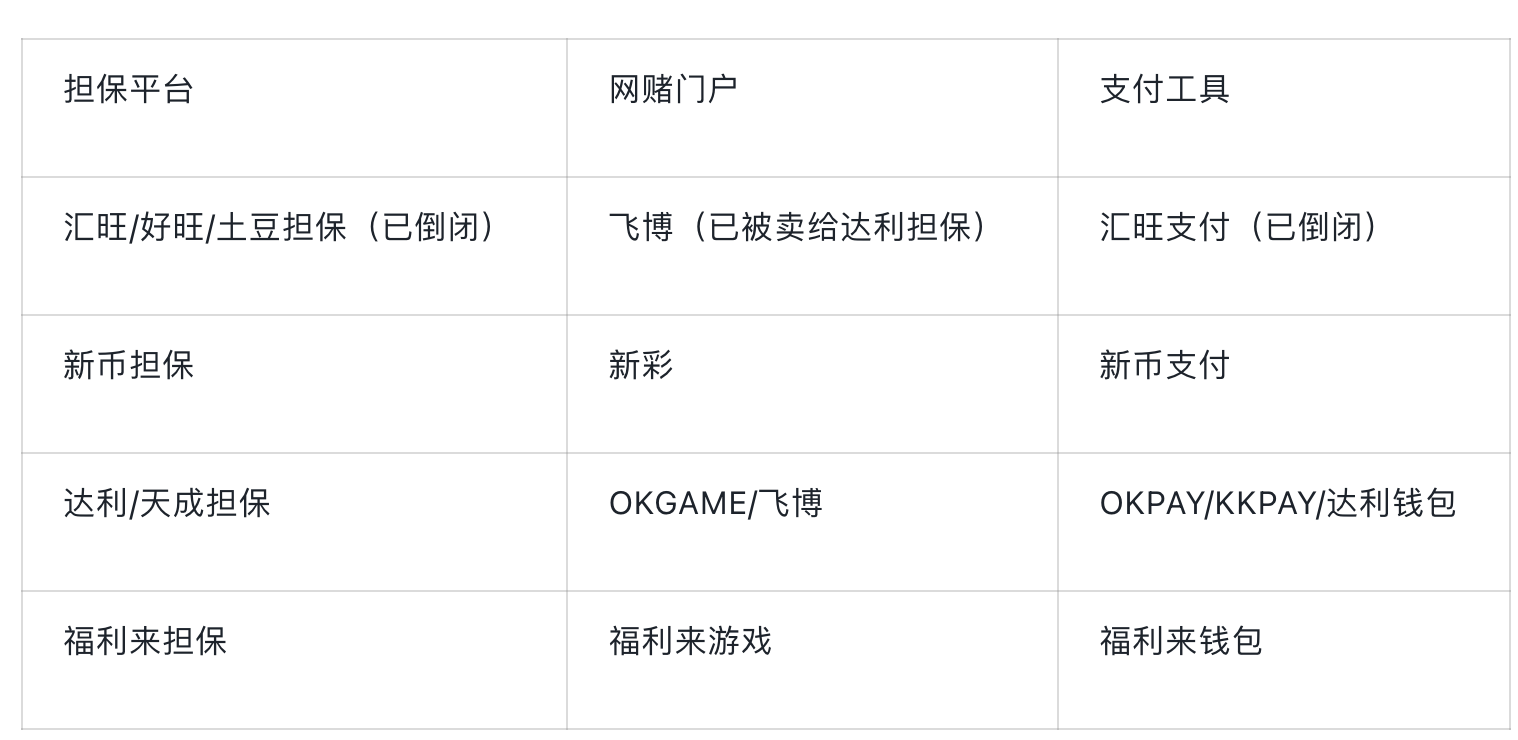
According to statistics, between May 2025 and April 2026, the three payment tools NewPay, OkPay, and FullyLight Wallet collectively received over 4.8 billion USDT in funds. Currently, Dali Escrow primarily operates under the name Tiancheng Escrow.
Fulaile Escrow: An Industrial Park Chain of One of the Four Major Families in Northern Myanmar
In 1996, after accumulating initial capital through drug trafficking in the early years, Liu Zhengxiang (formerly Liu Abao) founded the Fulaile Group in the Kokang Self-Administered Zone of Myanmar. Later, the group's business expanded to cover multiple sectors including cultural tourism, hotels, real estate, and entertainment, gradually becoming the core enterprise of the Liu Abao family and propelling it to become 'one of the Four Major Families in Northern Myanmar.'
In 2025, the Ministry of Public Security cracked down on the Liu family criminal syndicate case. The investigation eventually confirmed that the family's fraudulent funds involved over 2.6 billion yuan, gambling funds exceeded 8 billion yuan, extortion amounts totaled over 17 million yuan, and illegal proceeds from organized prostitution were over 16 million yuan.
It is worth noting that Fulaile Escrow primarily served major local scam compounds, established to meet the latter's 'labor demands.' Currently, this follows the dismantling of the Liu family criminal organization.

When Escrow Platforms Become Intermediaries for Crime, the 'Southeast Asian Alipay' is Just a Facade
In June this year, during 'Operation Riptide' conducted by Elliptic in coordination with the FBI, updated data on the Huione platform was released. Among this data, Huione Escrow's market cumulative funds received exceeded $31 billion; Huione Pay processed over $103 billion in cryptocurrency payments. Huione Escrow became the largest online illegal market ever operated, far surpassing previous giants like the Silk Road ($216 million), AlphaBay (over $1 billion), and Hydra (over $5 billion).
Looking back at the five escrow platforms mentioned above, they represent just an obscure corner of Southeast Asia's 'distorted financial ecosystem,' largely unknown to the public. In this rapidly developing region that lacks adequate infrastructure and institutional preparation, financial services have become breeding grounds for crimes such as human trafficking, scam compounds, romance scams, and online gambling.
The so-called 'Southeast Asian Alipay' is merely an ironic label from the outside world, not a business achievement.
Right now, they may be enjoying the glory of earning millions daily, but justice will not be denied.
References:
Behind the $15 Billion: The Rise and Fall of a Telecom Fraud Empire
2026 Illegal Cryptocurrency Transaction Escrow Platform Investigation Report By Bitrace


