泡沫褪去,谁在统治 AI 时代的注意力?2026 中英 AI KOL 影响力图鉴


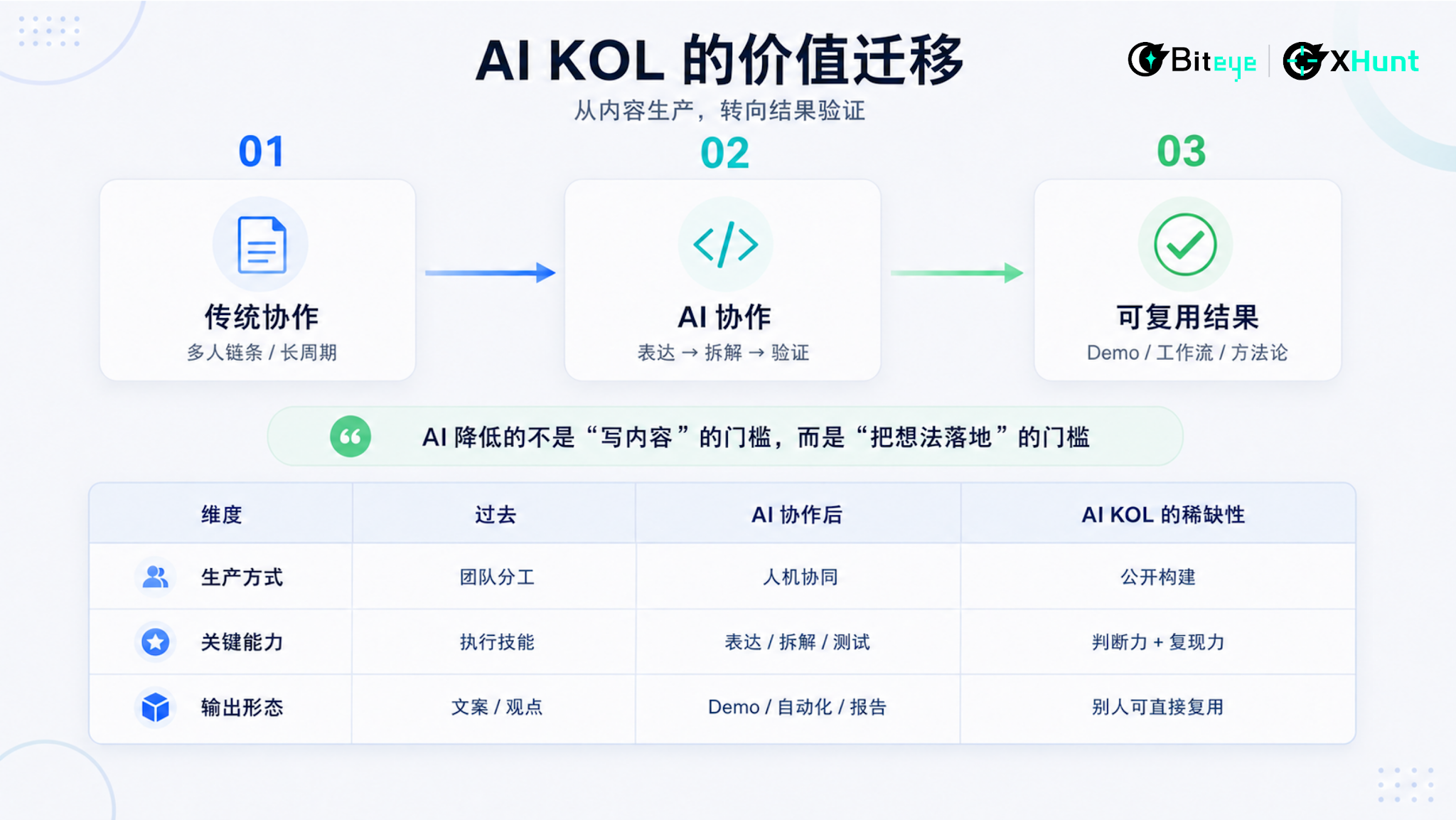
- 核心观点:AI时代,通识性信息快速贬值,真正的稀缺资源是“信任”与“可验证的生产能力”。AI KOL正从信息分发者转变为生产力赋能者,其价值锚定于可复现的实操能力和持续公开的验证结果。
- 关键要素:
- 注意力风向逆转:用户需求从“发生了什么”转向“是否重要”和“如何使用”,实操型、评测型内容更受青睐。AI KOL通过公开构建(Build in Public)的方式,将技术转化为可用场景来建立信任。
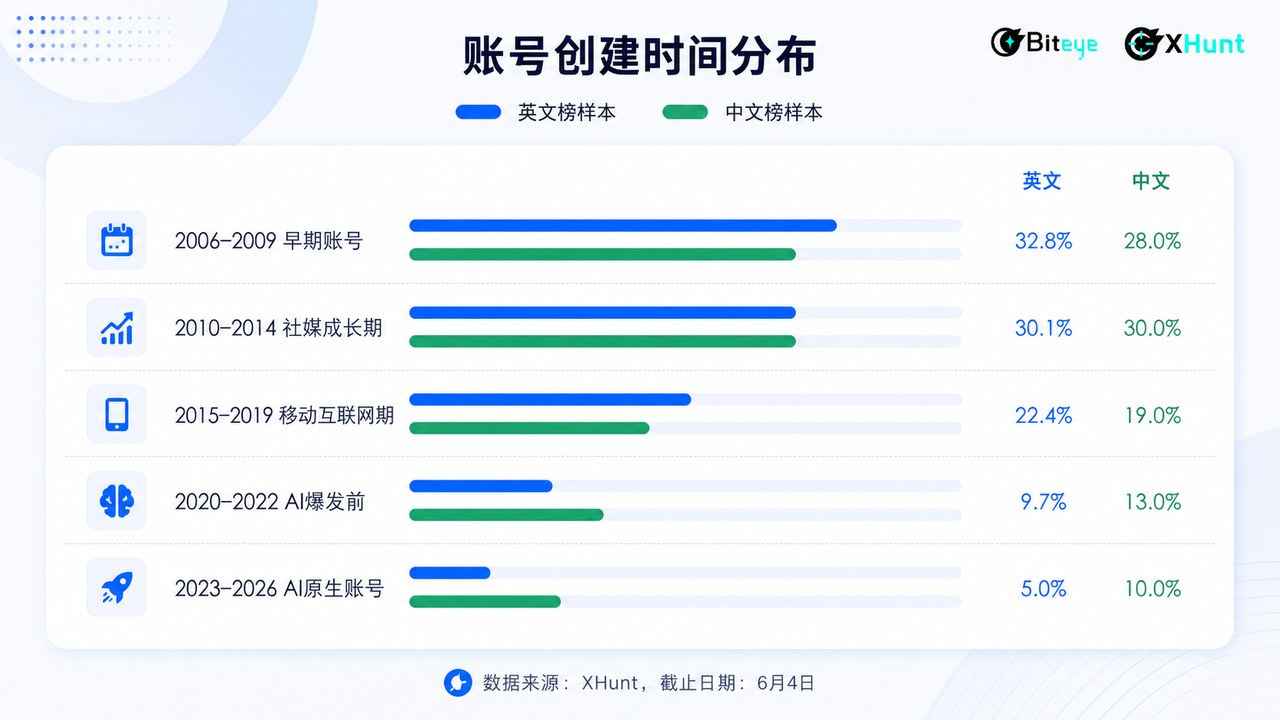
- KOL代际分化:英文区多为2007-2015年注册的资深从业者(占比62.9%),偏重技术源头和宏观叙事;中文区新兴账号(2022-2023年注册)占比达13%,偏重应用落地和实操教程,社区连接更紧密。
- 大模型使用偏好:Claude和GPT是中英文双语的“大小王”,但中文区对AI编程工具(如Codex)的提及率高达80.9%,体现了对落地工作流的狂热。国产模型DeepSeek(68.1%)和Kimi(58.5%)本土渗透力强。
- 能力雷达差异:英文KOL聚焦多模态(88.3分)、基础模型等技术洞察;中文KOL在AI编程(88.9分)和智能体(87.1分)方面领先,侧重全栈应用实操能力。
- 变现逻辑本质不同:与依赖消息和财富效应的Web3 KOL不同,AI KOL的核心资产是“信任”和“方法”,通过分发可验证的生产能力来凝聚生态。
Original Authors: Alan, Amelia | Biteye Content Team; Denise | XHunt Operations Team
In the summer of 2026, social media feeds are refreshing in milliseconds. One moment, a large language model releases an update; the next, tens of thousands of "in-depth interpretations" flood the timeline.
An independent developer told us that his first task upon waking is no longer scrolling through his timeline but quickly scanning a few familiar avatars to see what new creations they Vibe Coded last night.
"I only trust people who have actually done it," he said.
This seemingly paranoid trust points to a truth most overlook:
In an era of rapid advancements in large language model technology, general information itself is rapidly depreciating.
Traditional tech media accounts that relied on reposting news flashes, translating foreign announcements, or simply piecing together news are gradually losing their audience's patience. The truly scarce resource is no longer "who said what first," but "who can tell me if this is reliable and how I can use it."
To uncover the operational logic of this hidden circle, we leveraged the exclusive data and capability model of the social analysis tool @xhunt_ai to conduct an in-depth analysis of tens of thousands of tweets from nearly 400 top AI KOLs in both Chinese and English ecosystems.
Our finding: Opinion leaders in the AI era are undergoing a profound transformation from "information intermediaries" to "productivity enablers."
I. Core Finding: From Distributing Opinions to Distributing Productivity
In the traditional internet context, an individual with a brilliant idea needed to mobilize a complex chain of human resources—backend, frontend, UI, product managers, etc.—to bring it to life. Such a lengthy collaboration process often dulled most of the initial enthusiasm. Today, AI tools have rapidly compressed this production chain. Codex, Claude Code, Cursor, and Lovable transform coding barriers into logic and architectural capabilities; Seedance, GPT Image, Kling, and Nano Banana directly remove the complexities of image and video creation.
However, this has led to a counter-intuitive industry phenomenon: when anyone can use AI to mass-produce lengthy articles, high-quality content becomes "cheap" and readily available, making trust paradoxically scarce than ever.
The core value of an AI KOL lies not in their ability to get AI to churn out a generic article faster than the average person. Rather, it resides in their capacity to be the first to use human-machine collaboration to translate ambiguous AI usage capabilities into tangible, runnable, and directly replicable results for others. This is no longer distributing opinions; it's distributing productive capacity.
For example, when a new model claiming to "defeat Claude Opus 4.7" is released, users are tired of uniform press releases. They are eager to know from trusted KOLs: "Will it hallucinate in real code development? Is this product, dazzling in its official polished video, truly an out-of-the-box productivity tool for ordinary people?"
The direction of attention has reversed: from "what happened," to "is it important," and then to "how to use it."
In a noisy environment, AI KOLs act as pragmatic pioneers and anchors of trust.
II. Who Fills This Role: Tech Veterans and a New Generation Blue Ocean
A common industry bias suggests: "Most AI KOLs are marketing accounts that rode the wave after the ChatGPT explosion in late 2022." However, generational statistics on account registration dates from XHunt disprove this claim: the generational structure of AI KOLs follows an inverted pyramid distribution.
- Dominance of Senior Practitioners: In the English ranking, early adopters registered between 2007 and 2015 account for a high 62.9%; this proportion reaches 58% in the Chinese ranking. This means the majority of top accounts active in the core AI circle are practitioners and entrepreneurs who have weathered the PC internet, mobile internet, and Web3 cycles. With the advent of LLMs, they have keenly migrated their productive tools.
- New Generation Growth in the Chinese Ecosystem: Notably, during the ChatGPT explosion period of 2022-2023, new AI-native accounts that emerged in the Chinese ecosystem accounted for 13.0%, higher than the 9.7% in the English ecosystem. This indicates that the Chinese ecosystem offers significant traffic dividends for practical content. As long as tools are mastered and tutorials are solid, new accounts can build a competitive advantage through consistent posting.
In contrast, the registration times of Web3 KOLs often show a distinct spindle shape, with a large number of new accounts created during market booms like DeFi Summer, the NFT explosion, and the Meme craze.
III. The Symbiotic Evolution of AI KOLs and OPCs
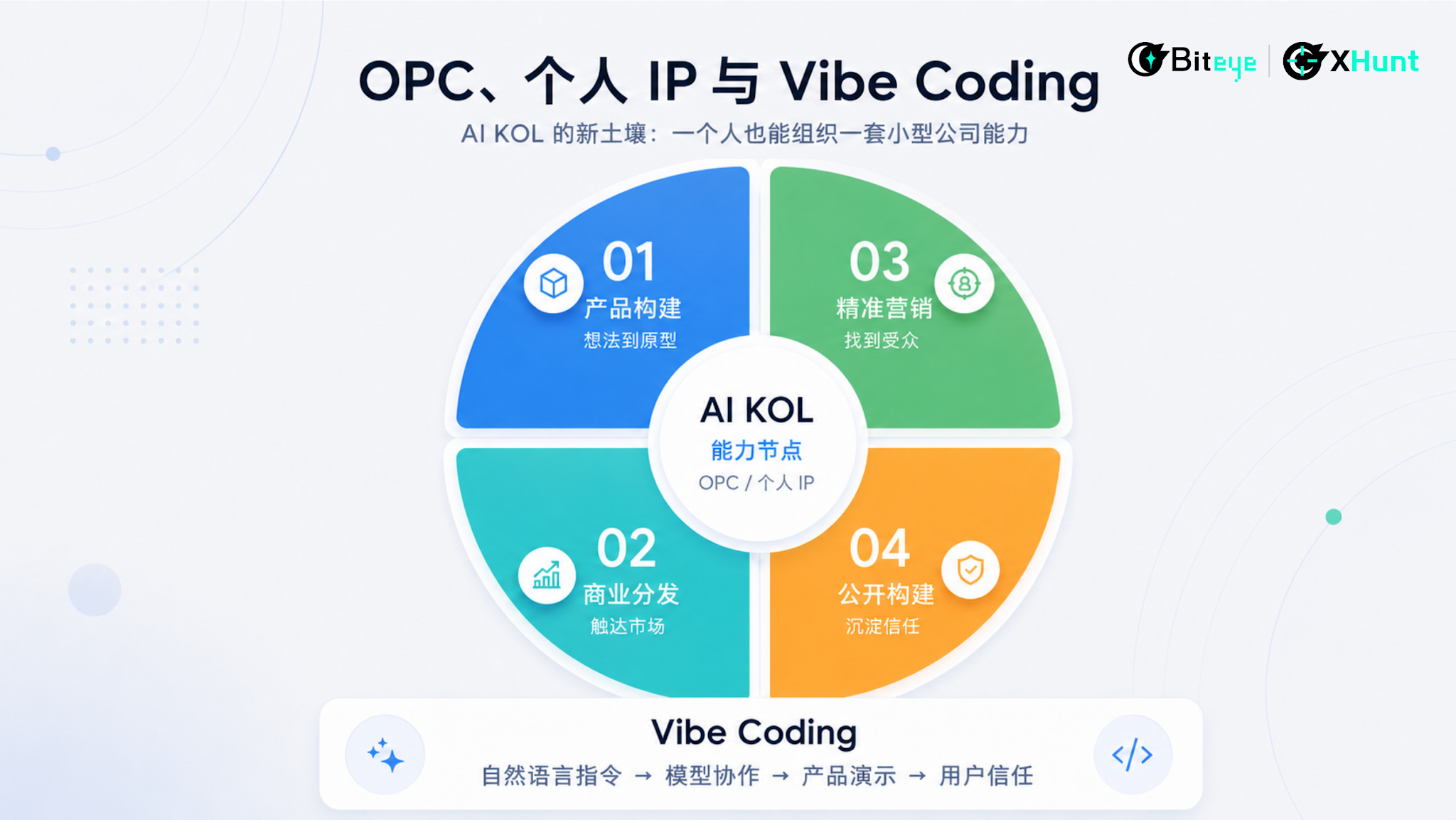
The evolution of AI is turning the concept of the One Person Company (OPC) from a superhuman ideal into a clearly achievable reality. The core essence of an OPC is its operator's extreme agility in leveraging various vertical AI agents, thus freeing themselves from solitary struggle and tedious tasks, infinitely amplifying their own ideas, and using AI to achieve independent product building, business distribution, and targeted marketing.
In this transformation, "application-distributing" AI KOLs have secured a core ecological niche with their composite advantages:
- Understanding Technological Boundaries: Most have backgrounds in major AI companies or are experienced developers. They possess deep technological foundations and understand the real limitations of tools better than pure marketers.
- Understanding Market Pain Points: As long-time content creators facing their audience directly, they possess strong productization and marketing awareness, understanding real user needs better than pure R&D personnel.
It is this dual advantage of "technology + trend awareness" that allows them to translate abstract technology into usable scenarios through building in public, thereby accumulating continuous user trust.
The wildly popular Vibe Coding trend has pushed the dynamism of this personal IP to its limit: a top AI KOL, when recommending a development framework, no longer writes bland endorsements. Instead, they directly showcase on X how, with only a natural language command and a relaxed atmosphere, they collaborate with a model to rapidly launch a complete, interactive AI application within 15 minutes.
Traditional KOLs harvest traffic by distributing opinions; AI KOLs consolidate ecosystems by distributing productive capacity.
IV. Data Profile: The Ecological Divide Between Eastern and Western KOLs
To explore the real operational logic of the AI KOL ecosystem, this report extracted 100 tweet samples from the top 300 English and top 100 Chinese AI KOLs on the XHunt influence ranking over the past 3 months, conducting in-depth analysis and comparison of their tweet content and various data points.
We found significant differences in attention structure and content production models between Chinese and English AI KOLs. Below, we unveil the true face of AI KOLs across seven core dimensions: traffic scale, discussion topics, account creation time, and personal profiles.
1. Attention Map: English Ecosystem Biased Towards Sources, Chinese Biased Towards Practice
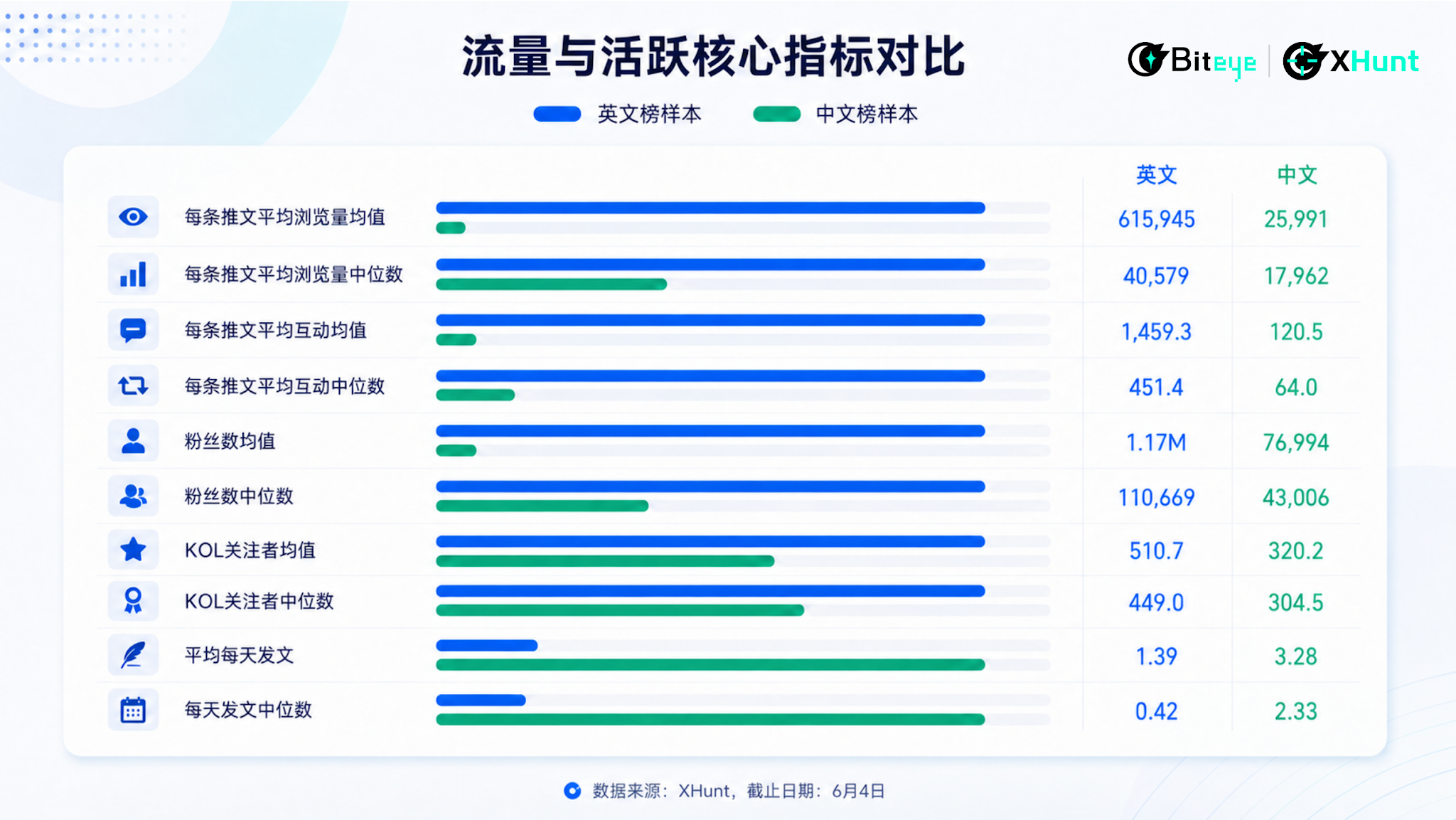
- Traffic Volume Distribution: The total follower base in the English ranking exceeds 350 million, with an average of 1.17 million and a median of 110,669. The Chinese ecosystem is more focused on refined verticals, with an average follower count of about 77,000 and a median of 43,006.
- Posting Activity Comparison: In the last 90 days, the top 100 Chinese accounts produced nearly 30,000 tweets, with a median posting count of 210. In comparison, 300 English accounts posted only 37,000 tweets total, with a median of just 38. Top English accounts often post infrequently, while Chinese accounts form a high-frequency application diffusion network.
- Follower Tier Structure: The English ranking shows a pyramid structure, with accounts holding 50,000 to 200,000 followers accounting for the highest proportion at 41.8%, and those with over 1 million followers making up 7.4%. The Chinese ranking is concentrated in the long-tail application layer, with accounts holding 10,000 to 50,000 followers accounting for 53.0%, and those with over 200,000 followers only 4.0%.
- KOL Followers: Although the average number of peer followers in the English ranking (510.7) is higher than in the Chinese ranking (320.2), when adjusted for the total number of AI KOLs (approx. 1000 and 5000 respectively), the circle penetration rate of top Chinese KOLs is as high as 32%, far exceeding the 10% in the English ecosystem. This indicates the Chinese AI KOL circle is a highly dense community with extremely tight connections.
- Activity Map: Up to 70% of Chinese KOLs share industry trends and practical operations daily. In the English ecosystem, low-frequency accounts exclusively account for 39.8%, while stable active accounts represent 26.4%. The English ecosystem leans towards an industrial source network, while the Chinese ecosystem leans towards a practical network.
Summary: English AI KOLs form an industrial source network holding primary technology and major strategic releases. Chinese AI KOLs form a super-diffusion and practice network that frantically translates, reviews, tutorials, and pushes cutting-edge technology into mainstream workflows.
2. Mindset Preferences: English Ecosystem Focuses on Macro, Chinese Focuses on Practice
Peeling back the broad labels, by extracting word frequencies and tags from the overall discussion content, we clearly see the focal points of the two ecosystems:
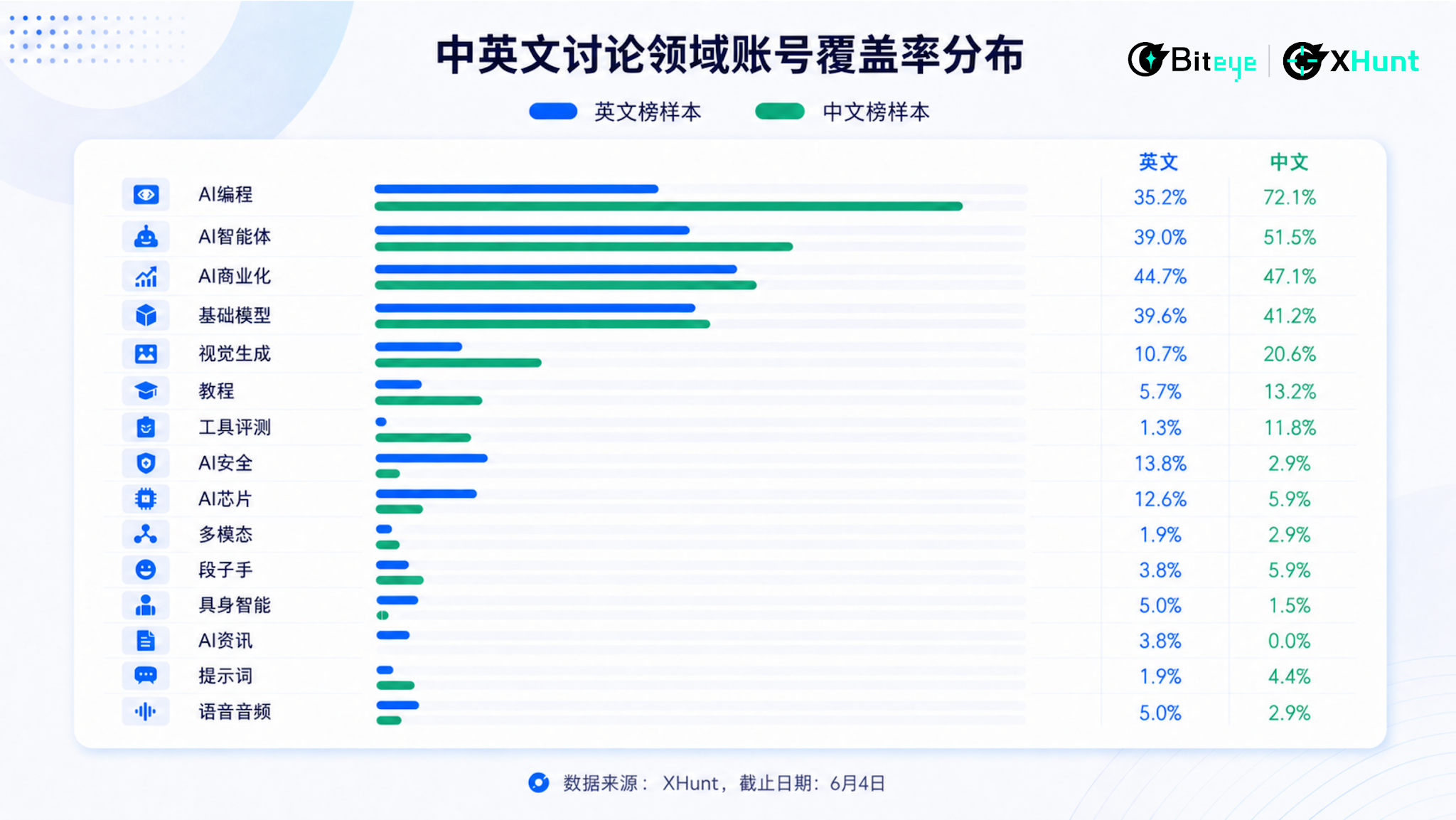
Whether English or Chinese, base models, AI agents, AI commercialization, and AI programming form the consensus backbone. However, their outward extension paths are quite different:
- English Ecosystem: Emphasizes underlying technology and macro perspectives. English KOLs have significantly higher coverage rates in AI commercialization (44.7%), base models (39.6%), AI safety (13.8%), AI chips (12.6%), and embodied intelligence (5%) compared to their Chinese counterparts. They devote considerable energy to discussing AGI safety alignment, the supply-demand landscape of computing power, open-source vs. closed-source debates, and embodied intelligence.
- Chinese Ecosystem: Emphasizes application landing and practical orientation. Chinese KOLs display strong pragmatism. AI programming coverage is 72.1%, roughly double that of the English ecosystem. AI agents stand at 51.5% vs. 39% in English. In visual generation, 20.6% is nearly double the English rate. Tool reviews at 11.8% are an astonishing nine times higher than the English ecosystem. Tutorials and prompts are also significantly more prevalent than in English, indicating Chinese bloggers are adept at breaking down complex technologies into specific operational guides for code writing and agent building.
3. Capability Radar: English Focuses on Technical Insight, Chinese on Full-Stack Application
To minimize misjudgment from broad category labels, we utilized XHunt's KOL capability scoring model to comprehensively analyze the quality of content published by AI KOL accounts across multiple dimensions:
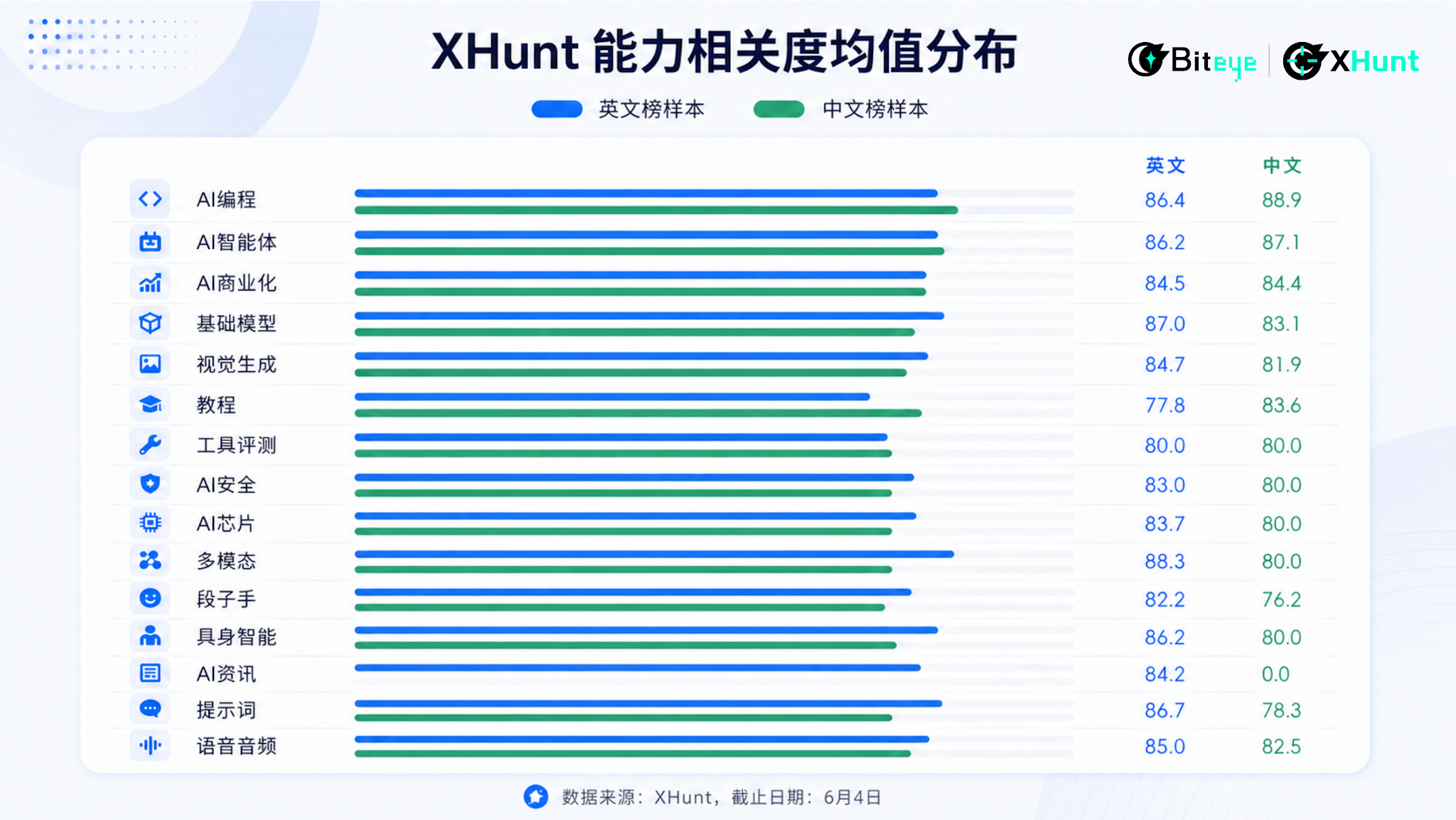
- English Ranking: Encompasses industry sources and foundational logic. The highest score in the English ranking is for Multimodal at 88.3, followed by Base Models and Prompts. Their core capabilities lie in insights into model architecture, large-scale engineering tuning experience, and foresight into cutting-edge trends. They hold a natural first-mover advantage in AI safety and chips.
- Chinese Ranking: Focuses on full-stack application practice. In the Chinese sample, the average relevance score for AI programming capability reached 88.9, and AI agents reached 87.1. The Chinese Twitter/X space hosts many creators adept at natural language development, skilled at integrating AI into private domain monetization or lean startup models.
4. Large Model Mention Rates: A Workflow Map "Voted with Feet"
The mention rate of a large model (i.e., any tweet from an account hitting the keyword in 3 months) represents both the discussion heat of the model within the community and a "vote with feet" by KOLs on their reliance on and sentiment towards various models in their actual workflows:
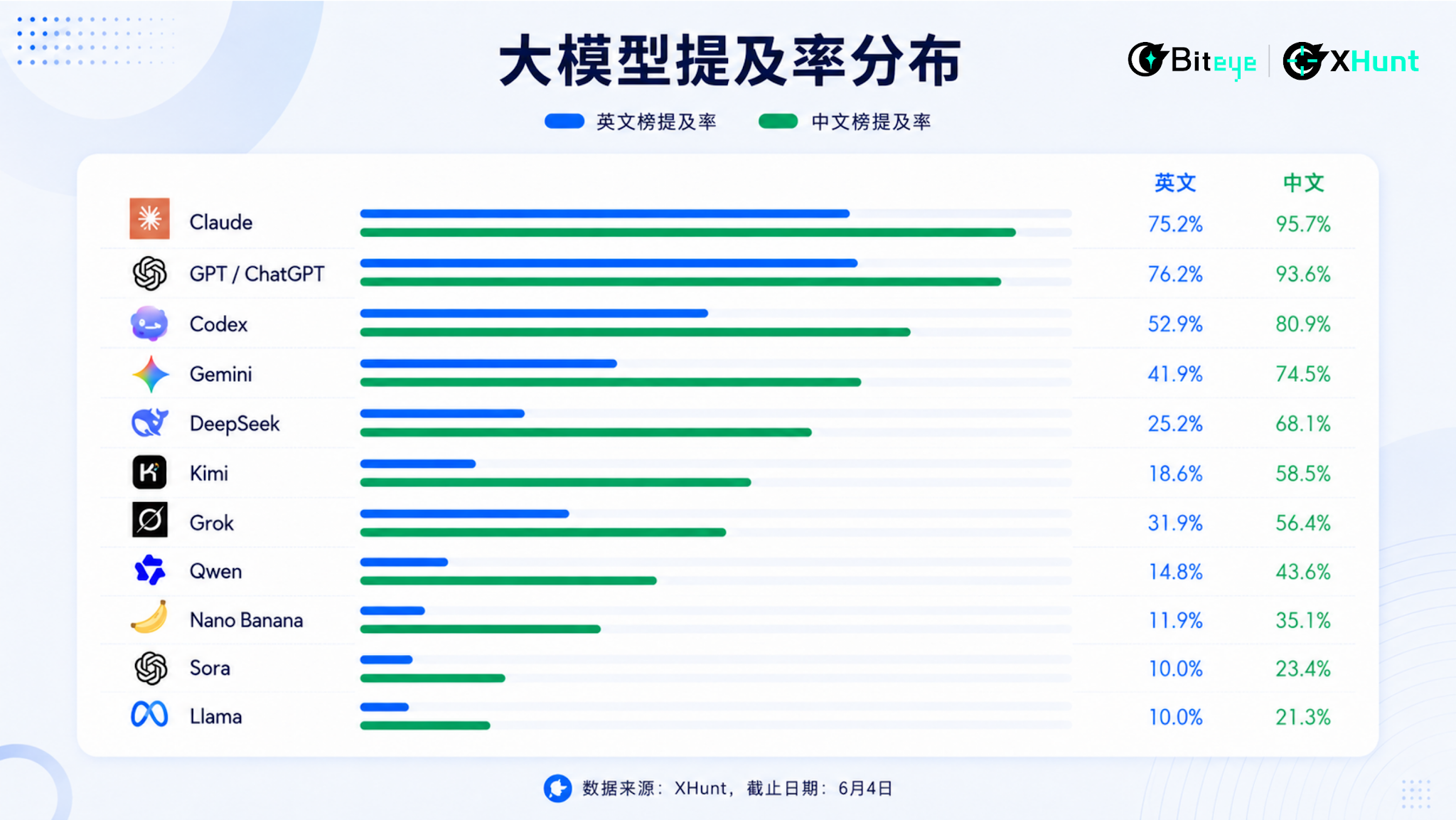
As shown, Claude and GPT are the top two models across both languages. In the Chinese ecosystem, Claude's mention rate is as high as 95.7%, still the preferred choice for independent developers and Vibe Coders; notably, with the booming AI programming scene, Codex's popularity has surged recently, firmly securing the third spot with an 80.9% coverage rate, further confirming the Chinese tech community's intense pursuit of practical workflows.
Additionally, domestic large models like DeepSeek (68.1%) and Kimi (58.5%) show strong local penetration. In contrast, in the English ecosystem, GPT (76.2%) and Claude (75.2%) are neck and neck. Compared to discussions of a single toolchain, they focus more on multimodal evolution and the overall industry narrative.
5. MBTI Content Style: Facets of Account Expression
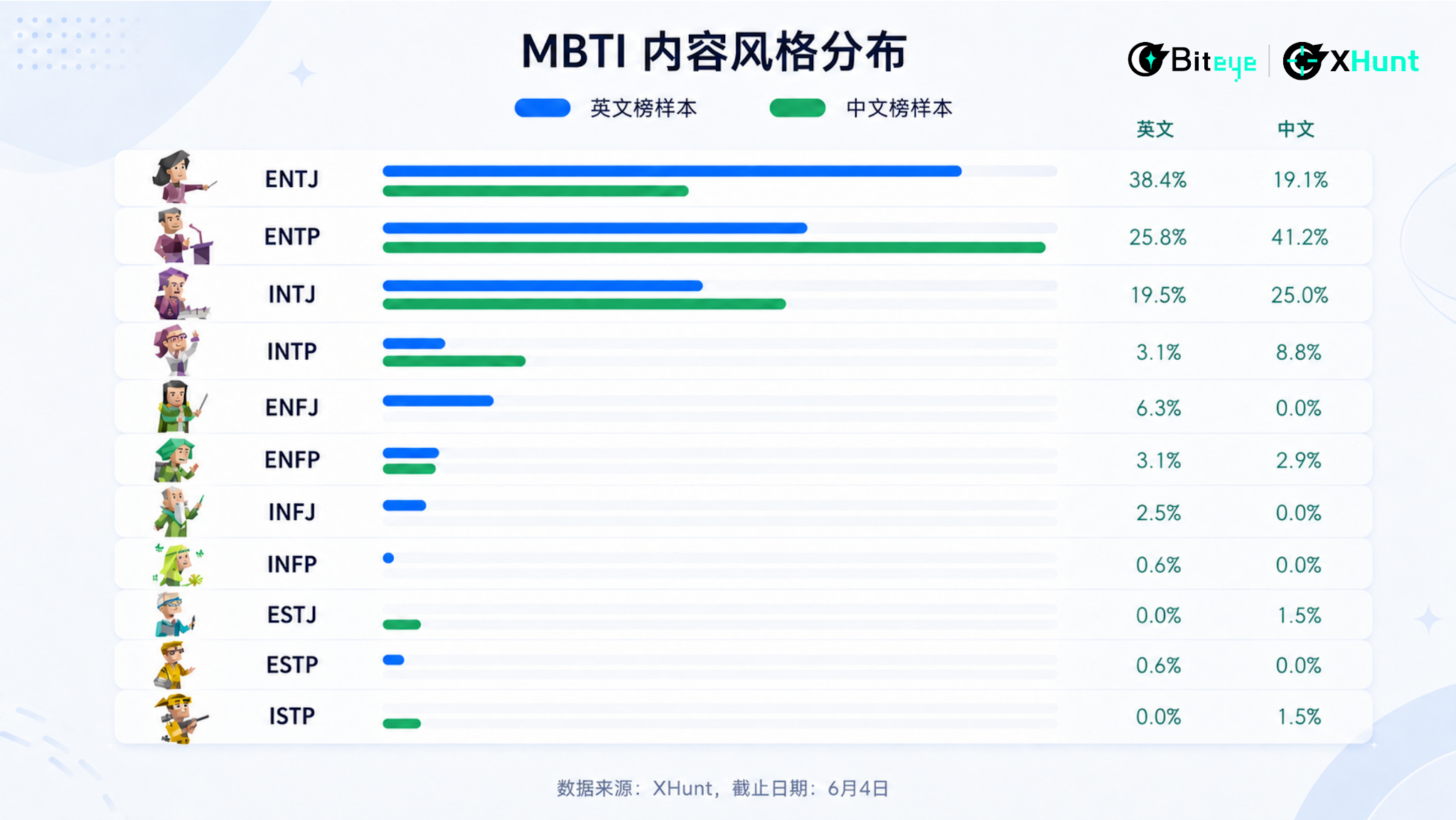
Using a proprietary style inference algorithm, XHunt classified the public personality facets of Chinese and English KOL accounts into MBTI profiles based on account bios, long tweet structures, interaction and debate logic, and topic preferences:
As shown, regardless of the ecosystem, accounts with influence predominantly belong to the NT (Rational) camp. In a period of rapid technological iteration, content providing logical analysis and productivity guidance is clearly more favored. The English ranking is dominated by ENTJ (38.4%) and ENTP (25.8%), leaning towards framework building and macro analysis; the Chinese ranking is led by ENTP (41.2%), echoing the characteristic of enthusiasts exploring diverse applications of new tools.
6. Identity Structure: English Biased Towards Frontiers, Chinese Biased Towards Practice
By clustering and cross-verifying the profile bios and historical tweet self-descriptions of the two sample groups, XHunt mapped out the landscape of Chinese and English AI KOLs:
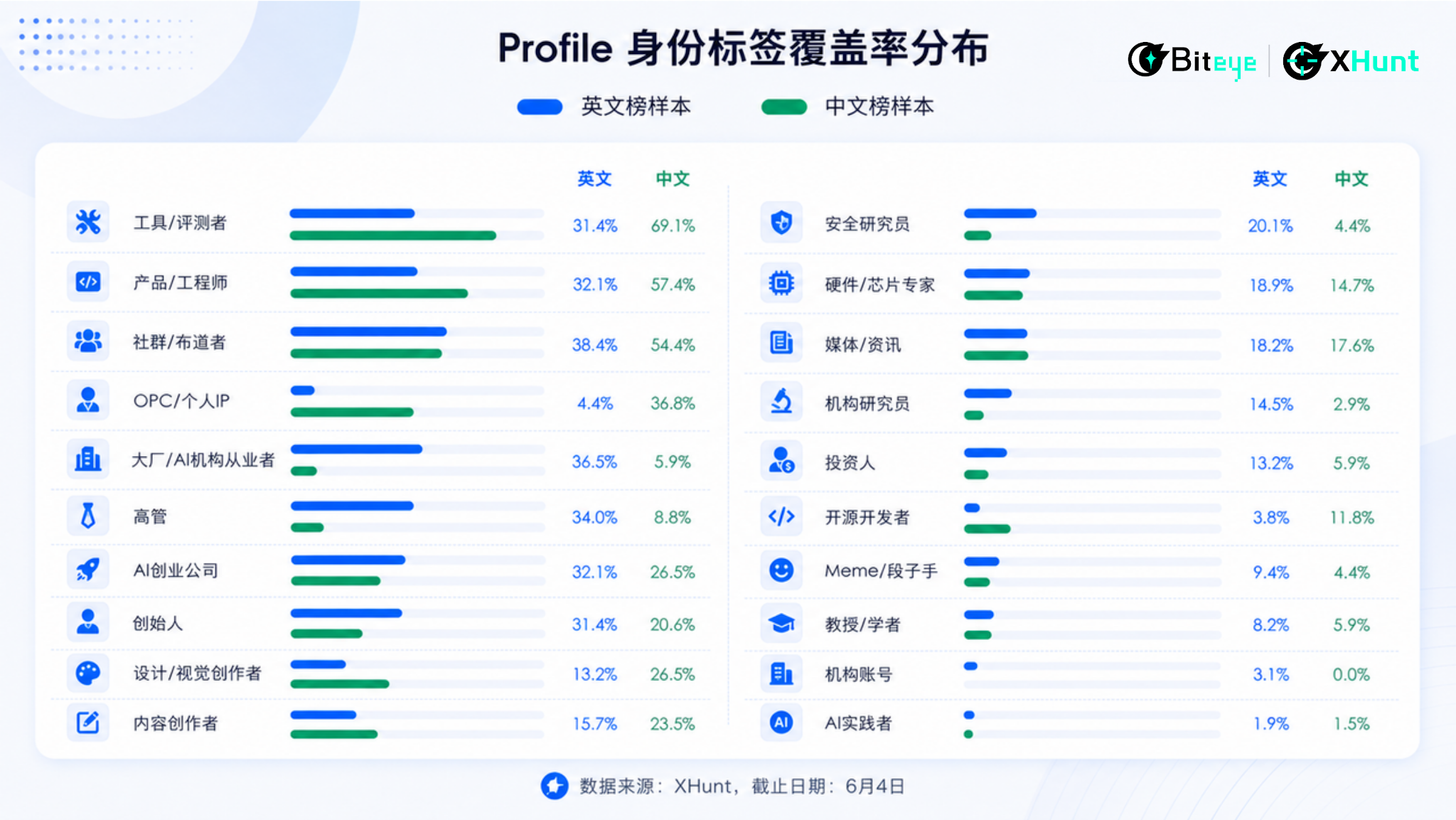
Core Identity Structure:
- Over 65% of KOLs in the English ecosystem are LLM founders (31.4%), executives (34%), or scientists. Their content output itself is a form of strategic distribution.
- The top identities in the Chinese ecosystem are tool/review accounts (69.1%) and product engineers (57.4%). Overall, the English ecosystem leans towards a source release network, while the Chinese ecosystem focuses more on a productivity practice network.
Overall:
The English AI KOL network resembles a cutting-edge source technology and paradigm release network in Silicon Valley, led by scientists and technology leaders. The Chinese AI KOL network is an explosion in a vast application market, a comprehensive productivity tool and survival practice network spearheaded by full-stack independent geeks and application pioneers.
7. Tweet Validity Evolution: From Brutal Growth to High-Quality Development
Looking at the overall trend over the past 8 months, the traffic distribution logic in the AI field has shifted from brutal growth to high-quality development, with continuous improvement in exposure and posting volume, showing three core characteristics:
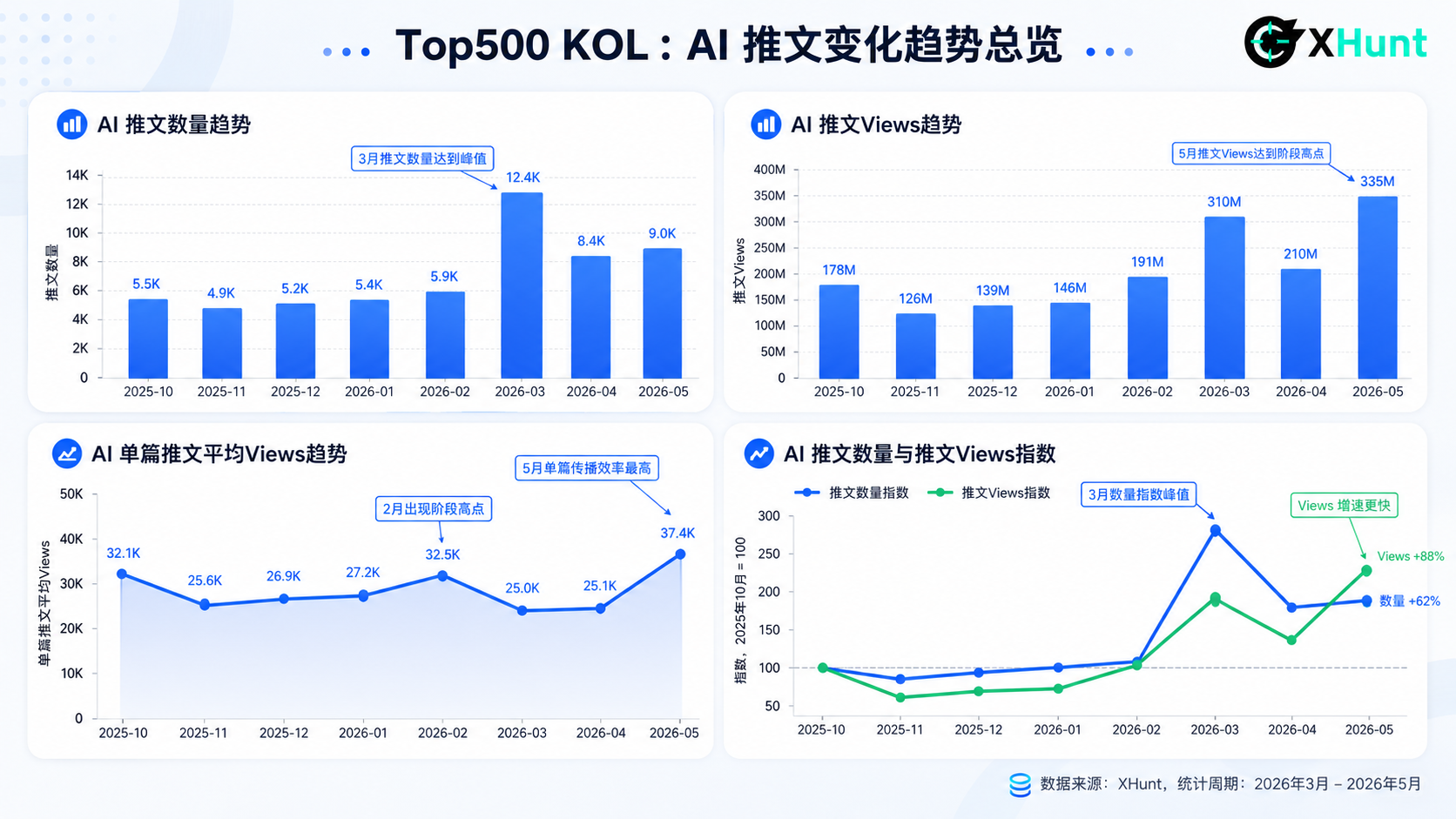
- Attention Dilution in Feb & Mar: Affected by industry hotspots like OpenClaw, total tweets surged to 12.4K in March, with total views reaching 310M. However, average views per post plummeted to a low (25.0K). A massive influx of homogeneous news flashes led to severe information overload and reduced dissemination efficiency.
- Peak Dissemination Efficiency in May: Total tweets in May fell back to 9.0K, but total views (335M) and average views per post (37.4K) both hit all-time highs. Deep practical and review content is leveraging fewer posts to generate larger traffic.
- Views Growth Outpacing Tweet Production: As of the end of May, the views index increase (+88%) significantly outpaced the tweet volume increase (+62%). This indicates that AI traffic dividends are still subject to the Pareto principle, rapidly concentrating with high premiums towards tweets outputting high-quality