






当BTC最大买家变成卖家,Strategy抛售3588枚比特币后谁在接盘?


- Core Thesis: Michael Saylor's Strategy sold Bitcoin for the second time in a month to pay preferred stock dividends, marking a break in its financial engineering cycle of "printing stock to buy Bitcoin." Market focus has shifted from the Bitcoin narrative to its balance sheet pressure, while discussions have expanded to the capital structure of tokens versus equities, the stablecoin wars, and the potential impact of bank-issued stablecoins on the global financial landscape.
- Key Elements:
- Strategy sold another 3,588 BTC (approximately $216 million). With the premium gone, it faces a dilemma between selling Bitcoin or diluting stock through issuance, while preferred shares have fallen below par value.
- The disappearance of the mNAV premium has broken the "printing stock to buy Bitcoin" cycle. The market believes Saylor's selling behavior has damaged his long-term holding narrative, potentially hindering institutional adoption.
- Industry experts question the value of tokens coexisting with equities, arguing that 99% of tokens will go to zero. With a lack of successful cases, stablecoins have become a new battleground for net interest income.
- The stablecoin war focuses on utility issues, with Tether abandoning the European market. Robinhood enters the government money market, and governance loopholes exposed by the OUSD alliance pose risks.
- Bank-issued stablecoins will flow back into the Eurodollar market. Major banks like JPMorgan could potentially earn spreads from non-customer clients through stablecoins, threatening the dollar deposit business of non-US banks.
Compiled & Edited: Odaily TechFlow
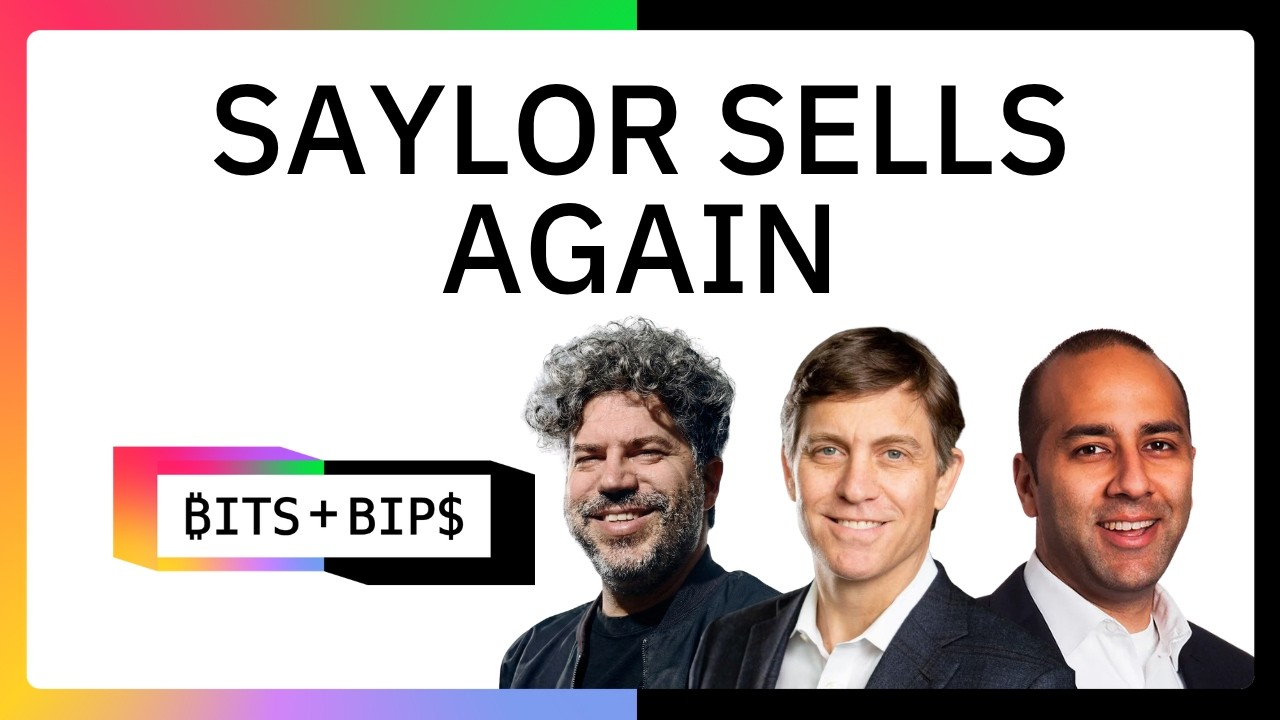
Host / Guests: Austin Campbell, Zero Knowledge Group; Ram Ahluwalia, CEO of Lumida Wealth; Chris Perkins, Franklin Crypto
Podcast Source: Bits + Bips (from Unchained)
Original Title: Strategy Sells Bitcoin Again to Cover Dividends
Air Date: July 7, 2026
Key Takeaways
This episode of Bits + Bips came against the backdrop of Michael Saylor's Strategy selling Bitcoin for the second time in a month—3,588 BTC, cashing out approximately $216 million to pay preferred stock dividends. The three regular guests (and co-hosts), Austin Campbell, Ram Ahluwalia, and Chris Perkins, dissected this structural turning point from their respective professional perspectives: When the largest BTC buyer becomes a regular seller, the mNAV premium vanishes, preferred shares fall below par, and the "print shares to buy Bitcoin" loop breaks – what cards does Strategy have left to play?
Austin opened with a quote from a hedge fund friend – "Saylor holds 5% of Bitcoin. Maybe this thing will only really take off after he blows up" – highlighting the brutal logic of the crypto market: when one person becomes the protagonist, their collapse can ironically be the catalyst. Ram analyzed the dilemma from a macro trader's perspective: sell BTC and destroy the narrative, or issue new shares and dilute MSTR. He also mentioned hearing Saylor speak twice in London, where Saylor was vigorously defending preferred stock dividends to restore confidence. Chris, from an investment banking background, pointed out that the foundation of the financial engineering has already been shaken after the mNAV premium disappeared.
But the discussion went far beyond just Strategy. The trio deeply analyzed the capital structure issues of tokens versus equity – why there are no successful cases of "token + equity" coexistence, the Pokémon card analogy, and the prediction that 99% of tokens will eventually go to zero. The stablecoin war was another major topic: Tether giving up the European MiCA market, the "utility problem" of stablecoins (can you buy a cup of coffee with a stablecoin?), the governance black hole of the OUSD 140-person alliance, and Robinhood entering the government money market. The latter half extended to the strategic significance of bank stablecoins – Scott Bessent's "repatriation of the Eurodollar market" thesis, JPMorgan potentially becoming the first trillion-dollar market cap bank, the obsolescence of USD deposit services for non-US banks – and a valuation breakdown of the Securitize IPO. Finally, the three touched on the capital absorption effect of AI/semiconductors and the return to fundamentals in the crypto market.
Highlights and Key Quotes
On Strategy Selling BTC and the "Three-Body Problem"
- "A friend of mine who does global macro told me he finds it hard to see the next wave of institutional adoption from pensions, sovereign wealth funds, and central banks, because Saylor is sitting there holding 5% of Bitcoin. His exact words were: 'Maybe the best thing is for that guy to blow up, and then this thing will really take off.'"
- "Whenever someone becomes the protagonist in the crypto market, their downfall is imminent. Strategy has been the protagonist for a while now."
- "The crypto narrative is now stuck on this MicroStrategy. Strategy is not crypto, crypto is not Strategy, but we're all stuck here. It's like when Bloomberg used to only talk about PIGS (Portugal, Italy, Greece, Spain) every day – the market eventually moves on."
- "His actions today make it very clear – he's protecting the dividend, hoping this will bring back confidence."
On the Disappearance of mNAV and the Breakdown of Financial Engineering
- "They have two paths: issue common stock and dilute MSTR, or sell Bitcoin and suffer narrative destruction."
- "Once the mNAV premium is gone, the 'print shares to buy Bitcoin' loop is broken. You can't arbitrarily issue more shares because the market no longer gives you a premium."
- "BTC actually went up the week of the sell-off – Josh Mandel and Pete Rizzo both noticed. It behaved like a buyback. But the bear side would say: the premium is dead, BTC hasn't really gone up, and it's now a seller."
On Tokens vs. Equity
- "We already have Delaware corporate law and centuries of capital structure. You can slice cash flows into different layers of debt, and what's left is called equity. There's no third thing called a 'token' that can be inserted into this stack."
- "If you have common equity, a token probably needs to function like preferred stock or debt to have independent meaning. If it's just another form of equity, you might as well tokenize your equity directly."
- "The Pokémon card is a good analogy – the company issuing the cards and the cards themselves are two different things. You can tokenize the product without necessarily tokenizing the equity."
- "If you look ten years out, 90% of the current top 500 tokens will disappear. I think it will be 99%."
- "Druckenmiller said during the internet bubble: 'I've already learned this lesson; I don't need to learn it again.'"
On the Stablecoin War
- "Stablecoins are the new net interest income. Everyone wants to capture that interest. Tether makes so much money doing the most basic product – how can I do the same?"
- "The biggest challenge for all stablecoins right now is utility. You can transfer, but what can you actually do with a stablecoin? Can you buy a cup of coffee with it?"
- "Tether's stance is very clear: this is called football, not soccer. They won't play by the Europeans' rules. BNP Paribas can't afford not to do business in France, but Tether can simply abandon a market."
- "OUSD is a 'plan with a plan'. 140 members with completely different economic goals, and the details aren't filled in yet. The hardest part – governance – was skipped. They pushed the technology out first."
On Bank Stablecoins and Market Landscape
- "Stablecoins are essentially the repatriation of the Eurodollar market. If JPMorgan or Bank of America issues a stablecoin, they can capture NIM from a Thai merchant or a Chinese supplier."
- "JPMorgan could become the first trillion-dollar market cap bank. They're above $900 billion now, spending $13-16 billion annually on technology."
- "The biggest losers might be the non-US banks offering USD deposit accounts. If I can buy a stablecoin directly, why go through a local bank with terrible exchange rates and fees?"
- "Securitize is trading more like a call option right now – you're betting on a 10% chance it's worth $18 billion, and a 90% chance it's worth nothing."
- "Last quarter, every sector in the S&P 500 underperformed the index except for semiconductors. Capital is being siphoned off by AI."
"Maybe After He Blows Up, This Thing Will Really Take Off"
Austin Campbell: Before we officially start, I want to share a conversation. I was chatting with a friend who does global macro, one of the best traders I know. I asked him what he thought about Bitcoin. He said he finds it hard to see the next wave of institutional adoption – pensions, sovereign wealth funds, central banks – happening while Saylor holds 5% of Bitcoin and has such a large personal presence. His exact words were: "Maybe the best thing is for that guy to blow up, and then this thing will really take off, and then everyone else will pile in." Whenever someone becomes the protagonist in the crypto market, their downfall feels imminent. Strategy has been the protagonist for a while now. It also makes me wonder, in a sense, this makes them an obstacle to Bitcoin's rise – which in itself creates their own problems.
National Security, Export Controls, and the Crypto Industry
Austin Campbell: Before diving into the main topic, I want to raise a bigger question. The government is now trying to control crypto from a new angle – not by preventing the release of code, but by controlling who can use it. They want to use export control laws to limit access to things already published under the First Amendment. This is essentially picking winners and losers without a real applicable law or due process. National security is certainly important, but we can't just say "national security" and close our eyes without asking why. We can't tell people "use stablecoins, use crypto rails to build your financial life" and then, at a moment's notice, cut it all off because of national security or export controls. The crypto industry isn't angry enough about this. This is our fight.
Strategy Sells Again: 3,588 BTC for $216 Million
Austin Campbell: Let's get to the main topic. Strategy sold 3,588 Bitcoin, cashing out approximately $216 million. This is the largest sale to date, following a smaller sale of 32 BTC to pay preferred stock dividends. The question is clear: now that the MSTR premium is gone, will selling Bitcoin to cover dividends become routine? Is Strategy still an accumulator, or has it become a regular seller?
Let's stick to the facts. They broke their long-standing record of not selling, first selling 32 BTC, and then another 3,588 a month later. As of July 5th, Strategy holds 843,775 Bitcoin, with $2.55 billion in dollar reserves, and a cost basis of $75,700 per BTC – significantly above the current trading price of just over $60,000. MSTR fell below 1 for the first time on June 27th, to 99 cents, before recovering somewhat. STRC bottomed out at 74.57, and I saw it back around 90 before the show started. The dividend yield increased by 50 basis points to 12%. The new authorized framework allows for the sale of up to $1.25 billion in Bitcoin, along with a STRC preferred share repurchase program. Chris, you have an investment banking background; Ram, you do a lot of investing. Saylor has pivoted to selling Bitcoin from the balance sheet instead of continuing to issue MSTR stock. What does this tell you?
A Choice of Two Evils: Sell Bitcoin or Dilute Stock
Ram Ahluwalia: Two paths. Issue common stock – dilute MSTR, stock price drops. Or sell Bitcoin – destroy the narrative. Last week we mentioned the possibility of a short squeeze in MSTR, which we saw in the news. More constructively, STRC and STRF have started to move back towards par value over the past few days. They need to push them back to par. Doing so provides breathing room; failing to do so is a problem. I still view this as a trading asset susceptible to violent short squeezes, and we might be in the middle of one right now. I also want to look at the dates of their Bitcoin sales compared to the announcement dates – if BTC held up or even went up during the selling period, that would be quite encouraging.
I was in London last week. First, I went to the Goldman Sachs event – it was packed, oversubscribed, the amount of institutional buildout is undeniable. Then I went to the Robinhood event, and the DeFi stuff they are doing is pretty impressive. Before that, I heard Saylor speak twice. He got on stage and was very focused on defending and protecting the preferred stock dividends, trying to reassure the audience of his commitment to Bitcoin. He's trying to navigate this three-body problem.
Austin Campbell: This also cuts to the divergence between bulls and bears. The bulls would say: mNAV back to 1.09, STRC is recovering, BTC actually went up the week of the sell-off – Josh Mandel and Pete Rizzo both noticed, it behaved like a buyback. The bears would say: the premium is dead, BTC hasn't really gone up, and it's now a seller. And Roland and Peter Schiff have both pointed this out. My question is: even if the preferred shares have recovered significantly, Saylor can sit tight for a while. But if BTC doesn't go up, will we be right back where we started a year from now?
Ram Ahluwalia: My guess is that last week, fast-money traders stepped in to buy the dip when volume crashed. That was hot money, not long-term holders. They will likely sell for a profit.
Chris Perkins: From an investment banking perspective, once the mNAV premium disappears, the 'print shares to buy Bitcoin' loop is broken. You can't arbitrarily issue more shares because the market no longer grants you a premium. So you have to look at the asset side. Selling Bitcoin is accounting-wise feasible – cost basis $75,700, market price around $60,000, a book loss but cash is raised. The problem is that this action itself tells the market: you no longer unconditionally believe in your own thesis.
The "Three-Body Problem": The Strategy-Bitcoin-Crypto Narrative Lock
Chris Perkins: Unfortunately, we're stuck. The crypto narrative is now locked onto this MicroStrategy entity. Strategy is not crypto, crypto is not Strategy, but we're all stuck here. It feels like we have to digest this issue before we can move on. It reminds me of when you'd open Bloomberg and all they talked about was PIGS – Portugal, Italy, Greece, Spain – every single day. The market eventually moved on.
I'm ready for us to turn the page on this. What's somewhat encouraging is that BTC has shown considerable resilience today. There are also some positive tail risks – like Trump expressing support for crypto on the day his Trump account went live. I look forward to us no longer focusing on this three-body problem and getting back to the fundamentals and details of other projects. Crypto is Bitcoin, Bitcoin is crypto, so Strategy is crypto – I want to break this equation.
There's also a related debate emerging: does value flow to tokens or to equity? You see this in both private and public markets. Some people dismissively say "all value is in equity, everything else is nonsense." I think it's more complex than that.
Tokens vs. Equity: No Third Type of Capital
Austin Campbell: I think both can work, but the difficulty is having both simultaneously – unless you are very careful about defining their respective rights. We already have Delaware corporate law and centuries of capital structure. You can slice cash flows into different layers of debt, pay employees and creditors, and what's left is called equity. There's no third thing called a 'token' that can be inserted into this stack. You can have a token play the role of equity or debt, but making it a new concept co-equal with debt and


