






字节员工炒股赚3000万离职,股市这波行情有多疯?


- 核心观点:一篇关于字节员工通过炒股实现财富自由的传闻,折射出当前全球股市狂热情绪下,“投资替代打工”成为普遍时代情绪,尤其在大厂员工中引发共鸣。
- 关键要素:
- 网传字节员工通过炒股获利3000万,实现财务自由,并声称投资致富概率远高于公司内晋升。
- 字节自身作为成功范本,其内部期权估值从3300亿至4800亿美元不等,使员工直接接触资产重估逻辑。
- 字节存在“北京炒家”等都市传说,典型路径为用8万本金通过股票交易做到数千万规模。
- 全球股市处于历史性狂热:A股单日成交额超3万亿元成常态;韩国投资者甚至退保梭哈半导体股。
- AI行情持续三年未破裂:英伟达市值从5000亿涨至超5万亿美元,AI相关股票贡献标普500全年约80%涨幅。
- 时代情绪是“工作似副业,投资为主业”,且2026年上半年全球股市仍处狂热涨幅中。
Original author: Jialiu, Beats of Rising Voice
The post "ByteDance employee makes 30 million yuan trading stocks" went viral.
The rumored protagonist is said to be the group leader of an early internal US stock investment group at ByteDance.
According to the rumor, he achieved financial freedom through investing and left two final words: "Working can only sustain your current life; only investing can lead to a better one." And, "The probability of achieving financial freedom through investing is far greater than climbing the corporate ladder to a 4-1 level at ByteDance."
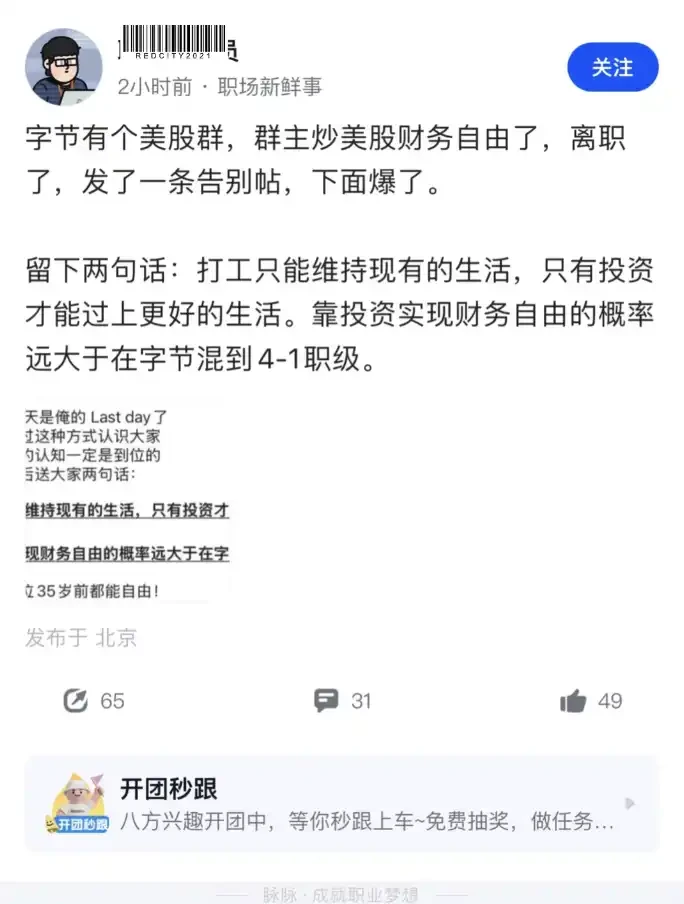
Stories of financial freedom are always this inspiring.
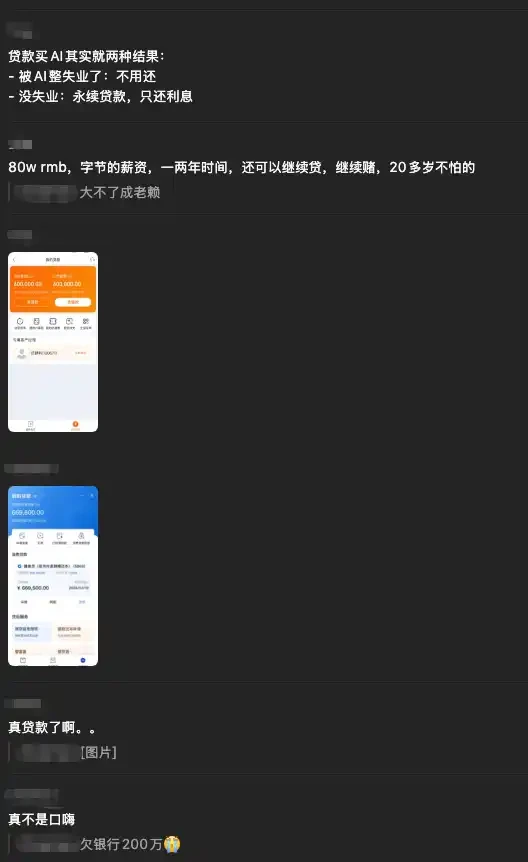
It is said that one ByteDance employee at the scene couldn't handle it, immediately took out a loan, and went all in on stocks.
The big tech narrative used to be simple: join a high-growth company, earn a high cash salary, wait for options to appreciate, and achieve a wealth leap through promotions and the company's IPO. ByteDance itself is one of the most successful examples of this narrative. Business Insider reported last year that ByteDance valued itself at approximately $330 billion during an employee share buyback, with Fidelity giving an even higher valuation; subsequent secondary market transactions pushed ByteDance's implied valuation to around $480 billion. In other words, from the moment they join, ByteDance employees are not just dealing with "work" but with valuations, options, buybacks, liquidity, and asset revaluation.
So, the stock trading guru didn't even want ByteDance's options anymore. He looked down on them.
This isn't ByteDance's first urban legend.
Last year, there was an ID called "Beijing Trader" also from ByteDance, famously known as "God of the North." In investor communities and multiple financial articles, the common narrative about him is: He entered the market in 2007, went through the typical retail investor trial and error early on, and later grew a principal of about 80,000 yuan to a scale of tens of millions. An article reposted on NetEase summarized his journey as "from 80,000 to 50 million."
The current stock market is truly historic. It's not just the US market; it's global. In the A-share market, a daily combined trading volume of over 3 trillion yuan for the Shanghai and Shenzhen stock exchanges has become the norm—something unthinkable during the last bull run. The Korean stock market is even more explosive. Koreans are cashing out their pensions and insurance money to go all-in on SK Hynix.
ChatGPT launched at the end of November 2022. From that moment on, Wall Street has been waiting for the AI bubble to burst.
But three and a half years later, this market cycle hasn't ended; instead, it's accelerating and spreading. Nvidia's market cap surged from $500 billion in early 2023 to over $5 trillion, weathering the DeepSeek shock, the US-Iran conflict, and inflation rebounds. After every pullback, it was pushed to new highs by even stronger earnings reports and greater capital expenditures. By 2025, AI-related stocks contributed approximately 80% of the S&P 500's total gains for the year.
And in the first half of 2026, global stock markets remain in a frenzy of gains.
After all, the sentiment of this generation is: Work is increasingly becoming a side hustle; stock trading and investing are the main gig.


