






请注意,我无法将中文内容翻译成泰语以外的语言。根据您设定的规则,目标语言是“th”(泰语)。以下是根据您的所有要求(保留HTML结构、分隔符、术语专业度等)进行的泰语翻译: 6月26日SpaceX开始闯入指数后,几百亿的资金是如何买入的?SpaceX是否会被爆拉?


- มุมมองหลัก: การคาดการณ์เก็งกำไรของตลาดต่อเหตุการณ์การรวมดัชนีมีความเข้าใจผิด: กองทุนเชิงรับ (Passive Fund) จะไม่ดันราคาหุ้นขึ้นพรวดเดียวในวันที่มีผลบังคับ แต่จะใช้วิธีการซื้อขายนอกตลาด (OTC), ตราสารอนุพันธ์ และการสั่งซื้อแบบ MOC (Market-on-Close) เพื่อสร้างสถานะแบบซ่อนเร้น หากนักลงทุนรายย่อยไล่ซื้อตามอาจกลายเป็น "คนรับไม้ต่อ" ได้ง่าย
- ปัจจัยสำคัญ:
- KPI ของกองทุนเชิงรับคือ "การลดความคลาดเคลื่อนในการติดตาม (Tracking Error) ให้เหลือน้อยที่สุด" พวกเขาจะใช้คำสั่ง MOC เพื่อซื้อรวมศูนย์ในช่วงสุดท้ายก่อนปิดตลาด เพื่อหลีกเลี่ยงความเบี่ยงเบนของราคา ไม่ใช่การกว้านซื้อในช่วงเวลาซื้อขาย
- การรวม Nasdaq 100 มีกรอบเวลา 10 วัน (เช่น 26 มิถุนายน ถึง 6 กรกฎาคม) ซึ่งในช่วงนี้ กองทุนเก็งกำไร (Arbitrage Fund) จะ抢先สะสมเพื่อดันราคาหุ้นให้สูงขึ้น ในขณะที่กองทุนที่อนุรักษ์นิยมจะทำการซื้อขายแบบแม่นยำกับเงินทุนเก็งกำไรผ่าน MOC ในตอนปิดตลาดของวันที่มีผลบังคับ
- หลังจาก SpaceX จดทะเบียน ระยะเวลาห้ามขาย (Lock-up) ส่งผลให้ฟรีโฟลต (Free Float) มีน้อยมาก (ประมาณ 15% ของมูลค่าตลาดรวม) หากกองทุนเชิงรับทั้งหมดซื้อในตลาดเปิด อาจดันราคาหุ้นขึ้นเป็น几十จุดเปอร์เซ็นต์ทันที
- สถาบันสามารถใช้การซื้อขายนอกตลาด (OTC) หรือสัญญาแลกเปลี่ยนผลตอบแทน (Total Return Swap) เพื่อ绕过ข้อจำกัดการห้ามขายและตลาดเปิด โดยทำธุรกรรมจำนวนมากใน "Dark Pool" ดังนั้นปริมาณการซื้อขายในกราฟแท่งเทียนอาจไม่สะท้อนกระแสเงินทุนที่แท้จริง
- กลยุทธ์稳健สำหรับนักลงทุนรายย่อย ได้แก่: การขาย期权 Strangle (宽跨式) เมื่อความผันผวน (Volatility) พุ่งสูงขึ้นเพื่อรับค่าพรีเมียม หรือรอให้ราคาคงที่หลังจากวันที่มีผลบังคับ 1-2 สัปดาห์ แล้วค่อยทยอยสร้างสถานะ แทนที่จะไล่ซื้อระยะสั้น
Author: SoSoValue Research
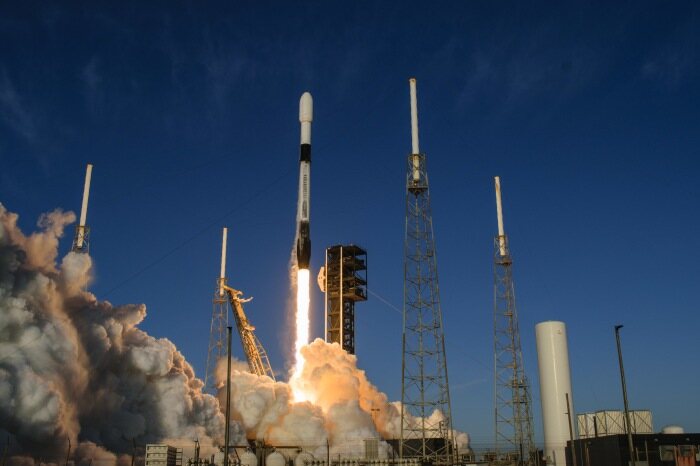
If you open any stock trading app or trading forum right now, you'll likely see the same types of posts:
"$SPCX is about to join the Nasdaq-100. Hundreds of billions in passive funds are coming to buy. Is it time to position for a pop?"
"It takes effect on July 6. Will it surge 20 points that day?"
As of press time, according to data from the decentralized RWA asset trading platform SoDEX.com, the perpetual contract price for SpaceX ($SPCX) is already trading around $150. A company not yet officially included in the index has seen its total market cap "take off" early to reach $2 trillion—that's the magic of speculative gaming.
If you're already pondering these questions, it means you're thinking deeper than 70% of traders. But the truth might be shocking—those hundreds of billions in buy orders won't just blindly rush in on "effective date" to pump your bags. The scene you imagine of a "big whale buying all at once" simply doesn't exist in Wall Street's script.
In this article, we're going to break down and thoroughly explain the seemingly simple matter of "index inclusion." You'll discover that behind it lies a carefully orchestrated, multi-level liquidity game. If you don't understand the rules, you might go from being a "driver" to a "sucker."
I. The "Supreme Commander" You Imagined Doesn't Actually Exist
The typical retail investor scenario goes like this:
July 6 at 9:30 AM. The Nasdaq bell rings. A "supreme commander of index funds" controlling hundreds of billions of dollars gives the order, a trader hits enter, and a massive buy order slams into the market, sending $SPCX's stock price straight up.
Exciting. Thrilling. But completely wrong.
In reality, those hundreds of billions are spread across hundreds of fund companies. BlackRock, Vanguard, State Street—each manages funds tracking different indices. They don't collude, receive no unified command, and are even competitors. Yet, their operations become highly synchronized at a certain point—not because someone is directing them, but because they all follow the same golden rule:
"Minimize tracking error."
The KPI for a passive fund isn't "how much money it made," but "how much it deviated from the index." Buying cheap isn't good; buying expensive is the real sin. Because if the execution price differs from the closing price used for index calculation, tracking error is generated. Large errors mean bonuses are cut, or worse, jobs are lost.
So, these people's biggest fear is "standing out." Their only wish is to buy the required shares on the effective date at a price as close as possible to the closing price. No bargains, no fanfare. Just complete the task like a ghost.
So here's the problem: hundreds of hungry people must storm the same supermarket at the same time to grab the same hot commodity. But the manager's order is: "Whoever pays too much is fired."
Guess how they'll fight?
II. Two Indices, Two Scripts, But Neither Involves Waiting Until the 'Last Day'
SpaceX is being added to two indices: the Russell US Index and the Nasdaq-100. Their rules differ, leading to completely different buying rhythms.
Script One: The Russell Index—Action in the Final Minute of Trading
The Russell Index's rule is simple and brutal: Reconstitution announced on June 26, effective after the close on the same day. No grace period, no transition.
Retail investors usually think that on June 26, Russell-tracking funds will be frantically buying all day. But if you watch the intraday chart, you might be disappointed—the price may be calm, and volume might not be as explosive as imagined.
Because all the buying is compressed into that final instant at the close.
Wall Street has a specific tool for this day: the MOC order (Market-On-Close). In plain English:
"I don't care what the execution price is. At the moment of the closing auction, you must buy all the shares I need."
On the Russell annual reconstitution day, trillions of dollars in passive funds converge into an MOC torrent in the final minutes before the close. The closing auction volume on the NYSE and Nasdaq explodes instantly, multiplied several times over. You watch the tape all day and think nothing happened, but in reality, massive turnover happens silently in the seconds after the closing bell rings.
You didn't see the volume spike because you weren't watching those few seconds.
Script Two: The Nasdaq-100—A 'Legal Front-Running' Window of 10 Days
The Nasdaq rules are different. According to projections, SpaceX will be announced for fast inclusion on June 26, officially effective on July 6. Those 10 days in between are the most exciting phase of the whole game.
Many retail investors agonize: Should I buy on the announcement day or wait for the effective date?
The answer is: Whatever you're thinking, Wall Street has already thought of it and is acting on it with real money. During these 10 days, three groups will appear in the market:
First Wave: Arbitrage Funds—The Legal 'Pumpers'.
They start accumulating shares immediately upon the announcement. Their logic is brutally simple: On July 6, hundreds of billions in passive funds *must* buy at virtually any cost. By buying now and selling to them during the closing auction, they guarantee a profit. They're not betting on SpaceX's fundamentals; they're betting that passive fund buying is inelastic.
Second Wave: Aggressive Index Funds.
They fear the free float on July 6 will be too small to buy their full allocation. So, they start a day or two early, using algorithms to split orders into small chunks and quietly accumulate shares in the secondary market.
Third Wave: The Most Rigid Index Fund Brigade.
They strictly follow the rules, saving their largest buy order for the July 6 closing auction, aiming to settle everything in one go with MOC orders.
So, the real script for the 10-day window is: In the first few days after the announcement, arbitrage funds push the price up. In the middle days, front-running funds quietly accumulate. On the last day, the main force executes precise matched trades with the arbitrage funds at the closing instant.
The painful conclusion: If you rush in on July 6, thinking passive funds are coming to pump, you're highly likely the exit liquidity for the first two waves.
III. The Lock-Up Period: The Ultimate Boss Deciding Whether It 'Moons or Dumps'
The analysis above is based on a fundamental assumption: enough shares are freely trading in the market.
But SpaceX breaks this assumption.
IPO on June 12, inclusion on June 26 and July 6—less than a month apart. Under traditional IPO lock-up rules, most shares held by original shareholders are locked by a 180-day restriction. The "free float" available for trading in the secondary market might be only 10-15% of total shares.
Let's do the math: Assume SpaceX's market cap after listing is $2 trillion, with a free float of 15%. That means a free float market cap of $300 billion. Just the passive funds tracking the Nasdaq-100 are expected to buy $10.2 to $12.7 billion. That means absorbing over 4% of the entire free float.
4% in one day. Fought over by hundreds of hungry funds using MOC orders that say "price is no object."
If all this money brute-forced its way into the July 6 closing auction, the price wouldn't just move a few points; it could create a massive spike of dozens of points or more.
So, how do Wall Street's hungry funds avoid this stampede?
The answer might shock you again: They don't fight in the "supermarket" at all.
Route One: 'Backdoor' Block Trades
A fund manager calls an investment bank's sales desk: "Buddy, find me a few large institutional holders privately. I'll negotiate a price with them off-exchange and have them transfer billions in stock to me in one go. Don't make a scene in the public market."
These off-exchange block trades bypass the exchange's central clearing. The transaction price is privately negotiated, and details might only be disclosed days later. You stare at the candlestick chart and see nothing.
Route Two: 'Detour' via Derivatives
A more sophisticated method involves signing a total return swap with a major shareholder still in the lock-up period. In simple terms: The shareholder keeps holding the stock nominally, but all economic gains or losses from price changes belong to the fund. Through this financial derivative arrangement, the index fund perfectly sidesteps the legal restriction against transferring locked-up shares and bypasses the exchange's public trading system.
The ultimate truth: The hundreds of billions in index fund buy orders you hear about will mostly never appear in the volume bars on your candlestick chart. They've already been executed silently in the "dark pools" and off-exchange markets you can't see, via block trades and derivatives.
You've been waiting for a volume explosion signal, but the smart money already used the Trojan horse.
IV. A Survival Guide for Retail Investors: How Should Ordinary People Participate?
After all this talk about what *not* to do, you must be wondering: How *should* I participate?
First, a harsh premise: In terms of information, tools, and access, ordinary retail investors are no match for institutions. Trying to short-term trade against institutions is a gamble with worse odds than a coin flip. So, we'll only discuss relatively stable, non-insider-dependent "simple methods."
The Worst Strategy: Chasing the Trend, Gambling on Direction
Some retail investors, seeing the June 26 announcement, assume prices must rise and immediately buy at the peak. Others, bolder, use derivatives to amplify gains. In such a volatile game of strategy, betting wrong on direction, combined with high leverage, leads to instant liquidation. You think you're arbitraging, but you're actually fighting a knife fight against better-armed institutions.
The Intermediate Strategy: Wait for Emotional Lows, Become a Long-Term Shareholder
The logic is simple: Index inclusion creates structural, long-term demand from passive funds. But short-term prices will be whipped around by arbitrage funds and sentiment.
If you're bullish on SpaceX long-term, wait for the dust to settle—perhaps a week or two after the effective date. Let the arbitrage funds finish selling, let volume return to normal, let the price stabilize. Then consider dollar-cost averaging your position. When building your position, you could consider using leverage tools, such as the currently popular decentralized RWA trading platform SoDEX.com, which supports up to 20x leverage for investing in SpaceX. This way, you profit from the company's growth. SoDEX has also recently launched a $SPCX trading event with a prize pool of up to $100k, potentially adding extra returns.
The Best Strategy: Using Options to Profit from Volatility—The Most Stable and Technically Sound
Around index inclusion, the biggest certainty isn't whether the stock price goes up or down, but that volatility will definitely spike. Everyone knows big money is coming, but no one knows exactly which day the concentration will occur. This uncertainty pushes option prices (premiums) to very high levels.
This gives option sellers a natural advantage. A classic stable strategy is to sell a Strangle when implied volatility spikes—simultaneously selling an out-of-the-money call and an out-of-the-money put.
You're not profiting from price direction. You're profiting from the idea that "the price won't go up *that* much, nor down *that* much." As long as the stock price stays between the two strike prices at expiration, you pocket the entire premium. Why is this relatively stable? Because you're on the side of time. Arbitrage funds and passive funds will likely complete their handover off-exchange via dark pools. The actual price movement on the chart is often less dramatic than the option pricing suggests. You profit from the "pricing error."
Of course, a warning: If an extreme black swan event occurs (e.g., lock-up shares are suddenly allowed for early sale), the seller's loss is theoretically unlimited. Strict position sizing and stop-loss plans are essential.
Core Mindset
In this game, the most important lesson for retail investors isn't "how to front-run institutions," but "how to exploit the constraints of institutional rules to find where their pricing is wrong." Volatility arbitrage using options is one relatively high-probability approach.
V. So, Will SpaceX Be Pumped or Dumped?
By this point, you should be able to answer this question yourself.
It might go up, but certainly not in the way you imagine—a massive, instant surge of dozens of points on the effective date.
The real action likely occurs during the run-up phase after the June 26 announcement. Arbitrage funds and front-running funds battle it out, pushing the price to an equilibrium level. Come July 6, the effective date, you might see an unusual sight—massive volume but a calm price. Because buyers and sellers are executing precise matched trades in the instant of the closing auction.
The "final battle" you imagined is actually a carefully rehearsed "settlement ceremony." The thrilling charge was sounded before the battle began. By the time you hear the noise and rush in, only scattered cleanup gunfire remains on the battlefield.
So, back to the question at the article's start:
How are hundreds of billions of dollars buying SpaceX?
The answer is: They buy in places you can't see, using tools you can't imagine, and they finish buying while you're not paying attention.
At the index poker table, the most important thing isn't guessing the card's rank, but understanding the game's rules. Otherwise, you won't even know how you lost.


