






苹果、微软被迫涨价,库克承认「40年来前所未见」,AI正在推升新一轮通胀?


Original author: Long Yue
Original source: Wall Street Sights
Apple and Microsoft announced price increases on the same day. This may not be a coincidence. As the bill for the AI arms race begins to be passed on to ordinary consumers, a new wave of inflation driven by data centers is quietly taking shape.
Apple announced on Thursday a global price increase for its Mac, iPad, and multiple hardware products, with increases of up to $300. Microsoft announced on the same day that its Xbox gaming console would see its third price hike starting August 1st, with some models increasing by as much as $150. The reasons given by both companies are highly consistent: The cost of storage and memory components has risen sharply.
Apple CEO Tim Cook had previously warned the media. He described the supply crisis as a "once-in-a-century flood" and stated, "In over 40 years in the industry, I have never seen anything like it." Apple directly named the cause in its statement: "The rapid expansion of AI data centers has created an extraordinary surge in demand for memory and storage; the company has never seen a single component's price rise so much and so quickly."
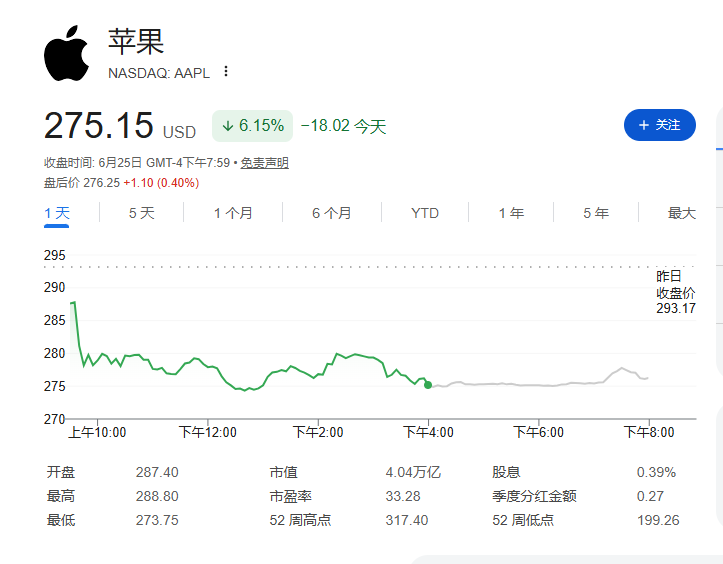
Following the announcement, Apple's stock closed down 6.15% on Thursday, while Microsoft fell 3.45%.
Price Hike Details: Significant Scope and Broad Coverage
Apple's price adjustment covers multiple product lines, including MacBook, iPad, HomePod, Apple TV, and Vision Pro.
Specifically: The starting price of the MacBook Air has risen from $1,099 to $1,299, an increase of about 18%; the 16-inch MacBook Pro has jumped from $2,499 to $2,999, a single increase of $500; the iPad Air has gone from $599 to $749, up 25%; the entry-level iPad has increased from $349 to $449; and the Apple TV has risen from $129 to $199, an increase of over 54%.
The iPhone was not included in this round of price increases. However, Apple's wording was telling—the statement said it has "reached a point where it needs to start raising prices on several products," leaving room for further increases.
On Microsoft's side, the standard version of the Xbox Series X will now cost $800, a cumulative increase of $300 since its original launch price in 2020. Microsoft stated on its official blog: "We hoped not to have to raise prices again. We've been negotiating various options with suppliers over the past few months, but component prices have risen more than 2.5 times, and we expect them to double again by fall 2027."
Xbox CEO Asha Sharma disclosed in an internal email that by the 2027 holiday season, the company expects to be paying five times more for storage and memory components than it did in 2024.
Root Cause: The AI Computing Power Arms Race is Grabbing Storage Capacity
The root cause of this price surge lies in the massive demand for storage resources driven by AI infrastructure construction.
Data from FactSet shows that the five major hyperscale cloud providers—Alphabet, Amazon, Meta, Microsoft, and Oracle—are expected to have combined capital expenditures of $741 billion this year, a year-over-year increase of nearly 75%.
Where is this money going? Columbia University economist Stijn Van Nieuwerburgh points out that the construction of AI data centers is highly physical—requiring specific cooling equipment, electricity and fiber optic cables, backup generators, and large quantities of high-bandwidth memory (HBM). He estimates that the total cost of AI infrastructure construction over the next six years could reach $8 trillion.
Suppliers are responding by shifting production capacity towards AI servers. According to Counterpoint Research data, memory and storage prices have quadrupled over the past three quarters. This trend is directly reflected in the financial data of chip manufacturers: Micron's latest quarterly gross margin jumped from 39% a year ago to 84.9%, surpassing Nvidia and Meta, setting a new historic high.
The result is: AI companies are gobbling up storage capacity originally intended for consumer electronics. Apple, Microsoft, and other manufacturers are forced to compete at higher prices for the remaining supply, ultimately passing the cost on to consumers.
Inflationary Pressure is Spreading
This cost pressure has already left its mark on macroeconomic data.
According to the U.S. Department of Labor, prices for consumer-level computer software and accessories rose about 15% year-over-year in May this year. Wholesale prices for electronic components and accessories surged 27% year-over-year.
Electricity prices are also under pressure. Goldman Sachs estimates that data centers will account for nearly half of new U.S. electricity demand by 2030, and predicts that consumer electricity prices will rise by about 6% annually in 2026 and 2027.
The wave of price increases in the gaming hardware industry is also spreading. Sony's PlayStation has been adjusted up multiple times, the recommended retail price for the Nintendo Switch 2 will rise to $500 in September, and Valve's Steam Machine console is also priced above $1,000.
Counterpoint Research Director Tarun Pathak estimates that the higher component costs could increase the cost of each iPhone for Apple by about $200, and predicts a price increase of $150 to $200 across Apple's entire product line.
Debate: Is AI Inflation Temporary or Sustained?
On Thursday, the Wall Street Journal published an article stating that the AI infrastructure boom is creating a third wave of inflation in the United States.
The article quotes Gregory Daco, Chief Economist at EY-Parthenon and President of the National Association for Business Economics (NABE), who said: "In the first phase of any major technological revolution, limited resources tend to come under pressure, which typically pushes prices higher."
Unlike one-time economic shocks such as tariffs or oil prices, AI's impact on demand could last for years. A survey by NABE on Monday showed that 81% of respondents believe AI infrastructure construction will push up inflation within the next year.
However, there is a different perspective. In a Wall Street Journal op-ed last November, current Federal Reserve Chair Warsh stated, "AI will be a significant deflationary force, boosting productivity and enhancing U.S. competitiveness," and argued that "a 1 percentage point annual productivity gain would double the standard of living within a generation."
UBS economists believe there is still a gap of several years between the current construction boom and AI actually driving prices down.


