






美元硬刚日本干预红线,Carry Trade还会崩盘吗?


- 核心观点:ดอลลาร์สหรัฐแข็งแกร่งยืนเหนือแนวเส้นสีแดงของการแทรกแซงของญี่ปุ่น การเทรดแบบ Carry Trade จะล่มสลายอีกหรือไม่?
- ปัจจัยสำคัญ:
- ดัชนีดอลลาร์สหรัฐยืนเหนือ 101 ได้อย่างมั่นคง ท่ามกลางความคาดหวังที่ธนาคารกลางสหรัฐฯ (เฟด) จะปรับนโยบาย hawkish และแรงหนุนจากอัตราผลตอบแทนพันธบัตรรัฐบาลสหรัฐฯ ระยะสั้น ขณะที่ค่าเงินเยนของญี่ปุ่นถูกผลักให้เข้าใกล้ระดับต่ำสุดในรอบเกือบ 40 ปีที่ 161.96 เยนต่อดอลลาร์ ซึ่งเพิ่มความคาดหวังว่าทางการญี่ปุ่นจะเข้าแทรกแซง แต่หากส่วนต่างอัตราดอกเบี้ยยังไม่เปลี่ยนแปลง การแทรกแซงจะส่งผลกระทบต่อความเร็วของความผันผวนเท่านั้น ไม่ใช่แนวโน้ม
- ดอทพล็อตของเฟดประจำเดือนมิถุนายนแสดงให้เห็นว่าเจ้าหน้าที่เฟด 9 รายคาดการณ์ว่าจะมีการขึ้นดอกเบี้ยภายในสิ้นปี 2026 และได้ลบข้อความเกี่ยวกับการปรับลดดอกเบี้ยออกไป ส่งผลให้ตลาดฟิวเจอร์สเพิ่มน้ำหนักต่อแนวโน้มการขึ้นดอกเบี้ยในปีนี้ ขณะที่อัตราผลตอบแทนพันธบัตรรัฐบาลสหรัฐฯ อายุ 2 ปีทรงตัวในระดับสูงที่ 4.22%-4.23%
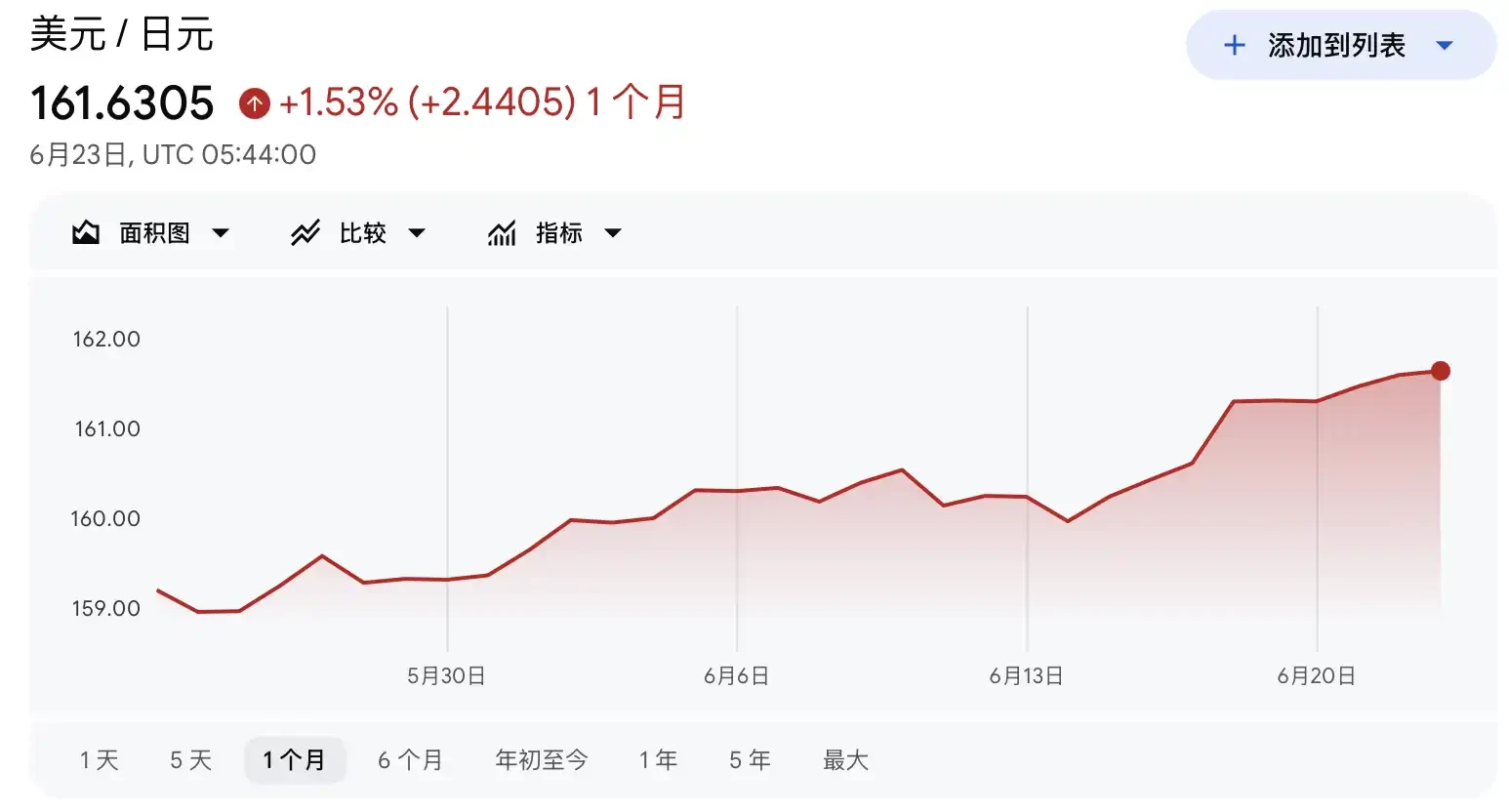
- เมื่อวันที่ 23 มิถุนายน ค่าเงินดอลลาร์สหรัฐแข็งค่าขึ้นแตะ 161.93 เยน หากทะลุแนวต้านที่ประมาณ 161.95-161.96 เยน จะหมายถึงค่าเงินเยนอ่อนค่าลงสู่ระดับต่ำสุดนับตั้งแต่เดือนธันวาคม 1986
- สาเหตุหลักที่เงินเยนยังคงถูกกดดันคือการที่ส่วนต่างอัตราดอกเบี้ยระหว่างสหรัฐฯ และญี่ปุ่นขยายวงกว้างขึ้น เนื่องจากการปรับนโยบายการเงินให้เป็นปกติของธนาคารกลางญี่ปุ่น (BOJ) เป็นไปอย่างล่าช้า ขณะที่ตลาดกลับมองว่าสินทรัพย์ดอลลาร์สหรัฐให้ผลตอบแทนที่สูงขึ้น
- รัฐมนตรีว่าการกระทรวงการคลังญี่ปุ่น คัตสึโนบุ คาโตะ ได้ออกมาเตือนด้วยวาจาเกี่ยวกับความผันผวนของเงินเยนแล้ว เทรดเดอร์คาดการณ์ว่าทางการอาจเข้าแทรกแซงตลาดปริวรรตเงินตราใกล้ระดับต่ำสุดเป็นประวัติการณ์ แต่ประสบการณ์ในอดีตแสดงให้เห็นว่าการแทรกแซงเพียงครั้งเดียวนั้นยากที่จะพลิกผันแนวโน้ม
- การดีดตัวของราคาน้ำมันเป็นปัจจัยสนับสนุนเพิ่มเติม ซึ่งอาจผลักดันความคาดหวังเรื่องเงินเฟ้อให้สูงขึ้นอีก และเสริมสร้างเหตุผลให้เฟดคงอัตราดอกเบี้ยในระดับสูงต่อไป ซึ่งส่งผลทางอ้อมในการหนุนค่าดอลลาร์
- ตัวแปรสำคัญที่กำหนดทิศทางตลาดในอนาคต ได้แก่ การที่ดัชนีดอลลาร์สหรัฐจะสามารถทะลุจุดสูงสุดในรอบ 14 เดือนที่ 101.97 ได้หรือไม่ ค่าเงินดอลลาร์สหรัฐต่อเยนจะ越过 161.96 หรือไม่ และทางการญี่ปุ่นจะเปลี่ยนจากการเตือนด้วยวาจามาเป็นการดำเนินการจริงหรือไม่
TL;DR
- During intraday trading on June 23, the U.S. Dollar Index held above the 101 mark, while USD/JPY approached the key 161.96 level, a near 40-year high.
- The Fed's dot plot and futures market indicate increased bets on a rate hike within the year, with short-term U.S. Treasury yields continuing to support the dollar.
- Japan's verbal warnings have reinforced intervention expectations. However, until the interest rate differential changes, intervention is more likely to affect the *speed* of volatility rather than the *trend*.
During intraday trading on June 23, the U.S. Dollar Index remained above 101, while USD/JPY briefly approached the critical level around 161.96. This level is closely watched because a break above it would push the yen into its weakest territory since December 1986. The main theme in the forex market is tightening: the Fed's policy expectations have turned hawkish again, short-term U.S. Treasury yields are elevated, and the yen's weakness has brought the possibility of Japanese authorities intervening in the currency market back to traders' attention. For investors, this isn't just about a stronger dollar; it also concerns global funding costs, carry trades, and pressure on Asian currencies.
Fed Expectations Turn Hawkish, Dollar Holds Above 101
As of intraday trading on June 23, the U.S. Dollar Index was near 101.01, not far from its one-week high of 101.13. The renewed strength of the DXY, which measures the dollar against a basket of major currencies, is most directly driven by shifting expectations for Federal Reserve policy.
According to Reuters, the Fed held the federal funds rate steady at 3.50% to 3.75% on June 17, but its latest dot plot showed nine officials anticipate a rate hike by the end of 2026. The statement also removed previous language hinting at a rate cut this year. This change makes it harder for the market to continue pricing in dovish expectations, and the futures market has already shown significant bets on an increased likelihood of a rate hike within the year or by September.
Short-term U.S. Treasury yields are providing concurrent support. During the session, the 2-year Treasury yield hovered around 4.22% to 4.23%, near highs last seen in February 2025. For the forex market, rising short-term yields enhance the appeal of dollar-denominated assets, especially when the policy outlooks of other major economies like Japan and Europe remain relatively accommodative.
Sim Moh Siong, a forex strategist at OCBC, believes that rising yields and more hawkish Fed expectations are jointly supporting the dollar. If the dollar index can break above its 14-month high of 101.97, it could gain further upward momentum. This positioning makes the 101 level more than just a standard integer threshold; it becomes a technical zone for short-term capital to gauge whether the dollar can continue its strength.
Other major currencies are also under pressure. The euro was around 1.1423, the pound near 1.3246, and the Australian and New Zealand dollars were around 0.6991 and 0.5704, respectively, during the session. Neither ECB President Lagarde downplaying concerns about second-round inflation nor political changes in the UK affecting the pound changed the day's primary narrative. The market's focus remains on whether U.S. interest rate expectations will continue to rise.
Yen Nears 161.96, Japan's Verbal Warnings Intensify
The yen is one of the most sensitive assets in this period of a strong dollar. As of intraday trading on June 23, USD/JPY was around 161.59, briefly touching 161.93 during the session, just a hair's breadth away from the 161.96 level. According to Japan Times and Reuters, a break above approximately 161.95-161.96 would mean the yen has weakened to its lowest level since December 1986.
The core reason for the yen's sustained pressure remains the U.S.-Japan interest rate differential. With the U.S. market re-pricing for a rate hike and the Bank of Japan's policy normalization proceeding relatively slowly, the yield advantage for investors holding dollar assets has widened, increasing selling pressure on the yen. A weaker yen benefits Japanese exporters' profits when converted back, but it also raises import costs, particularly for energy and food, putting pressure on household purchasing power and inflation expectations.
Consequently, the stance of the Japanese Ministry of Finance has become a market focal point. Finance Minister Katsunobu Kato has recently issued verbal warnings regarding the yen's volatility, stating that Japan is prepared to take action if necessary. This has led traders to speculate that Japanese authorities might intervene in the forex market by buying yen and selling dollars when the currency nears historic lows.
However, intervention remains at the level of expectation and cannot be written as a confirmed policy action. Historical experience shows that Japanese forex intervention can typically cause sharp, short-term volatility, forcing short-sellers to cover. If the U.S.-Japan interest rate differential continues to widen, a single intervention is unlikely to fundamentally change the direction of USD/JPY. Japanese authorities are more likely to alter the *speed* of the yen's ascent rather than completely reverse the trend.
This makes the 161.96 area a double threshold. On one side, the interest rate differential and dollar strength continue to push USD/JPY higher. On the other side, the closer it gets to its nearly 40-year low, the higher the risk of policy intervention. For short-term traders, this level represents not just a technical point but also a policy risk point.
Oil Price Rebound Brings Inflation Concerns Back to the Table
Beyond forex, oil prices also re-entered the market's spotlight during the same trading session. According to Reuters, oil prices fell about 4% on June 22 following progress in U.S.-Iran talks and news related to the opening of the Strait of Hormuz channel. The subsequent rebound in oil prices indicates the market is still waiting for clearer geopolitical and supply signals.
The Strait of Hormuz is one of the world's most crucial chokepoints for crude oil transport, handling about one-fifth of all seaborne oil. When expectations for a resumption of traffic increase, the perceived risk to oil supply decreases, typically putting downward pressure on prices. However, as long as negotiation progress, shipping safety, and actual supply restoration are not fully confirmed, oil prices are prone to oscillating back and forth between headlines.
Oil prices affect dollar trading because they feed back into inflation expectations and central bank policy calculations. If the oil price rebound persists, it becomes harder for the market to believe that inflationary pressures have faded, strengthening the rationale for the Fed to maintain higher rates or even hike further. If oil prices fall again, some inflation concerns might ease.
For now, oil prices act more as a supporting clue alongside the dollar and bond yields, rather than the main theme in the forex market. However, in an environment where Fed expectations have already turned hawkish, any rebound in energy prices could amplify the market's sensitivity to inflation.
The Strong Dollar Trade Still Hinges on Three Unresolved Issues
The most immediate question for the market is whether the Fed will indeed raise rates within the year or by September. Bets in the futures market have clearly heated up, but this is not a Fed commitment, and ultimately depends on upcoming inflation, employment, and growth data. If the data continues to support a hawkish stance, the dollar may continue to receive a boost. If inflation falls or employment weakens, rate hike bets could quickly cool down.
The second issue lies in Japan. The closer USD/JPY gets to 161.96, the stronger the intervention expectations become. However, uncertainty remains regarding whether Japanese authorities will act, the scale of any potential intervention, and whether the U.S. side would coordinate. What the market truly fears is not the verbal warning itself, but the instantaneous volatility an intervention could trigger.
The third issue stems from oil prices. There is still a gap between the progress of U.S.-Iran talks, expectations for the Strait of Hormuz channel to open, and an actual restoration of supply. If oil prices continue to rebound, it would re-intensify inflation concerns, which in turn would support bond yields and the dollar.
For now, this market move is still primarily driven by expectations for U.S. interest rates. Whether the Dollar Index can break through 101.97, whether USD/JPY will cross 161.96, and whether Japanese authorities will shift from verbal warnings to actual action will determine if the forex market continues its strong dollar trend or enters a period of more intense two-way volatility.


