






世界杯扩军之后,加密行业也走到了自己的“48队时代”


- 核心观点:世界杯首次扩军至48支球队反映了体育赛事的“扩容”趋势;类似地,加密行业正经历从单一比特币向多元资产(如RWA、ETF)的扩容,交易平台(如BitMart)作为连接枢纽,通过整合资产与用户活动(如竞猜)释放更大生态价值。
- 关键要素:
- 世界杯扩军至48队,新增16个席位,本质上是生态通过增加参与者扩大影响力,类比加密行业资产类型的扩张。
- 加密资产历史从比特币开始,经以太坊、DeFi、NFT等发展至RWA和比特币现货ETF,反映了资产结构的持续丰富。
- 资产扩容后,交易平台(如BitMart)承担“举办方”角色,连接多元资产与用户,成为生态枢纽。
- BitMart世界杯竞猜活动通过积分机制吸引足球迷和加密用户交互,总奖池达880,000 USDT,促进跨群体连接。
- 下一阶段行业竞争力取决于生态的开放性和连接能力,即包容更多参与者、资产和机会。
After the first round of group stage matches at the 2026 World Cup, discussions on and off the pitch have quickly heated up.
Argentina continued their dominant performance, with Messi scoring a hat trick, once again proving he remains the team’s most crucial core. For France, Mbappé was in top form, scoring a brace to secure a key victory. Stars like Haaland and Kane also delivered impressive performances. Meanwhile, another essential element of the World Cup has also arrived as expected—the underdog story.
Spain failed to secure all three points in their match, becoming one of the most talked-about topics since the tournament began. Portugal also faced tough resistance, with Ronaldo unable to help his team claim a victory. For fans, these unexpected outcomes often generate more discussion than wins by powerhouse teams.
The World Cup’s enduring global appeal largely stems from this uncertainty. Looking at a longer timeframe, the most noteworthy change this year might not be the performance of a specific team, but the expansion of the tournament itself.
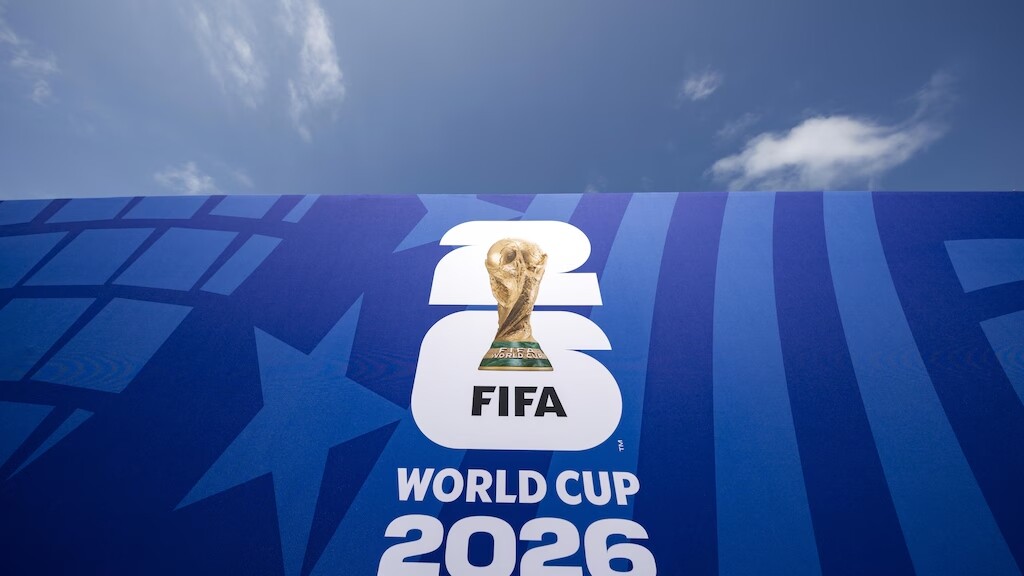
This is the first time in World Cup history that the tournament has expanded to 48 teams.
Compared to the previous format of 32 teams, this World Cup adds 16 extra slots, giving more countries and regions the opportunity to grace the world stage. Beyond the world of football, a similar story of “expansion” is also unfolding simultaneously in the crypto industry.
From Sports to Finance, “Expansion” is Becoming a New Industry Consensus
A common characteristic of mature ecosystems is their continuous absorption of new participants.
Looking back over time, many globally influential industries have undergone similar development processes. Internet platforms evolved from serving a handful of users to serving billions; capital markets developed from a single investment category to a rich array of assets; and the World Cup grew from a small-scale event into a global sporting spectacle.
The underlying logic is quite consistent. In the early stages of industry development, success often relies on core participants establishing rules and order. As the industry matures, the new challenge becomes how to attract more participants and build a richer ecosystem.
The crypto industry is no different. Over the past decade, the world of Crypto has experienced not just user growth, but a continuous expansion in asset types and ecosystem structures. Today’s crypto market shows a development trajectory remarkably similar to the World Cup’s expansion—constantly breaking boundaries and expanding the scope of participation.
From BTC to RWA, Crypto Assets are Also Experiencing Their Own “Expansion Era”
The history of the crypto industry’s development is essentially a history of continuous asset expansion.
Going back to the industry’s early days, people’s perception of crypto assets was almost entirely synonymous with Bitcoin. Then, the emergence of Ethereum spurred the growth of the smart contract ecosystem, bringing a wave of innovative projects to the market. Later, different tracks like DeFi, NFTs, GameFi, and Meme assets rose in succession, making the industry’s asset structure increasingly diverse.
In the recent couple of years, a new trend has begun to capture market attention—the accelerated development of Real World Assets (RWA) and the influx of traditional capital via products like Bitcoin spot ETFs. This means the crypto industry is forging stronger connections with the broader financial system, further broadening the boundaries of Crypto.
If the early crypto market was more like a tournament with only a few teams competing, today’s industry ecosystem is closer to an expanded World Cup. Asset types are increasingly plentiful, participating roles are becoming more diverse, and the market is gradually evolving from a single narrative into a more complex and open system.
As Assets Become More Diverse, Platforms are Playing the Role of a “World Cup Organizer”
After asset expansion, the truly important question becomes how to connect these assets.
After the World Cup expansion, the tournament organizers’ challenge wasn't just about accommodating more teams; it was more importantly about how to enable teams of different levels and from different regions to connect and compete within a single framework. The same principle applies to the crypto industry.
With the increasing variety of asset types, user demands on platforms have also changed. Traders want access to more market opportunities, projects seek wider channels for exposure, and the industry ecosystem needs more efficient liquidity and connectivity. Against this backdrop, trading platforms are gradually transforming from simple trading venues into crucial hubs of the entire ecosystem.
Take BitMart for example. In recent years, it has continuously expanded its asset coverage and enriched its product suite, including spot, futures, and innovative assets. In a sense, such a platform acts like a “super league” in the crypto world. Different types of assets gain exposure here, users from various backgrounds find suitable ways to participate, and the platform itself plays a vital role in connecting different parties in the market.
This trend is also very evident during the World Cup.
Centered around the tournament, more and more platforms are trying to integrate viewing, interaction, and digital asset ecosystems. For instance, the recently launched World Cup Prediction Event by BitMart uses a points-based prediction model covering the entire tournament period from the group stage to the final. Users can earn prediction points through mini-games, trading tasks, daily check-ins, and invitations. They can then use these points for World Cup match predictions and participate in distributing the total prize pool of 880,000 USDT.
In a way, the value of such events isn't just the prediction itself. It's about bringing users who originally focused on different things into the same ecosystem because of a common topic: the World Cup. Football fans, trading users, and crypto asset participants connect through a single event scenario. This kind of connection is precisely one of the most important aspects of the industry's expansion process.
For the industry, the value of this connective capability is becoming increasingly important. In an era of continuous asset expansion, platforms that can help users discover and participate in opportunities are often better positioned to unlock greater ecosystem value.
The Next Phase of Competition Belongs to More Open Ecosystems
The World Cup expansion is a choice, and the expansion of the crypto industry is also a choice.
Both the football world and the digital asset market are undergoing a transition from “niche participation” to “broad participation.” In the past, people focused on the top teams and the most mainstream assets. In the future, a richer set of participants, more diverse demands, and a more multi-faceted ecosystem structure might be the key drivers of sustained industry growth.
For the Crypto industry, the increase in asset types doesn't mean the market is becoming chaotic; quite the opposite, it signifies that the industry is gaining greater inclusiveness and more room to grow. From mainstream assets to innovative projects, from on-chain ecosystems to real-world assets, more and more elements are converging into a single market.
The World Cup expanding from 32 teams to 48 teams represents an open attitude from the football world towards the future. The crypto industry evolving from a single asset to a diverse ecosystem tells a similar story. In this process, platforms that can connect more assets, more users, and more opportunities may well become the crucial driving force for the industry's development in the next phase.
After all, whether it's the World Cup or the Crypto market, what truly determines its vitality is never the scale itself, but how many people can participate and find their own place within it.


