






Founders Fund's $600 Million Bet on SpaceX Turned Into $50 Billion


- Core Thesis: Former Founders Fund partner Brian Singerman revealed the fund's extremely concentrated investment philosophy: deploying the vast majority of capital into "A+ founders" (like Musk) rather than diversifying the portfolio; he argues that funds returning only 3x over 10-12 years actually underperform S&P 500 index funds, and this "contrarian" strategy is key to creating venture capital legends.
- Key Elements:
- Founders Fund invested approximately $600 million in SpaceX, holding a 3% stake; if the IPO occurs at $135 per share, the valuation would reach $1.8 trillion, making that equity stake worth over $50 billion—a nearly 100x return, arguably the most successful single bet in venture capital history.
- Singerman stated that over 98% of his decisions are based on founder strength, abandoning traditional VC dogmas like portfolio management and reserve allocation; the core logic is "putting the most money into the best companies at the best price."
- He believes that funds achieving only 3x returns over 10-12 years effectively underperform S&P 500 index funds, meaning LPs are losing money; the only way to beat the market is to heavily concentrate on companies you are convinced will become the greatest in history.
- Singerman emphasized that Musk's irreplaceability lies in his ability to simultaneously fulfill the roles of CEO and CTO; without SpaceX, Founders Fund would not exist—they were "staking their careers" on it.
- Regarding team culture, Peter Thiel assembled a team of "non-yes-men," where members have deep expertise in their fields and are willing to oppose him, ultimately reaching consensus on identifying "A+ founders"—a key factor in the fund's success.
Original Author: Bao Yilong
Original Source: Wall Street News
Brian Singerman, a former partner at Founders Fund who oversaw heavy investments in super unicorns like SpaceX and Palantir, recently revealed his "contrarian" concentrated betting strategy in an interview, bluntly stating that it was "A+ founders" like Elon Musk who created the myth of venture capital returns.
Wall Street News noted that SpaceX will officially list on the U.S. stock market this Friday. Over the past nearly 20 years, Founders Fund, led by Peter Thiel, has invested approximately $600 million in SpaceX through multiple funding rounds and currently holds about 3% of the company's shares.
If SpaceX ultimately goes public at $135 per share, its valuation will approach $1.8 trillion, valuing Founders Fund's stake at over $50 billion—a return of nearly 100 times, marking one of the most successful bets in venture capital history.
Against this backdrop, on June 11, the "Sorcery" podcast featured an in-depth interview with former Founders Fund partner Brian Singerman, conducted by host Molly O'Shea in his private home music recording studio.
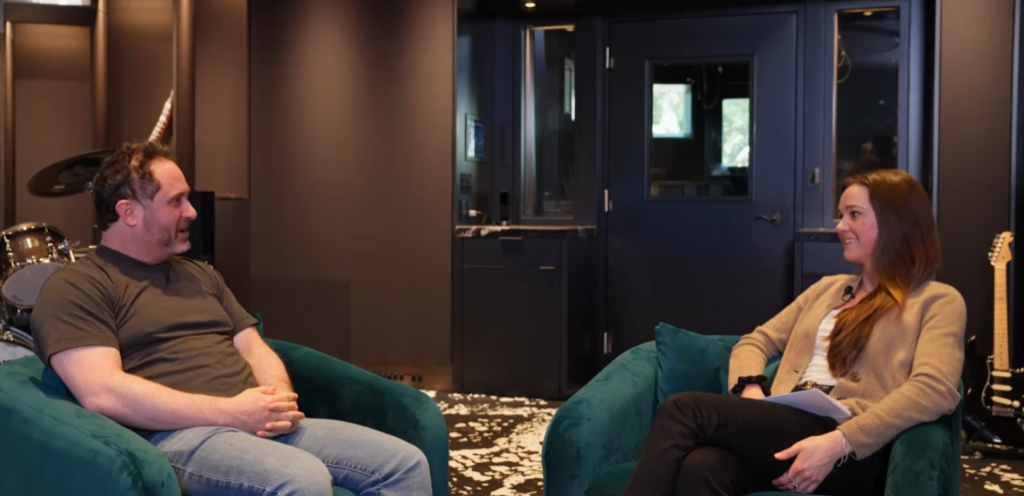
Left: Brian Singerman; Right: Molly O'Shea
In the interview, Singerman openly shared his journey of betting on SpaceX, his assessment of Musk, and Founders Fund's highly disruptive investment philosophy. Singerman stated:
"For me, the core of venture capital is: invest as much capital as possible into the best companies at the best price. Over 98% of my decisions are based on the strength of the founder."
Singerman emphasized that when he had the opportunity to meet Musk and learn more about SpaceX, he clearly realized that no one else on the planet besides Musk could truly make a venture like SpaceX a success.
Furthermore, regarding venture capital returns, he bluntly stated that funds achieving only three times returns over 10 to 12 years are actually underperforming the S&P 500 index fund, meaning investors have effectively "lost money."
In his view, portfolio management, reserve allocation, and equity stake calculations are all "nonsense." He admitted that if SpaceX had failed back then, Founders Fund would no longer exist—"We were essentially betting our careers."
"Without SpaceX, Founders Fund Would Not Exist"
Reflecting on Founders Fund's rise, SpaceX is an indispensable core anchor.
Singerman did not shy away from the decisive role this investment played in the institution's fate. Singerman stated:
Without SpaceX, Founders Fund would not exist. We essentially bet our entire careers on SpaceX.
Despite SpaceX experiencing three early rocket launch failures, the team maintained an extremely high level of conviction.
When asked why he dared to make such a heavy bet, Singerman attributed the core reason entirely to his judgment of Musk himself.
When I met Musk and learned more about SpaceX, I clearly realized there is no second person on Earth like him who could truly make something like SpaceX happen. In the entire history of business, there has never been anyone like him.
In Singerman's view, Musk's irreplaceability lies in his ability to simultaneously fulfill the dual roles of CEO and CTO. He said:
Very few people can be world-class at both the execution level of understanding new business models and the technical level. He is that kind of person.
Additionally, regarding the highly anticipated Starlink business, Singerman revealed that the investment team had already foreseen its immense commercial potential early on:
The launch business is an indispensable foundation, but we all knew long ago that Starlink is the true core business model.
Abolishing VC Dogma: "Put the Most Money into the Best Companies"
In contrast to the "portfolio management" and "risk diversification" emphasized by Wall Street and traditional Silicon Valley VCs, Singerman demonstrated an exceptionally pure and concentrated investment philosophy.
Singerman stated bluntly:
For me, venture capital is about putting the most money into the best companies at the best possible price.
Singerman further emphasized:
There is no room in my decisions for that nonsense about portfolio management, reserve calculations, and ownership percentages. It’s that simple: put the most money into the best company.
From a market return perspective, he sharply pointed out that the vast majority of diversified early-stage venture capital funds, even achieving three times returns over a 10 to 12 year cycle, actually fail to outperform the S&P 500 index fund. Singerman said:
Beating the market is very difficult. The way to outperform the market in venture capital is to pour massive amounts of capital into companies you are convinced will become the greatest in history, putting every dollar you can mobilize into them. Every other method either breaks even or underperforms the market.
Under this strategy, the "founder" becomes the sole variable. Singerman explained:
When I make venture capital decisions, over 98% of the basis is the strength of the founder. When I talk to that founder, do I believe they will crush every obstacle? Do I believe they are world-class in some novel domain?
Singerman also acknowledged his own limits in judgment. He never reads financial reports. The only time he was asked to do a spreadsheet, his wife helped him.
Regarding investments in biotech companies like Stem Centrx, he said he "knows nothing about biotech" but still decisively invested because he considered the CEO incomparable.
Unveiling Peter Thiel: Building a Culture of "Non-Yes-Men" and Macro Predictions
As the soul of Founders Fund, Peter Thiel's style and macro judgment have always been hot topics in the market.
Singerman evaluated Peter Thiel's team-building strategy in the interview. Singerman emphasized:
Peter Thiel is the greatest venture capitalist in history. The best thing he does in venture capital is surround himself with people who are truly smart and unafraid to showcase their individual talents.
At Founders Fund, no one tries to figure out and say what Peter Thiel wants to hear, Singerman elaborated:
If you're just trying to say what he wants to hear, it will never work. People are too smart; they can see through it instantly. He built a team of 'non-yes-men' who dare to oppose him, as long as your argument is good enough.
He emphasized that Founders Fund's success stems precisely from team members having genuine expertise in different areas, respecting each other, rather than imitating one another.
He internalized this principle as a personal code of conduct: focus on what you are truly good at, don't pretend to be proficient in other areas, and don't participate in topics you don't understand.
He believed that the team at the time, regardless of their perspective, could ultimately reach a consensus on the judgment that "this is a true A+ founder"—not an A minus, but a true A plus. "There are very few such people."
Beyond corporate culture, Singerman also mentioned Thiel's keen sense of macro trends.
Regarding Peter Thiel's recent move to Argentina, Singerman admitted:
Peter Thiel is usually very accurate on macro trends. He is the most impressive person I've ever seen on global macro trend judgment. He believes American politics is moving in a more extreme direction.
Singerman himself is also influenced by this notion of asset security. He chose to move to Hawaii, not only for the climate, but also due to a deeper consideration for private asset protection:
I'm not primarily trying to escape high income tax rates; what I'm trying to avoid is asset confiscation.
Bullish on Human Cultural Heritage, Physical Collection is a Belief
At the end of the in-depth interview, the investor who discovered countless tech unicorns shared his views on the AI era.
Surprisingly, as a cutting-edge technology investor, after stepping back from frontline VC, he has poured immense passion into physical games, music, and cultural collections. Singerman stated:
I am very bullish on unique, iconic artifacts of human culture. In a world increasingly dominated by machines and AI, things that truly carry a human emotional and creative imprint will experience exponential growth in mindshare and value.
Singerman concluded:
"I am a tech optimist. I've made a lot of money by betting on humanity, betting that 'the apocalypse won't happen.' A machine might be able to make music better than me, but so what? The emotional feedback that only humans derive from art and passion is irreplaceable. That is what will truly define us in the future."
The full interview transcript is as follows (AI-assisted translation):
Molly O'Shea: Brian Singerman, welcome to Sorcery.
Brian Singerman: Thanks for having me.
Molly O'Shea: Thank you for hosting us. This place is really off the beaten path.
Brian Singerman: Yeah, we're in my home recording studio right now.
Molly O'Shea: It's a bit like "nomen est omen," isn't it? Singerman.
Brian Singerman: I don't think so. The surname was probably made up generations ago at Ellis Island.
Molly O'Shea: Then how do you explain everything with you and music?
Brian Singerman: Right, exactly. There seems to be no other explanation for this music thing except having a musically fitting name.
Molly O'Shea: It must be it. So, when did music start for you?
Brian Singerman: Basically, I was 'created' at Ellis Island.
Molly O'Shea: Alright. That's a good start. Most people know you from Founders Fund, where you have a legendary status. Grace from Vanderbilt invited me to one of their conferences, around fall or winter, and she said, 'Hey, we'd love to have you. You could interview Brian Singerman on stage. Are you interested?' I said, of course. It turned out I had to be abroad somewhere at that time.
Brian Singerman: You're such a world traveler.
Molly O'Shea: I'm really sorry. But we finally meet here today, in your music factory.
Brian Singerman: It's a recording studio, but whatever.
Molly O'Shea: Okay. I want to talk about these things. I mean, these are truly unprecedented crazy times, and most of the companies dominating the headlines are ones you invested in early. I want to go through SpaceX, Palantir, Anduril, one by one. But before that, Max Loewen gave me some fantastic questions.
Brian Singerman: Oh no... I really don't want to hear what Max has in mind. I'm not prepared for this, but I'll do my best. I will definitely find a way to get back at him.
Molly O'Shea: We'll dive deep into investing later. Stay tuned. Let’s start here—are you ready?
Brian Singerman: Ready.
Molly O'Shea: When and how did you get into board games?
Brian Singerman: Good question. I've been playing board games for a long time. I'm just a gamer. It's my label, and it's core to what drives my investment strategy and everything else. I love strategy games; it's my true hobby. I probably started playing games when I was six or seven, not just video games, but also board games. I would go to small gatherings near my house where people played all sorts of things—from Monopoly to Acquire, and various other old games. I just got deeply hooked.
Molly O'Shea: Which are your favorites?
Brian Singerman: I've reached national and even global competitive levels in several games. I don't know if I should say 'love' or 'obsession.' It seems I get obsessed with one specific game at a time. I was the US champion of Settlers of Catan, but that was back in 1995 or '96, when almost no one played it; it was its first year. I was probably top ten in the world in a game called Ascension, and definitely top ten in Terraforming Mars and Keyflower. But how my poker is so bad is beyond me.
Molly O'Shea: Poker? You're bad at poker? How did you get into each of these games? How did it start?
Brian Singerman: I can't explain it. You play one, find it interesting, and then dive deeper. Especially when these games got online or computer versions, you could practice repeatedly and really get good. Back in 1995, it was nearly impossible to get really good at a game; it's incomparable to now. I definitely couldn't compete with top players today. But once online gaming really took off, if you invested enough time, you could get very good. My wife is quite exasperated by it—reaching that competitive level in these games requires playing 10 hours a day, practically full-time.
Molly O'Shea: And you had a family by then.
Brian Singerman: Yeah, so since having a family, I haven't been able to do that anymore. But before that, it was really fun.
Molly O'Shea: Have you ever gotten into chess or Go?
Brian Singerman: I'm bad at chess. I'm bad at any game where tactics and strategy are equally important, or even where tactics are more important. I don't like tactics; I like strategy.
Molly O'Shea: I'd like to delve deeper into this strategy aspect because I believe it permeates your investment philosophy and how you view companies. What kind of strategies do you primarily pursue? How do you see the competitive landscape and think about the game?
Brian Singerman: I don't think about the game. When I do venture capital, over 98% of my decisions are based on judging the strength of the founder. When I'm talking to that founder, do I believe they will be unstoppable at what they do? Do I believe they are world-class in some entirely new domain? Even now, though I'm not directly investing anymore, I'm still asking the same questions: Do I think they are the best in the world at something? Do I think they can use that to build one of the greatest companies in the world? Let's get back on track.
Molly O'Shea: Okay, back to 2007. You were talking to Sean Parker, and he introduced you to Founders Fund. You were managing your own angel fund at the time. Was it SpaceX that made you interested in joining Founders Fund? What was that feeling like?
Brian Singerman: It's really amazing to talk about. At that time, I was managing my own fund while still at Google. I was planning to leave Google and raise a larger fund myself. Then I became friends with Sean, and he said, 'Hey, come check out what we're doing at Founders Fund.' So I went, just to look around and meet a few people. I didn't know who the others were, didn't know who Peter was, just wandering around. At that time, they were starting to consider a company called SpaceX—a company that sounded utterly absurd. But that thing was so cool, I realized that with just angel investing, it was impossible to reach that scale. So I thought, this is the direction I want to focus on. So I joined Founders Fund early on.
Molly O'Shea: How did you meet Sean?
Brian Singerman: I think I was advising a company he was involved in, and that's how I met him. I think I first met Joe Green—he was Sean's co-founder at Causes—and then through Joe, I met Sean. That's how Silicon Valley works; the network is so complex it's hard to say exactly how the connection was made, but we just became friends.
Molly O'Shea: That's a good segue, because Max has another question—I don't know if there's a story behind this, but if there is, I want to hear all of it. He asks: Silicon Valley is a gathering place for characters. Who do you find the most interesting person, whether in your portfolio or not?
Brian Singerman: Silicon Valley is indeed a gathering place for characters. I don't know who is the 'most interesting,' but I can put it this way: There are two types of people in Silicon Valley—those who go with the flow, and those who are truly unique, genuinely world-class in some domain. I especially admire the latter, those who achieve mastery in an area I could never reach. I think Peter Thiel is the greatest venture capitalist in history for a reason. And one of the reasons Founders Fund initially attracted me was that everyone there seemed to be the best in the world at what they did. When I had the chance to meet Elon and learn more about SpaceX, it was very clear that no one else on this planet could truly make something like SpaceX happen.
I don't want to rank who is most interesting, but we can talk about people I know well one by one. I can analyze what each of them is world-class at. Whenever I meet someone I think is truly the best at something, I get very excited.
Molly O'Shea: I'd love to do that. I have a common question about people's personal performance and networks. I believe you are an extension of the people closest to you. Through Founders Fund and the people around you, what did you learn from Peter Thiel? What kind of person is he?
Brian Singerman: He


