






WLFI Freeze Controversy: Who is Defending Web3 Asset Sovereignty?


- Core Insight: The crypto project WLFI, backed by the Trump family, unilaterally froze user assets, raising industry concerns about excessive project control and the erosion of decentralized principles. In response, its partner platform HTX chose to stand with users, revealing the opportunities and core value conflicts that arise when political power enters the crypto industry.
- Key Elements:
- WLFI unilaterally froze approximately $1.5 million worth of WLFI assets in addresses associated with HTX, citing a "UK sanctions compliance review" without providing a legal basis or a path to unfreezing, sparking industry uproar.
- HTX publicly stated its position, suspended trading of WLFI and USD1, and proactively exchanged users' USD1 for USDT at a 1:1 ratio to mitigate risk, demonstrating the platform's commitment to prioritizing user asset protection amidst a conflict of interest.
- This marks the second recent freezing incident by WLFI, following previous allegations by Justin Sun that WLFI had illegally frozen his entire WLFI token holdings and stripped him of governance voting rights.
- The incident exposes how traditional political and business forces entering Web3 may bring centralized power logic (such as "long-arm jurisdiction") into the industry, contradicting its core decentralized ethos.
- The Trump family's entry has brought mainstream attention and capital inflow to the crypto industry, but their lack of respect for decentralization presents a severe test for the industry in balancing compliance with upholding its core value consensus.
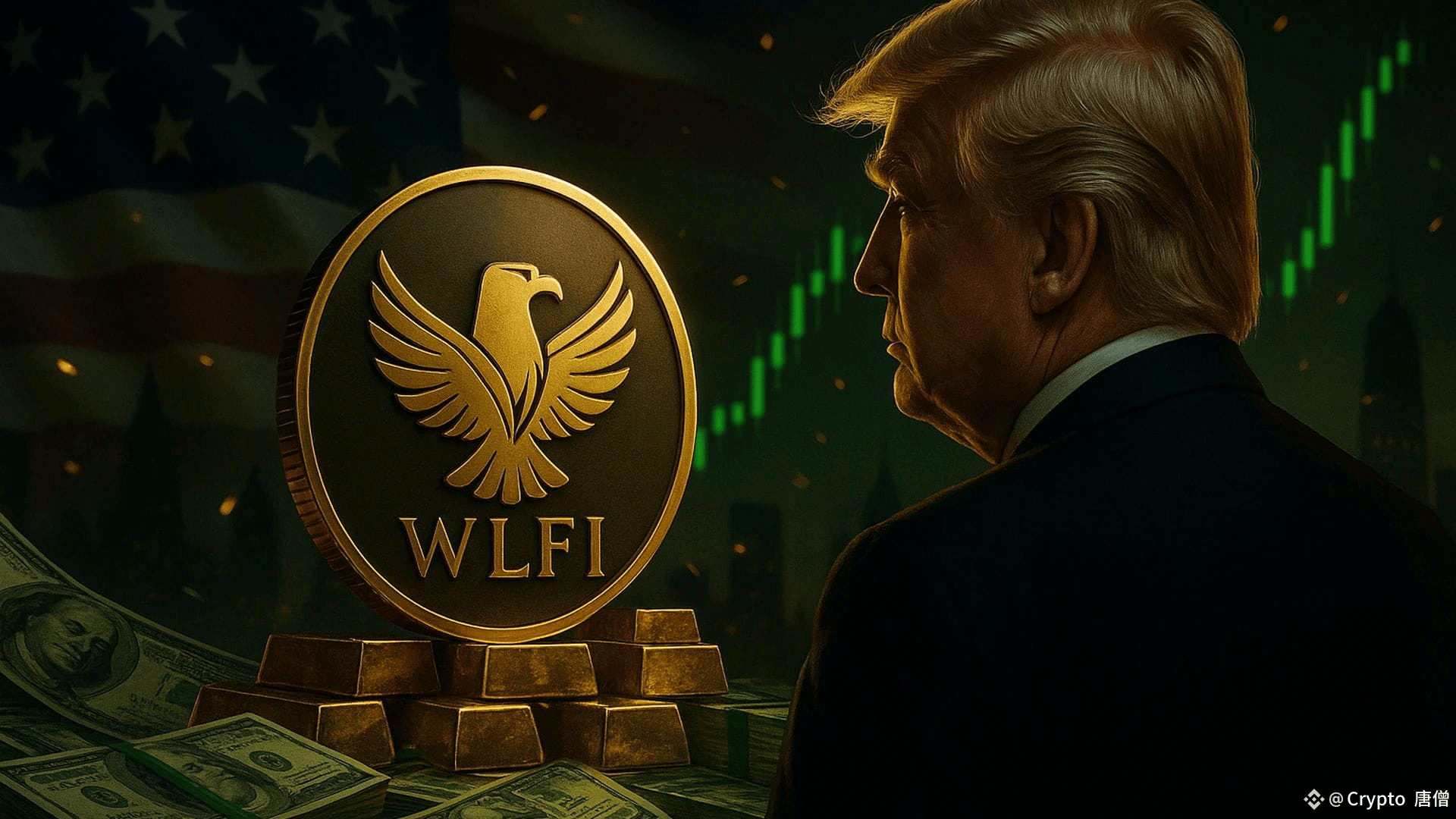
Over the past few days, the Trump family-backed crypto project WLFI (World Liberty Financial) has once again become the focus of industry discussion.
On June 5th, the WLFI team froze WLFI assets in certain addresses associated with Huobi HTX, citing "UK sanctions compliance review," which restricted the on-chain transfer of the affected assets.
After the news broke, the industry was in an uproar.
Indiscriminate Freeze Sparks Outrage: WLFI Touches a Core Line of Web3
It is understandable that WLFI, as a project deeply involved with the Trump family, has carried a distinct compliance label since its inception. In this freezing incident, the WLFI project team cited sanctions compliance review as their reason.
Viewed solely from a traditional finance perspective, freezing suspicious assets is not uncommon. Banks freeze accounts suspected of violations, and stablecoin issuers similarly possess the technical capability to freeze assets. For example, Circle's USDC indeed has "freeze" and "blacklist" functions built into its smart contract底层 design. However, such measures are typically only taken upon receipt of valid law enforcement or court orders.
The key point sparking widespread industry criticism, however, is the question of "how this capability is used."
WLFI froze user assets under the custodial environment of an exchange. What further worries the market is that the entire freezing action was implemented unilaterally: without prior notice, without a clear legal basis, without disclosure of the scope of the freeze, and without any means of lifting it.
Huobi HTX has publicly stated that, as of now, WLFI has not provided sufficient legal basis, enforcement standards, or specific resolution mechanisms for the freezing actions. In the view of many market participants, this behavior has exceeded the normal scope of compliance management and appears more like an exhibition of the project's excessive control over user assets. Crypto user furan criticized WLFI on X: "User assets should not be arbitrarily frozen; there is no room for negotiation on this."
In fact, controversies regarding WLFI freezing user holdings have arisen before. In April this year, Justin Sun accused the WLFI project team of illegally freezing all his WLFI tokens, stripping him of his governance voting rights, and threatening to permanently burn his assets. This also sparked market discussions regarding the risk of centralized project control.
Standing with Users: Defensive Measure from a Major Platform
Looking at industry history, when disputes arise between exchanges and projects, most platforms tend to handle them discreetly rather than publicly opposing them. But this time, Huobi HTX chose to speak out publicly.
Following the incident, Huobi HTX quickly suspended trading related to WLFI and USD1, and proactively converted user-held USD1 on its platform into USDT at a 1:1 ratio to prevent further risk spread. According to Huobi HTX platform data, the WLFI assets affected by this incident amounted to only approximately $1.5 million, indicating a relatively limited overall impact.
More notably, Huobi HTX was once one of WLFI's earliest and most significant partners. On May 6, 2025, Huobi HTX was the first major exchange globally to list USD1; on September 1, it was also the first to open WLFI trading. Subsequently, the platform further launched a series of products like USD1 and WLFI staking, continuously providing liquidity support and user growth channels for the WLFI ecosystem. Justin Sun, Global Advisor of Huobi HTX, even attended the TOKEN2049 Dubai summit to have a public dialogue with Eric Trump and Zach Witkoff.
From ecosystem co-building to public confrontation, Huobi HTX has paid a significant business price for this. But when the partnership conflicts with user interests, the platform ultimately chose to stand by its users.
According to industry insiders, this is not the first time the platform has taken such defensive measures.
After a security incident on the FLOW network in late 2025, Huobi HTX activated its internal risk control and asset verification mechanisms, continuously collaborating with the Flow team to confirm the status of assets. It was ultimately confirmed that all user FLOW assets were intact, and related services were restored.
From the FLOW security incident to this WLFI freeze controversy, Huobi HTX has demonstrated a relatively stable set of risk management principles: In the face of uncontrollable systemic risks or external hegemony, the platform must serve as the last line of defense for user assets. At a time when the trust system in the crypto industry is still being rebuilt, this value choice might be more significant than the crisis management itself.
The Trump Family Enters Crypto: Opportunities and Costs for the Industry
Stepping back from the specific event, the Trump family label behind WLFI lends this controversy deeper implications for the industry. Undoubtedly, the entry of political and traditional financial giants into the crypto market is a double-edged sword of extreme sharpness.
On one edge of the blade is the crossover effect and the influx of massive capital. As a family with top-tier political influence, their involvement has brought unprecedented mainstream attention to Web3 and pushed regulatory discussions to a higher level. This "Trump effect" has accelerated the process of crypto assets entering the traditional capital field of vision, even once filling the market with expectations for a comprehensive, friendly crypto policy in the future.
However, on the other edge of the blade lies the arrogance of centralized power and the erosion of the decentralized spirit. The WLFI freeze incident reveals a dangerous signal: When traditional political and business elites enter Web3, bringing with them the hegemonic logic and "long-arm jurisdiction" thinking of Wall Street, they often lack genuine reverence for decentralization. In their view, the backdoor permissions in smart contracts are merely tools for satisfying so-called compliance reviews or suppressing dissidents. As for the asset sovereignty of ordinary users, it can be stripped away at any time. This practice of "donning the cloak of Web3 while practicing traditional financial hegemony" runs directly counter to the very purpose of the crypto industry's inception.
Indeed, over the past decade or more, the reason Web3 has attracted hundreds of millions of users globally lies in its attempt to build a trust mechanism distinct from the traditional financial system: users no longer rely on the permission of centralized institutions but truly own their assets.
As more and more political forces, traditional capital, and powerful institutions enter the crypto market, the industry is indeed facing unprecedented development opportunities. However, simultaneously, a more severe test lies before all participants: In the process of embracing compliance and mainstream adoption, can the core value consensus of decentralization still be upheld?
This is not a question that can be answered once and for all. And every incident like the WLFI one forces the industry to provide its own answer.


