






瑞·达利欧:中国主导的“朝贡体系”重现,AI产业将如电动汽车产业一样发展


- 核心观点:瑞·达利欧指出,美国全球信誉下降而中国实力上升,正推动以中国为中心的新型“朝贡体系”形成;在AI领域,中国将其视为全民共享工具,致力于普及应用而非短期盈利,有望复制电动汽车产业的成功路径。
- 关键要素:
- 达利欧认为,美国难以赢得战争的认知扩散,正削弱其作为全球盟友的可靠性,而中国通过外交和经济影响力巩固地位。
- 中国经济规模已达美国的60%-70%,过去20年增长超三倍;越来越多国家领导人访华,体现对中国实力的认可,类似历史“朝贡体系”。
- 达利欧强调,这一地缘政治变化将加剧市场不确定性,投资者需保持流动性并多元化配置资产,如投资黄金。
- 在中美AI竞争方面,中国视AI为公共服务工具,追求广泛普及;而美国企业如OpenAI侧重订阅盈利,准备上市。
- 达利欧预测,中国AI产业将效仿电动汽车领域,通过成本控制与大规模应用实现全球主导,比亚迪即为成功案例。
Original source: Wall Street Week Program: Dalio's Warning&Ray Dalio on AI Development in China and the US
Compiled by: Odaily Planet Daily (@OdailyChina)
Translator: Wenser (@wenser2010)
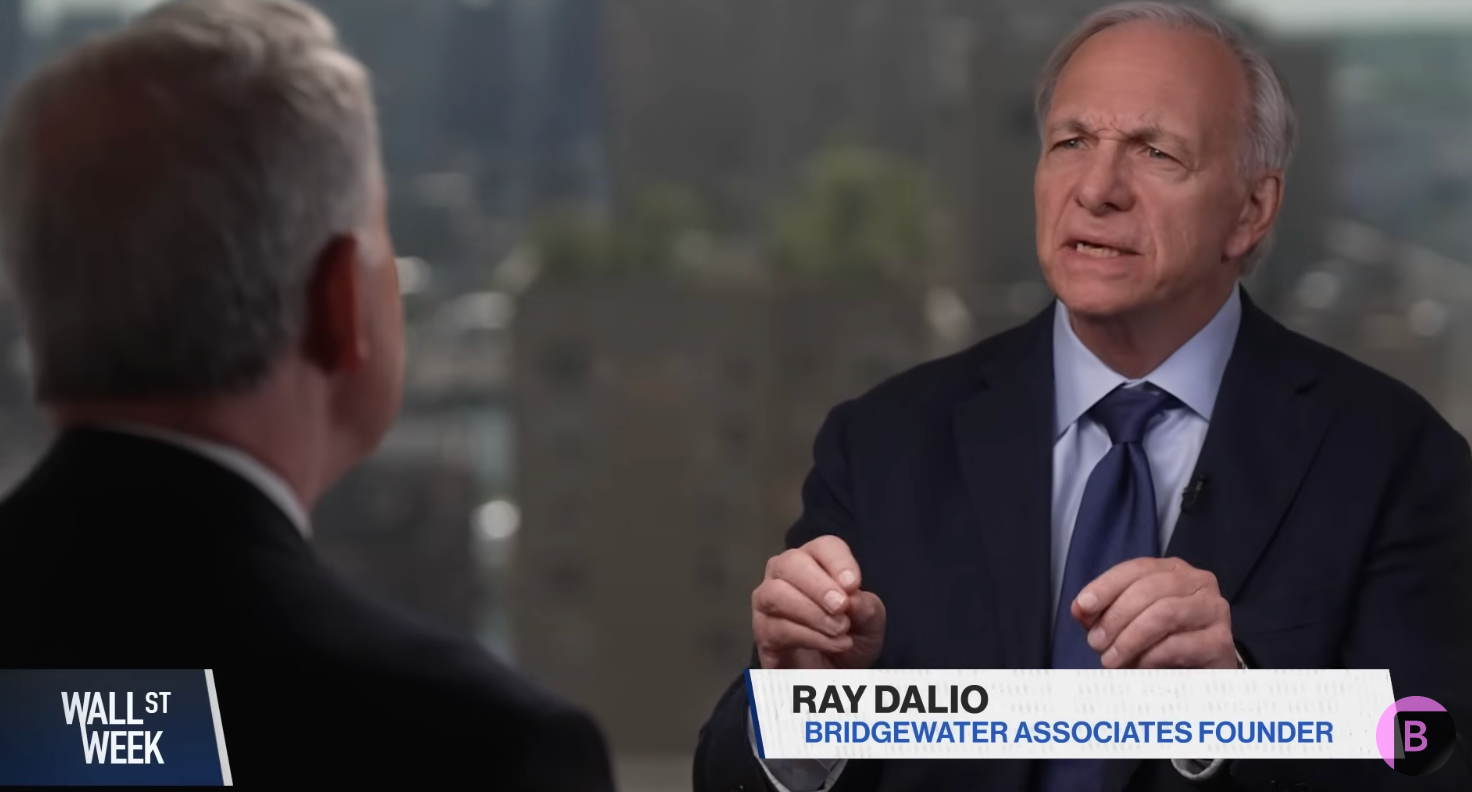
Editor’s Note: As the founder of Bridgewater Associates, the world’s largest hedge fund, Ray Dalio’s statements have always attracted high attention from all sectors of society. His insights into the global macroeconomic situation and various industries are particularly widely discussed topics. Following the consecutive visits of leaders including US President Trump and Russian President Putin to China last month, Ray Dalio has put forward a new perspective on this matter: “The world order is changing, and a tribute system led by China is being established.” Recently, regarding the “AI giant competition landscape” between China and the US, he has also offered his targeted views. The following content has been compiled and translated by Odaily Planet Daily, with some details edited and abridged.
Ray Dalio on a “China-Led World”: The Return of the Tribute System
Last month, after US President Trump and Russian President Putin successively visited China, Ray Dalio sat down for an interview with David Westin from Bloomberg’s Wall Street Week program.
During the program, Ray Dalio stated directly: “The credibility of the US as a global power willing to fight to defend its own interests is declining, while China continues to accumulate its global wealth and influence. This situation is fundamentally changing how other countries in the world view these two nations.”
“Currently, the US has approximately 750 military bases in over 80 countries around the world, and has long been seen as a trustworthy ally when facing attacks.” But after Ray Dalio concluded a roughly month-long trip to Asia (which included meetings lasting nearly 10 days with several leaders in China), he sensed a significant shift: a growing number of countries increasingly believe that “the US cannot be counted on to win a war.”
Dalio’s remarks further elaborated on his long-held view: “The power of the United States is gradually waning, while the power of China is correspondingly increasing.” Thanks to Bridgewater Associates’ extensive engagement with China, this perspective has gained considerable acceptance. On the other hand, due to his relatively close relationships with Chinese leaders, his views have also drawn criticism.
Dalio then stated that international recognition is very important to China. Currently, China’s economy is about 60% to 70% the size of the US economy, a ratio that has more than tripled over the past 20 years. He said that while China does not seek to conquer or occupy other countries, it places great importance on the recognition of political leaders from other nations. “You can see that leaders from many countries are visiting China one after another, which is reminiscent of the ‘tribute system’ in Chinese history — where other states came to acknowledge and respect China’s power. But this system was not an oppressive or controlling one.” (Odaily Planet Daily Note: The original term used was ‘tribute system’).
“So, this tribute system is essentially a hierarchical system. When dealing with other countries, what matters is how this system affects trade and national security between the parties involved. I believe that from a political perspective, we are now entering a period where similar tribute-system-like arrangements will form between China and various countries, and the relative power between nations will become the decisive factor in the world political landscape.” During this process, Ray Dalio also noted that it wasn’t until the mid-17th century that Western societies gradually developed concepts like nation-states and borders. Before that, the power structure in Western societies consisted of different royal families, which is fundamentally different from the historical concept of frontiers that has persisted throughout Chinese history.
He believes this change will directly impact global markets (including capital and finance). Investors must navigate this turbulent situation: there are risks to currency values, and global uncertainty requires investors to maintain liquidity and diversify asset allocation, including investment in gold.
Ray Dalio on the “AI Competition Landscape between China and the US”: China’s AI Industry Will Develop Like Its Electric Vehicle Industry
In June, Business Insider reported on Ray Dalio’s views regarding the competition between China and the US in the AI sector, also highlighting the significant differences and potential impacts between the two.
Ray Dalio stated that China views artificial intelligence as an important tool that should be accessible to all workers. “It’s like electricity and tap water — something everyone should have,” he said.
As a renowned entrepreneur who first visited China as early as 1984, Ray Dalio has long been very bullish on the country’s development. Previously, he told attendees at a Forbes magazine conference in New York: “China has made huge profits through exports, and these funds are being extensively utilized for R&D in the field of AI, thereby driving economic growth through increased productivity.”
Notably, Dalio emphasized that while US companies like OpenAI and Anthropic are adjusting their subscription package structures and working hard to increase revenue in preparation for going public, Chinese companies are focused on making their models accessible to as many regular employees as possible. “It doesn’t necessarily have to be expensive, nor does it even necessarily have to be profitable right now.”
“In a way,” Dalio believes, “it mimics the path of success the country has seen in industries like electric vehicles — domestic Chinese companies like BYD have achieved rapid growth in markets such as Europe.”
During a panel discussion following Dalio’s speech, JPMorgan executive Mary Callahan Erdoes pointed out that, unlike the US social climate which “treats employment issues as a political topic,” Chinese AI company executives and political figures, when referring to AI, “do not have a fear of AI affecting employment.” Instead, the country is more focused on “using AI to promote development” and is dedicated to finding the next industry sector where it can achieve dominance. “The robotics track can essentially be considered China’s ‘next-generation electric vehicle industry,’” she said.


