






73 sell trades, zero buy trades – is this Circle management's "long-termism"?


- Key Point: Circle's president emphasized the company's long-term value in public interviews, but insider trading records show that since CRCL went public, core management, including the CEO, has executed 73 sell trades and zero buy trades, cashing out a total of approximately $664 million. This clear contradiction between words and actions undermines the credibility of their confidence in the stock price.
- Key Elements:
- CRCL's stock price has plummeted over 70% from a high of $260 to $62. President Tarbert responded by saying they are "focused on long-term development," yet Form 4 filings show he has sold 10 times since listing, cashing out approximately $30.77 million, with zero purchases.
- Statistics for all Circle insider trades show: 73 sell trades, 0 buy trades, totaling approximately $664 million cashed out; CEO Jeremy Allaire made 9 sell trades, cashing out $139 million.
- Executive stock sales are common, but the core controversy lies in the fact that after a significant price correction, no insider with informational advantages chose to increase their holdings at lower levels, resulting in a highly "one-sided" trading structure.
- The market is reassessing Circle's valuation logic: its revenue is highly dependent on income from USDC reserve assets, profitability is questionable in a rate-cutting cycle, competition in the stablecoin赛道 is intensifying, and its compliance advantages are being diluted.
- The sluggish CRCL stock price fundamentally reflects the market's disagreement between its "financial infrastructure company" narrative and the current business reality, which relies on stablecoin scale.
Original Article: Odaily (@OdailyChina)
Author: Azuma (@azuma_eth)
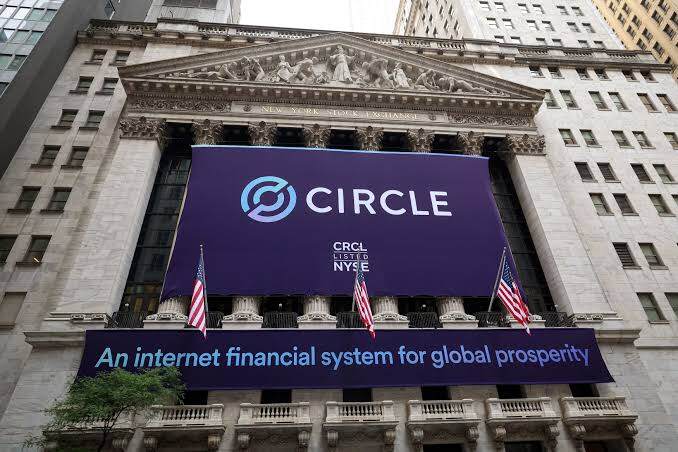
"Circle is playing the long game... If we can achieve our mission of building a full-stack internet infrastructure platform, the stock is going to take care of itself in the long run."
On July 14, Circle President Heath Tarbert appeared in a live interview on FOX Business. When asked by the host about what he would say to investors holding CRCL shares after the stock fell from a high of $260 to $62, Tarbert gave the above response.
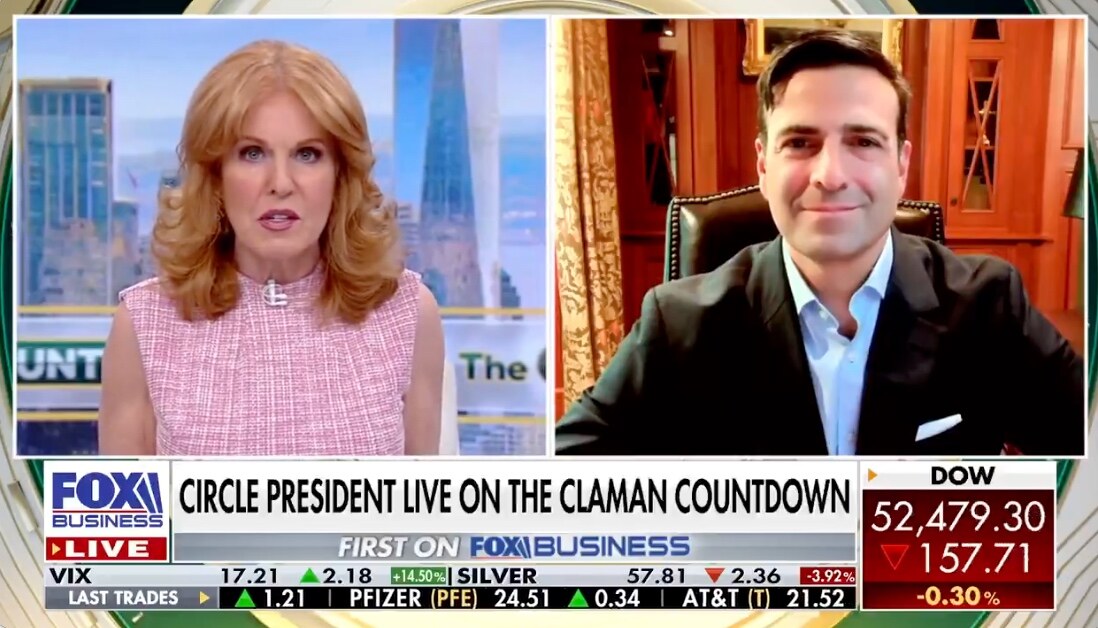
Championing "long-term value" is a typical response from any company experiencing a stock price downturn. However, to assess the credibility of this claim, one should not simply listen to how management describes the future, but rather observe whether they are willing to continue betting on it with their own capital.
After all, management is often the group most familiar with the company's situation. They possess the operational data, strategic plans, and future growth trajectories. If they genuinely believe the current share price is undervalued, a significant price correction should theoretically present a rare buying opportunity.
But for Circle, the actions of its management may reveal a different story.
73 Sells, 0 Buys: Is This What They Call Long-Term Value?
Following Tarbert’s long-term narrative, CRCL investors reviewed the Form 4 documents Circle filed with the U.S. Securities and Exchange Commission (SEC) and discovered a rather telling fact: the Circle President, who had just instilled long-term confidence in the market, has been consistently selling company stock since CRCL went public.
- Editor's Note: Form 4 is a mandatory filing with the SEC for insiders of publicly traded U.S. companies, used to disclose stock transactions by directors, executives, and shareholders owning more than 10% of the company. While ordinary investors only see public market price changes, Form 4 provides a crucial window into how insiders view the company's value.
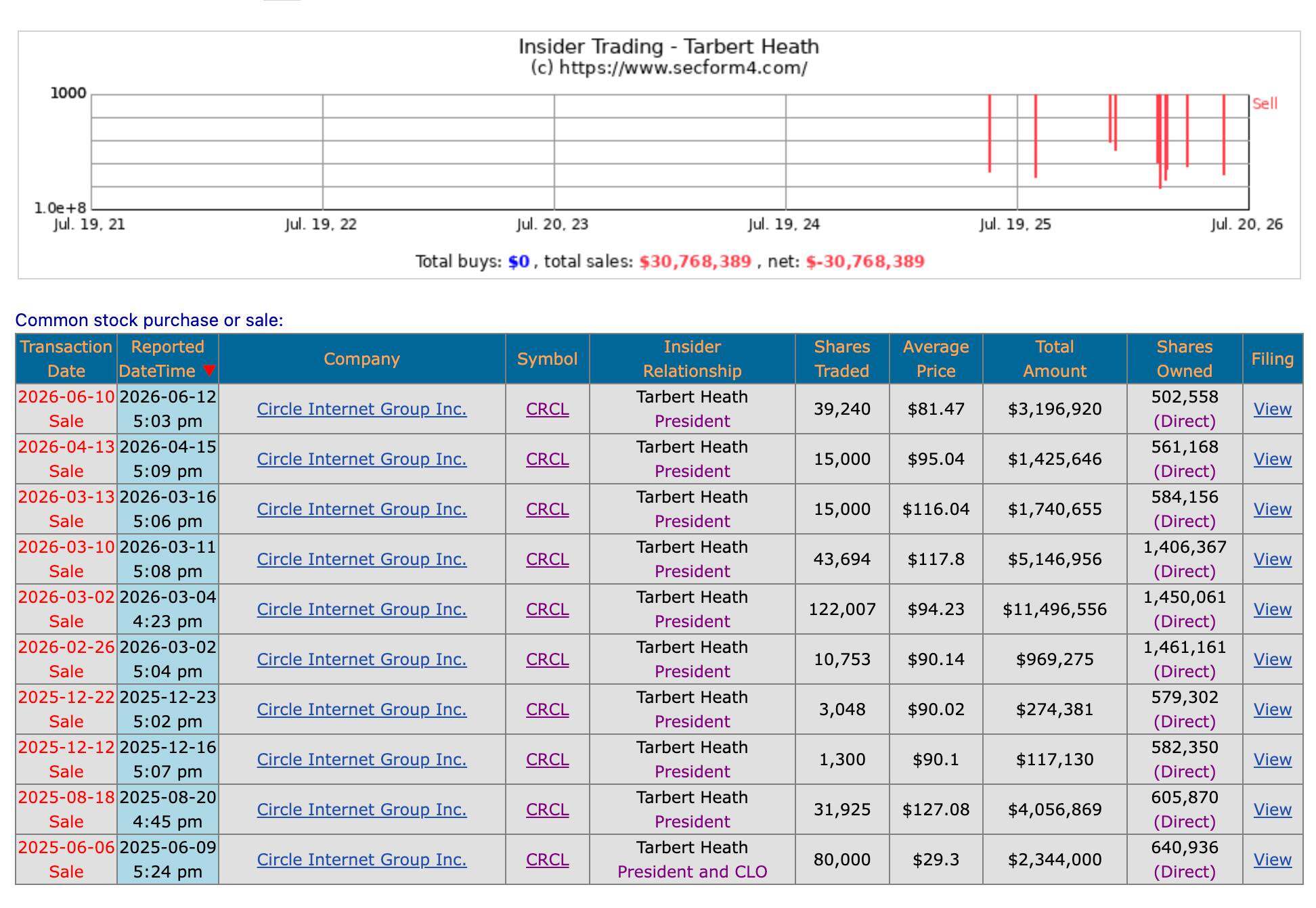
Circle's Form 4 filings show that since his first sale of CRCL in June 2025, Tarbert has sold CRCL a total of 10 times, cashing out approximately $30.77 million, with no purchases whatsoever.
If it were only Tarbert selling stocks, it might be overlooked. However, a deeper review of all insider transaction records at Circle reveals a more troubling pattern: From the founder and CEO to the CFO, CPTO, CAO, and board members... multiple core insiders at Circle are all selling stocks - 73 sells in total, 0 buys, amounting to approximately $664 million cashed out.
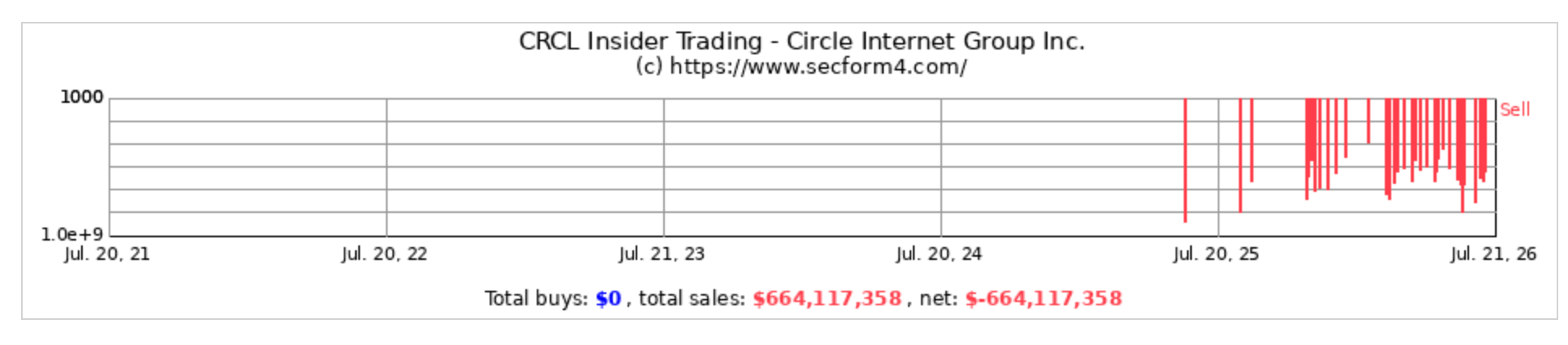
Here is a brief summary of the stock sales by these core insiders:
- Founder and CEO Jeremy Allaire: 9 sells, 0 buys, total cash-out of $139 million;
- Board Member Burns M Michele: 12 sells, 0 buys, total cash-out of $276 million;
- Board Member Neville Patrick Sean: 13 sells, 0 buys, total cash-out of $181 million;
- CFO Fox-Geen Jeremy: 9 sells, 0 buys, total cash-out of $22.45 million;
- CPTO Chandhok Nikhil: 12 sells, 0 buys, total cash-out of $69.21 million;
- CAO Schulz Tamara: 9 sells, 0 buys, total cash-out of $1.21 million;
- President Heath Tarbert: 10 sells, 0 buys, total cash-out of $30.77 million...
Clearly, when CRCL's stock price fell over 70% from its peak and the market began reassessing Circle's long-term value, the group closest to the business itself did not choose to express confidence in future growth by buying more shares.
Executive Share Sales Are Common, But the Trading Structure is Overwhelmingly One-Sided
It is important to note that insider stock sales do not simply equate to a bearish view on the company's future.
For management of public companies, stock selling is not uncommon. Especially post-IPO, founders, executives, and early investors often hold large equity stakes. Selling some shares for wealth diversification, tax planning, or personal asset allocation is normal practice.
Therefore, seeing one or even multiple executives selling stocks is not sufficient proof that they lack faith in the company's future. The real key is: after a significant price correction, are any of them willing to buy back?
For Circle, the controversy lies precisely here.
CRCL initially surged above $260 after going public, only to subsequently decline by over 70% from its peak. While there was a brief rebound recently, it was short-lived. According to traditional investment logic, if management truly believed the company's long-term value remained unchanged, or even that the market had undervalued Circle's future, the significant price drop should have presented an extremely attractive buying opportunity.
After all, these insiders inherently possess an absolute information advantage over ordinary investors. They know USDC's growth data, the progress of client acquisition, future product roadmaps, and the company's real competitive position in the stablecoin arena... Yet, based on publicly disclosed Form 4 data, Circle's core management has not made any purchases at lower price levels, but has instead continued to sell and cash out.
This highly one-sided trading structure makes it difficult to convey to the market the long-term confidence that matches the "playing the long game" narrative from the interview.
Reassessing CRCL's Value: Can the Long-Term Narrative Match the Current Valuation?
Of course, even as insiders continuously sell shares, it doesn't entirely equate to "Circle lacks long-term value," but it can easily reinforce the market's pessimistic expectations for the company.
Especially against the backdrop of CRCL's declining share price, there exists a significant divergence in market perception of Circle: Is Circle fundamentally a future financial infrastructure company, or is it an issuer primarily dependent on stablecoin scale and interest rate environments?
In the early days of the IPO, the high valuation the market gave Circle was a bet on a bigger narrative – that as stablecoins become a global digital payment infrastructure, Circle would have the opportunity to become a crucial gateway connecting traditional finance and the crypto world.
However, as the stock price has fallen from its peak, investors have begun to re-examine this logic. On one hand, Circle's current revenue remains highly dependent on returns from USDC reserve assets. Whether its profitability can maintain high growth during a rate-cutting cycle has become a market concern. On the other hand, during a crypto market downturn, the growth potential of USDC remains uncertain. Furthermore, as more financial institutions and crypto companies enter the stablecoin space, Circle's once dominant compliance advantage is also being reassessed.
Therefore, the current sluggishness of CRCL essentially reflects the market re-evaluating its value: Whether the growth of the stablecoin industry and Circle's own business performance can justify the high-growth valuation once assigned to CRCL.
Looking ahead, Circle will need to answer this question with its actual performance.


