Movement Labs가 파산 신청을 하면서, Movement Industrial 및 재단이 최대 수혜자가 될 전망이다.


- 핵심 의견: 전 개발사 Movement Labs의 파산 신청은 사실상 치밀하게 계획된 '금환탈각(金蟬脫殼)' 작전으로, 자산, 지적 재산권 및 팀을 신규 법인인 Move Industries와 Movement 재단으로 이전해 위험을 분산시키고, MOVE 토큰 매도 사태에 대한 미국 법무부의 조사와 소송을 회피하려는 의도다.
- 핵심 요소:
- 파산 전 핵심 자산 이전 완료: Movement Labs는 '페닉스 프로젝트 계약'을 통해 지적 재산권과 계약을 Movement 재단으로 이전하고, MOVE 토큰 발행 권한을 포기했으며, 팀을 120만 달러에 Move Industries에 양도했다.
- 파산 법인은 빈 껍데기: 파산 신청 당시, Movement Labs는 영업 자산이 없고, 직원도 없으며, 약 6만 달러의 현금만 보유하고 있었고, 부채는 최대 1000만 달러에 달했다. 주요 목적은 소송 청구 등 잔존 위험만을 남겨두기 위한 것이었다.
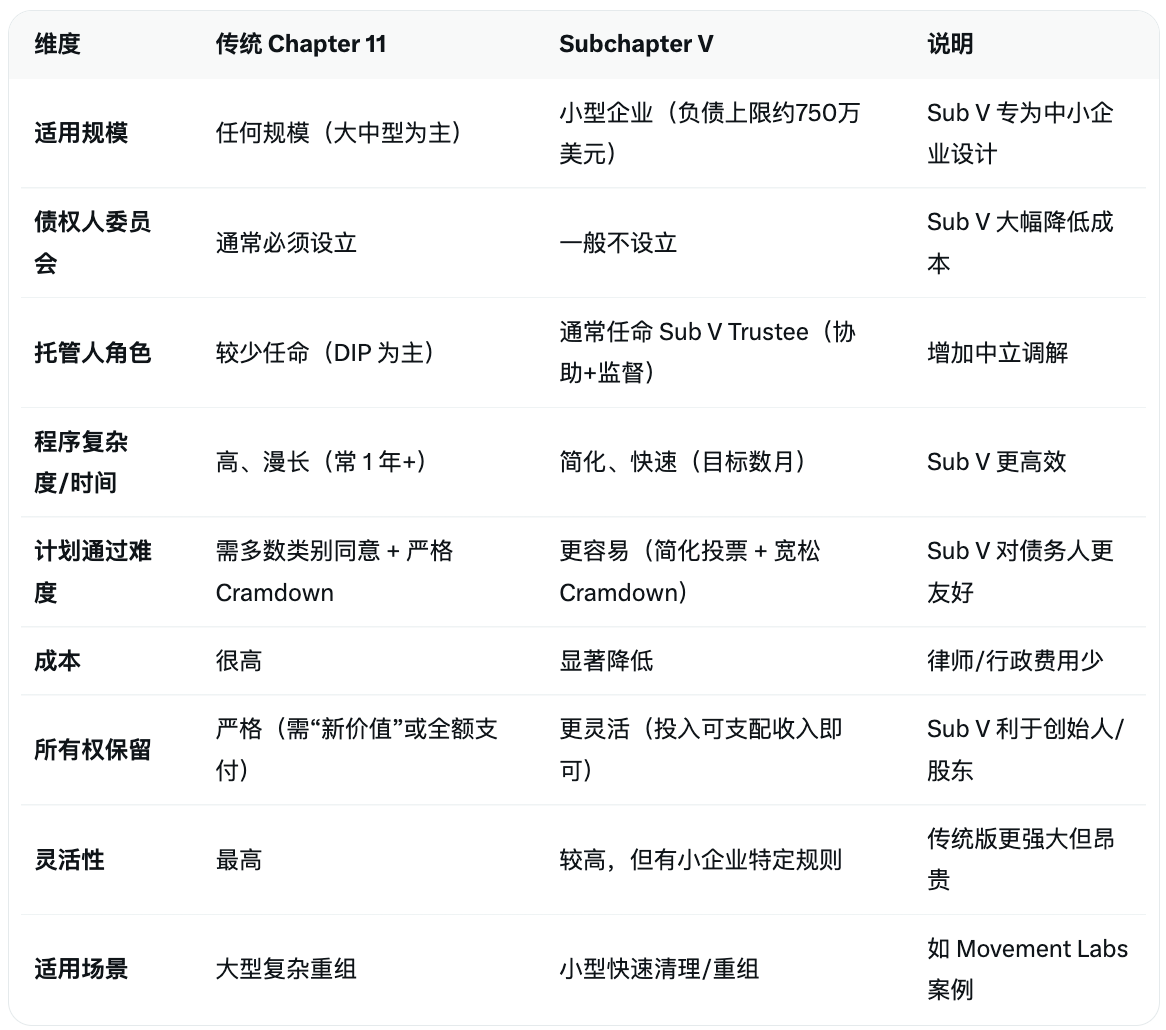
- 파산 전략 선택: 회사는 소규모 기업 간소화 파산 절차(챕터 11, 서브챕터 5)를 선택하여 채권자 위원회 구성 등 잠재적 감사를 피하고 신속하게 절차를 마무리하고자 했다.
- 자금 조달 조건으로 신규 법인 보호: Movement 재단 자회사는 570만 달러의 자금을 조달했지만, Movement 재단, Move Industries 및 이전된 임원과 직원에 대한 조사나 소송을 금지하고, 스캔들에 연루된 전 공동 창업자 Rushi Manche를 명시적으로 배제하는 등 엄격한 조건을 부과했다.
- 파산 배경: Movement Labs는 이전에 Rushi Manche와 관련된 6600만 개의 MOVE 토큰 매도 및 내부 거래 스캔들에 연루되어 미국 법무부 대배심 조사에 직면해 있었으며, 이번 파산은 Movement 네트워크와 MOVE 토큰의 규제 준수 장애물을 제거하기 위한 목적이었다.
Original|Odaily Planet Daily (@OdailyChina)
Author|Wenser (@wenser 2010 )

Last night, news that "Movement developer Movement Labs files for bankruptcy protection" caused an uproar in the crypto space. No one expected that this "star L2 project," which had previously sought $100 million in funding at a $3 billion valuation, would end up in bankruptcy.
However, as more details emerged, the truth finally surfaced: it was only the former development company, Movement Labs, that filed for bankruptcy, with no impact on the Movement network itself. The Movement network was already taken over by Move Industries in May 2025 and has pivoted to operate as an L1 network focused on cross-border payments and stablecoin settlement. Movement Industries CEO Torab alsoconfirmed this news in a post.
Just as we thought this was merely a routine "legacy issue from a developer team rotation," a post revealing the true bankruptcy process of Movement Labs offered a different perspective: This is not a simple bankruptcy filing, but a meticulously orchestrated escape act.
Deciphering the Movement Labs Bankruptcy Mystery: The Former Developer Transforms into a Shell for Bankruptcy
According to a tweet from Thomas Braziel, a partner at the corporate insolvency firm 117Partner, Movement Labs' bankruptcy filing appears to be a premeditated "shell game." Before filing, the company had already transferred its operating business, intellectual property, contracts, token rights, and employees elsewhere, leaving only $60,000 in cash and litigation claims behind.
In other words, this is not a normal application for bankruptcy protection but a strategic move to cut its losses, shield Movement Industries and the Movement Foundation from litigation risks. The latter two entities are the recipients of the assets formerly held by Movement Labs, the original developer of Movement.
In the bankruptcy protection filing documents submitted by Movement Labs, we can find further evidence supporting this view:
- In mid-July 2026, the company filed for Chapter 11 (Subchapter V, a streamlined process for small businesses) in the U.S. Bankruptcy Court for the District of Delaware. The company has assets between $100,000 and $500,000, liabilities up to $10 million, and 299 or fewer creditors.
- According to the prior "Fenix Project Agreement," Movement Labs transferred its remaining intellectual property and key contracts to the Movement Foundation, relinquished its rights to issue MOVE tokens, and agreed to cease its business operations.
- Movement Labs transferred its main team to Move Industries (the current developer of the Movement network) for a price of $1.2 million.
- As of the bankruptcy filing date, Movement Labs has no operating assets, no active business, and no full-time employees; it retains only approximately $60,000 in cash. The company is still subject to litigation claims and remaining rights under contracts.
- The Movement Foundation's Cayman Islands subsidiary, MNF DIP SPV Ltd., is providing Movement Labs with a financing package of up to $5.7 million for debt repayment and the exit plan. However, this is contingent upon meeting a series of stringent requirements, including but not limited to: the bankruptcy court recognizing and complying with the "Fenix Project Agreement," the trustee handling the bankruptcy being approved by this subsidiary, and a prohibition on investigating or suing the Movement Foundation, Movement Ltd., the DIP lender, and numerous affiliated entities. Notably, this protection also extends to former Movement co-founder Cooper Scanlon, Polychain Capital Chief Legal Officer Ruby Sekhon, and all executives, directors, and employees (including CEO and lead Torab Arya/Torab Torabi) of Move Industries and those who migrated over. Former co-founder Rushi Manche, who was previously dismissed due to the market manipulation and insider trading scandal, and the market-making institutions are not covered under this clause.
Thus, Movement Labs has become the scapegoat, bearing all the burdens, while the Movement Foundation, its Cayman Islands subsidiary, and Movement Industries have instead become the "benefactors" funding creditor litigation, holding the initiative to prioritize compensation and approve the trustee's bankruptcy plan. Whether former co-founder Rushi Manche, acting as a creditor in the bankruptcy protection case, can recover the $1.6 million in legal and litigation fees incurred from dealing with the lawsuit also depends on the decision of the subsidiary of the Movement Foundation. Currently, this subsidiary has provisionally approved $750,000 for this bankruptcy protection process.
At this point, it's necessary to distinguish between Chapter 11 and Subchapter V of the U.S. Bankruptcy Code.
According to public information, Chapter 11 is suitable for medium to large enterprises, requiring the formation of a creditors' committee, involves a complex process, takes a long time, and has correspondingly higher execution costs. In contrast, Subchapter V of Chapter 11, which Movement Labs has opted for in its bankruptcy filing, applies to small businesses (like Movement Labs, a "small business" with no full-time employees). The bankruptcy process is streamlined for speed, aiming to avoid potential scrutiny from a creditors' committee.
According to the documents, the deadline to object to the final DIP financing order is 4:00 PM ET on August 20, and the final bankruptcy hearing is scheduled for 11:00 AM ET on August 27, presided over by Judge Thomas M. Horan.
Behind Movement Labs' Bankruptcy: MOVE Token Embroiled in DOJ Investigation, Co-founders Part Ways
In April last year, Movement faced the "66 million MOVE token sell-off incident". At that time, the sale, valued at $38 million, was revealed through an insider contract, drawing widespread criticism towards the market maker behind MOVE, Rentech, and its parent company, Web3Port.
Ultimately, the matter concluded with Binance freezing the accounts of the involved market makers and confiscating profits, Coinbase suspending MOVE trading, the Movement Foundation using recovered funds for a $38 million token buyback, and co-founder Rushi Manche being terminated by the team. However, the U.S. Department of Justice continues a grand jury investigation into this matter and the MOVE token issuance, with Rushi being a key respondent.
Currently, Rushi Manche still holds a 34.25% equity stake in Movement Labs and retains the title of co-founder, but possesses no business decision-making power. This token sell-off incident, along with the revelation that "Movement Labs had secretly promised up to 10% of token allocation to two advisors", were the direct catalysts driving Movement Labs towards its bankruptcy filing.
Also, it's worth noting that Cooper, the other co-founder of Movement Labs, is not entirely clean either.
Previously, Thapaliya, a behind-the-scenes participant in the MOVE token airdrop, revealed that Cooper insisted on providing 75,000 specific wallets with the maximum allocation of MOVE tokens per wallet. Through on-chain heatmaps, Thapaliya pointed out that these wallets were almost the only addresses that claimed and were able to bundle and sell over 60 million MOVE tokens during the December 9, 2024, airdrop. Currently, Cooper has stepped down from the Movement ecosystem's decision-making body and previously handed over leadership to Movement Industries CEO Torab, seemingly taking a step back to retire.
As it stands, apart from the ongoing DOJ investigation and related lawsuits, Rushi's career development in the crypto industry hasn't been significantly impacted.
In December last year, Rushi announced the formation of Nyx Group, planning to deploy up to $100 million to support crypto token projects, aiming to provide liquidity and comprehensive operational support—including community building, financial management, and compliance guidance—for projects preparing for their token launches. It appears he is pursuing his own "second career chapter."
As for whether Movement Labs can successfully use this escape strategy to shed its regulatory scrutiny and the fallout from the token sell-off and market-making controversy, the upcoming bankruptcy hearing may provide the final answer.