Applications Are Landing, Wealth Is Evaporating: Three Financial Statements Break Down the Root Cause of Pain in the Crypto Industry


- Core Viewpoint: Although the crypto industry has achieved substantive implementation in areas such as stablecoins and tokenization, the root cause of market pain lies in the balance sheet: the market capitalization of ETH and SOL has evaporated by approximately $350 billion since last October, far exceeding the scale of industry cash flow, and price declines are the direct cause of depressed sentiment.
- Key Elements:
- Stablecoins and tokenization gain mainstream recognition: U.S. Treasury Secretary Bessent predicts stablecoins will reach $2 trillion in the short term, BlackRock CEO says all assets will be tokenized, and Hyperliquid partners with ICE to advance on-chain perpetual contracts.
- Industry revenue growth is limited: revenue has increased by approximately $8 billion since 2021, but excluding Tether it has actually decreased by approximately $3 billion.
- VC funding retreats: compared with 2021-2022, cash flowing into the industry has dropped by approximately $15 billion, directly affecting operating expenses such as salaries and rent.
- The balance sheet hole is enormous: approximately $26.6 billion in cash inflows this year, but the combined market capitalization of ETH and SOL has evaporated by approximately $350 billion, and closing the gap through revenue alone would require industry revenue to grow 35 times.
- Valuations have returned to reasonable levels: Cardano's market capitalization has fallen from $80 billion to $5 billion, and on-chain enterprise valuations are becoming more rational.
- Two repair paths: first, develop revenue-generating tokens, and a small number of HYPE-level tokens could significantly improve the balance sheet; second, the total market capitalization of store-of-value assets such as BTC, ETH, and SOL increases by $350 billion, which would require BTC to rise only about 30%, but considering that ETF holders will no longer invest, an increase of more than 60% may actually be needed.
Author: Felipe Montealegre
Translation: AididiaoJP, Foresight News
The crypto industry is clearly making real progress, yet nobody can bring themselves to celebrate.
A few years ago, stablecoins and tokenized funds were still distant ideas. Prediction markets, lending protocols, and automated market makers (AMMs) were just concepts in white papers. Now, U.S. Treasury Secretary Bessent says stablecoins will hit $2 trillion in the short term; BlackRock CEO Larry Fink says all assets will be tokenized; and Hyperliquid has partnered with ICE, the parent company of the NYSE, to bring on-chain perpetual contracts into U.S. capital markets.
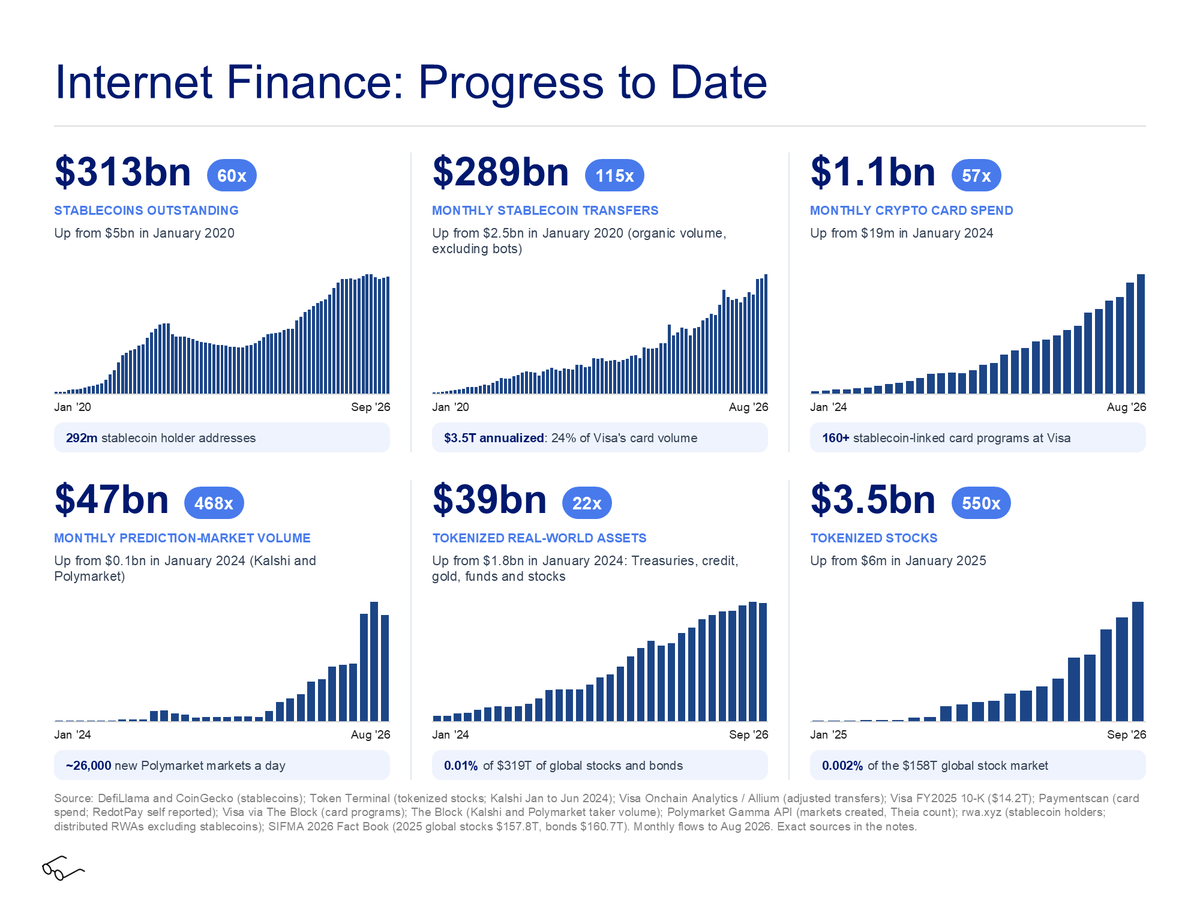
If back then you believed crypto would change global financial markets, you were right. So why does it still hurt so much?
1. Crypto Is Indeed Delivering
When I first entered the industry, I heard a piece of advice: don't join a company that can't even earn carry on its latest fund. It's not that they can't afford the salary—it's that the company culture will make you miserable. People are only happy when they work hard and make money.
The same logic applies to the industry. To see the state of the crypto industry clearly, you can simplify it into three financial statements: the income statement, the cash flow statement, and the balance sheet.
2. Income Statement: Revenue Isn't Big Enough
Look at revenue alone. Most of the industry's costs ultimately flow to practitioners: engineers, business development, validators, auditors, and so on.
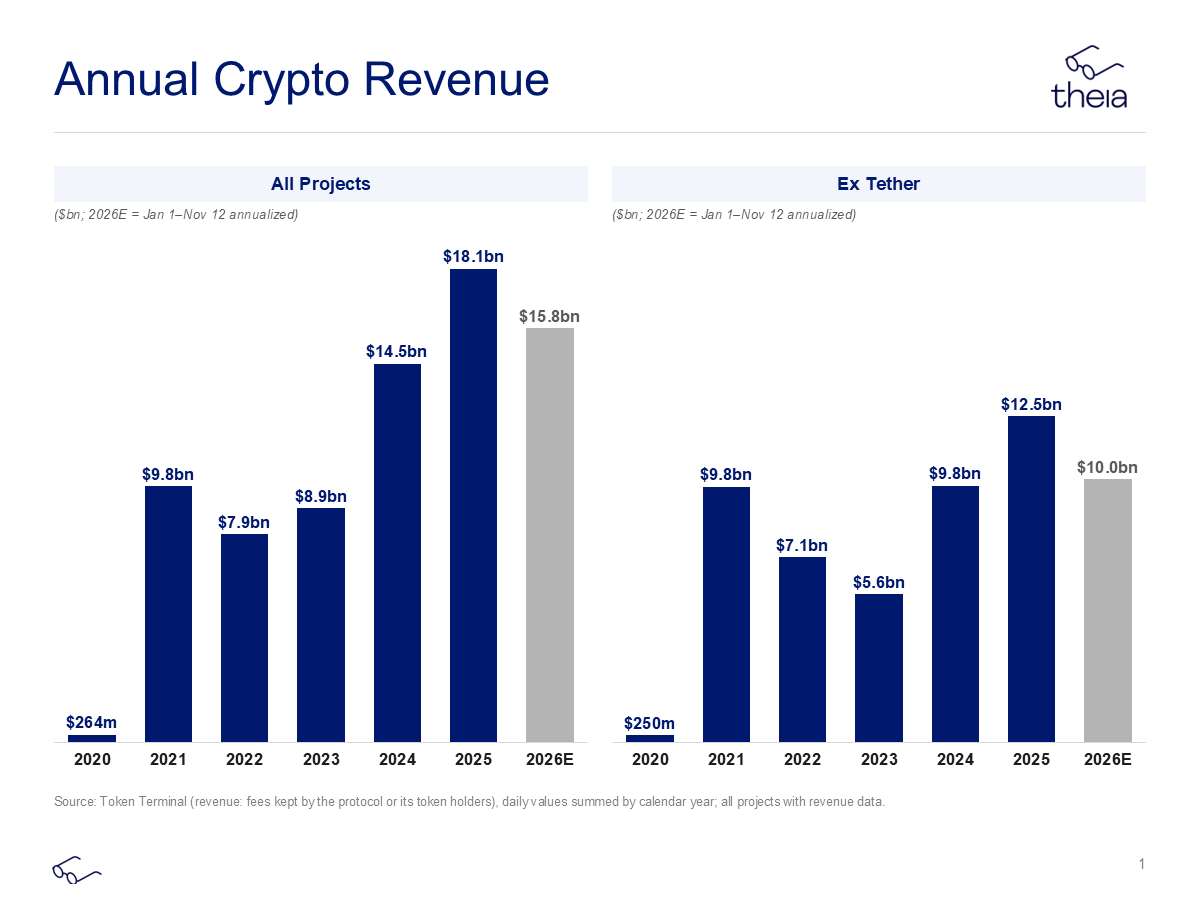
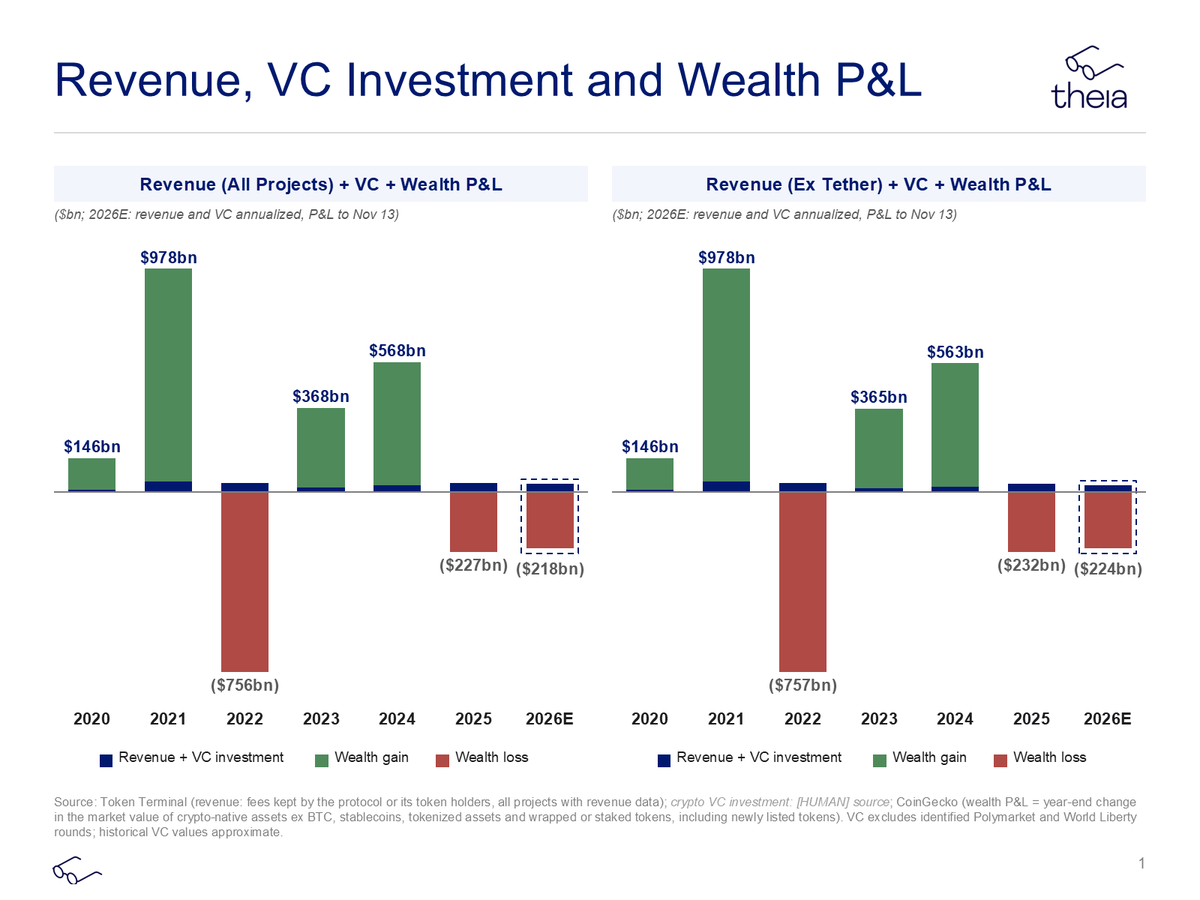
Revenue is passable: up about $8 billion since 2021; but excluding Tether, it's actually down about $3 billion.
3. Cash Flow Statement: VC Money Is Receding
The cash flow statement has three parts: operating cash flow, investing cash flow, and financing cash flow.
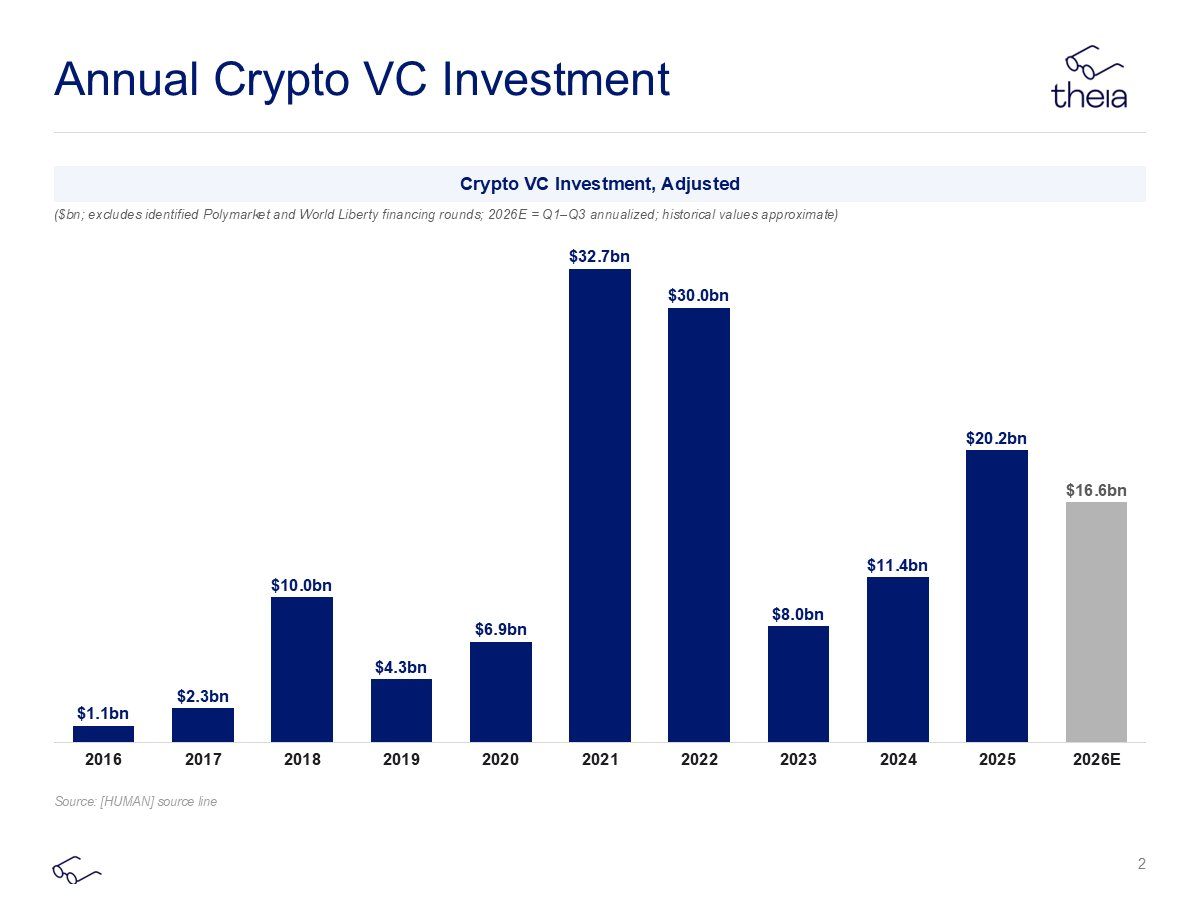
Operating cash flow can be roughly substituted by the revenue above. The crypto industry has very little capital expenditure, so investing cash flow doesn't matter much. What really matters is financing cash flow: in the past, most people's salaries and office rents in this industry were paid for with money invested by VCs.
Adding revenue and VC investment together is what flows into the industry to pay for salaries, office rents, audit fees, consulting fees, recruiting fees, and validator costs. What's left is investor profit; and investors still have to distribute money to LPs in order to keep raising funds.
The problem is that compared with 2021 and 2022, cash flowing into the industry has dropped by about $15 billion. We exclude Tether because its cash flow is highly concentrated. That money can pay a lot of salaries, but it's not enough to explain the current degree of collapse in the crypto market.
4. The Balance Sheet Is the Root Cause
The root lies in the balance sheet.
This year, about $26.6 billion in cash has flowed into the industry; but since last October, the market caps of Ethereum and Solana alone have together evaporated by about $350 billion. Note that this is a decline in paper wealth, not a cash outflow.
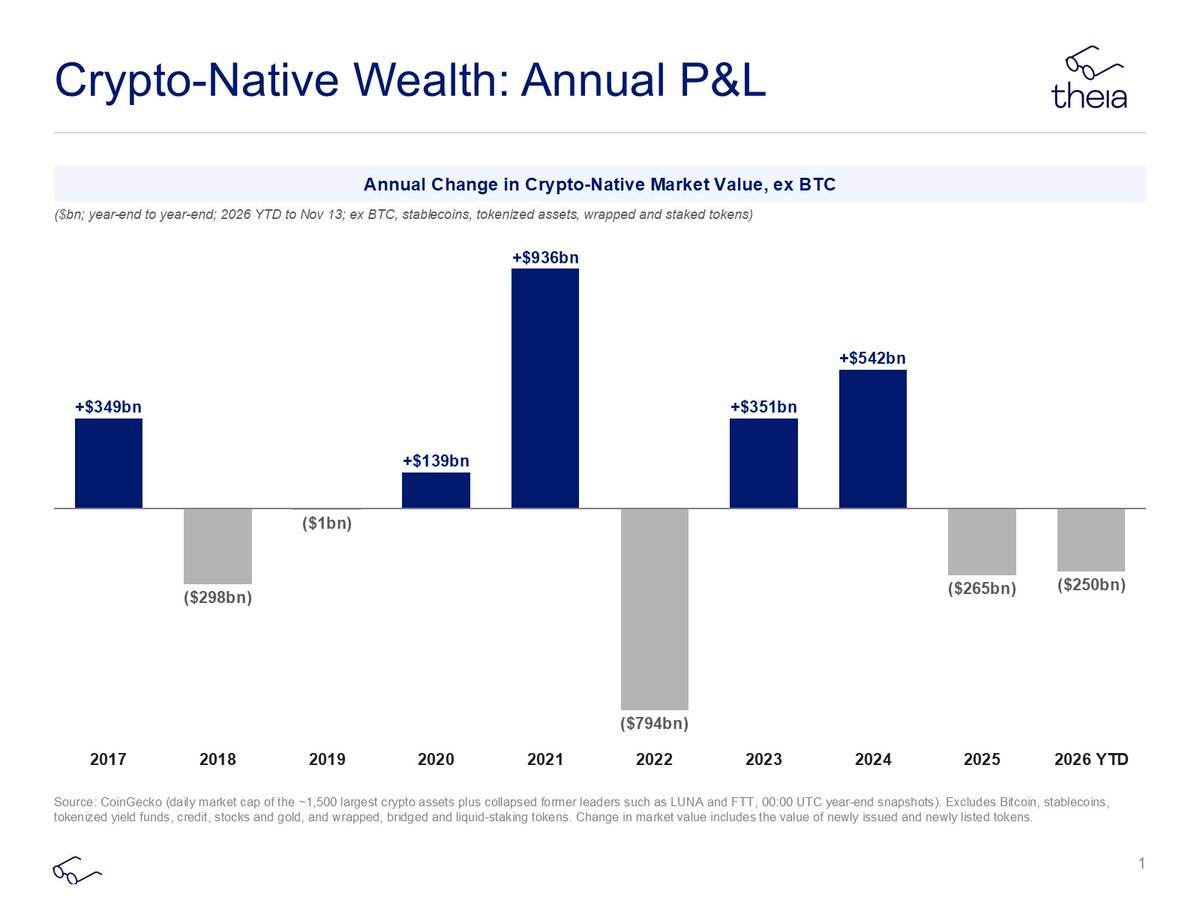
The crypto industry is unusual: asset values are absurdly high relative to cash flow. No matter how much tokenized stocks grow or how much stablecoins expand, none of it can fill a $350 billion balance sheet hole. To make up for the ETH and SOL losses through revenue, industry revenue would have to grow 35 times, equivalent to 350 Hyperliquid-scale revenues.
Putting the numbers together, the industry's balance sheet is the only truly important driver.
I believe that by understanding how an industry's three financial statements change over time—especially by seeing clearly how money flows: who puts money into the industry, who is pulling money out, and where the money is spent—you can understand the state of that industry. Silicon Valley, U.S. private equity, and AI can all be viewed this way. This article simplifies the crypto industry's statements, but it's enough to explain the current market: everyone is sad simply because prices have fallen.
5. Two Ways Out in 2027 and 2028
There are several reasons for optimism.
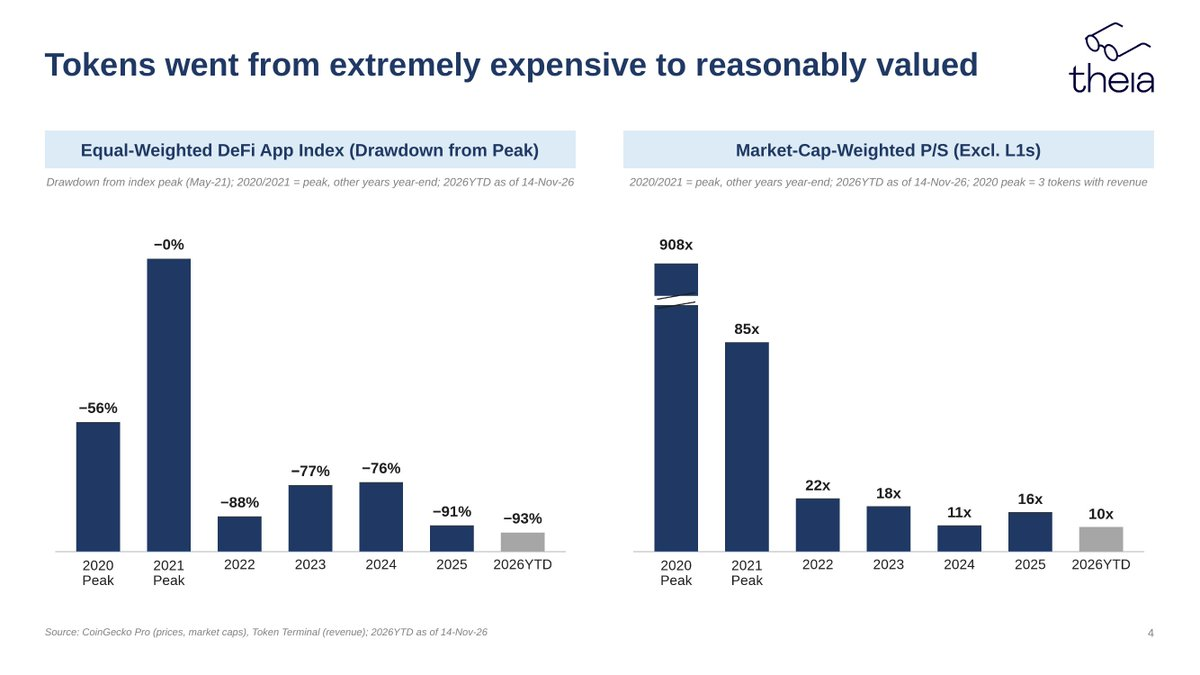
First, the worst may already be over. Valuations of on-chain businesses have returned to reasonable levels; the market cap of coins like Cardano has fallen from $80 billion to $5 billion.
One way out is revenue-generating tokens. True, making up the $350 billion in ETH and SOL losses through revenue would require creating 350 Hyperliquids; but to bring the industry's balance sheet back to its best period in 2024, only a few HYPE-level tokens are needed.
The other path is for the combined market cap of store-of-value assets like BTC, ETH, SOL, and ZEC to increase by $350 billion. Roughly speaking, a 30% rise in BTC would be enough; but after excluding ETF holders and Bitcoin holders who won't reinvest gains into the industry, it might actually require a rise of more than 60%. Or, ETH and SOL would need to return to their all-time highs. This is nothing new, but math is math.