


GMGN integrates new wallets as Rill and Tenon debut at Breakpoint


- Core viewpoint: At the Solana Breakpoint grand final, GMGN publicly integrated Rill Wallet and Tenon, two embedded wallets and payment infrastructures, for the first time, marking that licensed institutions are accelerating their expansion into the on-chain ecosystem.
- Key elements:
- In the GMGN grand final, 7 competitors will face off in live trading on site, with the champion receiving a custom Aston Martin Vantage; thousands of traders completed the online qualifiers.
- Rill provides a self-custodial wallet, with a median signing time of 2 milliseconds, 99.99% availability SLA, and private key export requiring dual approval from the user and the platform server.
- Tenon handles cross-chain USDC settlement (about 30 seconds on average), fiat on-ramp channels, and upstream card issuance, so the platform does not need to apply for licenses in each jurisdiction itself.
- Both products are embedded designs, so users do not need to download a separate wallet or switch between products.
- The parent company, Webot Group, holds licenses in multiple U.S. states and EU MiCA authorization, providing a regulatory foundation for fiat on- and off-ramps and card issuance.
- The platform has tens of thousands of daily active traders and monthly trading volume in the billions of dollars, placing extremely high demands on wallet and payment solutions.

On November 16, during Solana Breakpoint in London, one of the world's largest on-chain meme trading platforms will host a grand final. The winner of the GMGN Global Championship will drive away with a custom Aston Martin Vantage. Thousands of traders have completed the online qualifiers, and the final 7 will compete live on stage.
Among the sponsors, names like Base, Solana Mobile, and Hello Moon are familiar. But there are two new faces—Rill Wallet and Tenon—who will make their first public appearance at this event as Silver Sponsors. More notably, GMGN is integrating both companies' wallet and infrastructure services into its platform.
Rill will provide wallet capabilities for the GMGN platform. Users receive a self-custodial wallet upon login, and every transaction undergoes policy checks before signing to reduce the risk of anomalous operations and unauthorized transactions. Tenon, meanwhile, serves as underlying infrastructure, handling cross-chain USDC transfers, supporting crypto purchases via Apple Pay, Google Pay, or bank cards, and acting as an upstream card issuer that provides white-label card issuance capabilities to other institutions. For the platform, this means it can integrate fiat on/off-ramps and payment capabilities without having to apply for fiat licenses or card issuance permits in each jurisdiction itself.
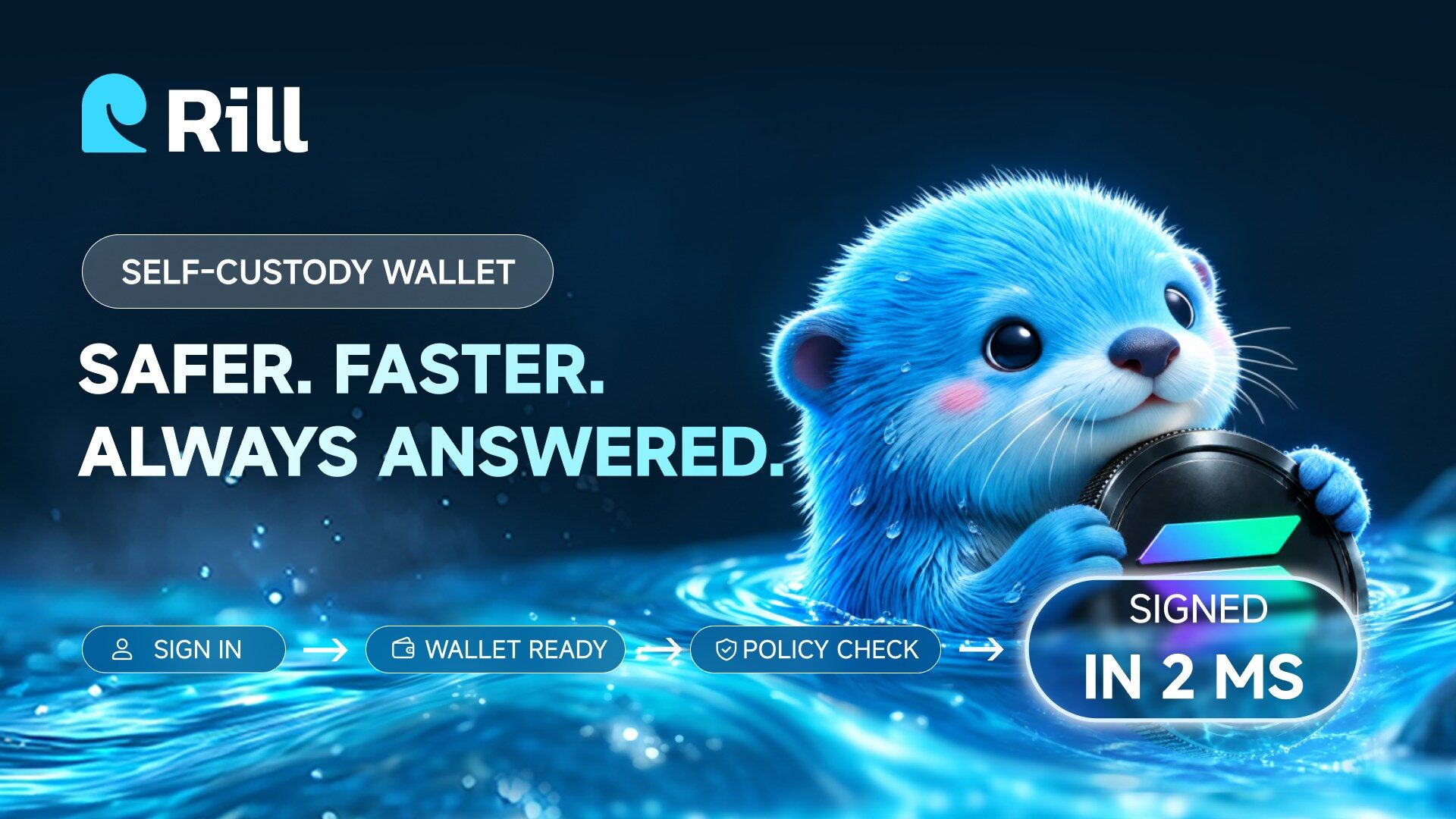
For a platform that regularly sees tens of thousands of daily active traders and billions of dollars in monthly trading volume, the choice of wallet and payment solutions is no small matter. High-frequency on-chain trading cannot tolerate slow signatures or fragile custody solutions. Rill offers a median signing time of 2 milliseconds and provides a 99.99% availability SLA. Exporting private keys requires simultaneous approval from both the user and the platform's servers, so a compromised login alone cannot move funds. Policy rules run before every signature, allowing transactions to be blocked by method, chain, or amount. The significance of these mechanisms is that the platform can maintain self-custody while retaining a degree of risk control, without leaving all decisions to users or handing everything over to the system.
Tenon's cross-chain bridge completes USDC settlement in approximately 30 seconds on average. Its fiat on-ramp handles KYC, risk control, and chargebacks, so the platform does not need to bear these processes itself. Both products are designed to be embedded rather than standalone consumer-facing apps. This design is closer to the actual needs of most trading platforms today: users do not want to download yet another standalone wallet, nor do they want to repeatedly switch between different products.
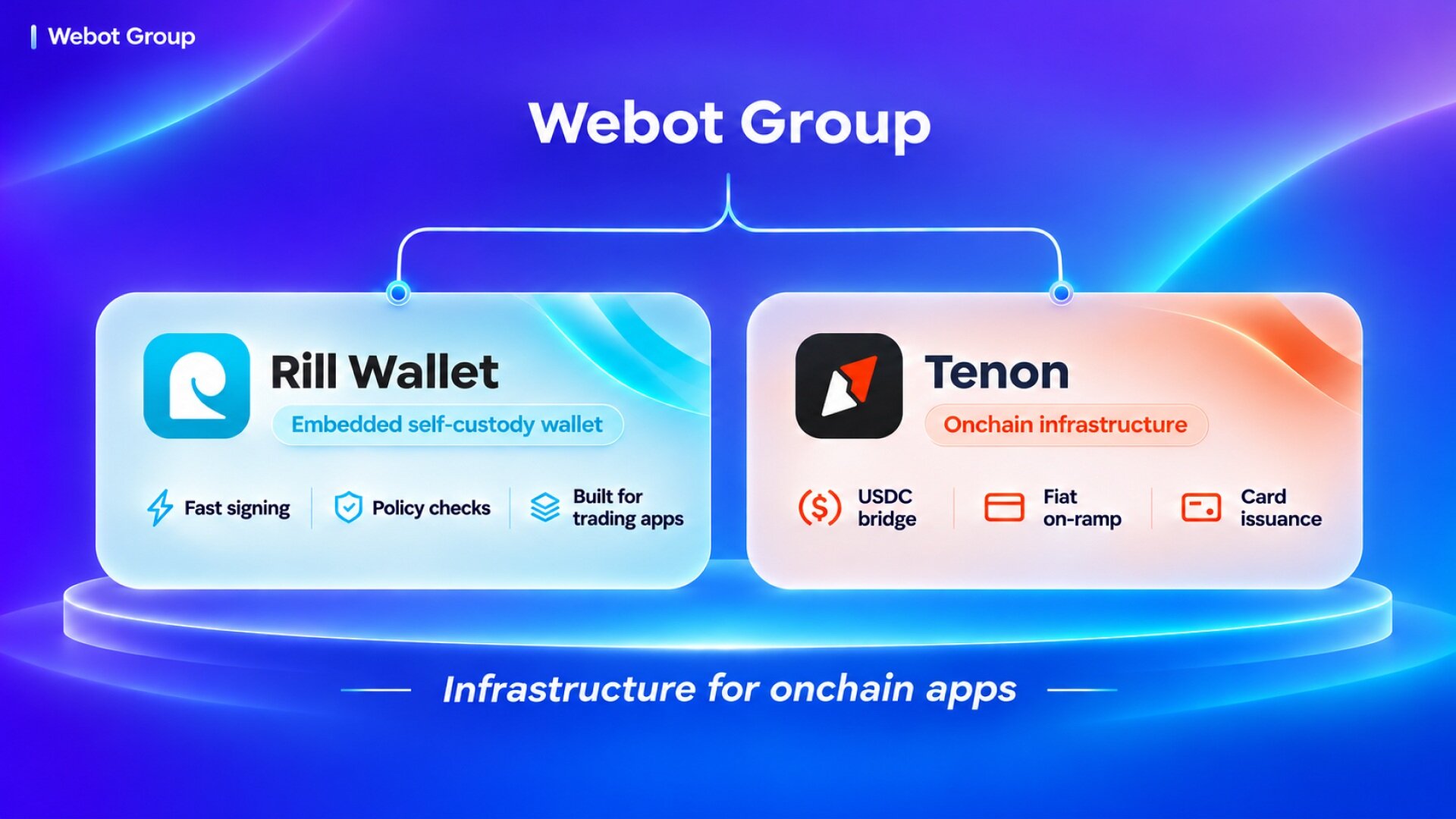
They come from Webot Group. In their view, compliance is becoming a baseline requirement for reaching real users and real funds, rather than a differentiator; at the same time, most actual activity is migrating on-chain. Rill and Tenon are built for this intersection. The group already holds multi-state licenses in the U.S. and EU MiCA authorization, which provides the regulatory foundation for its fiat on/off-ramp and card issuance services, so platforms themselves no longer need to apply for these licenses separately. But these two products are designed for on-chain applications, not as extensions of centralized exchanges.
The London event marks the first public appearance of both brands. For Webot Group, this is a step from its existing compliance foundation toward on-chain infrastructure. The fact that more and more licensed institutions are beginning to seriously explore the on-chain ecosystem itself signals one thing: the future on-chain is no longer just the judgment of on-chain teams—it is becoming a broader consensus.





