


Beyond T1, the Decisive Battle Against GEN: What Does BLG Still Lack to Reach the S16 World Championship?


- Core Viewpoint: BLG ended T1's undefeated BO5 record against LPL teams and advanced to the S16 final, but prediction markets favor GEN (62% to 38%). The key to the final lies in whether BLG's topside-focused offensive system can break through GEN's jungle operations and resource control, as well as both teams' in-game adjustment ability in the mid-jungle matchup.
- Key Elements:
- BLG defeated T1 3:1, ending T1's undefeated BO5 record against LPL teams and its four-peat campaign, but GEN swept its opponents in two consecutive knockout rounds and led in multiple positional stats before the match.
- BLG's core tactic is sustained aggression around the top side; Bin's individual skill needs Xun's support to be converted into results, but Canyon may exploit the timing window when Xun roams topside to accumulate jungle and dragon resources on the other side of the map.
- The "left hand vs. right hand" first-title battle between Knight and Chovy directly affects mid-lane priority and roam efficiency, which in turn influences both teams' jungle contention and side-lane tempo.
- When BLG's offense stalls, Viper needs to maintain his farm and provide teamfight damage; if the top side fails to open up and the bot lane falls behind, BLG will lose both side-lane pressure and teamfight insurance.
- In a BO5 format, both teams' ability to adapt is crucial—a tactic that works in Game 1 may be targeted in subsequent games, and the speed of in-game adjustments will directly shape the direction of the series.
Original | Odaily (@OdailyChina)
Author | Asher (@Asher_0210)
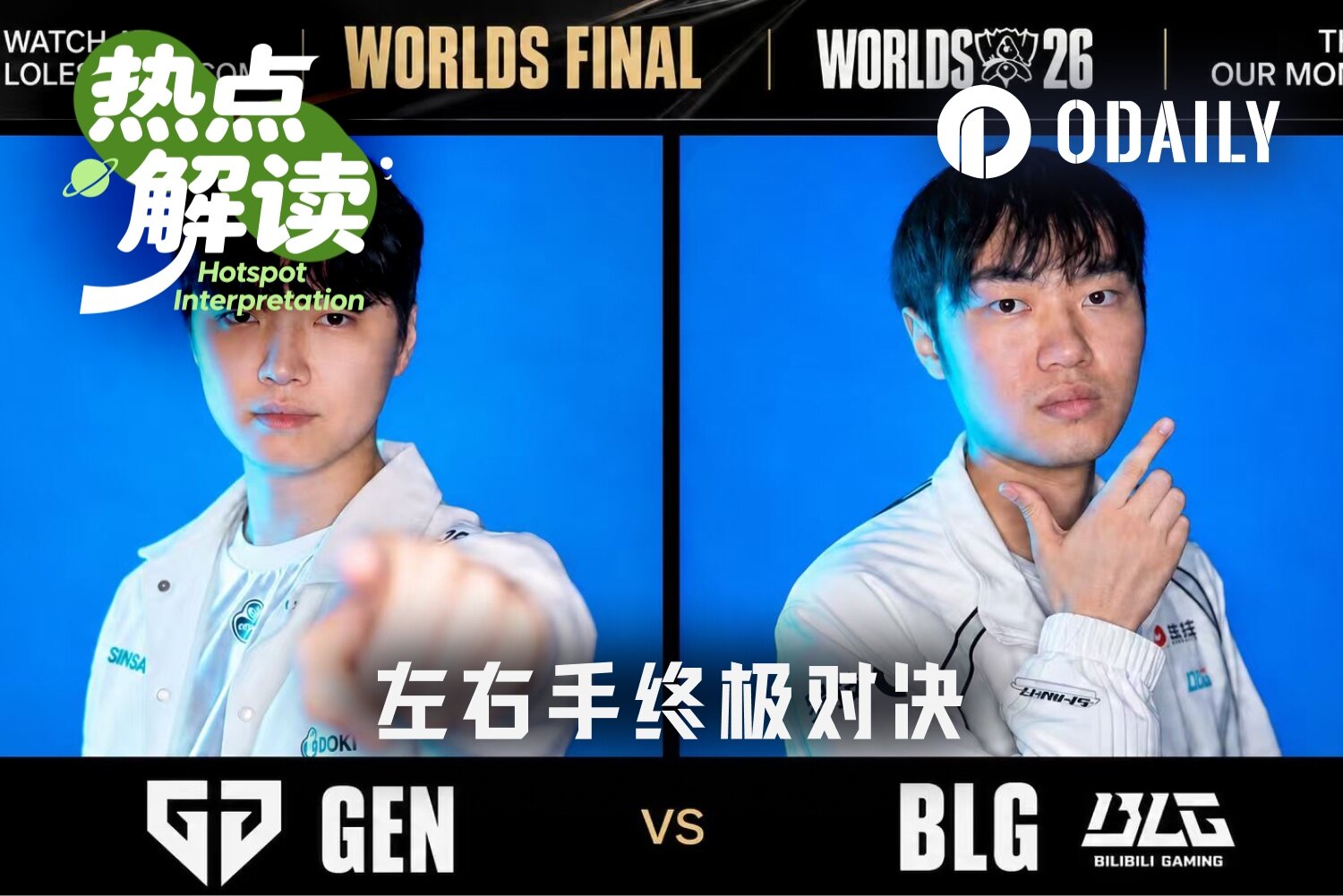
On November 9, BLG defeated T1 3:1, and the LPL finally got the victory it had waited years for. Previously, T1 had maintained a perfect record in BO5 series against LPL teams at the World Championship; this time, BLG ended that streak and also ended T1's quest for a fourth consecutive title.
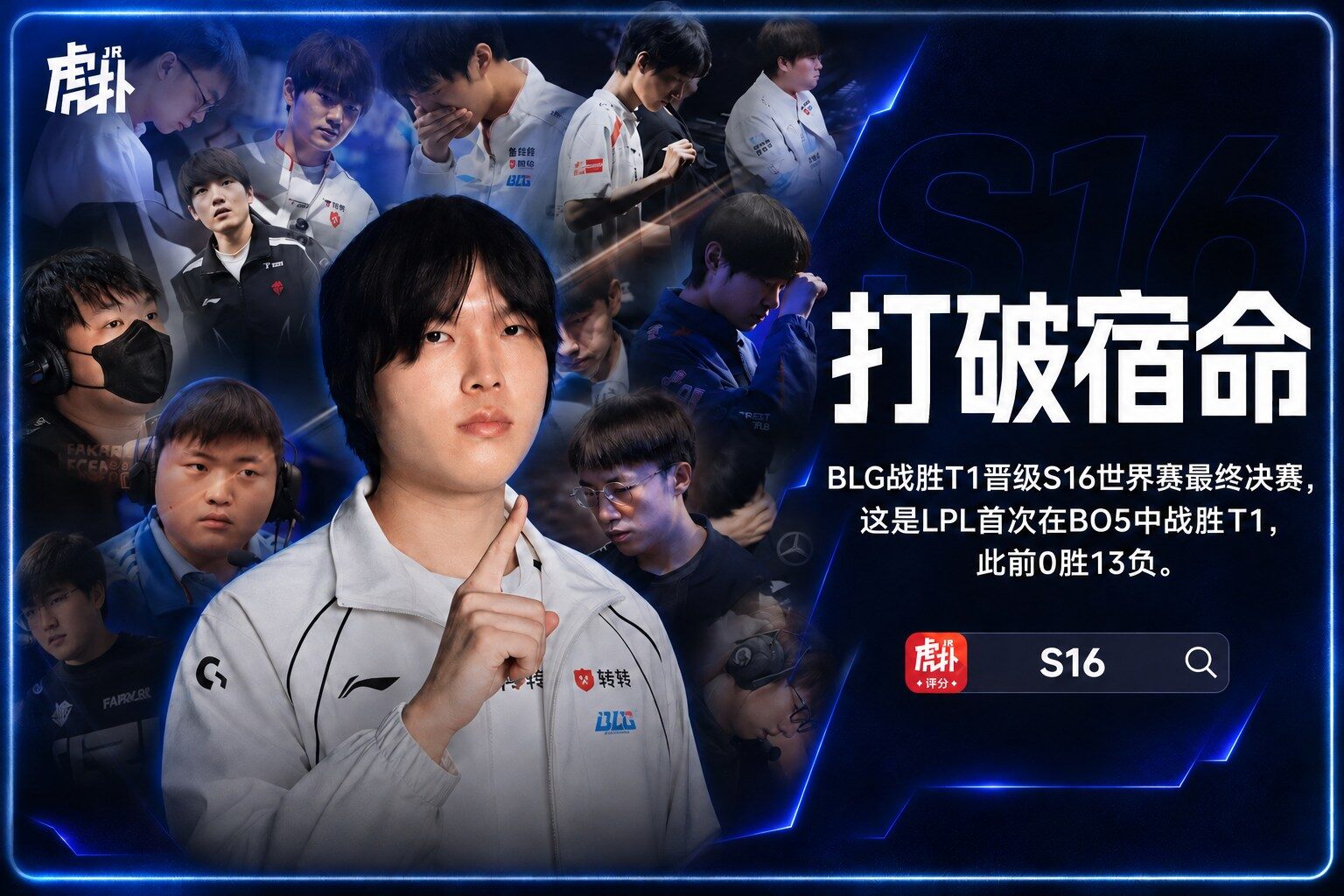
At 3 a.m. on November 15, BLG will face GEN at Barclays Center in New York to compete for the League of Legends S16 World Championship title. Knight and Chovy have finally made it to the same World Championship final, and a new Worlds champion will emerge from the "left hand" versus "right hand" matchup.
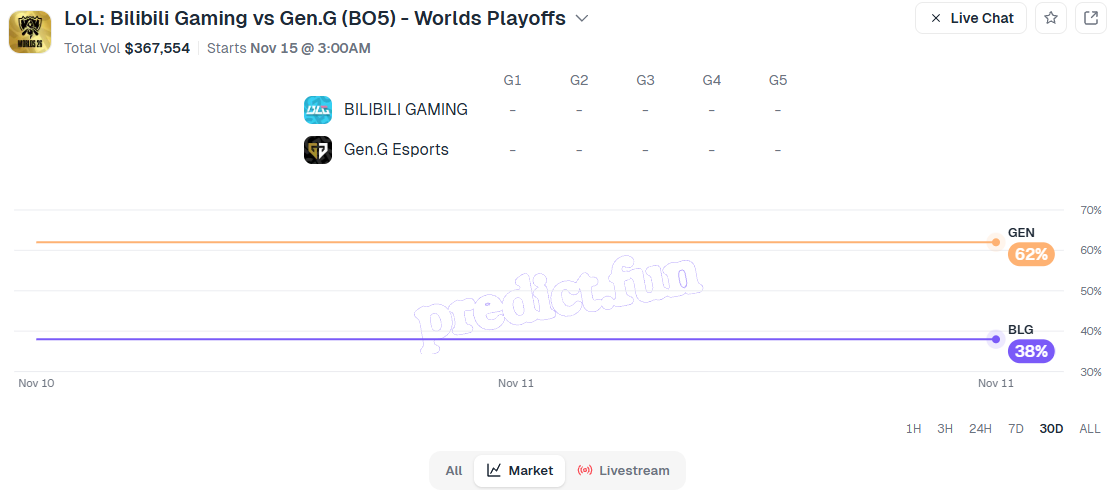
Ahead of the final, prediction markets favor GEN. Data from predict.fun shows GEN's championship probability at 62%, while BLG's stands at 38%.
On one side is BLG, having taken down three LCK teams in a row and just defeated T1; on the other is GEN, which swept its opponents in two consecutive knockout rounds. Can BLG's sustained aggression around the top side break through GEN's jungle operations and resource control? Below, Odaily will combine both teams' advancement performances and tactical characteristics to break down the key factors that will decide this final.
BLG Beat Strong Opponents in Succession, but GEN's Sweeps Carry Weight Too
GEN swept its opponents in two consecutive knockout rounds, and its pre-match data leads BLG in multiple positions, especially the top lane matchup of Bin vs Kiin. Looking at these metrics alone, GEN appears to be the steadier side, but the two teams faced different opponents and endured different tests, and these differences also affect the final data.
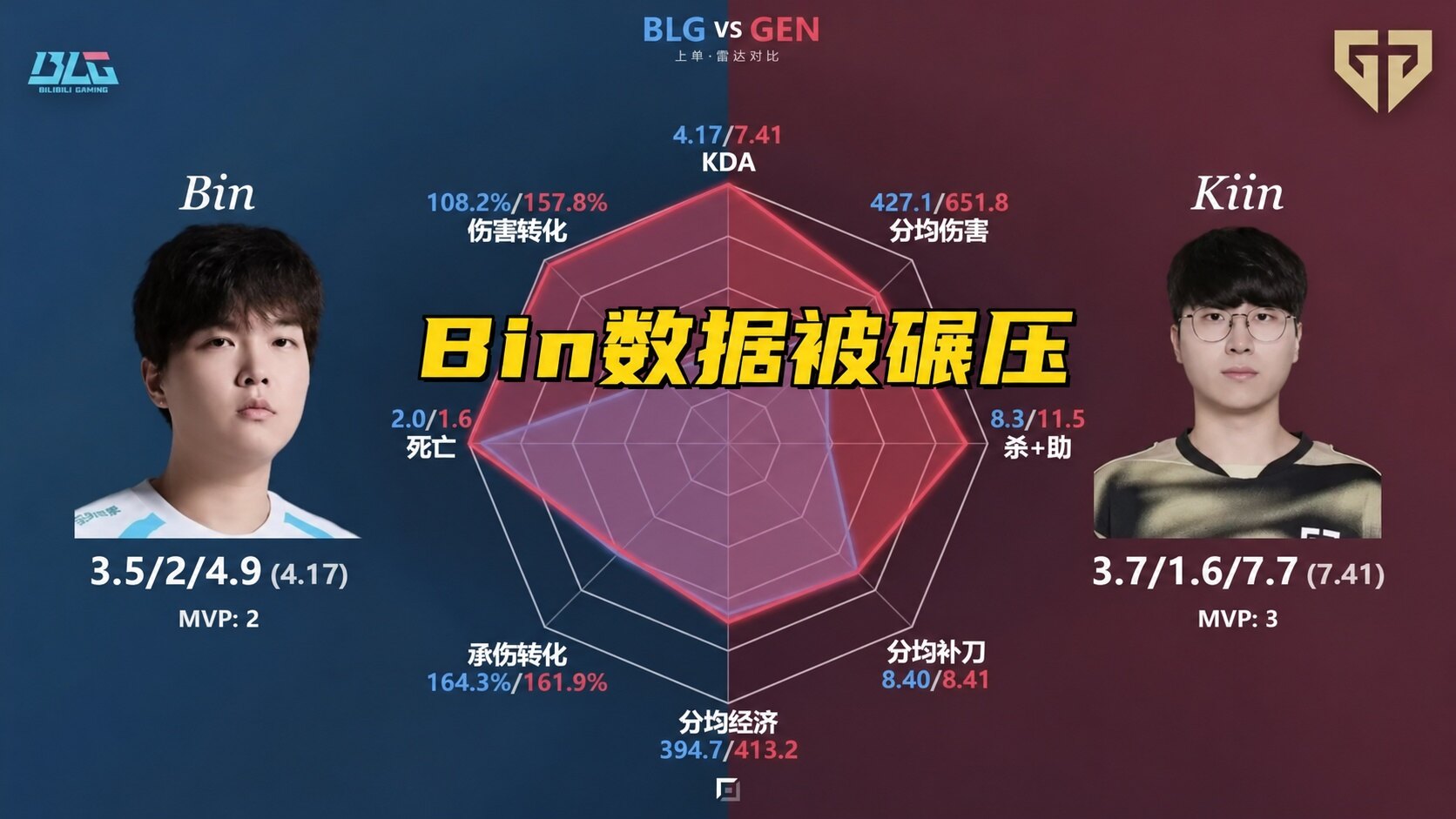
GEN faced LYON in the quarterfinals, while BLG took on DK and then T1. In addition, KDA, damage per minute, and damage conversion rate are also affected by champion picks, match duration, and resource allocation. Players responsible for initiating fights and absorbing damage often have to bear higher death risk—it is not possible to conclude that BLG is at a comprehensive disadvantage in matchups based on just a few metrics. Likewise, Knight leading Chovy in some damage metrics is not enough to prove that the mid lane is already firmly under control.
However, attributing GEN's advancement to bracket luck also underestimates their performance. In the semifinal against IG, GEN was behind in Game 3 but turned the game around through key resource fights and teamfights, showing that even when this team falls behind early, it has the ability to stabilize the situation and wait for counterattack opportunities.
When BLG faced T1, it also regained control after the momentum swung back and forth. Facing opponents with different styles in succession allowed them to demonstrate their ability to adjust, but these victories do not mean that the approach that beat T1 can be copied as-is into the final.
More than the pre-match data, what is worth watching in the final is who can adapt first after their original approach is blocked. Whether BLG can keep applying pressure on the side lanes, and whether GEN can stabilize the game through resource exchanges, will more directly shape the direction of this BO5.
Whether Bin Can Break Through Depends on How Much Xun Invests in the Top Lane
Based on BLG's style against T1, the top lane is an important entry point for understanding this BLG team. BLG can turn the top lane into a multi-player attack zone through mid-jungle support, rapid grouping, and repeated dives. Bin's individual ability is responsible for converting opportunities, while his teammates help him expand the range in which he can apply pressure.
In Game 3 against T1, the combination of Gnar, Taliyah, and Pantheon reflected this idea—the mid-jungle duo had fast support capability, the bot lane maintained its development with more flexible champions, and the team organized its offense around the top side. Once a side lane established an advantage, BLG had the chance to continue taking towers and pushing deep vision, forcing the opponent to keep committing players to defense. This approach also kept Bin's advantage from being limited to the laning phase. After entering the lane-swap phase, as long as the mid-jungle duo could still support in time, the opposing side laner had to constantly guard against multi-player collapses, and GEN's player allocation would also be constrained.
But against Kiin in the final, it will be difficult for BLG to directly carry over the expected returns from the T1 series. GEN can reduce the losses from top lane attacks through jungler positioning, wave management, and map exchanges. The most critical variable here is Canyon. Every time Xun ganks top, it requires an investment of time. If the attack succeeds, it can help Bin establish control; if the attack produces no result for a long time, Canyon may complete clears, counter-jungle, or dragon control on the other side. Even if BLG gets a kill, if it cannot subsequently take towers or control the map, it may not have earned enough in return.
Therefore, in the final, it is not enough to just look at whether Bin kills Kiin; it is also necessary to see what each side takes away after the attack. BLG needs to keep expanding its top lane advantage and avoid the scenario where "the kill is secured, but the jungle and dragons are lost repeatedly." For Xun, knowing when to keep doubling down and when to stop in time may be more important than a single successful play.
The Left Hand vs the Right Hand for a First Title—First, Fight for Control Beyond the Mid Lane
The matchup between Knight and Chovy is the most story-rich part of this final. Their contest is not limited to mid lane laning; who can secure lane priority and rotate first will directly affect both sides' jungle contests and side lane aggression. If BLG wants to attack around the top side, it needs Knight to minimize the cost of leaving lane. If the mid wave cannot be pushed out, roaming means losing minion waves; if the mid lane is under sustained pressure, Xun's room to operate will also shrink. Chovy, meanwhile, can use lane priority to limit Knight's roaming, relieve pressure on the side lanes, and create conditions for Canyon's jungle actions.
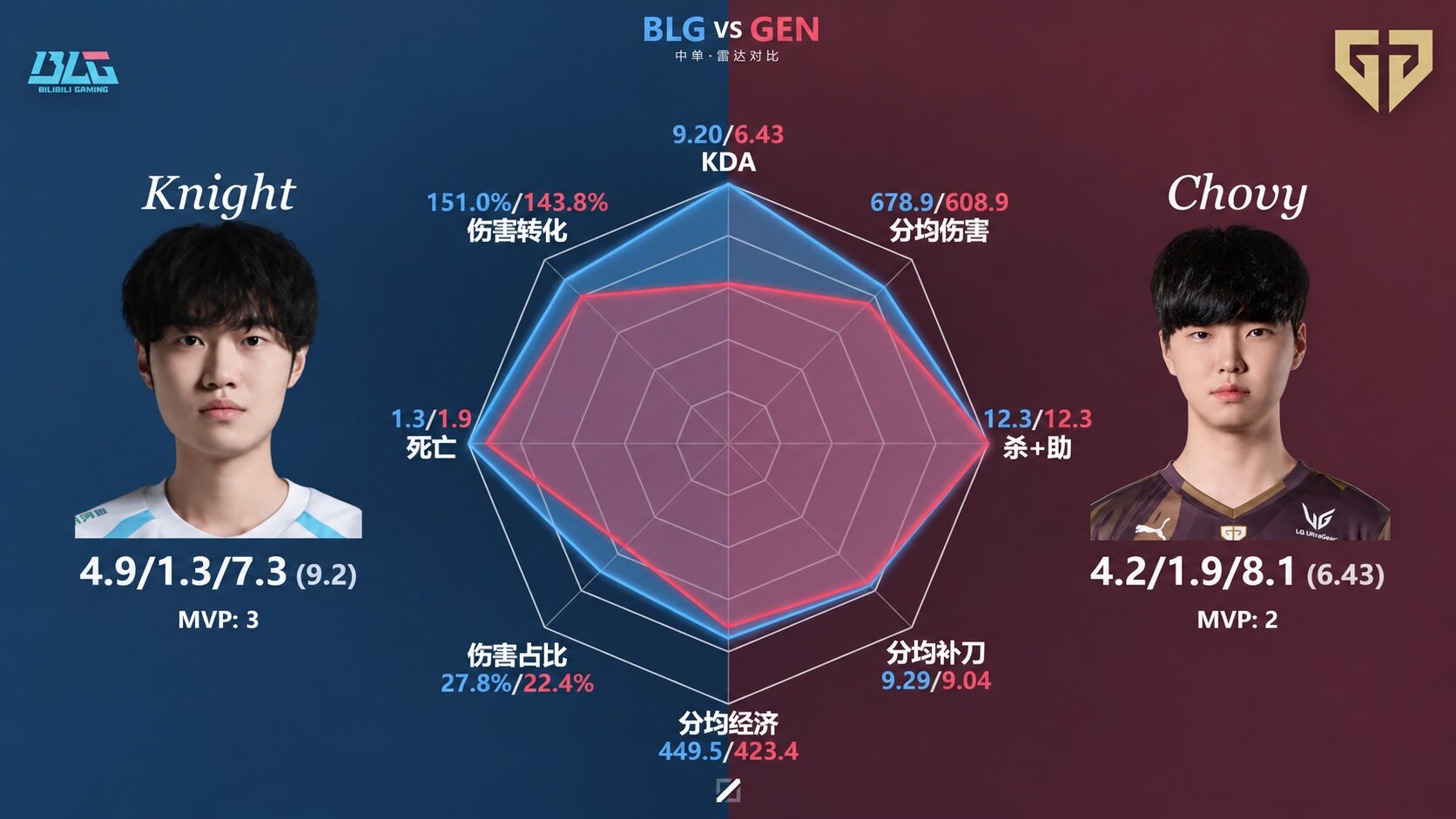
This also forces BLG to make trade-offs in draft. If priority is given to Bin's offensive champions and the bot lane matchup, the mid lane may need to bear more pick pressure; if more resources are invested in Knight, other positions will have to bear the corresponding cost. Whether Knight can stabilize the lane and maintain teamfight participation without consuming too many resources will directly affect BLG's offensive efficiency. Whether Chovy can convert lane advantages into jungle and resource control also matters more than simply leading in CS.
The support speed of both sides is equally important. If Knight joins side lane fights first, BLG has a chance to expand its advantage before GEN completes resource exchanges; if Chovy follows up in time, BLG's expected numbers advantage may be neutralized. ON's roams could further break the balance: timely entry by the support into the top side can change the numbers distribution and increase the difficulty for GEN to judge its next move, but it also means Viper will need to bear more bot lane pressure alone. Whether BLG can link up the mid-support support windows well while controlling bot lane losses will determine how much actual return these roams can generate.
When the Top Lane Cannot Be Broken Through, How Many Fallbacks Does BLG Have?
How much return BLG's aggression can generate determines the ceiling of the match; how it handles things after the aggression is blocked determines the margin for error in this BO5. With resources tilted toward the top side, Viper needs to maintain his development and provide sustained damage in mid-game teamfights. If the top lane fails to break open for a long time and the bot lane falls clearly behind due to a lack of protection, BLG will lose both side lane pressure and teamfight insurance at the same time. GEN, meanwhile, can rely on Ruler's development to choose resource exchanges more calmly, without needing to respond immediately to every BLG top lane action.
If the game drags into the late stage, BLG is not without chances. BLG also possesses excellent teamfighting ability, and composition range, engage methods, and positioning can all change the outcome of key resource fights. What BLG truly needs to avoid is being forced into consecutive fights while carrying multiple disadvantages in items, minion waves, and vision. That would compress ON's space to find engage opportunities and also force the two carries to take on higher damage risk. Therefore, when there is no opportunity to gank top, whether BLG can promptly return to development and resource exchanges; when the advantage cannot be expanded, whether it can wait for the next round of cooldowns and item timings—this will determine whether BLG can stabilize the game.
In a BO5, both sides also need to see who can adapt faster. An offensive route that worked in Game 1 may be targeted in the next game; weaknesses exposed by a composition also need to be covered in subsequent picks. BLG needs to keep its top-side investment producing returns while protecting bot lane development; GEN needs to limit top lane losses and use the time gaps in Xun's actions to accumulate resources. Whoever can stick to their own style while responding faster to the opponent's changes will have a better chance of taking the final victory.
Can this year's Bin carry the dominance from the semifinal through to the end? What kind of performance will Chovy deliver in his first Worlds final? The battle for a first title between Knight and Chovy, the jungle duel between Xun and Canyon, and the teamfight performances of Viper and Ruler could all change the direction of this BO5.
The Summoner's Cup will welcome a new owner—this time, will it be the "left hand" or the "right hand"?





