


Aethir Launches Daily ATH Burn Mechanism: Network Activity Drives Supply Contraction, November Launch Alongside Burn Dashboard


- Core Viewpoint: Decentralized GPU compute network Aethir has announced a systematic upgrade to the ATH token economic model, introducing a daily burn mechanism and floating network fee to directly tie token supply contraction to real network business activity.
- Key Elements:
- The burn model will launch in November 2026 and execute daily, with the sole source of funds being network fees collected by the platform. The burn volume fluctuates in real time with compute reservation volume—the more active the network, the larger the burn.
- Each burn is sent to a public burn address and permanently removed from circulating supply, reflected in real time on major tracking platforms. A burn Dashboard launches simultaneously, displaying daily, monthly, and cumulative burn amounts with complete records. The mechanism has been audited by CertiK.
- The floating network fee replaces the fixed platform fee, read via TWAP from market conditions and determined by a public formula with no manual intervention. When the market weakens, the fee rate decreases and the burn share increases; there is no lower limit on the fee, which can drop to zero in extremely weak markets.
- The floating network fee has a hard cap—fees never exceed the value of Cloud Host rewards. The cap is written into the public formula, with any excess revenue going entirely to Hosts. Cloud Host ATH emission schedules are unaffected.
- Synergy with the ACCELERATE program: New site compute revenue from US and Europe capacity expansion will be processed through the same fee and burn mechanism, directly converting physical infrastructure expansion into larger-scale on-chain burns.
- The ATH contract total supply remains fixed at 42 billion tokens. Daily burns continuously contract net new supply from the supply side, with burn data updated weekly in the official tokenomics documentation.
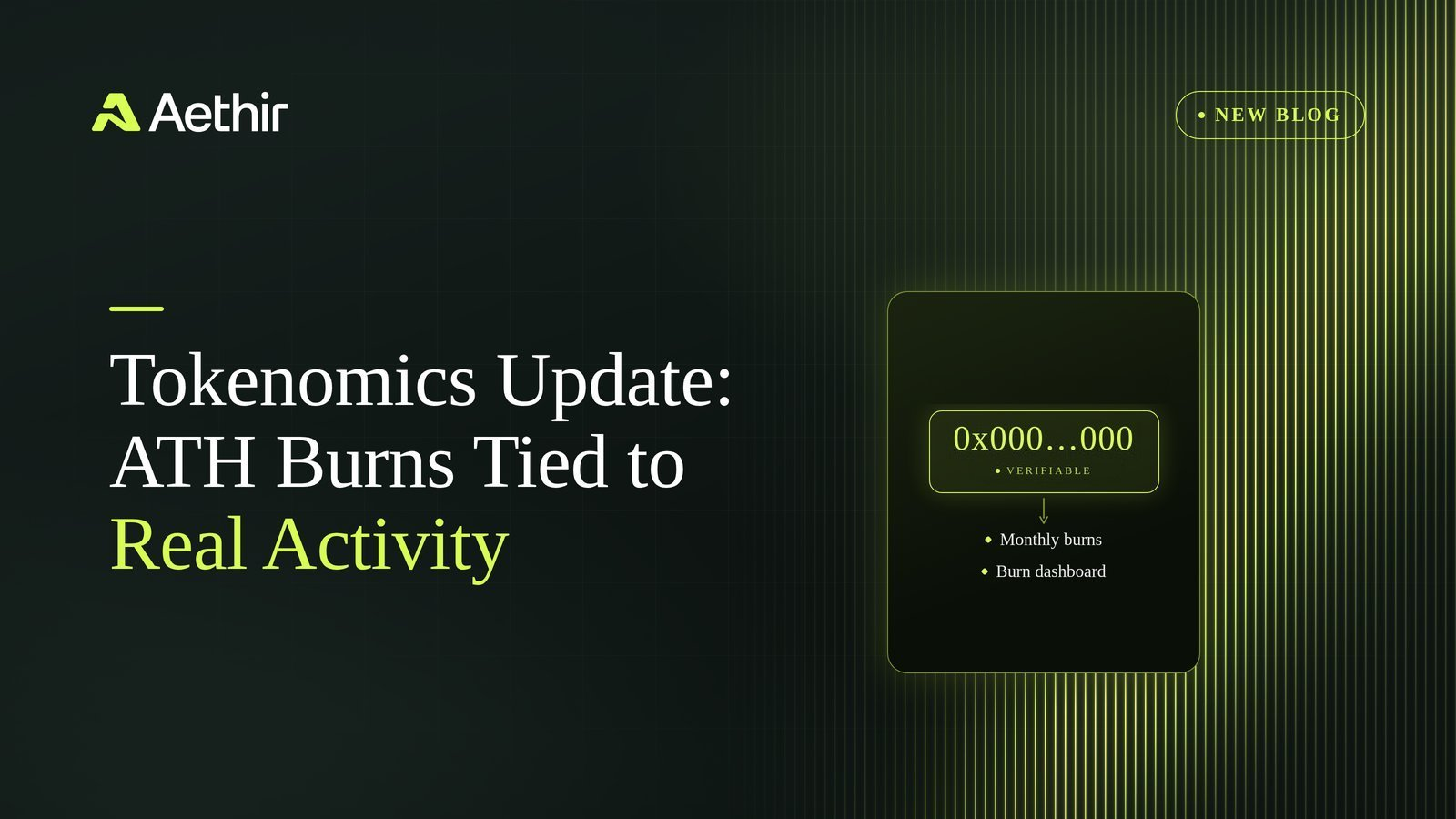
Decentralized GPU compute network Aethir today officially announced a systematic upgrade to the ATH token economic model. The core changes are: the introduction of a daily ATH burn mechanism, and the replacement of the current fixed platform fee with a floating network fee. The burn model will go live in November 2026 and will be executed daily thereafter.
Burn Mechanism: Business-Driven, On-Chain Verifiable
The core logic of this update is to directly tie ATH supply contraction to real network activity. The sole source of funds for the daily burn is the network fees the platform collects from customers, and the burn scale floats in real time with compute reservations—the more active the network, the larger the daily burn.
Every burn is sent to the public burn address: 0x000000000000000000000000000000000000dEaD
Once tokens are sent, they are permanently removed from circulating supply and will be reflected in real time in the circulating supply data of major tracking platforms. The burn dashboard will go live in November alongside the first burn, displaying daily, monthly, and cumulative ATH burn amounts along with complete transaction records, all publicly verifiable by anyone. The mechanism has been audited by CertiK.
Floating Network Fee: A Weak-Market Protection Mechanism
The current fixed platform fee will be replaced by a floating network fee. The new rate reads market conditions via time-weighted average price (TWAP) and is determined by a public formula, with no room for human intervention.
Its key design logic is: when the market weakens, the rate declines and the share burned rises. A fixed rate would continuously compress operators' actual returns in a bear market, whereas the floating mechanism, through inverse adjustment, provides buffer protection for the entire network during periods of revenue pressure. The fee has no floor and can drop to zero in an extreme weak market.
Cloud Host Rewards: A Protection Cap Written Into the Formula
Aethir explicitly emphasized in the announcement the protection of the interests of GPU compute providers (Cloud Hosts). The floating network fee has a hard cap—the fee will never exceed the value of Cloud Host rewards, and this cap is written directly into the public formula. All revenue above the cap goes to Hosts.
Cloud Hosts' ATH emission schedule is unaffected. This update adjusts only the fee mechanism applied on top of these protected rewards, a portion of which will be used for burning.
Strategic Synergy With ACCELERATE
Aethir noted in the announcement that as the ACCELERATE program continues to expand compute capacity in the U.S. and Europe, network activity will increase further in the coming months. The compute revenue generated by each newly launched site will be processed through the same fee and burn mechanism, meaning that physical infrastructure expansion will translate directly into larger-scale on-chain ATH burns.
Timeline:
- November 2026: The burn model officially goes live, with the first daily burn executed
- November 2026: The burn dashboard goes live simultaneously, tracking all burn records in real time
- Executed daily thereafter, with data updated weekly in the official token economics documentation
The total ATH contract supply is fixed at 42 billion tokens, and this remains unchanged. The daily burn continuously contracts net new issuance from the supply side.





