


Why did Tether bet on these four young people?


- Core Viewpoint: Tether's $3 million investment in Kuwaiti fintech company Kem is essentially a bet on the trend of "stablecoin becoming part of everyday life"—embedding USDT from a trading asset into real financial scenarios such as payments, remittances, and payroll, with the remittance needs of expatriate workers in the GCC region as the key entry point.
- Key Elements:
- Kem was founded in 2021 by four Gen Z founders, headquartered in Kuwait, and has expanded from a payment tool into a financial Super App covering individuals and businesses, with over 600,000 downloads across all platforms and over 200,000 XAUT wallets created.
- Tether's investment logic lies in downstream expansion of stablecoins: it has successively invested in Oobit, XREX, and Sorted Wallet, with Kem corresponding to the GCC personal and enterprise application ecosystem, addressing the question of "where USDT ultimately gets used."
- The GCC market has a high proportion of expatriates (nearly 70% in Kuwait), with remittances from expatriate workers in the Gulf region amounting to approximately $161 billion in 2025. Demand for remittances, currency exchange, and cross-border consumption is rigid, and regulatory and payment infrastructure is relatively mature.
- Kem's differentiated approach is "payment demand first, then stablecoin integration," embedding USDT as a back-end settlement layer into existing scenarios to reduce user education costs.
- Competitive barriers focus on local compliance and channels: it has obtained the Central Bank of Bahrain's Category 2 CASP and SIO principle approval, and has integrated partners such as Rain, Fireblocks, Chainalysis, and Visa.
- The challenge lies in the highly competitive U-card赛道 (with RedotPay surpassing 8.5 million users) and thin margins, requiring expansion into B-end merchant payments, Payroll, and enterprise APIs to form stable revenue.
$3 million is not a particularly large sum for Tether. What's more interesting is that the company's founders are four young people born in the 2000s.
At the time, Kem was far from having the array of products and users it has today—it was just a young team doing very local, even somewhat mundane TradFi work in the Middle East. But Tether still placed its bet early.
Looking back two years later, this investment has become increasingly worth discussing. Because the direction Kem eventually carved out happened to land squarely on one of the most important shifts in stablecoins in recent years.
What exactly did these young people get right, and what did Tether see in them at the time?
1. What Kind of Company Is Kem?
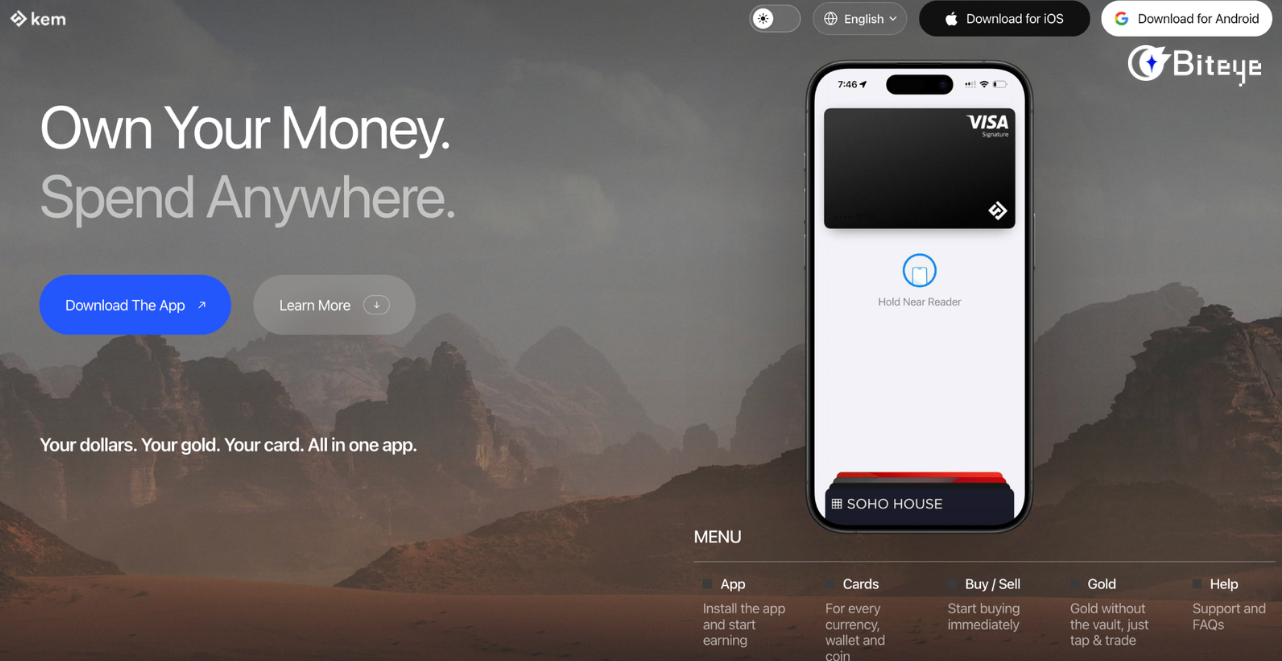
To understand Kem @Kem_App_CN simply as a U-card company would actually be underestimating it.
Founded in 2021 and headquartered in Kuwait, Kem positions itself as a next-generation fintech company serving the GCC market. It started with local transfers, but has gradually expanded from a single payment tool into a financial Super App covering both individual and business users. In 2026, Kem was also named to the CNBC Top 500 Fintech Companies.
Individual users can use Kem for fiat and crypto on/off-ramps, exchange of assets such as USDT, XAUT digital gold allocation, savings, and Visa card spending, as well as lifestyle services like eSIM purchases and airport lounge access.
Recently, Kem has also been accelerating its B2B business. Kem Business supports merchants in accepting USDT through Checkout, Payment Link, and API, while also covering payroll disbursement, refunds, VAT and invoice management, reconciliation, and treasury analytics.
In terms of data, according to information provided by the Kem team, total downloads across all platforms have exceeded 600,000, and more than 200,000 Tether Gold (XAUT) wallets have been created, making it one of the world's leading retail distribution channels for XAUT.
2. Why Does Tether Need to Build Out Everyday Financial Services?
USDT has already solved the stablecoin industry's most core supply problem, but as issuance scale continues to grow, the new problem Tether faces is becoming increasingly obvious: where are these stablecoins ultimately being used?
For a long time, USDT's primary uses remained concentrated in trading, on-chain transfers, and within the crypto ecosystem. But if stablecoins are to continue expanding their user base, they must enter the financial behaviors that ordinary people engage in every day—such as wages, remittances, spending, and business settlement.
This is also why Tether has in recent years been continuously expanding downstream along the stablecoin value chain.
2.1 From Stablecoin Issuance to Stablecoin Application
Tether's past goal was to issue USDT and maintain its liquidity and dollar peg, but as stablecoins grow larger and larger, being merely an issuer is no longer enough.
The next and more important step is to get USDT truly into everyday financial scenarios like payments, remittances, savings, and business settlement. Only when stablecoins are continuously used by ordinary users can issuance scale and liquidity be further converted into longer-term network effects.
So in recent years, Tether's footprint has clearly been extending toward the application side. It invested in Oobit for consumer payments, invested in XREX to build out cross-border B2B, and Sorted Wallet to cover emerging markets, while Kem corresponds to the individual and business application ecosystem in the GCC region.
The planning behind this is actually quite clear: Tether is responsible for providing stablecoins and liquidity, but actually getting USDT into users' hands still requires local products, banking rails, payment networks, and compliance capabilities.
2.2 Why the GCC and Not Other Markets?
The choice of the GCC is not because there are especially many crypto users there, but because the region has a large volume of financial needs that are well suited to being solved by stablecoins.
One of the GCC's biggest characteristics is its high proportion of expatriate population. Take Kuwait as an example: expatriates account for nearly 70% of the total population; across the entire Gulf region, a large number of residents come from India, Pakistan, the Philippines, and other Asian countries.
In 2025 alone, remittances sent home by expatriate workers in the Gulf region amounted to approximately $161 billion. For this group, the need to receive monthly wages, convert to dollars, send money home, and spend across borders is extremely rigid.
At the same time, the GCC is not entirely the same as many emerging markets. Local residents have relatively high income levels, banking and payment infrastructure is relatively mature, and governments are actively advancing digital asset regulation.
For stablecoin companies, this means there is both real demand and the possibility of truly integrating products into the mainstream financial system through licenses, bank partnerships, and payment networks.
3. Why Did Tether Choose Kem?
When Tether invested in Kem, the market already had no shortage of wallets, exchanges, and payment cards. What Tether likely saw in Kem were three longer-term factors: real local payment demand, a cross-cultural founding team, and the ability to connect both crypto and traditional finance.
3.1 Payment Demand First, Then Bring in Stablecoins
Many crypto projects start with technology and assets, then go looking for use cases. Kem's path is exactly the opposite—it first solves payment needs that users already have, then puts stablecoins into that product framework.
Ordinary users won't stick with a product long-term just because of USDT; what they really care about is whether transfers are fast, costs are low, and usage is convenient. Only when these basic experiences hold up does stablecoin have a chance to evolve from a crypto tool into part of everyday life.
For Tether, Kem's value lies precisely here: no need to re-educate the market, and no need for users to first understand stablecoins. Instead, USDT is placed in the background as a settlement layer and embedded directly into existing financial scenarios like payments, remittances, and spending.

3.2 The Four Founders' "Globalized" Backgrounds
Kem's four co-founders met during high school in the United States, but their upbringing and work experience span China, the Middle East, the US, and Eastern Europe.
This fits well with the GCC's market structure. The region has a large expatriate population, and cross-border work, remittances, and overseas spending are all common, while the founders have personally experienced the effects of war, currency depreciation, and financial restrictions.
Justin mentioned that he has experienced both China's highly convenient mobile payments and seen people in some regions rapidly lose financial security due to conflict and currency problems. For Kem, this kind of cross-cultural experience is itself an advantage in understanding GCC users.

3.3 Team Experience Spanning Crypto and Traditional Finance
Kem's team experience is not limited to crypto. Members have worked at institutions such as Sinovation Ventures, Target Global, MSA Capital, and PwC, with backgrounds covering VC, blockchain, and digital assurance; the technical team also includes members from fintech companies such as Tinkoff Bank.
This kind of experience matches stablecoin payments well, because truly integrating USDT into everyday finance also requires handling payments, custody, KYC, fiat on/off-ramps, and local regulation.
Kem currently partners with institutions such as Rain, Interlace, Fireblocks, Persona, Chainalysis, and Visa. For Tether, this means Kem not only understands crypto, but also has the capability to integrate USDT into the GCC's local financial system.
4. Where Are Kem's Competitive Advantages? How Deep Is Its Moat?
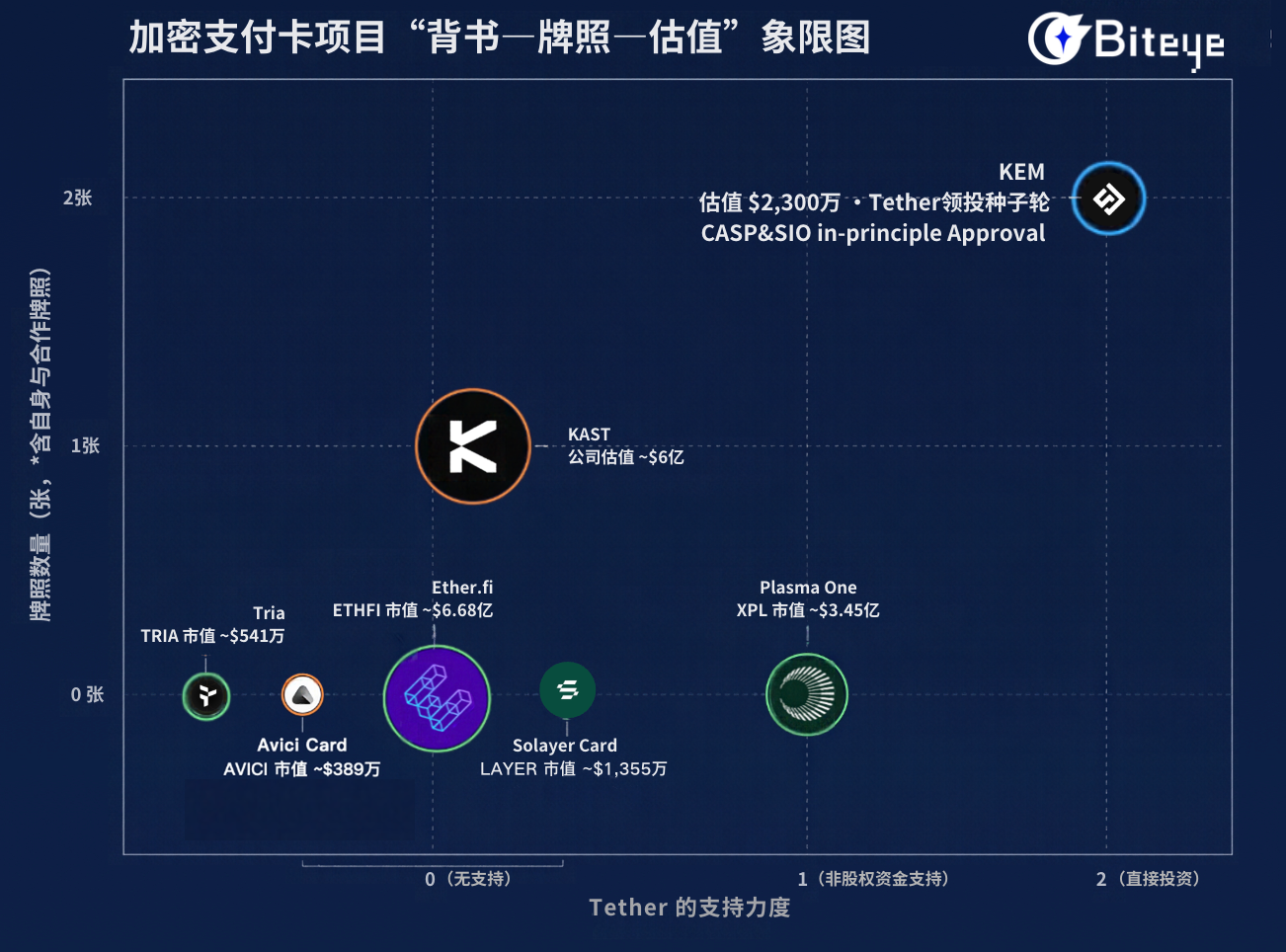
The U-card sector is now least lacking in products. RedotPay already has over 8.5 million users across more than 100 countries. For Kem, a Visa card that can spend USDT alone is unlikely to form a moat, so we need to look at what harder-to-replicate resources it has already accumulated in the GCC.
4.1 Tether's Investment and Ecosystem Endorsement
In 2024, Tether directly invested in Kem and explicitly hoped to use it to expand USDT usage in the Middle East.
For a fintech company still in its early stages, this is not only financial support but also a layer of brand and trust endorsement, which can lower the cost for users, banks, and other partners to understand Kem.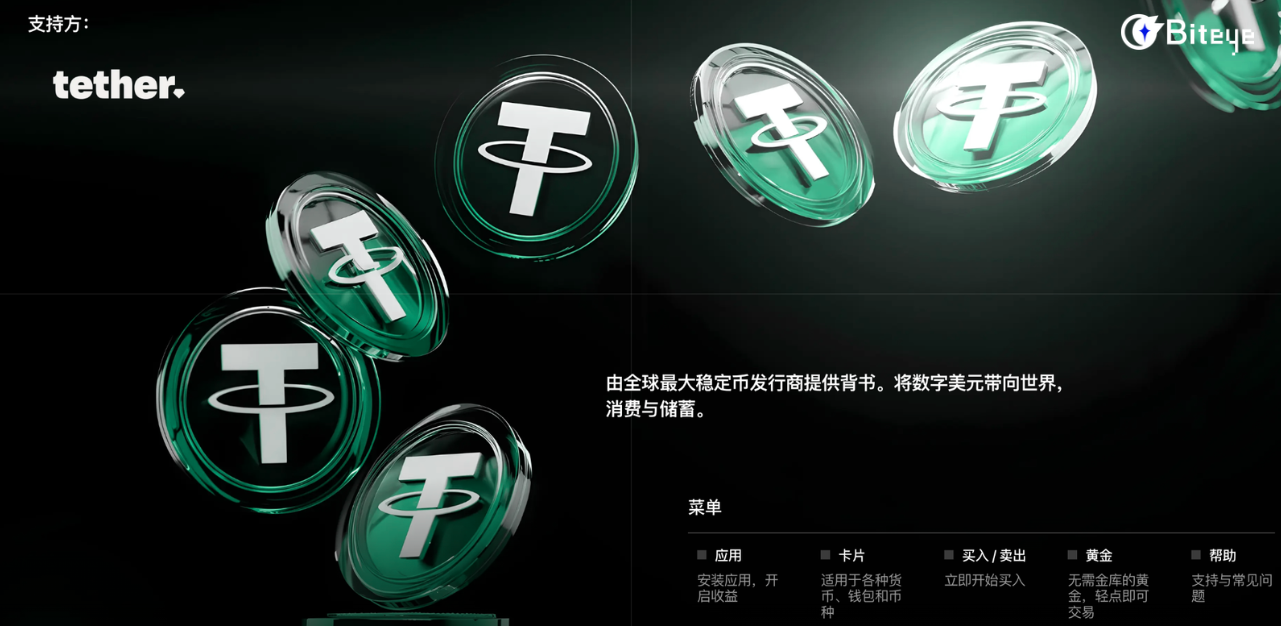
4.2 Local Compliance and Financial Channels Are Harder to Replicate
Compared with app features and cashback campaigns, licenses, local banking relationships, and payment channels are the harder-to-replicate parts.
In February this year, Kem obtained In-Principle Approval for both the Category 2 CASP and SIO licenses from the Central Bank of Bahrain, and has integrated payment, custody, and compliance services from Rain, Interlace, Fireblocks, Persona, Chainalysis, and others. According to information provided by the team, the company is also continuing to advance local banking channels and Visa-related partnerships.
4.3 From a Single Card to Gradually Increasing User Switching Costs
U-cards themselves are not very sticky, and users can easily switch platforms because of fees and cashback. Kem's approach is to put more financial scenarios into the same account: on the individual side, covering transfers, USDT, gold, and spending; on the business side, extending into collections, payroll, and treasury management.
When users' spending, savings, and transfers gradually settle into Kem, and businesses also start using it for collections and payroll, switching costs will naturally be higher than simply changing a U-card.
5. Growth Opportunities and Challenges
Kem's growth space lies both in geography and in business lines.
Geographically, Kem's current advantages are mainly concentrated in the GCC. If the Bahrain license and local payment partnerships can be successfully validated, markets such as Saudi Arabia, the UAE, and Qatar—which have large expatriate populations and cross-border capital needs—will all be relatively natural next stops.
On the business side, what matters more is continuing to extend from the consumer end to the business end. U-card profits are thin, and users can easily switch platforms because of fees and cashback, whereas merchant collections, payroll, cross-border payments, and enterprise APIs are more likely to generate stable revenue. Kem has already begun laying out these businesses, and whether it can achieve scale later will directly affect its commercialization capability.
But there are also no shortage of challenges. Once stablecoins enter wages, corporate treasury, and everyday payments, requirements for licenses, KYC, custody, and local banking partnerships will all become higher; at the same time, crypto fintechs such as RedotPay and KAST are expanding, and traditional fintechs like Revolut are also entering the Middle East, so competition will only intensify.
What Kem really needs to prove next is whether it can gradually turn its current first-mover advantage in the GCC into licenses, channels, and user retention.
6. Final Thoughts
Tether's bet on these four young people is essentially also a bet on the trend of the "Everyday Stablecoin."
Tether CEO Paolo Ardoino said: "Our investment in Kem App perfectly aligns with our mission to advance financial freedom for all."
In the past, the core competition among stablecoins was mainly focused on issuance scale, trading liquidity, and exchange coverage; as the market matures, the dimensions of competition continue to increase, extending from wealth management and asset allocation all the way to payments, remittances, payroll, and business settlement.
Stablecoins are gradually moving from being trading assets in the crypto world into more real financial scenarios. Kem represents exactly this direction.
If Kem can continue to prove this model out in the GCC and replicate it into more markets, then what Tether's investment has bet on may not just be one company, but possibly the entry point through which stablecoins truly enter the mass market in the next stage.





