As the froth fades, who commands attention in the AI era? 2026 Chinese-English AI KOL Influence Guide


- Core Insight: In the AI era, general knowledge information is rapidly depreciating. The truly scarce resources are "trust" and "verifiable production capabilities." AI KOLs are transitioning from information distributors to productivity enablers, with their value anchored in reproducible hands-on abilities and continuously disclosed, verifiable results.
- Key Elements:
- Shift in Attention Direction: User demand has shifted from "what happened" to "is it important" and "how to use it." Content focused on practical application and reviews is gaining favor. AI KOLs build trust by translating technology into usable scenarios through a "Build in Public" approach.
- Generational Divergence of KOLs: The English-language sphere predominantly features seasoned practitioners registered between 2007-2015 (62.9%), who lean towards technical origins and macro narratives. The Chinese-language sphere sees a higher proportion of new accounts (registered 2022-2023) at 13%, which focus more on application implementation and practical tutorials, fostering closer community ties.
- Large Model Usage Preferences: Claude and GPT are the "undisputed kings" in both Chinese and English contexts. However, in the Chinese sphere, mentions of AI coding tools (like Codex) reach as high as 80.9%, reflecting an obsession with practical workflows. Domestic models like DeepSeek (68.1%) and Kimi (58.5%) show strong local penetration.
- Capability Radar Differences: English-language KOLs focus on technological insights like multimodality (score 88.3) and foundation models. Chinese-language KOLs lead in AI coding (score 88.9) and agents (score 87.1), emphasizing full-stack application and practical capabilities.
- Fundamentally Different Monetization Logic: Unlike Web3 KOLs who rely on news cycles and wealth effects, the core assets of AI KOLs are "trust" and "methodology". They build ecosystems by distributing verifiable productive capabilities.
Original authors: Alan, Amelia | Biteye Content Team; Denise | XHunt Operations Team
In the summer of 2026, social media feeds refresh in milliseconds. One moment, a major language model releases an update; the next, tens of thousands of "in-depth interpretations" flood the timeline.
An independent developer told us his first waking thought is no longer about scrolling his timeline, but quickly scanning familiar avatars to see what new creations they've "Vibe Coded" overnight.
"I only trust those who have actually done it," he said.
This seemingly paranoid trust points to a truth most overlook:
In today's rapidly advancing era of large models, general knowledge information itself is rapidly depreciating.
Traditional tech media accounts that rely on forwarding news flashes, translating overseas announcements, or simply patching together stories are gradually losing their audience's patience. The truly scarce resource is no longer "who said what first," but "who can tell me if this is reliable and how I can use it."
To uncover the actual operational logic of this hidden circle, we leveraged the proprietary data and capability models of the social analysis tool @xhunt_ai to conduct an in-depth analysis of tens of thousands of tweets from nearly 400 leading AI KOLs in both Chinese and English ecosystems.
We discovered: Opinion leaders in the AI era are undergoing a profound transformation from "information intermediaries" to "productivity enablers."
1. Core Finding: From Distributing Opinions to Distributing Productivity
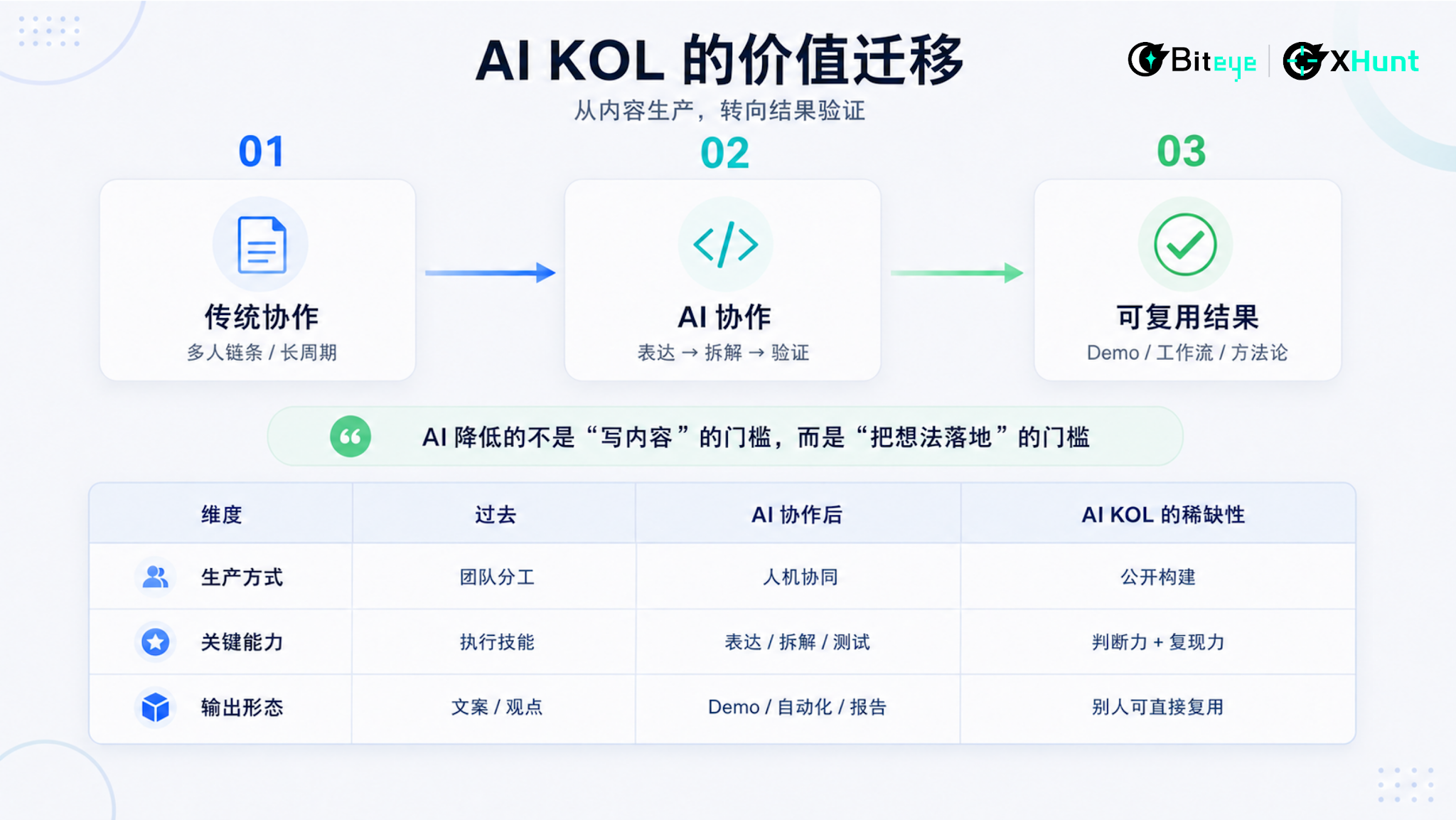
In the traditional internet context, an individual with a brilliant idea needed to mobilize a complex chain of human resources to bring it to life: backend, frontend, UI, product manager... This lengthy collaboration process was enough to dampen most enthusiasm. Today, AI tools are devastatingly compressing this production chain. Codex, Claude Code, Cursor, and Lovable transform coding barriers into logic and architectural capabilities; Seedance, GPT Image, Kling, and Nano Banana directly lower the formidable barriers to image and video creation.
However, this has led to a counterintuitive industry phenomenon: When anyone can mass-produce lengthy articles using AI, high-quality content becomes "cheap" and readily available, making trust unprecedentedly scarce.
The core value of an AI KOL lies not in their ability to generate mediocre articles faster than ordinary people. It lies in their ability, through human-machine collaboration, to translate vague AI usability into tangible results that others can see, run, and directly replicate. This is no longer about distributing opinions; it's about distributing production capability.
For example, when a new model claiming to "defeat Claude Opus 4.7" is released, users are tired of cookie-cutter press releases. They desperately want to know from trusted KOLs: "Will it hallucinate in real code development? Is this product, which looks dazzling in an official polished video, actually an out-of-the-box productivity tool for ordinary people?"
The compass of attention has shifted: from "what happened," to "is it important," to "how to use it."
In a noisy field, AI KOLs act as practical pioneers and trust anchors.
2. Who Plays This Role: Tech Veterans and New Generation Blue Oceans
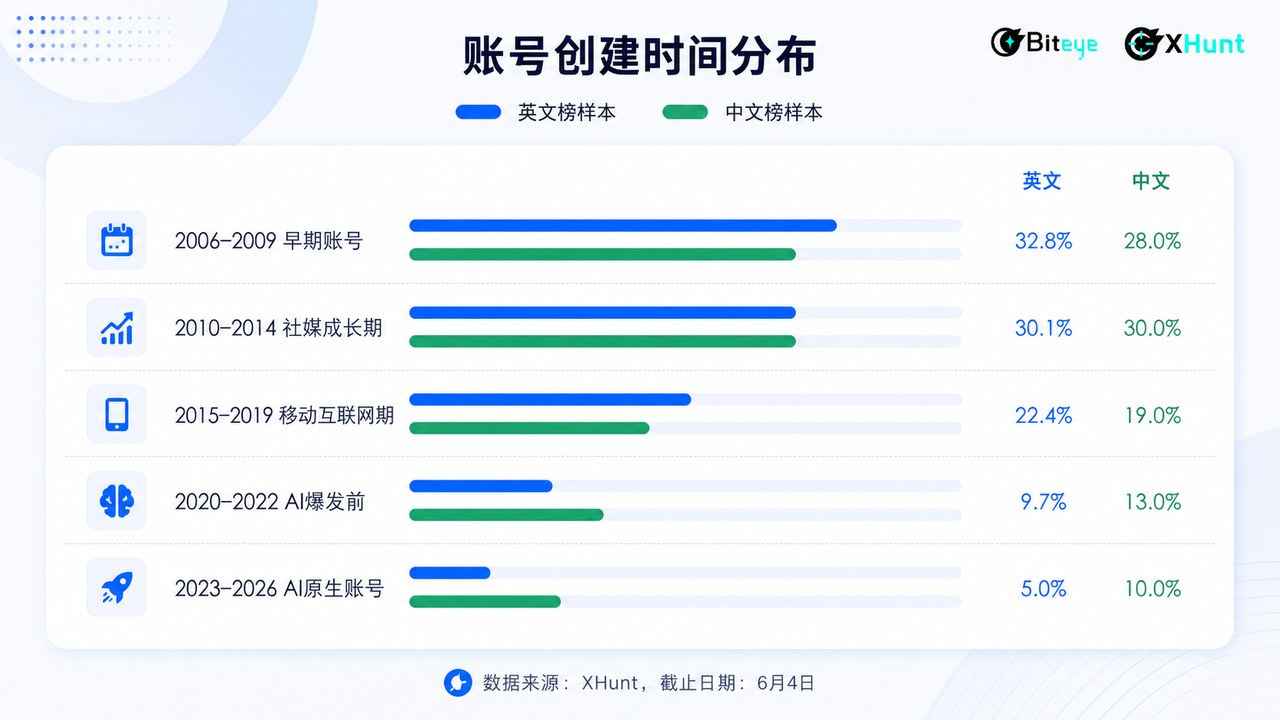
A common industry bias is: "Most AI KOLs are just marketing accounts that rode the wave after the explosion of ChatGPT in late 2022." However, generational statistics on account registration dates from XHunt disprove this claim: The generational structure of AI KOLs presents an inverted pyramid distribution.
- Dominance of Senior Practitioners: In the English list, early adopters registered between 2007 and 2015 account for a high 62.9%; in the Chinese list, this ratio reaches 58%. This means the majority of top accounts currently active in the core AI sphere are practitioners and entrepreneurs who have weathered the PC, mobile internet, and Web3 cycles. With the advent of the large model wave, they have keenly migrated their productivity tools.
- New Generation Growth in the Chinese Region: Notably, during the ChatGPT boom period of 2022-2023, AI-native new accounts that emerged in the Chinese region accounted for 13.0%, higher than the 9.7% in the English region. This indicates that the Chinese ecosystem offers significant traffic dividends for practical content. As long as a new account has proficient tools and solid tutorials, it can build a competitive advantage through consistent posting.
In contrast, Web3 KOLs often show a clear spindle-shaped registration time distribution, with a surge of new accounts created during DeFi Summer, the NFT explosion, and the Meme craze, correlated with market heat.
3. The Symbiotic Evolution of AI KOLs and OPCs
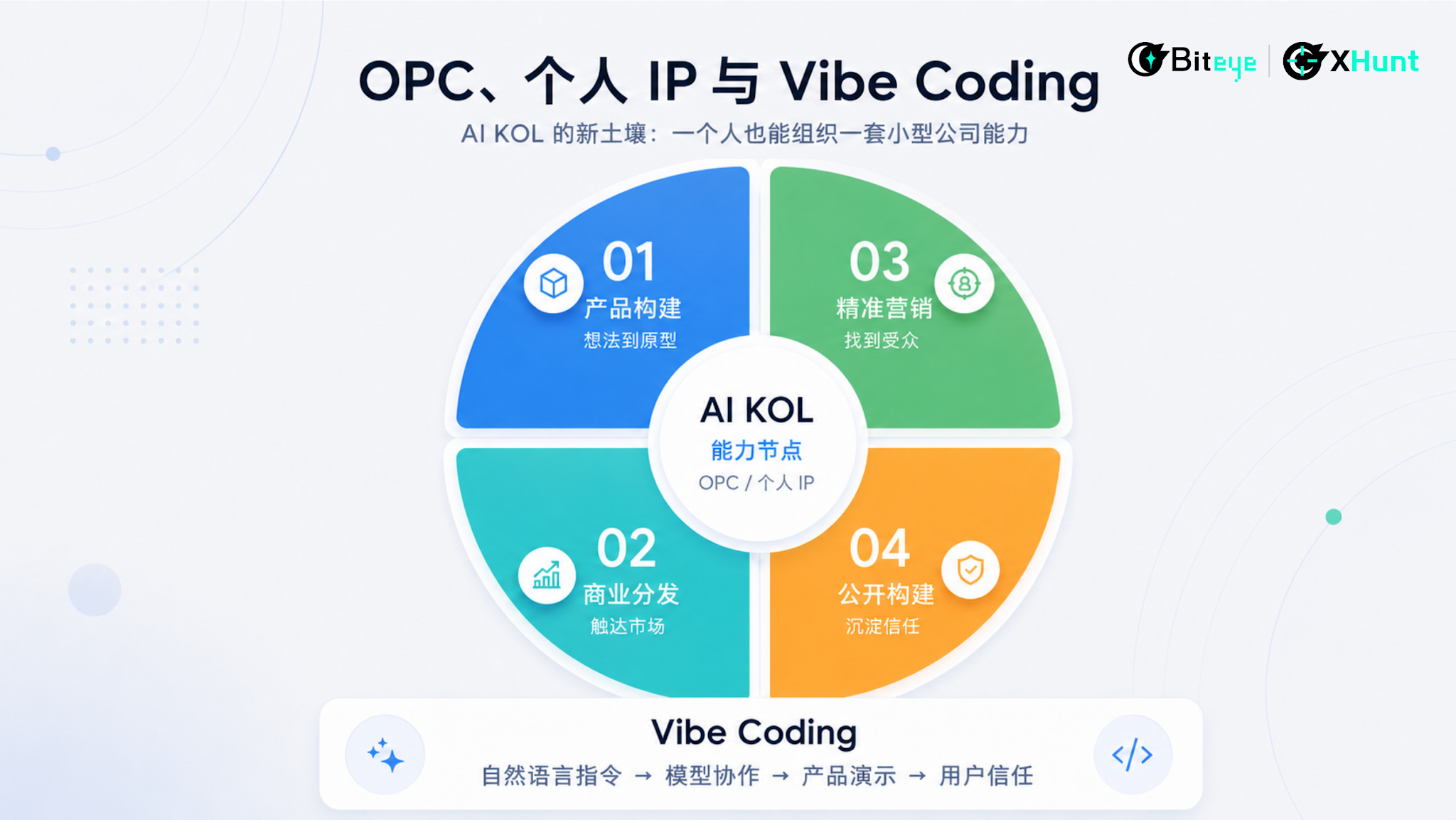
The evolution of AI is turning the concept of the One Person Company (OPC) from a superhuman idea into a clearly achievable reality. The core essence of an OPC is the user's keen ability to leverage various vertical AI Agents, thereby freeing themselves from fighting alone and handling all the grunt work, infinitely amplifying their own ideas, and using AI to complete independent product building, commercial distribution, and precise marketing.
In this transformation, "application-distributing" AI KOLs have secured a core ecological niche through their composite advantages:
- Understanding Technological Boundaries: Many come from major AI companies or are experienced developers with deep technical foundations. They understand the real limitations of tools better than pure marketers.
- Understanding Market Pain Points: As long-time content creators facing audiences directly, they possess strong productization and marketing awareness. They understand real user needs better than pure R&D personnel.
It is this dual advantage of "technology + internet savvy" that allows them, through "Build in Public", to transform abstract technology into usable scenarios, thereby accumulating continuous user trust.
The wildly popular Vibe Coding trend has pushed the potential of this personal IP to its extreme: When a leading AI KOL recommends a development framework, they no longer write pale recommendation blurbs. Instead, they directly demonstrate on X how, using just a natural language instruction and a relaxed atmosphere, they can quickly launch a complete, interactive AI application in 15 minutes by collaborating with the model.
Traditional KOLs harvest traffic by distributing opinions; AI KOLs consolidate ecosystems by distributing production capabilities.
4. Data Portrait: The Ecological Divide Between Eastern and Western KOLs
To explore the true operational logic of the AI KOL ecosystem, this report extracted a sample of 100 tweets from the top 300 English-language and top 100 Chinese-language AI KOLs on the XHunt influence rankings over the past 3 months. We conducted an in-depth analysis and comparison of their tweet content and various data points.
We found significant differences in attention structure and content production patterns between Chinese and English AI KOLs. Below, we unveil the true face of AI KOLs across seven core dimensions: overall traffic volume, discussion topics, account creation time, and personal profiles.
1️⃣ Attention Map: English Ecosystem Focuses on Origins, Chinese Ecosystem Focuses on Practice
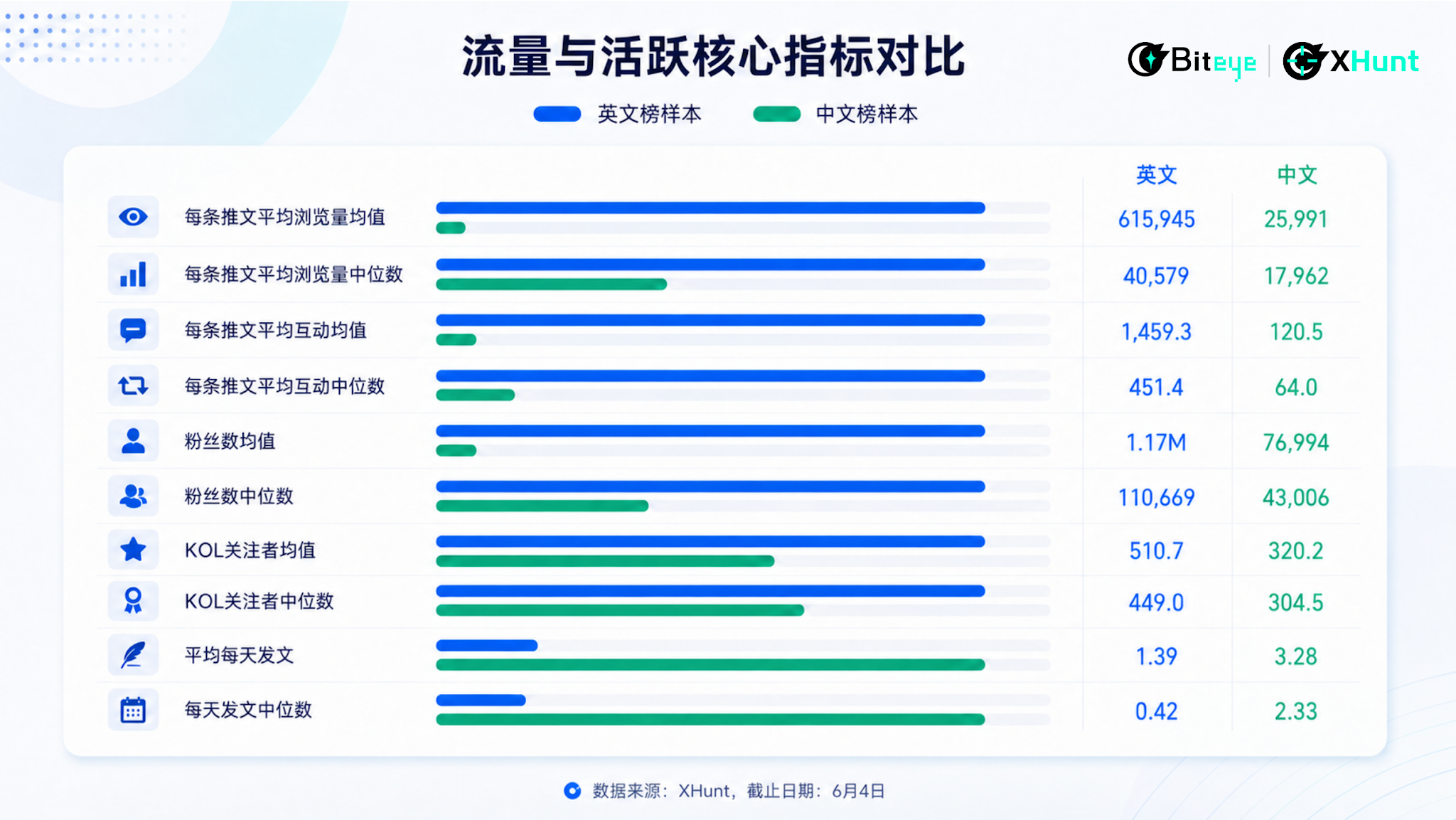
- Traffic Volume Distribution: The total follower base of the English list exceeds 350 million, with an average of 1.17 million and a median of 110,669. The Chinese ecosystem tends towards refined vertical niches, with an average follower count of approximately 77,000 and a median of 43,006.
- Posting Activity Comparison: In the last 90 days, the 100 accounts on the Chinese list produced nearly 30,000 tweets, with a median posting count of 210. In contrast, the 300 English accounts posted only 37,000 tweets in total, with a median of just 38. English top accounts tend to post infrequently, while Chinese accounts form a high-frequency application diffusion network.
- Follower Tier Structure: The English list shows a pyramid structure, with accounts having 50,000 to 200,000 followers making up the largest share at 41.8%, and accounts with over 1 million followers accounting for 7.4%. The Chinese list is concentrated in the long-tail application layer, with accounts having 10,000 to 50,000 followers constituting 53.0%, and those with over 200,000 followers only 4.0%.
- KOL Followers: Although the average number of peers followed by English-list KOLs (510.7) is higher than that of the Chinese list (320.2), when adjusted for the total number of Chinese and English AI KOLs (approximately 1,000 and 5,000 respectively), the circle penetration rate for top Chinese KOLs reaches 32%, far exceeding the 10% in the English region. This indicates that the Chinese AI KOL circle is a highly dense community with extremely tight connections.
- Activity Spectrum: A high 70% of Chinese KOLs frequently share industry developments and practical operations daily. In the English region, low-frequency active accounts exclusively account for 39.8%, while steadily active ones make up 26.4%. The English region tends towards an industrial source network, while the Chinese region leans towards a practical network.
Summary: English AI KOLs form an industrial source network controlling first-hand technology and major strategic releases; Chinese AI KOLs form a super-diffusion and practice network that frantically translates, reviews, tutorials, and pushes cutting-edge technology into mainstream workflows.
2️⃣ Mindset Preferences: English Ecosystem Focuses on Macroeconomics, Chinese Ecosystem Focuses on Practical Application
Stripping away broad labels, by extracting word frequencies and tags from the overall discussion content, we clearly observed the different focuses of the two ecosystems:
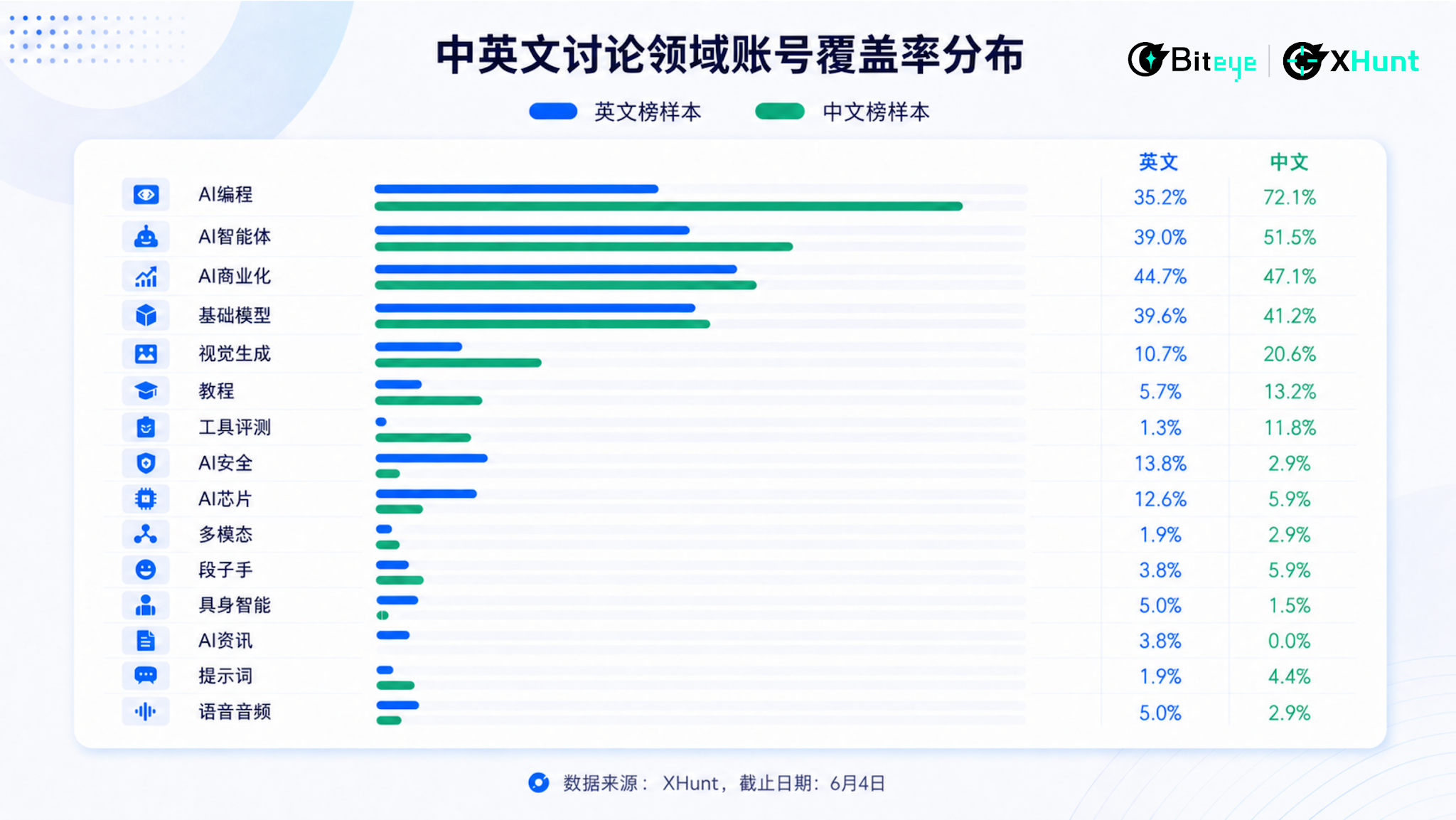
Whether in the English or Chinese region, foundational models, AI agents, AI commercialization, and AI coding form the core consensus. However, their outward paths diverge significantly:
- English Region Emphasizes Foundational Technology and Macro Perspectives: English KOLs have a much higher coverage rate in AI commercialization (44.7%), foundational models (39.6%), AI safety (13.8%), AI chips (12.6%), and embodied intelligence (5%) compared to their Chinese counterparts. They dedicate significant effort to discussing AGI safety alignment, the supply-demand landscape of computing power, the open-source vs. closed-source debate, and embodied intelligence.
- Chinese Region Emphasizes Application Deployment and Practical Orientation: Chinese KOLs exhibit strong pragmatism. AI coding reaches 72.1%, roughly double that of the English region. AI agents stand at 51.5% vs. 39% in the English region. In visual generation, 20.6% is also nearly double the English region. Tool reviews are at 11.8%, an astonishing nearly nine times that of the English region. Tutorials and prompts are also significantly higher than in the English region, indicating that Chinese bloggers are better at breaking down complex technologies into actionable guides for coding and agent building.
3️⃣ Capability Radar: English Focuses on Technical Insights, Chinese Focuses on Full-Stack Application
To reduce misjudgment from broad category labels, we utilized XHunt's KOL capability scoring model to comprehensively analyze the quality of content published by AI KOL accounts across multiple scoring dimensions:
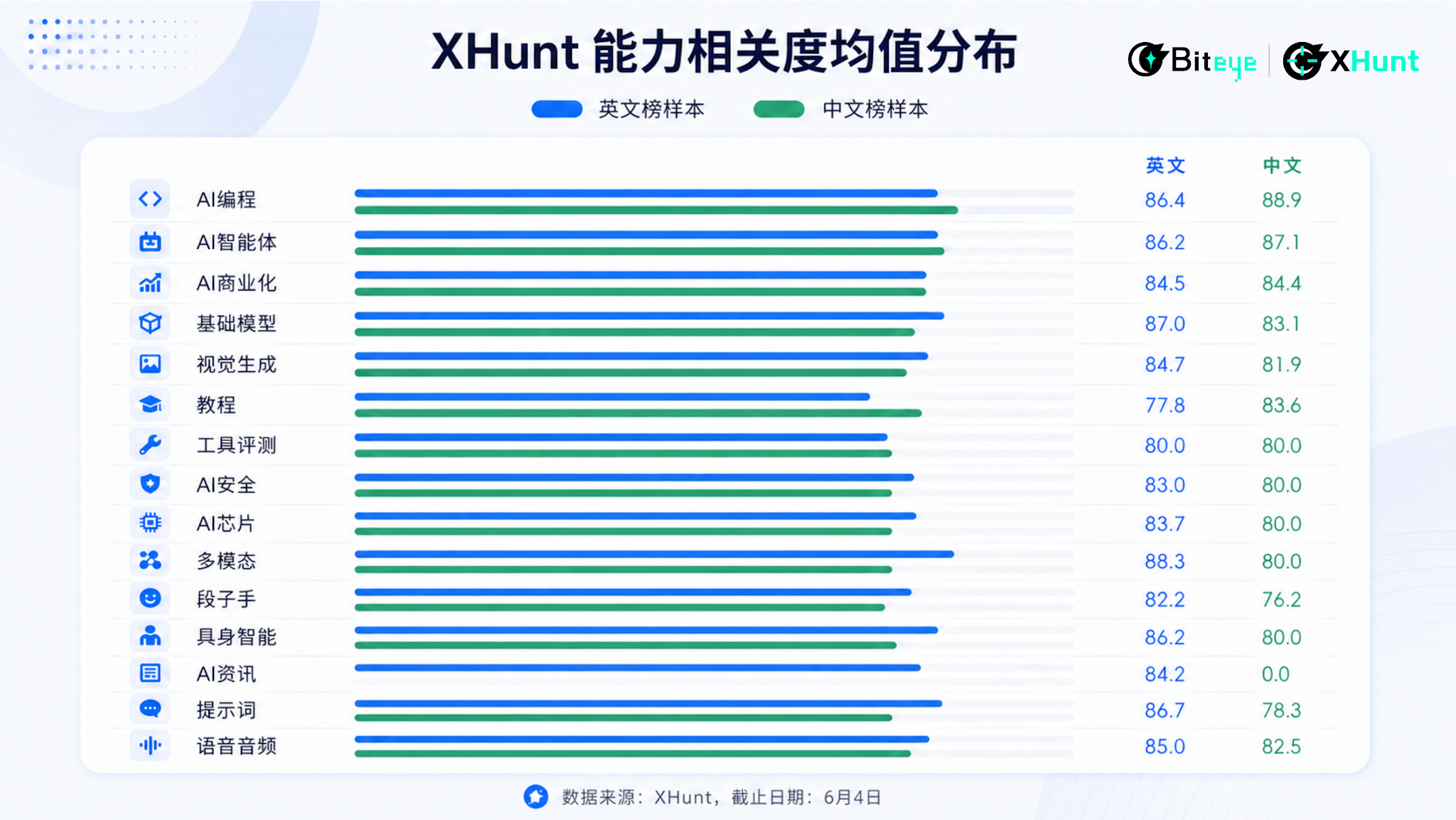
- English List Occupies Industry Origins and Foundational Logic: The highest score on the English list is for multimodality at 88.3, followed by foundational models and prompts. Their core capabilities lie in insights into model architecture, large-scale engineering tuning experience, and foresight into cutting-edge trends. The English list has a natural first-mover advantage in AI safety and chips.
- Chinese List Focuses on Full-Stack Application Practice: In the Chinese sample, the average relevance score for AI coding capability reached 88.9, and AI agents reached 87.1. A significant number of creators on Chinese Twitter possess natural language development skills and are adept at integrating AI into private domain monetization or lightweight entrepreneurial models.
4️⃣ Large Model Mention Rate: A "Vote with Feet" Workflow Map
The large model mention rate (i.e., whether any tweet from an account in 3 months hits a keyword) represents not only the discussion heat of the model within the community but also serves as KOLs' "vote with feet" on their reliance on and sentiment towards various models in their actual workflows:
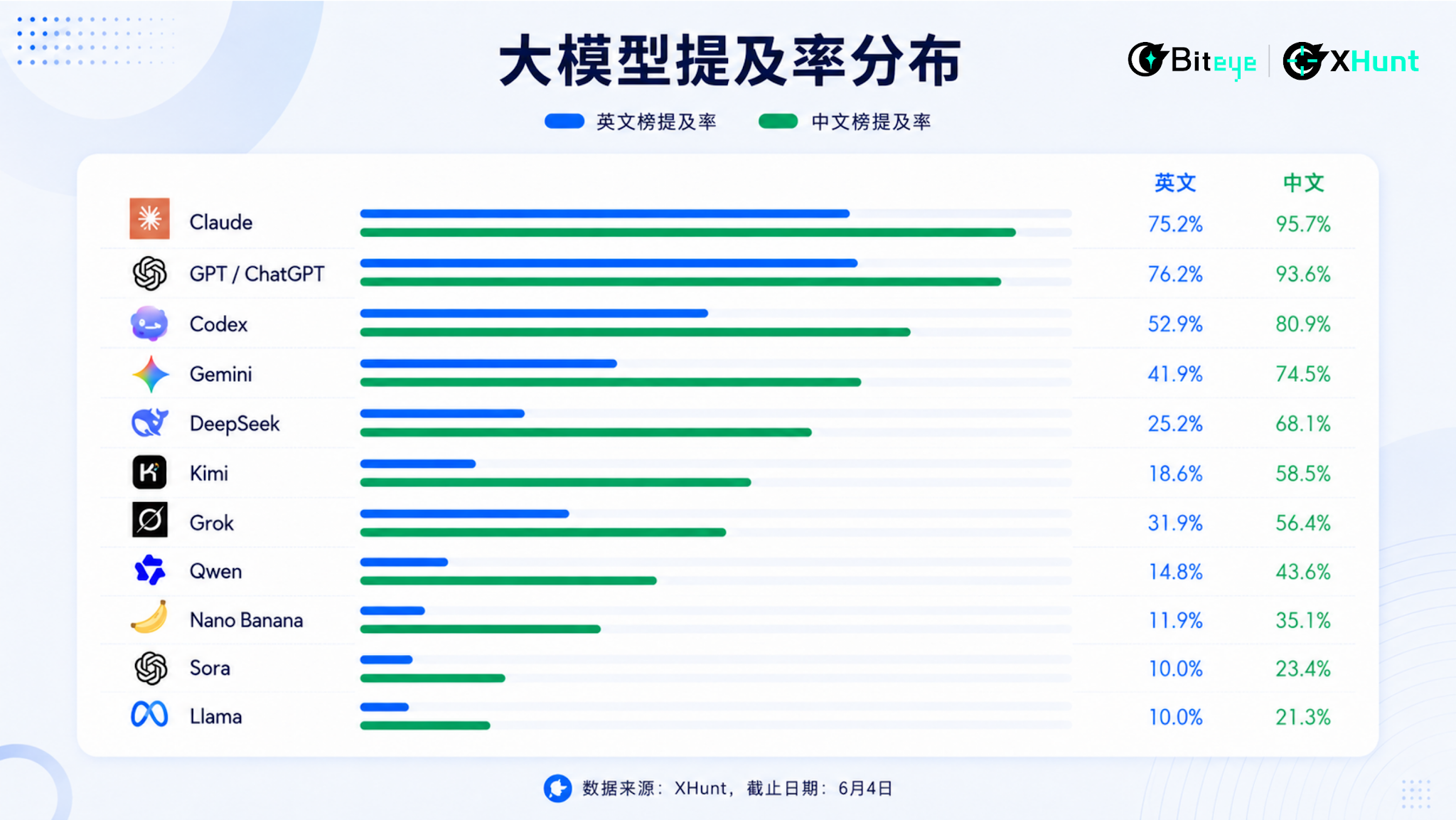
As shown, Claude and GPT form the top two bilingual models. In the Chinese region, Claude's mention rate is as high as 95.7%, remaining the top choice for independent developers and Vibe Coders. Notably, with the continued popularity of AI coding scenarios, Codex has seen a recent surge in popularity, securing the third spot with an ultra-high coverage rate of 80.9%, further confirming the intense pursuit of practical workflows among Chinese geeks.
Additionally, domestic large models DeepSeek (68.1%) and Kimi (58.5%) have also demonstrated strong local penetration. In contrast, in the English region, GPT (76.2%) and Claude (75.2%) are evenly matched. Compared to discussions about a single toolchain, they focus more on multimodal evolution and the overarching narrative of the industry.
5️⃣ MBTI Content Style: Facets of Account Expression
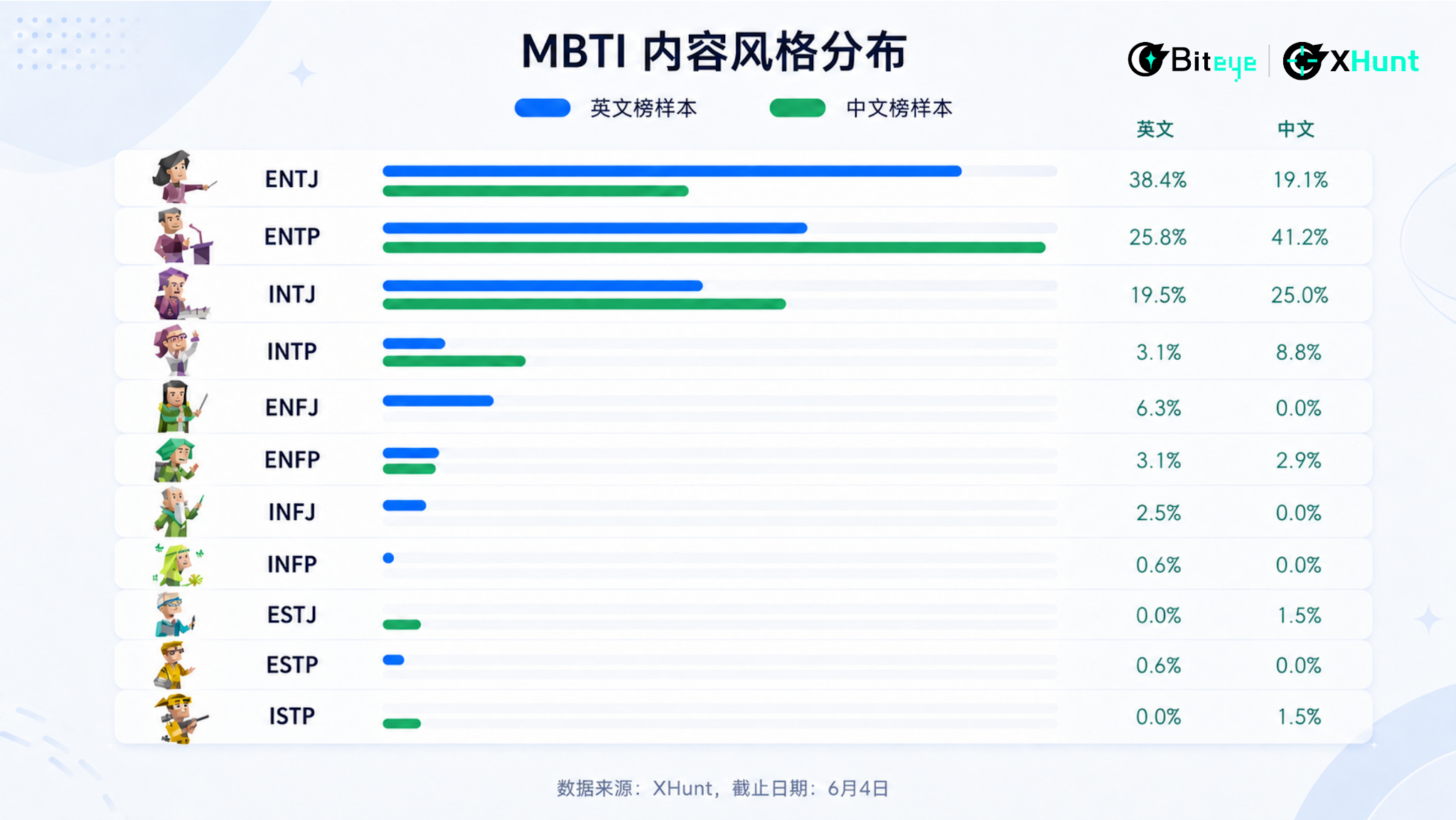
Using a proprietary style inference algorithm, XHunt classified the public personality facets of Chinese and English KOL accounts using MBTI profiling, based on their bios, long tweet structures, interaction and debate logic, and topic preferences:
As shown, regardless of region, accounts with influence predominantly belong to the NT (Rational) camp. In periods of rapid technological iteration, content offering logical analysis and productivity guidance is clearly favored. The English list is dominated by ENTJ (38.4%) and ENTP (25.8%), leaning towards framework building and macro analysis; the Chinese list is led by ENTP (41.2%), echoing the characteristic enthusiasm of the Chinese region for exploring diverse uses of new tools.
6️⃣ Identity Structure: English Leans Towards Frontiers, Chinese Leans Towards Practice
By clustering and cross-verifying the profile descriptions and historical tweet narratives of the two sample groups, XHunt mapped the landscape of Chinese and English AI KOLs:
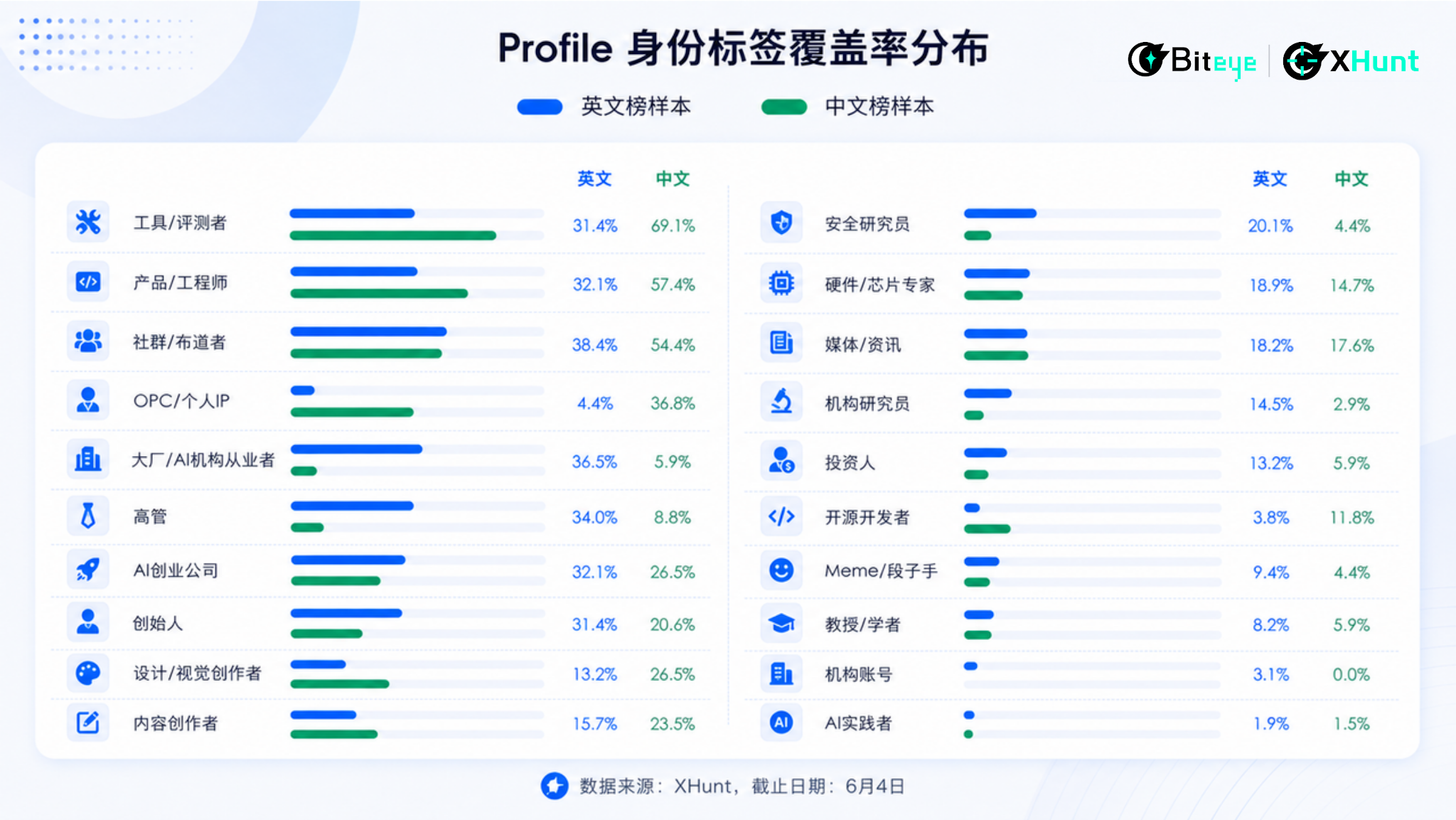
Core Identity Structure:
- Over 65% of KOLs in the English region are large model founders (31.4%), executives (34%), or scientists; their content output is, in itself, a form of strategic distribution.
- The top identities in the Chinese region are tool/testers (69.1%) and product engineers (57.4%). Overall, the English ecosystem tends towards a source release network, while the Chinese ecosystem emphasizes a productivity practice network.
In summary:
The English AI KOL network resembles a state-of-the-art technology and paradigm release network happening on the Silicon Valley frontier, led by scientists and tech leaders. The Chinese AI KOL network resembles a comprehensive productivity tool and survival practice network erupting within a vast application market, led by full-stack independent geeks and application pioneers.
7️⃣ Tweet Effectiveness Evolution: From Unruly Growth to High-Quality Development
Analyzing the overall market trends over the past 8 months, the traffic distribution logic in the AI field has shifted from unruly growth to high-quality development, with continuous improvements in exposure and posting frequency. Three core characteristics emerge:
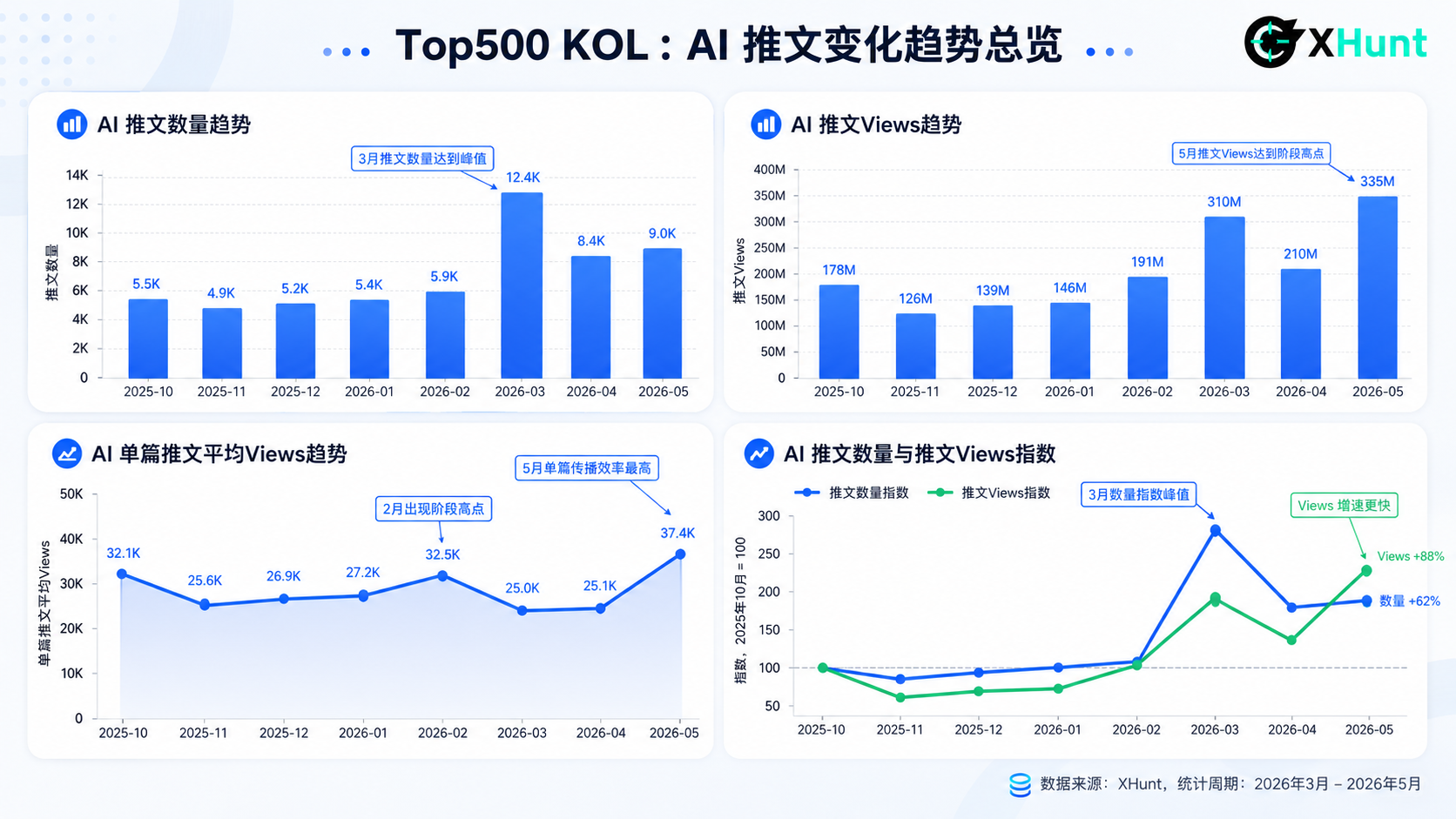
- Attention Dilution in February & March: Influenced by industry hotspots like Openclaw, the total number of tweets surged to 12.4K in March, with total Views reaching 310M. However, the average Views per tweet hit a trough (25.0K). A massive influx of homogenized news flashes led to severe information overload and reduced dissemination efficiency.
- Peak Dissemination Efficiency in May: In May, the total number of tweets fell back to 9.0K, but both total Views (335M) and average Views per tweet (37.4K) reached historical highs. In-depth practical and review content is leveraging fewer posts to attract greater traffic.
- Views Growth Outpacing Tweet Production: By the end of May, the Views