






Even losing money requires waiting in line—how far can PaperTrade's 1000x leverage experiment go?


- Core Viewpoint: PaperTrade, a synthetic perpetual contract platform built on HyperEVM, went viral immediately upon launch with its 1000x leverage and "loss mining" mechanism, surpassing $678 billion in first-day trading volume. However, controversies soon emerged around execution fairness and price manipulation, and its popularity has since declined significantly.
- Key Elements:
- Notional trading volume reached $14.4 billion within 10 minutes of launch, accumulating to over $678 billion in 24 hours, with maximum leverage of up to 1000x.
- Users who incur losses or get liquidated receive PAPER tokens. PAPER has zero initial supply, no pre-mine, and no team/VC allocation—the only source of minting is trading losses.
- Users trade directly against the protocol's USDC liquidity pool. When profitable, if the pool balance is insufficient, unpaid profits are queued on a first-in-first-out basis awaiting subsequent capital.
- The platform relies on Hyperliquid order book mid-price for pricing. A user allegedly briefly manipulated the ETH quote through approximately $20 million in trades, profiting from the liquidity pool.
- Official response stated that the manipulation risk stemmed from a relatively high open interest cap during the initial launch period, and position limits have begun to be tightened.
- As of the time of reporting, open interest stood at approximately $1.3 billion, down about 60% from 12 hours prior; margin declined from $20.29 million to $14.34 million.
- The PAPER minting rate curves downward as LP balance grows, meaning latecomers receive fewer tokens for the same losses, casting doubt on the sustainability of its popularity.
Original | Odaily (@OdailyChina)
Author | Asher (@Asher_ 0210)
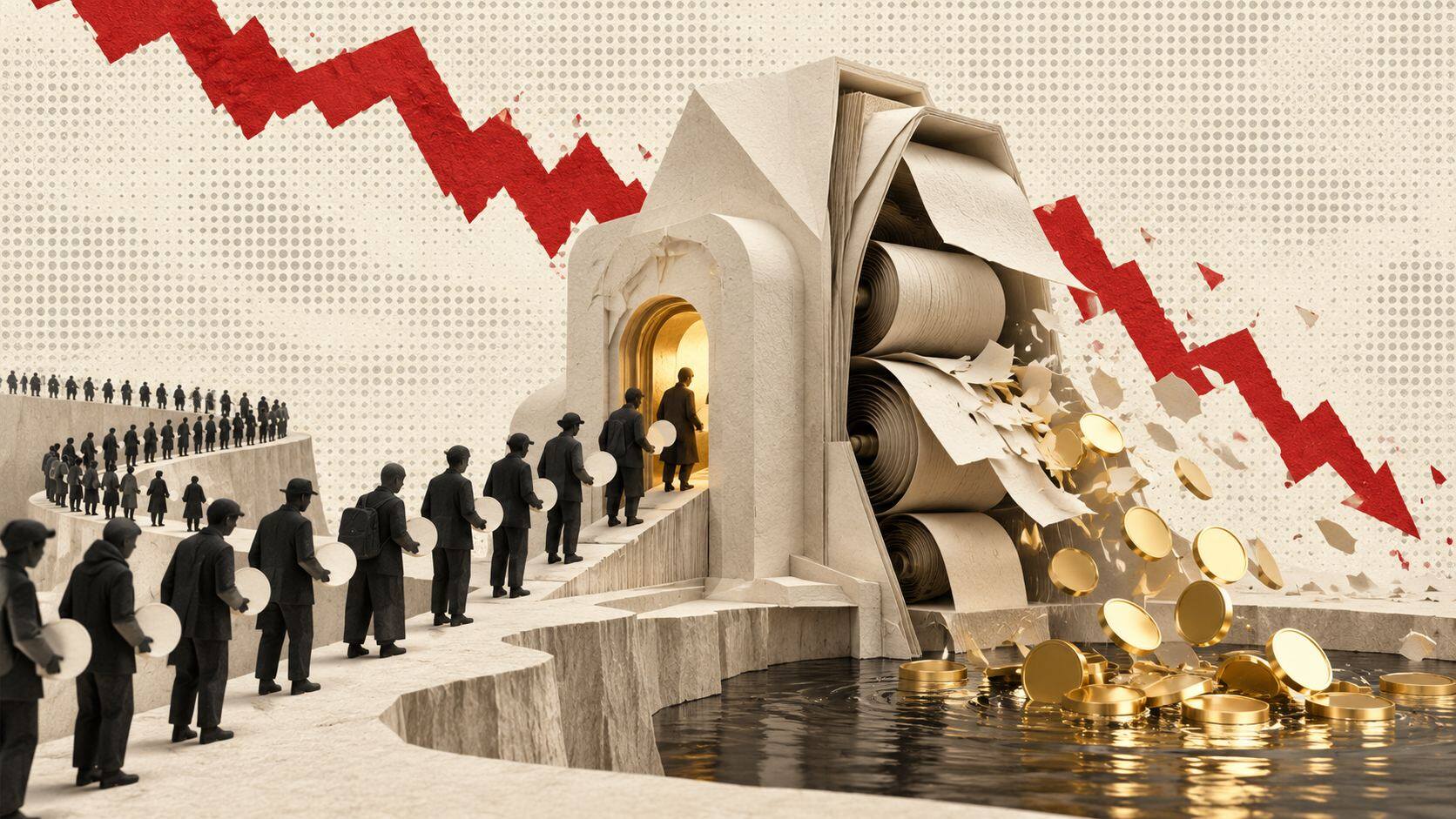
On the evening of October 10, PaperTrade, a synthetic perpetual contract platform built on HyperEVM, officially launched. Within less than 10 minutes, the platform's notional trading volume reached $14.4 billion; within 24 hours of launch, cumulative notional trading volume had exceeded $678 billion.
More talked-about than the trading volume was players "queuing up to lose money." PaperTrade supports up to 1000x leverage, and after a trading loss or liquidation, users receive the native token PAPER. As a result, some players entered the platform with the goal of "loss mining," and the trading frenzy in the early launch period left small trade requests unable to execute for extended periods, creating scenes where even those wanting to open a position to lose money had to queue up.

Beyond the hype, controversies followed: Why do small users wait longer? Can winners' profits be paid out in time? Some profited from PaperTrade's liquidity pool by pushing Hyperliquid's prices — was this a mechanism flaw, or a risk the team accepted?
Below, Odaily will explain PaperTrade's core mechanism and break down the controversies following its launch.
1000x Leverage, Loss Mining: How Does PaperTrade Operate?
Users Trade Directly Against the Protocol's Shared USDC Liquidity Pool
PaperTrade was co-founded by Jez and Blurr and is built on Hyperliquid's smart contract layer, HyperEVM. Unlike trading platforms that match buyers and sellers through an order book, PaperTrade users trade directly against the protocol's shared USDC liquidity pool: when users lose, funds flow into the pool; when users profit, the pool pays out the profits.
The platform reads the midpoint of Hyperliquid's best bid and offer to price synthetic perpetual positions for BTC and ETH, but does not simultaneously open hedge positions on Hyperliquid. This eliminates traditional bid-ask slippage, spreads, and funding rates, with traders' profit risk borne by the protocol's liquidity pool.
1000x leverage means $100 in margin can open a position with a notional value of $100,000, and roughly a 0.1% adverse price movement is enough to exhaust the initial margin. For players coming to "mine," a quick liquidation is exactly what they need to earn PAPER.
However, the platform still applies asymmetric profit reductions on the winning side, particularly for profits generated by extremely small price movements. Therefore, "no traditional trading fees" does not mean trading is entirely cost-free.
Winners Queue to Withdraw, Losers Mine Through Liquidation
What makes PaperTrade unique is that LPs start with zero capital and rely on user losses and liquidations to accumulate payout funds.
When users profit, if the pool balance is insufficient, the original margin can be withdrawn, but unpaid profits are queued on a first-in-first-out basis, waiting for subsequent funds to replenish. For example, if the pool only has $5 million but needs to pay $6 million in profits, the remaining $1 million must wait. This allows the protocol to avoid raising house capital upfront, but if subsequent traders don't lose enough, winners may not receive their full profits for a long time.
Losers receive PAPER. PAPER has an initial supply of zero, with no pre-mine, no team or VC allocation, and the only minting source is rule-compliant trading losses or liquidations. When the LP balance is below $2 million, every $1 lost mints 100 PAPER under the base rules; after exceeding the threshold, the minting rate declines along a curve.
Users can stake PAPER to receive USDC yield distributed by the protocol; after the LP exceeds the $5 million target balance, excess yield can also be distributed to stakers according to the rules. Thus, losers have an opportunity to recover costs through subsequent dividends.
However, in the early launch period, PAPER cannot be freely transferred and has no public market price. The USDC lost is certain, but whether the PAPER received can cover costs still depends on subsequent platform dividends and market pricing.
Transparent Rules, No Pre-Allocation — But Controversies Remain
A key reason PaperTrade exploded upon launch is that it offered a participation method different from conventional token projects. With no pre-allocation for the team or VCs, tokens are issued from zero, and participants bear costs through trading and then share in protocol revenue. For some crypto-native users, this kind of experiment with clear rules and aggressive gameplay is inherently attractive.
However, transparent rules only help participants understand risks; they cannot guarantee those risks remain within controllable bounds. Post-launch controversies mainly center on execution fairness and pricing security.
Fair Launch, But Small Users Wait Longer
Early losses earn more PAPER, so users naturally want to get their trades executed as early as possible. But in the early launch period, a flood of requests poured in, and trades were not executed simultaneously, meaning small users faced longer waits.
According to PaperTrade's response, to avoid frontend congestion and spam request attacks, small orders cannot enjoy exactly the same priority as large orders, and the team has done its best to improve fairness within performance constraints.
For players, no pre-allocation is only part of a fair launch. Who gets to trade first and acquire PAPER first also affects the final distribution. If large orders are more easily executed, small users may miss more favorable entry points.
Reliance on Hyperliquid Quotes Leaves PaperTrade Vulnerable to Price Manipulation
A more direct controversy stems from PaperTrade's reliance on Hyperliquid's BBO midpoint price. Trader Rune pointed out that PaperTrade's documentation already disclosed the risk of price manipulation using Hyperliquid's best bid and offer. Community user boblob claimed that two wallets allegedly established large positions on PaperTrade while executing approximately $20 million in trades that briefly moved ETH's price on Hyperliquid by about 10 to 20 basis points.
The logic behind such behavior: if the cost of pushing external quotes is lower than the profit gained from a large PaperTrade position, one could profit from the protocol's liquidity pool. With up to 1000x leverage and relatively large position limits, even very small price movements can translate into significant P&L.
In response, PaperTrade stated that manipulation risk was not a design oversight, but rather a problem arising from opening higher open interest limits in the early launch period to ease queuing pressure. As traffic declined, the team has begun tightening position limits at the on-chain and relay levels to reduce the profit space for manipulation.
The team also claimed that some users who persistently attempted manipulation ultimately returned most of their profits to the platform. However, this claim cannot substitute for independent verification of fund flows.
After the Frenzy, How Many Players Can PaperTrade Retain?
After the first-day frenzy, PaperTrade's position size has clearly declined. As of 10 PM last night, the platform's open interest was approximately $1.3 billion, down about 60% from 12 hours earlier; the margin corresponding to positions dropped from $20.29 million to $14.34 million, a decrease of about 30%.
"Loss mining" attracted the first batch of players, but may not keep attracting new users. As PAPER's minting rate declines, the same $100 loss yields fewer tokens for latecomers. Once PAPER opens for trading, the cost comparison between directly buying tokens and loss mining will also affect users' choices.
The buzz around this "loss mining" is driven by market expectations for PAPER's valuation and platform dividends. Whether PaperTrade can sustain the momentum and turn those expectations into actual returns is the key to retaining players. After all, players are willing to lose money upfront for expectations, but they won't keep paying for expectations forever.





