Jev Goes Viral: A Comprehensive Breakdown of Related US Stock Targets


- Core View: TypeSafe AI's decision model Jev specializes in classification and selection tasks at extremely low cost, driving AI judgment capabilities into edge devices and autonomous systems, with analog chip, edge AI, and sensor manufacturers poised to benefit.
- Key Elements:
- Jev charges only $0.042 per million input tokens and offers free output, making item-by-item inspection a viable alternative to sampling.
- Jev is positioned as a System One decision model that outputs options, scores, and probabilities, eliminating the compute overhead of generating explanations.
- Developers have already applied it to scenarios such as drone obstacle avoidance, browser operations, search, and Agent tool calling.
- Potentially benefiting US stocks include TXN, ADI, STM, and ON, covering sensing, power supply, motion control, and edge AI chips.
- NXPI, QCOM, and Cloudflare are on the watchlist, corresponding to industrial computing, on-device AI platforms, and model deployment, respectively.
- Jev still carries early-stage risks regarding judgment accuracy, problem design, and long-term business support, and is not yet suitable for mission-critical production operations.
Over the past few days, a new name has been appearing frequently on AI developers' timelines: Jev.
Some people use it to categorize papers, some use it to pick which tools an Agent should call, and others have hooked it into drone simulators to let drones choose maneuvers that avoid obstacles. Platforms like OpenRouter and Cloudflare have also integrated this new model, and demos of applications built around Jev have been appearing one after another.

If JEV makes AI decision-making faster and cheaper, which US-listed companies stand to benefit?
Before understanding the investment logic, we first need to figure out what Jev actually is.
Multiple-Choice Questions
Jev is a decision model launched by TypeSafe AI on September 15. The company calls its category System One, borrowing the concept of fast judgment from the seminal behavioral economics book Thinking, Fast and Slow. It can understand text descriptions, and primarily outputs options, scores, and probabilities for software to process further.
Take an example. An online store receives a message: "I bought a cup yesterday and it looks like I was charged twice. Can you check?"
The system has several small questions to resolve: Does this belong to after-sales or finance? Is the user inquiring about a bill or requesting a refund? Do existing records show a duplicate charge?
Developers can predefine the options and have Jev answer each one separately. The program then checks the order and payment records and enters the corresponding processing flow; when an explanation is needed for the customer, it is handed off to a model that excels at expression.
This is the basic use of Jev: give it a situation, define the questions, and let it make choices.
General-purpose large models can also complete these tasks. Jev's appeal lies in being specifically optimized for classification, scoring, and selection, reducing the time and cost of making a small judgment. It hands the result directly to the program, eliminating the process of generating an explanation.
To extend this further: you receive a thousand industry messages every day, but only a few dozen are truly worth reading closely. You can first have Jev determine whether each message involves a company you care about and whether it contains new information, then have a general-purpose model summarize the filtered content. In this way, the general model only processes the parts worth reading in depth, while a large number of simple judgments are handed to the lower-cost Jev.
Similar experiments have extended to browser operations, search, and gaming scenarios. Beating's Jev feature page organizes these projects by use case, explaining which judgments Jev handles in each, with source code and some demo links included. Comparing specific cases makes it easier to understand where this "multiple-choice" capability can be applied.
Cutting Costs to the Minimum
According to pricing published by TypeSafe, Jev charges $0.042 per million input tokens, with output free of charge.
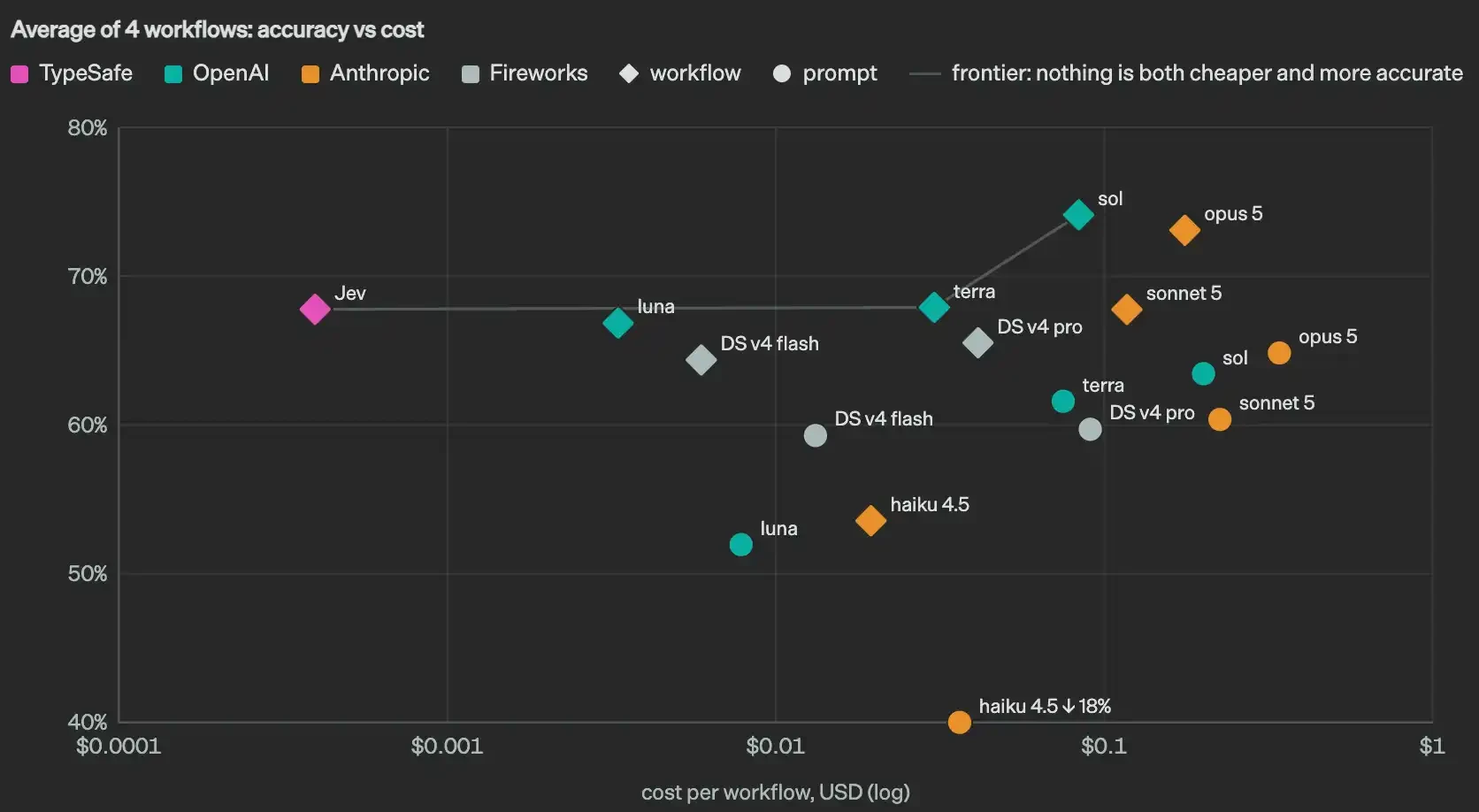
The significance of lower costs is that some work that could previously only be spot-checked can now be examined item by item. Customer service records can be classified one by one, retrieved materials can be judged for relevance one by one, and agents can run an extra round of filtering before each tool call.
For example, a news analysis program that previously only picked out the hottest articles each day to send to AI can now check all articles first and then classify them by company, product, order, and personnel changes. Information that isn't trending but is directly related to an important company also has a chance to be surfaced.
Jev is named after the economist Jevons, whose best-known achievement was proposing the "Jevons paradox." Developers hope that once judgments become cheap, software will use them more frequently. Everywhere that previously wasn't worth a separate large-model call can now have its cost calculus redone.
Jev and Physical Devices
Developer Roman Slack built a drone project: in the MuJoCo physics simulator, a quadcopter drone tracks a target ahead while navigating through pillars, beams, and moving obstacles.
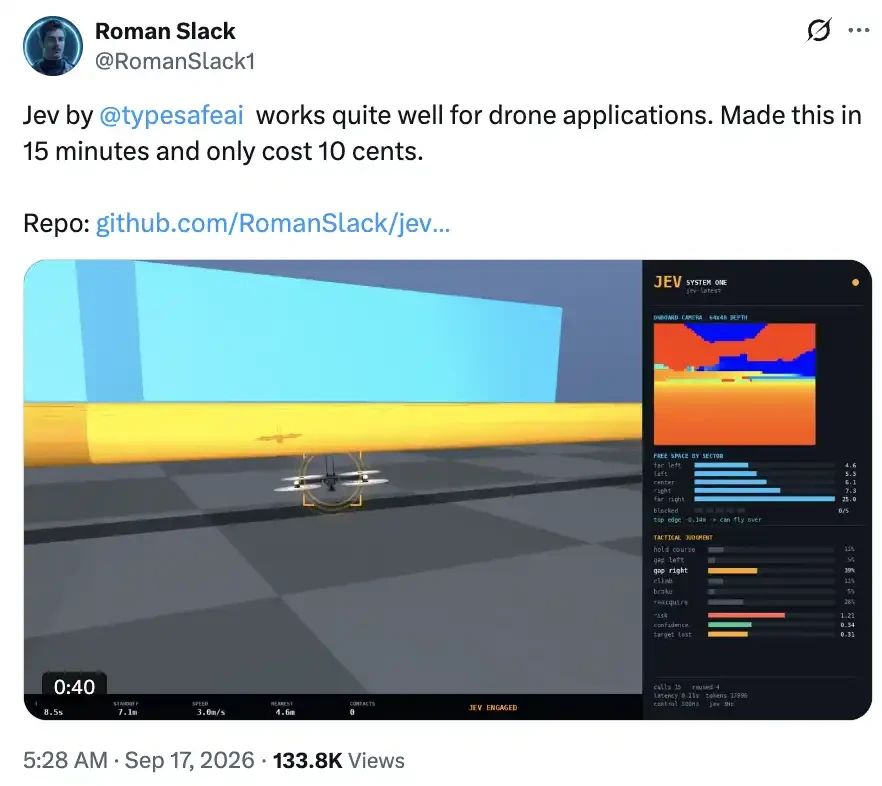
The program first organizes the depth and segmentation information captured by the camera into data, telling Jev whether the path ahead is blocked, which side has a gap, and how tall the obstacle is. Jev then chooses among actions such as holding course, veering left, veering right, climbing, and braking.
For example, a beam blocks the entire passage, with no way around on either side, but there is still space above. Jev can choose to climb, and the control program then translates that choice into motion commands for the drone.
During flight, different modules play their own roles. Jev decides where to go, while the control program maintains balance, adjusts motor thrust, and handles emergency obstacle avoidance. The camera provides environmental information, the decision model selects actions, and the controller makes the actions happen.
The same division of labor can also be understood through a robotic arm grabbing a cup. The camera identifies the cup's position, sensors measure distance and force, the controller adjusts finger movements, and the decision model participates in judging which cup to pick up first and what to do after encountering an obstacle.
If this kind of judgment becomes cheap and easy to integrate, the cost of developing automated equipment has a chance to fall. Equipment that was previously uneconomical because software development was too expensive and the use cases too niche will also find new commercial space.
This connects Jev to certain companies. More devices entering factories, warehouses, and homes means more demand for sensing, power supply, computing, and motion control.
Which Stocks Might Benefit
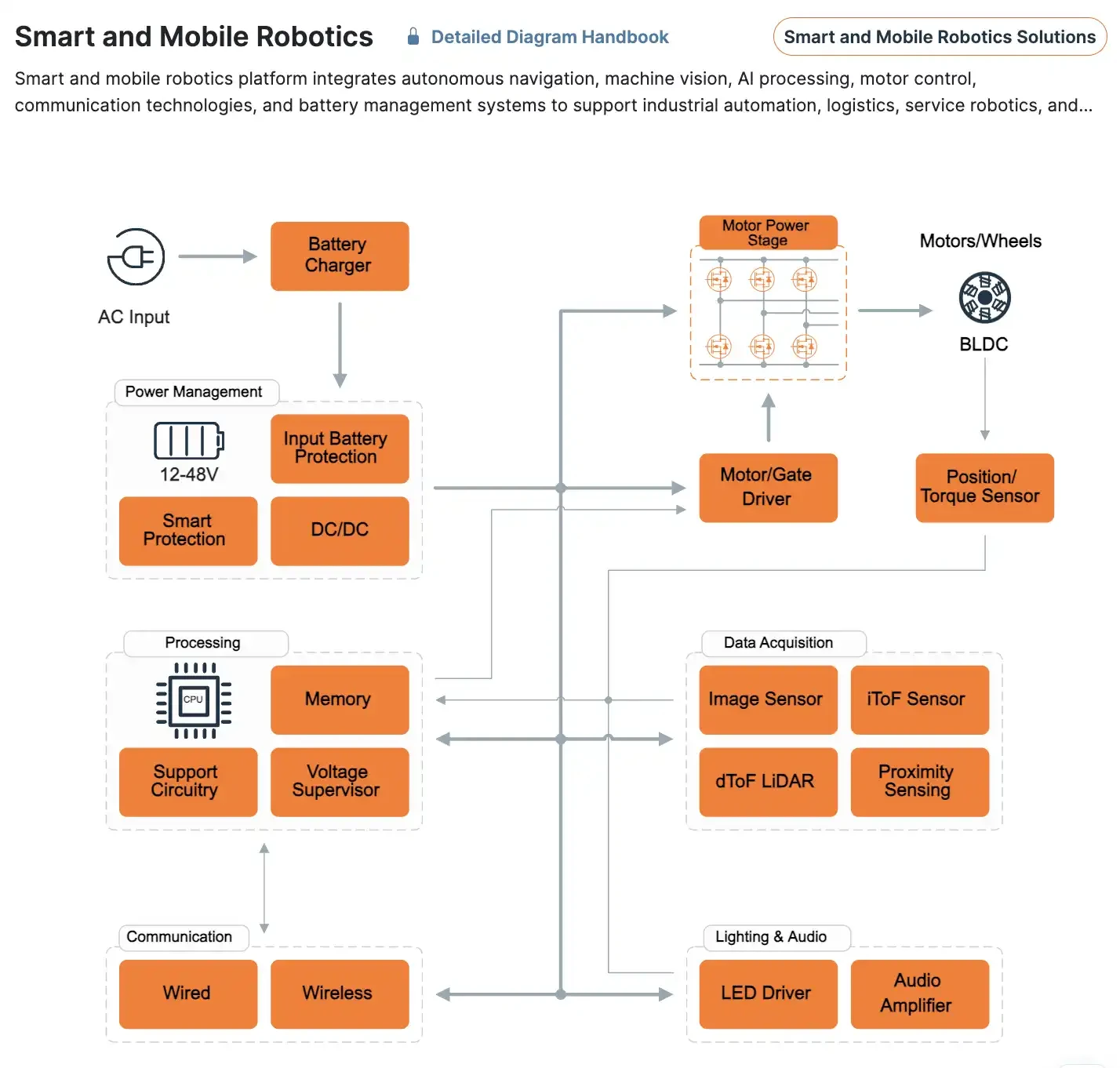
Following this line of thinking, what deserves attention are the components a device needs to go from sensing its environment to executing actions. No matter what model the software chooses, a robot needs to know where it is and what's around it, and convert electricity into precise actions.
Texas Instruments (TXN), covering sensing and execution support
Analog chips handle continuously varying signals such as voltage and current, and also take on power supply and drive tasks. TXN's robotics products cover signal acquisition, motor control, power, and embedded processing.
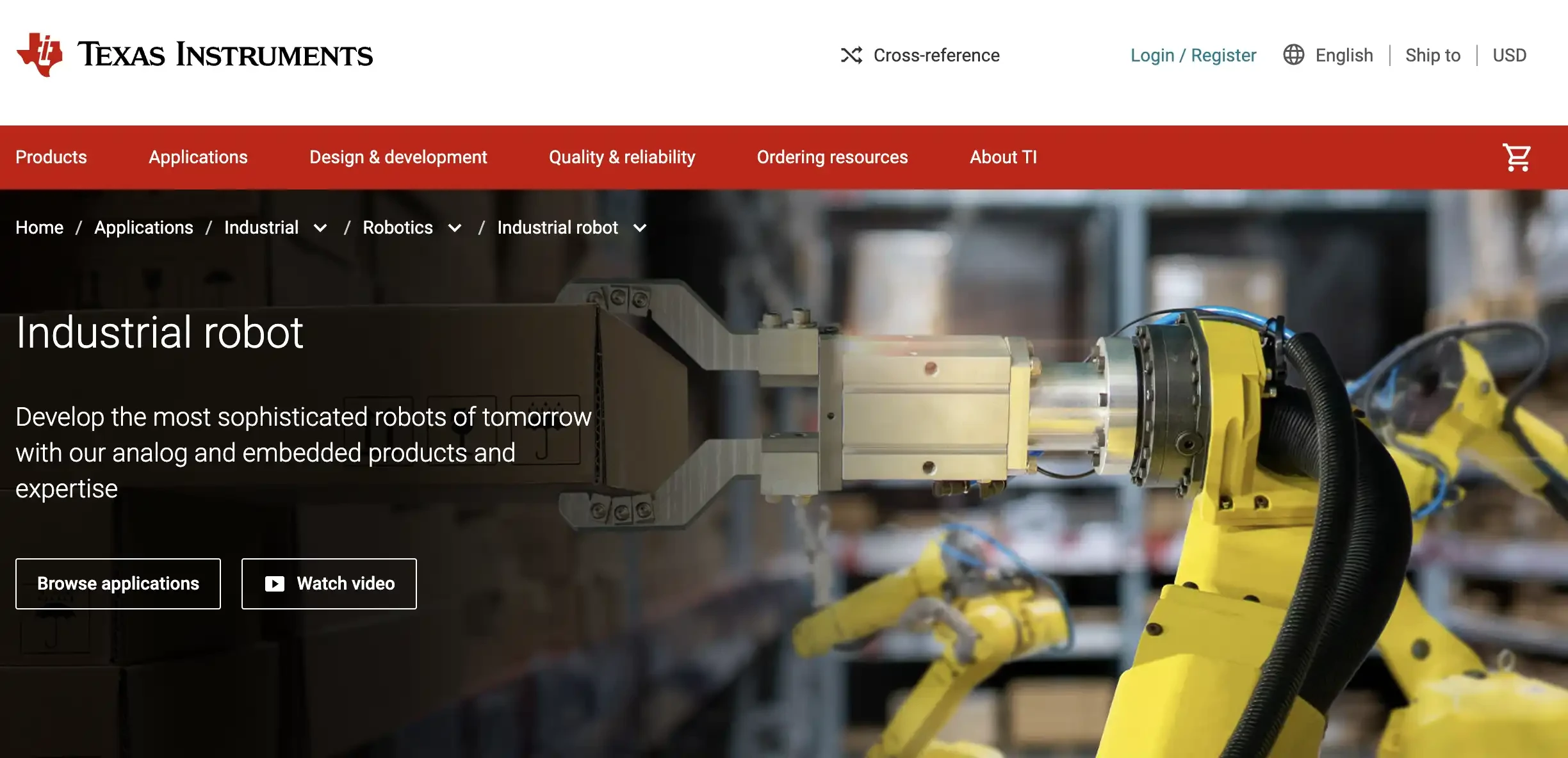
After a robot decides to raise its arm, how current is delivered to the motor and how force is controlled all require these components. If cheaper automation brings more robots, robotic arms, and smart devices, TXN has an opportunity to sell more supporting chips to these devices.
Analog Devices (ADI), corresponding to more precise sensing and motion.
ADI's robotics solutions involve inertial sensing, camera connectivity, industrial communications, and motion control interfaces. For example, when a warehouse robot enters a dimly lit aisle, it needs to combine inertial information to judge its own motion; when multiple cameras and sensors work simultaneously, data also needs to be synchronized and sent to the processor.
The more complex the work a device takes on, the higher the requirements for sensing precision, connection stability, and motion control. ADI's benefit logic is providing these supporting components in more autonomous devices.
STMicroelectronics (STM), corresponding to AI on low-power devices.
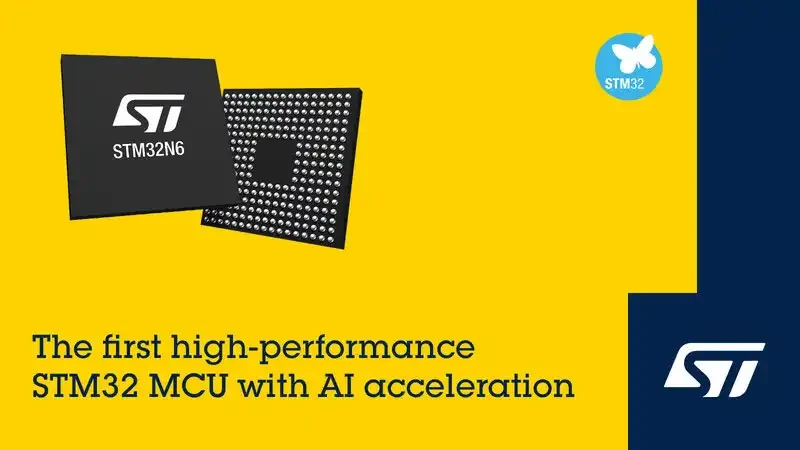
So-called edge AI means letting devices process part of the data locally. STM's STM32N6 microcontroller already integrates an accelerator for neural network computation, targeting cost- and power-sensitive applications such as vision and audio.
For example, a small camera device can recognize objects locally, and an industrial device can judge from sound whether it is operating abnormally. The discussion around Jev has drawn investors' attention to this type of use case: a large number of simple, repetitive intelligent tasks have a chance to move into cheaper, smaller devices. What STM provides is exactly the processing power these devices need.
ON Semiconductor (ON), corresponding to vision and power devices.
ON's products for robots include image sensors, depth sensors, as well as power transistors and motor driver chips. The first two handle capturing image and distance data, while the latter two work with the current needed to control motors.
Take a warehouse transport robot as an example: the image sensor in the camera captures the view of the shelves ahead, the depth sensor measures the distance to obstacles, and the motor driver chip works with power transistors to control current so the wheels turn. As more robots and smart camera devices are put into use, there is an opportunity to increase demand for these sensors and chips.
Beyond these four companies, there are three more that can be added to the watchlist.
NXP Semiconductors (NXPI)
Related business: i.MX processors, microcontrollers, connectivity, and control products
Benefit logic: providing computing, communications, and control capabilities for more robots and industrial devices
Qualcomm (QCOM)
Related business: the Dragonwing platform for robotics, drones, and on-device AI
Benefit logic: capturing demand for devices to handle vision, computing, and connectivity tasks locally
Cloudflare (NET)
Related business: providing access to and invocation of the Jev third-party model
Benefit logic: when developers use Jev for customer service routing, material filtering, and agent scheduling, they also need to deploy applications, connect data, and manage calls. Cloudflare's opportunity is to keep these applications running on its platform.
Still Early Days
Jev still has issues to resolve, including judgment accuracy, question design, and whether the service can support long-running business operations.
First, the promotion of Jev as "zero hallucination" is easily misunderstood. Restricting it to choose only among A, B, and C can prevent it from returning a D that the program doesn't recognize, but it can still choose wrongly. Going back to the customer service example, the program smoothly reading out "route to finance" does not mean this ticket really should be handled by finance.
One developer used Jev to test eight types of tasks and completed 16,000 judgments. He acknowledged Jev's speed and cost advantages, while finding that the questions and options still need further adjustment to cover real-world situations. He also wants to wait until the vendor accumulates more operational experience and alternatives emerge on the market before integrating it into production business.
How much work Jev can take on is currently unknown, but a trend has already emerged: hand a large number of repetitive judgments to JEV, and leave complex tasks to general-purpose models.
As the cost of developing and using automation falls, will analog chips, edge AI, and autonomous devices have their own ChatGPT moment?