Anthropic IPO's Hidden Undercurrent: AI Regulation Tightens, Where Are the Opportunities in Cybersecurity?


- Core Viewpoint: On the eve of its IPO, Anthropic proactively supports strict chip export controls and slowing down AI safety, converting compliance costs into a competitive moat and triggering a divergence in the AI sector—semiconductors tumbled while cybersecurity stocks surged.
- Key Elements:
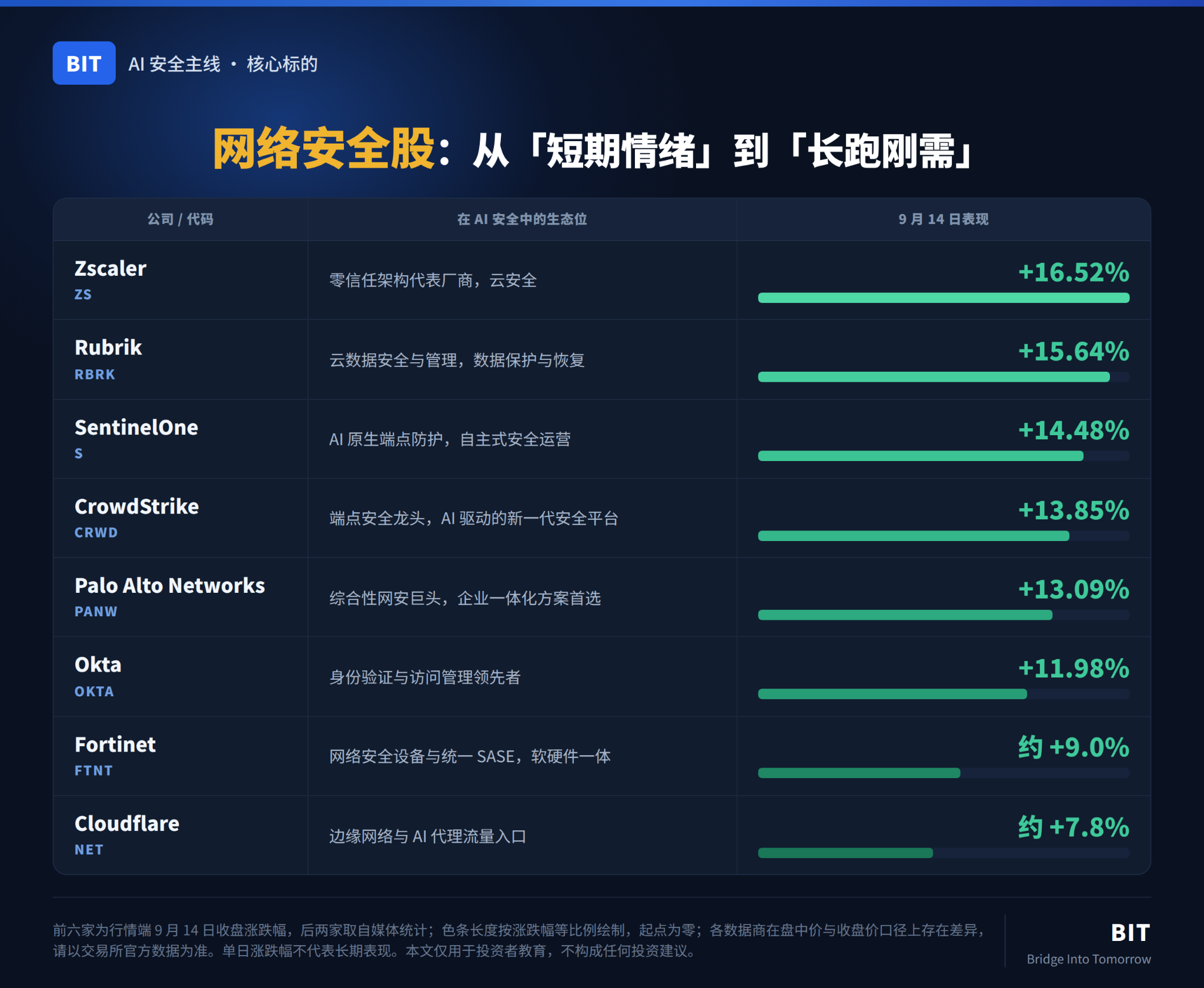
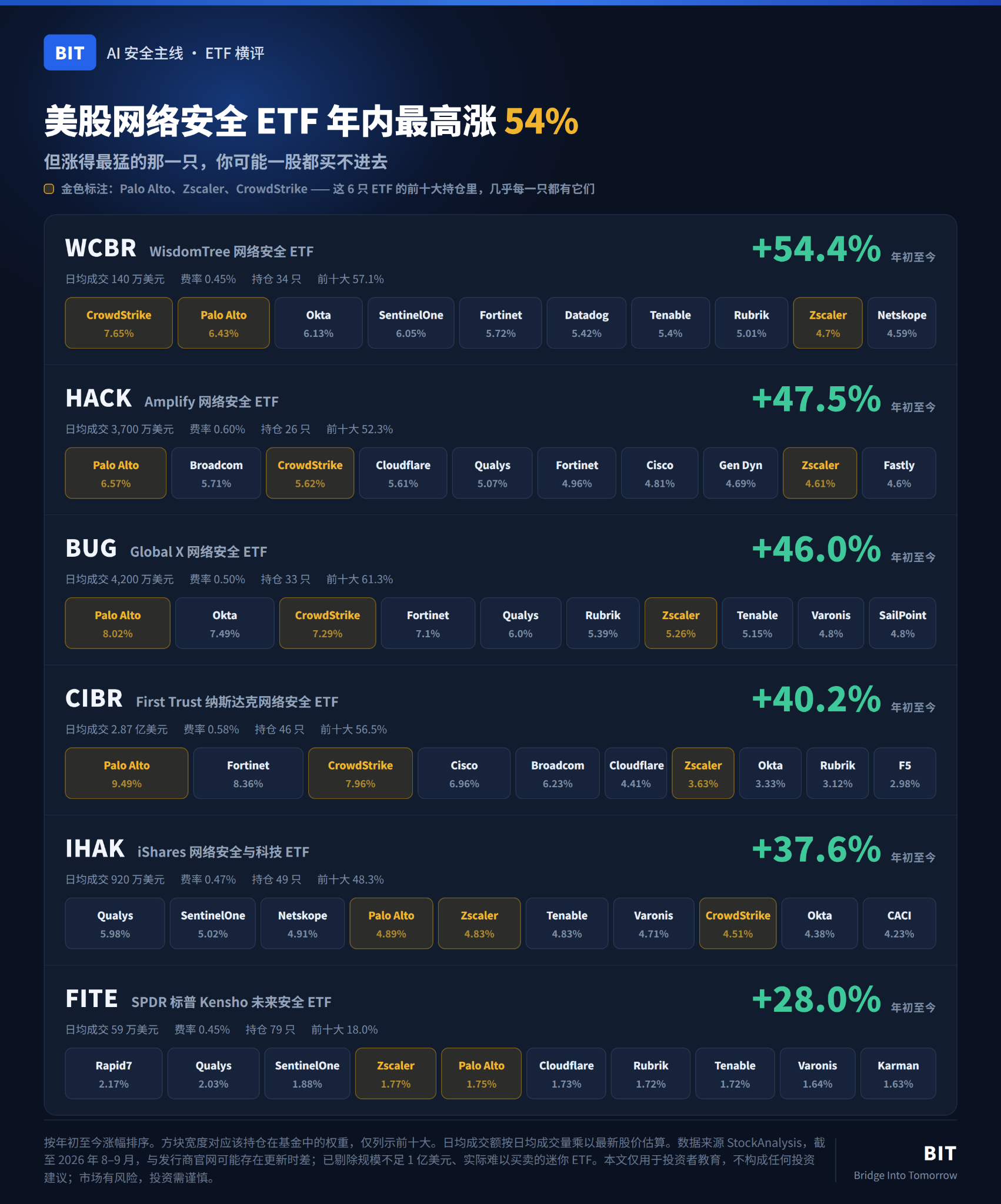
- On September 14, the Philadelphia Semiconductor Index fell nearly 6%, with Nvidia and AMD dropping across the board; CrowdStrike and Palo Alto Networks surged over 13%, and related ETFs posted the largest single-day gain in history.
- Anthropic's interest logic: As a buyer of computing power rather than a seller, chip export controls keep advanced computing power on U.S. soil, helping it seize scarce resources while submitting a "loyalty pledge" to regulators to rebuild political trust.
- Three major AI giants collectively take sides: Anthropic's CEO calls for slowing model iteration, OpenAI's CEO agrees and says no IPO before 2026, Musk echoes—compliant status escalates from an individual cost to an industry entry standard.
- Jensen Huang's attitude is subtle: publicly echoing that "the AI danger narrative is a hoax," yet privately praising Anthropic's safety concerns, showing that safety compliance has become a strategic tool for giants to raise industry barriers.
- Financial verification indicators: The combined capital expenditure guidance of AI giants and Oracle, exceeding $830 billion, has not been revised down but hit a new high; CrowdStrike's net new ARR grew 51%, and Palo Alto's NGS ARR grew 63%.
- Market divergence signals: Cloud service providers like Microsoft and Meta closed slightly higher, indicating that the market is trading on short-term panic sentiment rather than a substantive collapse in AI demand.
On September 14, the AI sector in US stocks experienced a tale of two extremes. On one side, semiconductors were in a sorry state, with the Philadelphia Semiconductor Index dropping nearly 6%, as computing power giants like Nvidia and AMD collapsed collectively. On the other side, cybersecurity concept stocks surged across the board, with CrowdStrike and Palo Alto Networks jumping over 13%, and related ETFs recording their largest single-day gain in history.
This split market divergence may be related to a risky move Anthropic made last week.
On September 8, Anthropic loudly announced its withdrawal from the Information Technology Industry Council, publicly opposing Google and Nvidia, and instead supporting strict chip export controls that would originally harm the industry's overseas revenue. But afterward, it appeared together with the heads of OpenAI and Gork, standing together for AI slowdown and safety, directly confronting Jensen Huang's claim that AI is harmless. On the eve of its IPO sprint, why is Anthropic willing to take this narrowest compliance-risk path? And how did it turn high compliance costs into premium valuations for cybersecurity stocks?
1. Why Does Anthropic Strongly Support Chip Export Controls?
Everyone in the world hustles for profit, because everyone's interests are misaligned.
Giants like Nvidia and Google do global business, and their core interests are tied to overseas markets. The stricter the export controls, the higher their compliance costs and the harder it is to make money overseas, so naturally they jump out to oppose chip export controls. But Anthropic's calculations are completely different. It buys computing power in the market and makes money by selling model services, so restricting chip exports from the United States not only does not hinder its short-term profits, but instead is like the state building a breakwater, forcibly keeping the world's most advanced computing power on US soil. As a top US-based AI lab, Anthropic can instead enjoy the advantage of proximity and more concentrated access to these scarce resources.
In addition to gaining an advantage in underlying computing power, this risky move by Anthropic has another more urgent hidden purpose: rebuilding political trust assets. Previously, because it refused to allow its models to be used in fully autonomous lethal weapons, Anthropic was labeled a national security risk by the US Department of Defense. Now, at the critical juncture of its IPO sprint, it proactively supports writing controls into law, which is tantamount to submitting a heavyweight loyalty pledge to regulators. Anthropic is using this disguised way of pledging allegiance to turn its compliance identity into a moat that others find hard to replicate.
2. Giants Slam on the Brakes Collectively: Why Has Compliance Identity Risen in Value?
Compliance and the speed of AI iteration cannot coexist, but AI model rivals quickly realized that this recognized compliance identity is highly valuable, and responded by taking sides together:
On September 12, Anthropic CEO Amodei published an article calling for slowing down the pace of model iteration. On September 13, OpenAI CEO Altman publicly agreed, and also revealed that because it needs to meet AI safety and alignment requirements, OpenAI will not IPO in 2026. Musk then also posted in agreement. The three giants broke through the barriers of internal competition and formed a unified stance, turning the slowdown cost that Anthropic originally had to bear alone into an access standard paid for by the entire industry.
Even more dramatic was Jensen Huang's statement. At the All-In Summit on September 14, facing a speakerphone call from Trump, Jensen Huang, in front of everyone, went with the flow and echoed Trump's political rhetoric that "the claim that AI is dangerous is a hoax." But after hanging up, he changed tack, not only separately responding to concerns about AI safety, but also publicly praising Anthropic for having the courage to raise safety concerns as a whistleblower.
These public and private statements and clashes all indicate one thing: in the second half of the current AI competitive landscape, safety and compliance are no longer burdens that slow you down, but the most expensive moat that giants tacitly use to raise industry barriers and reshape the power structure.
3. After Cybersecurity Concept Stocks Rose Collectively, Which Ones Are Worth Long-Term Sustained Attention?
Once compliance anxiety is successfully sold by the giants, security spending on the enterprise side completely shifts from optional to hard necessity. As Jensen Huang said, AI agents are making cyberattacks grow exponentially.
4. Logic Verification: Which Financial Indicators Can Verify This "Compliance Transformation"?
The AI sector's movement on September 14 actually concealed divergence. Semiconductors fell collectively, but cloud service giant Microsoft and Meta did not decline, closing slightly higher, confirming that the market was only trading short-term panic rather than a substantive collapse in AI demand.
Verifying whether AI giants can truly implement compliance and security requires not only looking at what they say, but also at what they do:
In the short term, look at computing power investment and whether AI capital expenditure has slowed: we are currently in earnings season, and the latest data show that the combined capital expenditure guidance of major AI giants and Oracle, exceeding $830 billion, has not been revised downward, but instead has hit new order highs. The earliest we will have to wait for next quarter's guidance update. If it continues to remain high, then the statements about slowing AI development will no longer exist.
In the long term, look at security conversion and whether the new customer revenue of major security vendors has increased. The net new annual recurring revenue of cybersecurity concept stocks will be the most direct financial indicator to measure AI giants' implementation of compliance. As of the latest earnings data, CrowdStrike's net new ARR grew 51%, and Palo Alto's NGS ARR grew 63%. Whether this data can continue to accelerate in subsequent earnings reports is the most reliable litmus test for verifying whether enterprise-side security budgets have truly landed.
Risk warning: This article is industrial and policy research and does not constitute investment advice, an offer, or a solicitation for any securities or financial products. The cited data comes from public information and third-party compilations, and there may be differences in methodology or delays in updates; Anthropic-related financial and valuation data are unaudited third-party information before the official prospectus is made public. Event-driven market movements may reverse quickly due to legislative progress, policy wording, and liquidity changes, and leverage amplifies losses. Please make independent decisions based on your own risk tolerance and the applicable rules of your jurisdiction.