






Team livestream is scarier than a rate hike — did ARC's meme run collapse in just one day?


- Core Takeaway: Circle's stablecoin public chain Arc met with a cold reception on its first day, as the meme market quickly shifted from anticipation to disappointment. The core issues lie in launchpads excessively siphoning off liquidity and the team's clumsy meme marketing, failing to replicate the retail entry advantage of Robinhood Chain.
- Key Elements:
- Over 50 launchpads had already emerged before Arc went live, with developers racing to replicate mature models to grab a share of the new chain's trading volume, severely fragmenting community consensus.
- Product team members awkwardly shilled using images of Circle's CEO's pet dog, combined with a poor livestream experience, prompting community comments that "the team simply doesn't understand memes."
- Robinhood Chain's wealth-creation effect stemmed from its underlying retail trading gateway, whereas Circle's strengths lie in USDC and institutional payment networks — disconnected from meme retail demand.
- Some traders viewed Arc merely as a short-term in-and-out opportunity, lacking motivation to stay long-term, with day-one gameplay highly similar to Robinhood's.
- Arc's true differentiation may lie in stablecoin financial capabilities, such as StableFX foreign exchange, optional privacy features, and Agent Stack agent infrastructure.
On the eve of the launch of Arc, Circle's stablecoin public chain, various cross-chain tutorials flooded the timeline. How to transfer USDC into Arc, which launchpad is worth positioning for, and who would become the first golden dog on the new chain—retail traders had already done their homework in advance.
Circle's brand effect, the early-mover dividends of a new chain, and the wealth-creation mythology of the earlier Robinhood chain were enough to make retail traders expectant about the opening. After launch, launchpads like Argus quickly became targets of capital chasing, with everyone waiting for the familiar storyline to play out once again.
However, just one day later, Arc's meme market took on an atmosphere of "bodies strewn everywhere." The discussion shifted from hunting for the leader to whether the team actually understands memes at all, and what else this chain even has to offer.
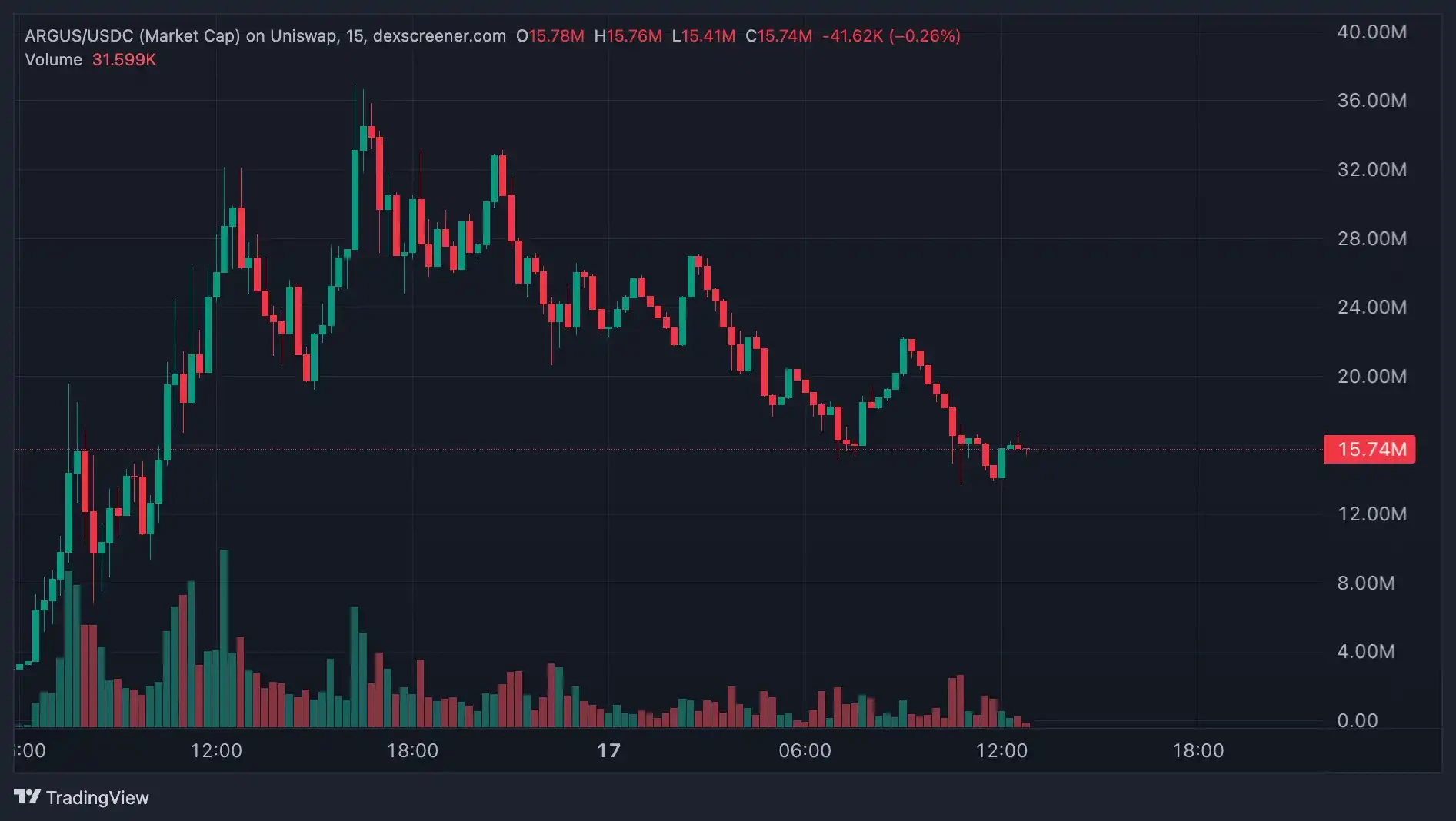
What exactly went wrong with Arc?
Launchpad Oversaturation
Before Arc even launched, someone had already compiled a list of more than 50 launchpads.
Before the new chain could form its own meme culture, the launchpad business was already fully occupied.
This isn't hard to understand. The launchpad model is easy to replicate, can quickly manufacture new assets, and can capture fees from trading. For developers, rather than spending time exploring a new approach, it's better to port over products that have already been validated and try to capture the trading volume at the chain's opening.
But a good business for developers doesn't necessarily translate into a good market for retail traders.
Every platform wants to prove it's the leader, every community wants to keep buy pressure on its own coin, and there's no consensus among communities on launchpads—the fragmentation is too severe.
A Clumsy Team
Launchpads siphoned off liquidity, and Arc team's poor marketing made it even harder to concentrate consensus.
Arc product team member Rachel Mayer posted a picture of a dog with the caption "Arc's Duke has arrived," then added that she heard it was Circle CEO Jeremy Allaire's dog. In the image, the dog's background and collar both bore the Arc logo—the implication was straightforward enough.

This approach certainly grabs the attention of degen traders. The problem is that this kind of blunt, blatant shilling no longer wins over retail traders.
Even the team livestream couldn't salvage the impression. The multi-person video call screen was mocked by him: "Arc's livestream is scarier than a Fed rate meeting." These jabs based on appearance and visual style certainly can't prove the team has problems, but they show that the trust the team hoped to build didn't reach this audience.

Meme communities magnify details and, in turn, mock deliberate marketing. Blunt shilling, conflicting hints, and an unappealing livestream impression combined to form the verdict that "the team doesn't understand memes at all."
Arc originally had a clear positioning as a stablecoin chain, but now it's stuck between enterprise finance and meme speculation. He questioned that the team simply saw Robinhood succeed and decided to copy it, without understanding why that playbook actually worked.
This is also the harder problem for Arc to solve.
Copied the Playbook, Not the Buyers
A large part of Robinhood's appeal comes from the retail trading gateway behind it. For on-chain players, speculating around Robinhood means buying the expectation that existing retail traders will enter the chain in the future.
Circle has a different kind of advantage. USDC, payment networks, and institutional clients can support settlement and financial applications, but have nothing to do with memes. Enterprises using stablecoins and retail traders willing to repeatedly trade cats and dogs have vastly different needs.
Arc didn't skimp on preparation. unipcs acknowledged its integration of tools like fomo and Dexscreener at launch, even calling it a well-executed public chain launch recently. He previously had little interest in Arc, but changed his view after learning that fomo would integrate with Arc.

But he also repeatedly emphasized that he treated Arc as a short-term opportunity to get in and out within a few days, because why would traders stay here long-term?
The gameplay Arc showed retail traders on day one was too similar to Robinhood. The traits that truly belong to Arc haven't yet become the protagonist of this meme rally.
Arc's Own Story
Arc's advantage over other chains is the other capabilities it has built around stablecoin finance.
For example, foreign exchange. According to Bankless, StableFX connects USDC with different local stablecoins. Following this direction, Arc's future memes could try pairing with stablecoins of different currencies, connecting local currencies, local communities, and their respective familiar cultural symbols.
Privacy is another direction. Circle's plan is to develop optional privacy features, protecting balances and transaction details through trusted execution environments, and allowing selective disclosure of information.
If this capability is implemented, developers could try designing gameplay around mechanisms like anonymous identities and selectively public positions, changing the interactive approach where all behavior is exposed on a public ledger.
Agents could also become the protagonist again. Arc's Agent Stack provides agents with policy-constrained wallets, as well as infrastructure for discovering and paying for services. The Arc team is continuously researching verifiable identity, history, reputation, and credit. Perhaps Arc can make the Agent narrative great again.
Circle's reputation is enough to draw traders in, but that's far from sufficient. Next, Arc needs to bring out something of its own.


