Oil prices return to $90 as global markets reprice 'stagflation'?


- Key Takeaway: The escalation of the U.S.-Iran conflict is driving up energy prices, which, combined with the global bond sell-off and weak economic data, has triggered a repricing of stagflation risk in the market. The author argues that the rate market and the energy market are now difficult to separate. If refined fuel prices remain persistently high, the Fed's policy space will narrow, and long-end U.S. Treasuries will face multiple pressures from inflation, fiscal deficits, and AI-driven financing demand.
- Key Elements:
- The U.S.-Iran conflict has pushed WTI crude above $90 per barrel. However, record diesel crack spreads and European natural gas prices hitting a three-and-a-half-year high signal that supply tightness in refined products is a stronger indicator than crude oil itself.
- On September 1, the market exhibited a "bearish flattening" trend, with short-end yields rising faster. Rate futures briefly priced in a probability of over 70% for a Fed rate hike in September.
- Japan's 10-year government bond yield touched 3% (the first time since 1996), while global sovereign bond yields approached their highest levels since 2008, reflecting concerns over inflation and fiscal expansion.
- The Treasury expanded its long-duration bond liquidity repurchase program to at least $4 billion, but analysts believe this is a "drop in the bucket" relative to the supply pressure from AI infrastructure debt issuance and fiscal deficits.
- In the options market, demand for payer options on rates at higher strike prices has increased significantly. Dealers' concentrated hedging could trigger "negative convexity," amplifying upside volatility in rates.
Original Title: Rate-Spike Hedgers Go 'Bonkers' As Iran Attacks Spike Oil; Stocks, Gold, & Crypto All Tank
Original Author: Tyler Durden, ZeroHedge
Editor's Note: On September 1, global markets faced twin pressures simultaneously: US-Iran tensions escalated once again, driving international oil prices sharply higher, while global sovereign bonds extended their sell-off, with Japan's 10-year government bond yield hitting 3% for the first time in 30 years. US stocks, gold, and Bitcoin all fell in tandem, while the US dollar and Treasury yields moved higher.
More important than the asset price moves is the fact that the energy shock is reshaping market expectations for inflation and the interest rate path. Weak job openings, construction spending, and manufacturing data had originally pointed to an economic cooldown, but rising oil, diesel, and natural gas prices could push headline inflation higher again. This presents the Fed with a more difficult combination: weakening growth alongside price pressures that may not ease in tandem.
Author Tyler Durden interprets this market action as a return of "stagflation trading." His core thesis is that energy prices, interest rate markets, and risk assets have become increasingly difficult to price independently. If refined product prices remain persistently high, the Fed's policy room could narrow further, while long-end Treasuries will simultaneously face pressure from inflation, fiscal deficits, and AI financing demand.
It should be noted that significant uncertainty remains over whether energy prices will sustainably feed into core inflation, and whether the Fed will continue hiking if employment weakens. Option markets show notably increased positioning in rate tail risks, but this reflects investors hedging against extreme scenarios rather than signaling that rates have definitively entered an accelerating uptrend.
The following is a translated compilation of the original article:
Following renewed US strikes on Iranian targets, international oil prices rose rapidly, intensifying the global bond sell-off. Equities, gold, and crypto assets broadly came under pressure, with market concerns over stagflation and further rate hikes notably escalating.
The US economic data released that day was hardly robust: job openings, construction spending, manufacturing PMI, and the Dallas Fed services indicators all released cooling signals to varying degrees. At the same time, however, oil prices, refined product prices, and Treasury yields moved higher in tandem, and rate futures markets increased their pricing for a September Fed hike.
This combination forms the core contradiction this article focuses on: economic activity is weakening, yet energy supply shocks could re-elevate inflation. If price pressures persist, the Fed will find it difficult to pivot toward easing based solely on employment and growth data. But continuing to hike while the economy weakens could equally amplify stress in financial markets and the real economy.
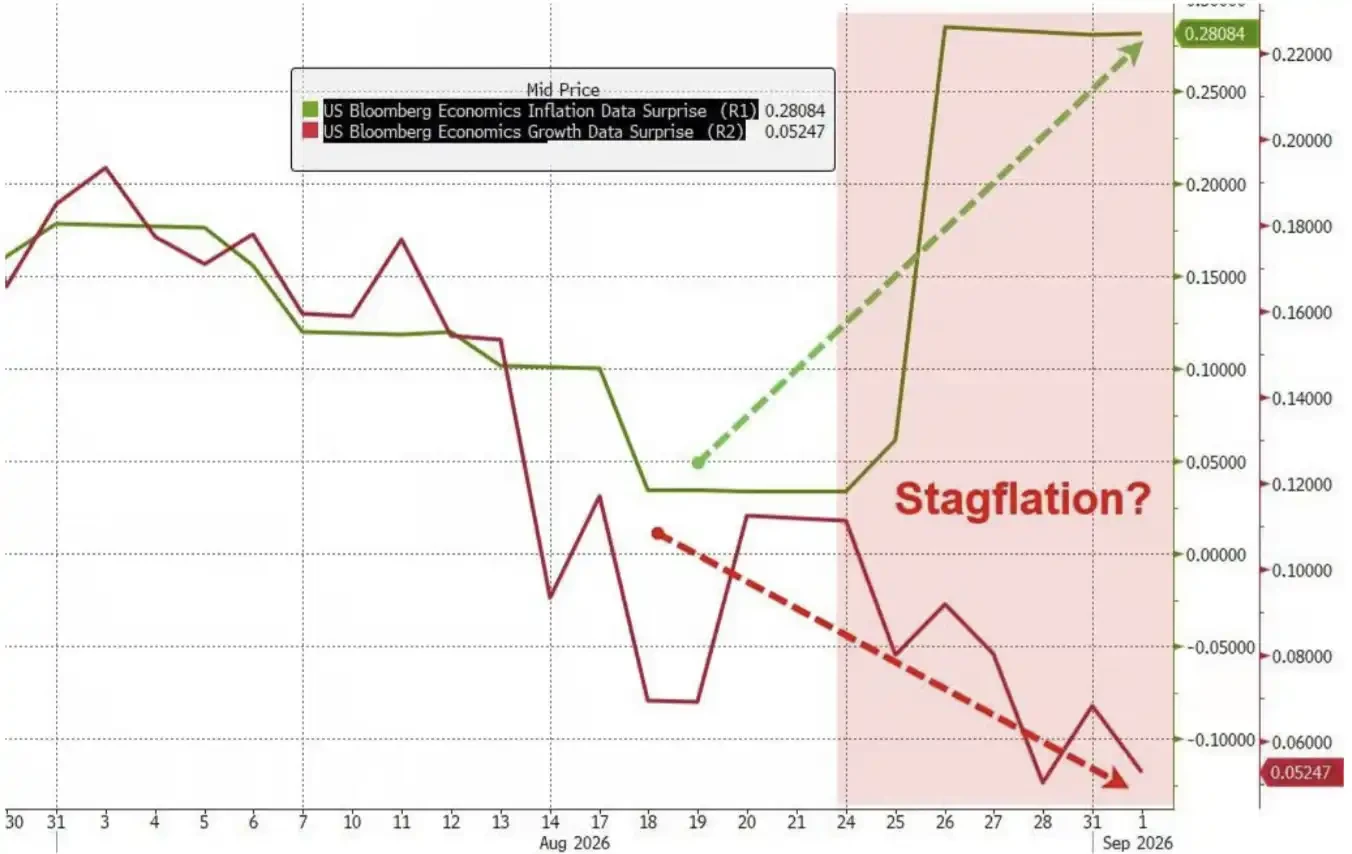
With economic data weakening and energy prices rising, markets are beginning to reassess stagflation risks.
Crude Breaks Above $90, Real Pressure Comes from Refined Products
Following fresh US strikes on Iran, markets began reassessing the possibility of prolonged disruption to energy shipments through the Strait of Hormuz. US crude futures briefly broke above $90 per barrel, hitting their highest level since late July.
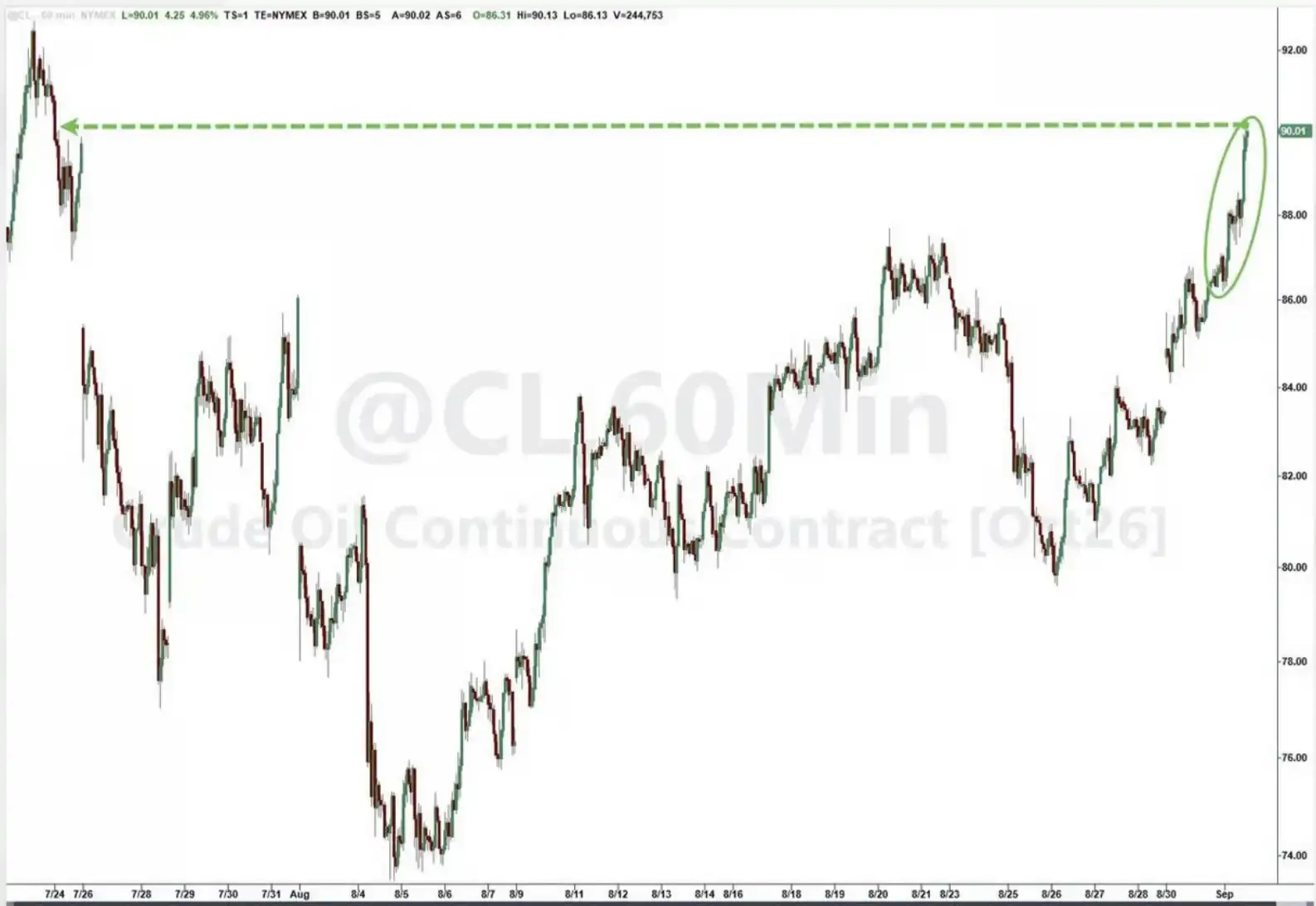
Spot Brent crude prices are rising, but remain broadly within their recent trading range.
Iran's Islamic Revolutionary Guard Corps subsequently warned that the US would face "severe punishment." The US, meanwhile, continues to pressure Iran through military action and sanctions. The duration of the conflict, the nature of Iran's retaliation, and whether shipping security further deteriorates have become the primary variables driving short-term crude pricing.
US Treasury Secretary Bessent downplayed the long-term strategic value of the Strait of Hormuz. He stated that Gulf nations are accelerating the construction of overland oil pipelines, potentially allowing oil transport to bypass the strait within two years. However, this statement describes future alternative transport capacity and cannot eliminate current supply and shipping risks.
Looking at the spot market, Brent crude prices have risen but remain broadly within their recent range. Rich Privorotsky, Head of Goldman Sachs' Delta One trading desk, believes the pressure facing markets stems not only from crude prices—the signals emanating from refined product and natural gas markets are even more severe.
European natural gas prices climbed to roughly three-and-a-half-year highs, heating oil approached recent peaks, and US diesel crack spreads hit record levels. Crack spreads measure the difference between refined product prices and crude costs, typically reflecting the degree of supply-demand tightness in the refining sector.
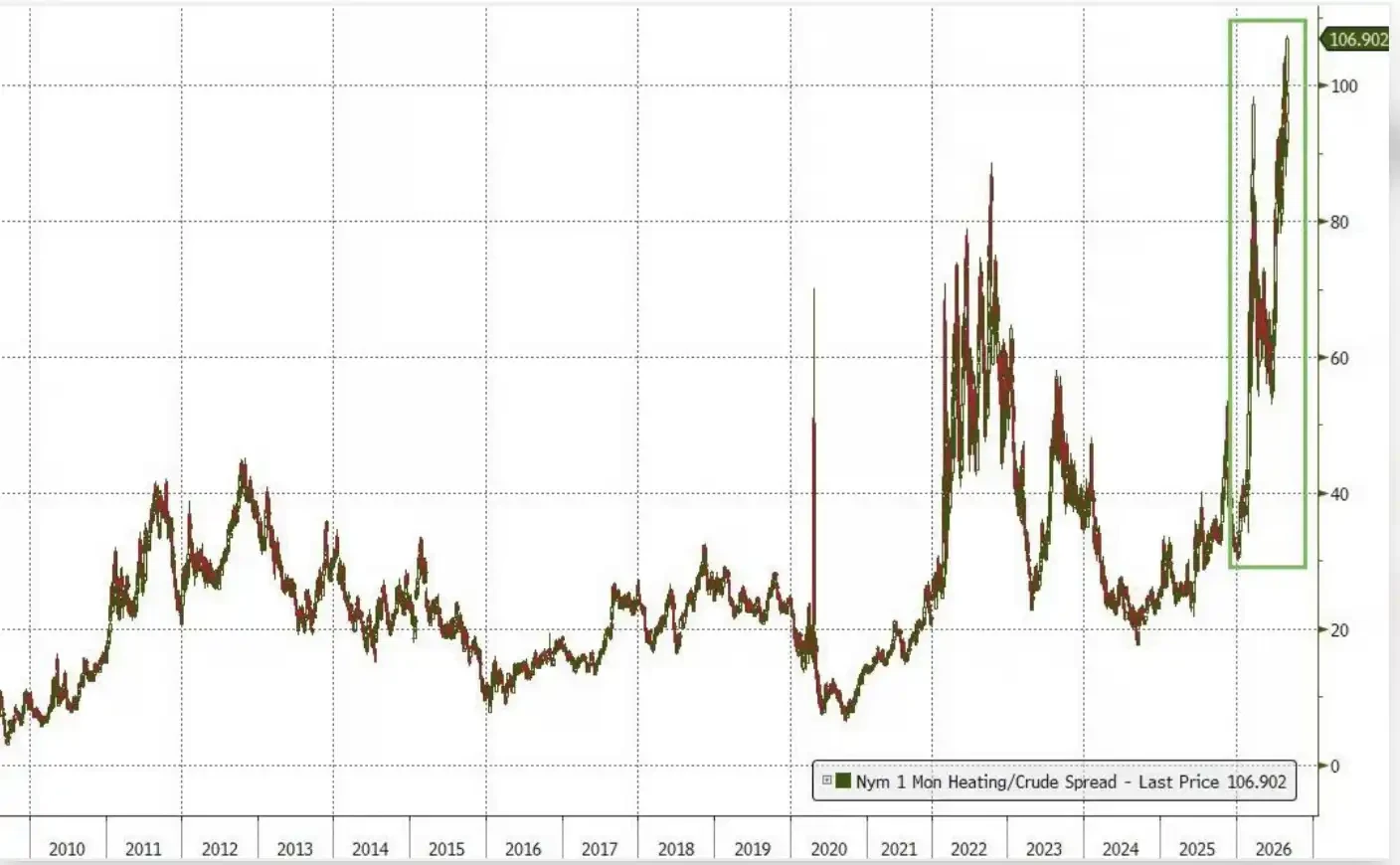
US diesel crack spreads hit records, with refined product markets signaling tighter supply conditions than crude.
This means that even if crude prices do not persistently break out of their recent range, the prices consumers actually pay for diesel, heating oil, and other fuels could still rise. Lower crude prices may not necessarily translate directly into lower end-user prices, as some of the spread could be absorbed into higher refining margins.
Privorotsky judges that if refined product prices hold at current levels, headline inflation could face renewed upward pressure in the coming months. Whether energy price increases ultimately spread to core inflation remains the key determinant of policy impact: a one-off supply shock may not alter the medium-term inflation trend, but if transportation, production, and service costs continue rising, price pressures could gradually transmit to other sectors.
According to market data cited in the original article, global wholesale refined product prices have risen by an average of approximately $40 per barrel since February, with diesel accounting for over 40% of the increase. During the same period, global refined product exports fell by approximately 6 million barrels per day year-over-year, with the Persian Gulf region and Russia accounting for about three-quarters of the decline. As this data originates from trading desk analysis, it should be viewed as that institution's statistical methodology rather than official consolidated figures.
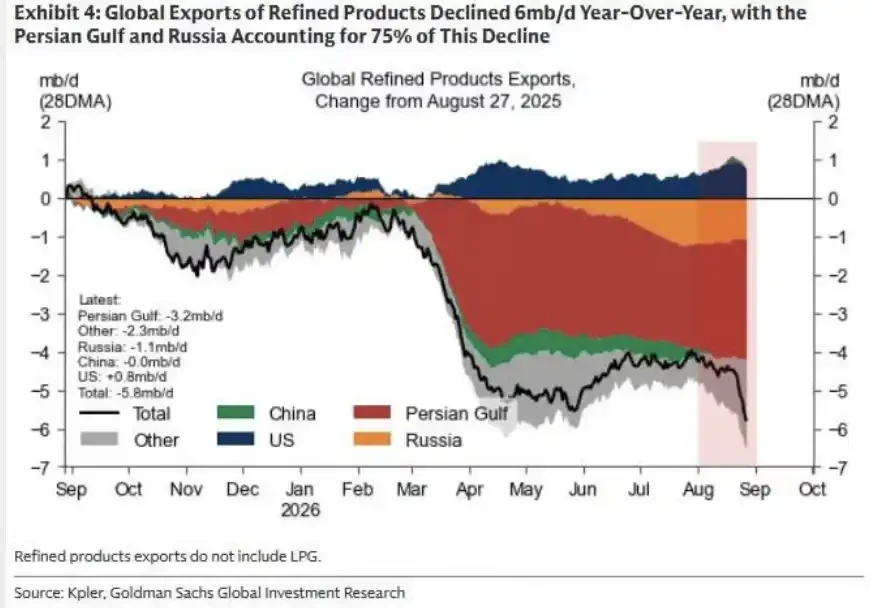
Global refined product exports are down year-over-year, with the Persian Gulf region and Russia as the main drags.
Oil and Rates Re-Coupled, Stagflation Trading Returns
Privorotsky believes it is difficult to discuss the energy market and the rates market separately in the near term. Rising oil and refined product prices could push inflation expectations higher, leading investors to demand higher bond yields; rising yields in turn compress valuations for risk assets like equities.
This trading relationship was particularly evident on September 1. US Treasury yields rose across the board, with the short end rising more, resulting in a "bear flattener" in the yield curve.
A bear flattener refers to a situation where bond prices broadly fall and yields rise overall, while short-end yields rise faster than long-end yields, causing the yield curve to flatten. This typically indicates the market is raising its expectations for near-term rate hikes or continued policy tightening.
That day's rising oil prices, combined with manufacturing surveys continuing to show price pressures, led to a notable increase in market pricing for a September Fed hike. The original article states that the relevant probability briefly exceeded 70% during the session; other public market data showed the probability at approximately 65% to 70% at that time. Different data may stem from different sampling times and contract calculation methodologies, so they should not be forcibly reconciled.
This pricing was also influenced by Fed Chair Kevin Warsh's earlier hawkish remarks. Rising oil prices were not the sole reason for the increased odds of a rate hike—more precisely, the energy shock reinforced inflation concerns the market had already formed.
The author characterizes the current environment as a typical stagflationary mix: growth and employment data are weakening while energy costs rise. The relative outperformance of "stagflation asset portfolios" recently also reflects some investors positioning for a scenario of slowing growth and sticky inflation.
However, whether rising oil prices can alter Fed decisions still depends on their duration and transmission to core prices. If energy prices quickly retreat, the policy impact could be relatively limited; only if diesel, natural gas, and transportation costs remain persistently elevated does the risk of inflation re-diffusing noticeably increase.
Global Bonds Under Pressure, Treasury Buybacks No Match for Supply
Before the energy shock arrived, global bond markets were already in the midst of a sell-off. On September 1, the global sovereign bond aggregate yield rose to near its highest level since 2008, while Japan's 10-year government bond yield touched 3%, the first time since 1996.
Japanese government bonds were particularly affected by a combination of inflation, fiscal expansion, and expectations of further Bank of Japan rate hikes. US, German, and UK government bond yields also moved higher across the board, indicating this was not isolated volatility in a single market.
Long-end US Treasuries also face additional pressure. The original article notes that the 30-year Treasury yield rose in morning trading, at one point erasing the decline that had followed the Treasury Department's expansion of liquidity support buybacks for long-dated bonds.
The US Treasury had previously announced it would increase the per-auction liquidity support buyback size for 10- to 30-year Treasuries from a maximum of $2 billion to at least $4 billion, with the new arrangement set to take effect on September 9. Buybacks can improve liquidity and trading conditions for older issues, but they do not directly reduce the Treasury's net financing needs, nor do they equate to Fed quantitative easing.
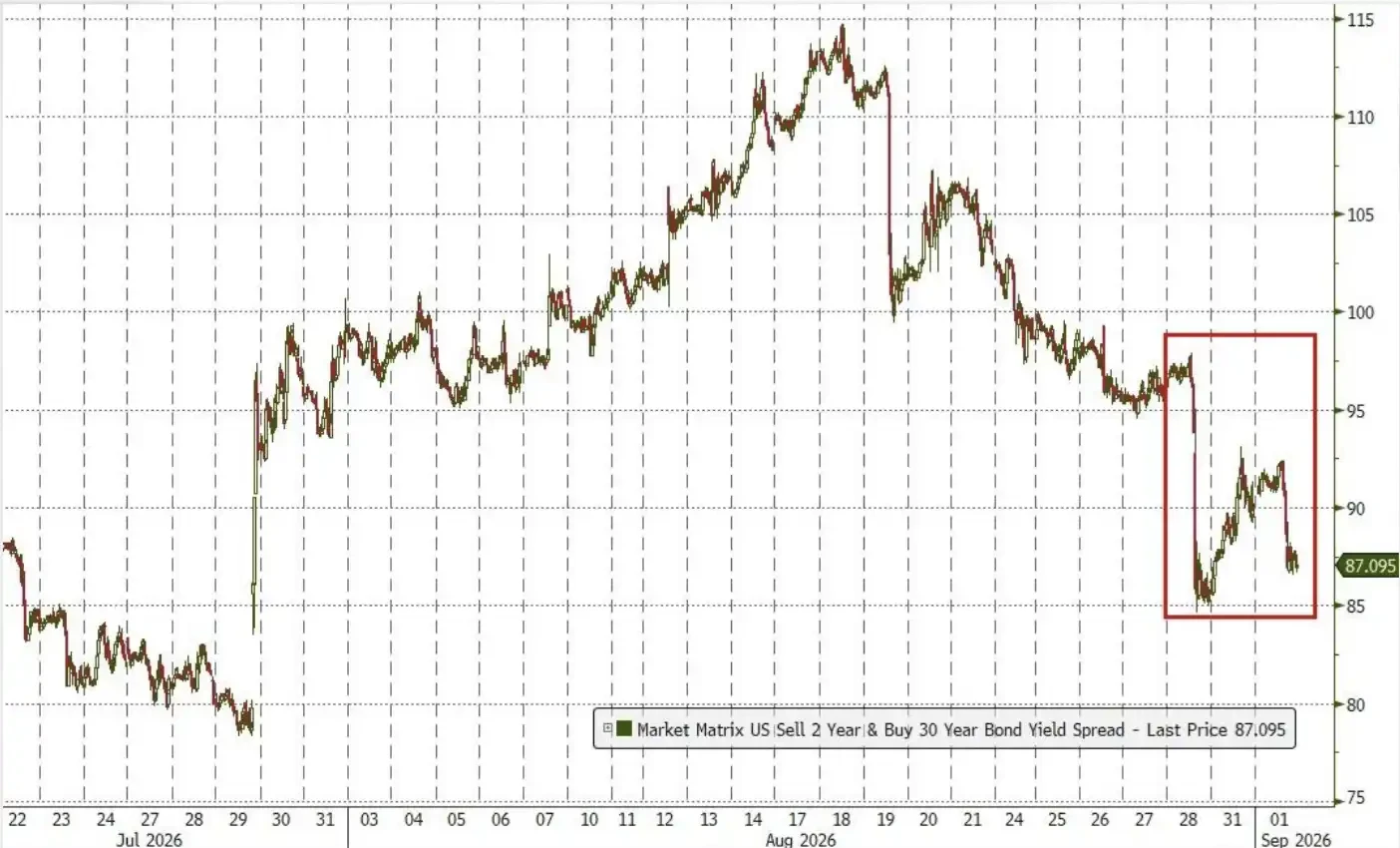
The 30-year Treasury yield moved back higher, at one point erasing the decline seen after the announcement of expanded long-end Treasury buybacks.
Priya Misra, Portfolio Manager at JPMorgan Asset Management, believes Treasury buybacks could provide some demand for long-dated bonds, but this could be overwhelmed by the supply of financing generated by AI infrastructure buildout. The "AI supply pressure" referred to here mainly involves large tech companies, utilities, and data center operators increasing bond issuance to fund computing power, electricity, and supporting facilities.
Meanwhile, the US fiscal deficit, continued government issuance, and a fresh wave of corporate bond offerings are all adding to the supply of long-duration assets. John Briggs, Head of North America US Rates Strategy at Natixis, judges that long-end yields may continue to hold at elevated levels until welfare spending reform genuinely changes the fiscal deficit outlook. In his view, Treasury buybacks relative to overall bond supply remain merely a "drop in the bucket."
This is also the distinction between the current long-end rate pressure and a simple rate-hike expectation dynamic. The short end primarily reflects the Fed's policy path, while the long end must also digest inflation risk, fiscal deficits, term premiums, and bond supply. Even if the Fed does not keep hiking, long-end yields will not necessarily retreat quickly.
Rate Tail Risks Intensify, Options Market Wary of 'Negative Convexity'
While the cash bond market drifts lower, some investors are heavily buying high-strike interest rate payer options—instruments that bet on significantly higher rates in the future.
Charlie McElligott, Strategist at Nomura Securities, points to notably increased demand for medium-tenor, high-strike payer options, with some of that demand coming from a large buyer who is not a regular participant. These trades have pushed up the payer skew, meaning options purchased to protect against rising rates have become more expensive relative to options benefiting from declining rates.
However, overall volatility in the current swaption market has not risen sharply in tandem with yields. The reason is that the bond market currently resembles a sustained, gradual sell-off rather than a short-term violent disorder. Actual volatility remains low, yet investors keep buying extreme upside protection, creating a mismatch between spot price action and tail risk pricing.
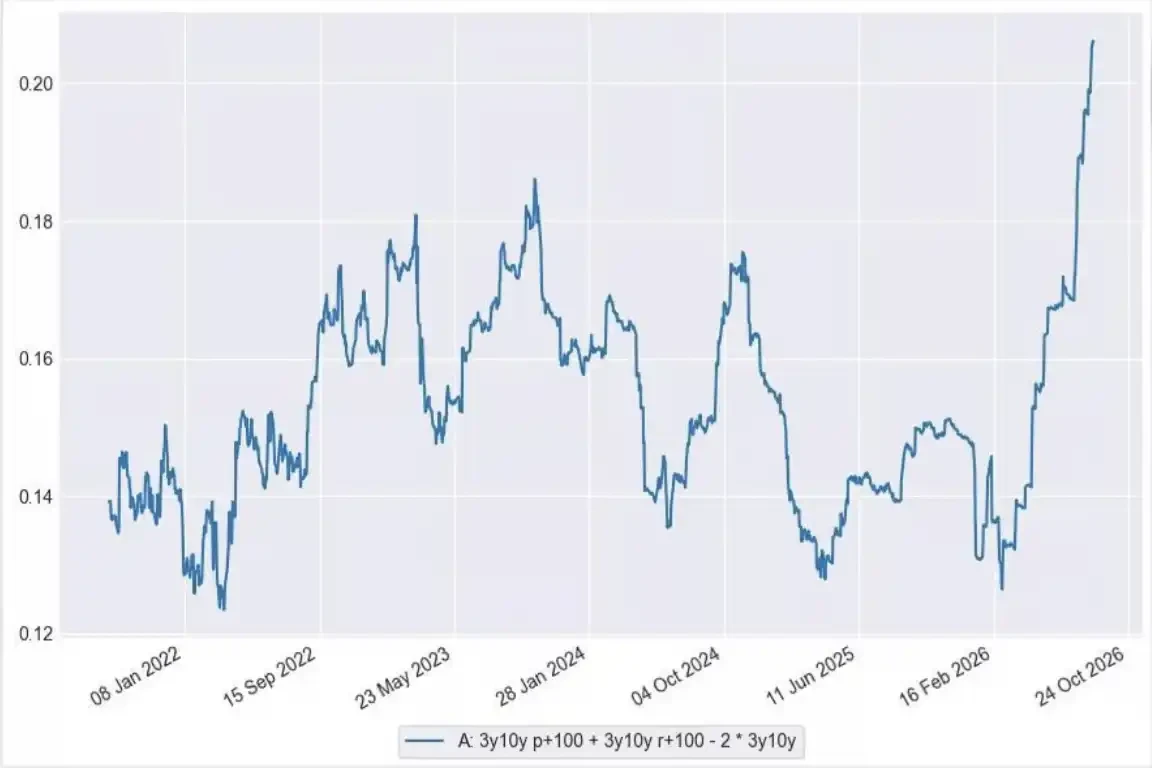
The "volatility of volatility" in rates is rising rapidly, indicating significantly heightened market hedging against rate tail risks.
The risk is that if rates shift from a slow grind higher to an accelerating advance, market makers may need to aggressively hedge the high-strike options they previously sold. Since the market may lack sufficient counterparties willing to take the opposite positions, such hedging could further amplify rate volatility, creating what is known as a "negative convexity" moment.
Negative convexity refers to a situation where, after rates move, some market participants are forced to add hedges in the direction of the move: the higher rates go, the more they need to add positions betting on higher rates, which can in turn push rates even higher. Current options demand shows investors are guarding against this risk, but it does not mean such a scenario will necessarily materialize.
Going forward, markets need to watch three sets of variables: first, whether the US-Iran conflict and shipping through the Strait of Hormuz continue to impact energy supply; second, whether end-user energy prices like diesel and natural gas remain elevated and transmit into core inflation; and third, whether the degree of weakening in employment data is sufficient to prevent the Fed from continuing its tightening path.
If energy prices hold at elevated levels, inflation expectations continue to rise, and bond supply pressures do not abate, the stagflation and rate tail risk logic proposed by the author will be reinforced. Conversely, if energy supply is restored, refined product spreads retreat, or employment deteriorates markedly enough to force the Fed to prioritize growth risks, the foundation for this round of rate-up trading could weaken.