Warsh's Jackson Hole Debut: Bidding Farewell to "Forward Guidance," Restoring Fed Discipline Between AI and Inflation


- Key Takeaways: In his Jackson Hole speech, Fed Chair Kevin Warsh declared that the "forward guidance" tool of the unconventional era had fulfilled its mission, signaling a return to data dependency and decision-making discipline in monetary policy. He outlined seven principles to guide policy implementation and made clear that, unless there is confidence that inflation is converging toward the 2% target at a clear pace, the Fed still "has work to do," emphasizing that market trust should be earned through soundness and transparency rather than promises.
- Key Elements:
- Policy Stance: Warsh advocates restricting the use of forward guidance, arguing that over-committing limits decision-making flexibility and distorts market signals, creating a "hall of mirrors problem" that harms ordinary people without financial assets.
- Economic Assessment: The labor market is broadly consistent with full employment (unemployment rate at 4.1%), but inflation remains well above target, with PCE running at 3.7% year-over-year (4.1% on a six-month annualized basis), and 54% of items in the PCE basket seeing price increases above 3%.
- Seven Principles: Anchoring the 2% inflation target, balancing the employment mandate, using short-term interest rates as the primary tool, monitoring monetary aggregates, exercising restraint in communication, relying on real-time data trends, and acknowledging that supply-side estimates are imprecise.
- AI Impact: AI is viewed as a new factor of production, with Token sales annualizing at over $100 billion (up 500% year-over-year). However, its long-term effects on productivity, capital returns, and employment remain unknown. The Fed will observe cautiously without letting it affect current decisions.
- Market Conditions: Corporate capital expenditure growth has hit its fastest pace since 2021 (approximately 9%), with over half related to AI. S&P 500 profit growth exceeds 20%, credit markets show no signs of tightening, and financial conditions do not appear restrictive.
- Inflation Expectations: Medium-term inflation expectation indicators remain stable, with swap markets showing confidence in the Fed's ability to achieve price stability. However, Warsh warned that expectations may still appear firm before they become unanchored, requiring close monitoring.
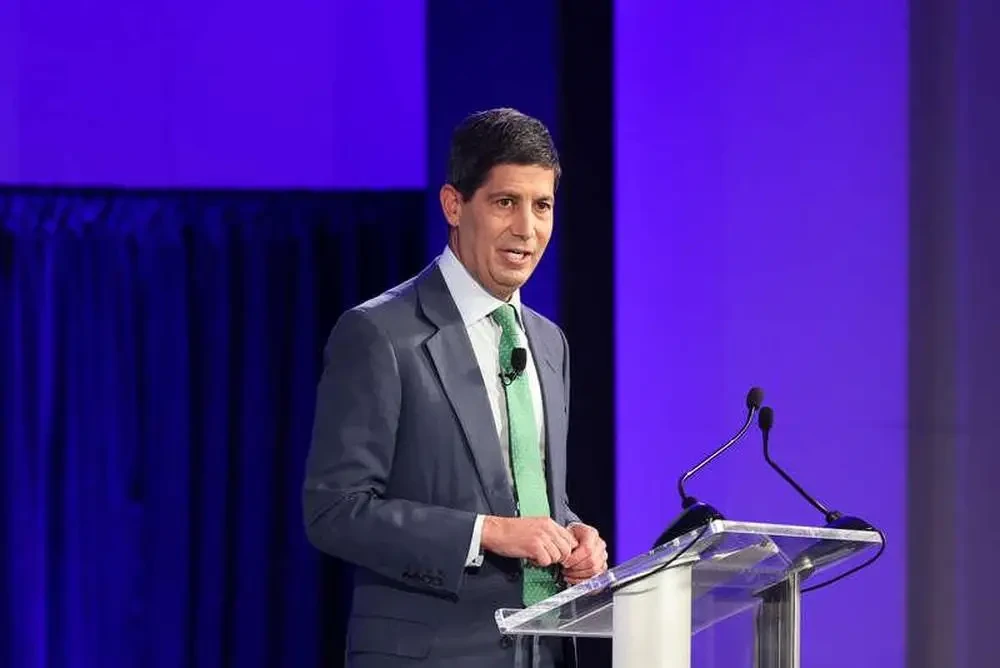
Editor's Note: At 10 PM Beijing time on August 28, Federal Reserve Chair Kevin Warsh delivered a speech at the Jackson Hole Global Central Bank Symposium, marking his first address at this prominent annual gathering since assuming office.
In his remarks, Kevin Warsh stated that the "forward guidance" tool, born out of extraordinary times, has fulfilled its mission in a normal economic environment and should be retired, with monetary policy needing to return to data dependence and decision-making discipline.
Addressing artificial intelligence as a defining variable of our era, he acknowledged that its profound impact on productivity, labor markets, and the structure of capital returns remains unknown, requiring the Fed to maintain prudent observation. Simultaneously, he clearly outlined seven principles to guide policy implementation: anchoring the 2% inflation target, balancing the employment mandate, using short-term interest rates as the primary tool, focusing on monetary aggregates, and maintaining restraint and purposefulness in communication. These principles sketch a governance approach that returns to orthodoxy and avoids overloading policy functions.
On the current economic assessment, he believes the labor market is broadly consistent with maximum employment, but inflation remains well above target—with PCE at 3.7% year-over-year and more than half of its components rising above 3%. He pledged not to pre-set a policy path but made clear that unless there is confidence that inflation is moving toward target at a clear pace, the Fed has "work to do." The overarching message conveys a stance where discipline precedes specific decisions: humble judgment amid uncertainty, unwavering commitment to responsibility. Monetary policy stands at a new crossroads, and this Chair has chosen steadiness over boldness, transparency over promises, to earn market trust.
The following is the full text of Kevin Warsh's speech, translated by Odaily. Enjoy~
————————
Thank you. It's great to be back here, and great to see so many familiar faces. I've been looking forward to this weekend—and where better to mark my 100th day as Fed Chair? For this wonderful hospitality, we all have Kansas City Fed President Jeff Schmid and his colleagues to thank. Jeff, thank you to all of you.
I learned years ago that there are two very different types of hikes to be had on the trails around Jackson Hole. I can summarize my hike with former Fed Vice Chair Don Kohn in two words: I survived. Those steel-willed marathon "death marches" revealed a Don Kohn I was completely unprepared for.
Then there's the other kind of hike—the one I associate with my old colleague, former Fed Chair Ben Bernanke. Hiking with Ben is a much more leisurely affair, a pleasant stroll along the winding paths of the Rockefeller Preserve.
So, before we set out, let's do a "health check" and ask ourselves: "Is it a Kohn day, or a Bernanke day?"
The theme of this conference is innovation. I believe the public and the markets—with their collective wisdom—understand that innovation in how the Fed implements policy will help achieve price stability while also achieving maximum employment.
Here's a brief overview of what I'll discuss this morning. You can call it an outline... or a roadmap... but please, don't call it forward guidance.
First, I'll touch on some longer-term questions the Fed is thinking about, including the latest general-purpose technology—artificial intelligence—and where it might take the economy. Then, I'll discuss the policy practice of forward guidance and the interaction between central banks and financial markets. Next, I'll lay out some key principles that I believe should guide the implementation of monetary policy. Finally, I'll offer my assessment of the current economic situation.
Preparing for Future Policy Inflection Points
Set against the timeless Teton range, we gather here to examine an economic picture that is anything but static. Not long ago—before the 2008 crisis and in the decade that followed—economists and policymakers talked about "secular stagnation" and the "global savings glut." A widely held view was that vast amounts of capital would sit idle for long periods because there simply weren't enough compelling investment opportunities. All the good ideas seemed to have been invented.
So, growth would be sluggish and slow. Well, times have certainly changed dramatically. We have arrived at a turning point in history.
The most obvious example is the development of AI—an 80-year-old name now applied to the latest generation of technology—which is advancing even faster than the technology evangelists predicted just a few years ago. The potential for significantly higher economic growth is rising. Growing pools of capital are pouring into AI-related infrastructure. A phenomenon akin to a "super Moore's Law" seems to be unfolding. Scaling laws are also changing, altering both how innovation happens and its pace.
Capital and labor combine to create the large language models at the heart of AI. Users purchase tokens to gain access to these models.
Reportedly, token sales from just two leading AI labs are already running at an annualized pace exceeding $100 billion, up more than 500% from a year ago. The Fed is watching all of this closely.
We recognize that AI is a new variable—perhaps even a new factor of production—that will have implications for the economy and the conduct of monetary policy.
This raises a series of important questions: Will the application of AI drive a significant and sustained increase in economy-wide productivity? And if so, when? Will token usage complement labor, or compete with it? Will the next generation of AI models require greater capital intensity, or might the models themselves help design solutions needing less capital?
Another unresolved question concerns the resulting market structure. We don't yet know where the returns to capital will ultimately accrue, or how long that will take. In the early stages, how much surplus value will flow to the owners of scarce assets—AI labs, chipmakers, energy producers, and cloud providers? Over time, how much value will shift to businesses and consumers? And what are the broader implications for workers and the Fed's employment mandate?
Similarly, we don't yet know the equilibrium price of tokens. Will there be different tiers of tokens, such that people are willing to pay increasingly more for access to the frontier, best-in-class models? For older models, will token prices eventually fall to marginal cost?
To be clear, their recommendations will come later and will not influence decisions made in the current policy context. But I believe this kind of intellectual investment we are making today will leave us better prepared for the policy challenges ahead.
Forward Guidance and Its Alternatives
Even as our working group gets underway, I haven't waited to introduce innovations at the Fed to help it meet the needs of the future.
As one example, I've set about changing the form and function of what the Fed Chair calls "forward guidance." As you may know, I have long been uncomfortable with prematurely announcing future policy decisions.
I prefer a different path... and let me explain why.
Transparent communication about future policy decisions is not a virtue in itself. Communication must serve the Fed's most important responsibility: getting monetary policy right.
Forward guidance as a regular policy tool was introduced by my colleagues and me during the Global Financial Crisis. It was vital then, and we deployed it in a very high-profile way. But like other legacies of that crisis, I believe forward guidance has outlived its usefulness. In normal times, its role should be limited and kept within clear boundaries.
Otherwise, it risks creating ambiguity in the name of "clarity."
Over-disclosing the deliberative process and over-committing to future decisions can mislead markets, businesses, and households. And I believe that when policymakers make quasi-commitments about the path of interest rates over the policy cycle, we actually constrain our freedom to make the right judgment when decisions truly need to be made.
To get policy right, we also need to get the relationship between financial markets and the central bank right. The Fed needs clear market signals, and these should be as unfiltered as possible, including market internals, the levels and changes of asset prices across markets and sectors, the prices and volumes of Treasury securities, the foreign exchange value of the dollar, the cost and availability of credit, and broad commodity prices. These indicators, among others, should help the Fed gauge near-term economic activity and the inflation outlook over the business cycle.
The Fed should be humble, but never naive. The Fed plays a vital role in the economy and in markets. Our policy tools are powerful. We set the path of short-term interest rates. And market participants will always try to anticipate our next move. But we should not cater to a dynamic where market participants rely primarily on the Fed to determine their next trade.
The economics literature has long described the distortions created by this dynamic, the so-called "hall-of-mirrors problem." If markets are highly dependent on Fed guidance, and the Fed is dependent on market prices, then we are all more likely to miss new developments, more likely to be caught off guard when conditions turn, and more likely to make mistakes in policymaking.
Ironically, market participants may not bear the greatest cost in the hall-of-mirrors problem. The most severe harm likely falls on those who own no financial assets. If the Fed misreads inflation and misreads the economy, who suffers most? Not the winners in financial markets. It's hardworking Americans who face the reality of excessively high inflation or suddenly less stable jobs.
So, if forward guidance isn't suited for normal times, should the new Fed Chair at least commit to a clear reaction function? For instance, if data comes in hot or soft, should he tell us how rates will adjust? I wish our understanding of the economy were precise enough to offer a mechanical, time-tested answer—such as relying strictly on a simple function like the Taylor Rule. But our knowledge isn't there yet—at least not yet. And the factors most important for conducting policy well also change over time.
Revealing the Fed's reaction function through forecasts is more effective in theory than in practice, more effective in the lab than in the real world. I'm not alone in noting, for instance, that forward guidance in 2021 likely slowed the Fed's policy response to high inflation. During my tenure, my colleagues and I will work to build more reliable models and sturdier rules to inform policy decisions.
We will do so with a clear-eyed recognition: the accuracy of economic forecasting remains an aspiration. Geopolitics, global supply chains, and technology are all changing so rapidly and so profoundly that a healthy dose of humility about what we can and cannot know is wise. In that same spirit, we should give full consideration to diverse perspectives on any issue that could affect Fed policy decisions. If the goal is best decisions, we shouldn't exclude different views on the economy.
So, how can we find a better path for policymaking?
In the rest of my remarks, I will share some key principles that guide my thinking on appropriate monetary policy implementation...
And then I will deliver my promised assessment of the economy.
Key Principles
Let me turn to those principles.
First, I note that in this job, yesterday's news can easily be mistaken for what's happening right now. The challenge is telling the difference. In other words, we must examine reality and ensure we are not setting policy for the future based on stale or inaccurate data. We also shouldn't rely on isolated data points. Trends matter most. The Fed is a decision-making institution. We make choices under uncertainty, so the data we rely on must be as relevant, timely, accurate, and actionable as possible.
Second, the Fed acts to ensure that the economy's aggregate demand is broadly in line with aggregate supply. However, we can only directly observe economic activity. We never see the supply side directly; we can only infer it. Therefore, assessing the current and future balance between aggregate supply and demand is inherently imprecise.
Third, there must be no room for misunderstanding: the Fed's 2% price stability target, measured by the Personal Consumption Expenditures (PCE) price index, is a firm and fixed objective. Equally, we must be clear about the other aspect of the goal: Price stability will not be achieved automatically, and inflation will not necessarily return to target on its own. Achieving price stability is the Fed's responsibility.
Fourth, the Fed also bears the responsibility of achieving maximum employment. Over the medium term, achieving the dual mandate is not an either/or proposition. I do not see the Fed's dual mandate as conflicting. After all, high inflation itself severely damages economic prosperity.
Fifth, the short-term interest rate is the primary tool for achieving the dual mandate. Unconventional policies designed to stimulate economic activity may be appropriate in genuine crises, but beyond that should be used with caution—and ideally not at all.
Sixth, money matters. It may not be fashionable to say so these days, but my view is: money has an important relationship with monetary policy. We should pay attention to the money created by the central bank, as well as money originating from the banking system and the financial system. Admittedly, financial innovation and other factors have altered the transmission mechanism between the monetary base, money velocity, and the broader economy. But that is hardly a reason to ignore how money ultimately affects financial conditions and prices.
Finally, a quieter Fed, one with more purposeful communication, will be better equipped to achieve its goals. We can also be held accountable by whether we fulfill our duties—that is the only true test of our credibility. To borrow a phrase from Air Force General Chuck Yeager: "At the moment of truth, there are either reasons or results."
The Current Economic Situation
Now, based on these principles, how do I see today's economy? What is actually happening outside this window? You've likely seen in the July meeting minutes the FOMC's unanimous view: the labor market is stable, and output is solid. But inflation is still too high.
Most of my colleagues and I believe the wiser course is to wait for new information between meetings—especially given potential developments in supply chains, investment flows, and geopolitics—before deciding whether changes to the interest rate stance are necessary. We've also collectively expressed a willingness to act as conditions warrant. For my part, what strikes me today is the overall performance of the economy. The economy appears to have strengthened.
One measure of an economy's strength is its resilience to shocks. On that front, both the real economy and Wall Street have shown remarkable fortitude. Let me touch on a few observations.
Business capital expenditure—the "seed corn" for future economic growth—is growing rapidly. The four-quarter change in equipment and intangible investment is around 9%, the fastest pace since 2021. More than half of this year's capex growth is likely attributable to AI-related construction. For S&P 500 companies, profit growth has exceeded 20% over the past year. Margins are quite high relative to historical levels. Overall equity market volatility is low. We are closely monitoring market internals to see how various sectors are performing. Market expectations for both capital spending and corporate earnings growth are quite elevated.
I will continue to watch for changes in the pace of growth—what you might call the second derivative of the growth rate. The follow-through effects on asset prices, business confidence, consumer income, and spending are also very important to assess. Credit spreads on corporate bonds and leveraged loans are near the low end of their historical ranges, and issuance volumes in these markets have been quite strong this year. Shifting from fixed income markets to banking, in the July Senior Loan Officer Opinion Survey, banks told us that standards for commercial and industrial loans are on the looser end of their historical range, which helps explain this year's growth in those loans.
Credit and lending markets show few signs of restrictive policy, and certain sectors—like housing and agriculture—are under pressure. But overall, I would struggle to say that broad financial conditions are clearly restrictive. Despite various shocks, real consumer spending has remained healthy, growing more than 2% over the past four quarters. Year-to-date, growth in PDFP is near 3%. This measure often contains more useful signals than gross domestic product, and the trend here is also positive.
Turning to the employment side of the Fed's dual mandate, our nation is doing well. The labor market is quite stable. The current unemployment rate of 4.1% remains low by historical standards and hasn't changed much in a few years. Initial jobless claims, measured by the four-week average—an empirically tested, real-time indicator—are near multi-decade lows. In my view, today's low labor market churn partly stems from the massive re-matching between employers and employees that occurred in the post-pandemic period. When labor supply is barely growing, monthly job gains will naturally settle at lower levels. There are always concerning pockets in the labor market—such as new graduates. But overall, those who want to work are largely keeping their jobs or finding them.
They may worry about potential future labor market disruptions, but for now, I believe: the labor market is consistent with maximum employment. But on the price stability side of our dual mandate, the picture is more concerning. The Fed's preferred inflation gauge—the 12-month change in the PCE price index—is currently 3.7%, while the 6-month change is 4.1%. The corresponding measures for the Consumer Price Index are also elevated, as are core inflation