AI时代未来最重要的5个习惯


Authors: SanTi Li, Nasida, Yin Yue
As AI capabilities iterate at an exponential pace, we are entering a brand-new era. #AI is transforming the way we work at an unprecedented speed, and the biggest challenge we face is no longer "information scarcity." What is truly becoming scarce is: inspiration, attention, judgment, and the ability to think independently.
When AI can complete search, analysis, writing, coding, and even propose solutions within seconds, humanity's greatest risk may no longer be "not knowing how to use AI," but rather over-relying on it—ultimately handing over our thinking agency and judgment to AI.

Therefore, what truly matters in the future is not making ourselves more machine-like, but preserving the capabilities that are genuinely human while fully leveraging machine power.
The following 5 habits are designed to help you build your own "Survival and Productivity Operating System for the AI Era."
1. Proactively Disconnect, Return to Nature, and Exercise More
The body is the foundational layer of the human cognitive system
AI responds in milliseconds. We can open multiple windows simultaneously, converse with multiple models, and delegate vast amounts of work to AI. Efficiency appears to multiply, but one easily overlooked fact is: servers and screens never get tired, but human bodies and minds do.

If significant efficiency gains were held by a select few, it would merely amplify their individual competitive advantages. But when it becomes a collective technological upgrade, it can easily trap humanity in a state of sustained high-frequency information stimulation, prolonged sitting, and constant task-switching—continuously draining attention and cognitive resources, eventually resulting in an overloaded state of "extreme productivity, yet silently frozen body and mentally drained spirit."
- Establish "Digital No-Go Zones": Designate fixed time periods each day to completely step away from screens (such as the first hour after waking up and the hour before sleeping), or set a specific time to fully disconnect from the internet and smart devices, drawing your attention back to the physical world and allowing your brain to "refresh."
- Counter Virtual Immersion with Physical Awareness: Engage in regular aerobic exercise or spend time in natural environments (such as basketball courts, football fields, forests, or parks). Nature's non-linear visuals combined with the dopamine release from physical movement are among the best ways to replenish attentional resources and activate unconscious creativity (like "shower thoughts").
- Distinguish Between "High Stimulation" and "True Rest": Scrolling through short videos, browsing social media, playing high-intensity games, and aimlessly chatting with AI are all forms of digital stimulation. They don't help you rest—they exhaust your brain further and can even cause insomnia. True recovery comes from physical movement, deep sleep, sunlight, nature, breathing, and genuine human interaction.
The body is not a burden on productivity;the body itself is part of cognitive capability. The stronger AI becomes, the more humans need to protect their physical vessel.
2. Continuously Refine Your Collaboration Principles with AI
Don't just learn prompts—build your own Human-AI Operating System
Treat AI as your digital twin or top-tier advisor, not a search tool you occasionally use. Never let AI take the dominant role—especially now, when the probability of AI "hallucinating" or "confidently fabricating nonsense" remains high. Different models can also exhibit "confident but wrong" judgments, which means the more capable the models become, the more humans must not abandon verification and final decision-making.
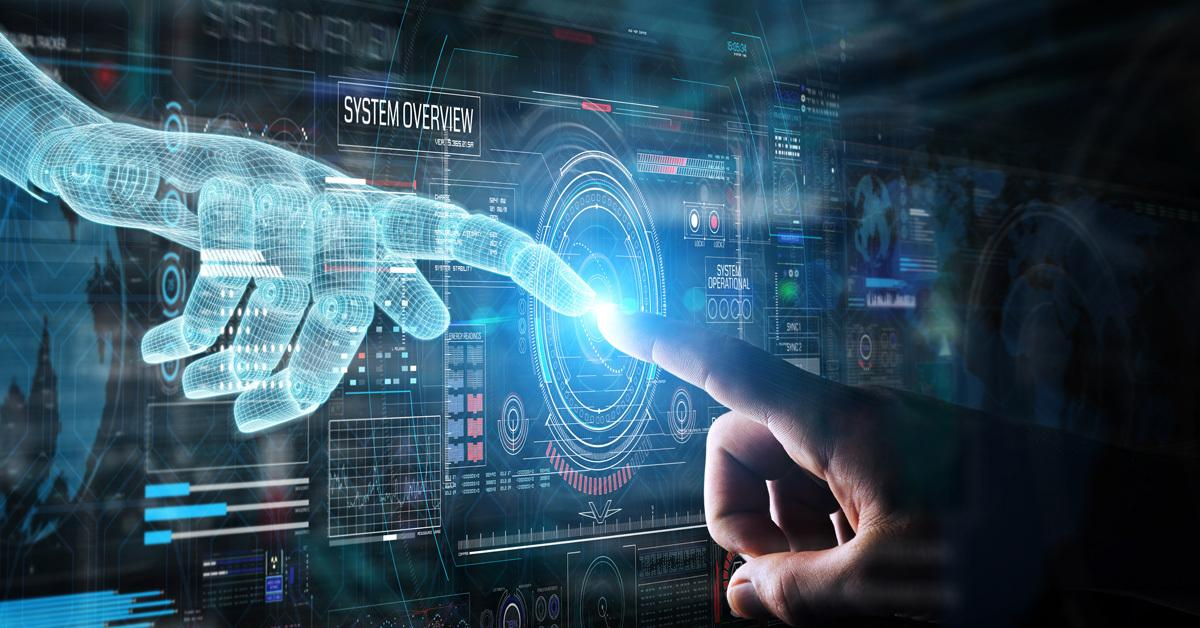
In the future, what separates people won't be who masters more ad-hoc prompt tricks, but who can design and institutionalize a stable Human-AI Operating System.
- Define Clear Division of Labor:
AI Handles: Information gathering, data organization, drafting, framework building, code writing, formatting, repetitive tasks, and multi-scenario simulation.
Human Retains: Real-time feedback, strategic direction, value judgment, risk assumption, final decisions, aesthetic taste, ethical boundaries, and understanding of the real world.
- Create Customized System Prompts: Condense your work standards and core principles into a specification document and embed it into your AI settings. For example: "When analyzing problems, first distinguish facts from inferences; clearly flag uncertain information; never fabricate facts for the sake of structural completeness; and provide verification paths for important conclusions."
- Continuously Iterate Your Collaboration SOP: After completing high-difficulty tasks, review: Where was communication cost highest? Why did AI misunderstand? What rules need to be communicated in advance? Gradually build your own standardized operating procedure. (In a sense, treating AI as a "digital puppy" that requires long-term training isn't a bad approach: the clearer your rules are, the more stable its work habits become.)
3. Keep Your Thinking Fresh and Clear—Don't Grind When You're Overheated
AI can work indefinitely, but humans shouldn't exhaust themselves without limits
One of AI's greatest strengths is also its greatest trap: it can always keep going.
You can keep tweaking prompts, ask AI to rewrite, switch models, try another approach, analyze again, and then modify further—until hours later, you suddenly realize you no longer remember what problem you were originally trying to solve.
This is a cognitive trap that appears frequently in the AI era: machines have no fatigue mechanism, but humans do.
When you're stuck or feeling anxious, it's easy to fall into a vicious cycle of endlessly adjusting prompts, desperately trying to force the perfect answer out immediately. Repeatedly tugging at AI with chaotic instructions not only drains your cognitive energy rapidly but also muddles AI's processing logic, turning it into a ruthless tool that burns tokens and money in place. I've experienced this myself: a minor algorithmic bug took Codex and Claude—two of the most advanced models—two full days to fix unsuccessfully. Eventually I gave up. The next day, with a fresh mind, a completely different approach suddenly occurred to me, and AI solved it in 3 minutes via another route.
- Recognize "Diminishing Cognitive Returns" Signals: When you find yourself modifying prompts three times without a satisfactory answer, or starting to feel noticeably irritated by AI's outputs, it means you've hit a blind spot and your cognitive energy is depleted.
- Execute a Forced Stop: The moment you feel "overheated," immediately step away and stop interacting with AI. Get water, take a walk, take a shower—give your brain a cognitive buffer period and let implicit thinking run in the background.
- Shift from "Grinding Details" to "Redefining the Problem": When stuck, instead of optimizing your prompt, ask yourself: "What problem am I truly trying to solve? Have I set a false premise? Is this problem even worth continuing to solve?"
Stock investing has its sunk costs—it seems AI-era token consumption can trigger a similar sunk cost psychology too, huh.
4. Decisively Interrupt AI and Take Control of the Interaction
Don't let AI's output rhythm hijack your thinking rhythm
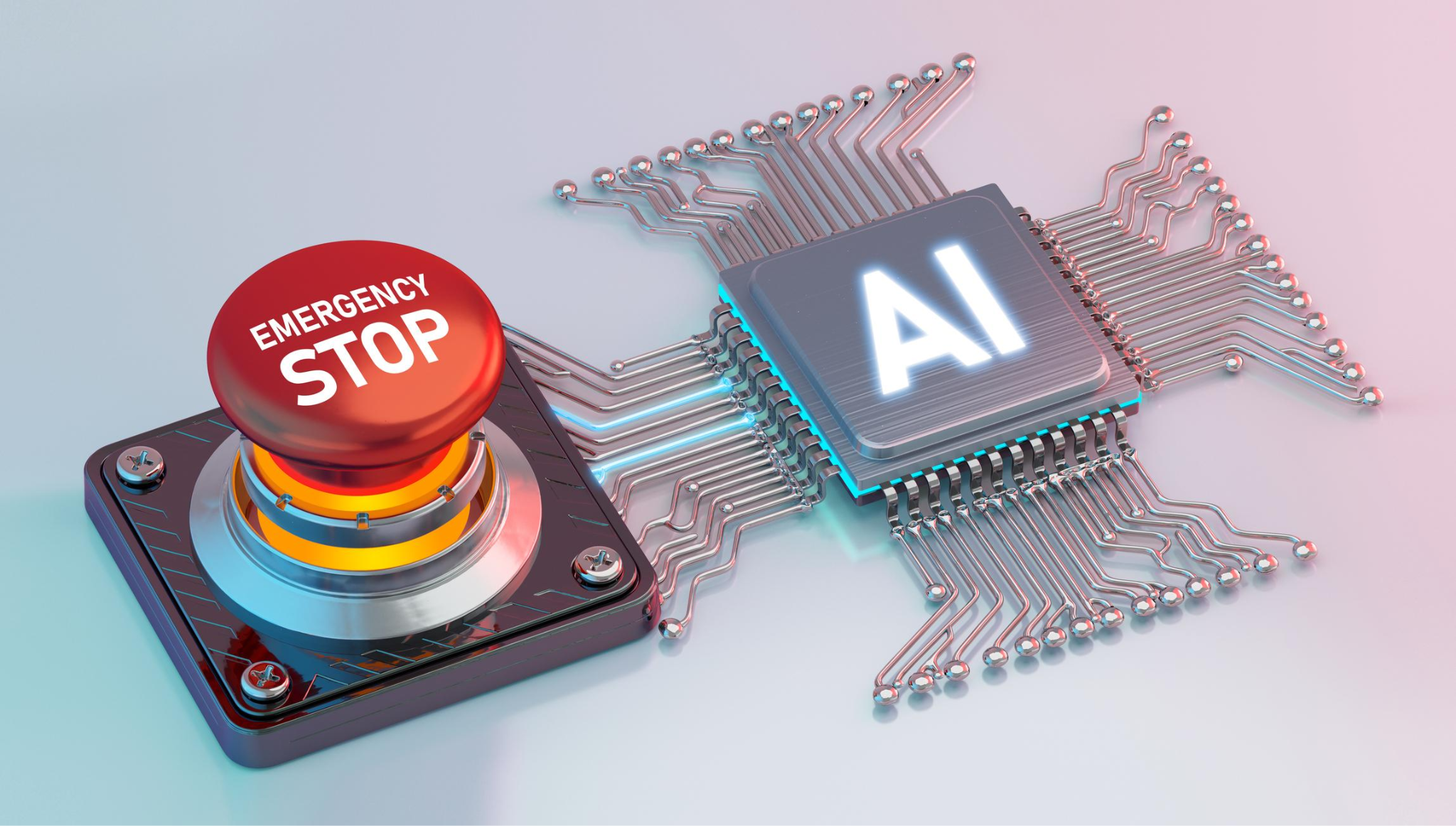
The generation mechanism of large language models dictates that they can produce answers that appear logically coherent but actually contain deviations and hallucinations. If you habitually wait for AI to finish spitting out one or two thousand words before reading, your thinking rhythm will be completely led astray.
You need to master a critical human-AI interaction skill: Iterative Steering.
- Hit the "Stop Generating" Button: The moment you notice AI's output veering off from the core intent, padding with empty platitudes, or going wrong from the very first sentence, don't hesitate—interrupt immediately. Never waste time reading useless output. This means humans now also need to monitor AI's reasoning process in real-time to check whether its logic is wrong—which is actually quite mentally taxing. AI is like autonomous driving right now; you can't fully trust it.
- Correct and Fine-Tune Immediately: Add constraints right after interrupting. For example: "Stop—you've misunderstood. I don't need an industry overview; I need 3 specific implementation steps."
- Force "Step-by-Step Thinking" Mode: Refuse to accept thousand-word complete solutions. Require AI to "first provide 3 core assumptions, then begin Part 1 only after I confirm," breaking large tasks into small closed loops, ensuring the steering wheel of the interaction stays firmly in your hands.
5. Discover Opportunities with Inspiration, Decide Answers with Taste
Answers and execution are getting cheaper; what's truly expensive is the quality of questions and aesthetics
As AI capabilities advance, the "execution cost" of writing articles, coding, making PPTs, and analyzing data approaches zero. If future top-tier models like Claude Fable 5 have token prices as low as recent DeepSeek Flash models, overall costs will drop dramatically. When answers become extremely cheap to produce, what becomes truly scarce is: Should this IDEA be pursued? What's worth doing? Why do it? Whose problem should it solve?
AI excels at solving problems, but humans must be responsible for choosing them.
- Win Through Inspiration (Transform from Worker to Creative Director): AI possesses humanity's collective knowledge base, but it cannot generate cross-disciplinary intuition, lived experience, or sudden flashes of brilliance. Capture every fleeting thought (flicker notes, voice memos), use your authentic inspiration as the seed, and let AI help you exhaustively verify, add details, and rapidly generate prototypes.
- Questioning Power Is Productivity: Deep questioning ability stems from insight into business fundamentals and understanding of human needs. Ask more "why" and "what if" questions, and use high-quality inquiries to steer AI's direction.
- "Edit" AI with Extremely High Aesthetic Standards: What AI produces is typically a mediocre "average answer." You need sharp discernment to identify the blandness, preachiness, and logical holes in AI's output, then use rigorous taste to eliminate, refine, and reconstruct—infusing the final result with irreplaceable personal style and soul.
The truly dangerous thing in the AI era may not be that machines become smarter than humans, but that humans gradually abandon the ability to think independently, blindly following AI's instructions. When the same AI system influences tens of millions or even hundreds of millions of people, even an extremely small percentage of systematic errors can be amplified at scale, ultimately affecting countless people's cognition and decision-making. This is especially concerning for the post-2020 generation growing up with AI. Currently, humans can still control AI because the engineer-level inventors are still alive—people who understand AI's lowest-level code and are intimately familiar with its core bugs. But as AI increasingly programs and optimizes itself, the number of such engineers will dwindle.
The more advanced a civilization, the greater the complexity of its systems; the more complex the systems, the stronger the dependence on infrastructure and critical nodes.
Humans used to write knowledge on stone, bamboo slips, and paper—preservable for hundreds or even thousands of years. Today, we increasingly rely on servers, cloud computing, and network storage.
We've gained unprecedented efficiency, but we've also handed over part of civilization's "memory rights" to digital infrastructure. This is perhaps the most caution-worthy flip side of technological progress: the greater the capability, the deeper the dependence. This might be the "Tai Chi" of the AI era—gaining one kind of power while potentially losing another.
Just as human knowledge today increasingly depends on digital storage—if large-scale network infrastructure failure ever occurs, we might suddenly discover: knowledge still exists, but the ability to access it could vanish. This is similar to how many people, when deprived of electricity and their phones, suddenly feel completely penniless.
When AI can search, analyze, write, and code for you, do you still possess the perception to observe life, the courage to define problems, and the taste to judge what's good?
The core competitive moat of the future is no longer knowledge storage capacity, but: physical perception, independent thinking, sharp judgment, cross-disciplinary inspiration, and the ultimate decision-making power to define problems.
AI can help us produce answers faster and faster, but one question must always be answered by humans: "What kind of world do we actually want to create?" This question—at least for a long time to come—should still be answered by human beings.