The "Crisis Helmsman" of Financial Markets Passes Away: A Look Back at Greenspan's Fed Career


- Core Thesis: Alan Greenspan, former Chairman of the U.S. Federal Reserve, has passed away. His nearly 19-year tenure and market-friendly policies (the "Greenspan put") underpinned the prosperity of the 1990s. However, his era of loose regulation and low interest rates is also blamed for laying the groundwork for the 2008 financial crisis, sparking a lasting debate over whether central banks should actively curb asset bubbles.
- Key Elements:
- Greenspan served as Fed Chairman from 1987 to 2006, spanning four presidential administrations. He successfully navigated multiple crises, including the 1987 stock market crash and the 9/11 attacks, earning a reputation as a "crisis manager."
- He famously warned of "irrational exuberance" but refrained from taking strong measures to deflate asset bubbles, maintaining the stance that central banks cannot accurately identify bubbles and should not attempt to prick them preemptively.
- His policy approach fostered expectations of a "Greenspan put"—the belief that the Fed would provide liquidity support during major market downturns. This reduced panic but may have encouraged high leverage and risk-taking.
- Critics argue that maintaining low interest rates for an extended period after the dot-com bubble burst, combined with lax regulation of financial innovation (such as derivatives and securitization), fueled housing market overheating and risk accumulation.
- Supporters view him as a key driver of the U.S.'s long period of low inflation and growth. Detractors see him as a symbol of an era of financial laissez-faire, with the stronger regulations enacted after 2008 representing a correction of his philosophy.
Alan Greenspan, former chairman of the U.S. Federal Reserve, passed away on Monday at his home in Washington, D.C., at the age of 100 due to complications from Parkinson's disease. The news was announced by his wife, Andrea Mitchell, NBC News' chief Washington correspondent. To global markets, Greenspan was more than just a former central banker: he led the Federal Reserve for nearly 19 years, guiding the U.S. from the 1987 stock market crash to the internet boom, and was later drawn into the historical reckoning of the 2008 financial crisis after his departure.
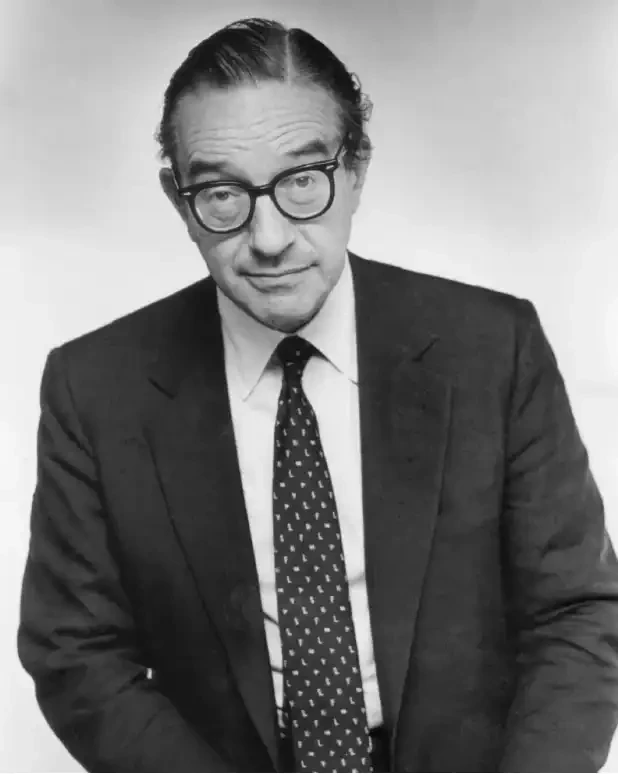
His life encapsulates the core debates of the past decades in U.S. capital markets: Can markets truly self-regulate? Should central banks proactively burst bubbles?
Leading the Fed for Nearly 19 Years Across Four Presidencies
Greenspan became Chairman of the Federal Reserve in August 1987 and served until January 2006, a tenure of nearly 19 years. This made him the second-longest-serving Fed chair in U.S. history, behind only William McChesney Martin.
His term spanned the presidencies of Ronald Reagan, George H.W. Bush, Bill Clinton, and George W. Bush, covering the end of the Cold War, the internet revolution, accelerating globalization, and an era of financial innovation. His ability to be continuously reappointed across different party administrations speaks to his unique standing both in Washington and on Wall Street.
At his peak, Greenspan was known as the "Maestro." This title was not just a personal accolade but also reflected the strong U.S. confidence in the 1990s regarding technological progress, free markets, and the efficiency of capital markets. During this period, the U.S. economy experienced prolonged expansion, inflation remained moderate, and both stock markets and productivity rose in tandem. Many believed the central bank could maintain growth and stability without heavy-handed intervention.
Greenspan's public persona was heavily technocratic. He often spoke cautiously and obscurely, yet markets would parse his every word for clues on interest rate direction. This era, where "a single phrase from the Fed chair could move global markets," reached its zenith under his leadership.
From the 1987 Crash to 9/11, He Was Seen as a Crisis Helmsman
Greenspan faced his first major test shortly after taking office. In October 1987, U.S. stock markets experienced "Black Monday," with the Dow Jones Industrial Average crashing in a single day. The Federal Reserve's swift action to provide liquidity to support the markets was seen as a crucial step in stabilizing the financial system.
He subsequently navigated the Asian Financial Crisis, the Russian debt default, the collapse of Long-Term Capital Management (LTCM), and the market shocks following the September 11, 2001 attacks. At each of these junctures, the Fed's liquidity provisions and interest rate cuts solidified Greenspan's image as a "crisis manager."
This policy approach was later characterized by the market as the "Greenspan Put." It wasn't an official policy but rather a market expectation that the Fed would step in to support asset prices and the financial system during significant downturns. For investors, this expectation reduced panic; conversely, it was also seen as potentially encouraging higher leverage and more aggressive risk-taking.
Greenspan himself was not simply synonymous with "perpetual easing." In 1996, he famously warned of "irrational exuberance" in the stock market, a phrase that became a landmark in financial history. The problem, however, was that the warning did not translate into forceful policy action to curb the asset bubble. In his view, it was difficult for a central bank to accurately identify when a bubble was forming and even harder to prick it preemptively without damaging the real economy.
This judgment seemed pragmatic during the boom years but became a point of contention after the crisis.
Market-Friendly Philosophy Re-examined After 2008
Greenspan's policy stance was fundamentally market-friendly. He believed that market prices aggregate information, financial innovation disperses risk, and excessive regulation hampers efficiency. He was also a long-time advocate for free trade, deregulation, and technology-driven productivity gains.
This philosophy aligned perfectly with the economic atmosphere of the 1990s. The end of the Cold War, combined with the expansion of globalization and information technology, generated immense optimism. Wall Street's financial innovation accelerated, with complex derivatives, securitized products, and off-balance-sheet banking activities expanding rapidly. Before the crisis, these tools were often described as advancements that improved capital allocation efficiency and dispersed financial risk.
But the 2008 financial crisis fundamentally altered Greenspan's historical standing.
Critics argued that the Fed kept interest rates too low for too long following the dot-com bust and 9/11, fueling the housing market. Regulators were seen as too permissive regarding risk-taking by banks and Wall Street, failing to curb the expansion of mortgage-backed securities, leverage, and complex financial products. The central bank, critics said, knew asset prices might be detached from fundamentals but was unwilling to directly confront the bubble.
These criticisms do not mean the 2008 crisis can be attributed to Greenspan alone. Its causes were multifaceted, including regulatory structure, institutional incentives, rating agency failures, housing policy, and global capital flows. However, as the most influential monetary policymaker and a leading proponent of free-market ideology before the crisis, it was inevitable that he would become a central figure in the ensuing debate.
In his later years, Greenspan defended his policy legacy. He acknowledged flaws in his assumption about financial institutions' capacity for self-regulation but also stressed that bubbles are often difficult to identify precisely as they form, and policymakers cannot possibly have the full picture of a crisis in advance.
His Legacy Hovers Between Two Eras
The reason Greenspan's death draws global market attention is that the debates surrounding him have not faded with time.
To his supporters, he was the central bank helmsman during a period of prolonged U.S. prosperity. He maintained financial system stability during numerous external shocks and helped steer the U.S. economy from an era of high inflation memory to one of low-inflation growth. Without the Greenspan era, it's hard to understand the optimism of U.S. capital markets in the 1990s and the global investor trust in the Federal Reserve.
To his critics, he is the iconic figure of an era of financial laissez-faire. Low interest rates, light regulation, and faith in the market's self-correcting abilities ultimately came at a cost, exposed by the housing bubble, the subprime mortgage crisis, and global financial system imbalances. The post-2008 shift towards stronger regulation and greater intervention by the Fed and U.S. regulatory system was, in a sense, a reaction against the Greenspan era.
This is the complexity of Greenspan's legacy: He is neither purely a creator of prosperity nor simply a culprit of the crisis. He represents an era that believed markets, technology, and financial innovation could continuously improve economic performance. The outcome of that era, however, forced a global rethinking of the boundaries between central banks, regulation, and markets.
For today's investors, Greenspan's death is not merely a historical footnote. Whenever markets bet on the Fed pivoting to easing during a crisis, whenever asset prices rise alongside financial stability risks, the questions of the "Greenspan era" resurface: Is the central bank stabilizing markets, or is it encouraging the next build-up of risk? This question remains unanswered.