






Elon Musk vs. OpenAI Trial Day One: The Veneer of Idealism Is Torn Away


- Core Thesis: The core of Musk's lawsuit against OpenAI is not about a clash of philosophies, but a struggle for commercial control. Musk left after failing to secure control of OpenAI and later accused it of betraying its non-profit founding mission, which was actually a move to eliminate competitors for his own for-profit AI company, xAI. Trial evidence revealed both sides' desire for money, power, and control, tearing off the veneer of Silicon Valley idealism.
- Key Elements:
- Musk's legal team accused OpenAI's founders of "stealing from a charity," claiming they reneged on non-profit promises due to Microsoft's $13 billion investment, and promising to direct all proceeds from the billion-dollar lawsuit to a non-profit foundation if successful.
- OpenAI's legal team countered that Musk left because he failed to gain absolute control, had proposed merging OpenAI into Tesla, and that his lawsuit was an act of commercial retaliation after founding xAI.
- OpenAI President Brockman's private diary from 2017 showed that core management had planned to monetize the technology long before ChatGPT's explosion in popularity, targeting $1 billion in revenue, shattering the non-profit aura.
- In a 2018 email, Musk asserted OpenAI had "zero probability of success" and resigned from the board, yet in his testimony, he portrayed his founding motivation as a "moral guardian" against Google's monopoly on AI.
- The case reveals Silicon Valley's complex web of interests: former OpenAI board member and mother of Musk's child, Shivon Zilis, was allegedly placed as an inside informant by Musk, highlighting the entanglement of commercial competition and personal relationships.
Original author: Sleepy.md
On April 28, 2026, at the Federal Court in Oakland, California.
There were no Hollywood-style histrionics with table-pounding and shouting. Instead, there were only cold evidence lists, top-tier lawyers in sharp suits, and a suffocating sense of pressure.
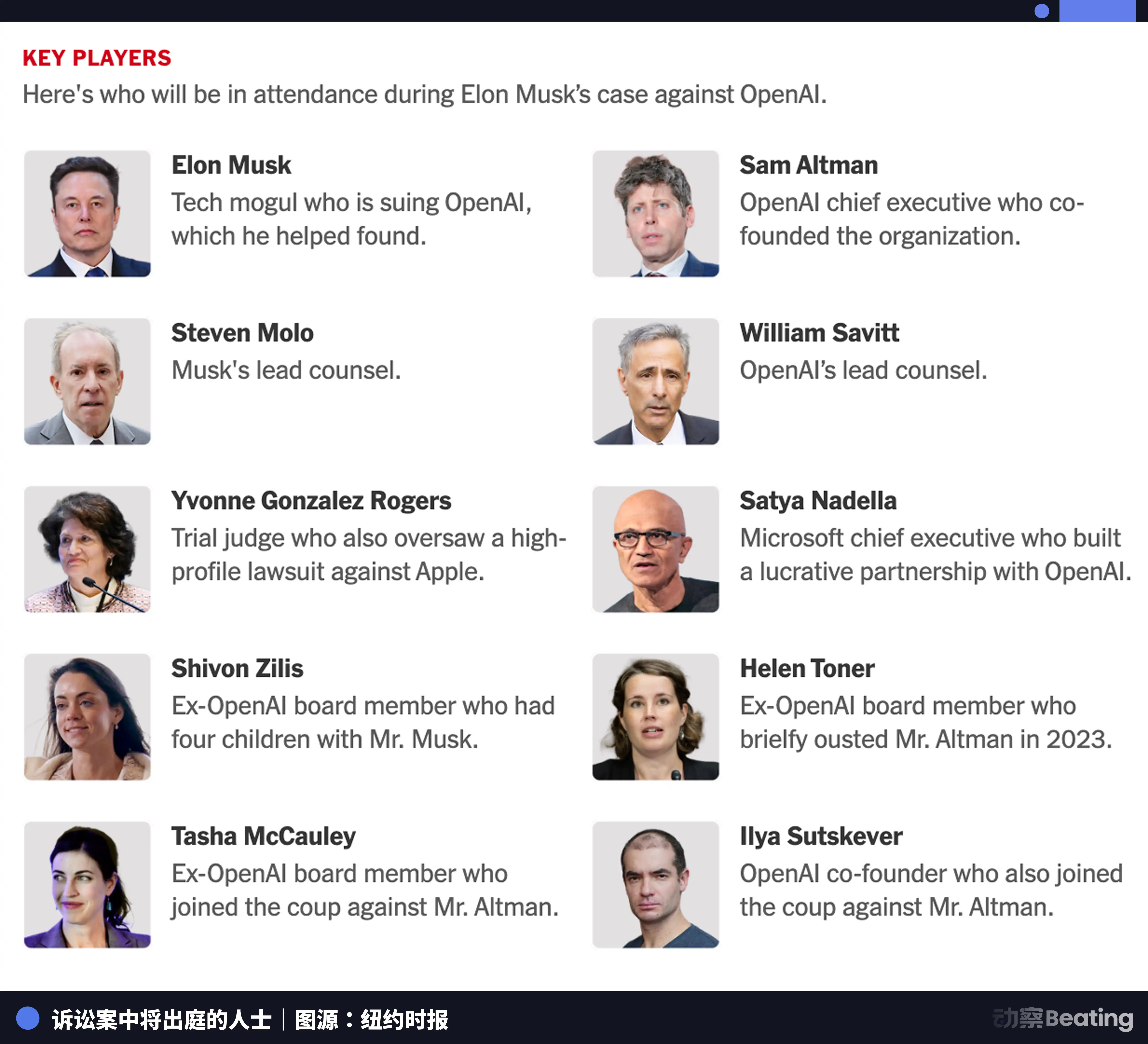
Tesla CEO Elon Musk and OpenAI CEO Sam Altman sat on opposite sides of the courtroom. Musk sat at the central table, jaw clenched, tongue pressed against the inside of his cheek, flipping through his notes. Altman, arms crossed, sat in the front row of the gallery with a stern expression, whispering to his lawyer.
This is the richest man in the world attempting to use legal means to destroy the world's largest AI unicorn.
The curtain raiser for the trial began the day prior with jury selection.
In this tech-concentrated area of the East Bay, San Francisco, picking nine ordinary people capable of remaining absolutely neutral towards both Musk and ChatGPT was no easy task.
Candidates were grilled one by one: "Do you use ChatGPT often?" "Do you follow Elon Musk on X?" "Do you own shares in Tesla or SpaceX?"
After a grueling five-hour tug-of-war, both sides had exhausted their five peremptory challenges. The presiding judge, Yvonne Gonzalez Rogers, even remarked candidly from the bench: "The reality is a lot of people don't like Elon Musk."
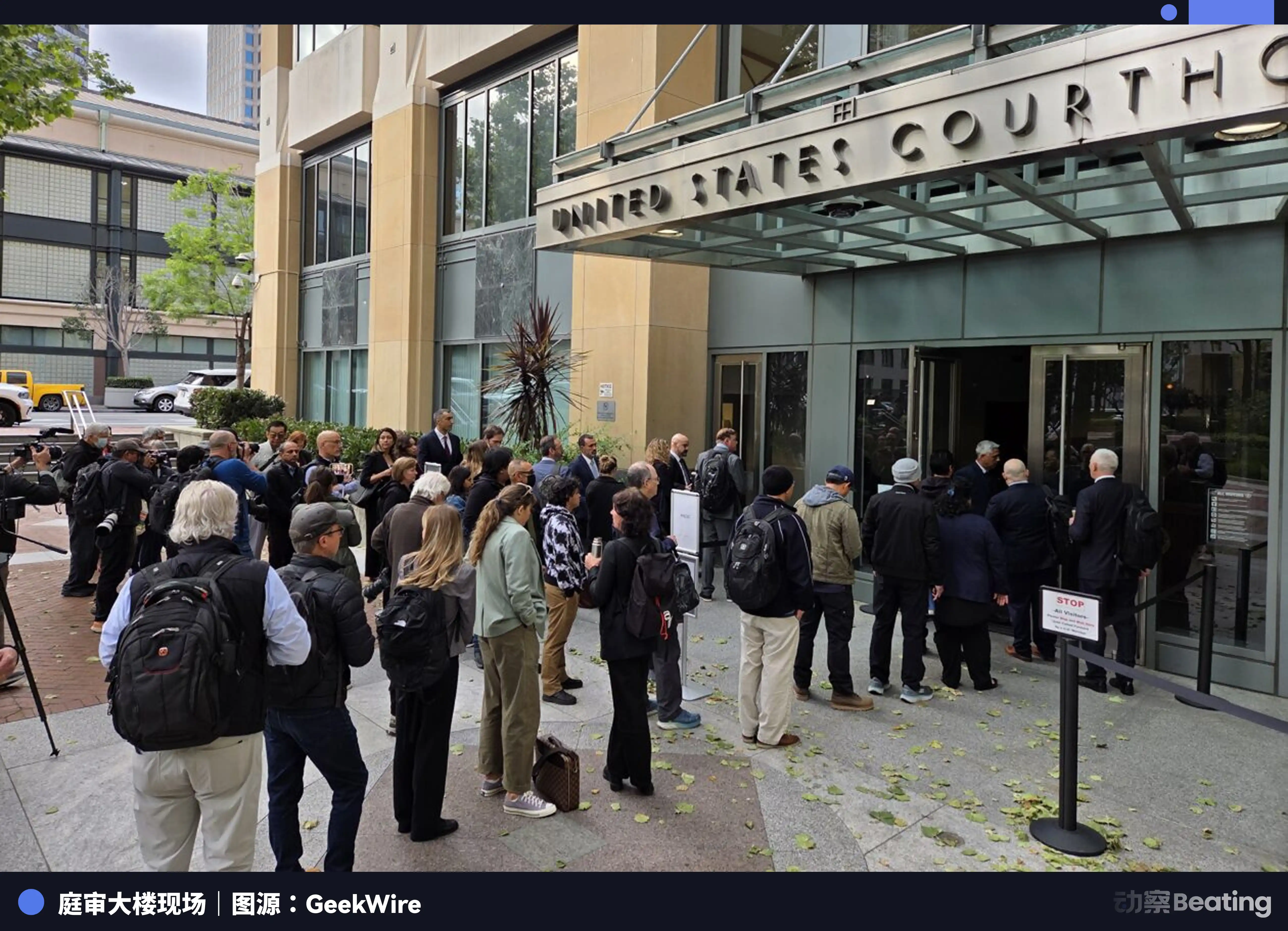
This lawsuit, dubbed the "Trial of the Century" by the media, appears on the surface to be a legal battle over billions of dollars in claims and the legal nature of a non-profit organization. But beneath this dry legal terminology lies a more fundamental question.
When an open-source project, once proudly championing the cause of "benefiting all humanity," transforms into a commercial empire valued at $852 billion, did the original idealists part ways due to moral purity, or simply because they lost a power struggle and are now nursing their bruised egos? Is this a long-overdue trial for justice, or is it the table-flipping of a jilted capital giant, the classic "sour grapes" scenario?
Two Narratives
When the trial formally began, the opening statements from the lead counsels for both sides presented the jury with two completely opposing narratives.
In the narrative of Musk's lead attorney, Steven Molloy, this was a drama of a "White Knight fighting a Greedy Vizier."
Molloy deliberately avoided all obscure technical jargon. Quoting OpenAI's founding charter from 2015, he repeatedly emphasized a single concept: OpenAI's original intention was "to benefit all humanity," and it was "not a vehicle for personal enrichment."
In his accusations, Molloy claimed that Altman and President Greg Brockman had "stolen a charity." He pointed directly at Microsoft's cumulative $13 billion investment in OpenAI, arguing that this was the point at which OpenAI had completely torn up its promises to Musk and to the world.
To demonstrate their sincerity, Musk's side even promised that if they won the case and secured the billions in damages, the entire sum would be allocated to OpenAI's non-profit foundation, with Musk personally taking nothing.
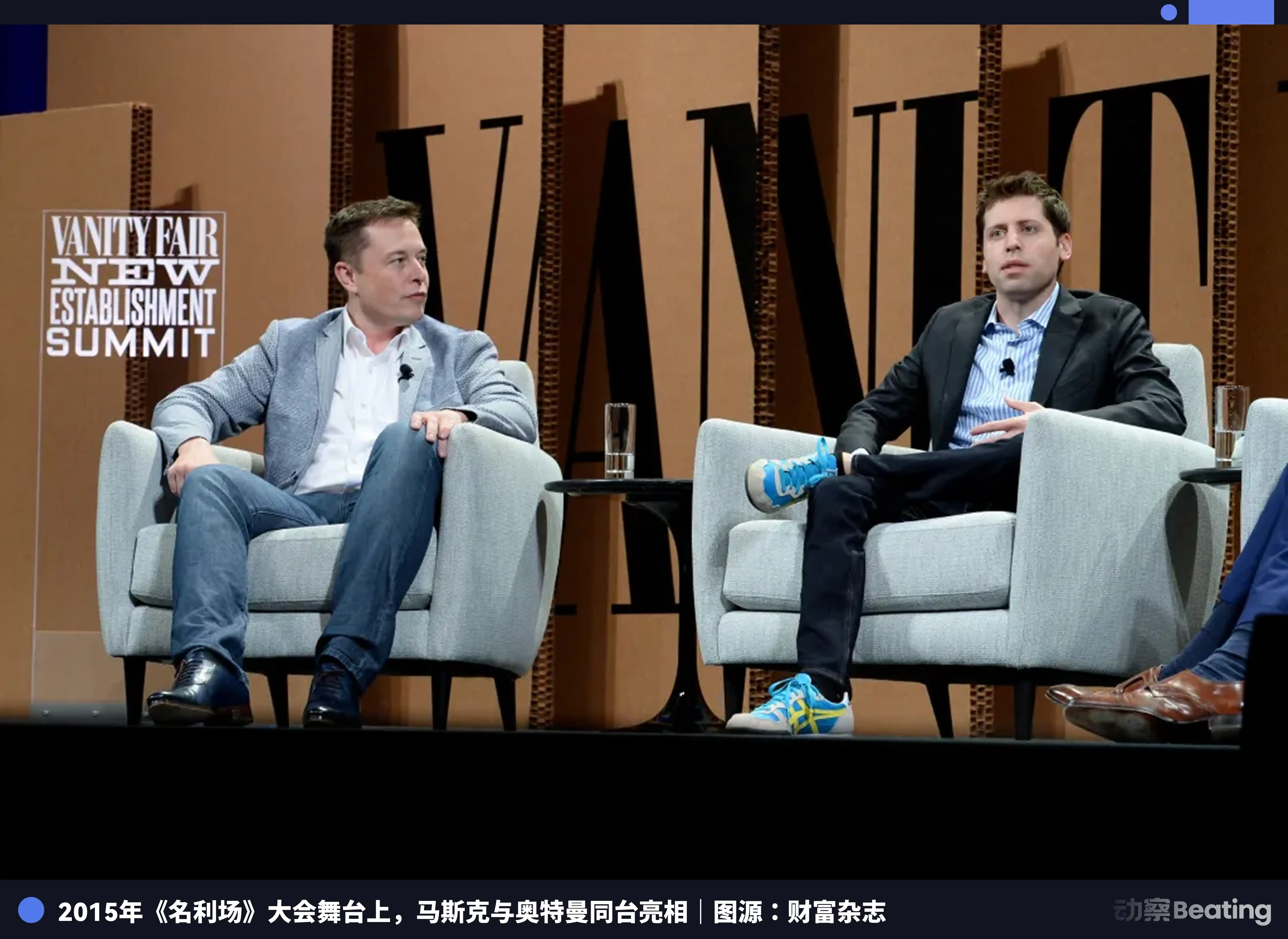
However, in the narrative of OpenAI's lead attorney, Bill Savitt, it was an entirely different story. This was no longer a moral crusade but a blatant act of business retaliation after a failed "power play."
"We are here because Musk didn't get what he wanted," Savitt cut to the chase.
He told the jury that Musk was the one who had actually smelled the commercial opportunity of AI and tried to seize it for himself. Back in the day, Savitt claimed, Musk not only demanded absolute control over OpenAI but even proposed merging it directly into Tesla.
Savitt dismantled Musk's persona as an "AI safety guardian." He argued that AI safety was never Musk's real priority, and that Musk had actually looked down on employees who were overly focused on AI safety. In Savitt's view, Musk only looked into suing OpenAI after he himself founded the for-profit AI company xAI in 2023, and this was purely for commercial competition.
"My client thrived and succeeded after he left. Even if Musk feels resentment, he has no right to file a malicious lawsuit," Savitt stated.
Even more interesting was the nuanced position of the third party, Microsoft. Microsoft's attorney, Russell Cohen, went out of his way in court to distance his client, claiming they had always been a "responsible partner every step of the way" and had done nothing wrong.
But just before the trial, OpenAI suddenly announced an update to its cooperation terms with Microsoft. Microsoft no longer held exclusive rights, and OpenAI's products could be deployed on other cloud platforms. This was not merely an act of self-preservation against antitrust investigations; it seemed more like a carefully orchestrated PR stunt. OpenAI was trying to prove in court that it was definitely not a puppet on Microsoft's strings.
Beneath the banner of morality, both sides harbored deep, unfathomable commercial calculations.
Musk's Testimony
As the first heavyweight witness, Musk sat on the stand for a full two hours.
In an era rife with anti-elite sentiment, Musk knew exactly how to build empathy with ordinary jurors. He didn't start with obscure talk about AGI. Instead, he spent nearly half an hour reviewing his own "grassroots" struggle to success. He spoke of leaving South Africa at 17, working as a lumberjack in Canada and doing manual labor on farms. He emphasized that he still works 80 to 100 hours a week, owns no vacation home, and no yacht.
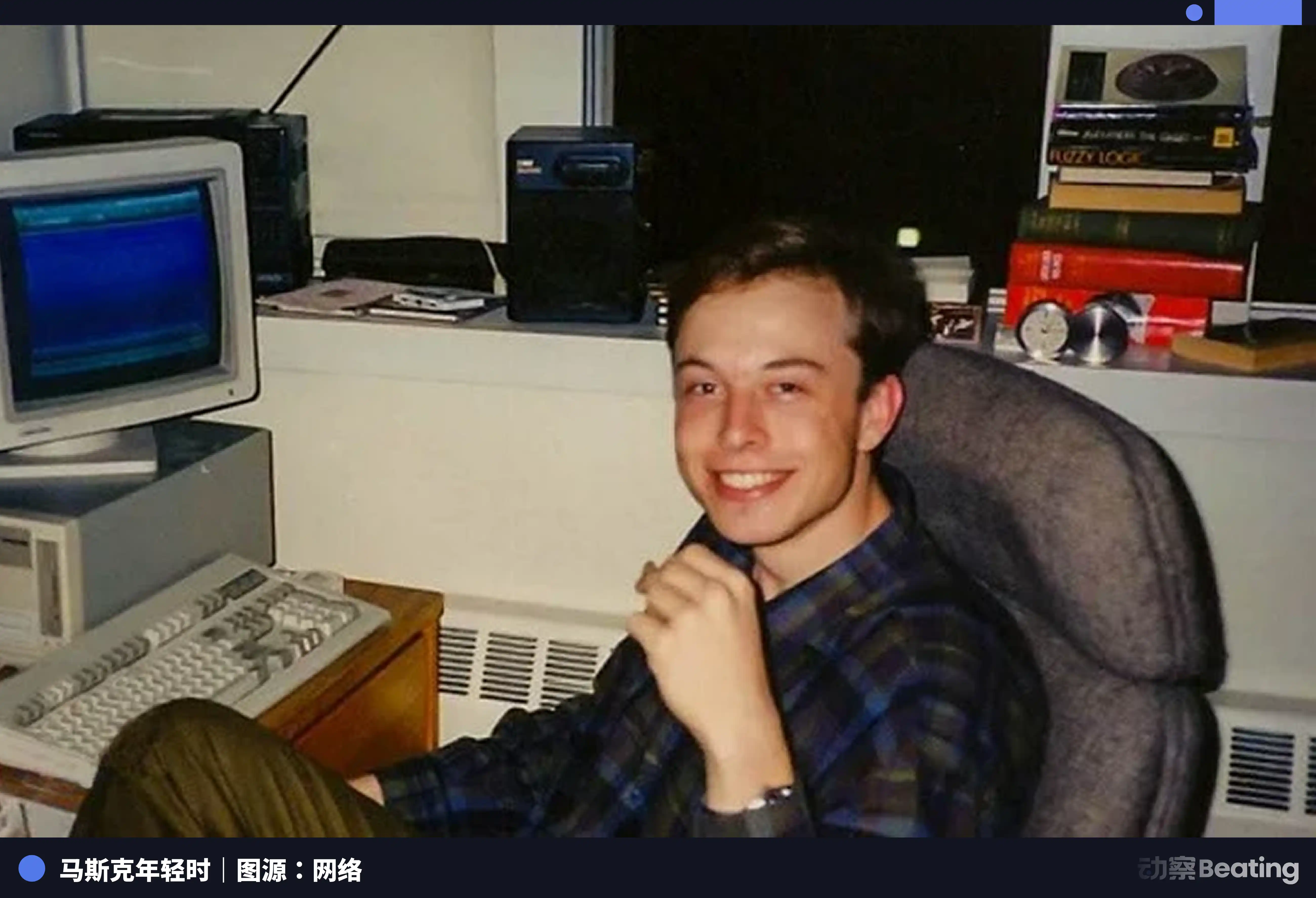
"I like working. I like solving problems that make people's lives better," Musk attempted to portray himself as a hardworking, pragmatic, down-to-earth doer, not someone who indulges in pleasure.
Then, he pivoted sharply, steering the conversation towards the terrifying crisis of AI.
Musk predicted that AI would become smarter than any human as soon as next year. He analogized developing AI to raising a "very intelligent child." Once the child grows up, you simply cannot control it; you can only pray that the values you instilled from a young age will stick.
"We don't want a Terminator outcome," Musk warned, his tone grave.
To prove that his motivation for founding OpenAI was completely pure, Musk recounted his falling out with Google co-founder Larry Page.
Musk recalled that they were once close friends, often having long conversations about the future of AI. But during one exchange, Musk discovered that Page was utterly unconcerned about the risks of an AI losing control. When Musk insisted that human survival must be the top priority, Page allegedly retorted, accusing Musk of being a "speciesist."
This term is exceptionally jarring in the context of Silicon Valley. It implies that, in the eyes of tech fanatics like Page, silicon-based AI life is equal to carbon-based human life, perhaps even representing a more advanced direction for evolution.
Musk told the jury that he found Page to be crazy at that moment. It was this extreme fear that Google might monopolize and misuse AI technology that prompted him to fund the creation of OpenAI as a "counterforce to Google."
This narrative was logically coherent and tragic, but not without its flaws.
While sternly declaring in court, "If we allow them to steal a charity, the entire foundation of American charitable giving will be destroyed," it was exposed that Musk's own foundation had failed to meet the IRS's minimum 5% charitable payout requirement for four consecutive years, with a funding gap of $421 million for 2023 alone.
Even more contradictory is the fact that a man who deeply fears AI destroying humanity quickly assembled a team in 2023 to found the entirely for-profit xAI, deeply integrating it into his own business empire.
Is Musk's talk of "benefiting all humanity" a pure conviction, or a perfect excuse to attack competitors? And what do the private diaries and emails presented as evidence reveal about the true inner worlds of these Silicon Valley titans?
Diaries, Text Messages, and the Dark Side of Silicon Valley
If the opening statements were carefully choreographed PR pieces, the internal communications presented as exhibits tore off Silicon Valley's polished facade.
Musk's side delivered a knockout blow: the private diary of OpenAI President Greg Brockman from 2017. The diary bluntly stated: "Our plan: If only we could make that money. We kept thinking, maybe we should just convert to for-profit."
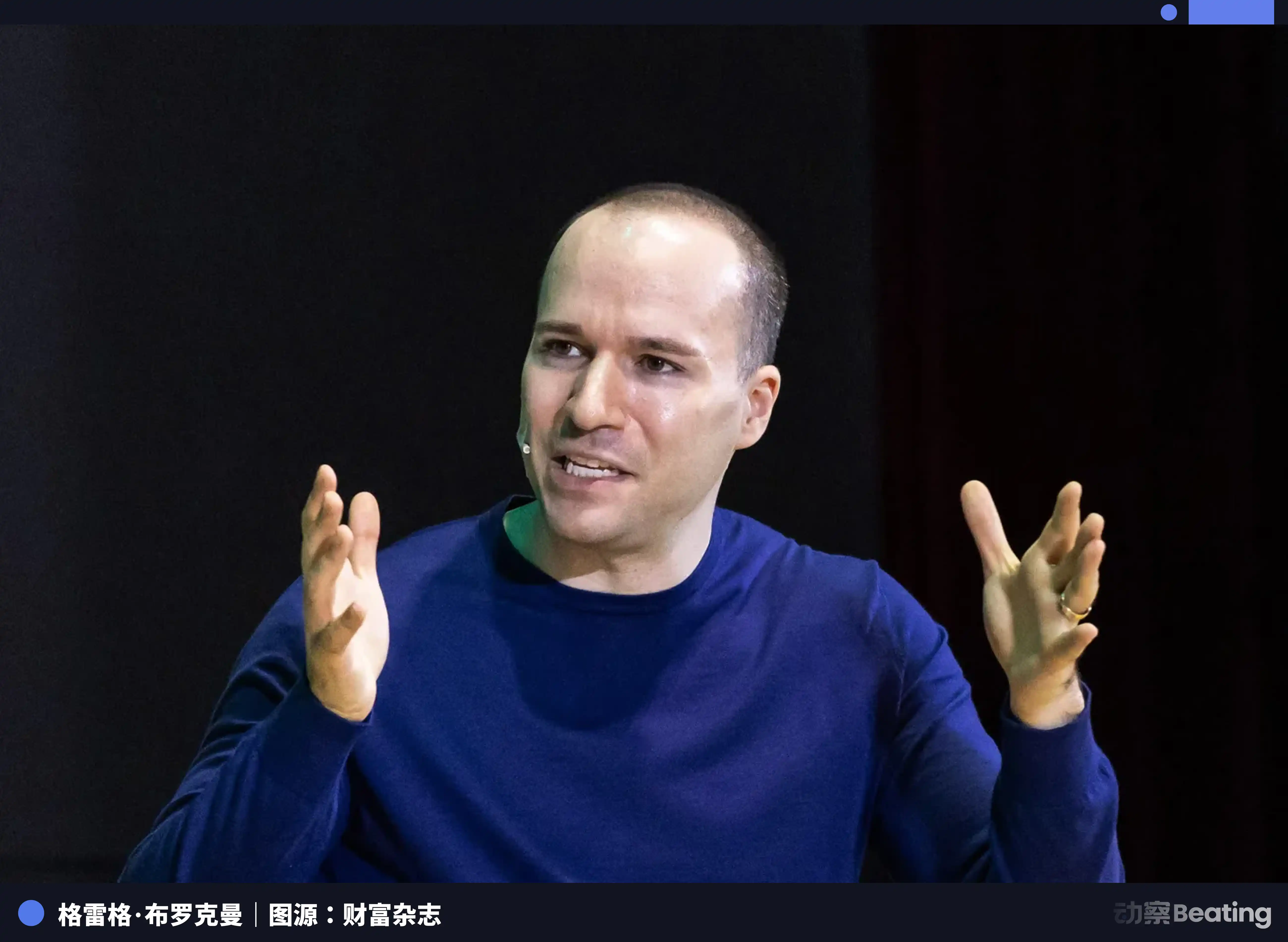
And an even more naked question: "Financially, what can make me $1 billion?"
These recorded words, in black and white, instantly shattered the carefully cultivated "pure research, no return" non-profit halo of early OpenAI. It proved that five years before the ChatGPT boom, OpenAI's core management was already scheming about how to monetize the technology and join the billionaire club.
OpenAI's counterattack was equally lethal. They presented email records from 2017 showing Musk demanding sole control. The records showed Musk was far from a generous donor who simply provided funds and asked no questions; he demanded absolute control over the potential for-profit OpenAI.
When Altman and Brockman refused to hand over control, Musk's attitude did a complete 180. In a 2018 email, Musk pessimistically asserted that OpenAI's probability of success was zero. He then stormed off, not only leaving the board but also halting further financial support.
OpenAI's lawyers tried to use this evidence to argue to the jury that Musk's departure had nothing to do with moral purity or disagreement over principles. He left purely because he thought the project was a dead end and he couldn't get control, so he cut his losses.
In this bare-knuckle brawl of mutual accusations, one name stands out: Shivon Zilis.
She is a former OpenAI board member, an executive at Musk's brain-computer interface company Neuralink, and also the mother of three of Musk's children. In text messages disclosed during the trial, Zilis had proactively asked Musk if she should remain inside OpenAI to keep information flowing. Based on this, OpenAI's side accused her of acting as an informant planted by Musk during her tenure as a director.
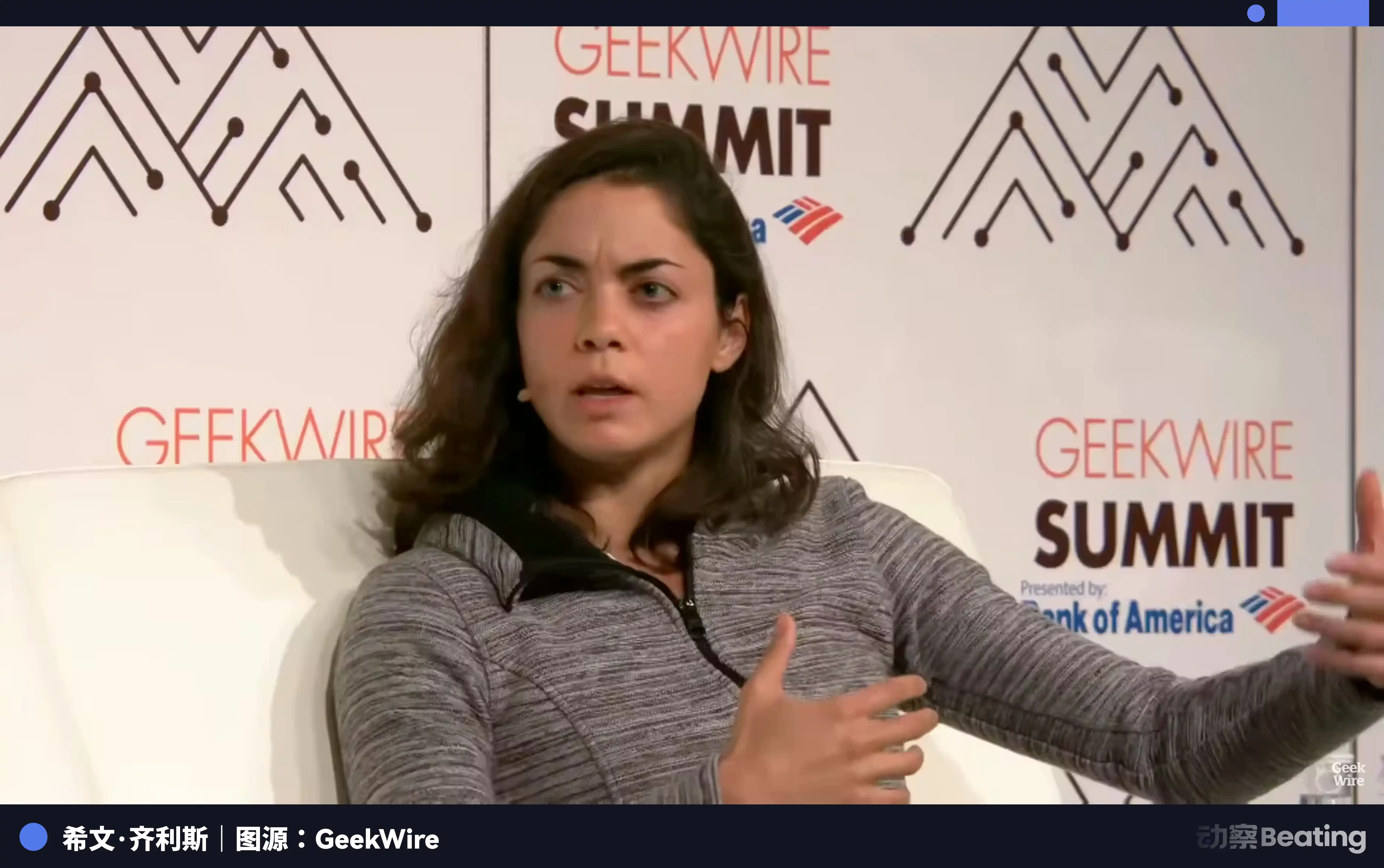
This tangled web of intertwined interests, personnel infiltration, and emotional entanglements surges beneath the lofty rhetoric of changing the world, revealing a deep-seated desire for money, power, and control.
As the shell of idealism is peeled away layer by layer by the court's evidence, will the outcome of this lawsuit truly change the direction of the AI industry?
Questions for the Future
Regardless of the final verdict, there are no real winners in this trial.
If Musk wins and OpenAI is forced to dismantle its complex "capped profit" structure and revert to a pure non-profit, its $852 billion valuation and the IPO plans set for late 2026 would vanish into thin air. But this wouldn’t stop the frenzied flow of capital into the AI sector; Musk's own xAI would simply lose its most formidable competitor.
If OpenAI wins, the legal loophole for transitioning from a non-profit to a for-profit will be torn wide open. This means future tech entrepreneurs could easily masquerade as a "non-profit," leveraging tax exemptions and public moral goodwill to attract top talent and early-stage funding at a low cost. Once a technological breakthrough is achieved, they could then privatize and commercialize it through complex equity design.
Viewed within the long history of technological revolution, this trial becomes just another footnote in the annals of commercial competition. It echoes the late 19th-century battle between Edison and Tesla over AC vs. DC current, or the late 20th-century browser wars between Microsoft and Netscape. The titans are arguing in court over current rules for distributing profits.
Winning or losing in a courtroom cannot change the objective laws of technological evolution. What truly determines humanity's fate is not the carefully crafted arguments of lawyers, but the GPU clusters humming away in data centers around the globe, devouring electricity and data day and night.
The scene returns to the Oakland courtroom. Midway through the trial, the courtroom's microphones and display screens suddenly suffered a brief technical glitch. Judge Rogers quipped helplessly, "What can I say? We're funded by the federal government."
Laughter rippled through the courtroom. This self-deprecating interlude formed a starkly absurd contrast with the Silicon Valley titans, who routinely speak of hundreds of billions in claims, the survival of humanity, and Terminator-style crises. In this surreal reality, the AI juggernaut is mercilessly rolling over established business ethics and legal boundaries, heading towards a future that even its creators cannot foresee.


