SK Hynix: Can It Double Again?


- Core View: Aletheia Capital has raised its target price for SK Hynix to approximately $3,500, significantly surpassing the mainstream consensus range of $2,000-$2,520. This aggressive pricing hinges on betting that AI-driven HBM shortages, DRAM price increases, and free cash flow improvements will persist through 2027, challenging the market's cyclical discount for the memory sector.
- Key Elements:
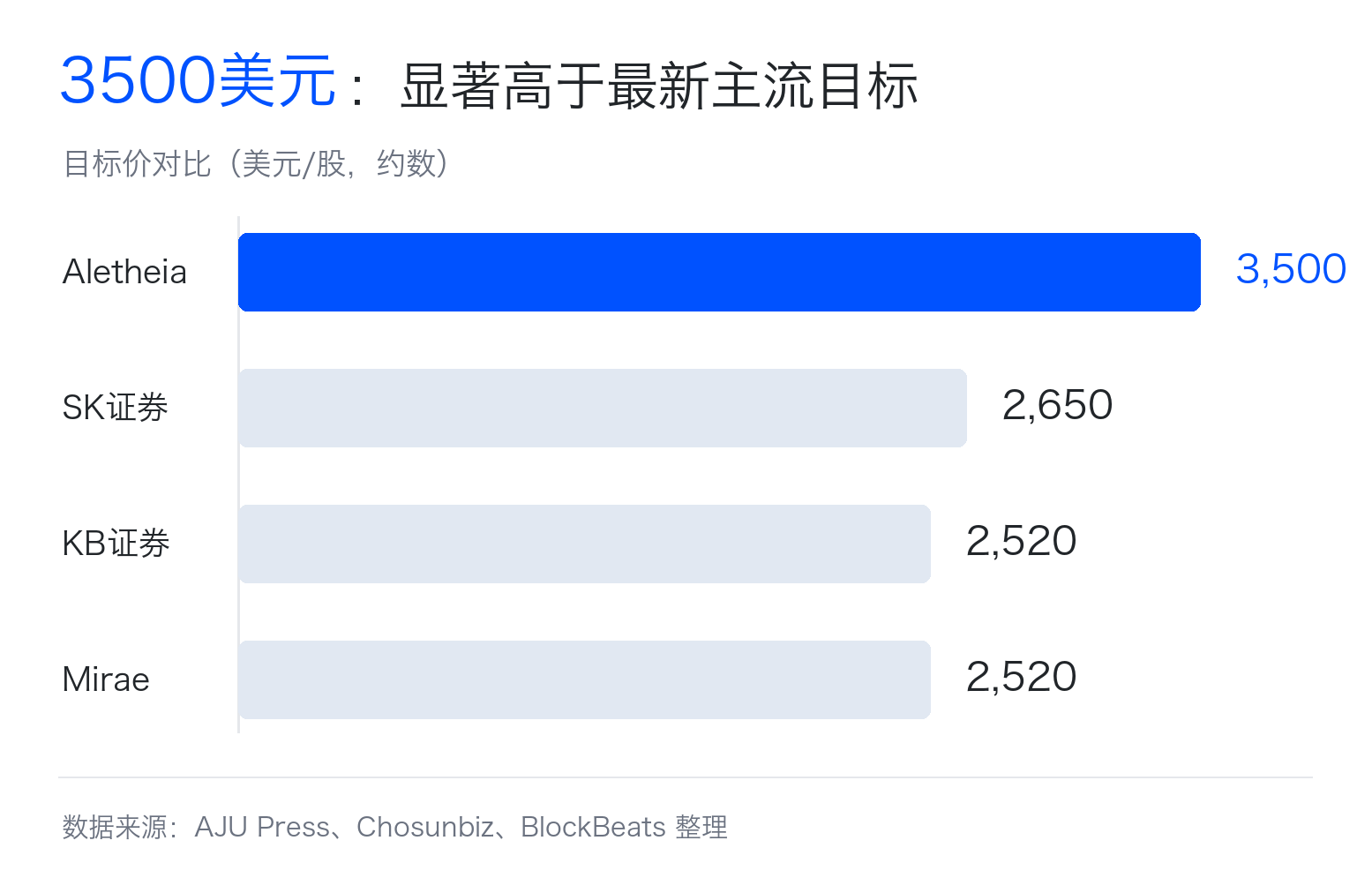
- Aletheia's target of $3,500 is notably higher than SK Securities' (~$2,000) and Mirae Asset's (~$2,520). The core difference lies in projections for the 2027 profit base and valuation multiples.
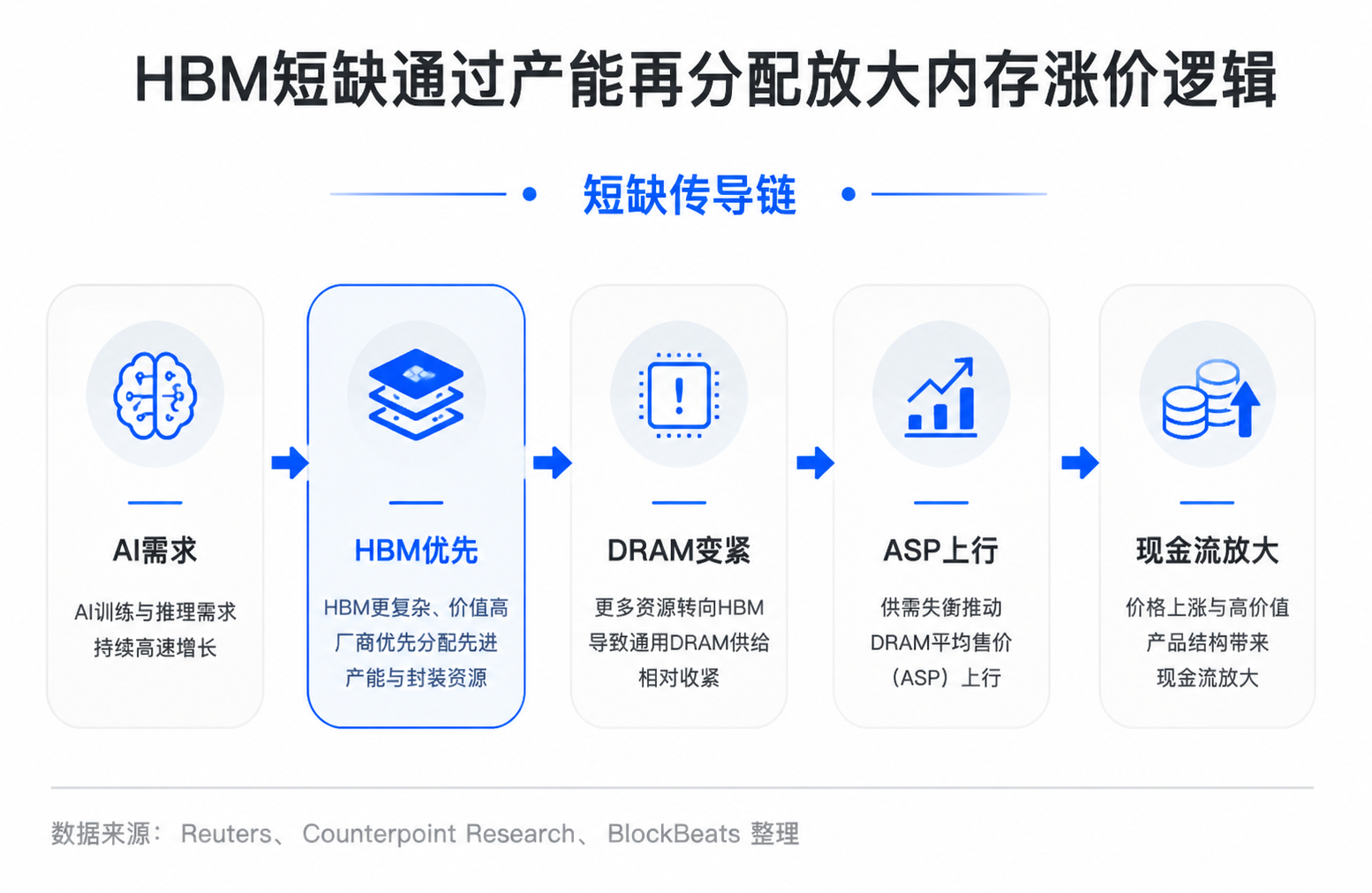
- HBM is not just a high-growth product; its high capacity consumption squeezes general DRAM supply, elevating the industry-wide memory price curve and acting as a profit amplifier for SK Hynix.
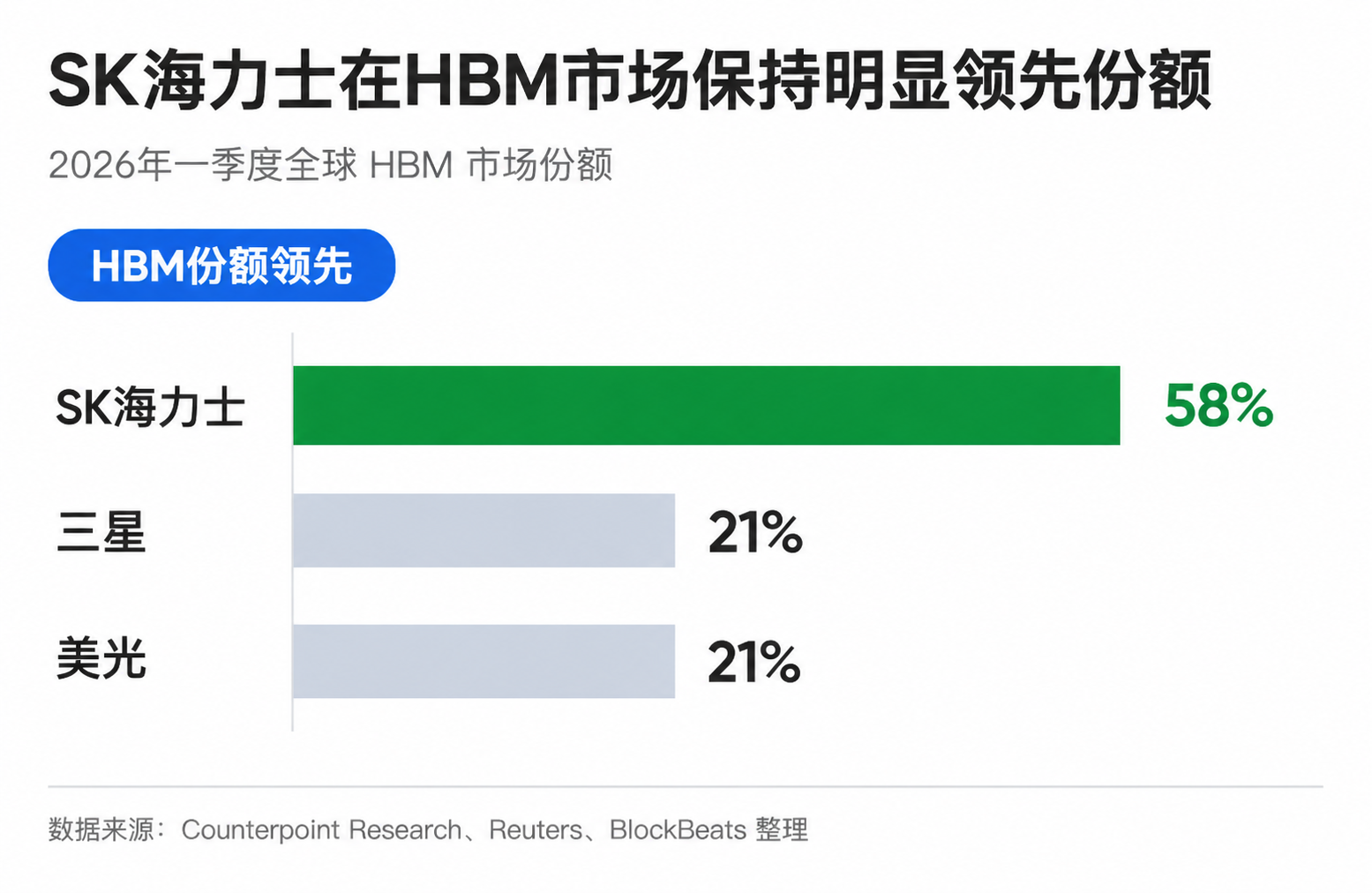
- Leveraging its first-mover advantage, SK Hynix is projected to hold approximately 58% of the global HBM market share in Q1 2026. It has also completed supply discussions with key clients for 2026, securing a supply chain premium.
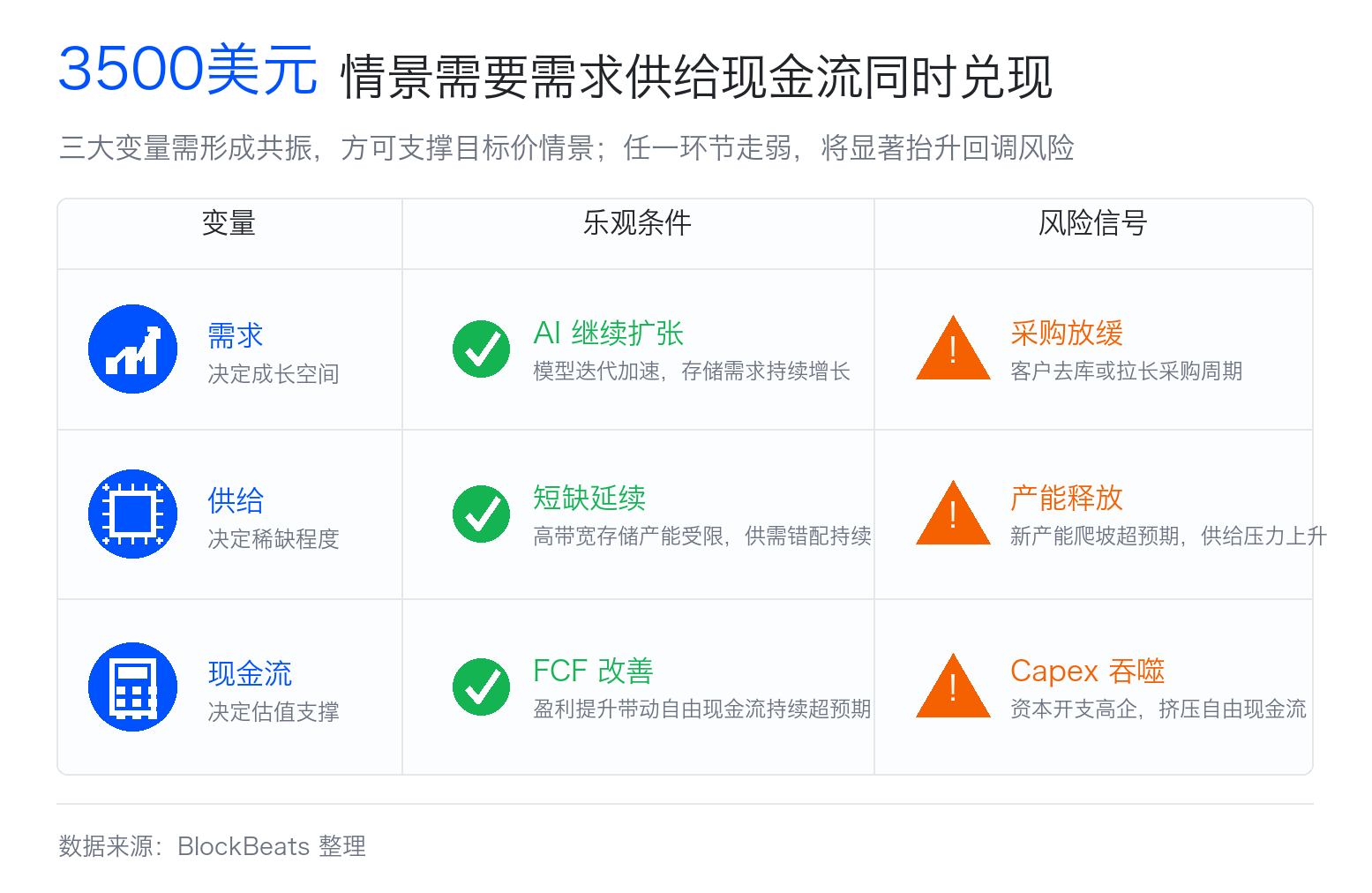
- Achieving the $3,500 target price requires strong HBM pricing, stable DRAM prices, maintained market share leadership, and controlled capital expenditures—all simultaneously. Failure in any single component could turn this into an optimistic extrapolation of the high cycle.
- Although mainstream institutions have raised their targets to the $2,000-$2,520 range, they still apply a cyclical discount, refraining from extrapolating the tight supply conditions as the new normal.
TL;DR
- Aletheia Capital raised its SK Hynix target price to approximately $3,500, significantly higher than the target range of about $2,000 to $2,520 set by most mainstream institutions.
- At the core of this pricing divergence is whether the market is willing to believe that the HBM shortage, DRAM price increases, and free cash flow improvements can extend into 2027.
- Related tickers: SK Hynix, Samsung Electronics, Micron Technology, NVIDIA supply chain.
In a report released today, Aletheia Capital raised its target price for SK Hynix to approximately $3,500, directly pushing it far above the target range of mainstream institutions.
Aletheia Capital is an independent research and investment advisory firm headquartered in Hong Kong, serving institutional investors and covering sectors such as Asian tech hardware. In contrast, publicly reported target prices are about $2,000 from SK Securities and around $2,520 from Mirae Asset and KB Securities.
What makes the $3,500 target price truly aggressive is not just that it's more optimistic than mainstream institutions, but that it requires the market to believe three things will happen simultaneously: a persistent shortage of HBM (high-bandwidth memory for AI chips), continued price increases for general DRAM, and AI server demand sustaining storage industry momentum and free cash flow through 2027.
The market already acknowledges that SK Hynix deserves a revaluation; the disagreement lies in how far that revaluation can go. Most mainstream institutions still apply a cyclical industry discount, while the $3,500 target pulls out an optimistic tail scenario after the revaluation.
The Divergence Lies in the 2027 Profit Base
The $3,500 target is most easily misread as a simple valuation issue: as long as SK Hynix is given a 10x multiple on 2027 earnings or free cash flow, the stock price can continue to rise. The difficulty isn't the multiple itself, but how much the company can actually earn and how much cash it can retain by 2027.
Memory company profits are highly volatile. During an upturn, prices rise, inventories are digested, and profit margins expand rapidly. During a downturn, new capacity comes online, customers cut orders, prices fall, and profitability can quickly reverse. This is precisely why the market has historically assigned lower valuation multiples to memory companies.
Even with SK Hynix's current strong earnings, publicly reported 12-month forward P/E ratios are still in the single-digit range. The market isn't blind to AI; rather, it's concerned that this upturn will ultimately be priced at cyclical highs.
The aggressive target price attributed to Aletheia challenges this cyclical discount. According to public accounts, it bets that AI hardware demand will continue to drive up HBM and DRAM prices, and that SK Hynix's 2027 free cash flow will significantly exceed most current expectations, allowing for a repricing based on a higher base.
The problem is that the $3,500 target requires multiple variables to align favorably simultaneously: HBM prices remain strong, general DRAM prices aren't undercut by new capacity, SK Hynix maintains its leading market share, capital expenditures don't consume too much cash, and the market is willing to give a cyclical stock a decent multiple. If any one of these falls short, the target price shifts from a structural revaluation to an extrapolation of a cyclical peak.
HBM Transmits the Shortage to General Memory
HBM can change SK Hynix's pricing logic because it's not a minor upgrade to general memory, but a core component alongside AI accelerators. No matter how fast an AI chip computes, if data can't be fed in fast enough, overall performance bottlenecks. HBM's role is to provide a high-bandwidth data channel for GPUs or AI accelerators.
For ordinary investors, think of it this way: the GPU is the engine, and HBM is the high-speed fuel injection system. The more powerful the engine, the greater the demands on the fuel system. In the past, the market traded AI hardware by looking at NVIDIA GPUs first. Now, the market is increasingly realizing that whether GPUs can ship and AI servers can be built also depends on HBM supply.
Furthermore, HBM supply isn't something that can be ramped up immediately by slightly modifying general DRAM production lines. It requires more complex stacking, packaging, and customer qualification, and it consumes more wafer area and advanced packaging resources. Producing an equivalent capacity of HBM typically consumes more production resources than general DRAM.
This spillover effect impacts general memory. As manufacturers allocate more resources to HBM production, the supply of DRAM used in general servers, PCs, and mobile phones tightens, potentially pushing up average DRAM selling prices.
This is precisely the core mechanism that makes the ~$3,500 target price plausible. If HBM were just a fast-growing niche product, it would only boost a fraction of SK Hynix's revenue. But if HBM simultaneously constrains general DRAM supply and raises the entire memory pricing curve, it becomes an amplifier for the company's overall profit margins and cash flow.
However, an HBM shortage can only lengthen the cycle, not eliminate it. Samsung and Micron are catching up, and SK Hynix itself will also expand capacity. New fabs and packaging capabilities will eventually be reflected on the supply side. The core of the debate isn't whether the shortage exists, but how long it will last and how long prices can remain strong.
SK Hynix Captures the Most Direct Supply Chain Premium
SK Hynix has become the core of this revaluation not just because it's a memory company, but because it's the fastest mover in HBM. According to Reuters citing Counterpoint data, SK Hynix held roughly 58% of the global HBM market share in Q1 2026, compared to Samsung's and Micron's ~21% each. Reuters has also identified it as a key supplier in NVIDIA's HBM supply chain.
This leadership is highly valuable in the semiconductor supply chain. AI chip makers choose HBM based not only on price but also on performance, yield, stability, and qualification progress. The earlier a company passes customer qualification, the easier it enters the next-generation product collaboration window. The earlier it secures orders, the better its position in capacity planning and price negotiations.
This is precisely why supply-demand visibility for 2026 has garnered attention. According to a Reuters report from 2025, SK Hynix had already completed discussions with key customers regarding HBM supply for 2026. Multiple industry reports also suggest the HBM shortage could extend into 2027. For investors, 2026 performance, at least, isn't purely based on narratives.
SK Hynix's benefits aren't limited to HBM revenue alone. Because HBM consumes more capacity, general DRAM supply gets squeezed, potentially benefiting the traditional memory business through higher prices. AI demand first enters the financial statements through HBM, then influences the entire DRAM pricing landscape through capacity reallocation.
This explains why institutional target prices have been consistently revised upward. Even without accepting the extreme scenario of $3,500, target prices in the ~$2,000 to $2,520 range indicate that mainstream institutions are already recalculating SK Hynix's earnings elasticity for 2026-2027. The difference is that most still apply a discount appropriate for cyclical industries, without extrapolating the post-2027 tightness directly into a new normal.
A Double Requires Three Things to Materialize
The ~$3,500 target price attributed to Aletheia essentially bets on continued strong demand, continued tight supply, and continued cash flow outperformance. Over the past two years, cloud vendors and AI companies have massively purchased GPUs, driving an HBM demand explosion. Going forward, the market needs to see if inference, enterprise AI, and custom ASICs can further expand memory consumption, preventing demand from stagnating at training clusters.
On the supply side, it cannot loosen too quickly either. The tightness in 2026 is relatively understandable because of lags in capacity, packaging, and customer qualification. By 2027, however, new capacity and products from Samsung, SK Hynix, and Micron will gradually enter the market. If new supply exceeds expectations, HBM price increases might narrow, and general DRAM will face renewed pressure.
Ultimately, it comes down to cash flow. During an industry upcycle, memory companies often increase capital expenditure to expand capacity, upgrade processes, and invest in advanced packaging. Profit growth doesn't necessarily all stay on the books. If SK Hynix needs larger investments to maintain its lead, the free cash flow base upon which the $3,500 target relies will be eroded.
Therefore, this target price is best viewed as an optimistic scenario, not a validated market consensus. 2027 is the true observation window: as long as HBM prices, DRAM averages, supply rhythm, and free cash flow remain favorable, the market will believe AI is raising the profit center of the memory industry. If prices soften first, supply arrives first, and cash flow is consumed by capital expenditure, the ~$3,500 figure will shift from a revaluation anchor to a sentiment peak.