






Hotter than SpaceX, Oversubscribed by Over 6,586 Times. What is the Meme Power Behind Liuliumei (06658.HK)?


- Core Thesis: Liuliumei, due to its stock abbreviation homophone "LLM" (Large Language Model), surged over 186% on its first day of trading in Hong Kong, reflecting the trend of "stock Meme-ification," where investors speculate based on sentiment, puns, and thematic relevance rather than fundamentals.
- Key Elements:
- The public offering tranche of Liuliumei's IPO saw an oversubscription of 6,586.73 times, but the allotment rate was as low as 1.5%, indicating frenzied retail sentiment; the international placement received only 2.64 times subscription, signaling a lack of institutional interest.
- The primary drivers for the stock surge were its "LLM" abbreviation piggybacking on the heat of AI concept stocks like Zhipu AI, coupled with the market's speculative habit regarding "Meme stocks" (e.g., GameStop, Sichuan Data Security), which is unrelated to the company's fundamentals.
- Global stock markets are entering an era of "attention economy," where emotional factors like homophones, acronyms, and celebrity mentions (e.g., Trump assassination attempt causing abnormal volatility in Goertek) are increasingly dominating short-term stock price movements.
- Such Meme stocks present a dual nature of wealth-creation effects and speculative risks, including pump-and-dump schemes and sentiment marketing. Investors need to be cautious about the risks of buying into a hype.
Original|Odaily(@OdailyChina)
Author|Wenser(@wenser2010 )

"Are you okay? Okay? Then eat some Liuliumei!"
Once upon a time, a catchy ad line from Yang Mi made Liuliumei a household name. Today, after decades of accumulation, the company behind it finally went public on the Hong Kong Stock Exchange, becoming the "first listed green plum snack stock." Its IPO price was HKD 43.58, opening at HKD 95, surging about 116% from the offer price of HKD 42; it hit an intraday high of HKD 127.50, up over 190%; and has since retreated to HKD 125, still up over 186%.
But contrary to many expectations, Liuliumei's (06658.HK) stock surge wasn't driven by a revival of "new consumption, new retail, new snacks." Instead, its stock abbreviation LLM rode the coattails of the "Large Language Model" (LLM) hype, catching the tailwind from Zhipu AI's (02513.HK) 45% surge today.
Many are calling it a "genuine AI large language model stock," and a flood of hot money has followed. Whether acknowledged or not, perhaps global stock markets are entering an era of "stock memetics."
A New Era for Global Markets: When Stocks Collide with Memes
Let's start with the fundamentals of Liuliumei's IPO: This marks the company's fourth attempt to enter the capital market.
In 2019, Liuliumei failed to list on the A-share market. In 2025, it submitted applications to the HKEX twice, both of which lapsed. It wasn't until May 21 this year, after a third application update and a name change from "Liuliumei Group Co., Ltd." to "Liuliumei Co., Ltd.," that it successfully listed in less than a month. It seems that sometimes, a name can be a bit of a mystical factor.
According to the company's allocation results, the public offering portion of this IPO was oversubscribed approximately 6586.73 times. The final number of publicly offered shares was 1.1465 million, accounting for about 10% of the total global offering. It received approximately 180,500 valid applications, of which about 11,465 were accepted, and the allotment rate for subscribing one board lot was only 1.5%, indicating extremely fierce competition. For the international placement, Liuliumei was oversubscribed 2.64 times, with the final number of international offering shares being 10.3176 million, accounting for 90% of the total offered shares. By comparison, the popularity of Liuliumei's IPO has surpassed that of Mixue Bingcheng, the "first listed milk tea chain stock," which went public on the Hong Kong Stock Exchange in March last year. Mixue's public offering oversubscription rate was 5258.21 times.
In other words, institutions were not optimistic, but held 90% of the shares; retail investors were optimistic but held only 10%. The main driver of the opening rally stemmed more from the free-market "dance of retail investors and market makers" in the open market. This is precisely the power of a "meme stock" — converting the attention attracted by a meme into buying pressure in the capital market.
Some netizens even compared Liuliumei's opening performance to SpaceX's, noting that its market rally was far more impressive.
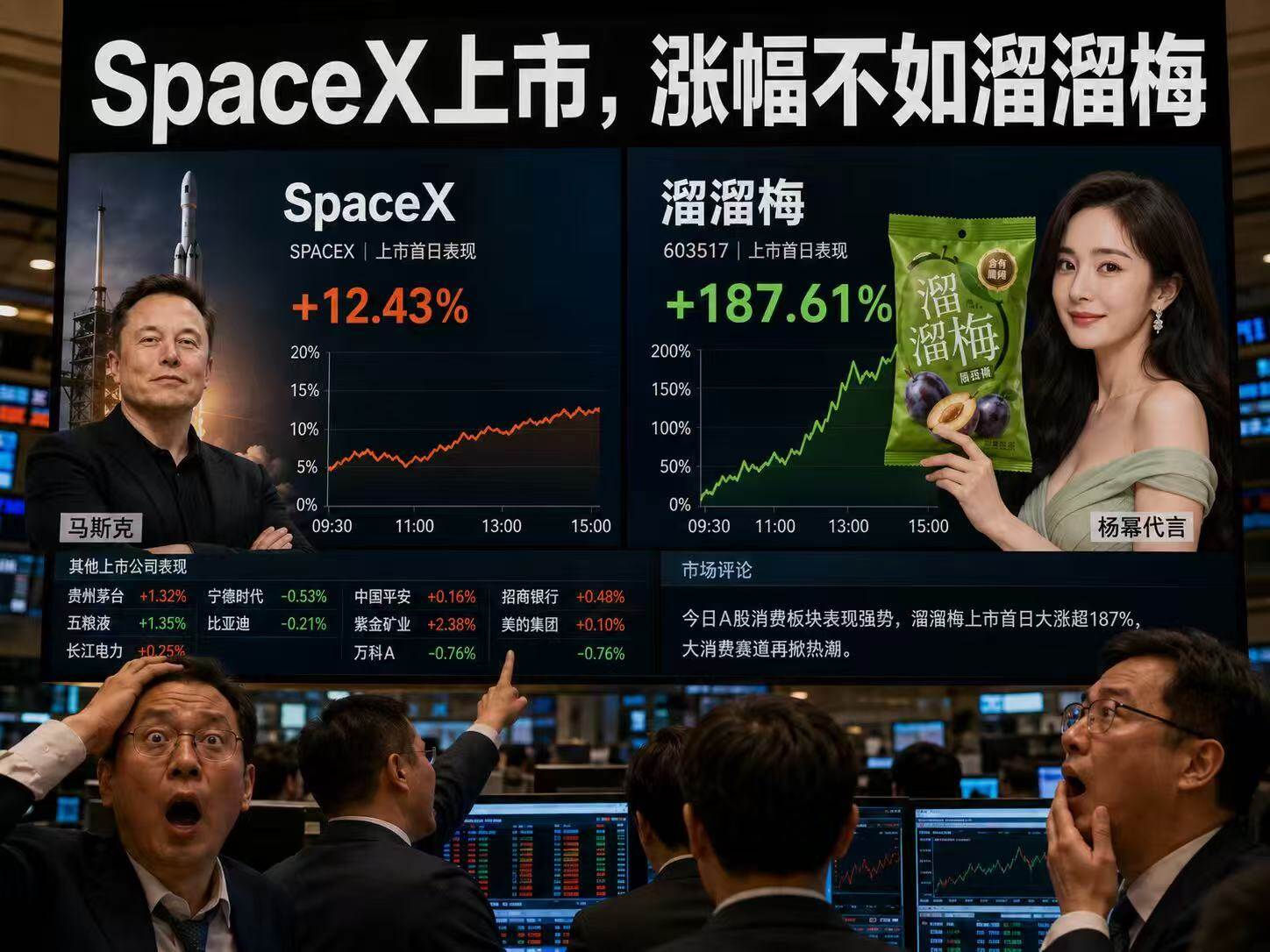
It's worth noting that "meme stocks" are not a new term; they are an objective category of stocks in major capital markets like the US, Hong Kong, and A-shares. However, the "era of stock memetics" is a definitive trend emerging in the last 1-2 years, driven partly by factors related to the crypto market.
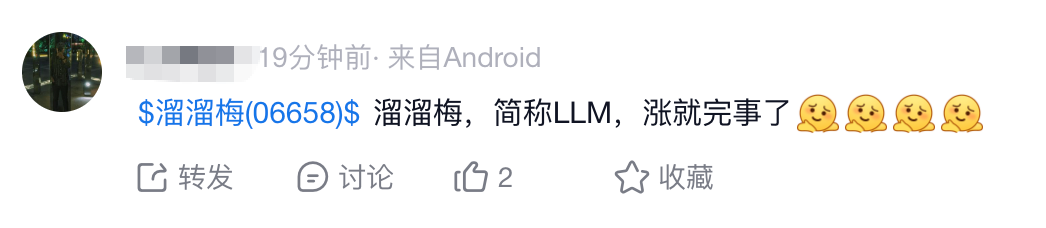
The earliest meme stocks are lost to history, so let's focus on some representative ones from recent years.
GameStop in 2021 was perhaps the starting point for many people's initiation into US meme stocks. Led by well-known bulls like Roaring Kitty, global retail investors united to short-squeeze Wall Street institutional capital, causing many brokerage platforms and exchanges to halt trading. More recently, rumors of GameStop acquiring eBay caused market tremors and a temporary price surge.
Tesla and SpaceX, which recently completed its IPO, have also been considered meme stocks. These companies and their stocks are strongly correlated and deeply tied to the highly controversial "world's first trillionaire," Elon Musk. Before strong performance evidence emerged from their respective businesses, they were viewed as "narrative-driven companies with sky-high valuations."
Just before Trump won the 2024 US presidential election, the A-share market showed unusual activity, with "Chuan Da Zhi Sheng" frequently appearing on platform hotlists and even hitting its daily limit multiple times. Earlier, during Trump's campaign, an assassination attempt left his ear scratched by glass from a shattered bullet, causing shares of Goertek (a homophone for "cutting ear") to rise intraday.
Last year, amid deteriorating Sino-Japanese relations, the military stock Furuisi (a homophone for "capturing Japan") saw its price surge due to this patriotic pun, hitting its daily limit for 8 consecutive trading days and accumulating gains of over 100%, making it one of the short-term "demon stocks" in the A-share market.
Like the fragmented attention and concentrated emotions of the crypto market, today's capital markets have turned stocks, sectors, and themes that can spark widespread discussion and attention into "focal points" that churn funds and liquidity.
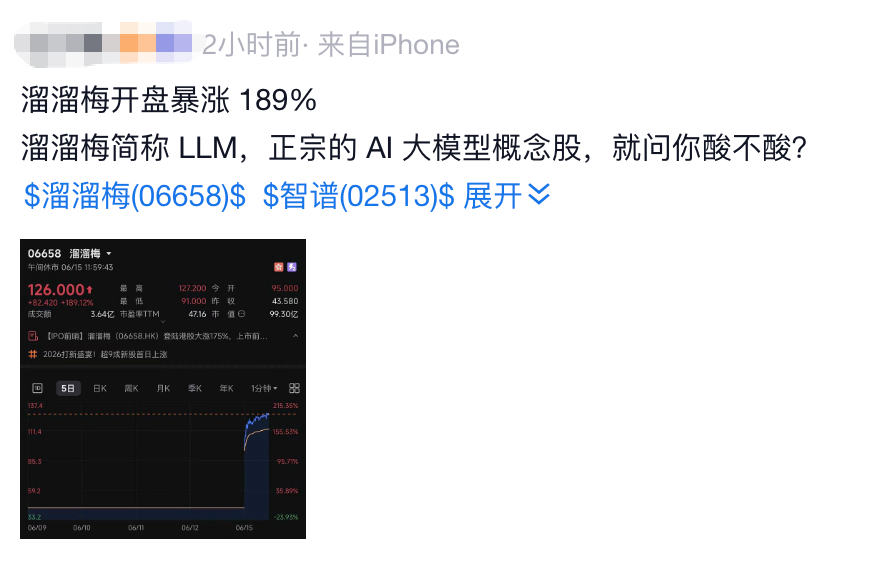
Liuliumei's surge is a prime example of the "stock memetics" era.
The Dawn of Stock Memetics: Puns, Abbreviations, and the AI Windfall
As OpenAI and Anthropic's valuations soar towards the trillion-dollar mark, companies and stocks related to the AI industry chain, such as optics, communications, materials, and computing power, have entered a period of explosive growth:
- Nvidia became the first company ever to surpass a $5 trillion market cap.
- Micron, SanDisk, and others hit new highs, with institutions raising their price targets.
- SK Hynix and Samsung Electronics' price fluctuations significantly influence the South Korean KOSPI index.
- Nvidia's founder's comment about being "bullish on Marvell becoming a trillion-dollar giant" caused Marvell (MRVL) stock to rise immediately.
- Due to a translation error, a new investor "Serenity" mentioning Innolight was misread as Innolight (a different laser company), whose stock price surged 10% on an influx of HKD 300 million in hot money.
In the tidal wave of "stock memetics," associating with AI, riding the "Large Language Model" wave, having a homophonic connection to a hot subject, or being mentioned by a celebrity have all become reasons for market attention. It's the ultimate stage where attention and capital coalesce.
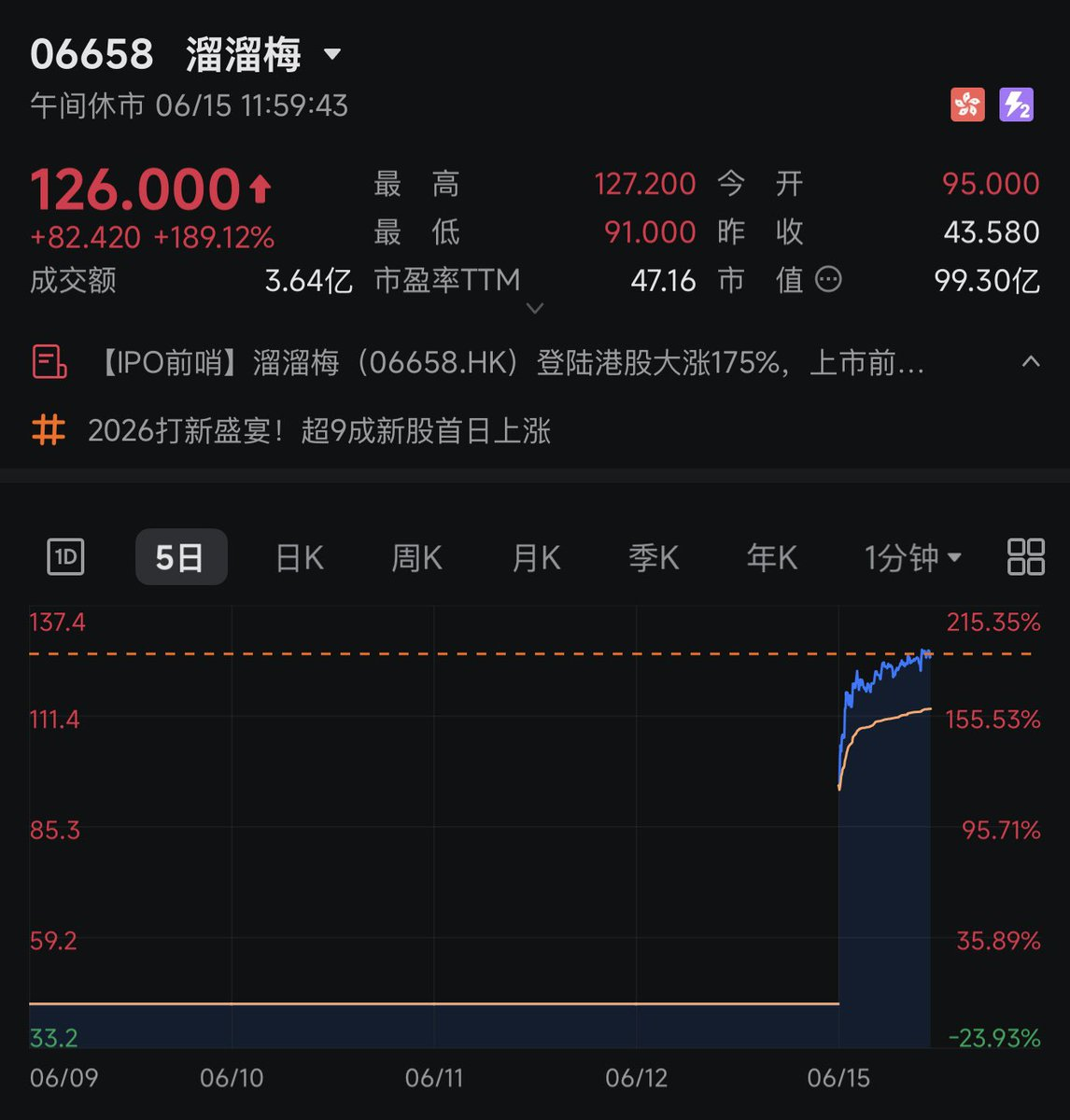
"Trump-era stocks," "US government concept stocks," "TACO trade beneficiaries" — these are all related manifestations of this industry trend. This is also a common gameplay in the "attention-intensive industry" that crypto has long championed — the meme coin sector.
Of course, the capital markets are different, the rules are different, and the scale of funds and liquidity is incomparable to the crypto market. After all, compared to the trading volumes of the US, Hong Kong, A-share, Japanese, and Korean stock markets, the crypto market's total volume of under $3 trillion seems somewhat insignificant.
Upon its listing, SpaceX immediately ranked among the top 10 global asset classes. In contrast, BTC has fallen to 17th place on that list. The comparison on a numerical level is brutally stark — decades of painstaking development in the crypto industry can't match the market capitalization of a single company's IPO.
Now, the emergence and proliferation of meme stocks might have become an industry trend. The earlier case of Joyoung launching a product based on the "Hakimi North-South Mung Bean" meme and seeing its stock price rise illustrates a key point: for today's youth and investor groups, investment targets that trigger emotional swings, capture market attention, and stir up liquidity are more worthy of buying.
Even if this fleeting pursuit of emotion is just a temporary fad, for many, "if you can't beat them, join them" seems the better choice. Of course, objectively speaking, the advent of meme stocks doesn't just bring benefits like wealth effects or industrial booms. Sometimes, this process is also accompanied by negative phenomena like pump-and-dump schemes, one-sided harvesting, and emotional marketing.
Just like Liuliumei's opening surge, some have angrily condemned it as a manipulation to "harvest retail investors." Others speculate that Liuliumei joining the "Stock Connect" program, allowing A-share market funds to buy in, might have driven the price up. The truth is likely multi-dimensional and complex. For us, perhaps the only thing to do is to ride this wave of the times and seek our own path to wealth.


