After Dell's Surge, Which AI Infrastructure Stock Could Be Next?


- Core Thesis: Dell raised its full-year guidance due to stronger-than-expected demand for AI data center construction, sending its stock price up about 39% in after-hours trading. This indicates that the AI investment boom is shifting from chips and models to hardware infrastructure like servers and storage, making hardware manufacturers direct beneficiaries of the AI capital expenditure cycle.
- Key Points:
- Q1 revenue jumped 88% year-over-year to $43.84 billion, significantly beating analyst expectations; adjusted earnings per share came in at $4.86, above the consensus estimate of $2.94.
- The company raised its fiscal 2027 AI server revenue forecast from $50 billion to approximately $60 billion and lifted its full-year revenue outlook to between $165 billion and $169 billion.
- Revenue for the Infrastructure Solutions Group surged 181%, while PC sales grew 17%, highlighting the AI server business as the core growth engine.
- The U.S. Department of Defense awarded a Dell unit a five-year contract worth $9.7 billion, reinforcing the certainty of order growth.
- Tech giants such as Alphabet and Amazon are planning to invest over $700 billion in AI infrastructure, driving continued demand for equipment.
Original Title: Dell lifts forecasts as AI data center buildout fuels demand, shares soar
Original Author: Jaspreet Singh, Reuters
Original Translation Editor: Peggy
Editor's Note: Dell's stock surge after hours reflects more than just a quarterly earnings beat; the market is repricing the value of the AI infrastructure chain.
Driven by demand from AI data center construction, Dell's first-quarter revenue surged 88% year-over-year to $43.84 billion. The company also raised its fiscal 2027 AI server revenue forecast from $50 billion to approximately $60 billion. Following the earnings release, the company's shares rose about 39% in after-hours trading.
This indicates that the AI boom is propagating from models and chips further downstream to servers, memory, storage, and data center equipment. As tech giants like Alphabet and Amazon continue to ramp up AI infrastructure investment, hardware manufacturers like Dell, with their supply chain capabilities, customer relationships, and delivery capacity, are becoming direct beneficiaries in the new cycle of AI capital expenditure.
Simultaneously, a $9.7 billion contract awarded to a Dell division by the U.S. Department of Defense has further strengthened market expectations for order growth and revenue visibility. For investors, Dell's rally suggests the AI trade is moving into a more tangible, downstream phase: companies capable of transforming chips into deliverable data center infrastructure may be poised for the next round of valuation re-rating.
The following is the original text:
TL;DR
Dell raised its full-year AI server revenue forecast to $60 billion
The company issued second-quarter guidance above market expectations
First-quarter revenue increased 88% year-over-year to $43.84 billion
Company shares rose about 39% in after-hours trading
A Dell division secured a $9.7 billion contract from the U.S. Department of Defense
Dell Technologies raised its full-year revenue and profit forecasts on Thursday, signaling that customer data center expansions are fueling demand for its AI-optimized servers, which are equipped with Nvidia's advanced chips.
Dell's clients include CoreWeave, Honeywell International, and Samsung Electronics. Following the earnings announcement, the company's shares rose about 39% in after-hours trading.
U.S. tech giants, including Alphabet and Amazon, plan to invest over $700 billion in AI infrastructure this year, which will boost demand for servers and data center equipment from suppliers like Dell and Super Micro Computer.
The strong results demonstrate that Dell has become one of the biggest beneficiaries of the generative AI boom. The company has navigated the memory chip shortage effectively by raising prices and adjusting its supply chain.
"We feel like we're repricing almost every day," Dell Chief Operating Officer Jeff Clarke said on a conference call. "I'm sure customers feel that pressure as well. Unfortunately, given the inflationary environment we're in right now, I don't see that changing."
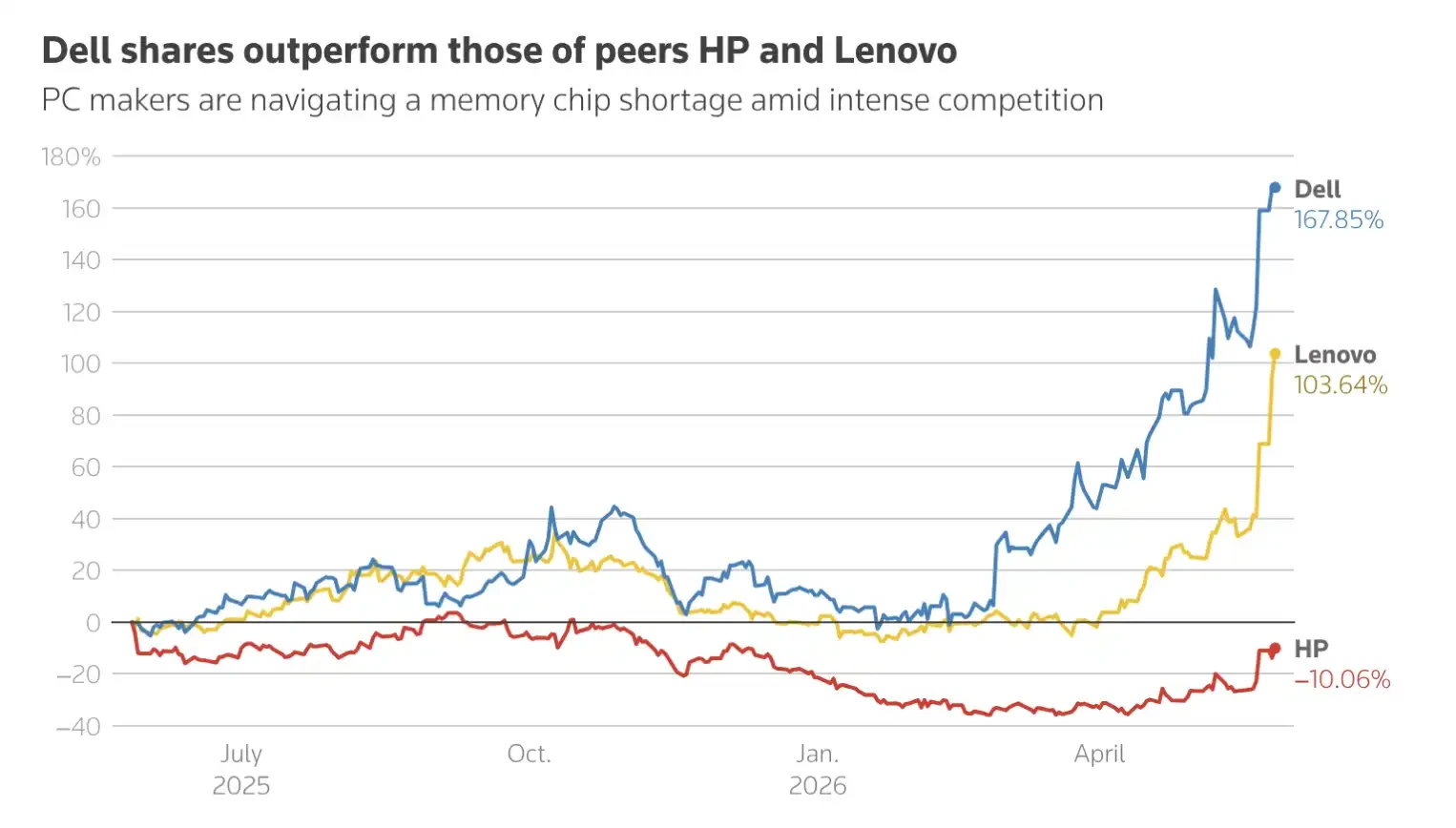
Dell said it now expects AI server revenue for fiscal 2027 to be around $60 billion, up from a previous forecast of $50 billion.
The company also raised its full-year revenue forecast to between $165 billion and $169 billion, a significant increase from its prior projection of $138 billion to $142 billion.
Additionally, Dell raised its full-year adjusted earnings per share forecast to $17.90, up from the previous $12.90.
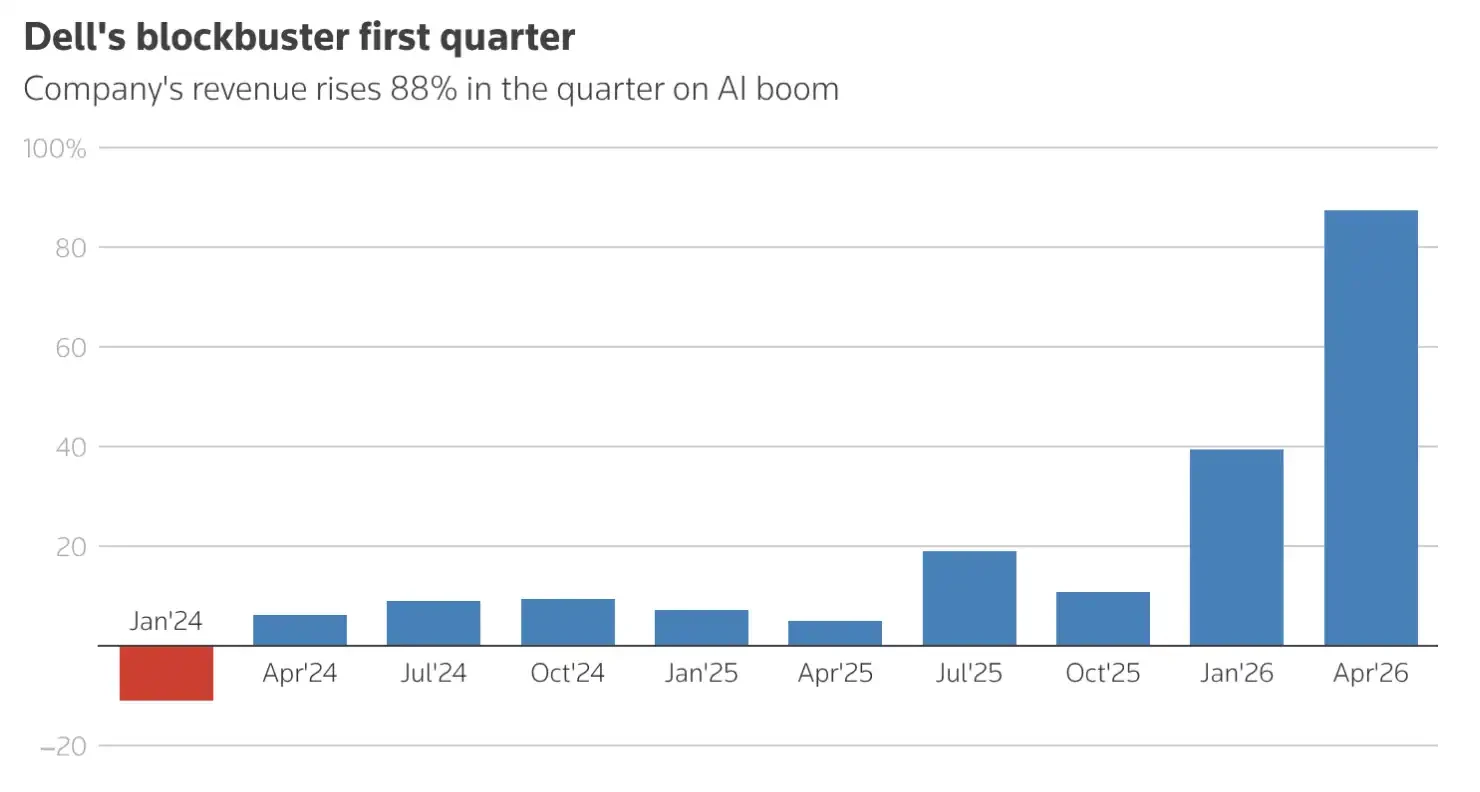
In the first quarter, Dell's revenue jumped 88% year-over-year to $43.84 billion, significantly exceeding the average analyst estimate of $35.43 billion compiled by LSEG. Adjusted earnings per share were $4.86, also above the market consensus of $2.94.
"Dell is in a more favorable position compared to its competitors due to its scale advantages, supplier relationships, and ability to prioritize allocation, which helped it gain market share during the memory shortage," said Melissa Otto, head of research at S&P Global Visible Alpha.
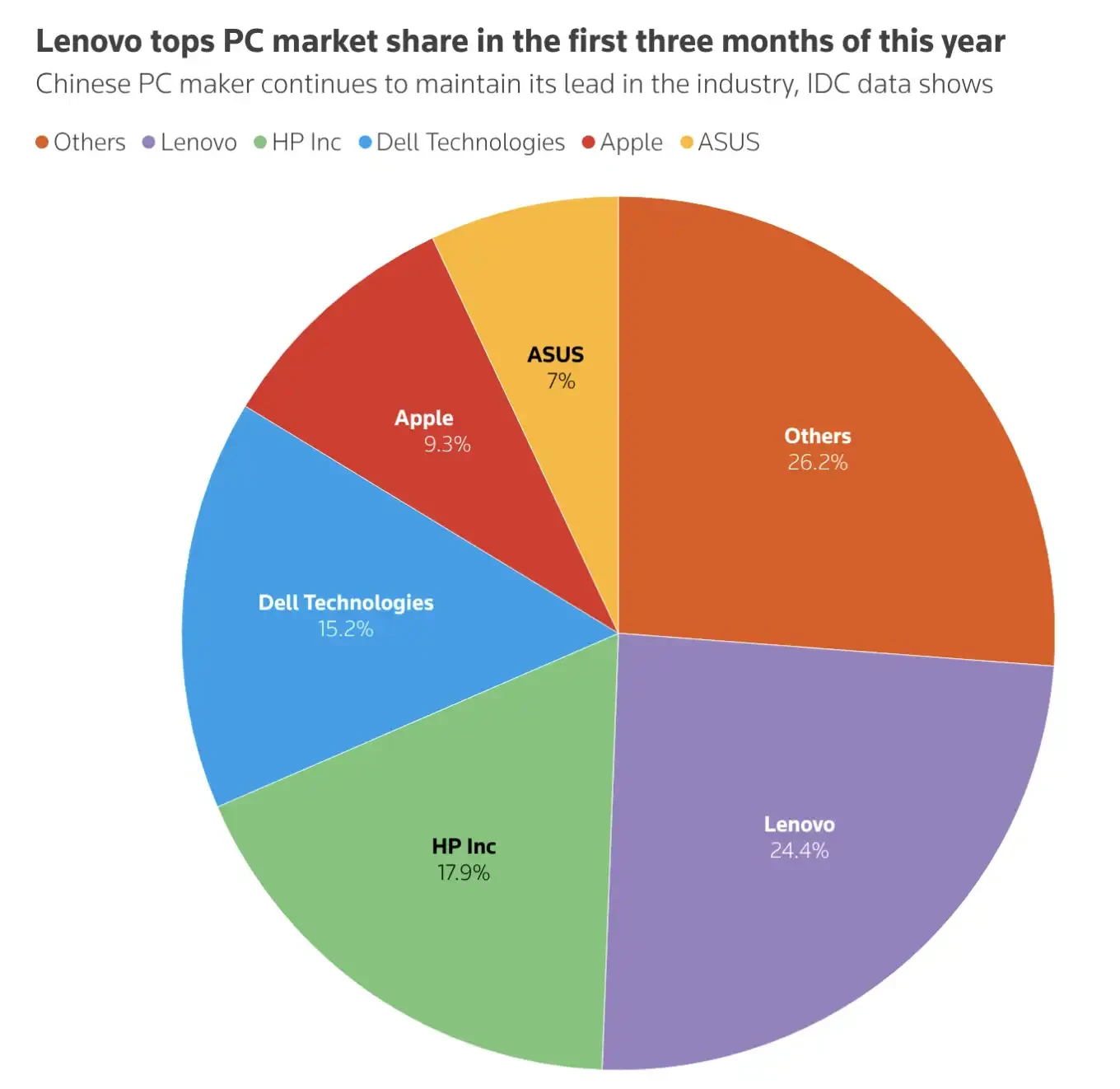
Quarterly revenue for Dell's Infrastructure Solutions Group, which includes storage, software, and server businesses, grew 181%. Meanwhile, sales in the Client Solutions Group, which houses the PC business, rose 17%.
The company also issued second-quarter revenue and adjusted earnings per share guidance that exceeded market expectations.
On Wednesday, a division of Dell was awarded a five-year contract worth $9.7 billion by the U.S. Department of Defense to help manage Microsoft software licenses.