Epstein's Hand Reached into Bitcoin


- Core Viewpoint: Roger Ver's "Bitcoin Hijacking Theory" posits that Bitcoin's development, influenced by external funding (e.g., Epstein) and commercial interests (e.g., Blockstream), along with potential intervention by the U.S. government, shifted from its original "peer-to-peer electronic cash" purpose to a "digital gold" speculative narrative, deviating from Satoshi Nakamoto's original vision.
- Key Elements:
- In his 2024 book, Roger Ver systematically elaborated this theory, pointing out that after the Bitcoin Foundation's collapse, Bitcoin Core developers accepted funding from the MIT Media Lab (which received donations from Epstein), affecting development independence.
- He argues that companies like Blockstream, driven by commercial interests (e.g., sidechain/Layer2 business), supported the small-block solution, leading to mainnet congestion, expensive transactions, and hindering Bitcoin's adoption as a payment tool.
- He cites a 1996 NSA paper on anonymous electronic cash, suggesting the U.S. government may have been monitoring or attempting to influence Bitcoin early on to maintain dollar hegemony.
- This theory has regained attention due to recent Epstein file disclosures. Although Ver himself was arrested on tax fraud charges, his views (e.g., Bitcoin being "co-opted" by traditional finance) still find some resonance within the industry, such as with Peter Thiel.
- Historical data shows that companies like Valve and Stripe, which once supported direct Bitcoin payments, eventually withdrew support due to transaction efficiency and cost issues, highlighting its challenges as a daily currency.
The recently released Epstein files contain a considerable amount of insider information related to Bitcoin and even the broader cryptocurrency industry. We previously provided a relatively comprehensive overview in our article, "Reviewing the Epstein Files, Discovering He Met Satoshi Nakamoto".
Today, we will discuss the "Bitcoin Hijacking Theory," which has regained attention due to the Epstein files.
What is the "Bitcoin Hijacking Theory"?
The "Bitcoin Hijacking Theory" originates from Roger Ver's 2024 book, "Hijacking Bitcoin: The Hidden History of BTC." This is the first time he has systematically elaborated on this theory using a book title and its full length.
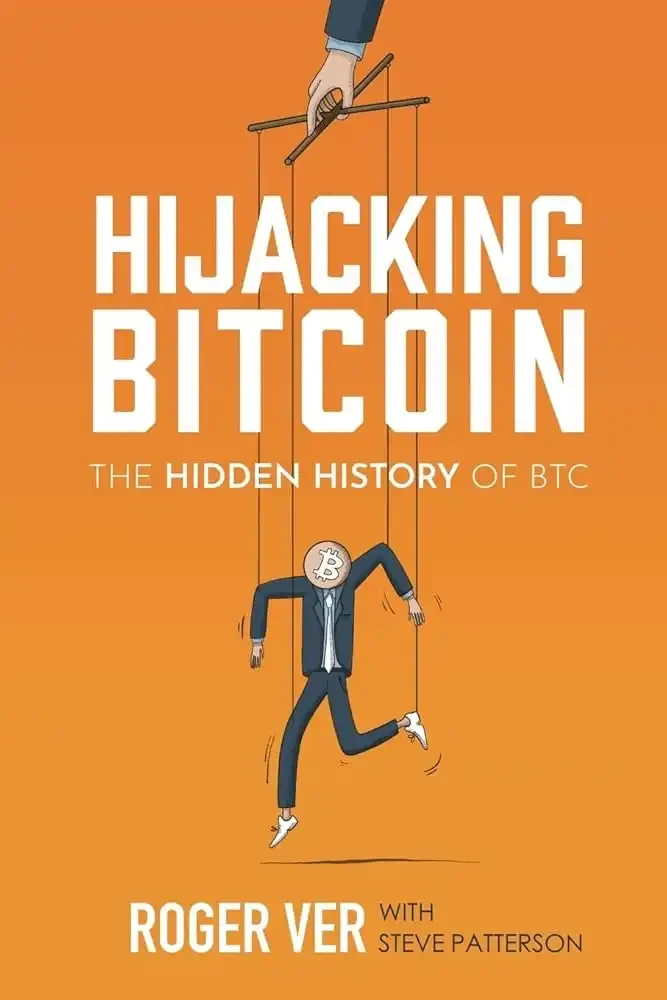
The "Bitcoin Hijacking Theory" posits that Bitcoin's transformation from a "peer-to-peer electronic cash" system designed to challenge fiat currency hegemony into a speculative "digital gold" asset represents a departure from Satoshi Nakamoto's original mission. It is argued to be the result of deliberate influence by various conspiracies—internal commercial interests, external funding from figures like Epstein, and the U.S. government's efforts to maintain dollar hegemony. In essence, "Bitcoin's development was not natural and organic; it was meant to be a currency freely chosen by people worldwide but ultimately became dominated by the digital gold store-of-value narrative."
Roger Ver argues that Bitcoin Core developers' decisions were not independent but influenced by external funding. During 2014-2015, the collapse of the Bitcoin Foundation left Bitcoin Core developers without stable salaries. The MIT Media Lab's Digital Currency Initiative (DCI) began paying salaries to several Bitcoin Core developers, leading three—Gavin Andresen, Wladimir van der Laan, and Cory Fields—to decide to join the MIT Media Lab.
This information has resurfaced as a hot topic due to the latest Epstein file disclosures, but it was actually public knowledge as early as 2019 when MIT admitted to receiving donations from Epstein. Roger Ver incorporated this into his book as evidence of external funding influencing Bitcoin's development, although the developers receiving MIT funding were unaware the donations came from Epstein.
He also mentions another Bitcoin Core developer, Adam Back, whose company Blockstream received funding from VCs like a16z. He suggests that mainnet congestion benefited Blockstream's business, implying commercial interests also contributed to Bitcoin's "hijacking" to serve the sidechain/Bitcoin Layer 2 narrative.
During the "Blocksize War," Bitcoin Core developers insisted on small blocks and rejected various scaling proposals. They publicly supported and pursued full blocks, high fees, and transaction congestion, viewing it as a "natural state of market competition" and a long-term replacement for block rewards to incentivize miners and maintain network security.
Roger Ver, however, believes this ultimately made Bitcoin transactions slow, expensive, and unreliable, hindering its mass adoption as a world currency and daily payment tool. He wanted Bitcoin to truly enter ordinary people's lives—for buying coffee, clothes, watching sports games...
"If blocks are always full, it's as absurd as Starbucks intentionally selling out of coffee every day. Block space is a consumable good; miners should meet the real usage demands of Bitcoin."
He further points out that due to the small block limit, Bitcoin was forced to turn to custodial wallets or solutions like the Lightning Network. Bitcoin was relegated to a settlement layer, ceasing to be electronic cash. Moreover, whether through custodial wallets or sidechains/Bitcoin Layer 2, users would ultimately still rely on centralized services.
Large-block proponents lost the "Blocksize War." Roger Ver shifted to BCH, which later split into BSV and XEC. However, did the small-block proponents "win"? At the time, they argued that large blocks would drastically increase the cost of running a Bitcoin full node, making it gradually impossible for ordinary people to do so, leading to Bitcoin's validation power being controlled by governments, mining pools, large corporations, and data centers.
Yet, years later, government influence over Bitcoin continues to grow. The envisioned path of "decentralization first, payments can come later" has not developed ideally. Companies like Valve, Stripe, Dell, and Expedia once supported direct Bitcoin payments (without converting to fiat for settlement) but eventually canceled support due to long transaction times, high fees, or low user willingness.
Today, few discuss Bitcoin's attributes as a world currency; the digital gold narrative is mainstream.
He then goes further, mentioning U.S. government involvement, pointing out that U.S. intelligence agencies were interested in similar technologies even before Bitcoin's birth, citing the NSA's 1996 paper "How to Make a Mint: The Cryptography of Anonymous Electronic Cash" as evidence. This paper describes an anonymous digital currency system similar to Bitcoin. He suggests this indicates the U.S. government may have monitored or attempted to influence Bitcoin's development from an early stage to prevent it from truly threatening the national monetary system.
In a 2024 interview, he further stated:
"As early as 2011, we already knew the CIA was interested in Bitcoin because they had contacted Bitcoin developers to inquire about it. When most people hadn't even heard of Bitcoin, the CIA was already studying it.
But around 2012, someone calling himself 'John Dylan' claimed to be an intelligence agency member and spent over $10,000 (a considerable sum at the time) to produce propaganda content trying to mislead people into believing that keeping Bitcoin blocks small would make it more decentralized. This was completely contrary to the facts and to Bitcoin creator Satoshi Nakamoto's original design. Bitcoin's design philosophy and usage were not like that initially. At first, nobody believed this propaganda.
Later, the Bitcoin community experienced a massive wave of censorship. Anonymous individuals took control of all major Bitcoin discussion platforms. Overnight, any speech advocating for Bitcoin's use as money was banned. They censored anyone trying to promote Bitcoin for payments. Initially, people could see through these operations, but as new users joined, they were indoctrinated with these censored ideas."
The Credibility of the "Bitcoin Hijacking Theory"
Roger Ver is an influential early evangelist and builder in the crypto industry. He began investing in Bitcoin in early 2011, is the founder of Bitcoin.com, a co-founder of Ripple and Blockchain.com, and a seed investor in Kraken. He actively promoted Bitcoin and cryptocurrency-related startups in the early days. Already a millionaire before investing in Bitcoin, he still sold his Lamborghini to buy more Bitcoin, earning him the nickname "Bitcoin Jesus."
However, since the "Blocksize War," he has long criticized small-block advocates, Bitcoin Core developers, and Blockstream, consistently supporting BCH. Consequently, his statements are almost uniformly mocked within the Bitcoin community, with comments like "Roger is still making excuses for the war he lost in 2017; BCH is the real hijacking of Bitcoin."
It wasn't until 2024, with the publication of his new book, that he first integrated various elements—the "Blocksize War," Epstein's funding of Bitcoin Core developers, the NSA paper, and potential U.S. government censorship of large-block advocacy—into a complete "Bitcoin Hijacking Theory."
Approximately three weeks after the book's publication, he was arrested in Spain on tax fraud charges, with the U.S. subsequently requesting extradition. The U.S. Department of Justice charged him with eight counts, including mail fraud, tax evasion, and filing false tax returns, for failing to report taxes on approximately $240 million worth of Bitcoin sold in 2017 (causing the IRS at least $48 million in losses) and undervaluing his Bitcoin assets when renouncing U.S. citizenship in 2014. He faced up to 109 years in prison.
In subsequent interviews, Roger Ver claimed that exposing "the truth about Bitcoin's hijacking" and the U.S. government's role in it led to retaliation. However, the charges against him were filed months before the book's publication; the arrest was only made public and executed after the book was published.
In October 2025, he reached a deferred prosecution agreement with the U.S. Department of Justice. After paying approximately $49.9 million (taxes + penalties + interest), the case was dismissed.
In summary, he has a clear stance (supporting large blocks and BCH), and there is no direct evidence that his arrest was due to "exposing the U.S. government's deliberate effort to diminish Bitcoin from a currency to a speculative asset to maintain dollar hegemony." Yet, he persists in presenting his views despite misunderstanding and even attacks from the Bitcoin community, and his early contributions to Bitcoin cannot be erased. More importantly, his viewpoint that "Bitcoin has deviated from its original positioning, thereby diminishing its value" has actually garnered considerable recognition.
PayPal co-founder Peter Thiel explicitly stated in an interview last year that Bitcoin has strayed from its original goals of decentralization and rebellion against the system. It is no longer a revolutionary tool against the old system but has been "co-opted" by it, becoming part of the old system. Peter Thiel noted that FBI agents told him they prefer criminals to use Bitcoin over dollars, indicating Bitcoin has not achieved its intended anonymity and censorship resistance but has instead become an easier tool to trace. While Bitcoin ETFs have brought incremental capital to the market, they do not represent traditional finance bowing to cryptocurrency; on the contrary, Bitcoin has been "co-opted" by traditional finance. The free technology meant to disrupt fiat currency ultimately became a mainstream financial product.
The massive recent disclosure of Epstein files has caused a cognitive shock. This information was previously inaccessible and unimaginable, so when finally revealed, shocked and stunned people tend to "retaliate" by amplifying their imagination.
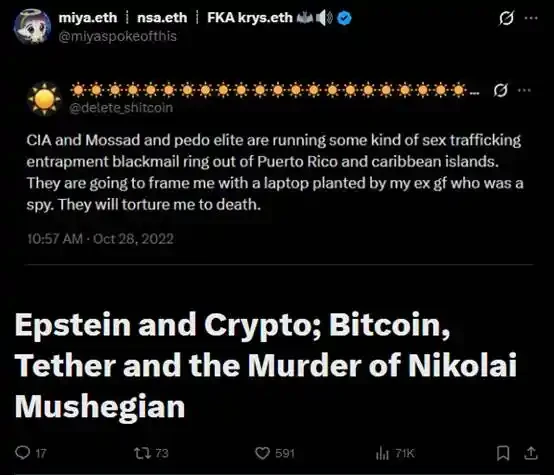
Roger Ver's "Bitcoin Hijacking Theory" has also regained attention, with some believing "he was right." @miyaspokeofthis even connected the death of Nikolai Mushegian (co-founder of MakerDAO, lead developer of WETH) with Epstein, Tether co-founder Brock Pierce, and the "Bitcoin Hijacking Theory," writing a complete article about it.
I am reluctant to label all of this a "conspiracy theory" because when a corner of the iceberg of evil is suddenly exposed to sunlight, no one can convince themselves that "human nature is inherently good, and I should not harbor more doubts."