






As crypto companies flock to the U.S. stock market, has the investment logic of the cryptocurrency circle changed?


In 2025, the crypto industry is gradually moving from the fringe to the mainstream, and the U.S. capital market has become the center stage of this craze. From the crypto fintech company Antalpha's stock price soaring 70% on its first day of listing and triggering a circuit breaker, to the world's leading exchange Coinbase about to enter the S&P 500, to the Bitcoin mining company American Bitcoin's backdoor listing triggering a stock price surge, a wave of crypto companies have landed on the Nasdaq through initial public offerings (IPOs) or backdoor listings, igniting investors' enthusiasm.
At the same time, Wall Street giants such as Morgan Stanley, Bank of America, and Royal Bank of Canada have smelled business opportunities and have made plans to try to get a piece of the pie against the backdrop of the Trump administration's strong support for the crypto industry. The latest forecast by crypto asset management company Bitwise has added fuel to the craze, claiming that 2025 will be the "year of crypto IPOs," with companies such as Circle and Kraken gearing up for the launch. This wave not only demonstrates the maturity of the crypto industry, but also injects fresh blood into the capital market.
Crypto companies are listed on the US stock market
Antalpha is a financial technology company focusing on crypto asset management, trading and infrastructure services. It officially debuted on the Nasdaq Global Market on May 14 with the stock code "ANTA". On the first day of listing, Antalpha's stock price soared 70% like a rocket, triggering the circuit breaker mechanism and eventually closing at the daily limit. This debut not only made investors eager to try, but also marked that Antalpha successfully stepped into the spotlight of traditional finance from a professional player in the crypto field.

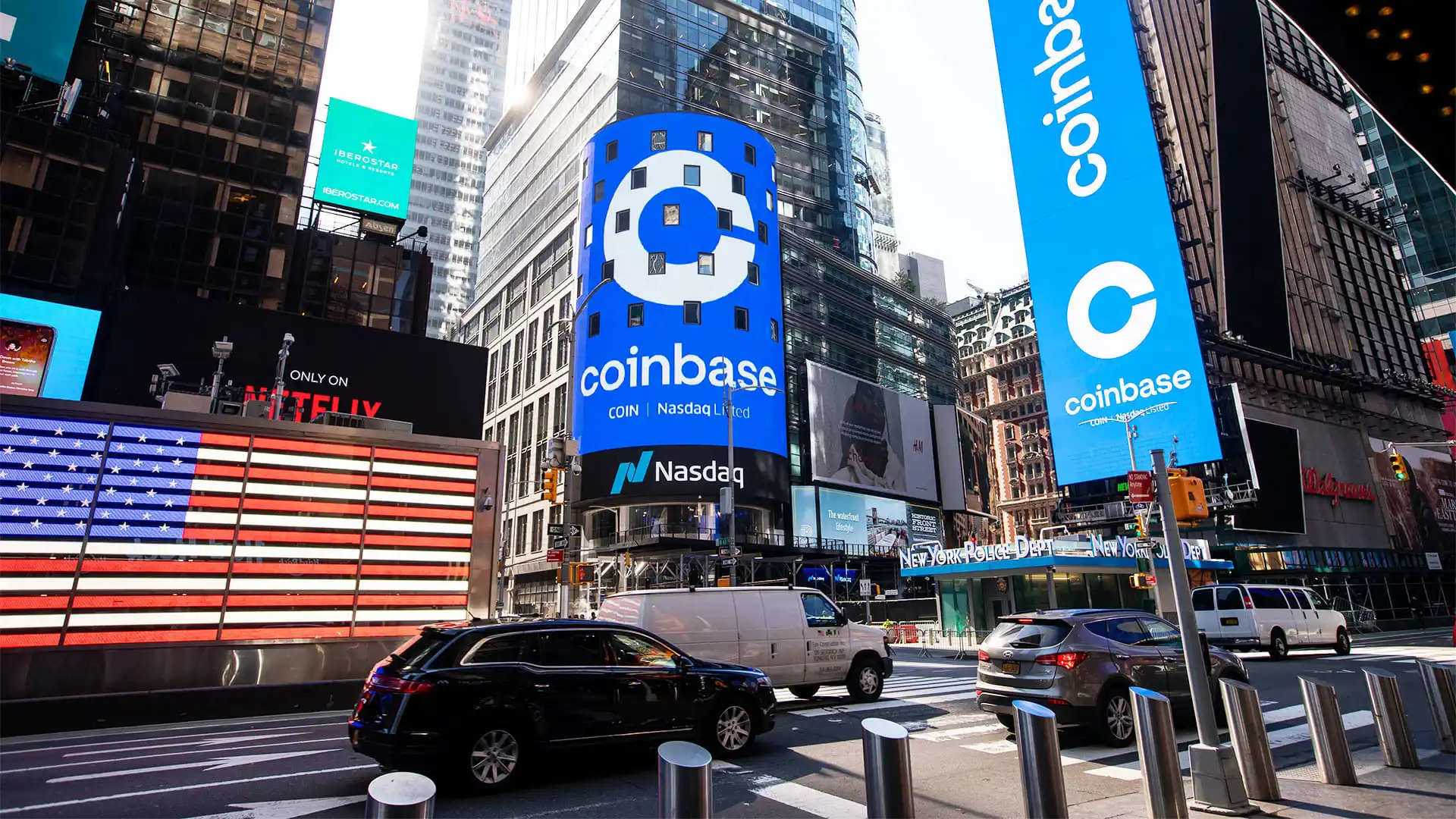
At the same time, Coinbase, the "big brother" of the crypto exchange, also ushered in a highlight moment. Coinbase is about to be included in the S&P 500 index, becoming the first crypto company to receive this honor. This is not only an affirmation of Coinbase, but also a milestone recognition of the mainstreaming process of the entire crypto industry. The S&P 500 brings together the top companies in the US economy, and Coinbase's inclusion means that crypto assets are being accepted by the traditional financial system. Market analysis agency QCP Capital excitedly predicted that this event may become a new "trigger point" in the crypto market, attracting more institutional investors to pour in and pushing the prices of assets such as Bitcoin to new highs. As early as 2021, Coinbase's direct listing was handled by top investment banks such as Goldman Sachs and JPMorgan Chase, and now its S&P 500 status has consolidated its position as the industry leader.
In addition to direct IPOs, backdoor listings have become the "fast lane" for many crypto companies to open the door to the public market. Among them, the case of American Bitcoin, Trump's son's Bitcoin mining company, is textbook-level. As a subsidiary of mining giant Hut 8, American Bitcoin plans to be listed on the Nasdaq with the stock code "ABTC" through a merger with Gryphon Digital Mining. The deal has attracted much attention due to the endorsement of the Trump family. As soon as the news came out, Gryphon Digital Mining's stock price soared 330%. Hut 8 CEO Asher Genoot boasted that this listing is "the next big step in accumulating Bitcoin at a low cost" and the goal is to build a "Bitcoin bank." This not only shows the flexibility of backdoor listings, but also highlights the influence of political background in the crypto industry.
Another player, Galaxy Digital, is not to be outdone. The crypto asset management company plans to list on the Nasdaq on May 16 and is currently awaiting final approval from the shareholders' meeting. Galaxy Digital's business covers trading, investment and consulting, and is committed to providing crypto financial services to institutions and high-net-worth clients. However, its financial report of a loss of $295 million in the first quarter of 2025 poured cold water on investors. Despite this, the market remains optimistic about its listing prospects, and investors are full of expectations for its long-term potential.
In addition, Amber International went public through a merger and was listed on the Nasdaq with the stock code "AMBR", further enriching the public market landscape of crypto companies. Companies such as Gemini (a crypto platform supported by the Winklevoss twins), Bullish (an exchange endorsed by Peter Thiel), Circle Internet Financial and Kraken have also announced IPO plans, which may be realized as early as 2025.
Running in both directions?
Behind the listing boom, there is not only the endogenous power of the crypto industry, but also the strong entry of Wall Street giants. For a long time, traditional financial institutions have been on the sidelines of the crypto market, and high risks and regulatory pressure have made them hesitate to move forward. However, the coming to power of the Trump administration has completely changed the rules of the game. Trump, who calls himself the "crypto president," promised to make the United States the "global crypto capital." After taking office, he quickly signed an executive order on digital assets and pushed the SEC to establish a crypto task force led by industry advocate Hester Peirce. David Sacks, the head of White House crypto affairs, is even studying the feasibility of creating a national Bitcoin reserve. These policies are like a shot in the arm, clearing obstacles for crypto companies to go public and igniting the enthusiasm of Wall Street.
Morgan Stanley is at the forefront of this change. According to people familiar with the matter, the previously low-key investment bank in the crypto space is actively reaching out to potential clients, eager to handle the IPOs of crypto companies. In 2024, Morgan Stanley assisted Coinbase in issuing convertible bonds and was hired by IREN to explore monetization opportunities in the artificial intelligence data market. Now, it is gearing up to make a big splash in the IPO boom. Bank of America is also not far behind, and its investment banking executives are hotly discussing how to promote digital asset trading business, targeting the tens of billions of dollars in fee pie in this market. In an interview with CNBC in early 2025, CEO Brian Moynihan said that once the regulation is clear, the bank will "go all out" in the trading field.
The Royal Bank of Canada (RBC) is also moving fast. At the end of 2024, RBC assisted the crypto mining company Core Scientific in issuing convertible bonds. Data from its official website showed that since the 2024 US election, the market activity of crypto issuers has surged. Although RBC started late, it is cautiously accelerating its layout. In addition, investment banks such as Jefferies Financial Group, Moelis & Co. and Cantor Fitzgerald are also emerging in crypto trading. For example, Jefferies is advising Bullish on its potential listing with JPMorgan Chase and assisting Figure Technologies in preparing for its IPO. Even HSBC has quietly taken action, and its senior foreign exchange strategist has added the title of "Head of Digital Asset Research", showing that traditional finance's interest in the crypto field is heating up across the board.
"A big year for crypto IPOs", why?
The crypto industry is maturing. After more than a decade of ups and downs, cryptocurrencies have grown from a "wildly growing" speculative asset to an important member of the global financial system. Coinbase's inclusion in the S&P 500 and Antalpha's successful listing indicate that traditional finance has significantly increased its acceptance of crypto companies. Listing not only allows companies to gain credibility, but also brings in more institutional funds to the industry.
Bitwise’s latest forecast report boldly declares that 2025 will be the “year of the crypto IPO,” and points out that three major engines are driving this trend: active participation of regulators, support from institutional investors, and strong demand from market investors.
First, an improved regulatory environment is key. In the past, the SEC's strict scrutiny has forced many IPO plans to be shelved, and banks have been asked to suspend crypto activities. Typically, companies will make S-1 filings public 6 to 8 months after submitting a draft, but the complexity of the crypto industry makes the process full of variables. The Trump administration's pro-crypto policy has given companies a green light, and the SEC's newly established crypto task force is expected to speed up approvals and pave the way for IPOs of companies such as Circle, Kraken, Figure, Anchorage, and Chainalysis.
Secondly, financing needs are the core driving force. Crypto companies often require huge amounts of capital, such as mining companies purchasing expensive ASIC mining machines, exchanges upgrading their technology platforms, and asset management companies developing new products. Going public provides companies with a direct financing channel to help them cope with market fluctuations and accelerate expansion. For example, American Bitcoin plans to expand its mining business through private placement financing, and Galaxy Digital hopes to ease financial pressure through going public.
Finally, the enthusiasm of investors has injected strong momentum into the craze. The entry of Wall Street giants shows that crypto is no longer on the fringe as it used to be. The strategic shift of Morgan Stanley and Bank of America, and the active performance of Goldman Sachs and JPMorgan Chase in Coinbase and Bullish transactions all show that institutions have growing confidence in crypto companies. This support not only provides professional financial services for companies, but also attracts more institutional funds to flow into the market. Antalpha's daily limit on the first day and Gryphon Digital Mining's stock price soared, showing the market's pursuit of crypto companies. Sol Strategies and Exodus plan to list on the Nasdaq and NYSE US markets respectively, further igniting investors' enthusiasm. Bitwise pointed out that more crypto companies going public will attract retail investors to participate in the industry through the stock market without directly holding crypto assets, which will rebuild trust and release huge capital.
Crypto is going mainstream, but does it really have an impact on coin prices?
In the long run, this listing boom will accelerate the mainstreaming of the crypto industry. Coinbase's S&P 500 status, Antalpha's successful listing, Wall Street's entry, and Bitwise's "Year of Crypto IPO" forecast indicate that crypto assets are being integrated into traditional investment portfolios and getting rid of the "speculative" label. As more companies go public, the industry will attract more institutional and retail funds, and the market size will further expand. Bitwise pointed out that listed companies will lower the entry barriers for investors through the stock market and enhance transparency and trust.
At the same time, the craze will intensify industry competition. Exchanges, mining companies and asset management companies will compete to innovate and launch lower transaction fees, more efficient mining technologies or richer financial products. This competition will benefit consumers and enhance industry competitiveness. Professional management of Wall Street will also promote market standardization.
Globally, the U.S. IPO boom could trigger a chain reaction, motivating crypto companies in Canada, Europe and other regions to follow suit and form a global crypto capital market. This will promote the globalization of the industry and provide more opportunities for investors.
This IPO boom will profoundly reshape the crypto market, bringing both opportunities and risks. On the positive side, the boom has greatly boosted market confidence. Coinbase's S&P 500 status marks the maturity of the industry, which may attract more traditional investors to enter the market and drive up the price of crypto assets. The listing plans of companies such as Antalpha, Amber International, and Gemini have proved the attractiveness of crypto companies in the public market. Bitwise emphasized that the public market will force companies to disclose more financial data, improve transparency, and rebuild investor trust.
In addition, the craze will promote industry consolidation. Backdoor listing provides a shortcut for small and medium-sized enterprises to enter the public market and lowers the IPO threshold. For example, American Bitcoin quickly achieved its listing goal through mergers. This model may inspire more companies to follow suit, accelerate resource integration, and optimize market structure. The participation of Wall Street investment banks will also enhance transaction professionalism and inject more capital into the industry.
Advances in technology and infrastructure will also benefit from the boom. After obtaining funds, listed companies can invest in technological innovation. For example, Hut 8 cooperated with Bitmain to develop efficient mining equipment, Coinbase upgraded its trading platform, and Galaxy Digital may launch new financial products. These initiatives will promote technological progress in the industry and enhance user experience.
However, risks should not be ignored either. First, financial volatility is a concern. Galaxy Digital's loss of $295 million in the first quarter exposed the vulnerability of crypto companies to market fluctuations. High valuations can give rise to bubbles, and once investor confidence is shaken, stock prices may plummet. Second, regulatory uncertainty remains. Despite the current loose policy, future regulatory changes may impact listed companies, especially under the scrutiny of the SEC. Finally, excessive market speculation may exacerbate volatility. Gryphon Digital Mining's stock price surge of 330% highlights the speculative nature and may lead to market instability.


