


In-depth analysis of BTC sidechain Liquid, how to improve the participation of ordinary users? BTC Ecosystem


Original author: DaPangDun
1. Reason for writing the article
When I was investigating the BTC ecosystem in the early days, I looked at the side chain network. At that time, based on the judgment of insufficient nativeness, there was no detailed research and focused on the research of the RGB protocol. A few days ago, the pprgb project team and I discussed the possibility of mapping distribution on Liquid. Then we found that there is a bridging code between the RGB protocol and Liquid. Although I have not tested it, I found that the code is very Its been there for a long time, and it means its been on the road map. So, I started to study Liquid, and gradually understood its principles, technical characteristics, ecological status, etc., so I wrote this article.
This article can only be used as a brief discussion because Liquid came out very early and belongs to the category of ancient protocol. I dont have much time to research, and there is definitely a gap with the OGs understanding of this protocol, so this article is only used as a Study Notes to record.
2. Get to know Liquid
2.1 Overview
Liquid is a Bitcoin second-layer settlement network based on the side chain idea. Its purpose is to connect cryptocurrency exchanges and institutions more effectively to achieve faster and more confidential Bitcoin transactions and the issuance of digital currency assets.
2.2 The concept of side chain
In the early BTC expansion debate, two viewpoints emerged: one was about large blocks (if TPS is not enough, just increase the block size), and the other was to make various attempts outside of BTC to compete with the original ones in some way. Chain anchoring or hooking, side chaining is one of them.
Sidechain is a mechanism that allows the tokens of the original blockchain (here, the BTC of the BTC main chain) to be safely used in another independent blockchain (here, Liquid). In this new chain There will be new rules, performance requirements, security mechanisms, etc.
In this way, when you need to test some new functions that have security risks on the original chain, or test new functions that cannot be implemented in the original chain, you can do it on the side chain.
Of course, in order to ensure the anchoring of the original chain and side chain, there will be a two-way peg mechanism to anchor the main token.
Liquid is a side chain of Bitcoin that allows users of the Liquid network to move Bitcoin between the two networks through a two-way peg. The Bitcoins used in the Liquid network are called L-BTC, and each L-BTC is backed by a verifiable equivalent number of BTC, guaranteed by Liquid members called staff (Functionary).
The picture above shows the process of the main chain BTC entering the side chain through Peg-in and converting it into L-BTC, and then transferring out of the side chain to the main chain through Peg-out. The intermediate process is guaranteed by Functionary.

2.3 What can we see from the definition?
1) Liquid prefers to connect with standardized exchanges and institutions rather than ordinary retail investors; this can also be clearly seen from the partners on the official website.

2) The assets issued on Liquid are usually more inclined to comply with real-life assets (because the usual needs of large institutions and investors are not meme tokens, etc., but are based on real-life asset forms)
3. Liquid functional features and simple technical principles
Compared with traditional BTC transactions, Liquid provides powerful features
3.1 Quick and deterministic settlement
1) Bitcoins transferred to the Liquid side chain can be settled within 2 minutes, which is a much shorter time than main chain transfers.
2) The block time of Liquid Network is one minute. Compared with the BTC main chain, the transaction confirmation speed is greatly improved.

3) The Liquid network only requires 2 blocks to confirm a transaction, which is much lower than the 6 block requirement of the BTC main chain.

3.2 Confidential Transactions
3.2.1 Concept of confidential transactions
The default transaction on Liquid is a confidential transaction, which hides the amount and type of transaction assets to ensure the security of user financial data.
This privacy enhancement was introduced in 2013 byAdam BackProposed and later formalized by Gregory Maxwell, Andrew Poelstra, Adam Back, Mark Friedenbach, and Pieter Wuille.
Confidential transactions on Liquid allow any two parties to trade without anyone else being able to view the assets (e.g. L-BTC, L-USDt) and transaction amounts (not even Liquid Alliance members and staff can see this information). This kind of privacy can avoid the tracking of large-value transactions by on-chain analysis software and expose ones transaction intentions.
Of course, because some assets on Liquid fall within the scope of regulatory requirements, including basic service providers, etc., these may be required to have KYC; some projects may be subject to regulatory or anti-money laundering measures, and in Peg-out KYC may also be required when entering the main chain; however, for most people, most operations are optional and confidential.
3.2.2 Blind data and non-blind data
Technically, Liquid calls “the process of cryptographically hiding the amount and type of assets being transferred from everyone “blinding,” so that only the recipient can decrypt the amount sent in the transaction.
Of course, the recipient can choose to share the private blinding key for a specific transaction with any third party he trusts so that that party can verify the amount and asset type.
Therefore, in Liquid transactions, in the explorer of some products, we will see the difference between blind data and non-blind data.
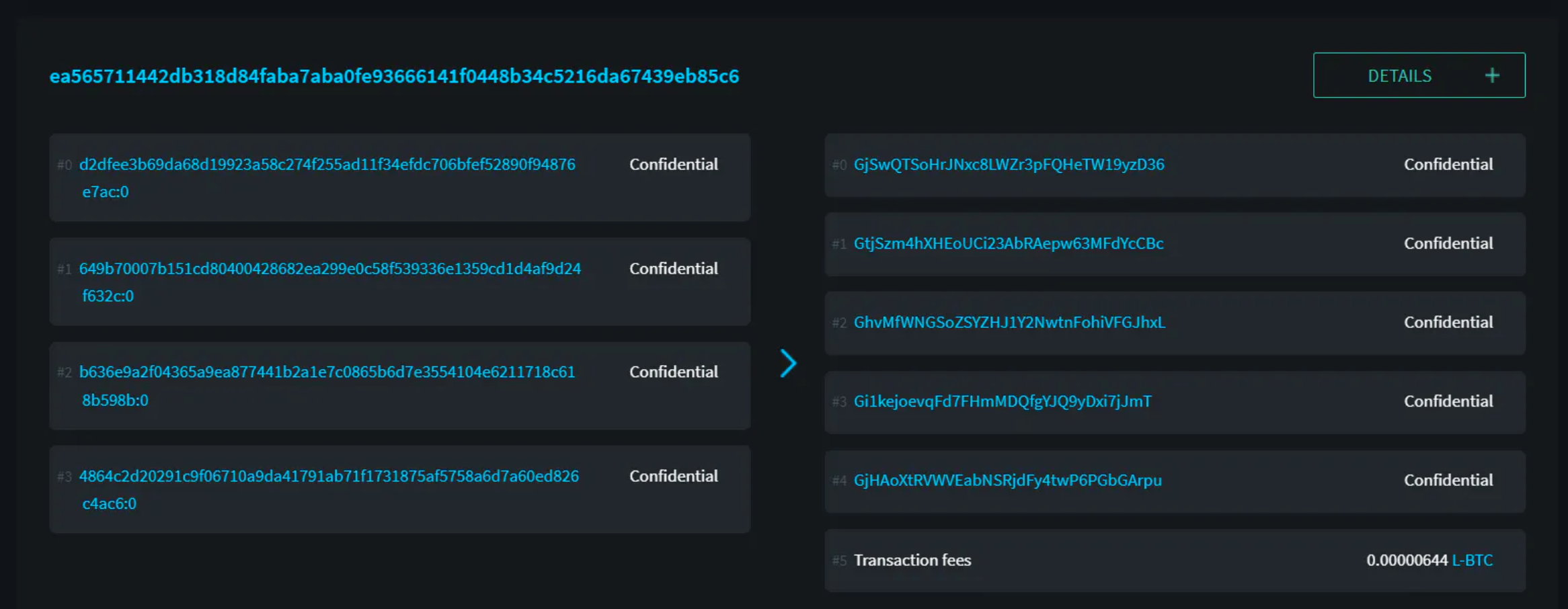
The picture above is the blind data of a transaction. We can only see the input and output, but we cannot see the specific assets and amounts. This is also the data status seen by others.

The picture above is the display after the blind data is unblinded. Here I can only see my own input and output. The input is three L-BTC, the output is 9 PPRGB, and one L-BTC is returned. ; For the counterparty, his “non-blind data” is the remaining confidential part
3.3 Diverse asset issuance
Because it is a side chain, it can do a lot in the asset issuance function. Liquid allows individuals, institutions, project parties, companies, etc. to issue various digital assets. The types include: tokenized legal currency, tokenized non-BTC cryptocurrency, Digital collectibles, bonus points, certified assets and more.
3.3.1 Asset Registry
Issued assets in Liquid are given a unique identifier (64 hexadecimal characters) when they are created. This is the unique identifying information of the issued asset that is clearly recorded on the Liquid blockchain. Any additional human-readable metadata that simplifies the identification of issued assets at the UI level can be submitted during issuance and published on servers such as asset registries. Metadata that can be linked to assets includes:
NAME asset name
TICKER The ticker you want assigned to the asset (optional)
DOMAIN The domain used to verify the asset
ASSET AMOUNT Amount to be issued
TOKEN AMOUNT The number of reissued tokens to be created
PRECISION The precision used to display asset amounts in applications that use Liquid Assets Registry data
PUBKEY saves the public key value entered in the Issuer_pubkey registration data field. The asset registry uses this data field to verify ownership when registry data is deleted or updated in the future.
COLLECTION Optional field used to associate a set of uniquely issued assets, often helpful for NFT collections
The assets issued on Liquid can be reissued or destroyed, which can be understood as the concept of asset contract upgrade in RGB. This operation usually requires setting up and confirming through the m of n multi-signature scheme.
3.3.2 Stable currency (tokenized currency)
in this case:
1) Fiat currency is deposited into a bank account and held in custody by the issuer
2) The issuer generates tokens in Liquid that represent the amount in the account and distributes the tokens to the depositors of the account
3) If the owner of one of these tokens wishes to receive fiat currency in return, he can redeem it through the issuer. The issuer can then destroy the tokens and maintain an equal supply of fiat currency and outstanding tokens
4) The issuer can prove to any auditor or regulator that the number of outstanding tokens always matches the bank account balance
5) Issuers can also choose to use Liquid’s scripting capabilities to comply with different regulations around the world without adding any artificial requirements for staff.
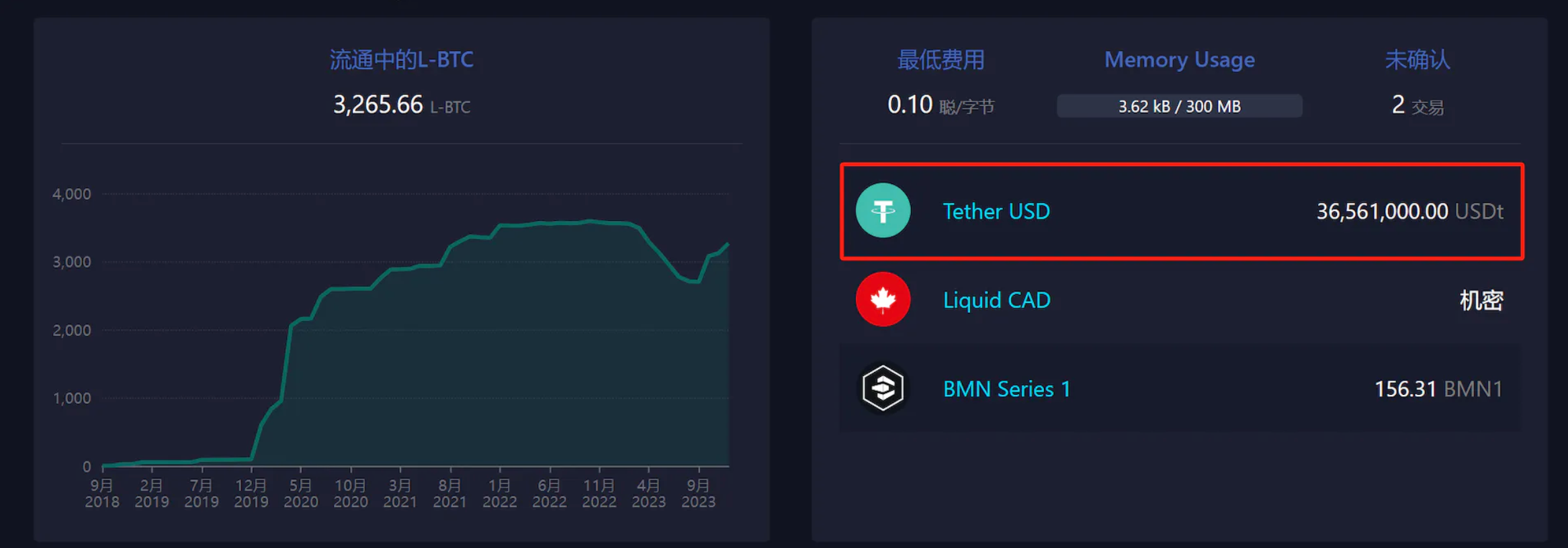
USDt
TEDAs stablecoin has been issued on the Liquid network. As a stablecoin, it participates in various exchanges of Liquids ecological protocols. We can see the status of the stablecoin through Mempool.
It is currently possible to withdraw L-BTC and stablecoins directly to the Liquid protocol through Bitfinex.
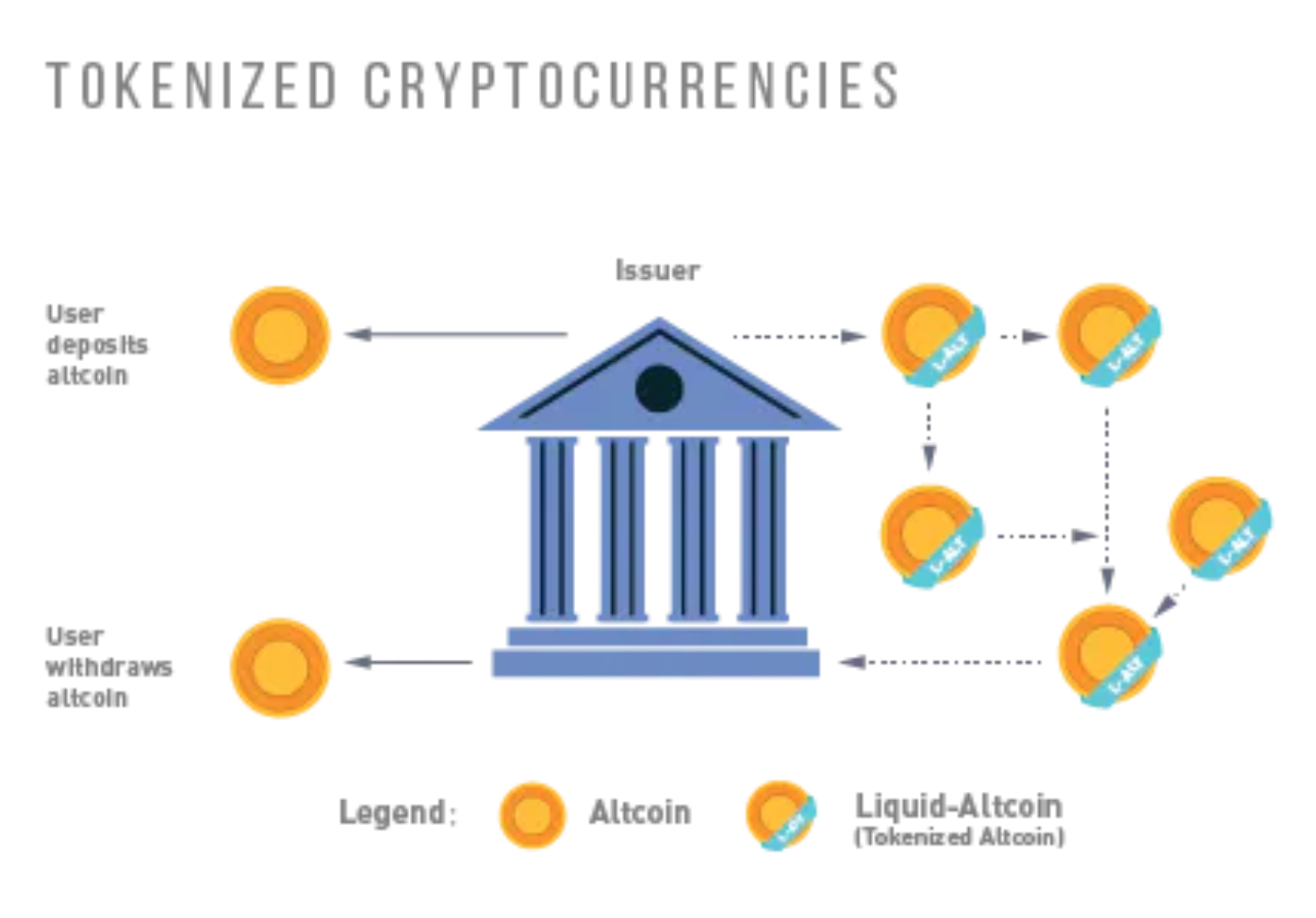
3.3.3 Tokenization of other currencies (financial currencies or cryptocurrencies)
For example:
1) Blockstream Mining Note and El Salvador Bitcoin Bond
2) Various tokens on sideswap

Liquid members can create tokens that represent collateralized cryptocurrencies. These tokens can now be traded and settled between Liquid users with the same speed and privacy as Bitcoin and other issued assets. This approach also allows exchanges and traders to handle these assets securely without the need to back the underlying asset. This opt-in model allows users who wish to benefit to work with parties they trust to issue and secure assets without requiring the entire consortium to know about the asset.
3.4 Quickly transfer funds
For exchanges, using Liquid provides their users with the ability to deposit and withdraw funds quickly and privately. Its implementation logic is:
1) The exchange will hold a portion of the funds on the Liquid network
2) When a user wishes to deposit on an exchange, they will request the exchange to generate a Liquid deposit address on their behalf
3) The client then takes that address to another exchange and requests to withdraw Liquid
4) The sending exchange will deduct the customers balance and send the funds to the receiving exchange via Liquid. When a transaction receives two confirmations, the receiving exchange can deposit funds into the user’s account without the risk of double spending
5) The entire process is typically completed in less than three minutes after the original transaction is sent
This mechanism mainly serves institutional traders or arbitrage traders. This function allows institutional funds to be quickly transferred to any exchange that supports Liquid deposits to realize trading opportunities. And it will transfer the custody risk of institutional funds from a single exchange to the entire Liquid Alliance.
4. Participation role
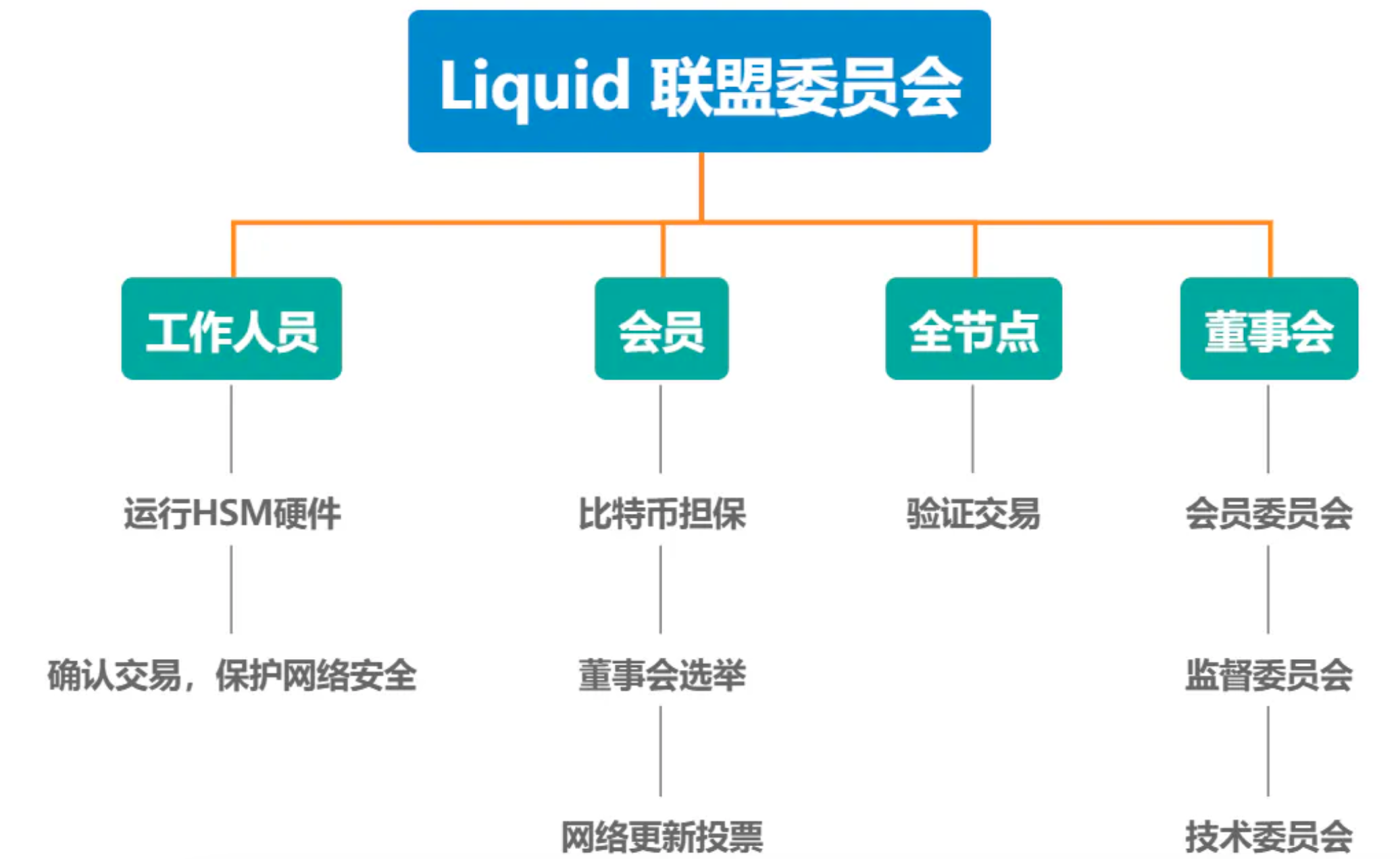
Liquid is governed by its membership federation, which includes major exchanges, trading desks, wallet providers, payment processing services, financial institutions and other important companies in the Bitcoin space, which are geographically and geopolitically dispersed across the all around the world. Each member has no single control, and they collaborate to ensure network security through multi-signature smart contracts.
For Liquid users, there is always the ability to self-verify activity on the network through Liquid full nodes.
The picture below shows the governance structure and the responsibilities of each department that I organized.
5. Parent company
5.1 Overview
The parent development company of Liquid Network is:blockstream
Founded in 2014, Blockstream has been a leading provider of blockchain technology with the companys mission to build crypto financial infrastructure based on the most powerful and secure blockchain - Bitcoin.
The company’s CEO is: Dr Adam Back
As a diversified company, blockchain has experienced multiple rounds of heavyweight financing, and its products cover many aspects.

5.2 Development history
In 2014, Adam Back, Erik Svenson, Pieter Wuille and others formally established Blockstream.
November 2014 Seed round, received $21 million in investment
In June 2015, the first version of Elements was officially launched (an open source platform for developing side chains)
Series A financing in February 2016, receiving US$55 million in investment
July 2016 Acquired Bitcoin wallet service provider GreenAddress
In April 2017, the privacy asset function was launched
Blockstream satellite officially launched in August 2017
Digital Garage invested in Blockstream in November 2017, bringing total funding to over $80 million
Blockstream’s Lightning Network deployment c-lightning was officially launched in December 2017
Lightning Charge was launched in January 2018, making it easier to develop applications on the Lightning Network
The Liquid network was launched in October 2018 by Blockstream and the world’s largest cryptocurrency exchange and trading desk (Liquid only came into existence at this time)
Blockstream Green wallet launched in March 2019
July 2019 Lightning Network Supports Liquid Network
Blockstream Mining Service Unveiled in August 2019
January 2020 Liquid network supports BTCPay Server
Liquid Alliance reaches 45 members in March 2020
May 2020 Blockstream Satellite 2.0 launched, Ledger supports Liquid Network
Liquid Alliance reaches 53 members in July 2020
October 2020 Launch of Blockstream Asset Management Platform (AMP) to support programmable security tokens on Liquid
January 2021 Launch of Blockstream Jade, a fully open source hardware wallet
Liquid Federation membership increased to 59 in January 2021
March 2021 Launch of Blockstream Mining Note (BMN)
March 2021 Galaxy Digital leverages Blockstream to provide mining hosting services
May 2021 Acquired Adamant Capital and established Blockstream Finance
June 2021 Announced partnership with Block Inc. to build open source, solar-powered Bitcoin mining facilities in the United States
Acquired Spondoolies in August 2021 and plans to build the world’s first enterprise-level mining machine
August 2021 Received US$210 million in Series B financing, with valuation reaching $3.2B
The number of Liquid Federation members increased to 63 in January 2022
BMN will be listed on the global stock exchange MERJ in April 2022
Construction begins on solar-powered Bitcoin mine in April 2022, powered by Tesla’s solar and battery infrastructure
February 2023 Blockstream announces launch of new Blockstream Research brand
In August 2023, Blockstream announced the launch of a new “BASIC Note” investment tool, betting on the recovery of the ASIC market.
October 2023 Blockstream Launches Greenlight for Scalable, Unmanaged Lightning Integration
Judging from the development process, the pace is very good, and there is no shortage of money. It is promoted in multiple lines and in an orderly manner.
6. Liquid ecological project
The ecological infrastructure projects on Liquid are very complete, including wallets (custodial, non-custodial, plug-ins, mobile terminals, and computer terminals), NFT markets, trading platforms, lending platforms, asset issuance platforms, compilers and other related auxiliary tools Complete.

7. Thoughts
7.1 About Liquid
Overall, the ecological projects on Liquid are very complete, the protocol itself has continued to develop, the formal exchanges and institutions it connects to are also constantly expanding, and the financing amount is also very dazzling.
The overall product architecture and development process show an obvious regular army rhythm, with multi-line advancement and step-by-step expansion.
However, judging from the prosperity and transaction frequency on the side chain, the frequency of use is very low. I guess it is because it is positioned at professional institutions and companies, so ordinary retail investors rarely participate. If there are fewer people doing research, then there will be fewer relevant tutorials that are popularized. As a result, many people may not be able to figure out a simple account entry.
As the BTC ecosystem develops and becomes one of the main narratives of this round, I think this side chain protocol will enter the eyes of ordinary retail investors; maybe the official can think about some marketing behaviors (although for a company of this level may not care about these) to facilitate the participation process of ordinary users.
7.2 Liquid and RGB
Although there are big differences in the implementation paths of the two, they also have many similarities, such as:
1) Emphasis on privacy. Liquid’s “confidential transactions” are a major feature, while RGB’s extreme privacy is also an important attribute;
**2) The implementation functions are similar. ** All can improve the speed of network transactions and confirmations, can issue multiple types of assets, can deploy smart contracts, and can be connected to the Lightning Network. They are all designed to develop in the direction of compliant assets.
** 3) Do not destroy the original chain. **Many foreign BTC old OGs tend to maintain the cleanliness of the BTC main chain. All expansions are carried out without destroying the characteristics of the original chain as much as possible, whether it is side chain or off-chain verification. It will not interfere with the operation of the original chain. In principle, I agree with this concept.
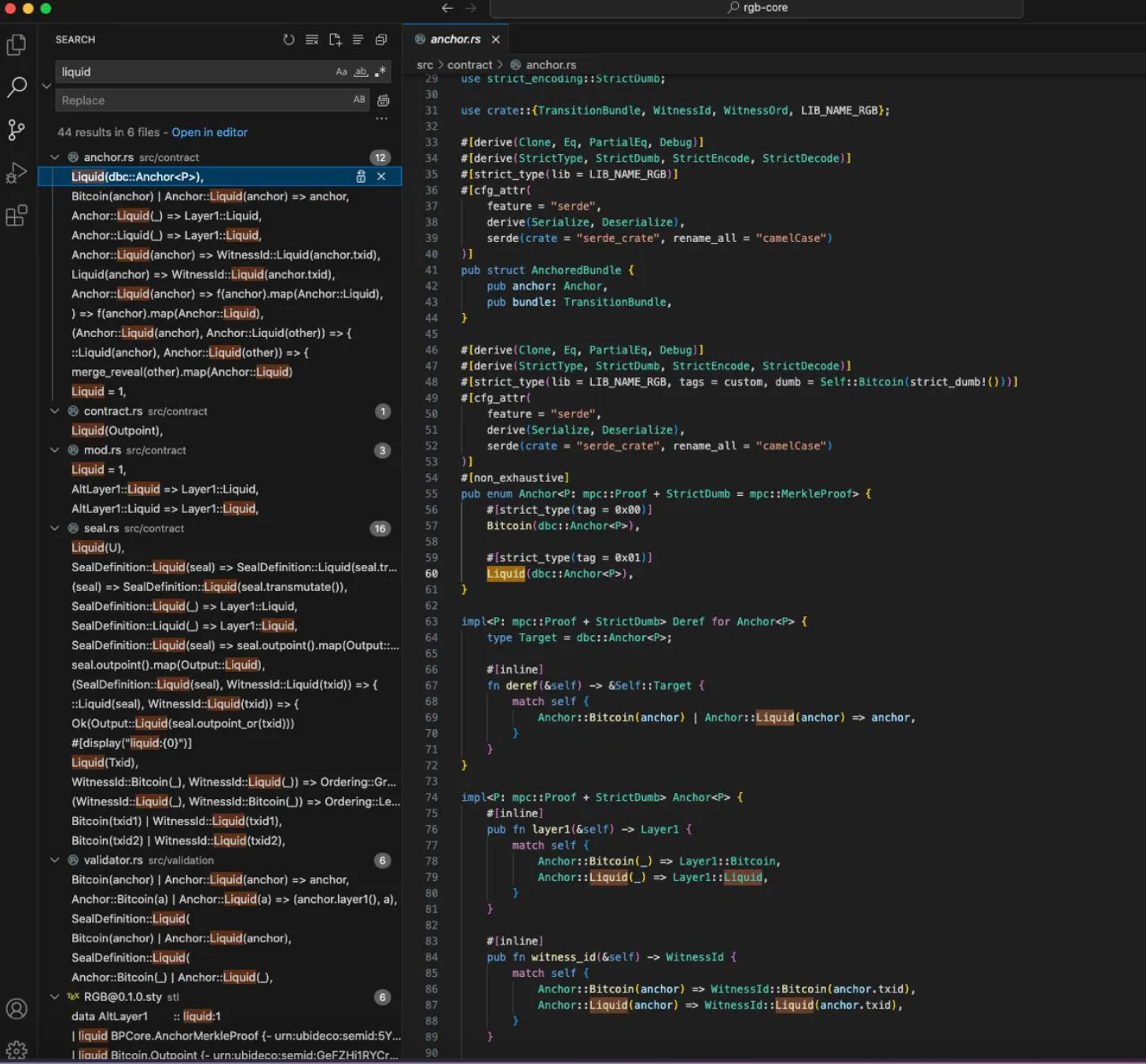
In the core code, RGB has already had bridging code with Liquid. Maybe we can see Liquid+RGB in the future
8. Reference links
2)blockstream official website





