


Data Interpretation 7 L2: What are the characteristics of the initial liquidity distribution?


Original author: Keyrock
Original compilation: Luffy, Foresight News
Welcome to Part 2 of our in-depth data reporting series, where we reveal the on-chain performance of the much-anticipated L2 network in its first days after mainnet launch.
existpart 1In our analysis, we observed the flow of ETH from Ethereum into the L2 network during the first 24 hours of L2 launch and the following two weeks. Part 1 gave us a look at how well these networks perform in terms of gaining liquidity, attention, and early adoption, taking into account differences in market environment (bear vs. bull), underlying technology (ZK vs. non-ZK), and brand recognition. We draw three main conclusions:
Anticipation of future token distribution is a key factor driving ETHs early migration to the new L2.
The initial 24-hour migration size serves as a reliable measure of performance over the next 2 weeks.
Networks that deviate from conclusion #2 start slowly and then grow explosively. These unusual patterns are the result of massive recharges by the whales.
Building on this, we ask the next important question: what happens to ETH once it migrates to these L2s? It is not enough for L2 to attract ETH; applications on these networks must also attract liquidity to ensure an attractive ecosystem for users and traders.
In Part 1, we looked at which L2s attracted the most liquidity in the first hours and days. In Part 2, we will answer which of these L2 applications attracted the most ETH in the first two weeks after the network launched.
Data conclusion
We analyzed the observed application TVL in 7 L2 networks and came to the following conclusions:
DEX initially attracted the most TVL compared to perpetual contracts, lending, and other DeFi protocols. DEXs have proven their importance to the early success of any new network, and user liquidity will continue to flow to these applications after mainnet launches.
Liquidity tends to flow to applications incubated by or aligned with L2. Liquidity is concentrated in these protocols before being dispersed to other protocols.
A potential airdrop of L2 DEX could help attract large amounts of liquidity, as LPs seek to “kill two birds with one stone” – earning revenue from the liquidity provided while also targeting future airdrops.
Liquidity mining opportunities can significantly increase L2’s TVL by bringing liquidity to specific applications that promise short-term gains. The result is that the TVL of L2 is concentrated in the application.
The most well-known and popular DeFi applications tend to be released on L2 networks with a slight lag. These DeFi applications appear to be waiting for other applications to test L2 before launching. The notable exception here is where the company developing the L2 mainnet has a significant reputation, with proven companies like Consensys and Coinbase initially attracting higher quality DeFi projects.
data range
As in Part 1, we looked at on-chain ETH flows across 7 different L2 networks launched between 2021 and 2023. We tracked the cross-chain applications that provided liquidity to L2 in the first two weeks after each L2 public mainnet launch.
Some L2 networks have a large number of applications at launch, and we only looked at the 10 applications with the highest TVL within two weeks of launch.
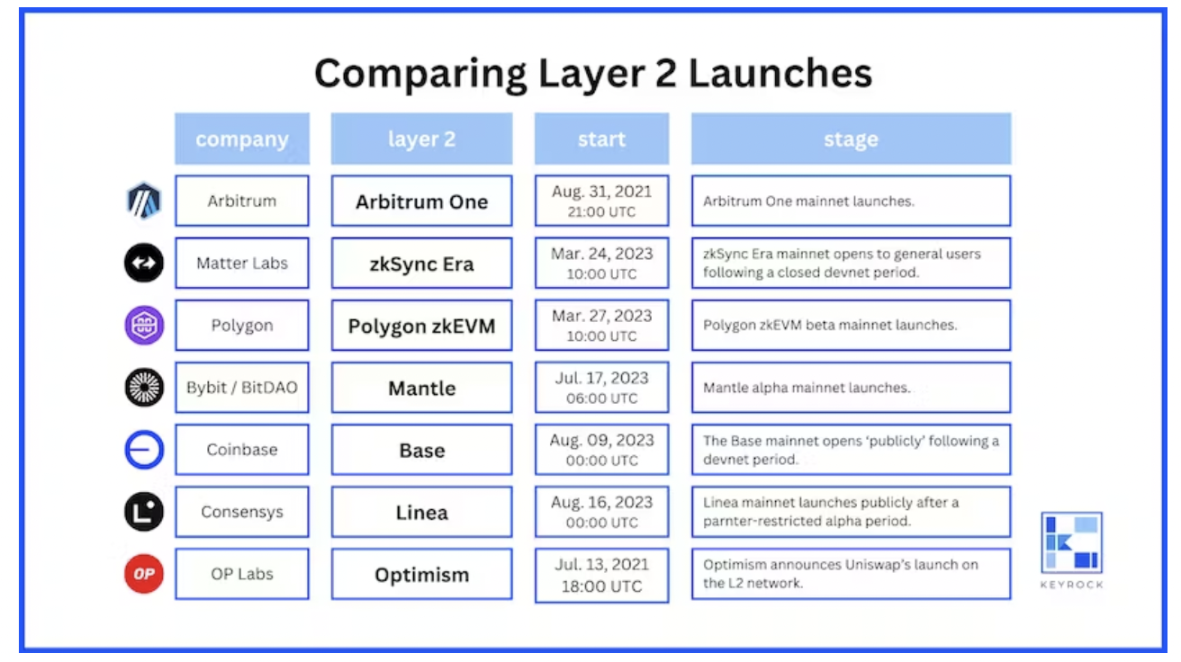
Compare Layer 2 Startup
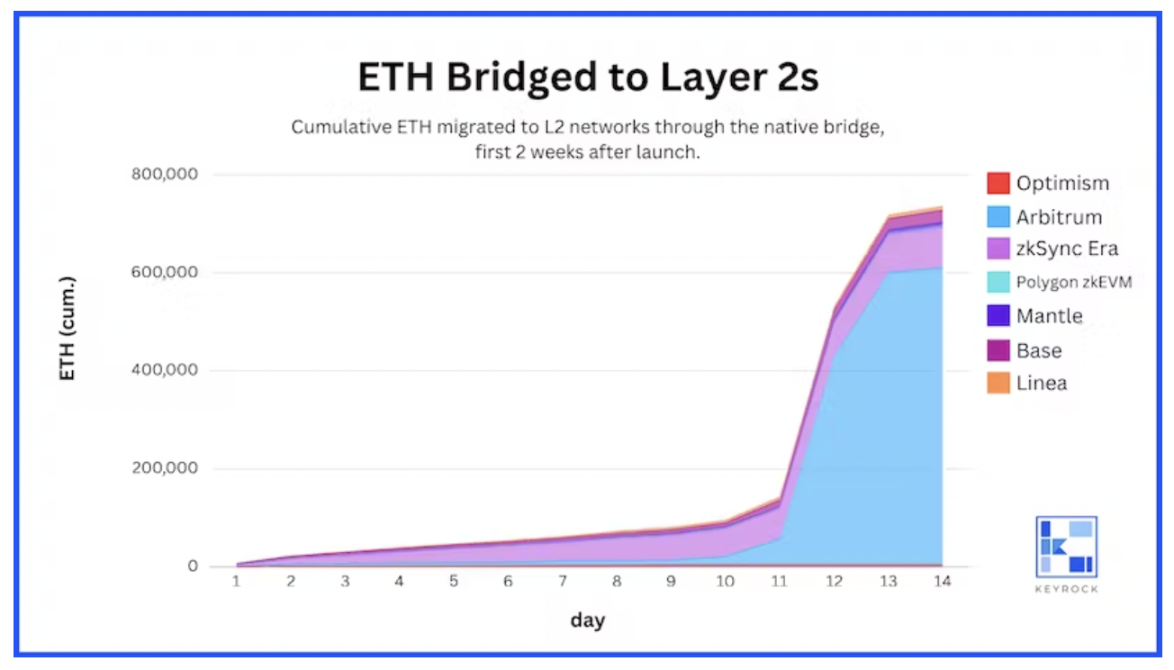
ETH cross-chain to L2
Arbitrum
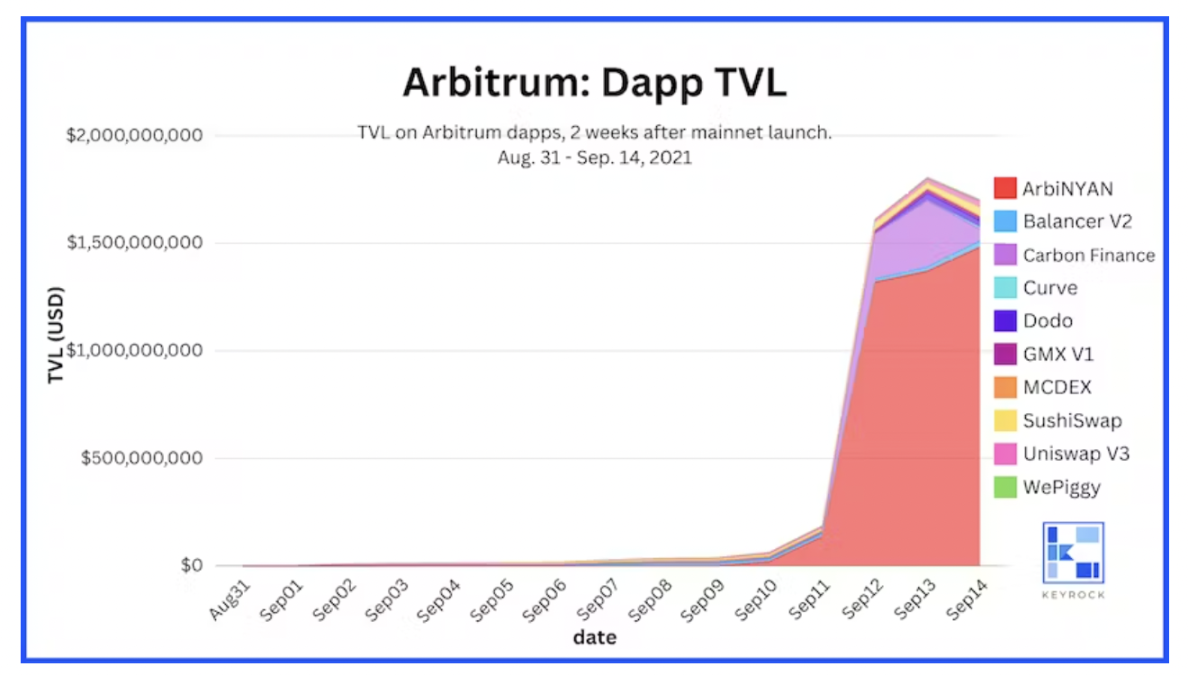
Arbitrum Dapp TVL
We observed application TVL two weeks after the Arbitrum One mainnet launch on August 31, 2021.
Despite launching on August 31st, it was not until September 11th that the TVL of the Arbitrum application increased significantly. Application activity is consistent with our initial observations in Part 1, indicating that Arbitrum has experienced a significant influx of ETH from Ethereum.
On September 11, 180,000 ETH was deposited into Arbitrum in less than an hour. As of September 12, nearly 600,000 ETH has been deposited from Ethereum to the Arbitrum mainnet.
In Part 1, we did not conclude what was driving ETH’s massive cross-chain rally. However, looking at the application TVL data, it can be seen that the driving force behind the large deposit of ETH into the Arbitrum mainnet on September 11th was ArbiNYAN.
ArbiNYAN is a memecoin liquidity mining project that exploded in September 2021. It was the first native Arbitrum application to gain widespread attention. Just like this years BALD played a role in the Base ecosystem, ArbiNYAN pushed Arbitrum into the Web3 boom.
On September 10, the top 10 apps on Arbitrum had a total TVL of $61,929,474. ArbiNYAN accounts for 31% of TVL ($19.34 million). As of September 12, the TVL of Arbitrum’s top 10 apps has soared to $1,609,246,339 — a 2,500% increase in 48 hours. At that time, ArbiNYAN accounted for 82% of TVL ($1.31 billion).
In other words, on September 12th, the TVL of ArbiNYAN alone was 21 times greater than the TVL of the entire Arbitrum network 2 days earlier.
zkSync Era
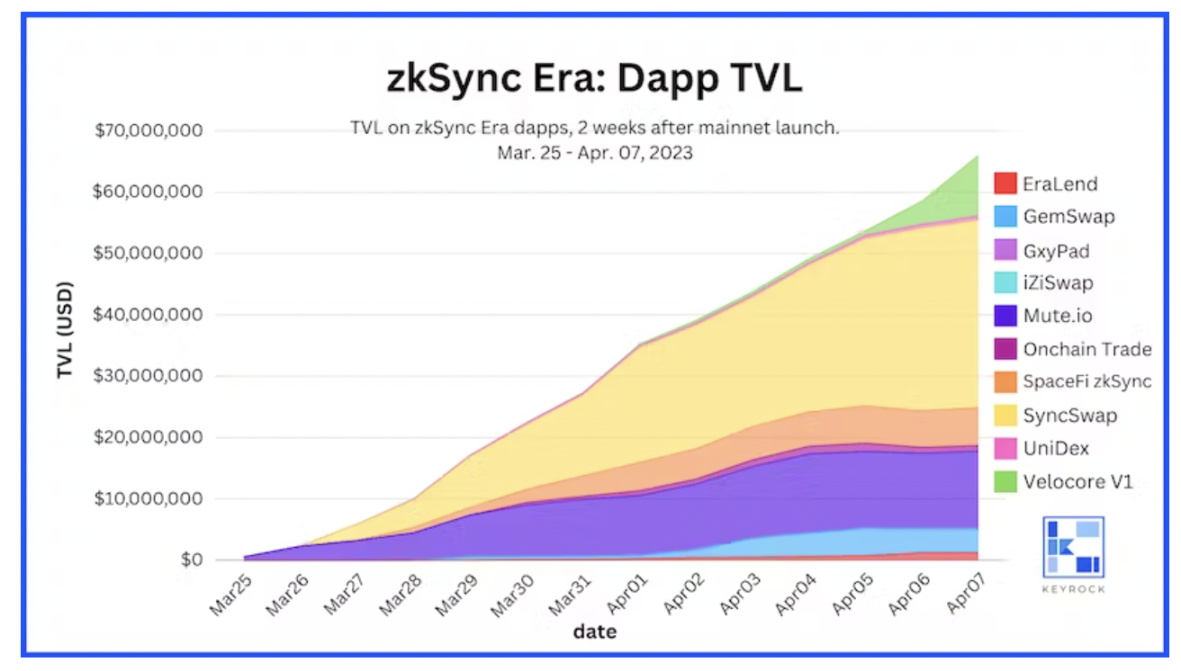
zkSync Era Dapp TVL
We observed application TVL two weeks after the zkSync Era mainnet launch on March 23, 2023.
In the two weeks since its launch, the ZkSync Era has seen a steady increase in the amount of ETH migrated from Ethereum to its mainnet. On the other hand, we are seeing similar steady growth in TVL within the DeFi application of the zkSync Era as these ETH are distributed throughout the ecosystem.
At the end of two weeks, one application, SyncSwap, stood out, accounting for 46% of zkSync Eras TVL (only the top 10 applications were counted). We also saw two other protocols, Mute.io and Velocore, both of which had double-digit TVL shares at the end of two weeks.
SyncSwap is a DEX built on zkSync Era. It was the first native DEX to go live on the zkSync Era and thus attracted a lot of liquidity in the first two weeks after the launch of the zkSync Era. DEXs built by Ethereum ecosystem leaders such as Uniswap remain one of the most popular DeFi protocols, providing early LPs with a familiar place to trade and provide liquidity.
We conclude that part of the reason for the breakout success of the zkSync Era (in terms of ETH migration) in the first two weeks was the anticipation of the token airdrop. ETH holders who migrated funds to the zkSync Era appear to have gone a step further, providing liquidity to SyncSwap after cross-chain ETH. Their motivation may be to try to eat two fishes with one fish: getting the token airdrop opportunities of zkSync Era and SyncSwap at the same time.
Polygon zkEVM
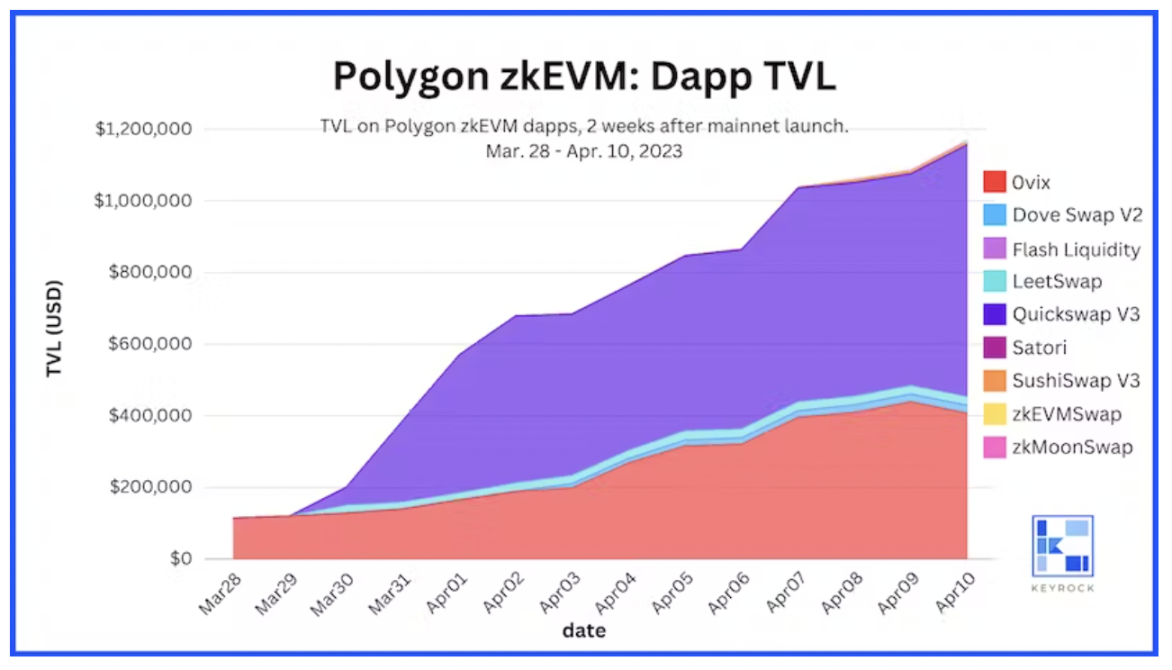
Polygon zkEVM Dapp TVL
We observed application TVL two weeks after the launch of the Polygon zkEVM mainnet on March 27, 2023.
TVL on Polygon zkEVM mainly focuses on two applications: Quickswap and 0 vix.
Quickswap V3, in particular, dominates, accounting for 60% of Polygon’s zkEVM TVL ($704,000 of $1.17 million). Quickswap is successful for a reason. Before the launch of zkEVM, Quickswap was already the dominant DEX on Polygon, historically surpassing Uniswap. Polygon can ensure that Quickswaps release on zkEVM is prioritized, and early zkEVM users can rest assured that they are using a DEX that has been proven elsewhere.
The lending platform 0 vix is also a native product of the Polygon ecosystem. Although 0vix is a relatively small player among lending platforms on POlygon (behind Aave and Compound), its early launch on zkEVM offering non-DEX DeFi primitives (lending) gave it an upper hand in the early days of zkEVM.
This distribution of TVL on Polygon reveals the advantages of applications that have natural alignment with the companies building L2. Strangely, in the first two weeks after mainnet launch, there were not any mainstream DeFi applications (Uniswap, Aave, Compound) on zkEVM. Polygon is a veteran player in the Web3 space, with strong brand recognition and developer adoption.
One possibility may be that zkEVM is an L2 powered by zk, and mainstream DeFi applications need to observe and understand the performance of other applications in the first two weeks. Interestingly, this seems to be illustrated by the cases of Base and Linera, both platforms being built by highly trusted entities (Coinbase and Consensys respectively). However, Base attracted mainstream DeFi applications in its first two weeks of launch, while Linea did not. Linea, like zkEVM, is an L2 supported by zk.
Mantle
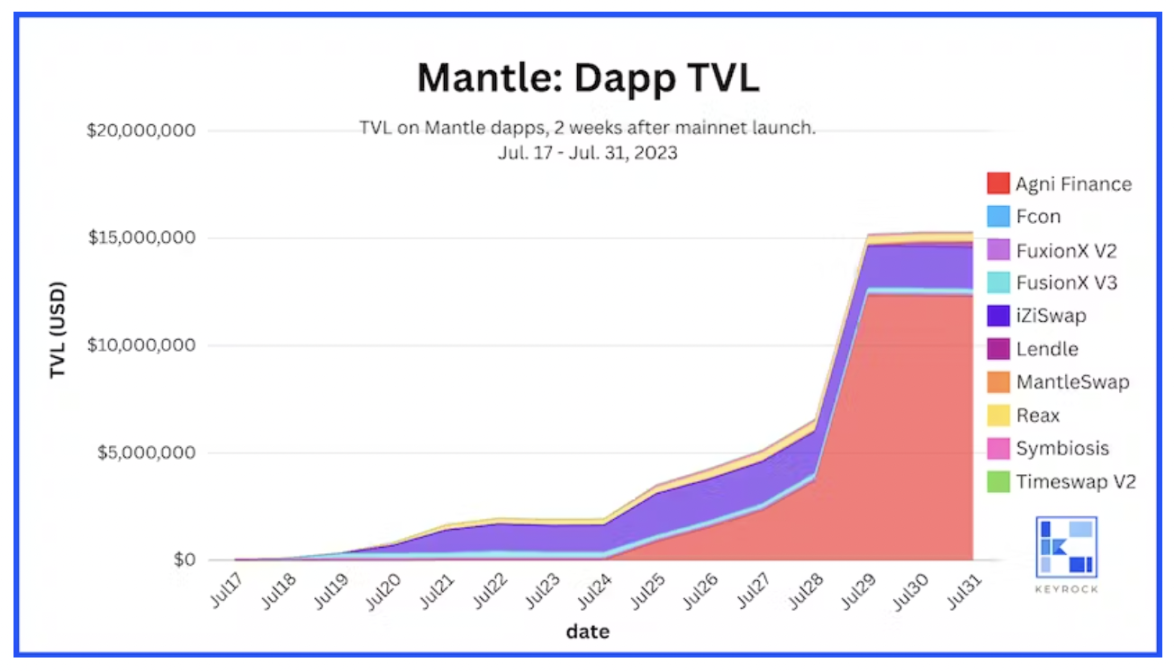
Mantle Dapp TVL
We observed the application TVL two weeks after the Mantle mainnet launch on July 17, 2023.
Two weeks later, the applications AgniFinance and iZiSwap accounted for the majority of Mantles TVL. On July 31, AgniFinance owned over 80% of Mantles TVL (only the top 10 apps are counted) ($12.3 million/$15.3 million). iZiSwap TVL accounted for 12.6% (USD 1.95 million).
AgniFinance and iZiSwap are both AMMs, which once again shows that DEX is able to capture the majority of early LP ETH after the launch of L2.
In Part 1, we discussed Mantle’s strange ETH migration pattern. In the first few days after the mainnet launch, Mantles ETH migration was relatively slow. Then, on July 28, a single address migrated 5,000 ETH to Mantle, and the total cross-chain ETH instantly increased from 2,500 to 7,500.
In the chart above, we can see that the TVL of Mantles top apps spiked on July 28th. The spike in AgniFinance’s TVL was particularly pronounced, the data shows, indicating that the vast majority of the 5,000 ETH deposited on July 28 went directly to AgniFinance.
Base
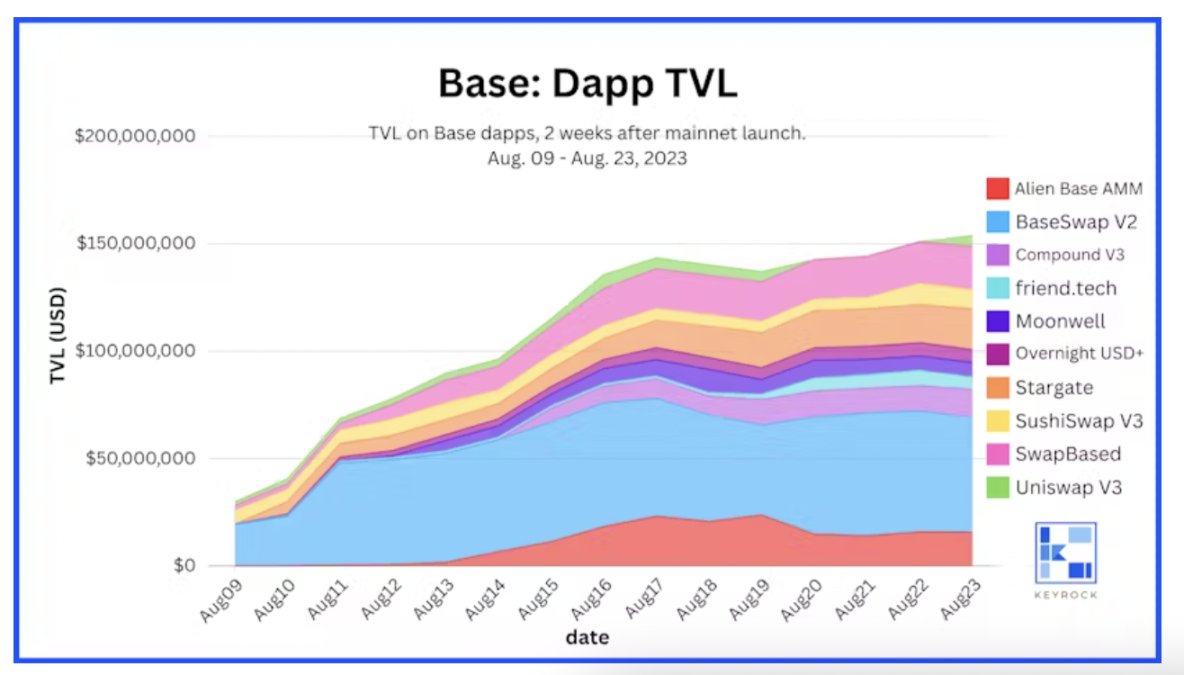
Base Dapp TVL
We observed application TVL two weeks after the launch of the Base mainnet on August 9, 2023.
At the end of two weeks, there were six apps with more than 5% of TVL, and no app controlling more than 35% of TVL.
Of the 6 applications accounting for more than 5% of Base TVL, 4 of them are DEXs – again supporting the conclusion that DEXs are easiest to attract liquidity on the new L2. BaseSwap contributes the largest share of TVL (about 35%), which once again shows that applications that work closely with L2 development companies have an advantage in the early stages of the network.
Of all L2 launches observed, Base attracted the earliest and most high-profile DeFi applications (Uniswap, SushisWap, Compound). This may be attributed to Coinbases reputation and the fact that Base is built using OP Stack, which has experienced long-term practical experience with the Optimism network.
Interestingly, Stargate is the only non-native cross-chain bridge we observed. This anomaly may be due to the fact that non-native cross-chain bridges often require more time to come online on a brand new network.
Linea
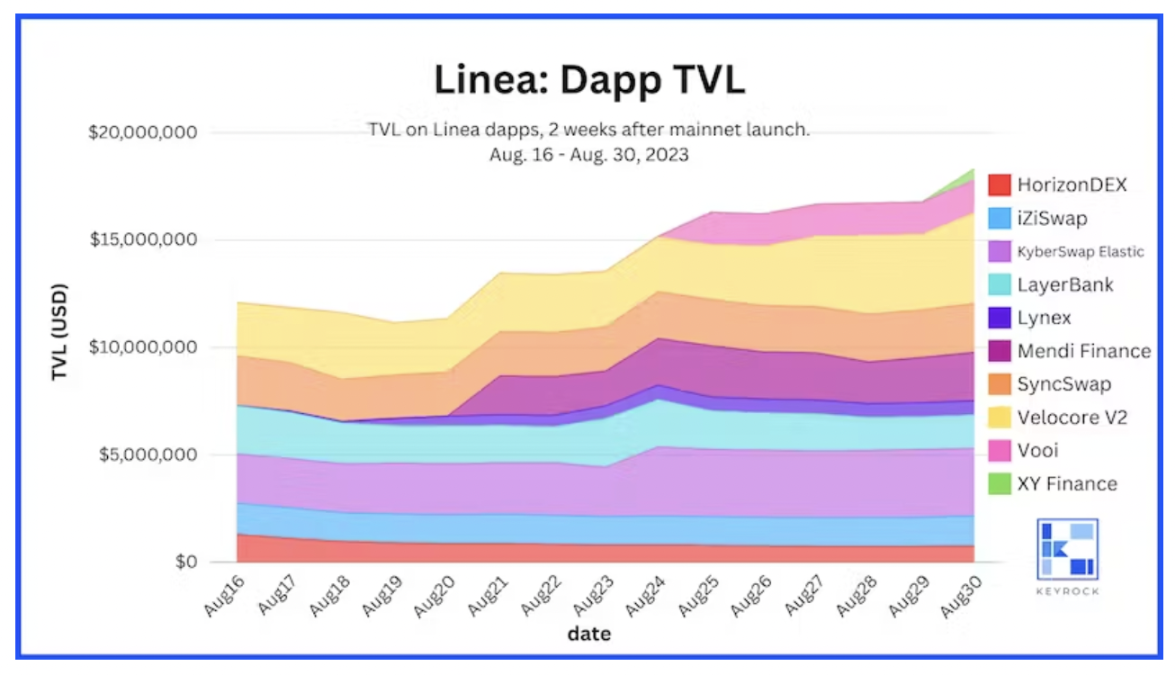
Linea Dapp TVL
We observed the application TVL two weeks after the launch of the Linea mainnet on August 16, 2023.
At the end of two weeks, 7 applications accounted for more than 5% of Linea TVL, and no application controlled more than 25% of the networks TVL.
Among all observed L2s, Base and Linea had the highest TVL diversity and balance among applications within two weeks of launch. Both Linea and Coinbase launched during a bear market, but the architecture and branding of the two networks are different. Base is a more classic L2 Rollup, built on Optimism OP Stack. Linea is a ZK Rollup.
The striking similarity between the two chains is the strong industry reputation of the companies that created them: Coinbase and Consensys. Both companies have broad recognition, funding and users.
A relatively simple conclusion to the TVL diversity after the launch of Base and Linea is related to their reputation. Coinbase and Consensys respective reputations may attract more developer interest ahead of mainnet launch than other L2s. Developers can spend more time preparing their applications to go live on Base and Linea as soon as possible after the mainnet launch, as an influx of users is expected. Compared with other L2s where TVL is highly concentrated in a few applications, Base and Lineas liquidity is dispersed to more applications soon after the mainnet launch.
Optimism
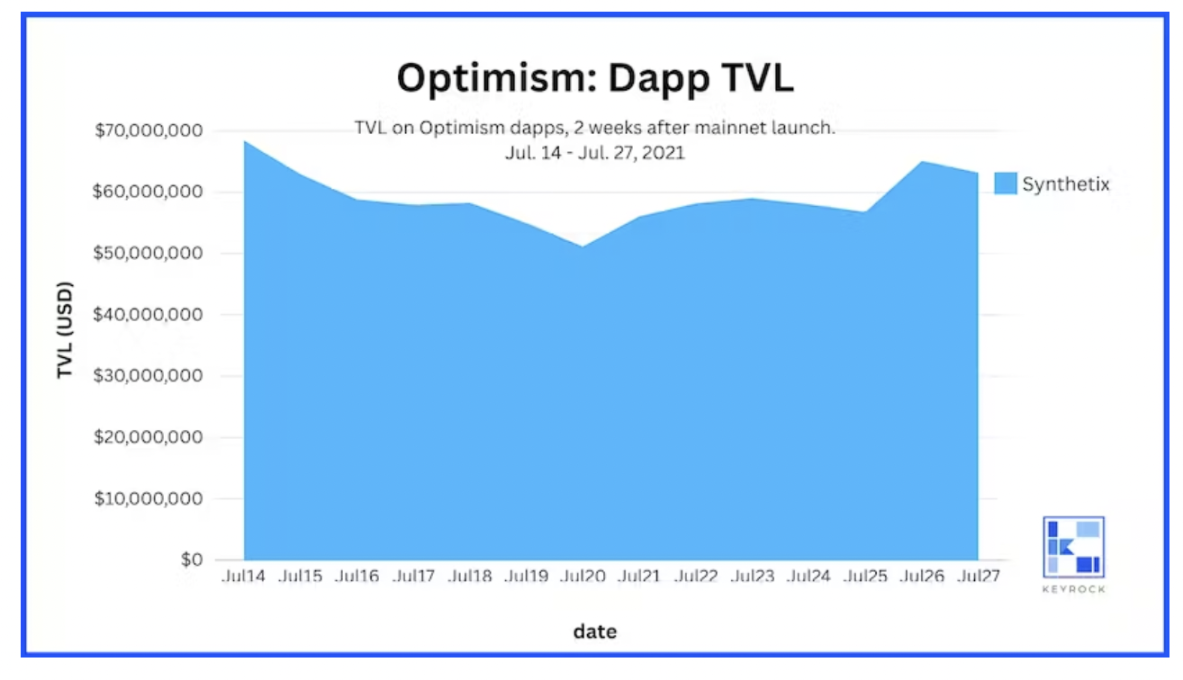
Optimism Dapp TVL
Optimism launched its L2 network in phases in 2021. July 14th was an important moment when Optimism announced its support for Uniswap. Interestingly, two weeks after this news, Optimisms app TVL is still completely dominated by Synthetix.
Optimism has been actively building throughout 2021 and has a uniquely close relationship with Synthetix early in the roadmap. As early as early 2021, an incentive program was released to incentivize Synthetix’s liquidity. By July, we saw these incentives pay off, with Synthetix’s TVL exceeding $60 million, two weeks after Optimism announced support for Uniswap.
in conclusion
This report series reveals TVL distribution trends in newly launched L2 network applications. we come to the conclusion:
DEX was the key to early L2 success, accounting for most of the initial TVL.
Applications developed or supported by the L2 team itself have a clear advantage in gaining early liquidity.
Airdrops for L2 applications, especially DEX, are expected to attract a lot of liquidity.
Liquidity mining may cause TVL to rise sharply.
Mainstream DeFi applications will often delay launching on new L2 unless the L2 is backed by a reputable company.





