


Underrated Web3 front-end services: The rise of MEV, user behavior monetization and brand moat


Original author:Trace
Original compilation: Deep Chao TechFlow
Web3 front-end provides 2 services. They allow users to read data from and write data to the blockchain. The front end can profit from both reading and writing.
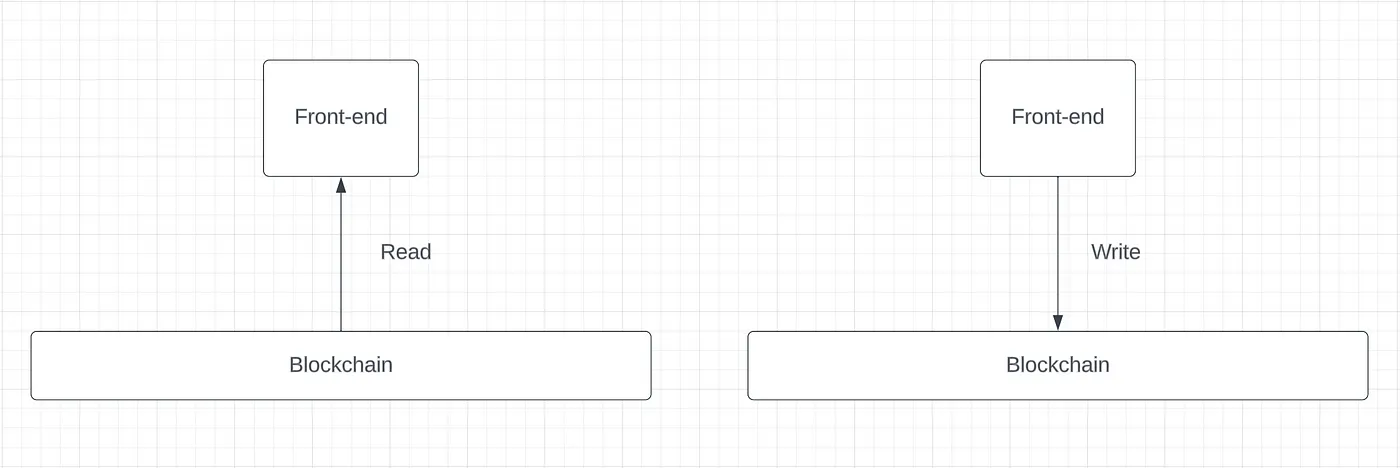
We have always been skeptical about value capture on the front end. Their main challenge is their limited differentiation; each front end is a different perspective on the same shared back end.
The cost of switching between frontends is low: users simply import their private keys into another wallet or log into another web application; all their information remains in the common backend. This gives users significant influence over the front end, driving prices to zero in the battle for users. Likewise, the blockchain explorer and analytics platform pulls data from a shared and transparent backend. Backend data can be displayed in different ways, but its hard to get an order of magnitude better user experience than competitors with shared infrastructure.
These arguments all make sense. However, we believe their conclusion - that the front end does not accrue defensible value - is wrong. Instead, we expect front-ends to become some of the most valuable businesses in Web3. Our beliefs are formed by examining new developments in the transaction supply chain, monitoring the latest innovations in front-end user experience, and observing user behavior.
Order flow payment
Before Flashbots and The Merge, MEV was a quiet, shadowy corner of Ethereum known only to a handful of searchers and miners. The establishment of Flashbots shines sunshine into the industry, increasing its competitiveness and ensuring a fair distribution of MEV revenues. As the MEV industry grows, a supply chain has emerged to facilitate better extraction and execution. Driven by the separation of proposers and builders, supply chains outline the middlemen between users and their transactions being registered on-chain. In theory, every middleman has an opportunity to extract value.
Over the next few years, this supply chain will become a more complex network of middlemen as MEV extraction professionalizes.
While the number of MEV is not zero-sum and is expected to grow as on-chain activity increases, the distribution of MEV among entities in the transaction supply network is zero-sum. Since the merge, most MEV has been accumulated by validators. In perfect competition, searchers and builders must increase their overall profits to validators in order for their bundles and blocks to be included.
To maintain profits, searchers and builders seek exclusive order flow to gain a competitive advantage over their competitors. The impact of exclusive order flow is most evident when comparing the profits of integrated builders (i.e. search builders) such as BeaverBuild and Rsync to neutral builders.
While integration builders have always been a profitable business, trunking is not. In fact, Blocknative recently discontinued their relay and neutral block builders, citing their lack of financial sustainability. Relay stimulation is still an open research area. What explains this difference in value capture?
The primary factor that determines which entities capture value in a transaction supply network is exclusivity. Integration builders capture value because they create exclusive order flow. Validators capture MEV because they have exclusive ability to propose the next block. Relays do not capture value because they are not exclusive.
Flashbots emerged to solve the problem of MEV extraction, including the systematic exploitation of users through sandwich attacks and other economic attacks. To solve this problem, they introduced MEV-Share, which moves MEV away from middlemen and verifiers and towards the front-ends and users who generate MEV. This is achieved through Order Flow Auctions (OFAs). Front-ends can direct their order flow to these auctions, and searchers bid on the order flow. Auction proceeds are then returned to the transaction originator. With Order Flow Auctions (OFAs) and MEV-aware front-ends, MEV will flow to the front-end and users. SUAVE will accelerate this trend. Intent-centric protocols like UniswapX also transfer MEV to users through auctions where solvers compete to provide the best execution price, thereby returning MEV to users through price improvements.
In addition to returning MEV to users, frontends have inherent influence in the exchange supply network: all frontends’ order flow is inherently exclusive. Therefore, once we have a mature OFAs and other MEV rebate infrastructure, frontends and their users will collect the vast majority of user-generated MEV.
Of course, not all order flows are equally monetizable, and not all front-ends can facilitate high MEV activity. However, MEV is more common than most people realize. We expect any front-end that can meaningfully monetize their order flow, such as exchanges and application-agnostic wallets, will do so. In Web3, the PFOF popularized by Robinhood in the traditional financial market (note: payment-for-order flow, in the order flow payment mode, retail investors’ transactions on zero-commission brokers such as Robinhood are not actually sent directly to the New York Stock Exchange. Or Nasdaq exchange execution, but packaged and sent by brokers to high-frequency trading market makers) business model will become common.
Networks outside of Ethereum currently lack the MEV infrastructure needed to monetize order flow. As these ecosystems evolve, MEV will inevitably emerge, creating similar opportunities for front-end monetization.
Unique user experience
Frontends share the same blockchain backend, which has historically limited their ability to create differentiated user experiences. But thats changing. We’ve seen three recent innovations emerge in the front-end that can unlock network effects for user experience: finely tuned LLMs (Large Language Models), wallet extensions, and app partnerships.
With the rise of LLMs and intent-based architectures, new front-ends enable building AI-powered experiences tailored to each user. Proprietary LLMs allow the front-end to maintain its user experience moat through data network effects. Were not sure yet about AIs ability to enhance the front end, but believe it will be an important differentiator.
MetaMask snaps reveal another opportunity to differentiate the user experience; the front end can become a platform for third-party developers to add extensions, providing an app store-like experience. Snaps built a network effect around MetaMask, solidifying its position as the dominant wallet. Standalone front-ends will struggle to maintain functional parity with the entire developer ecosystem.
Finally, the front end can capture price network effects. Frontends with large numbers of users can leverage their distribution channels to negotiate with apps for discounted fees or sponsorship deals to promote those apps.
User monetization and behavior
The most important factor that convinced us of the value of the front end was observing user behavior. If the cost of switching between wallets is low, and their user experience is not that different, how is MetaMask able to make $200 million in revenue in 2021 with Swap built into the wallet?
The answer is brand.
Not all users are the same. While the cost of switching between front-ends is technically low, there are complexities and uncertainties for users who dont understand or havent fully audited the technology. Although the crypto industry emphasizes the importance of trustlessness, users are inherently in a trust relationship when they interact with technology they do not fully understand or have not personally audited. For example, users must trust that their wallets are safe. Given the financial risks of trading on cryptorail, where there is plenty of fraud and irreversibility that leaves little room for error, users place a high value on the brand and reputation of the front-end. As one founder of a wallet company told us, “When it comes to wallets, users don’t care about maximizing its advantages through additional features, they care about minimizing its disadvantages.”
This is why MetaMask remains the dominant wallet. Users stick with MetaMask because they trust it over a more feature-rich wallet. Minimizing downside risk means the brand is critical to wallet providers and other front-ends.
There are varying levels of complexity among users. The more sophisticated the user is, the more willing they are to interact with different front-ends, moving to where they have the best user experience or lowest cost. In contrast, unsophisticated users will be less price-sensitive – they may be willing to pay Metamask’s 0.875% in-wallet exchange fee instead of using cheaper alternatives. To some extent, we can define the sophistication of users as their price elasticity. The less sophisticated a user is, the more they will rely on the brand’s trust, regardless of the associated costs. This applies even to some large investors; the correlation between investor size and sophistication is very weak.
Front-end monetization
As mentioned before, the front-end provides two services: reading and writing. Some frontends only provide read services, such as analytics platforms. Others provide reading and writing. For each service, how they monetize depends on the sophistication of their customers.
Read monetization
Assuming that reading content can make money, they mainly revolve around two business models. Mass-market services like block explorers enable scalable monetization through advertising revenue. And more complex enterprise platforms like Dune Analytics use a SaaS business model. The most advanced users may host their own full nodes or infrastructure, bypassing the need for a third-party front-end entirely.
Platforms that serve simple reads—reads that present basic information from the blockchain to retail users—look similar to Web2 businesses. They focus on high traffic and use ads to gain user attention. We expect that some low-MEV frontends such as Web3 social platforms and games will be monetized primarily through advertising rather than through order traffic. Or they might only be monetized at the application level.
As Web3 becomes more popular, the number of users reading information from the blockchain will grow, as will the time they spend reading this information. This trend will make advertising-based Web3 businesses more common. In Web2, having users attention has proven to be profitable. To continue to capture users’ attention, the read-only frontend must again have a differentiated user experience. However, branding is less important with a read-only frontend than with a write-enabled frontend, because the risk to the user wont be as great as with a write-enabled frontend.
Write to monetize
The business model for write-enabled frontends is similar. Developers and enterprise customers typically pay a SaaS subscription fee. Users at the highest level can choose to self-host. The retail-oriented write front-end will monetize the order flow of its users. Similar to advertising, PFOF (payment based on order) revenue is largely abstracted from the user.
In addition to PFOF, another way to monetize order flow is commission. Commission is the fee charged by the front end to the user for each order. The fees proved profitable. Uniswap Labs’ recent front-end fee adjustment is a clear example. The 0.15% fee is small, but annualized revenue can reach $17 million. Since these commissions are avoidable—users can use other frontends without paying these fees—its best to think of commissions as convenience fees. Users may either be unaware of the cost, be willing to pay a premium for user experience, or prefer to use a trustworthy front-end.
This is why MetaMask will be able to earn $200 million in 2021, because for many users, convenience and security trump cost competitiveness.
solve balance problems
A front-end with a large number of users is extremely valuable. But is it stable? Over time, users become more knowledgeable about the domain. The front end will become more secure, reducing the need for trust while also reducing the value of the brand moat. Other competitors will emerge with lower prices and competitive user experiences, which will be enough to win over some users.
While these arguments have merit, despite every frontend reading and writing to the same network, we expect the brand moat to persist for many years. If front-ends can build user experience network effects, they may become more defensible. Our base case is that competitive dynamics on the front end roughly track those of online brokers who have strong brand moats and have competition eat away at their fees over time.
in conclusion
Transaction supply chains are changing. As competition intensifies and OFA develops, more and more MEV will flow to front-ends and their users. Front-ends servicing retail customers will leverage their distribution to monetize through PFOF and convenience fees. As the crypto user base grows over the next few years, these revenues will become lucrative, especially given the insensitivity of users to price. Frontend can also defend its fees through proprietary artificial intelligence and other user experience network effects. The long-term balance is more complex and may see MEV revenue gradually flowing from the front end to users. Convenience fees will also be reduced due to competition among front-ends. These fee reductions are made up for by higher transaction volumes.
We believe there is huge potential in read-only and read-write frontends designed for the retail market. By monetizing user attention and orders, they have the ability to become one of the most valuable businesses in Web3.





