LD Capital Weekly Report (10.23): The real war has not yet begun



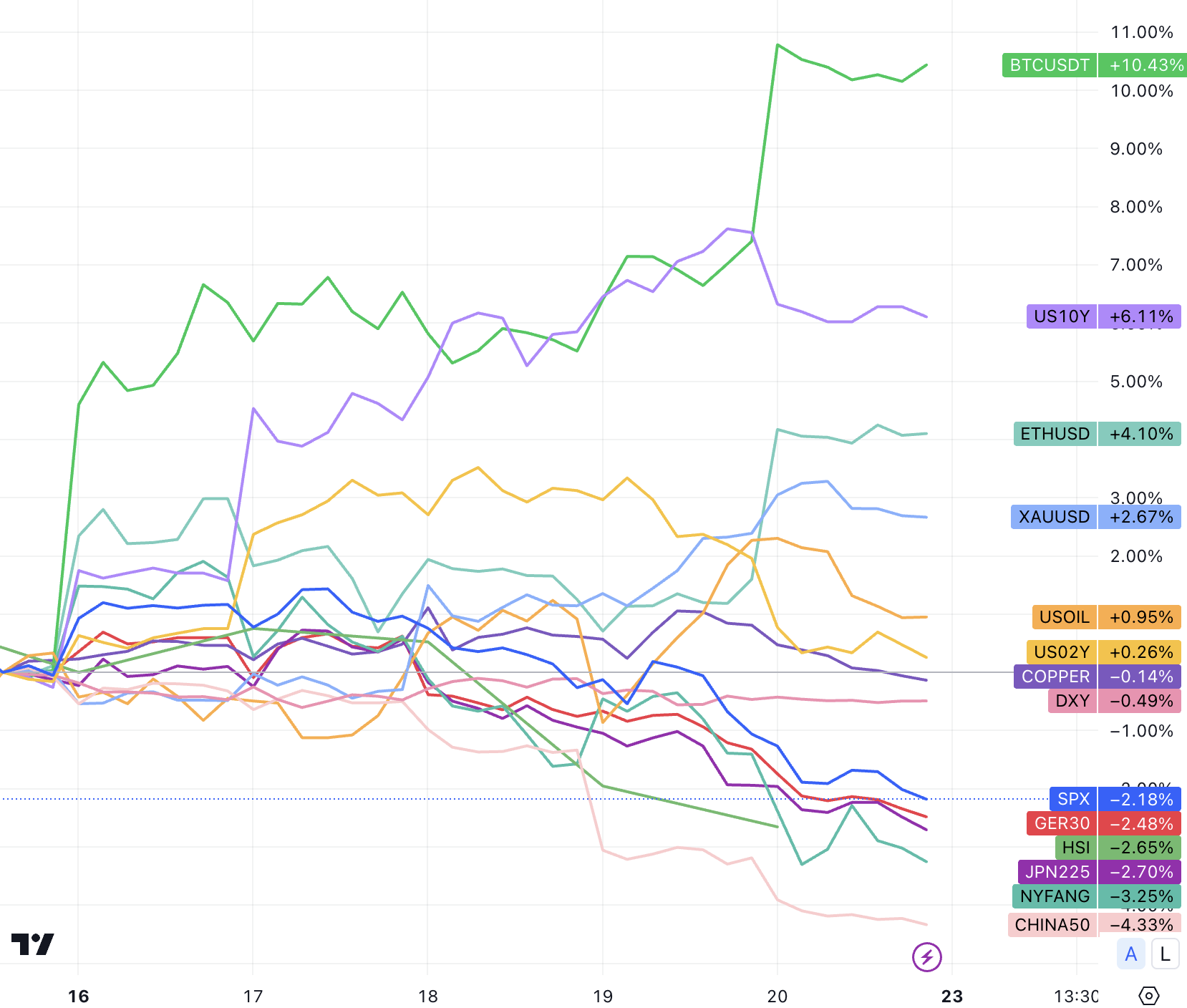
Affected by war risk aversion and the Q3 financial report that was less than expected, Treasury interest rates reached new highs, the Fed issued another hawkish tone, and economic data (retail sales, initial jobless claims) were better than expected. After a slight rise in the first two weeks, the US stock index last week Falling sharply, NAS 100 fell more than 3%, SP 500 fell 2.5%, closing below the 200-day moving average, big technology companies led the decline last week; in addition, European and Asian stock markets also generally fell, Germany 30 fell 2.4%, China 50 fell 4.3% (Although Chinas GDP exceeded expectations by 4.9%, deflator -1.4%), JPN 225 fell 2.7%. U.S. small-cap stocks and Chinese stocks fell below year-to-date lows.
The price of gold rose nearly 3% last week, reaching its highest level in five months. Cryptocurrencies led by BTC surged last week against the background of all macro headwinds. This is consistent with the view put forward in our weekly report last week. Amid rising uncertainty In the context of the epidemic, the need for diversified allocation will be highlighted, and alternative assets such as gold and digital currencies will benefit, although the cryptocurrency market started a week later than gold.
Cryptocurrencies were able to buck the trend and rise sharply against the backdrop of the decline in global stock markets. This broke the previous trend of positive correlation between the two and will help cryptocurrencies further restore confidence and move out of independent markets.
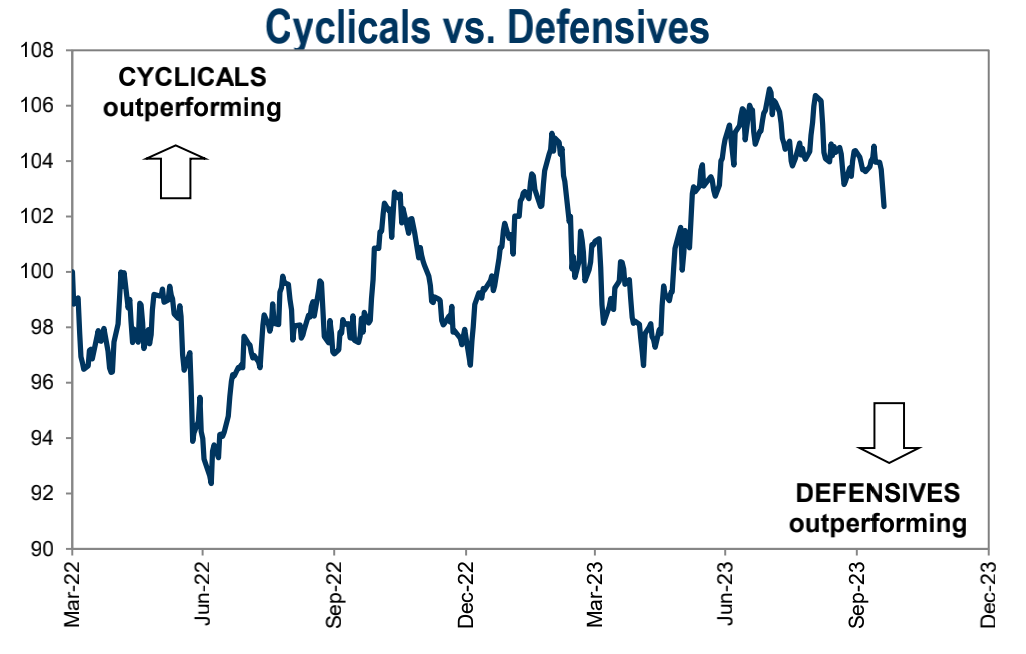
Defensive stocks performed better:
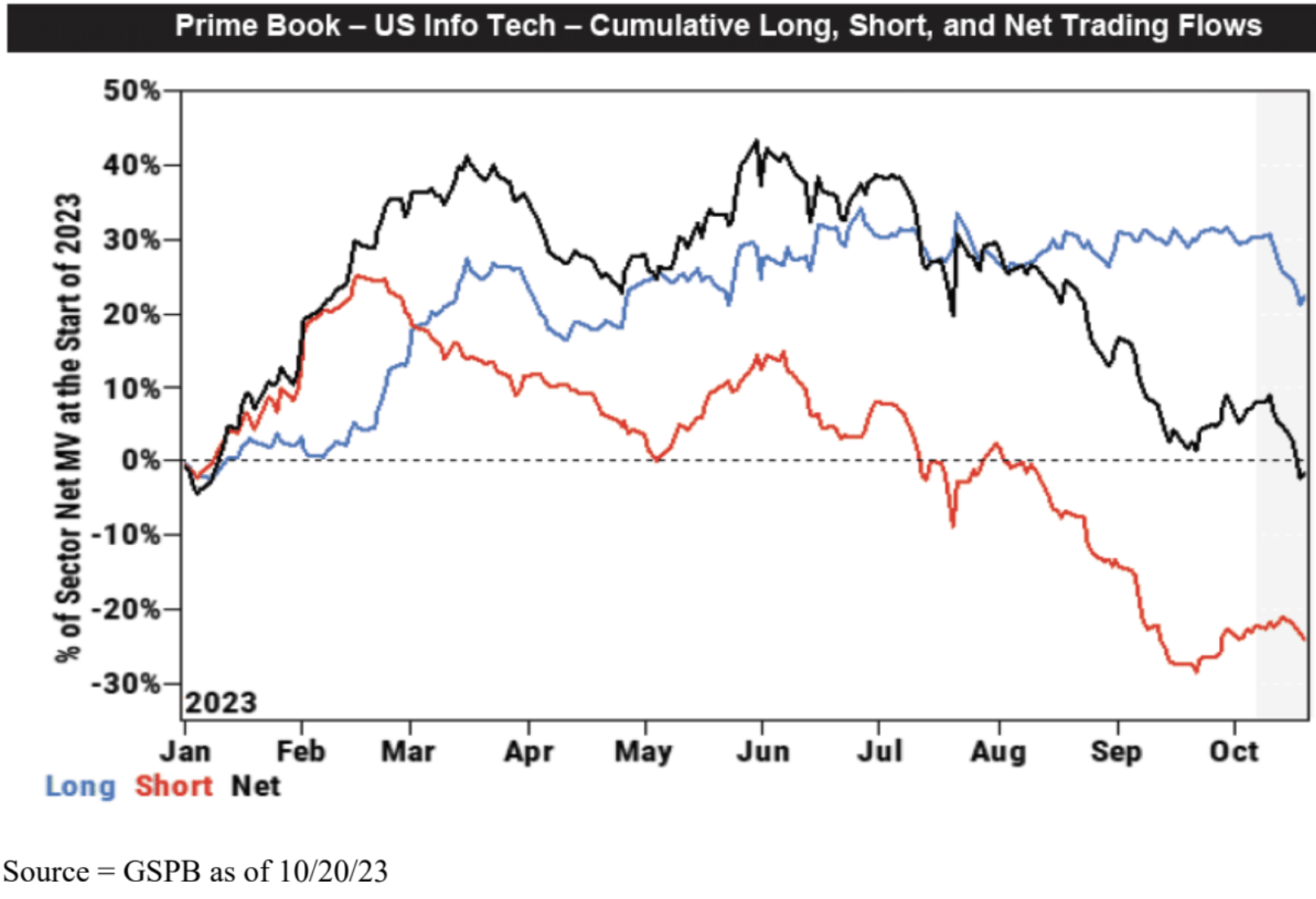
According to GS PrimeBook data, the information technology sector saw a large-scale reduction in positions and profit-taking among institutional investors last week, mainly concentrated in stocks with poor quality:
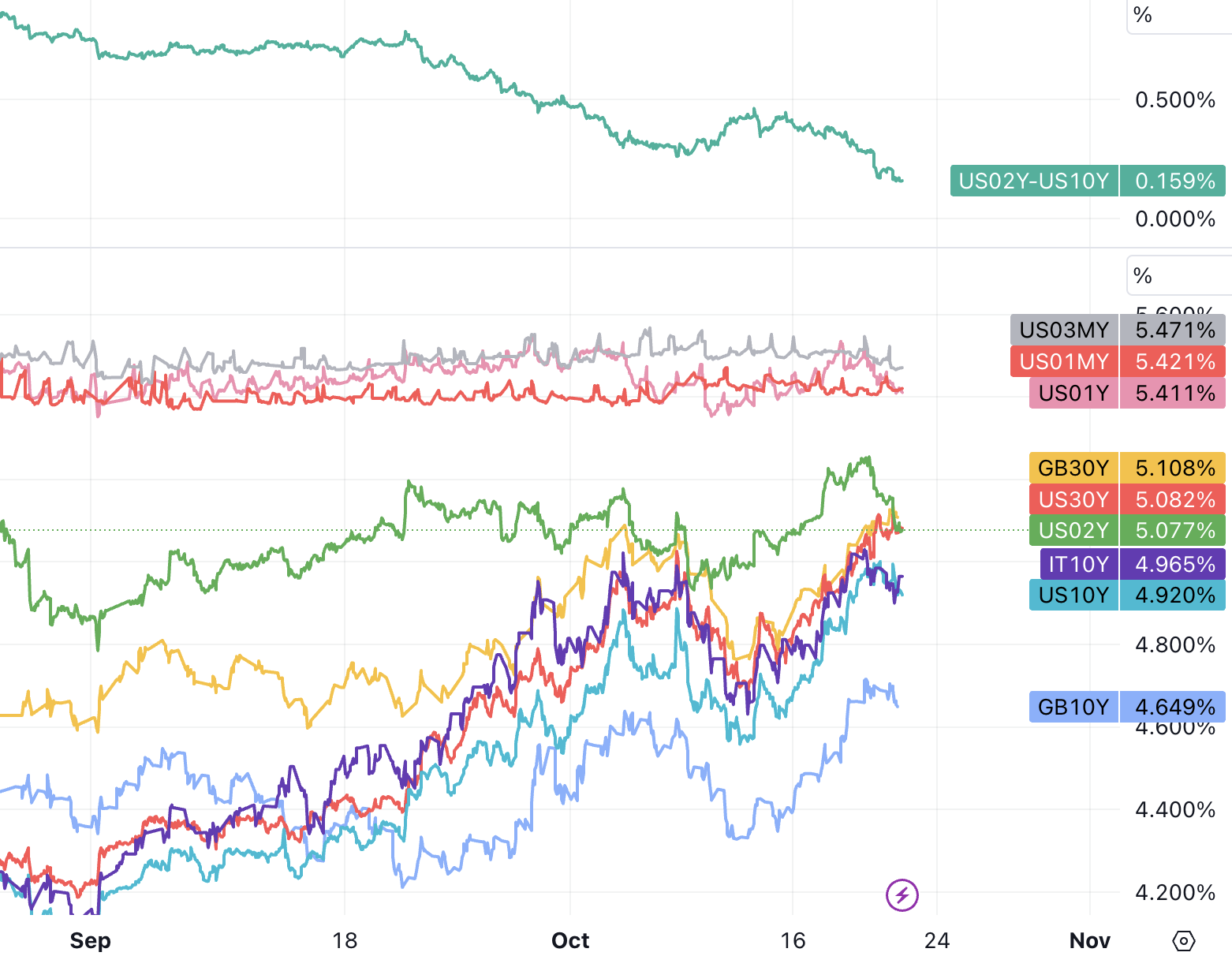
The 10-year U.S. Treasury bond yield almost touched 5% in intraday trading on Thursday, refreshing the highest level since July 2007; the 30-year U.S. Treasury bond challenged the 5.1% mark for two consecutive days on Thursday and Friday, refreshing the highest level since May 2007. highest level since last month. A 1 percentage point increase in 10 yr and 30 yr since August would be equivalent to 4 rate hikes. In addition, the national debt of major European countries is also challenging multi-year highs (DE 10 yr 2011, IT 10 yr 2012, GB 10 yr 2008)
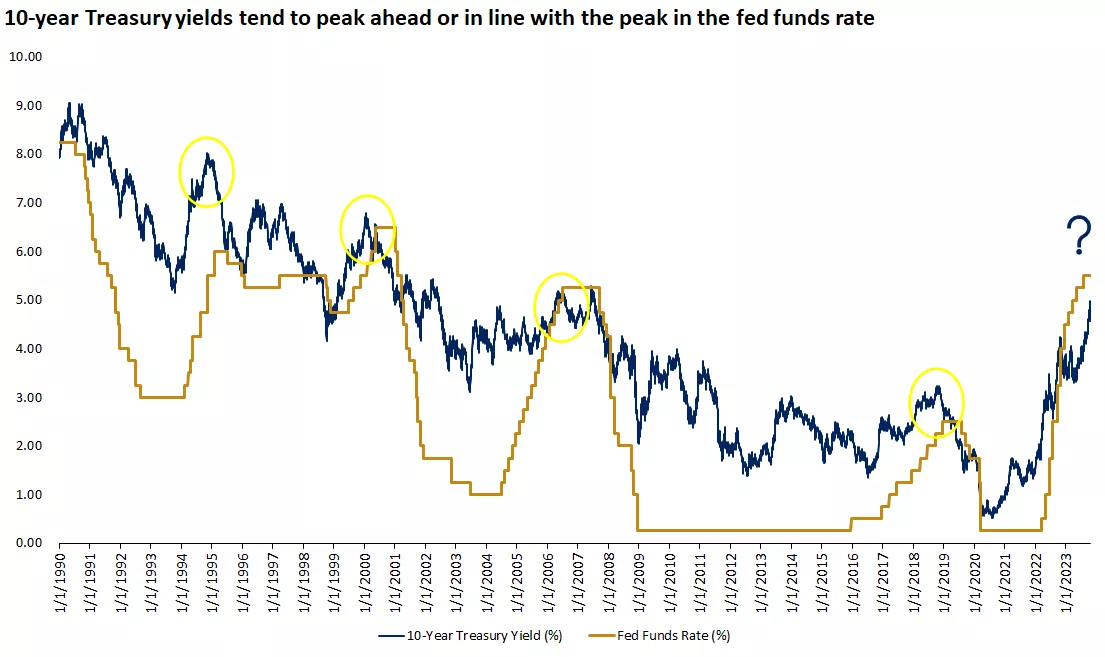
Historically, U.S. bond yields have peaked ahead of the Feds policy rate, and if we expect the Fed to be close to completing rate hikes, then yields may already be close to their peak levels.
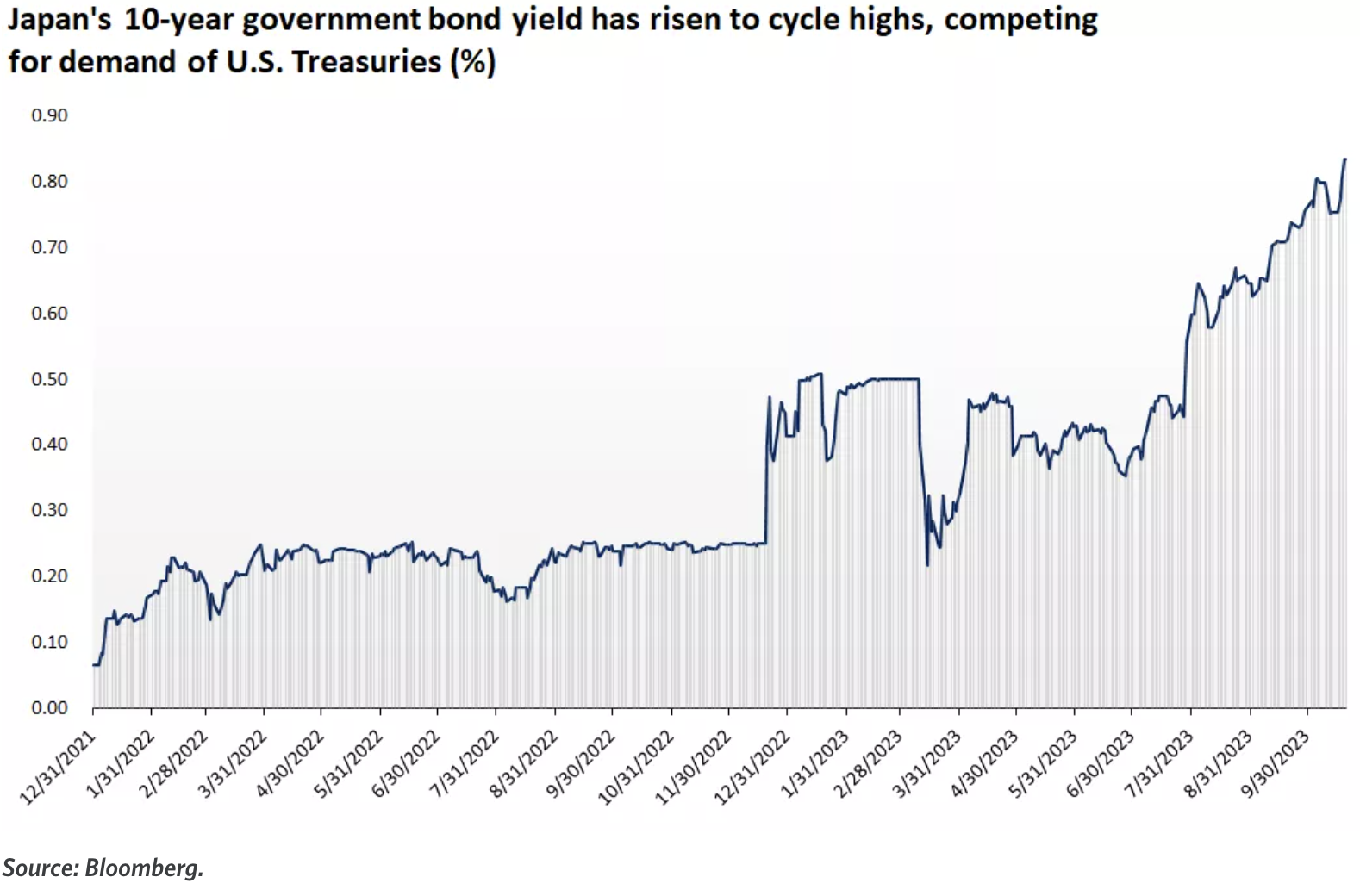
The Bank of Japans failure to contain 10-year government bond yields from rising above 0.8% - the highest since 2013 - could further reduce Japans reliance on U.S. dollar assets:
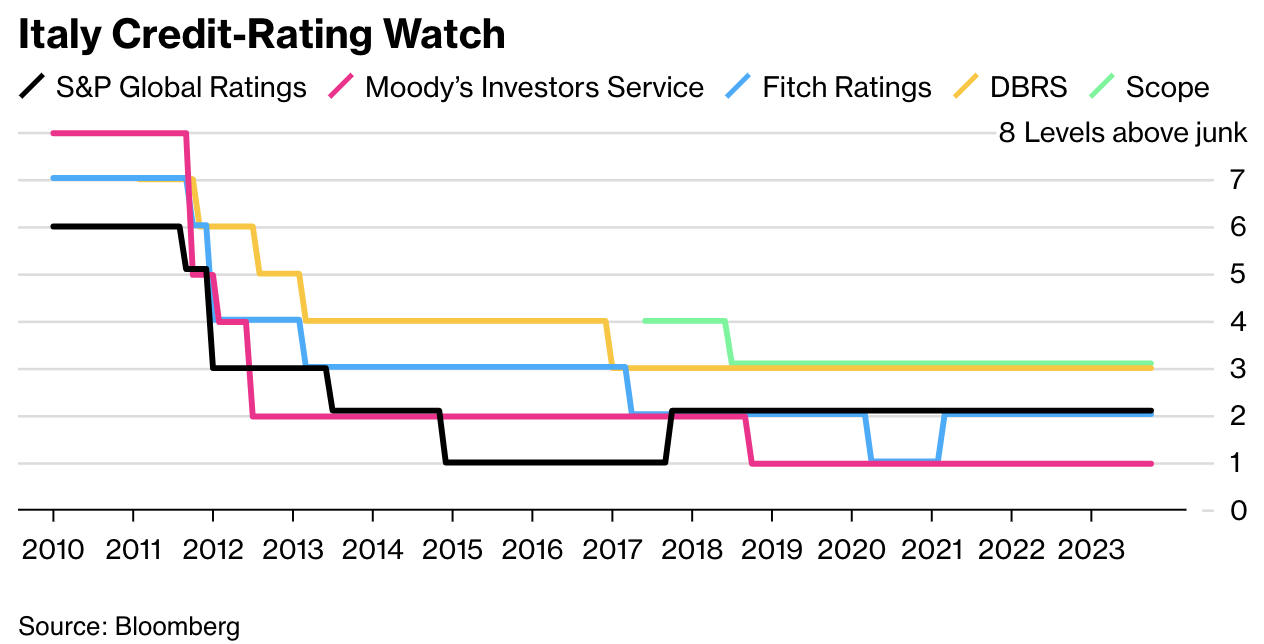
SP affirmed Italys sovereign debt rating at BBB with a stable outlook. The current widening gap between Italian government bond yields relative to German and other core euro zone bond yields is likely to become a focus of this weeks European Central Bank meeting, focusing on whether to support it through the PEPP reinvestment plan first.
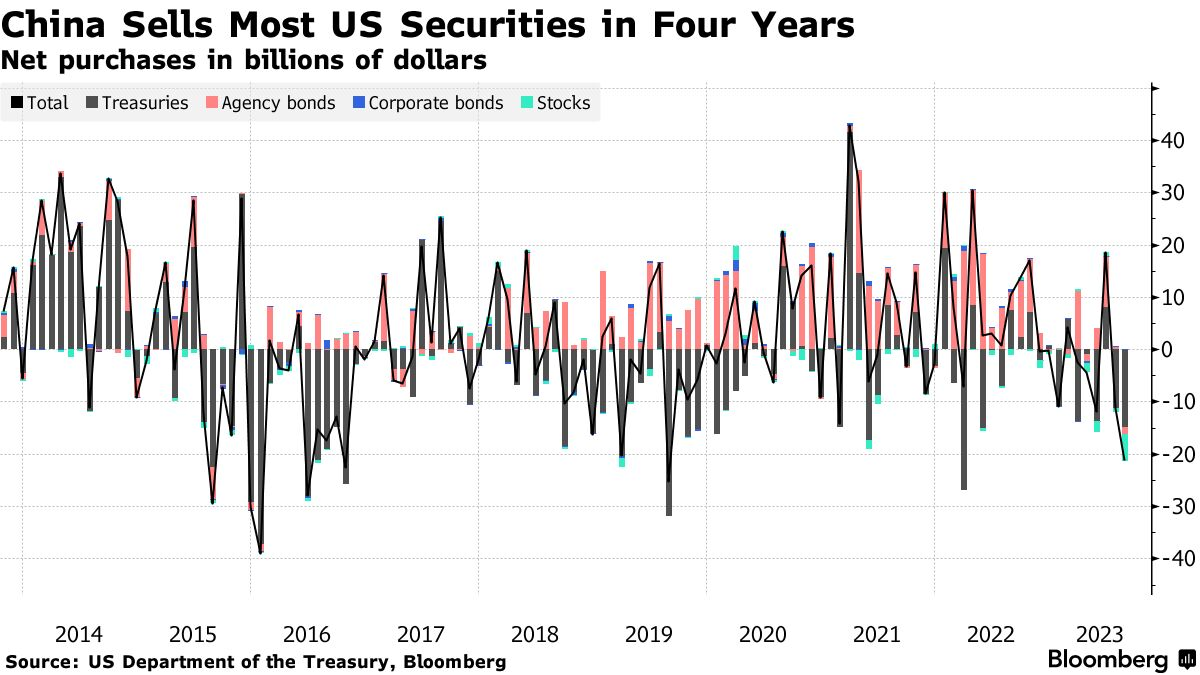
U.S. Treasury data on Wednesday showed Chinese investors sold the most $21.2 billion in U.S. bonds and stocks in four years in August, including a record $5.1 billion in U.S. stocks. This has triggered speculation that assets are being liquidated to obtain US dollar cash in case intervention operations are needed to defend the yuan in the future.
3Q financial report progress
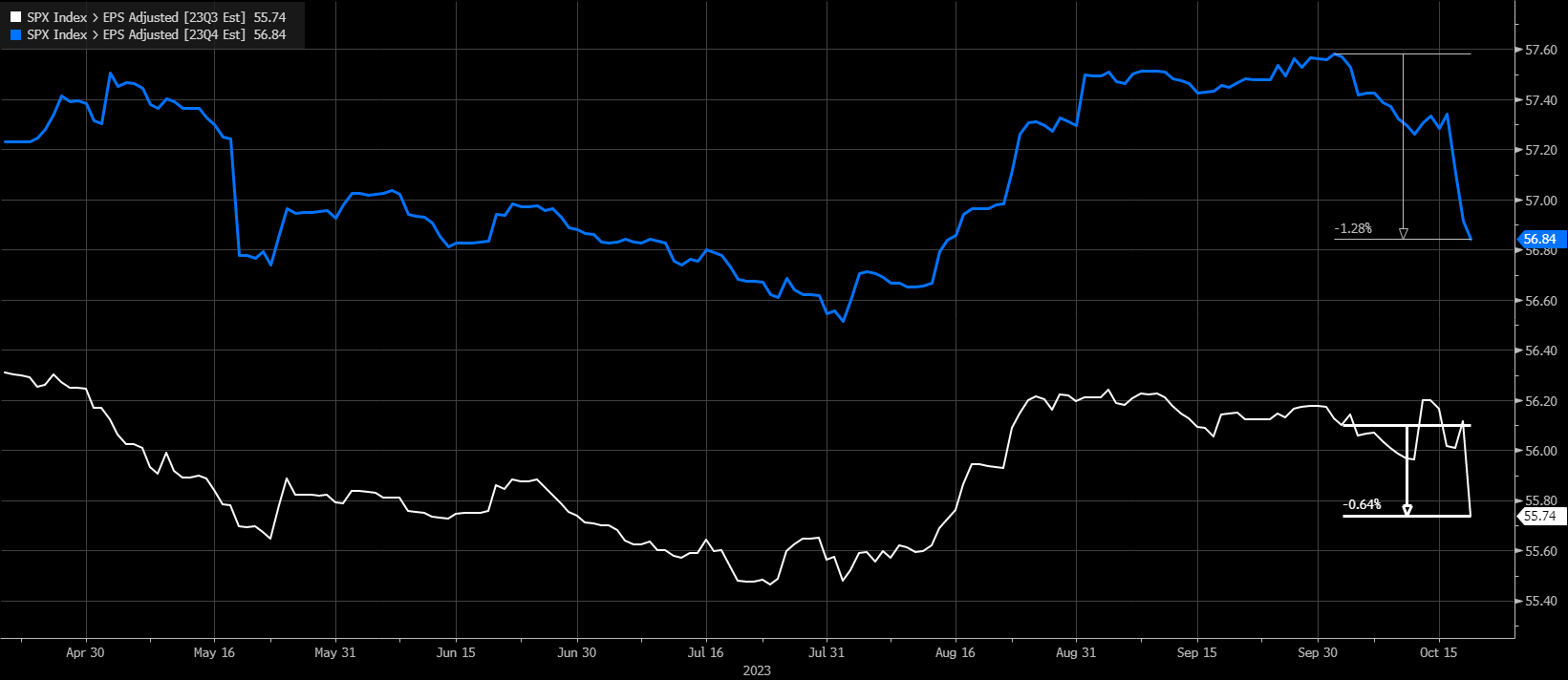
Earnings estimates for companies in the SP 500 index got worse this quarter, based on actual results from 86 companies that have reported earnings, as well as forecasts from companies that havent reported but expected results.
Combined with companies that released financial reports last week, overall net profit is expected to fall by 0.4% compared with the same period last year. This forecast is slightly lower than the previous weeks forecast, when the consensus expected a 0.4% year-over-year increase.
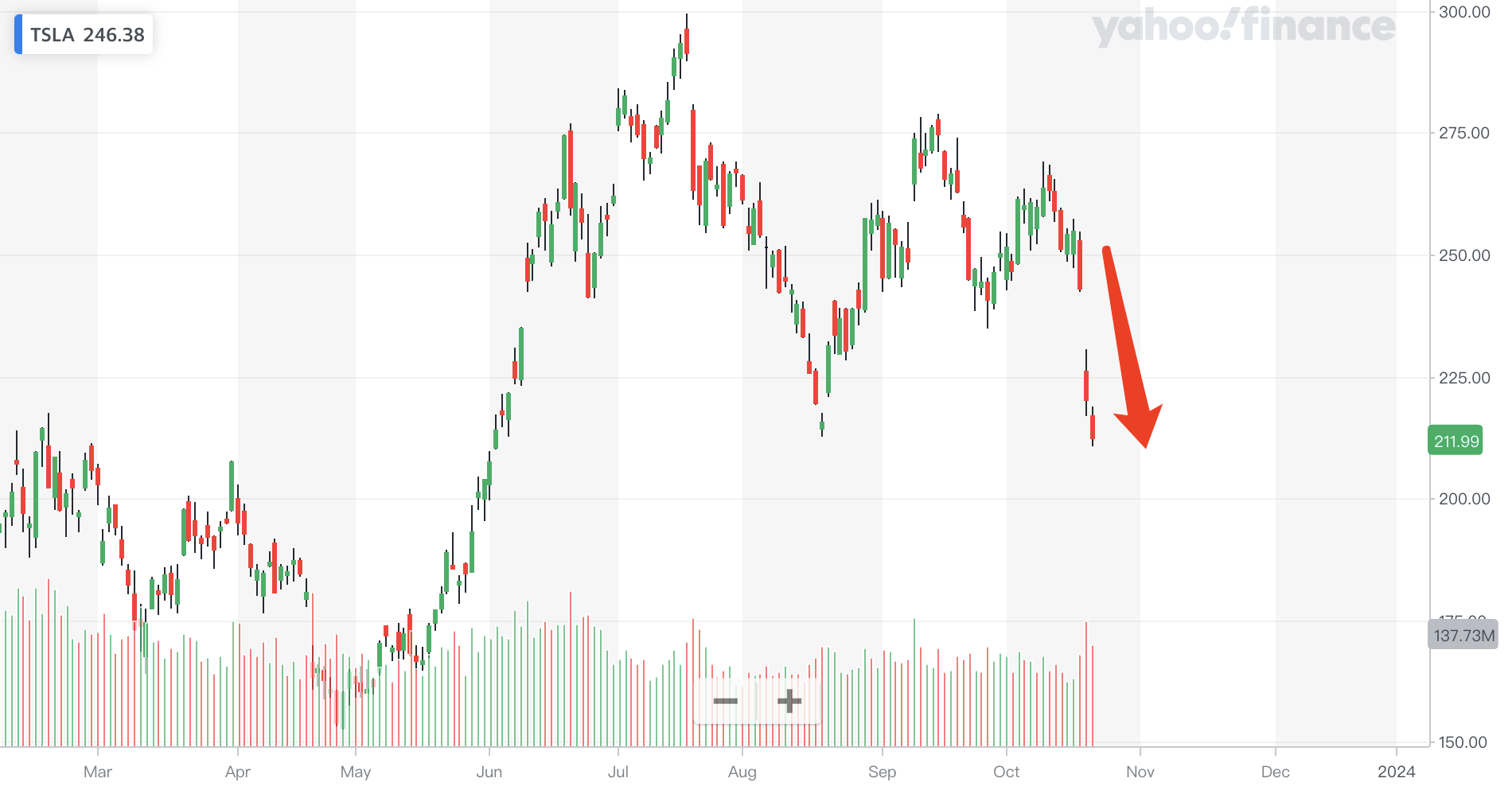
Of particular note is the star company Tesla. Its third quarter 2023 financial report shows that Tesla’s revenue in the third quarter of this year was approximately US$23.4 billion, a year-on-year increase of 9%, which was lower than Wall Street’s expectations of US$24.3 billion. It was the slowest growth rate in three years; net profit was US$1.853 billion, down 44% year-on-year, and gross profit margin further fell to 17.9%, down 0.3 percentage points from 18.2% in the second quarter, a four-year low. Combined with the general correction of technology stocks, Teslas stock fell -15.22% last week, and its market value evaporated by more than $100 billion.
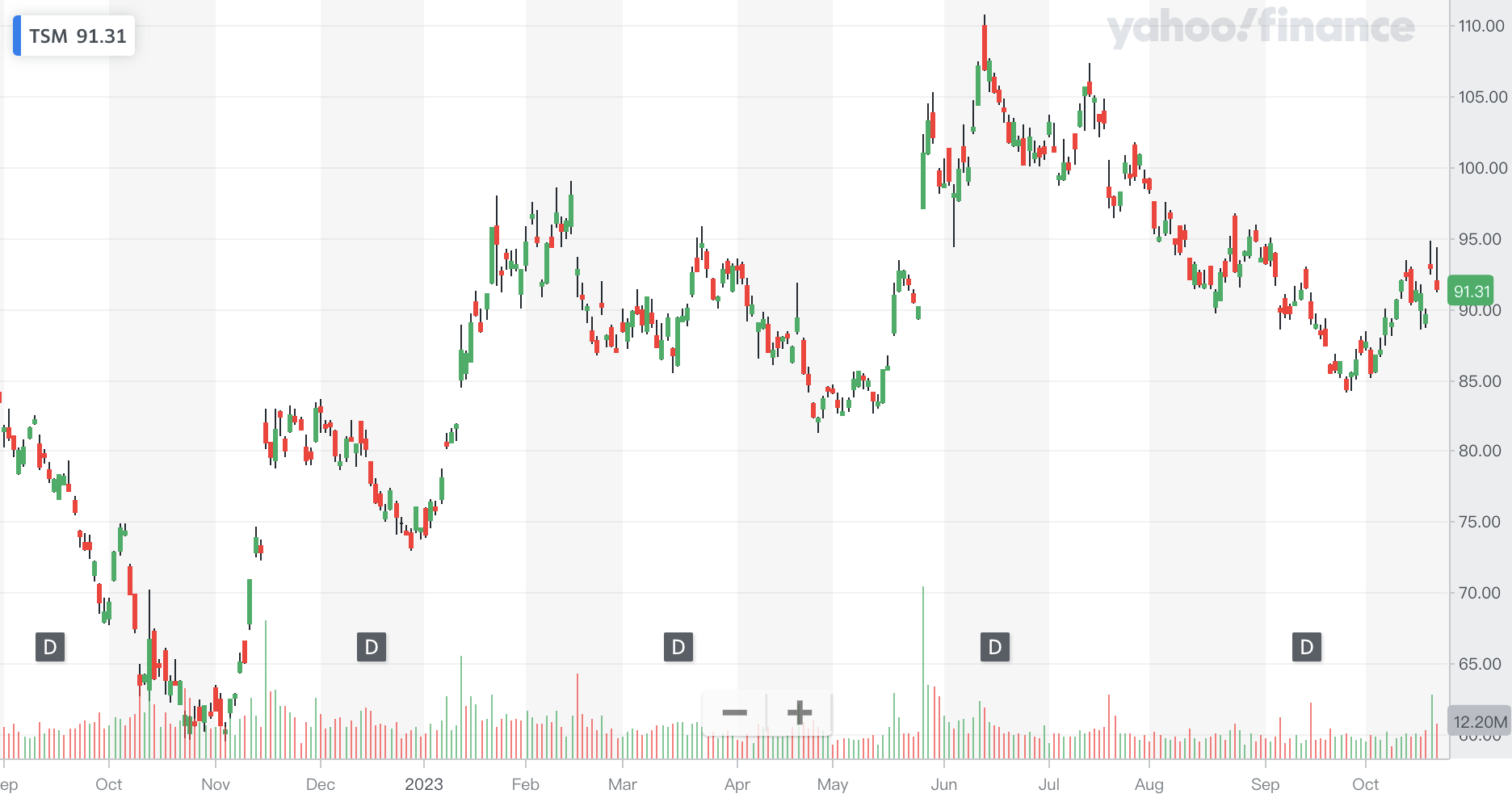
Another star company with the opposite fate to Tesla is TSMC, which last week reported third-quarter revenue of NT$5,47 billion ($17 billion), down 11% from the same period last year. Net profit was NT$2,11 billion, higher than analysts forecast of NT$190 billion, but down 25% from the same period last year. But the company expects a broader recovery in semiconductors next year and stronger demand for high-end chips. So TSMC shares bucked the trend and closed up 1% last week.
Also worth noting is that revenue from the high-performance computing segment, which includes high-end artificial intelligence chips, accounted for 42% of its total sales, down from 44% in the previous quarter but up from 39% in the same period last year.
Progress of the Israel-Kazakh War
The Israel Defense Forces and conscripted reservists are currently gathering on the border between Israel and Gaza, ready to launch a ground offensive against Gaza.
In order to prevent the escalation of the war between Israel and Kazakhstan, more than a dozen countries held a peace summit in Cairo this past weekend. Major countries around the world sent officials to attend the meeting, but what was embarrassing was that Israel refused to attend. Finally, due to differences among the leaders and representatives of Arab and Western countries present at the meeting, no joint statement was issued after the meeting. At the meeting, Arab leaders condemned Israels bombing of the Kasa Strip and demanded that Israel end the operation immediately. Most Western leaders emphasize that civilians should be protected and call for humanitarian assistance to be provided to civilians.
Biden visited Israel last week, a particularly clear signal of support during the war. He then proposed to Congress $14 billion in aid to Israel (a total of $100 billion, a huge financial drain). He also stated that he did not want to send U.S. troops to fight Russia on Ukrainian territory, but did not make the same commitment on Israeli territory.
The U.S. government has pressured Israel to delay its upcoming invasion of Gaza in order to release more Hamas hostages, according to sources. Blinken: There are still 10 Americans who remain unaccounted for in this conflict... We know that some of them are being held hostage by Hamas, and an estimated 200 or so hostages are also being held in Gaza. But at the same time, The U.S. military is also sending more missile defense systems to the Middle East and deploying additional U.S. troops under readiness to deploy orders.
Israel has taken a tough stance, saying it will dismantle Hamas no matter what happens to the hostages. Hamas offered to deport two Israeli women on Saturday, but Israel refused to accept them, in what the prime ministers office said was a Hamas propaganda ploy to win international sympathy.
The Israel Defense Forces will increase air strikes in Gaza starting today, IDF spokesman Daniel Hagari said on Saturday. Asked whether Israel would halt ground operations in Gaza due to U.S. pressure, Hagari said the Israeli military would launch such an operation when military conditions are optimal.
Israels prime minister warned Hezbollah would be devastating to Lebanon if it entered the war.
The death toll in Gaza has risen to 4,651 since October 7, with more than 14,245 injured, the Palestinian Health Ministry said on Sunday.
At present, it seems that the Israel-Kazakhstan war may not have really started, and the United States is unlikely to prevent Israel from sending ground troops. The impact on oil prices may continue for some time. Middle Eastern countries may use crude oil as a weapon against Israel and its allies, such as Iran’s Foreign Minister Last weeks call for all Muslim countries to impose an oil embargo on Israel spurred another rise in oil prices.
Reduced Iranian oil exports are the most likely short-term consequence. Iranian oil exports are currently at their highest level since 2018 at 2 million barrels per day, due in large part to the easing of U.S. sanctions. However, Irans overt support for Hamas and Hezbollah could lead to a major shift in U.S. policy toward Iran, though it would have little impact on Opecs output of more than 30 million barrels per day.
And let’s not forget that last week the U.S. military encountered drone attacks in Iraq and Syria, while the Navy encountered drones and cruise missiles launched from Yemen.
In addition, the US Department of Energy said last week that it is prepared to purchase 6 million barrels of oil as reserves at a price of US$79 per barrel or lower. The time frame for potential purchases is December and January. This of course means zero replenishments, as it’s hard for oil to fall that low, with the U.S. Strategic Petroleum Reserve already half depleted at a time when geopolitical risks are at their highest levels in years:
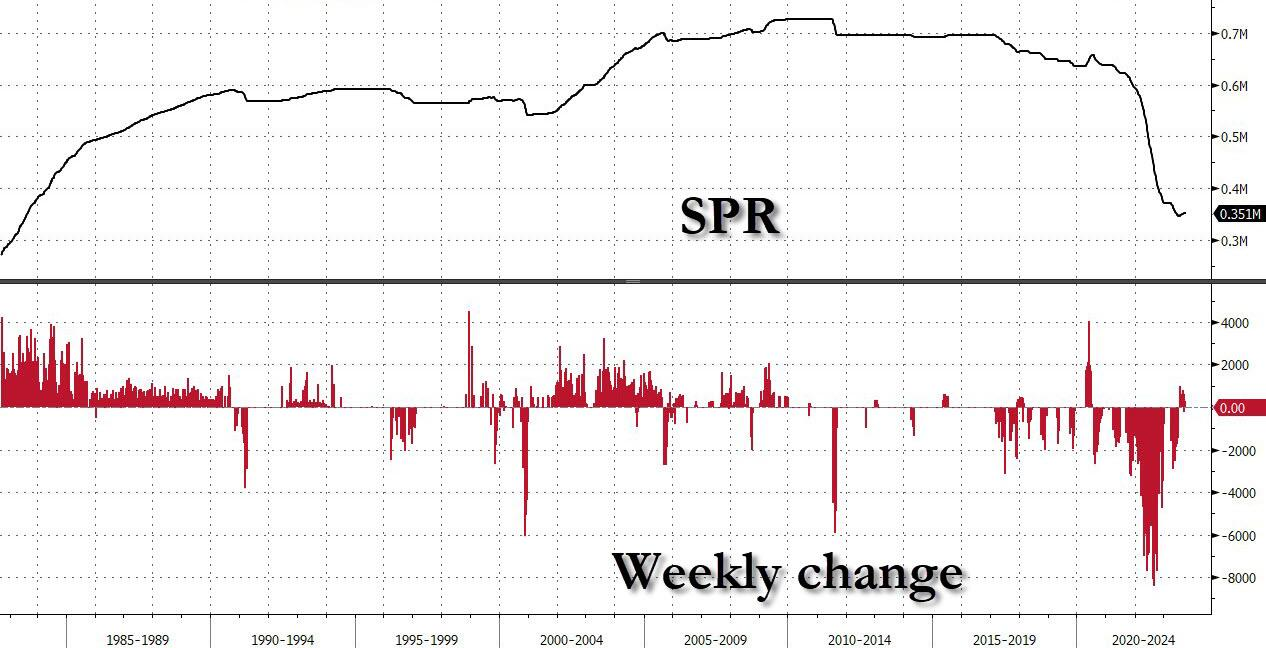
News of the replenishment of the SPR plan helped push up oil prices, with $79 seeming to be the new lower limit for oil prices.
The Speaker of the U.S. House of Representatives has another difficult delivery
Jim Jordan, mentioned last week, was ultimately defeated. Some commentators said that since McCarthy was elected Speaker of the House of Representatives after 15 rounds of voting at the beginning of the year, it is now difficult for the Republican Party to even recommend a recognized candidate for the party. Difficulty in childbirth for Speaker of the House has become a common occurrence in American politics. One of the most serious institutional crises encountered in the past decade.
With temporary government funding set to run out on Nov. 17, fears of a government shutdown will return to markets as the year progresses. And combined with Bidens plan of more than 100 billion US dollars in military aid to Ukraine and Israel, the market has priced in a substantial increase in U.S. fiscal expenditures, resulting in greater supply-side pressure on U.S. debt + civil strife in the U.S. government. The result is that 10 years has reached the same level as in 2007. new highs.
There is something a little bit like the American Truss Moment here. Think about it. Last year, the UK massively increased its deficit in the face of inflation, triggering the collapse of the capital market and bringing about the shortest-lived British Prime Minister in history, Ms. Truss.
Fed officials hawkish speech
Fed Powell: Suggested to keep interest rates on hold at next policy meeting ending on November 1st. But inflation is still too high, and if the economic situation is good, it is still possible to raise interest rates. (Hawk)
Fed Logan: There are currently no plans to cut interest rates, and it is not certain that inflation is returning to the 2% level. While there are some encouraging signs of inflation developments, high levels remain, necessitating the continuation of restrictive financial conditions. (Hawk)
Fed Bostic: The long-term equilibrium trend of the U.S. economy is still moving in a positive direction. He believes that there is no possibility of interest rate cuts before the middle of 2024, and there is a certain opportunity in the second half of 2024. He believes inflation will return to the 2% policy target, but the Fed should be very cautious and patient, stressing that the U.S. economy will not enter a recession. (Dove)
Fed Harker: The U.S. economy is very healthy and the labor market is very strong. It reiterated its preference to keep interest rates unchanged while closely monitoring economic data. (Hawk)
Fed Mester: I still support another interest rate hike. Interest rates may now be at or near their peak. Interest rates are expected to remain at their peak for some time. QT can be completely independent of interest rate hike policy. (Hawk)
experts point
Morgan Stanley: Surging yields are equivalent to three interest rate hikes, and a slowdown in the fourth quarter will prompt the Fed to pivot
Rising Treasury yields have led to a significant tightening of financial conditions. Compared with the September rate meeting, the current environment is equivalent to three more 25 basis point increases in policy rates, as measured by the Morgan Stanley Financial Conditions Index (MSFCI).
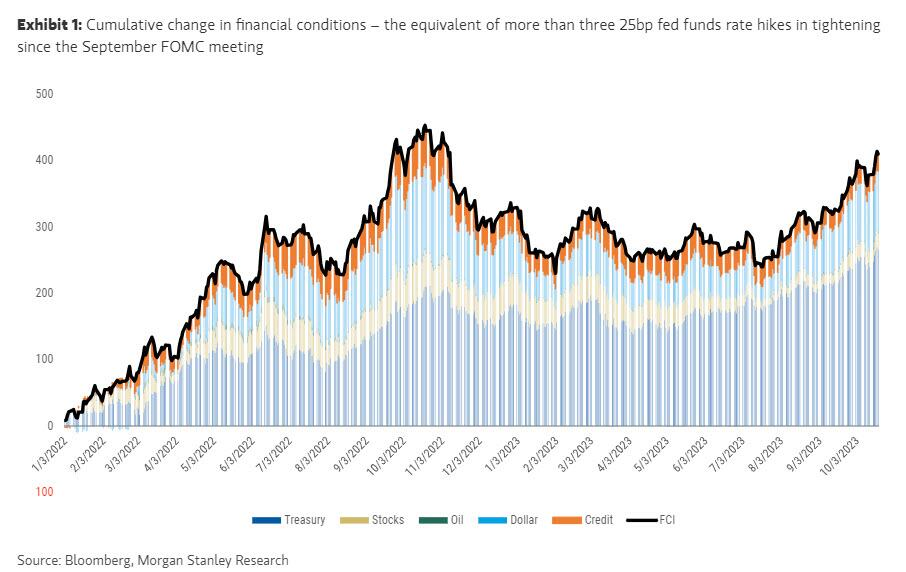
Is contraction caused by exogenous or endogenous factors. Sustained exogenous rate increases should slow economic growth, requiring the Fed to adjust the path of policy rates over time to offset the drag of rising rates. Conversely, if rising rates are an endogenous response that reflects continued strength in the economy, driven by more fiscal support, higher productivity, or both, then the Fed may see no need to lower its policy path.
We prefer the former explanation to the latter. We believe that the growth momentum in the third quarter is unlikely to be sustained. Ellen Zentner, chief U.S. economist at Morgan Stanley, pointed out that in the third quarter, consumer spending benefited from large-scale One-off events – Barbenheimer, Taylor Swift’s The Eras Tour and Beyoncé’s Renaissance Tour…the end of these events, coupled with the expiration of the student loan moratorium, will significantly impact real personal consumption in 4Q23 and, in turn, economic growth Tighter financial conditions due to rising long-term yields will only exacerbate this drag. As a result, we expect Q4 data to show slower growth, which will lead to a reversal of the recent surge in yields driven by lower term premiums.
Fund flows and positions
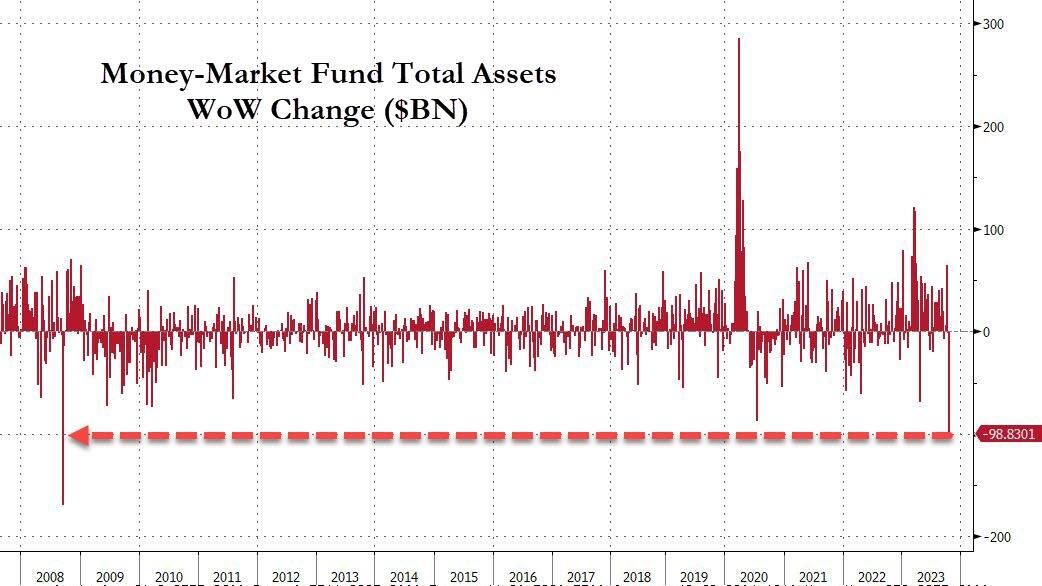
U.S. money market funds saw their largest weekly outflows since Lehman Brothers (Q3 2008), -$99 billion:
All outflows are institutional funds (retail fund inflows):
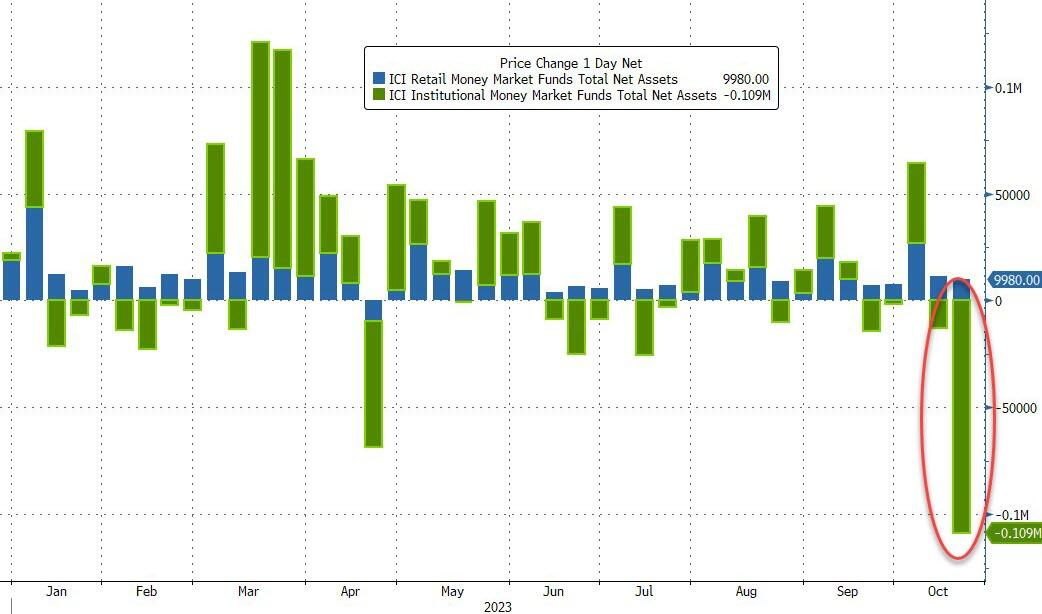
This could be driven by extended tax deadline payments, but could it be something else?
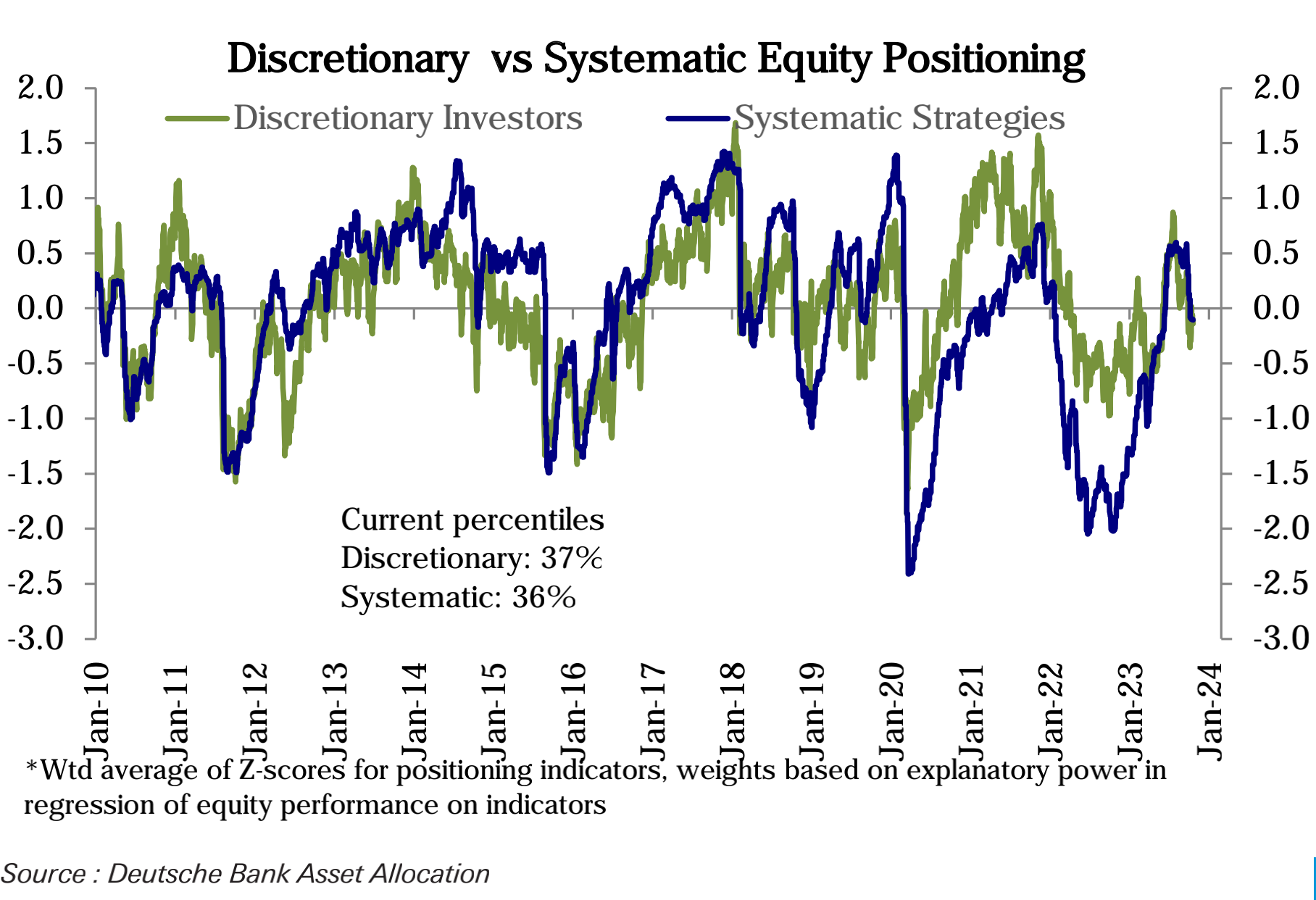
Both subjective investor positions (37th percentile) and systematic strategy positions (36th percentile) declined slightly to just below neutral:
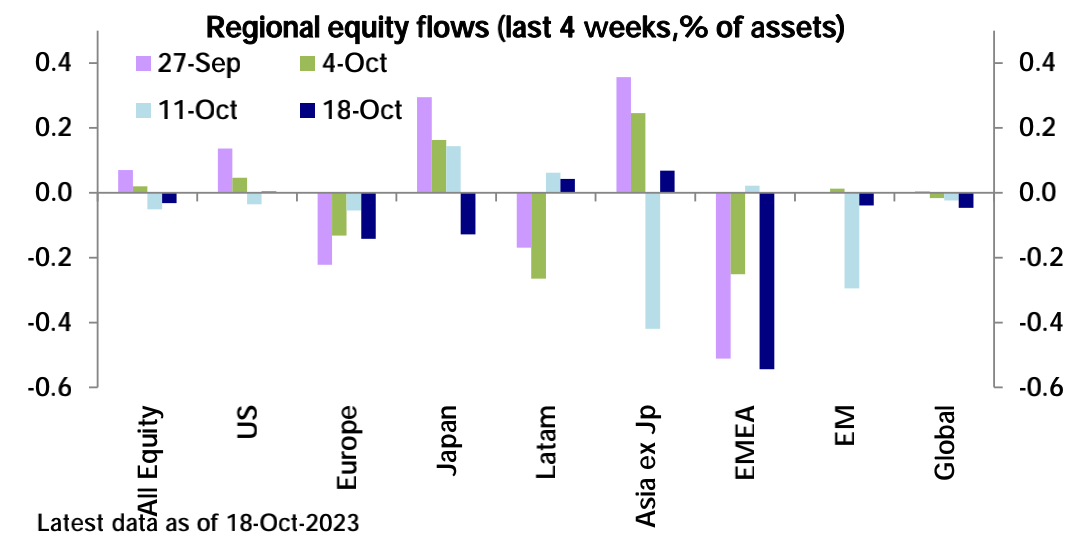
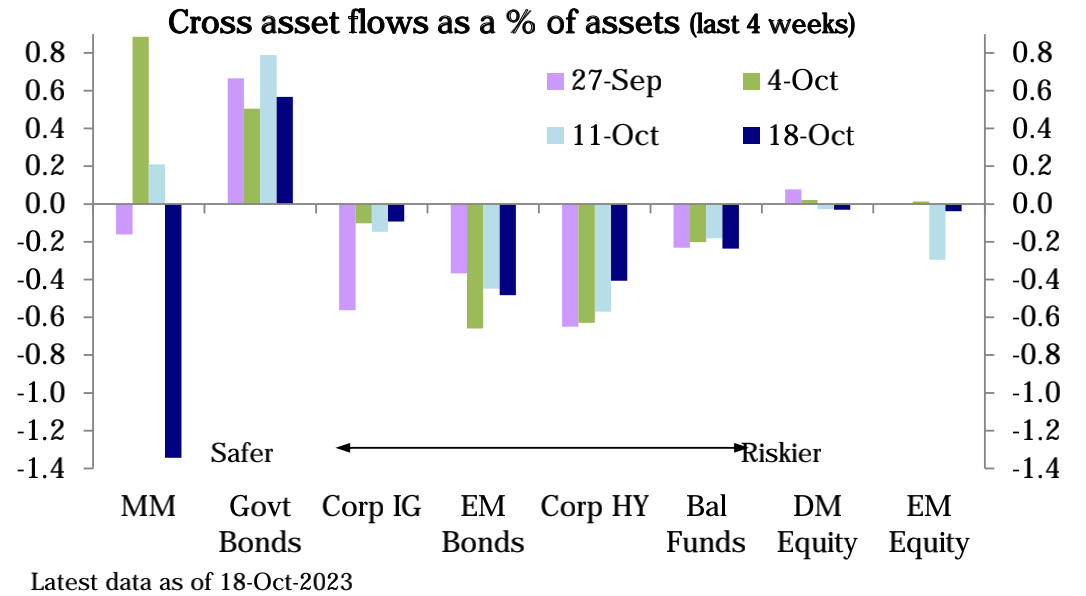
Global equity funds (minus $5.2 billion) saw outflows for the second week. The United States ($300 million) received modest inflows, while other major regions saw outflows. Inflows into bond funds ($2.1 billion) slowed from last week.
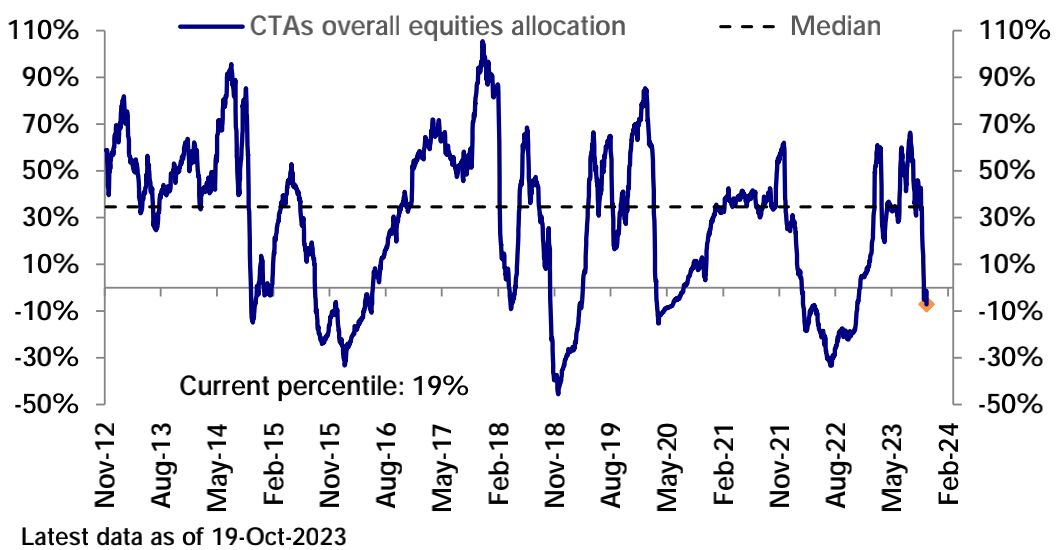
CTAs continued to further trim their overall equity allocations last week after shorting the index for the first time since November 2022.
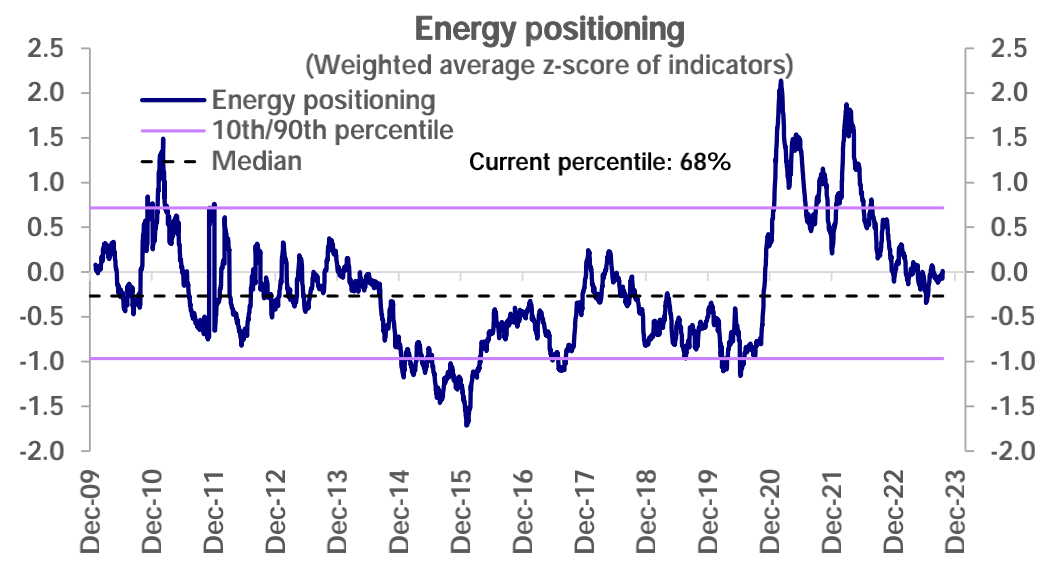
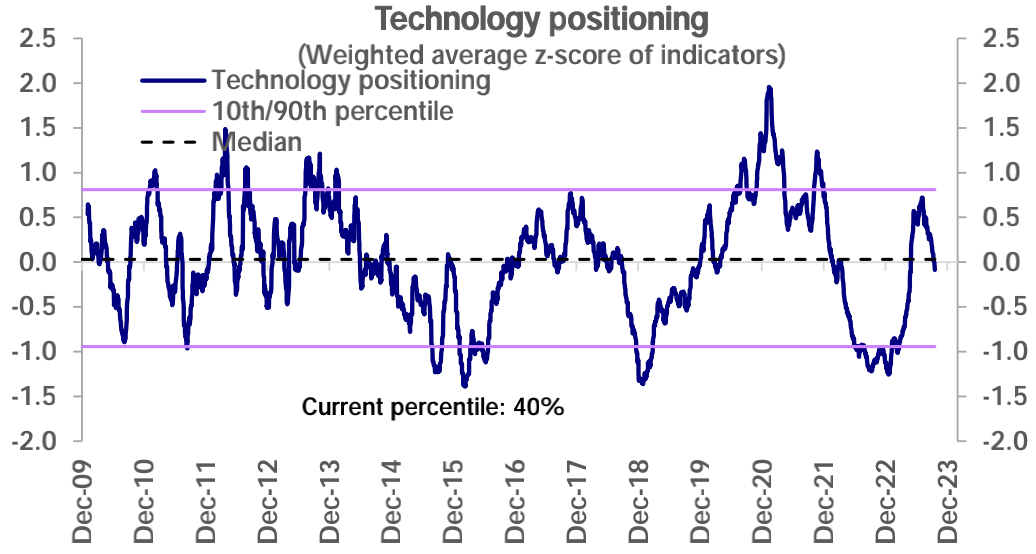
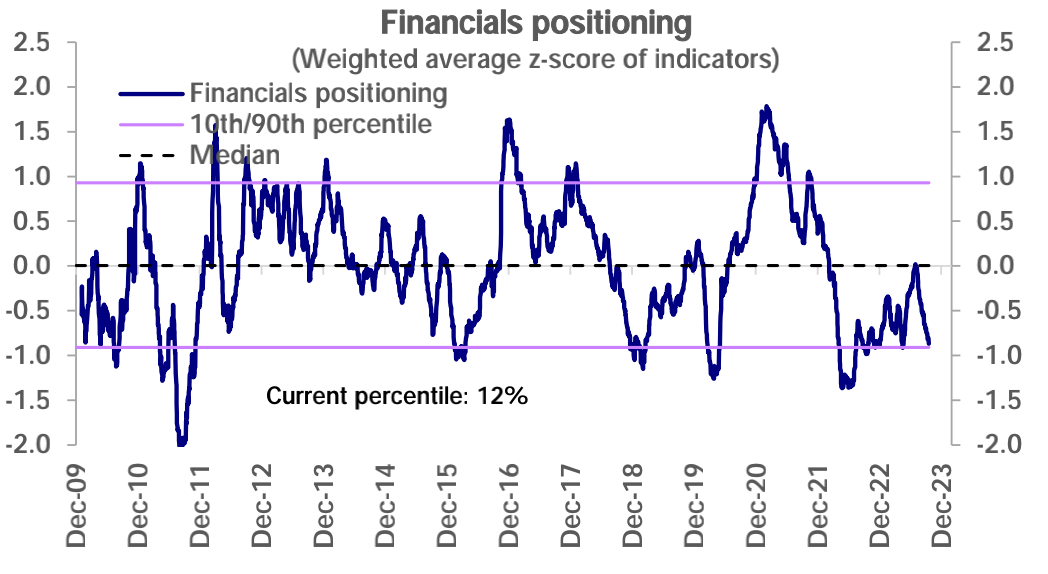
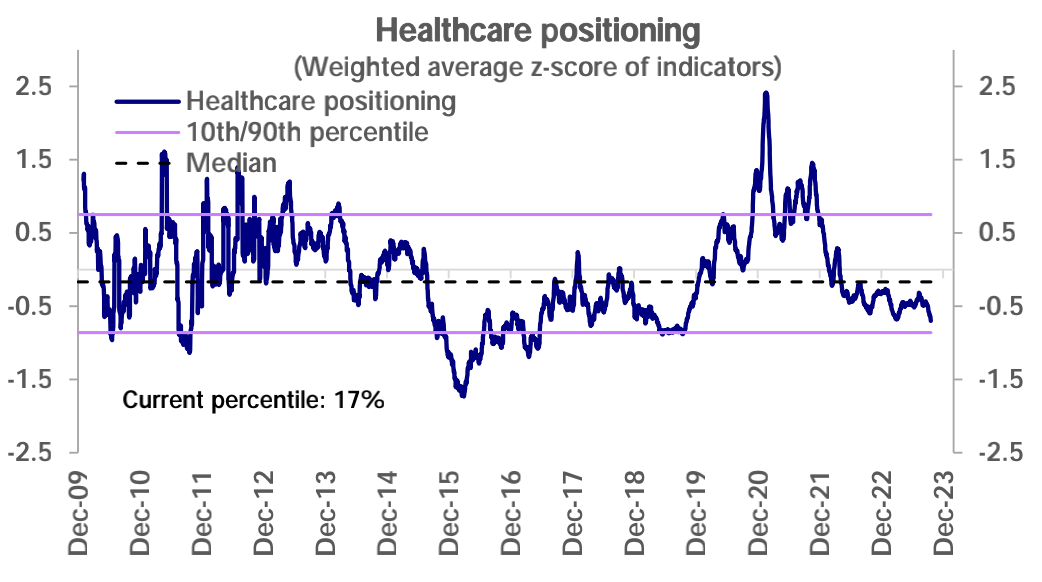
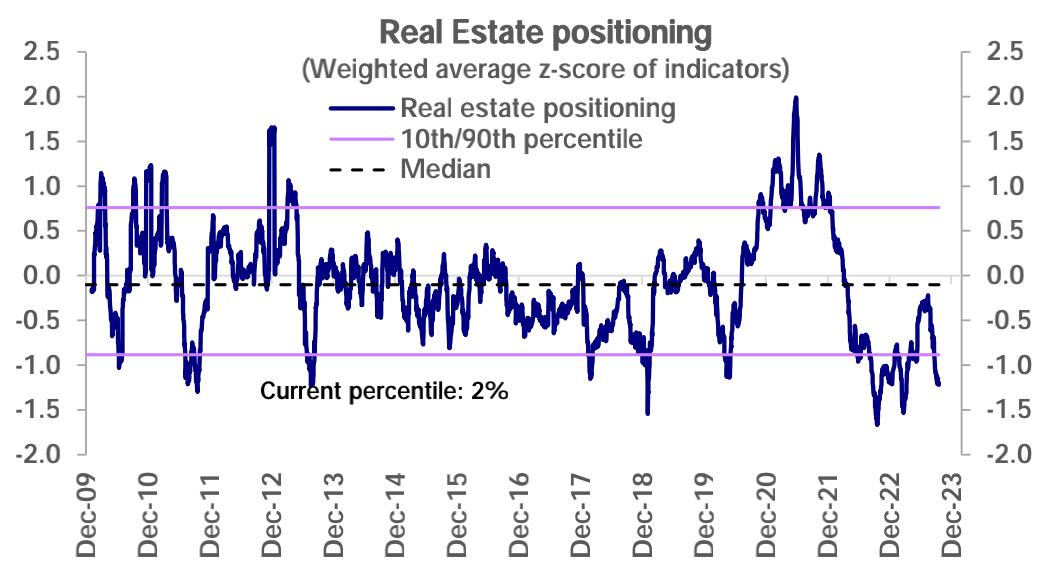
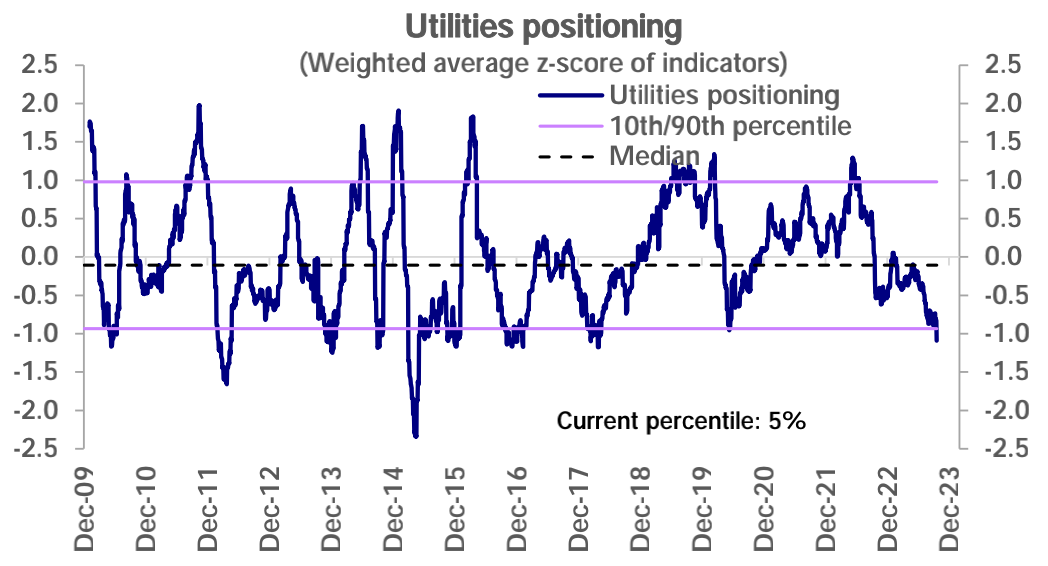
From an industry perspective, except for the energy industry (68th percentile), which is above average, almost all industries have declined and are below the 50th percentile, especially materials (27th percentile) and healthcare (17th percentile). Positions in the 12th percentile) and Financials (12th percentile) are already significantly below average, with positions in Utilities (5th percentile) and Real Estate (2nd percentile) at extreme lows.
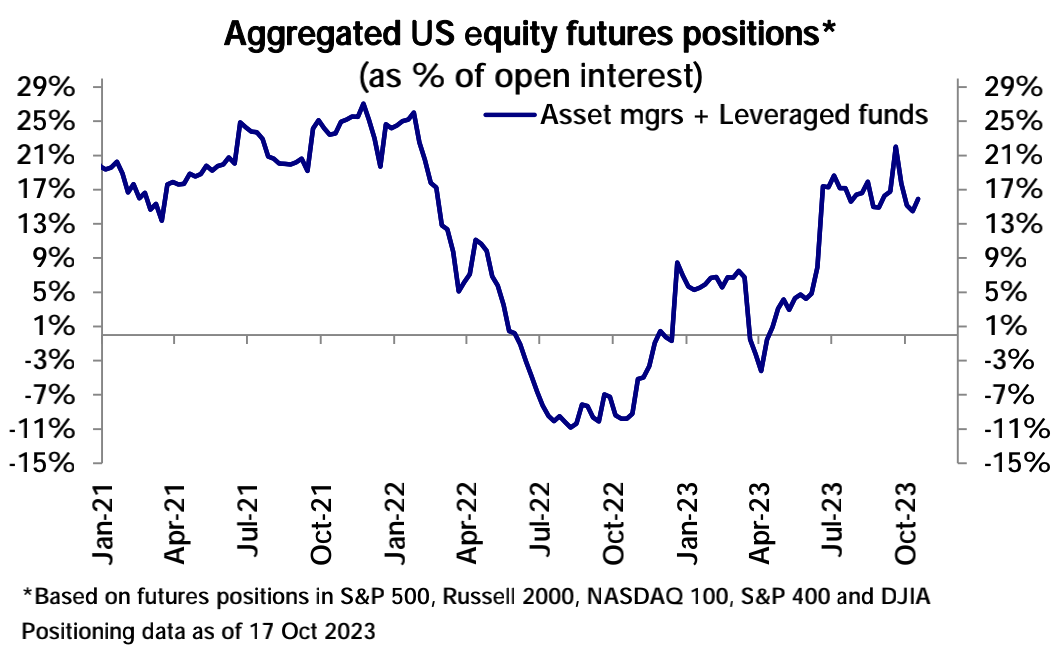
CFTC futures data showed an overall increase in net long positions in stocks, as net longs increased in the SP 500 and Nasdaq 100, while net shorts in the Russell 2000 decreased.
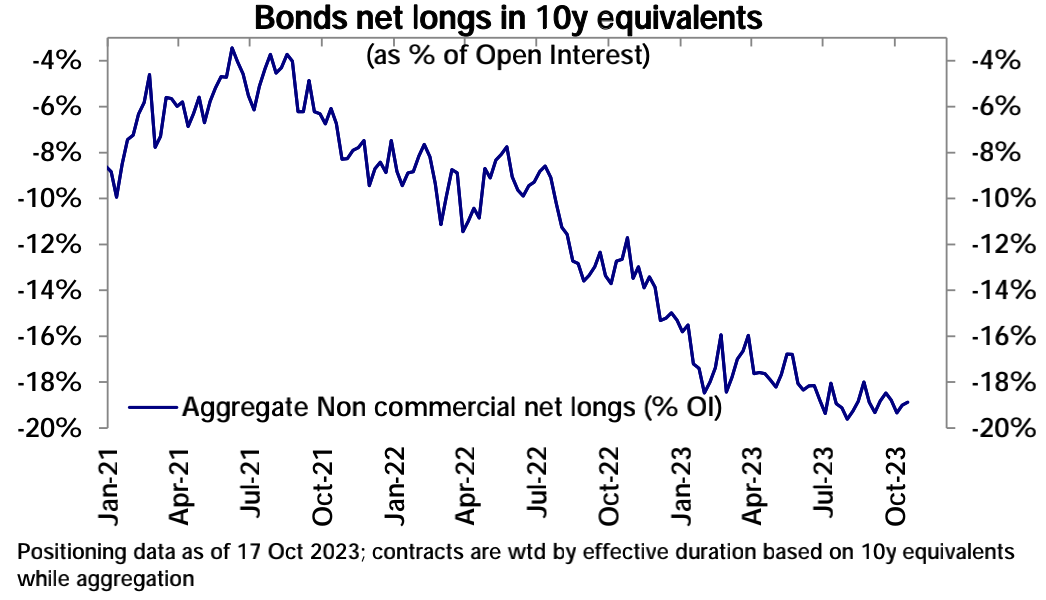
In bonds, overall net shorting declined slightly, as declines in net shorting in the 10-year and 30-year outweighed increases in the 2-year and 5-year.
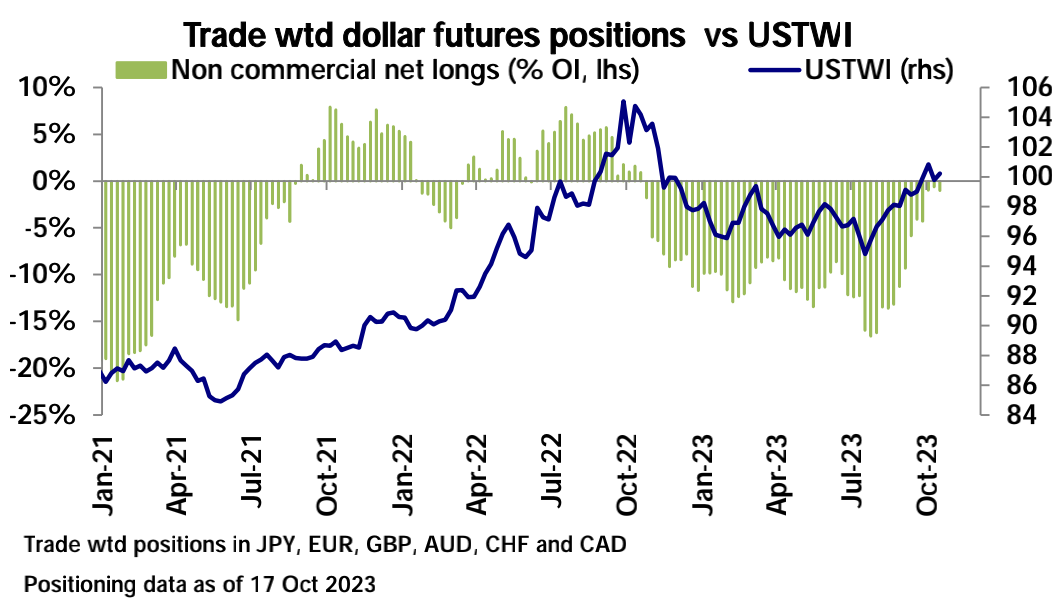
On the FX front, as net longs in the euro increased, overall net shorts in the U.S. dollar increased slightly:
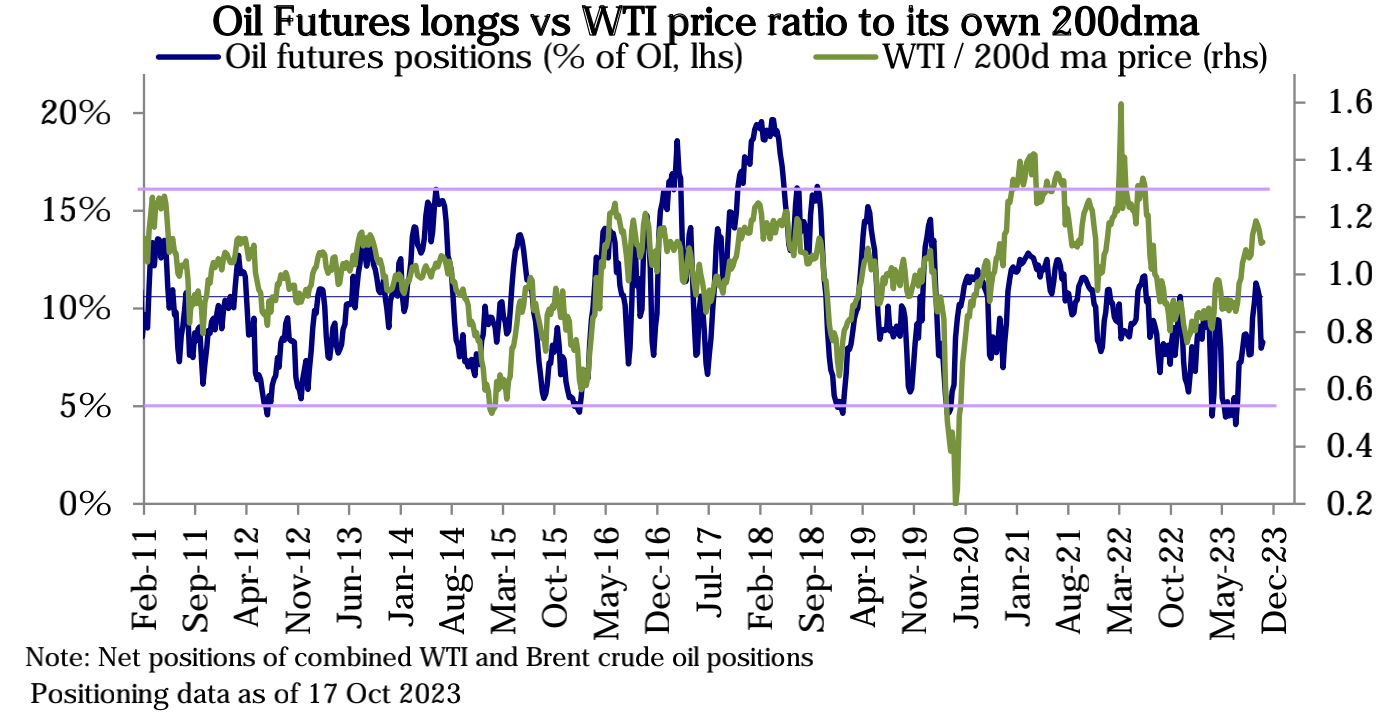
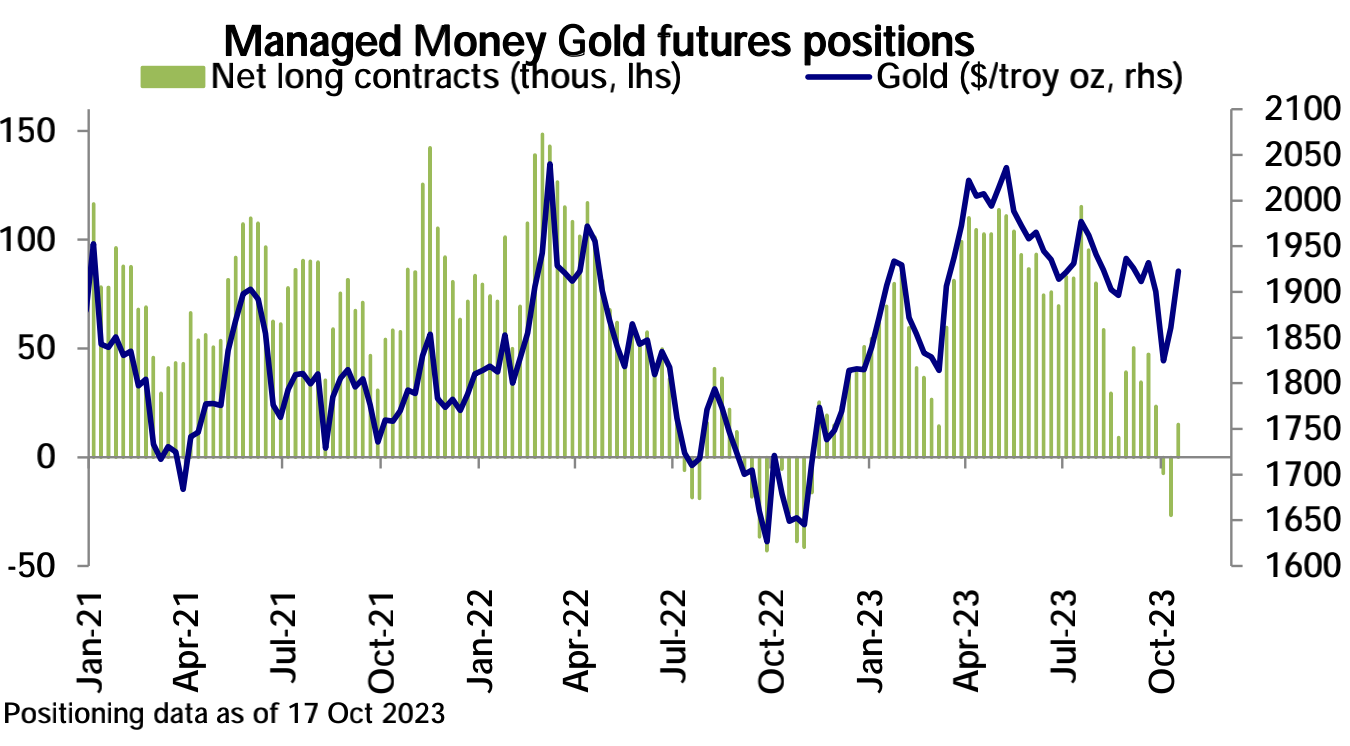
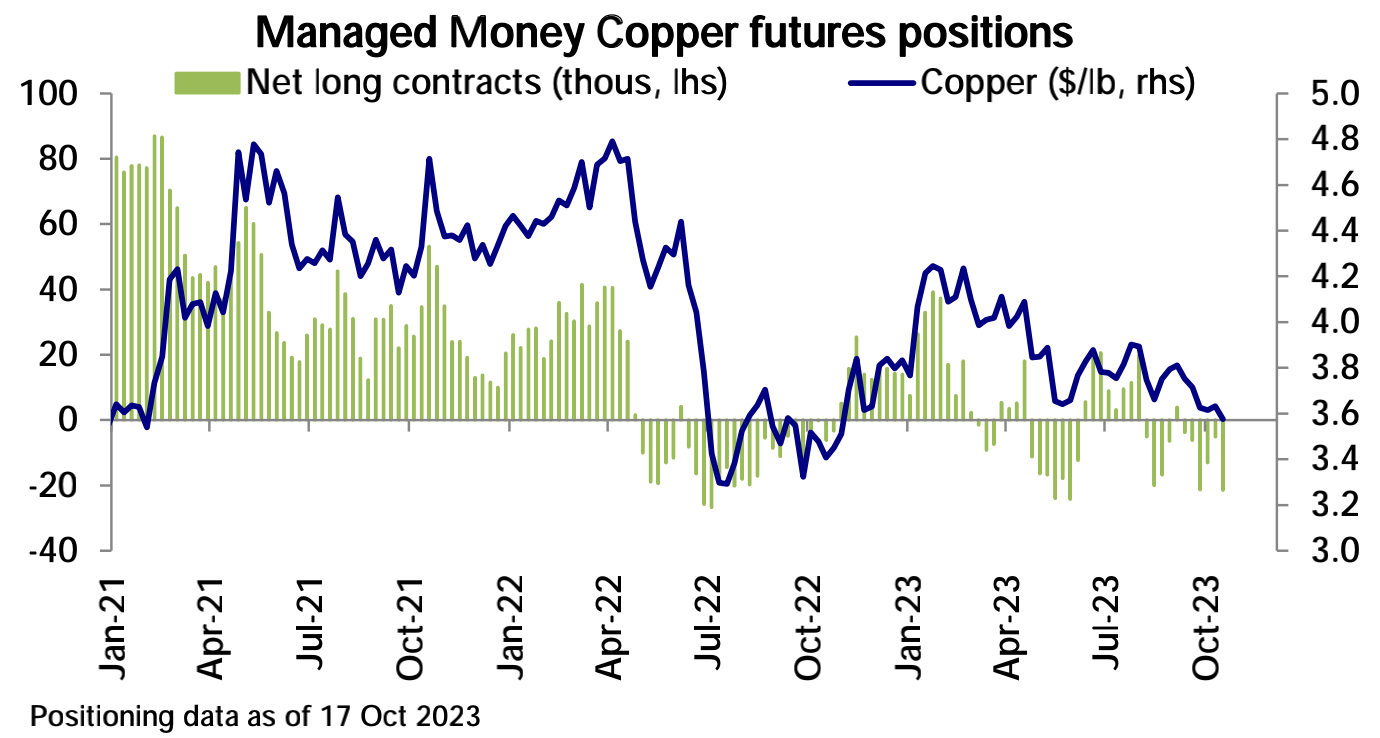
In terms of commodities, the net long position in crude oil increased slightly; the net short position in silver remained basically unchanged, while the positions of gold and silver switched from net short to net long; and the net short position in copper increased further.
sentiment indicator
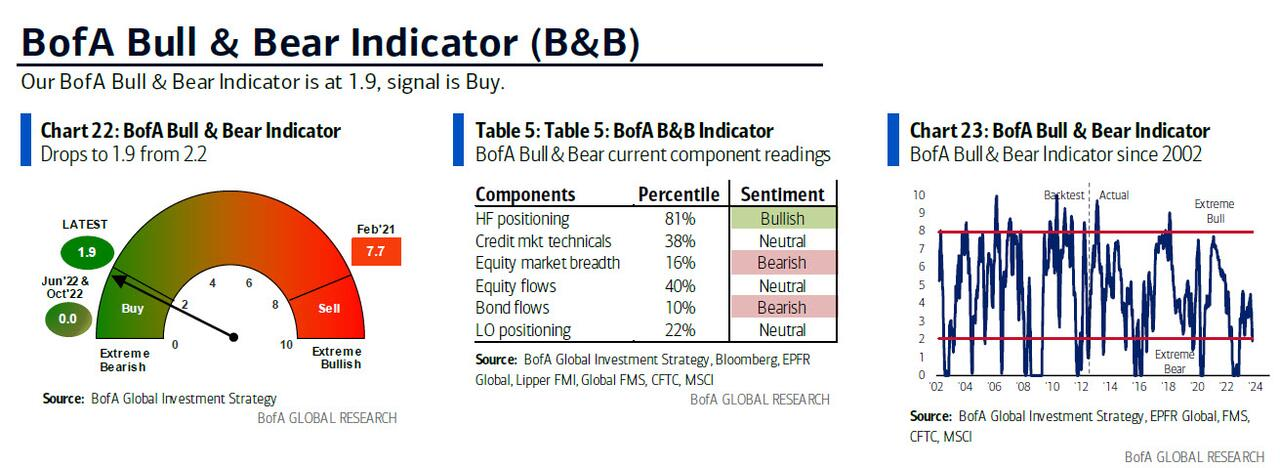
The Bank of America bull and bear indicator has entered the extremely bearish range. According to Hartnett, chief investment strategist at Bank of America, this means that the reverse buy signal for risk assets has been triggered: Historically, 3 days after the buy signal The median monthly return implies upside of 5.4% for U.S. stocks, 7.6% for global stocks and 9.1% for investment-grade bonds.
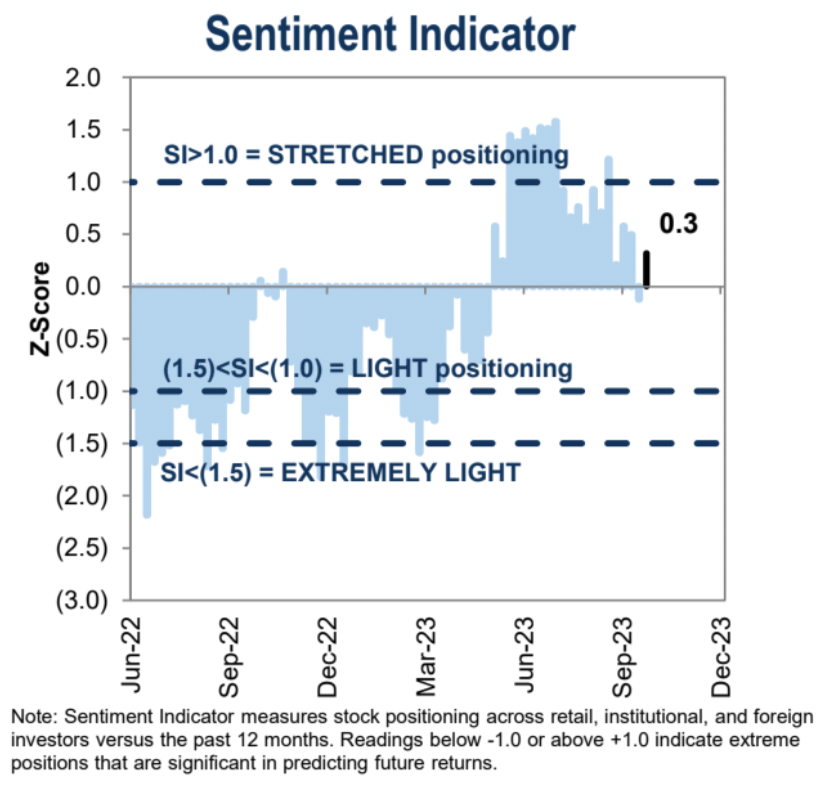
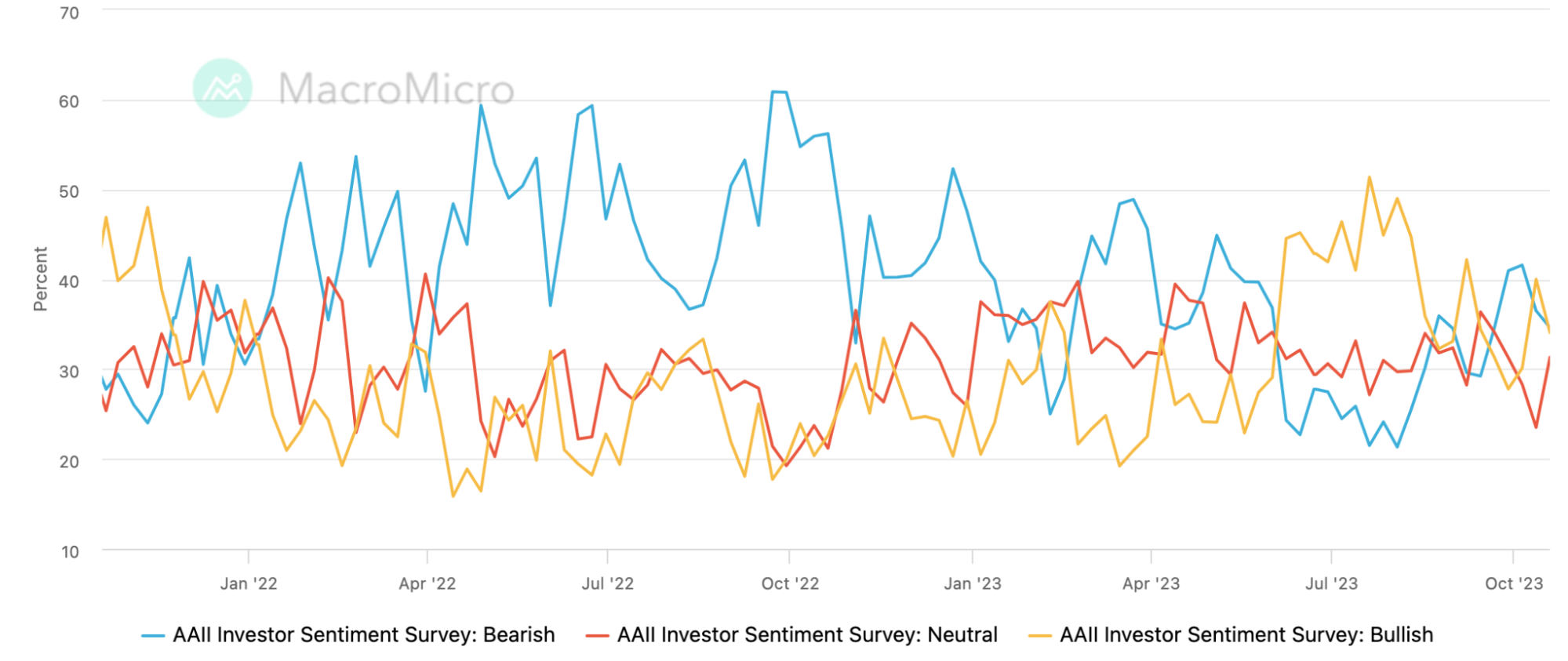
The proportion of long and short positions in the AAII survey simultaneously decreased, and the proportion of neutral views increased, highlighting that the market has entered a tangled stage: