LD Macro Weekly Report (10.9): Long-term bond Y continues to rise, while stock reduction is in progress, expectations for the third quarter report



Market Overview
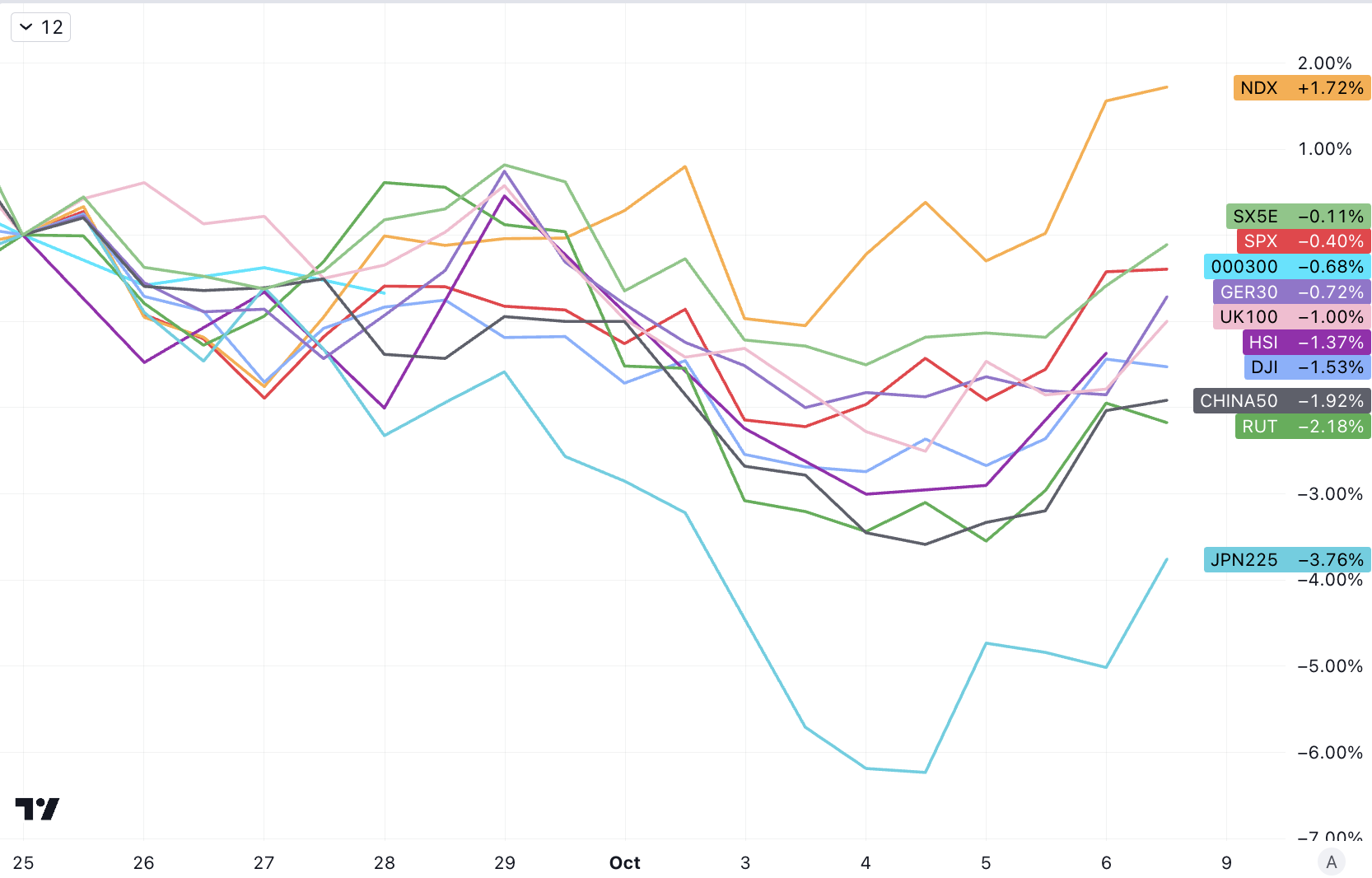
Major stock markets around the world have fallen in the past two weeks, with only the Nasdaq recording bi-weekly gains:
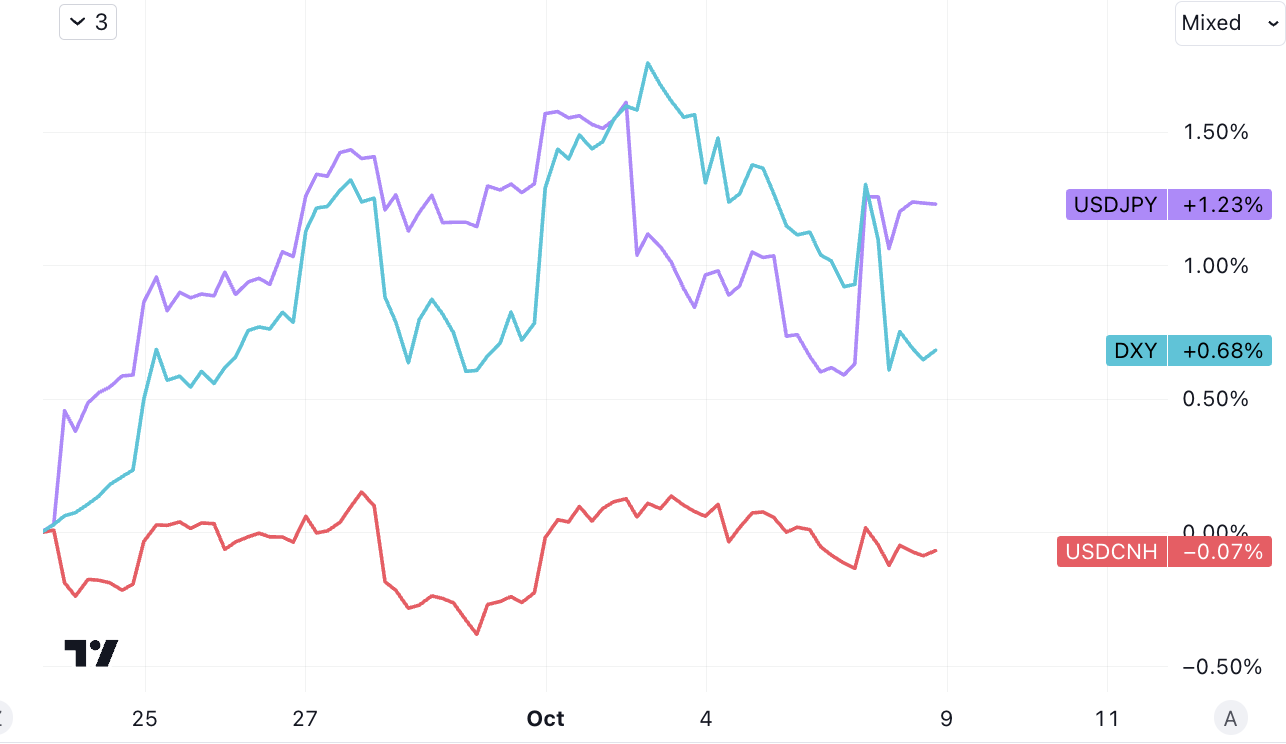
The U.S. dollar continues to be strong, the Japanese yen is somewhat weaker, and the offshore yuan is flat:
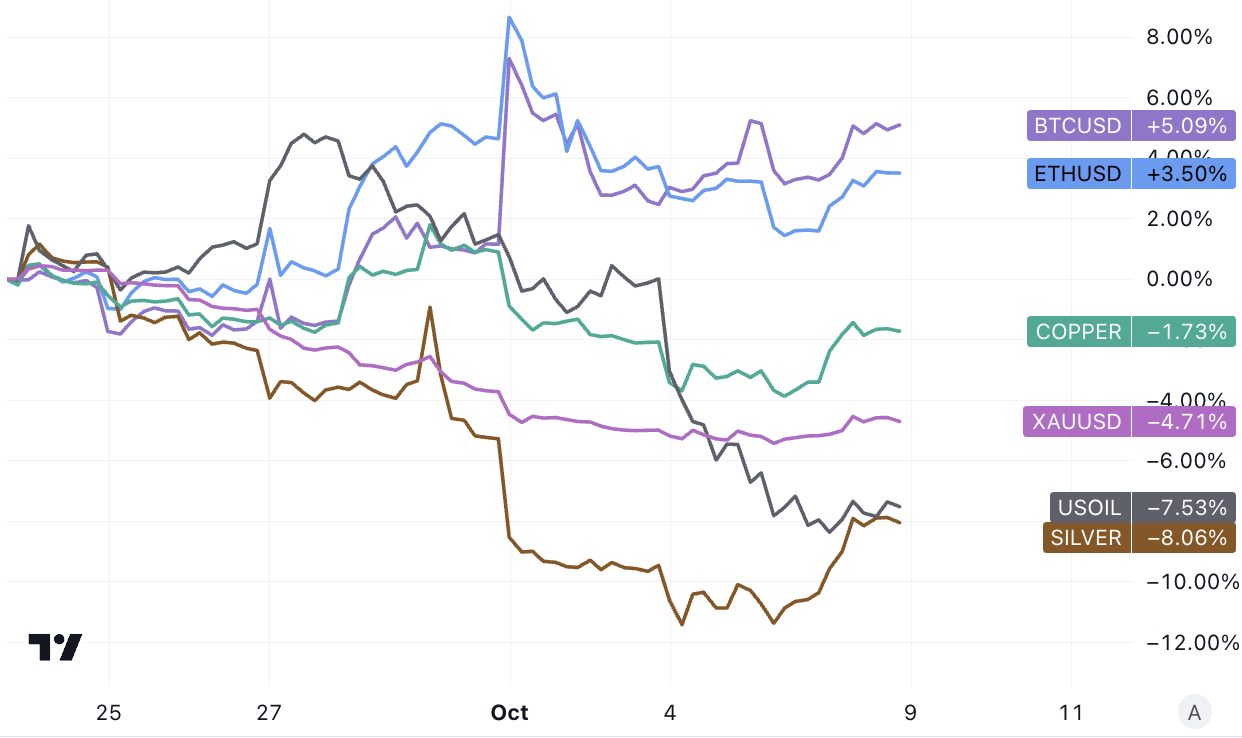
Cryptocurrencies have strengthened, and energy and metals have weakened. It is particularly noteworthy that Saudi Arabia has expressed to the United States its willingness to increase oil production in order to promote the US-Saudi Mutual Defense Agreement. This news caused crude oil prices to plummet by 7%, but this weeks Palestinian-Israeli conflict may Oil prices regain momentum to bring momentum:
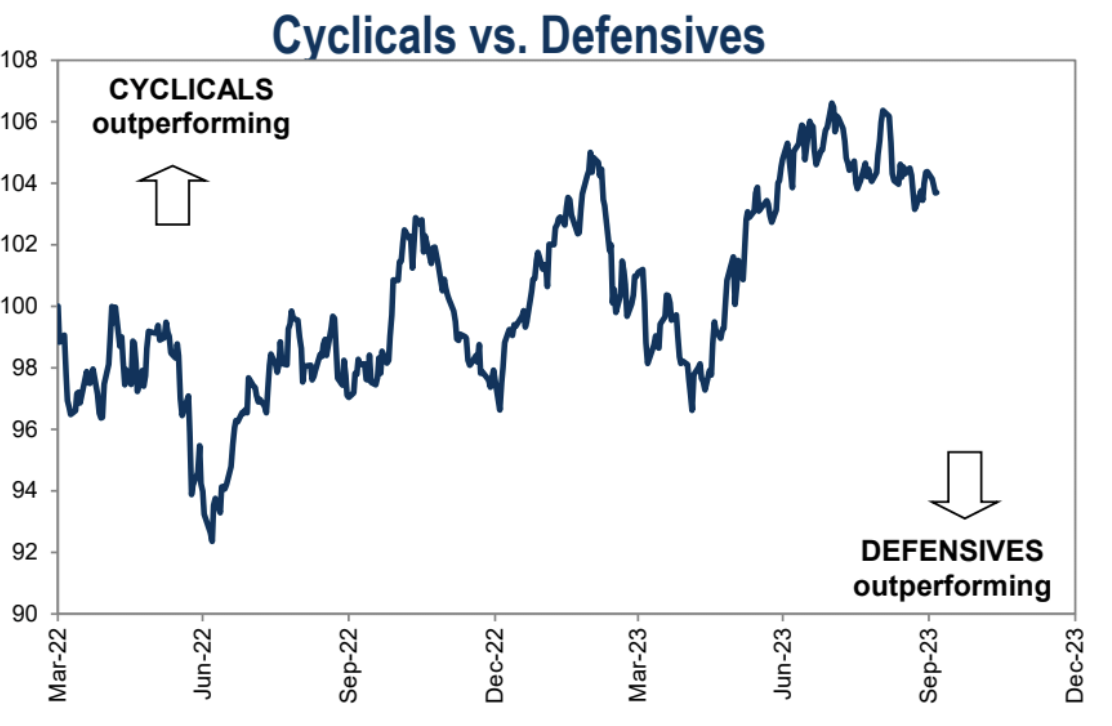
There is no change in the strength and weakness of the cycle and defense categories:
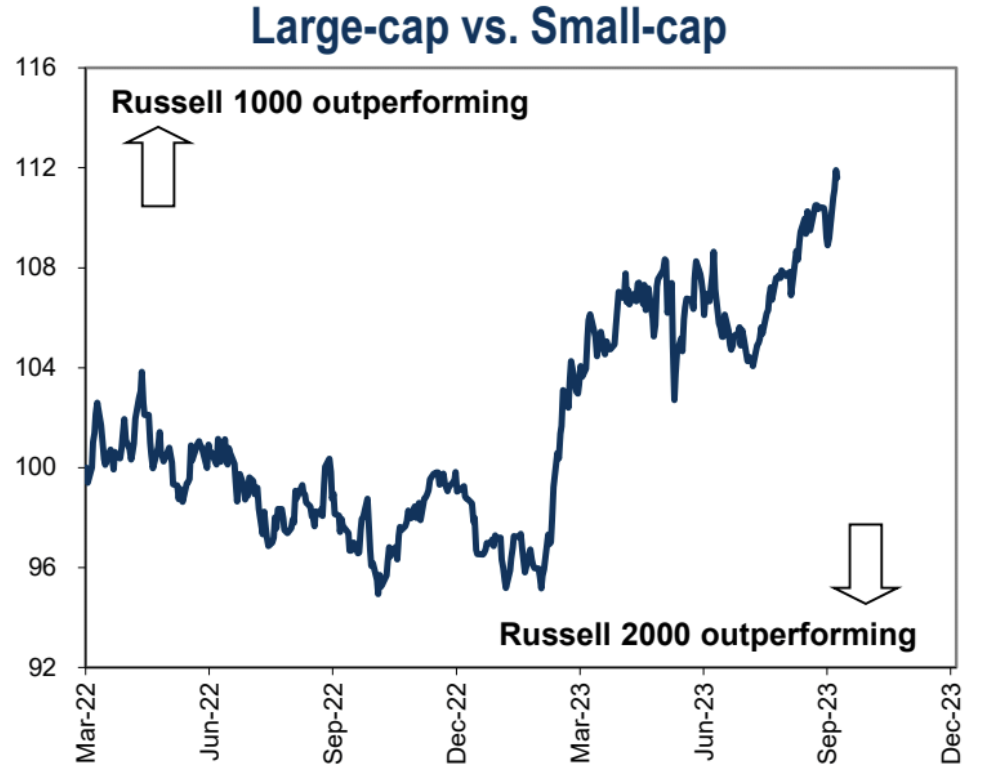
Large-cap stocks continue to outperform small-cap stocks:
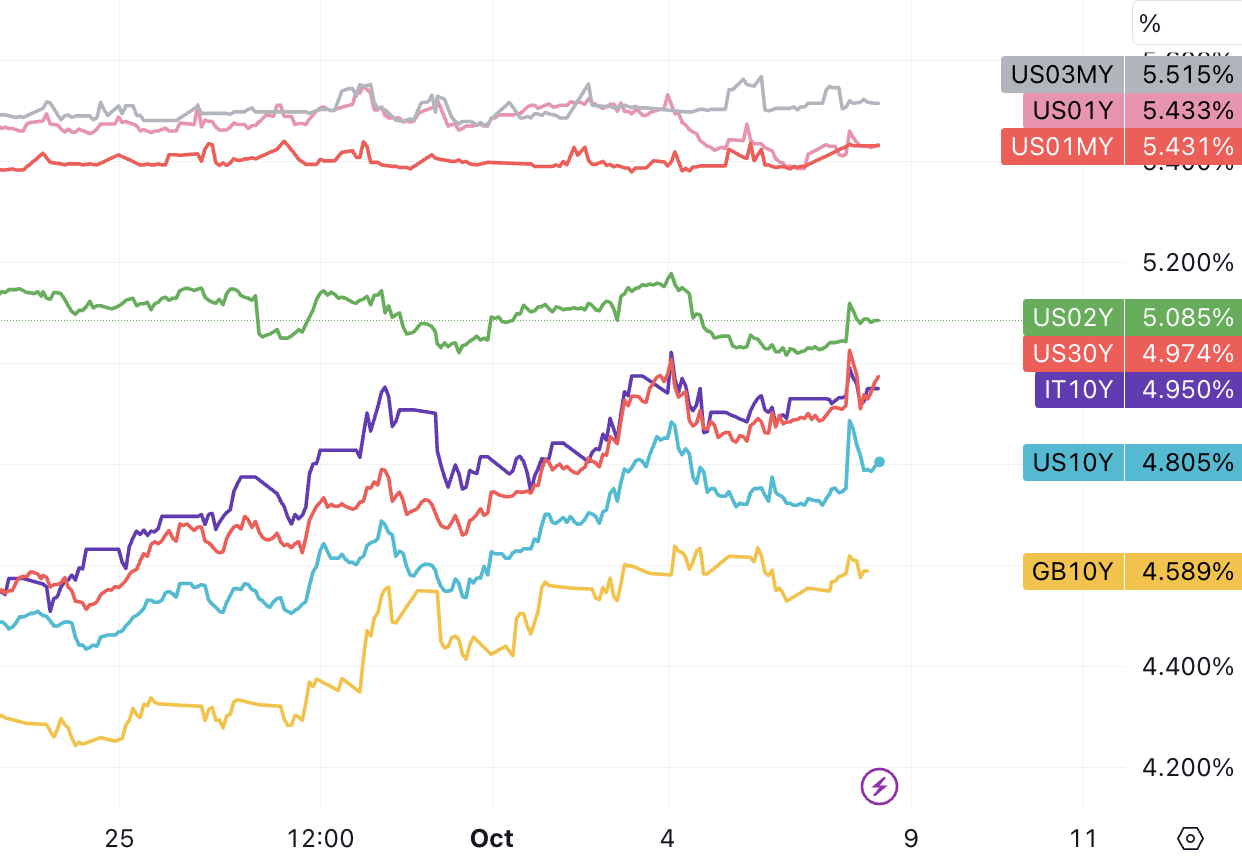
The most important event of the past week was undoubtedly the September employment report released by the U.S. government last Friday. The number of jobs increased significantly beyond everyones expectations, so the markets first reaction was panic. Prices for the 10-year Treasury note plunged nearly 2%, stocks appeared headed for further losses, and CMEs federal funds rate forecast tool showed a 10-point increase in the odds of a rate hike in November. But the final drop was unchanged at 27%.
But the situation quickly reversed, with the SP 500 bottoming half an hour after the opening and closing up 1.2%. The 10-year Treasury bottomed around 10:50 a.m., recovering about a third of its losses. Chances of a rate hike also fell back from the brink earlier in the day.
The 10-year U.S. Treasury yield climbed to 4.88% on Friday, its highest level since 2007. It closed Friday at about 4.8%, up from 3.3% six months ago. On Friday morning, the 30-year U.S. Treasury yield briefly exceeded 5.00% before falling below that threshold and finally closing at 4.97%.
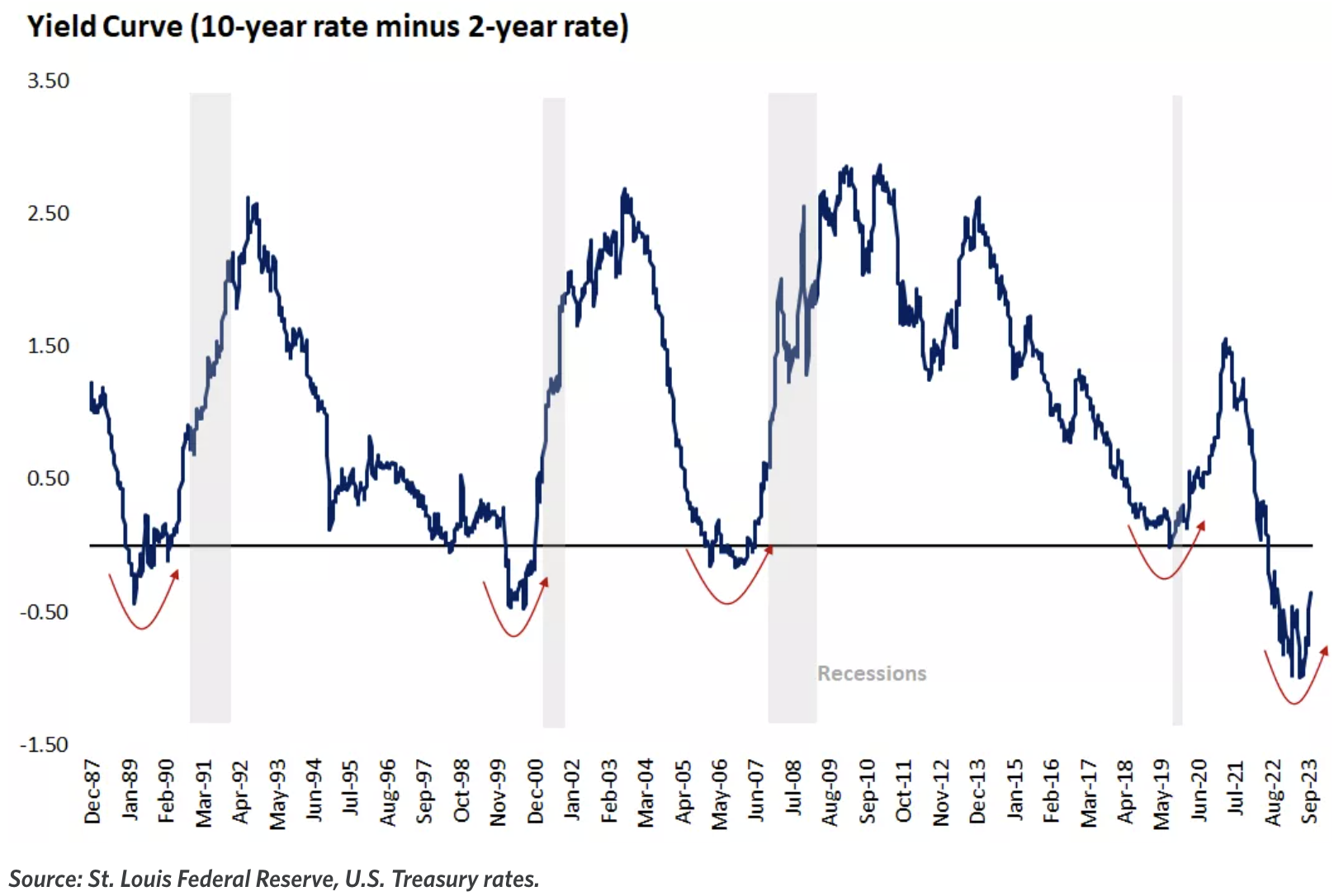
As long-term interest rates have risen faster recently, the inversion of the yield curve has improved significantly. The current 10-02 Y inversion is only 30 bp, but there is still a long way to go before returning to the normal curve. If 02 Y maintains the current level of 5.08%, 10 Y may have to rise above 6% to be considered back to normal.
That was largely because markets, after a brief panic, were more focused on wage growth recording its smallest gain since June 2021 and approaching levels in line with the Federal Reserves 2% inflation target, a key sign of a loosening labor market. At least it means that the labor market does not require further significant interest rate hikes by the Fed.
Summary of the September non-agricultural report: Employment in key sectors of the economy continues to recover, but wage growth has slowed. We believe this gives the Fed room to continue tightening policy without seriously harming economic growth (there is more room, but it will not necessarily be done). In terms of impact on the market, the report is generally neutral, with rising employment being offset by falling wage growth.
Nonfarm payrolls rose sharply by 336,000 in September, beating all expectations and marking the biggest monthly gain this year. Figures for the first two months were also revised upward, totaling 119,000. This suggests the labor market remains strong.
Job growth continues to be concentrated in service industries that require a high degree of human contact, such as education, health care, leisure and hospitality. These industries added 170,000 jobs in September and account for 55% of total nonfarm employment growth in 2023.
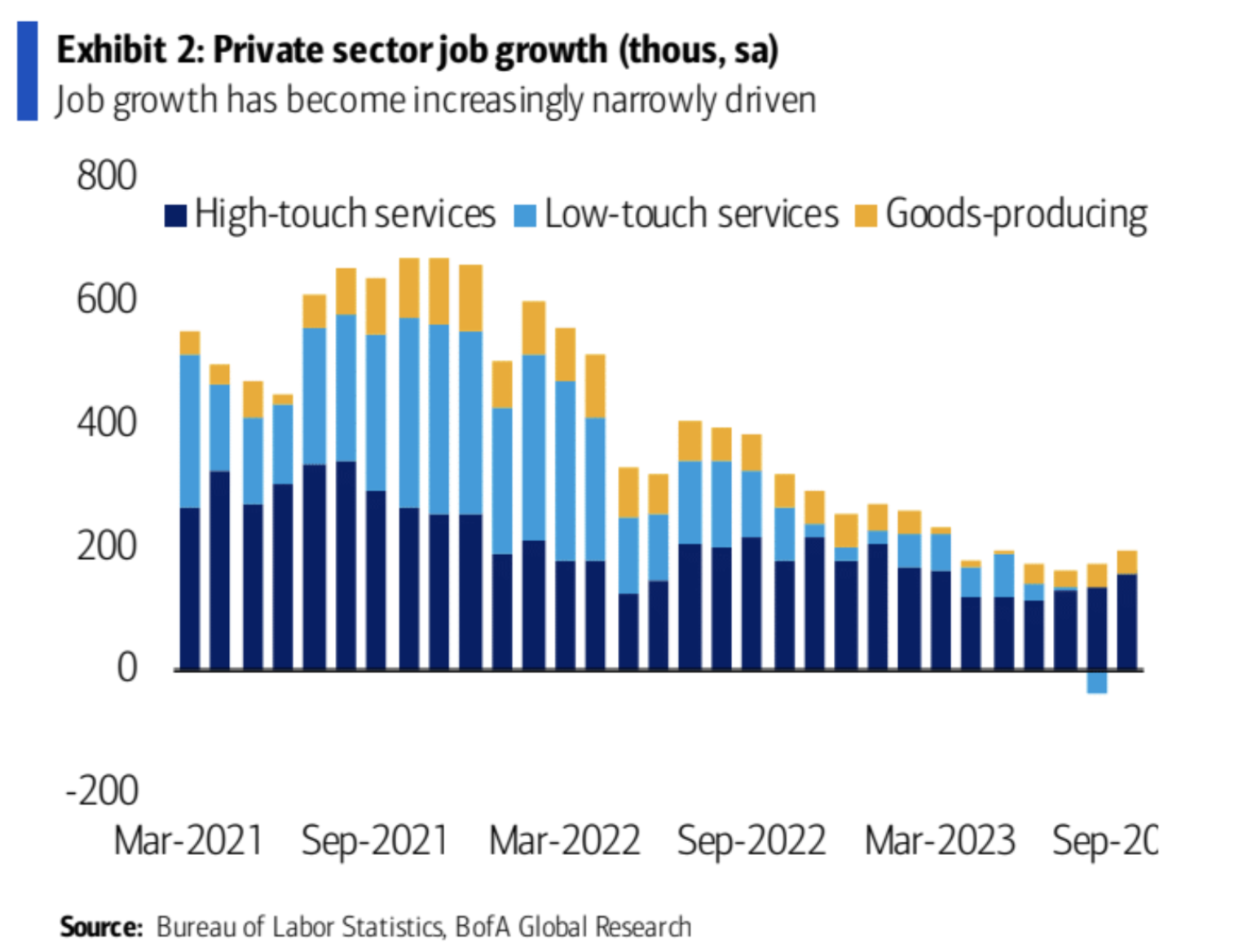
At the same time, wage growth has been softer, with average hourly earnings growth slowing to 4.2% year-on-year, below expectations. Average hourly earnings growth over the past three months was just 3.4%. Various surveys show that companies willingness to raise wages has also cooled, indicating an improving balance between demand and supply, which is good for the Fed and inflation.
The combination of a tight job market but slowing wage growth provides the basis for the Federal Reserve to raise interest rates in November. The report generally showed that the labor market remains strong but inflationary pressures have eased.
After the report, which both bulls and bears could find reasons for, the market reaction was also divided. U.S. Treasury yields collectively rose to new highs, but U.S. stocks closed higher, and generally speaking, they tend to show a negative trend. Such a report would hardly be the basis for a stock market rebound, and Fridays rebound was more technical. The bear market is not over yet. Before economic recession and credit events lead to policy changes, the stock market may fluctuate in a range, and the rebound will be difficult to sustain.
In an ultra-low interest rate environment, investors value corporate valuations more than profit growth. But now that interest rates are rising, investors will have higher requirements for profit growth. Rising interest rates will increase borrowing costs for companies, potentially constraining growth. How the positive and negative impacts of interest rates and inflation on profits are offset in the future will determine whether the stock price can continue to rebound. The ideal situation is that the impact of falling inflation on profit margins has been weakened, and profits will not be caused by the rapid rise in raw material and labor costs as before. Space is significantly squeezed. While moderating input cost pressures and continued economic momentum could help boost margins, significant margin gains appear unlikely given the resilience of wage growth and higher interest rates and taxes.
Other economic events of concern
Most Fed officials generally believe that the high interest rate environment needs to be maintained for a longer period of time, and hawkish representatives Bowman and Mester did not rule out the possibility of further interest rate increases in November.
The U.S. PCE price index rebounded to 3.5% year-on-year in August, while core PCE slowed to 3.9% year-on-year.
The final value of the Markit manufacturing PMI in the United States in September was revised upward to 49.8; the final value of the services PMI was revised downward.
The final month-on-month growth rate for U.S. durable goods orders in August was revised down to 0.1%.
The latest number of initial jobless claims rose back to 207,000.
As of October 7, the latest forecast from the Atlanta Feds GDPNow model is that the U.S. third-quarter GDP annualized rate will be 4.9%, unchanged from the forecast on September 29.
The minutes of the Bank of Japans September interest rate meeting showed a hawkish view. One hawkish official said that the inflation target is about to be achieved, and the normalization of monetary policy may not be far away.
U.S. stock market third quarter report is coming soon
The third quarter 2023 financial reporting season kicked off this week. The first reporting companies are PepsiCo, JPM, Citigroup, Wells Fargo, BlackRock, etc., and financial stocks are bullish. The earnings season will not be digested until November 3 at the earliest, when 80% of the companies in the SP 500 will release their financial reports.
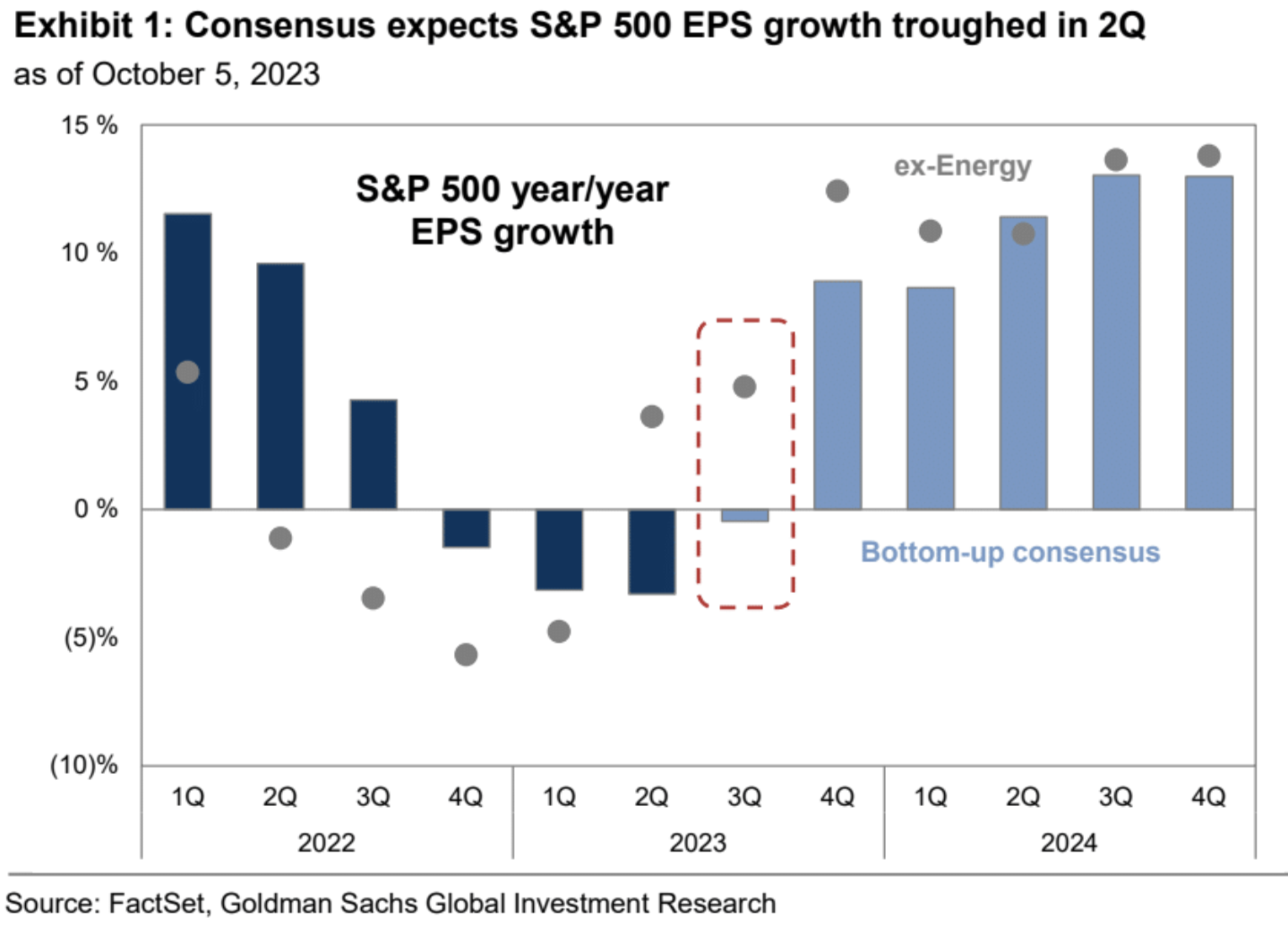
The market expects the overall profits of SP 500 companies to grow by 0% year-on-year in the third quarter. This is the most optimistic analyst expectation for the financial reporting season since the fourth quarter of 2022; excluding the energy industry, it is expected to grow by 5%, the best since the first quarter of 2022. ;The median expected EPS growth for individual stocks is 2%:
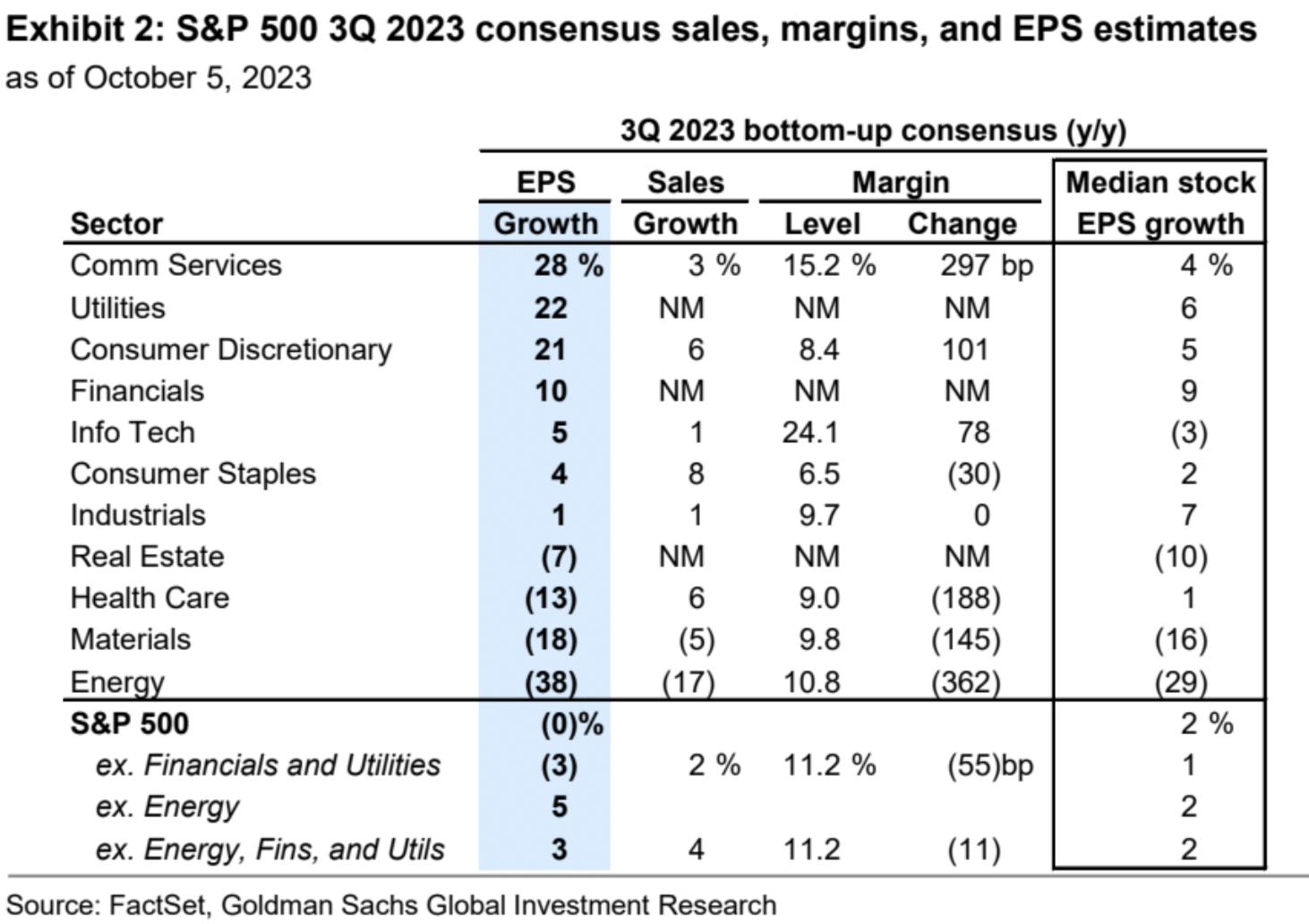
From a sector perspective, the consensus is the most optimistic about the EPS growth of the communications services industry (+28%), and the most pessimistic about the EPS of the energy industry (-38%). Although Brent crude oil prices rose 27% in the third quarter, the average price is still 12% lower than the same period last year. Excluding energy, SP 500 EPS is expected to grow 5%.
According to GS estimates, information technology is the largest contributor to SP 500 EPS estimates in 2024 and 2025, with annual contribution growth of 2 percentage points. After a slump in 2022, communications services and consumer discretionary profits have bottomed out and will collectively contribute about 3 percentage points of growth in 2024 and 2025 as META and Amazon focus on expense management and profitability. However, companies need to invest in AI may limit profit growth in these sectors.
The concentration of giant technology companies share of SP 500 sales and profits poses a risk that if these companies fail to meet expectations, it will have an impact on the index as a whole. In 2022, the seven largest stocks (Apple, Amazon, Google, META, Microsoft, Nvidia, Tesla) accounted for 12% of SP 500 sales and 17% of earnings. By 2025, Big Tech is expected to account for 15% of the SP 500s sales and 24% of its earnings. Antitrust scrutiny from regulators is a potential headwind for future sales and profit growth in the groups stocks, with recently announced lawsuits targeting the market practices of Apple, Amazon and Google. Our previous case studies show that ATT, Microsoft, and IBM have historically experienced slower sales growth following the resolution of their respective antitrust lawsuits.
Since earnings this quarter are expected to reach a new high, and historically, the earnings season has been good for the stock market as a whole, against the background of easing overheated bullish sentiment and anticipating strong earnings, we should not be overly pessimistic about the market prospects in the next quarter. The key is to see whether U.S. bond volatility can be alleviated, that is, whether yields can stop rising unilaterally and become range-bound.
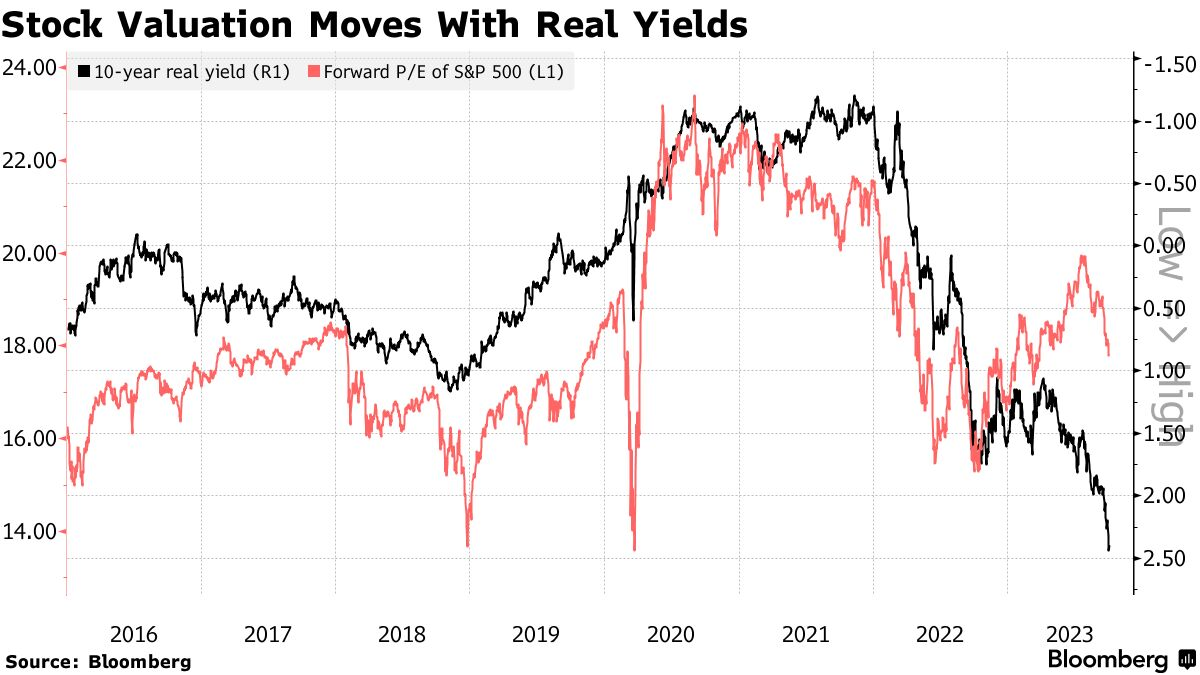
According to veteran bond king Bill Gross, under normal circumstances, such a large surge in real yields would push the forward price-to-earnings ratio of the SP 500 down to 12 times from the current 18 times. But excitement about the breakthrough potential of artificial intelligence and massive government spending have dampened the impact. But even so, can artificial intelligence and future $2 trillion fiscal deficits prove this time is different? he wrote. I doubt it.
impact of war
The Islamic militant group Hamas launched a surprise attack this weekend, killing more than 600 Israelis so far. Saturday was Israels deadliest day in decades, following months of surges in violence between Palestinians and Israelis, with the long-running conflict now entering uncharted and dangerous new territory. Israel formally declared war on Hamas on Sunday and launched airstrikes in densely populated Gaza in response, with Prime Minister Benjamin Netanyahu vowing retaliation, warning Israel would take powerful retaliation and be ready for A long and difficult war.” The Palestinian Health Ministry said at least 413 Palestinians have been killed in Gaza since Saturday.
In addition, Hamas launched attacks on Israeli-occupied lands that have killed several foreigners, including Americans and French. Major developed countries have expressed support for Israel, and the United States has moved the USS Ford aircraft carrier strike group closer to Israel.
The nationality financial market was closed over the weekend, and relevant war news failed to show any impact. The digital currency market continued its weak and volatile trend. Judging from the last large-scale war, Russias full-scale invasion of Ukraine, the time point was February 2022, and the SP 500 that month , gold and digital currencies all closed higher, but then fell for three consecutive months. However, it was faced with continuous interest rate hikes by the Federal Reserve.
Positions and Fund Flow
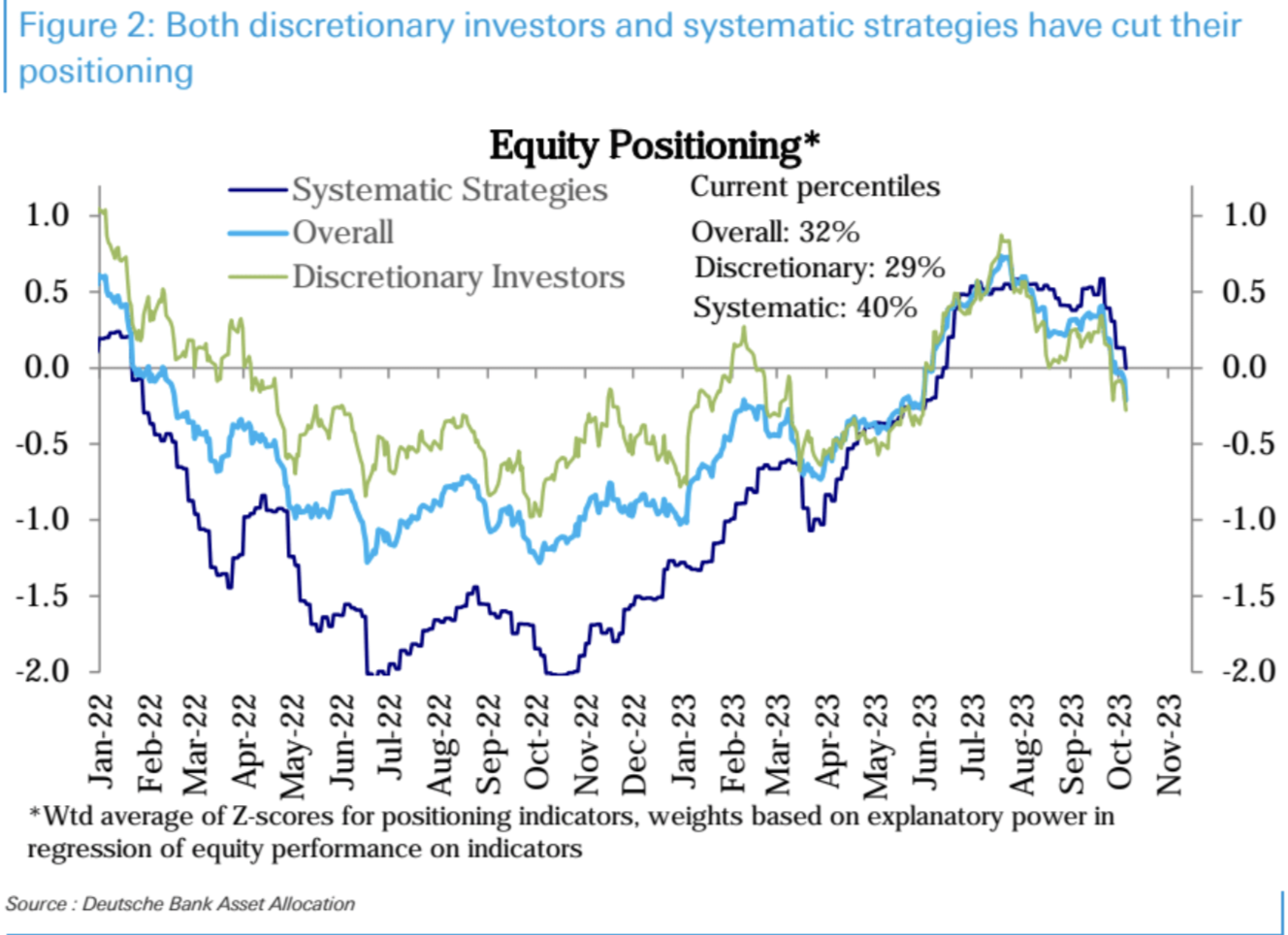
A number of stock market investor position indicators fell again, indicating that investors overall bearish sentiment has further strengthened.
The position of the systematic strategy portfolio has dropped significantly to the neutral level, which is the 40th percentile in history (dark blue line in the figure below). The positions of subjective investors (already in the underweight range) have also further dropped back to the level in May this year, which is the 29th percentile in history. Percentile (green line below).
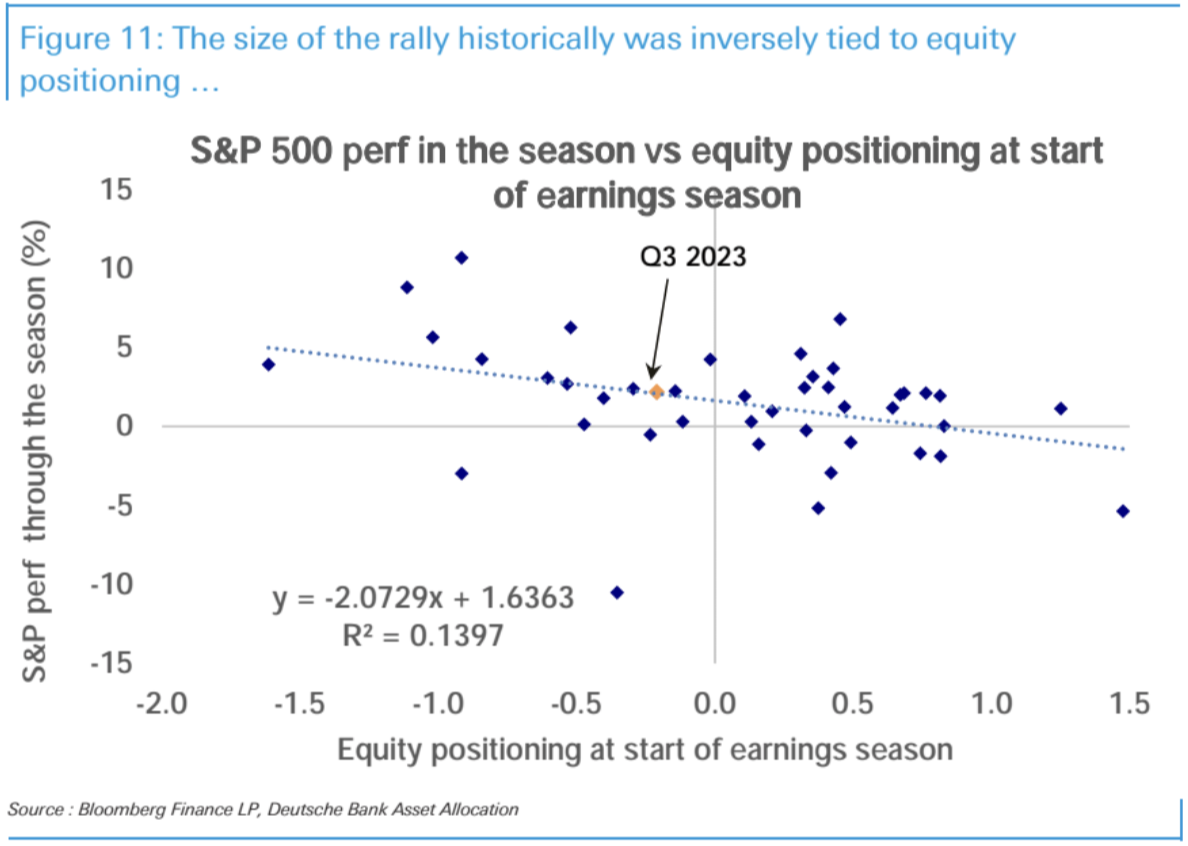
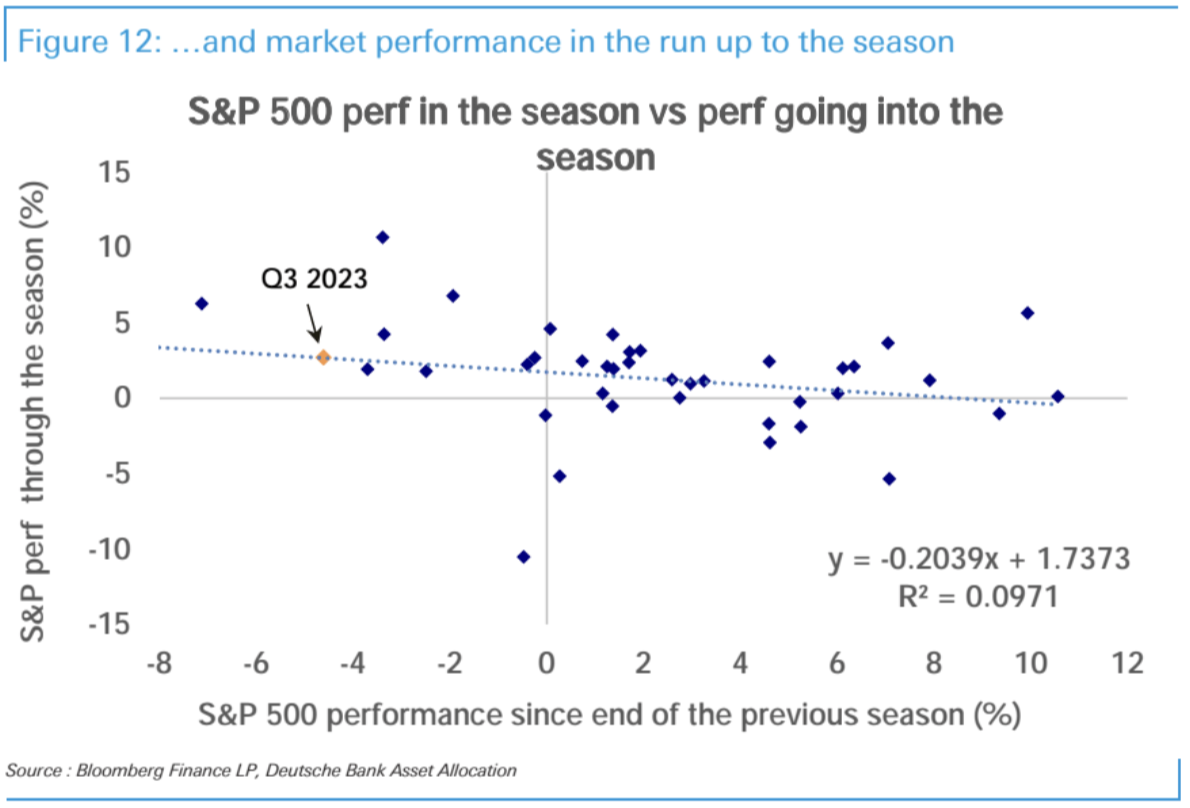
Deutsche Bank analysis believes that the stock markets rise in the earnings season is negatively related to the stock market position at the beginning of the earnings season. The lighter the position, the greater the increase.
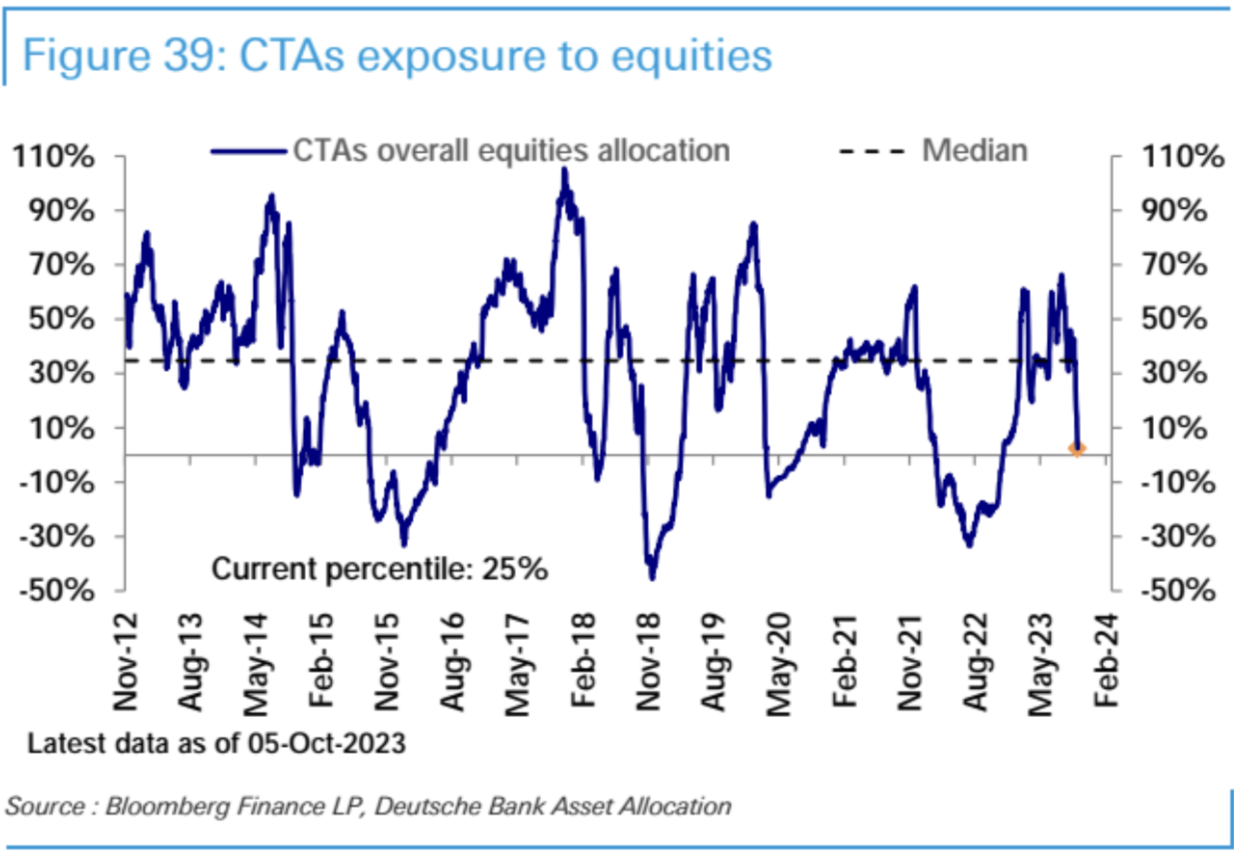
Overall equity positioning for CTAs (momentum strategies) fell significantly from last week and is currently in the 25th percentile all-time with lower positions
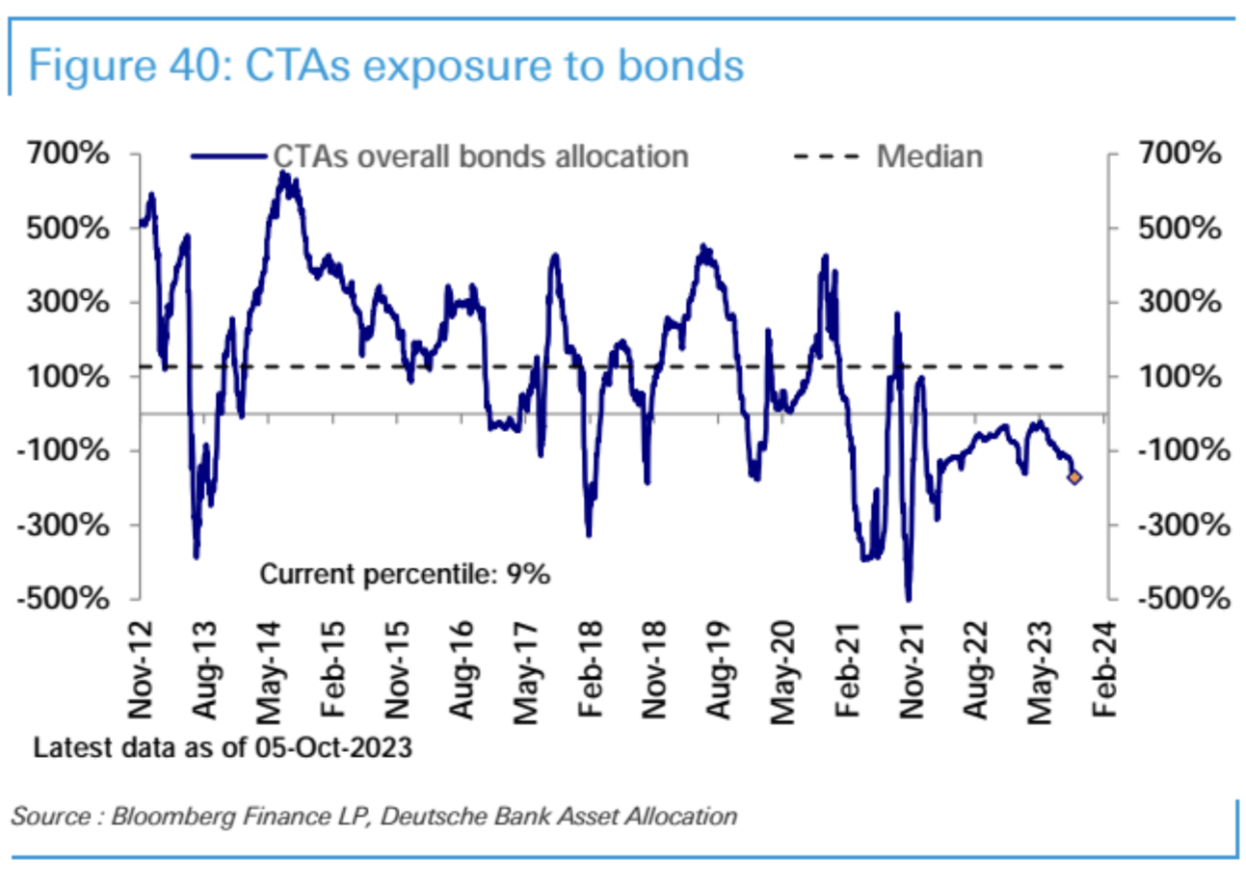
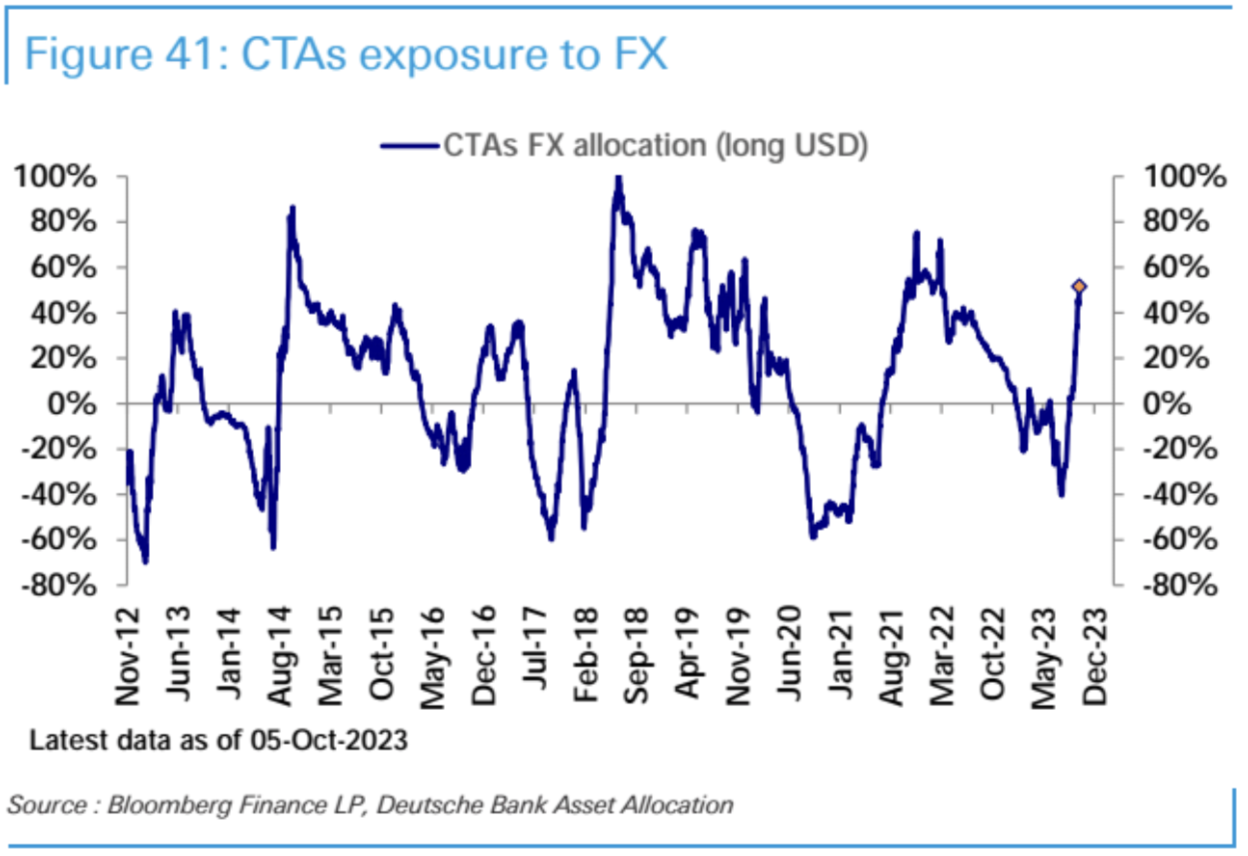
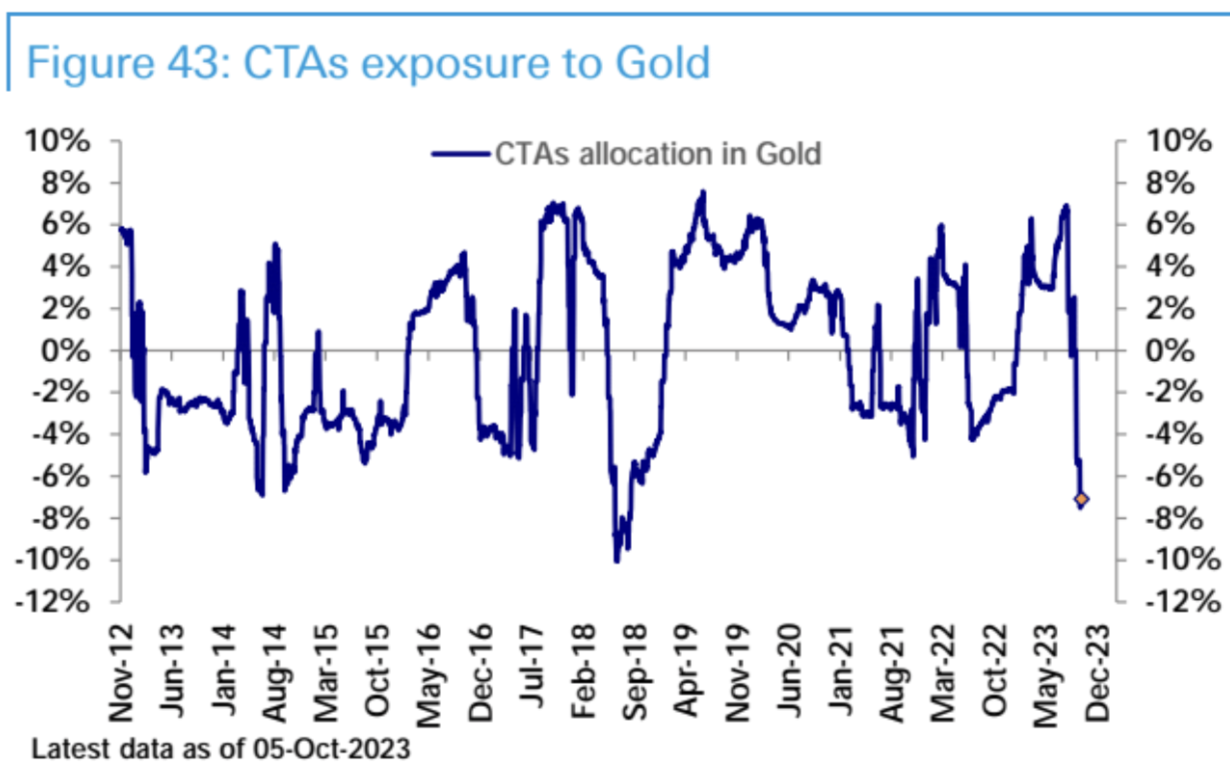
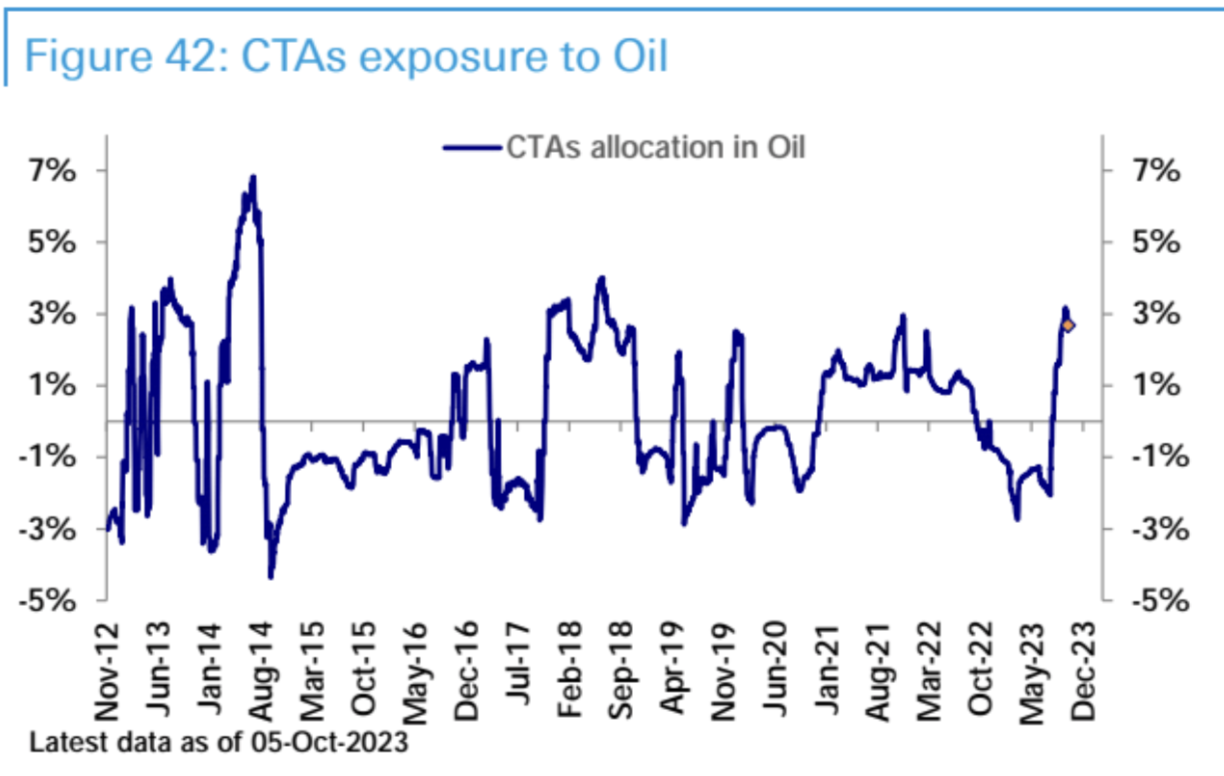
At the same time, CTAs are clearly bearish on bonds, extremely bullish on the US dollar, extremely bearish on gold, and extremely bullish on crude oil. This structure is quite clear, and it is getting closer and closer to a reversal.
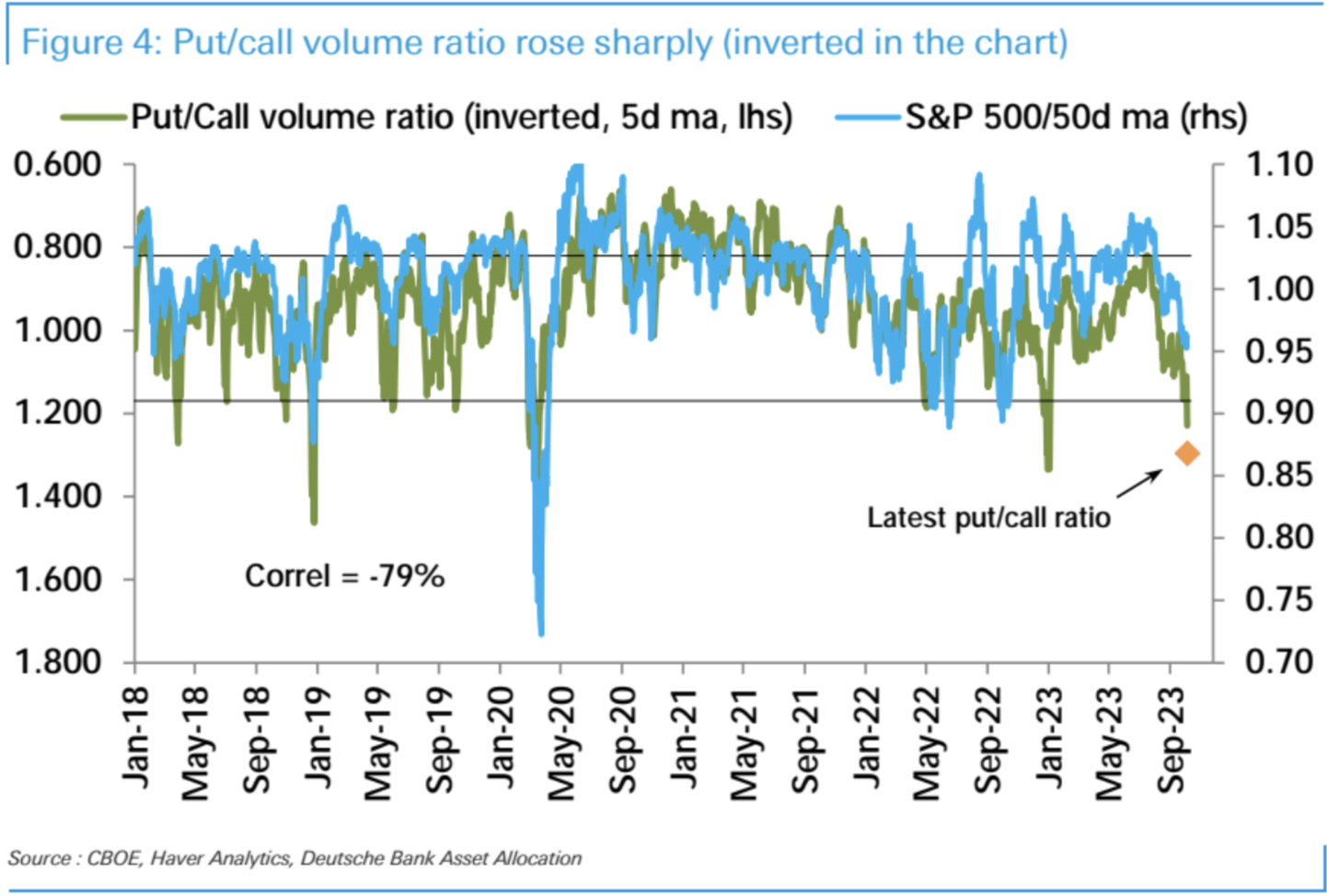
U.S. stock call option volume minus put option volume continued to decline sharply, falling to the lowest level in 9 months and sitting at a negative level (only 1 percentile) that is rare in history
Equity funds (ETFs and mutual funds) recorded net inflows ($3.3 billion) for the second week, but the scale slowed down from last week. Net inflows slowed in the United States ($3.9 billion) and Asia ($1.2 billion), with emerging markets ($200 million) recording slight net inflows. Net outflows from Europe ($1.8 billion) have continued for 30 weeks. Bond funds recorded net redemptions ($2.5 billion) for the second week, mainly due to outflows from corporate bonds and emerging market bonds, while government bonds continued to maintain continuous inflows
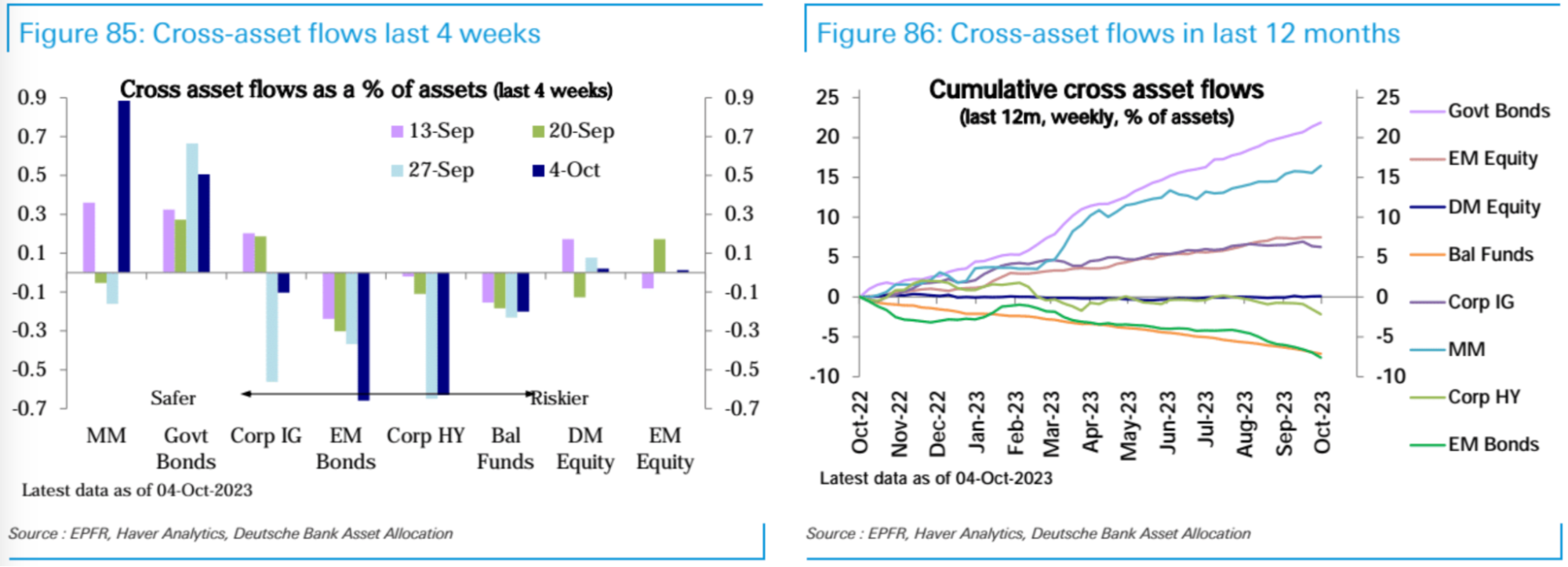
Money market funds ($70.8 billion) posted their highest net inflows in three months on a strong note, ending the previous two weeks of net redemptions.
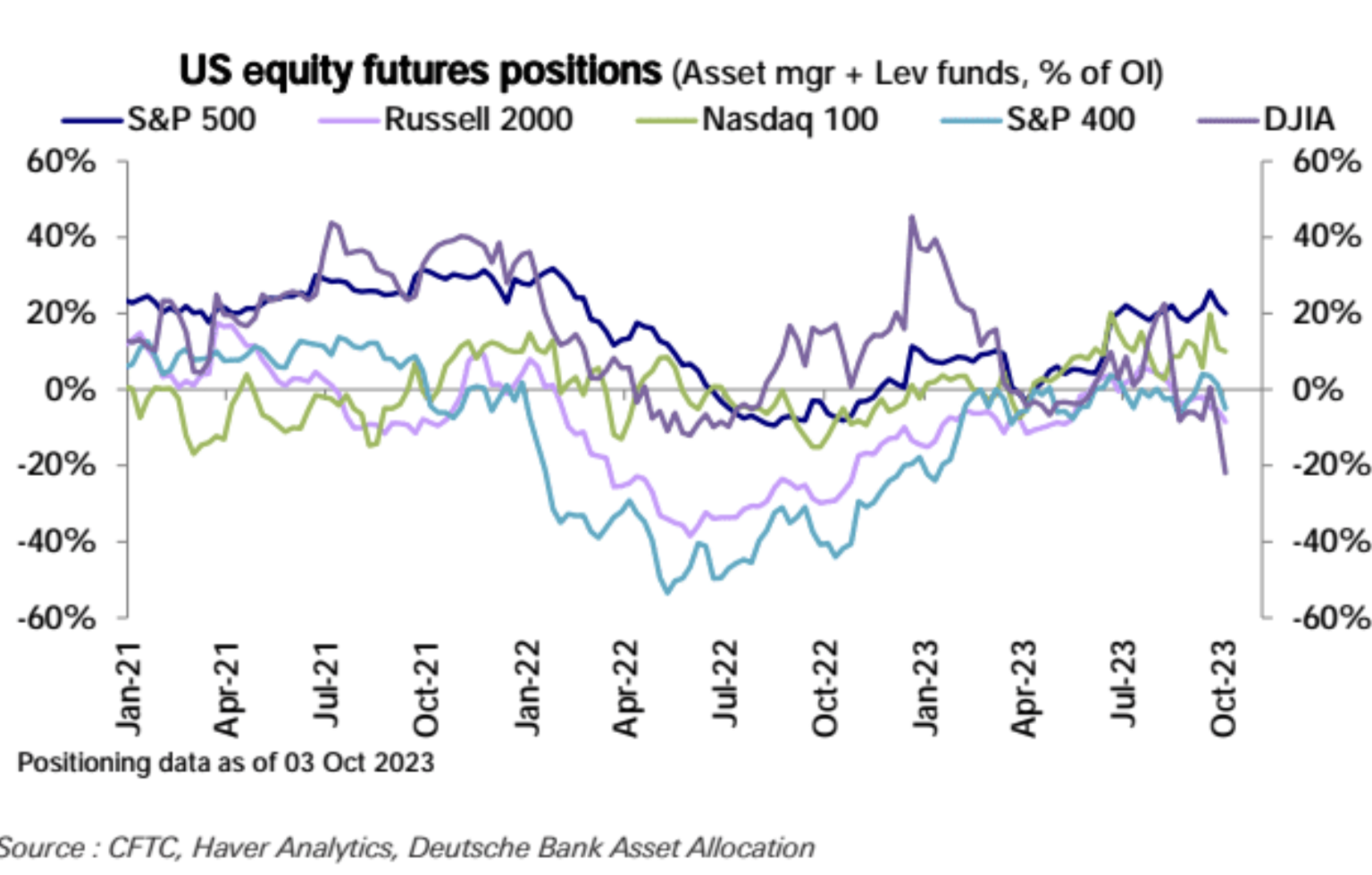
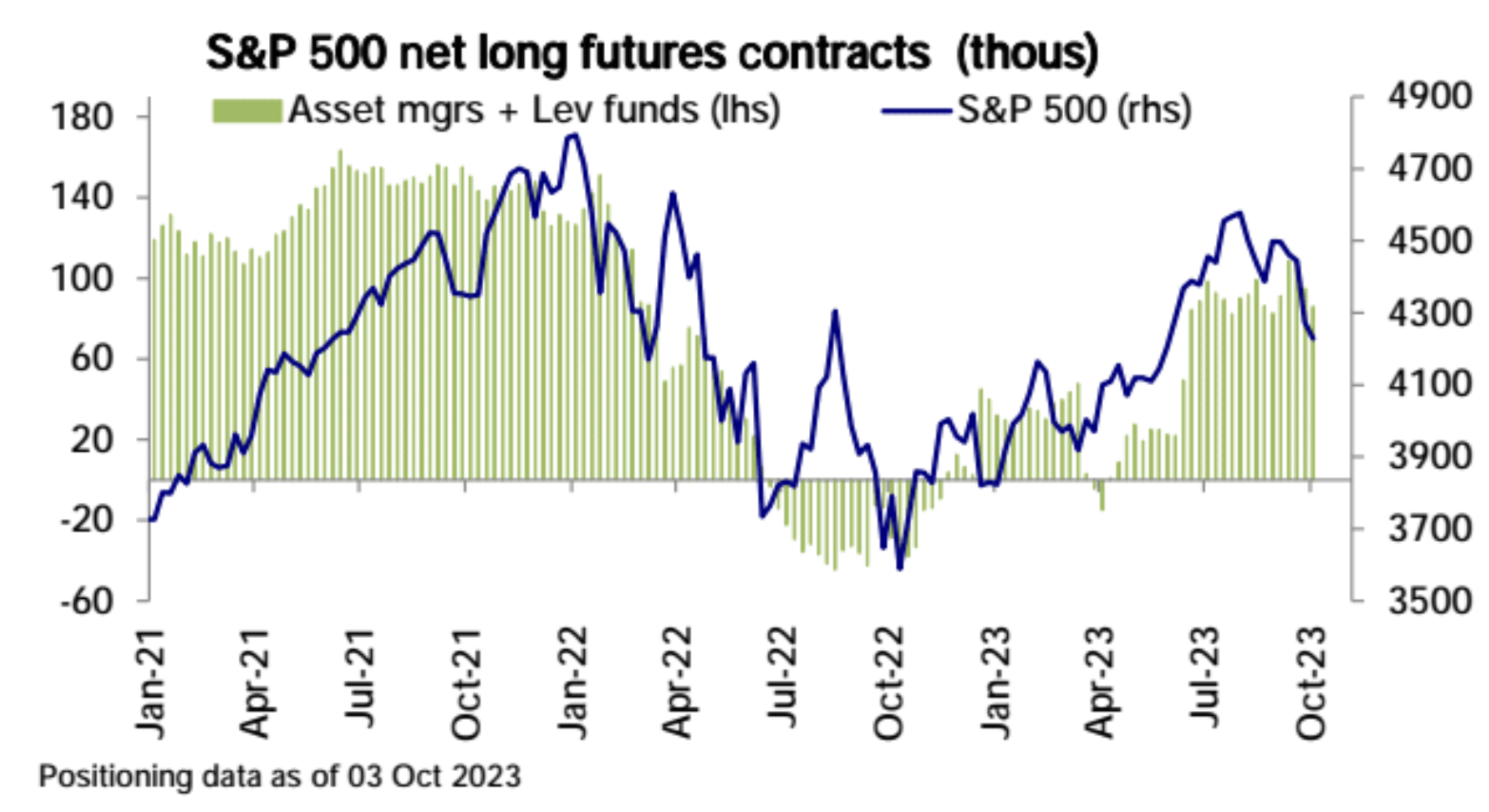
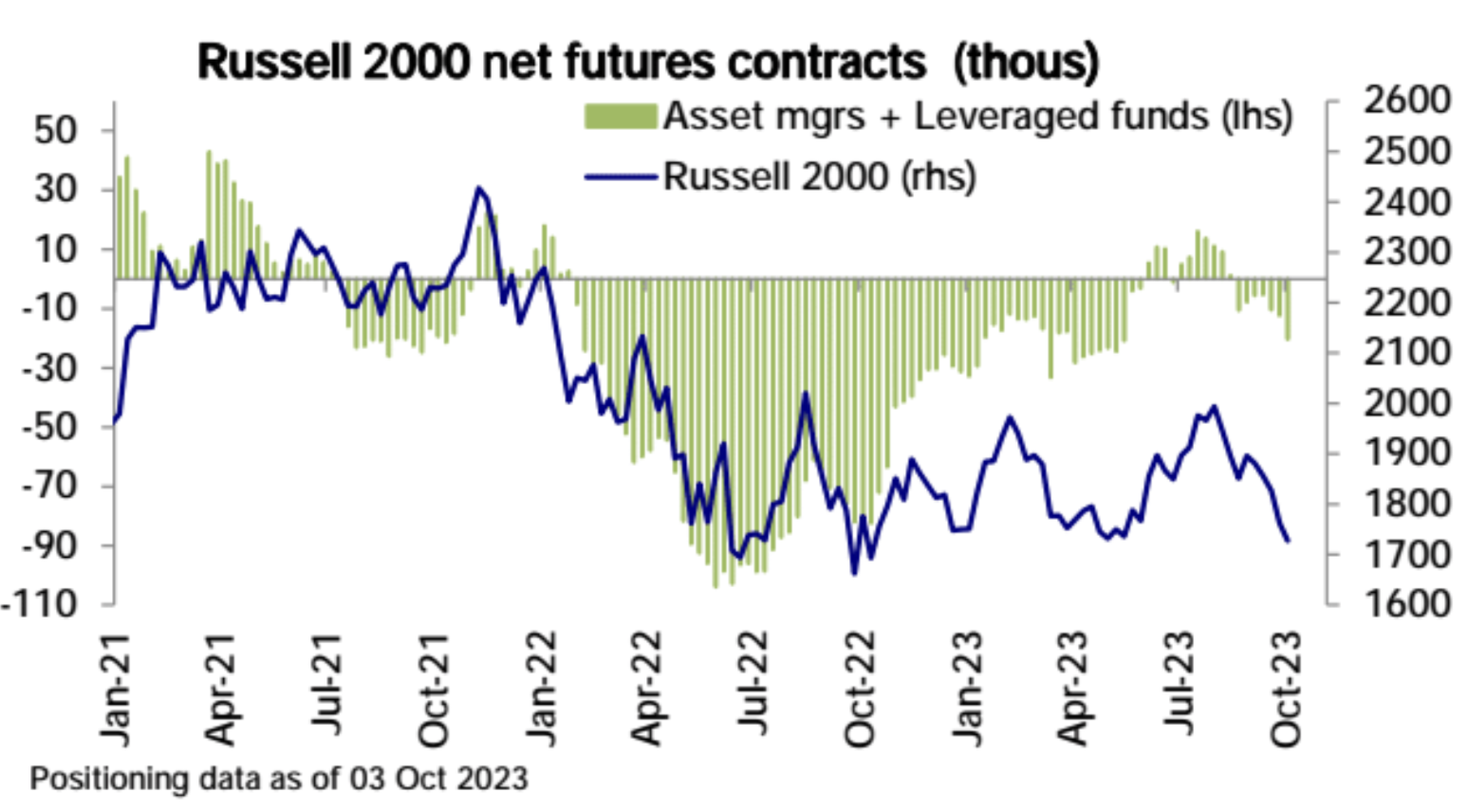
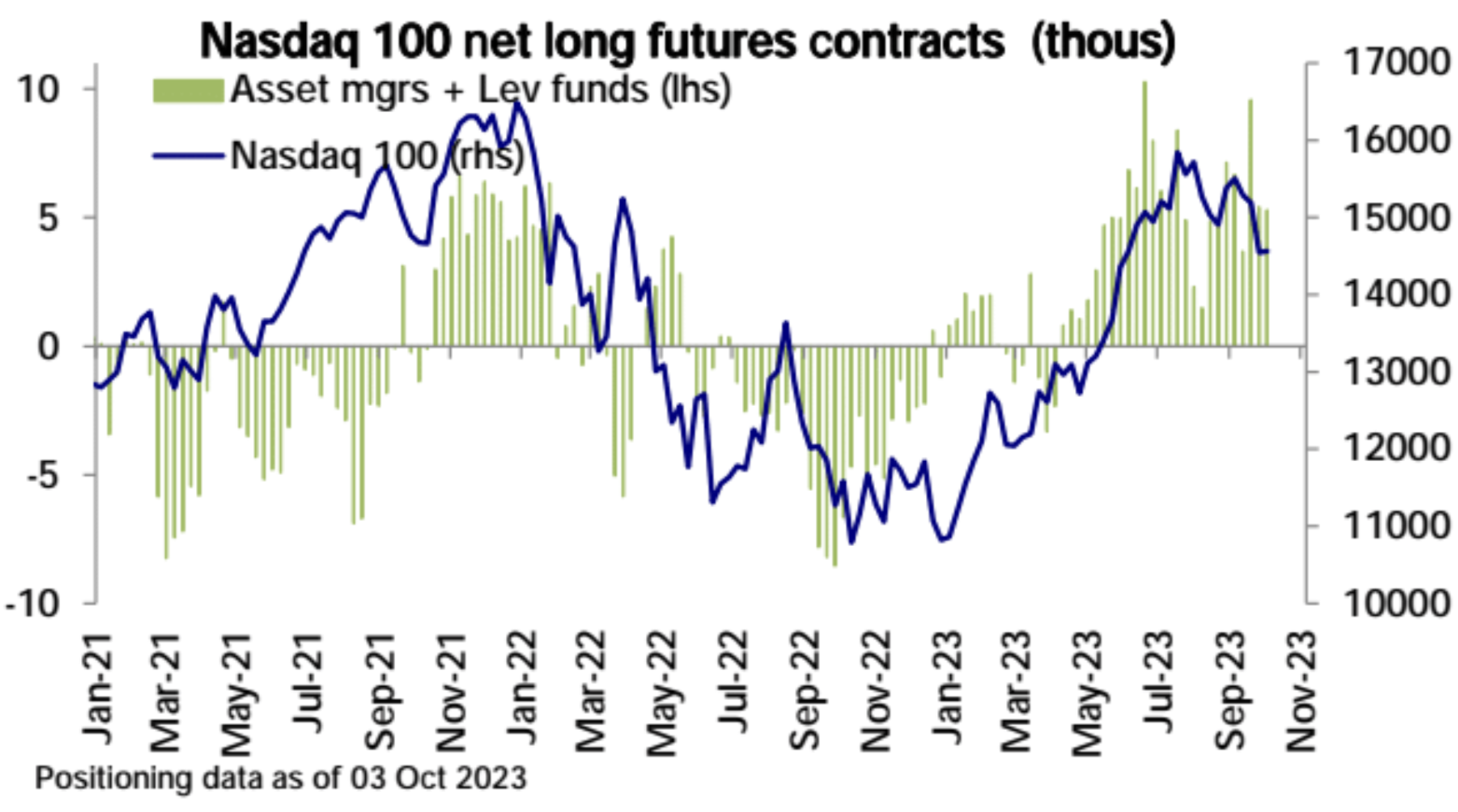
According to the latest CFTC data, overall U.S. stock futures positions fell again, with the SP 500 net longs decreasing and the Russell 2000 net shorts increasing. The Nasdaq 100s net long position is flat, and the net short position of Dow Asset Management + Leveraged Funds has exceeded 20% of the overall position value:
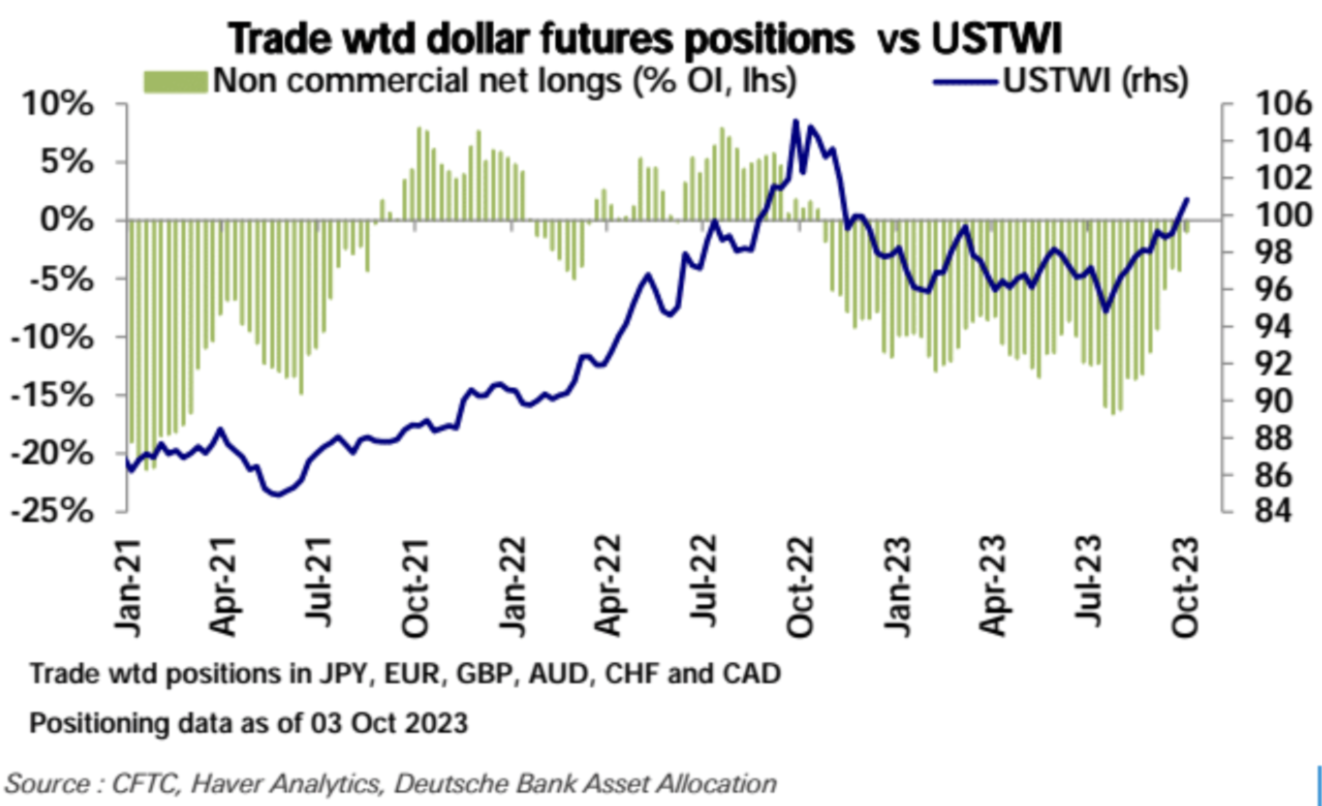
Driven by the rebound of the US dollar, the net short position of the US dollar has decreased continuously in the past three months and has almost returned to zero:
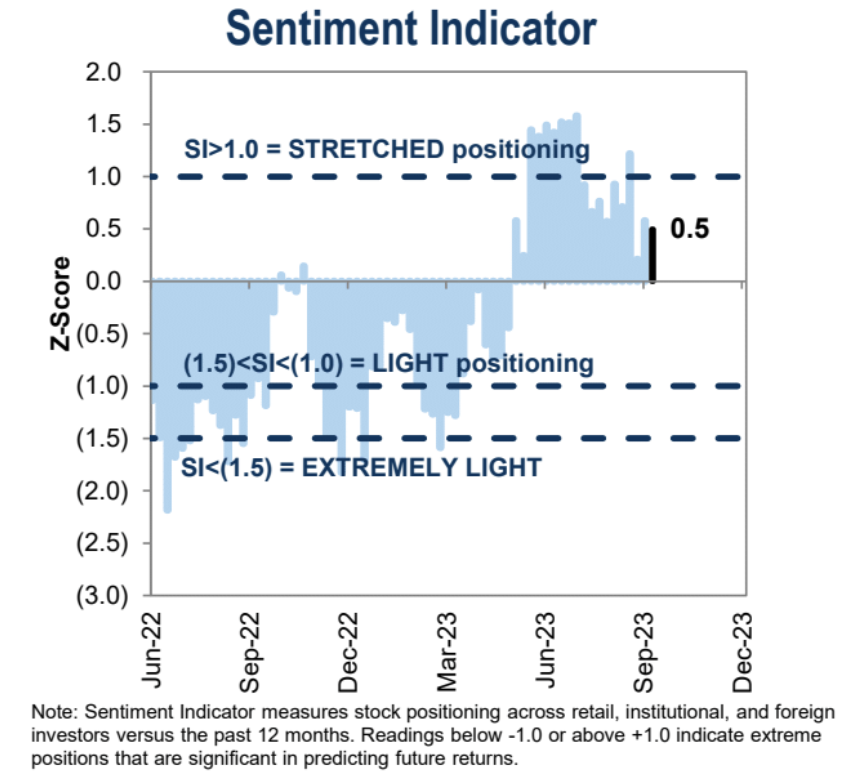
sentiment indicator
The Goldman Sachs sentiment indicator currently sits at 0.5, which is a neutral to positive range:
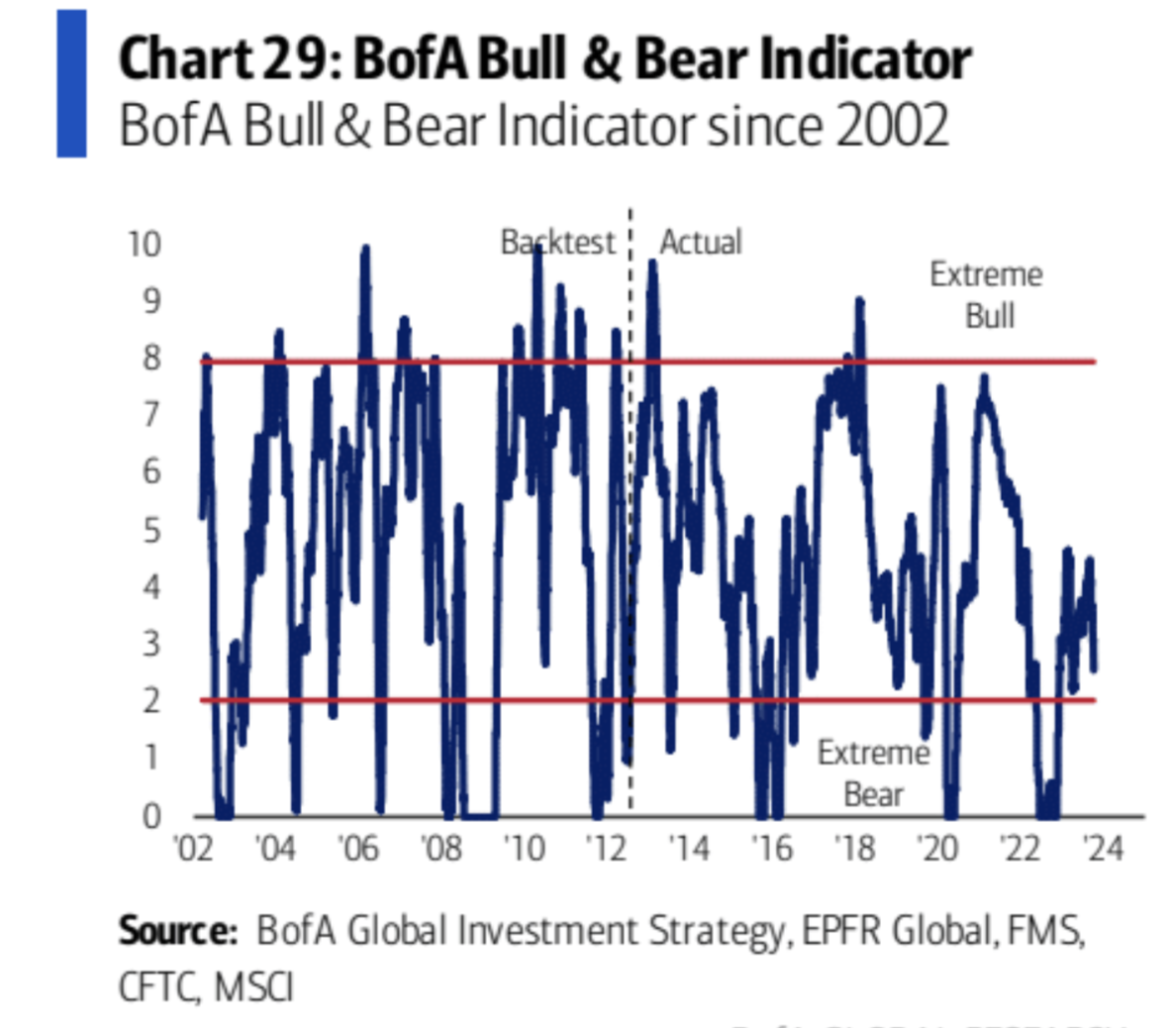
Bank of Americas sentiment indicator has dropped sharply and is now in bearish territory
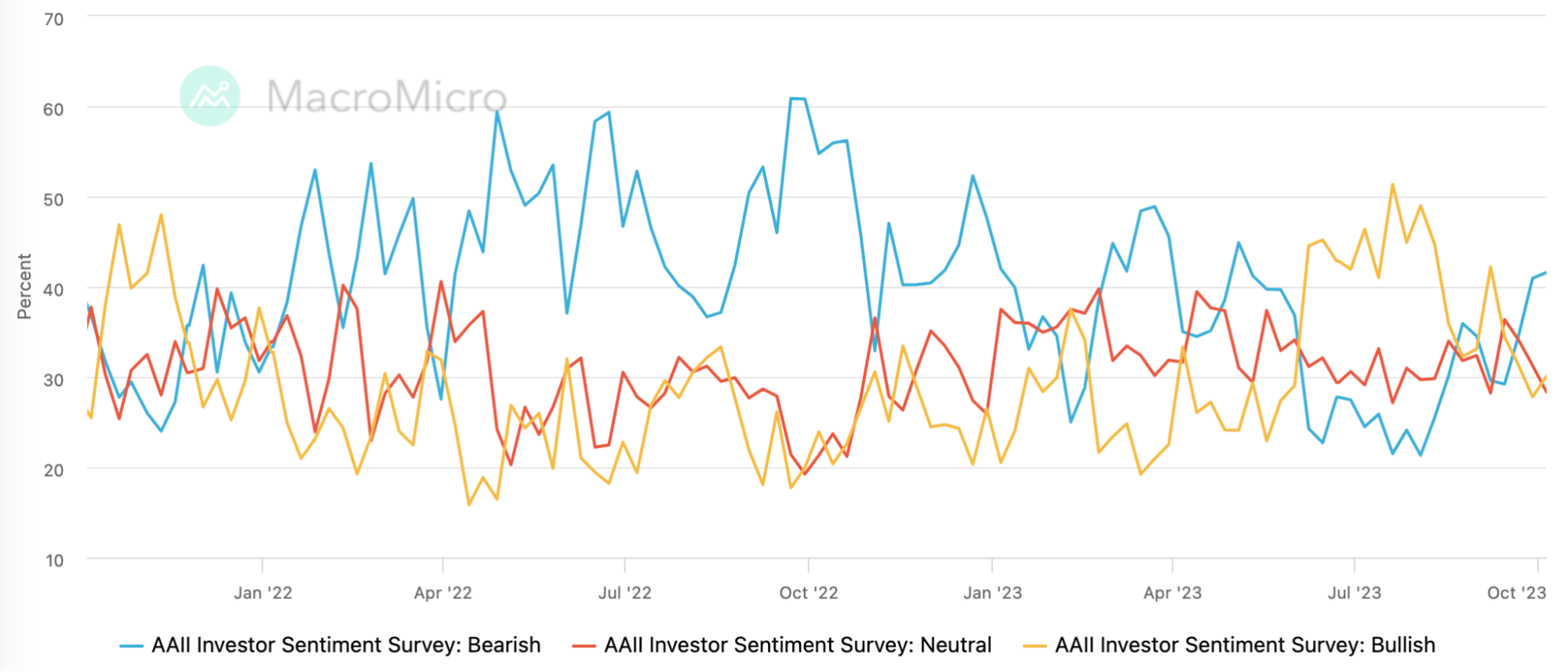
The bearish proportion of the AAII investor sentiment indicator rose to 41.58%, the highest level since early May. However, the bullish proportion also rebounded slightly, and the neutral view dropped sharply, indicating that the long-short game will begin again:
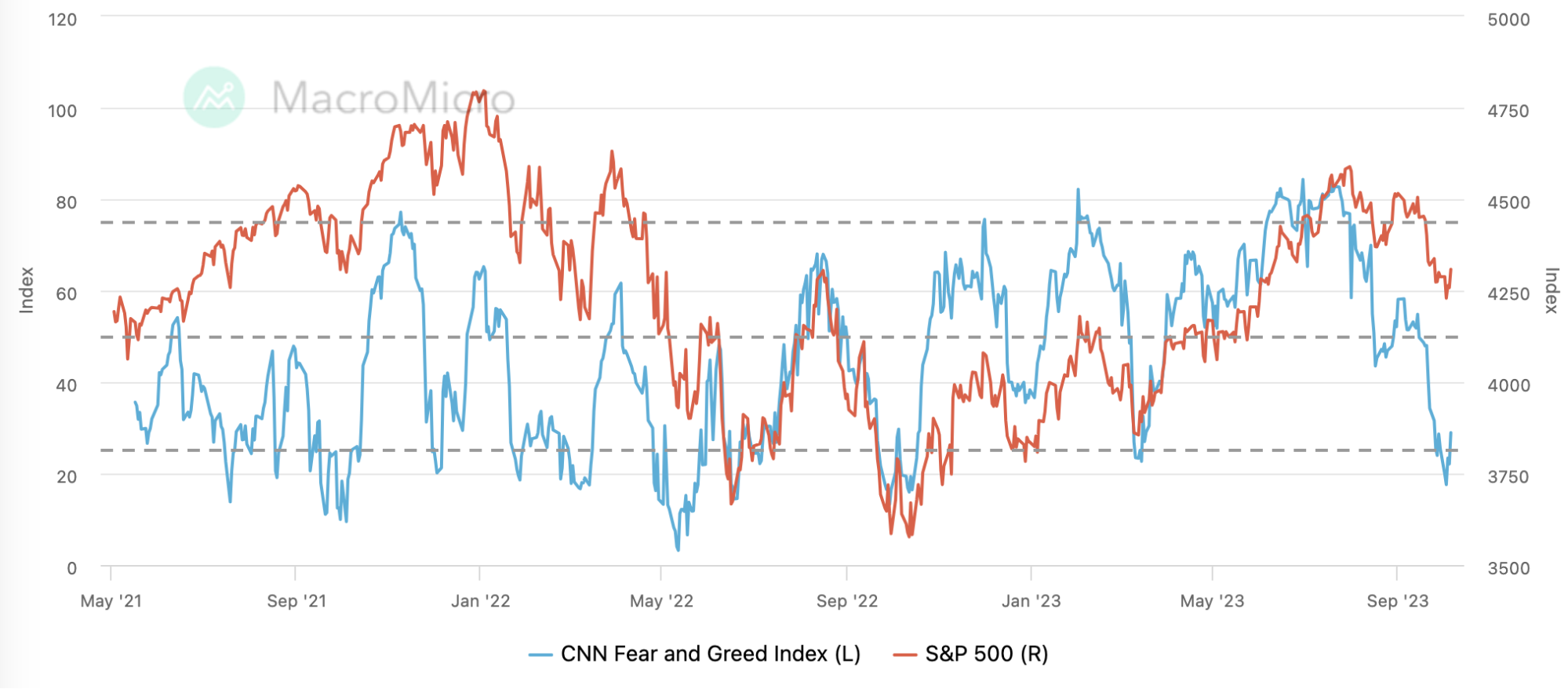
The CNN Fear and Greed Index fell to 17.58 last week, the most panic situation since October last year, but rebounded in the following three days:
Viewpoint sharing
Bank of America’s view: Focus on structured trading opportunities
Because as the deleveraging caused by rising capital costs continues, there is a high probability that a recession will come. Then it will be the time for the market to bottom out and rebound. At present, we need to pay attention to the relative value of different assets and sectors, rather than just looking at the absolute value. .
Bank of America’s Oct. 5 report cited a number of clear mismatch opportunities, such as:
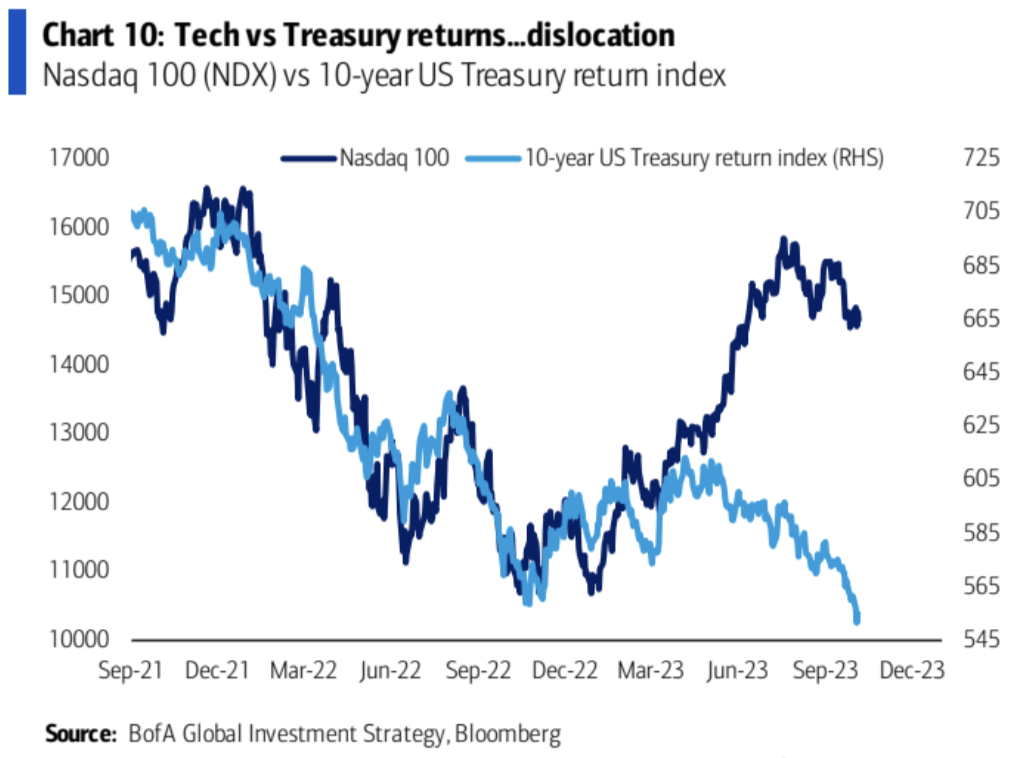
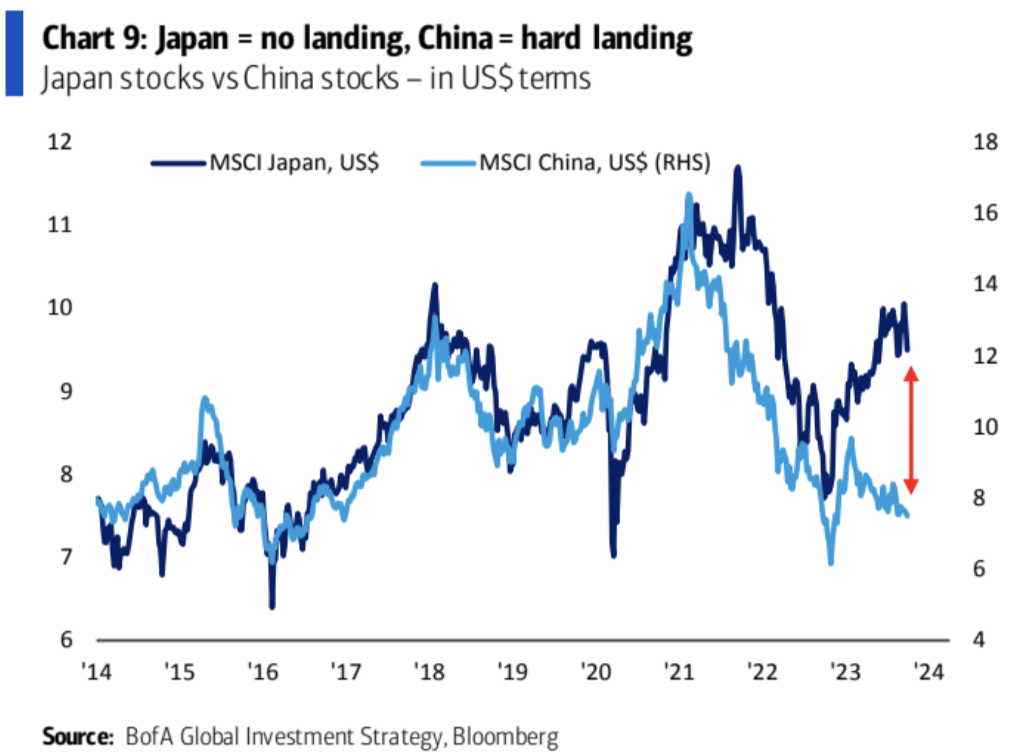
Japan represents the concept of no hard landing, while China represents with hard landing
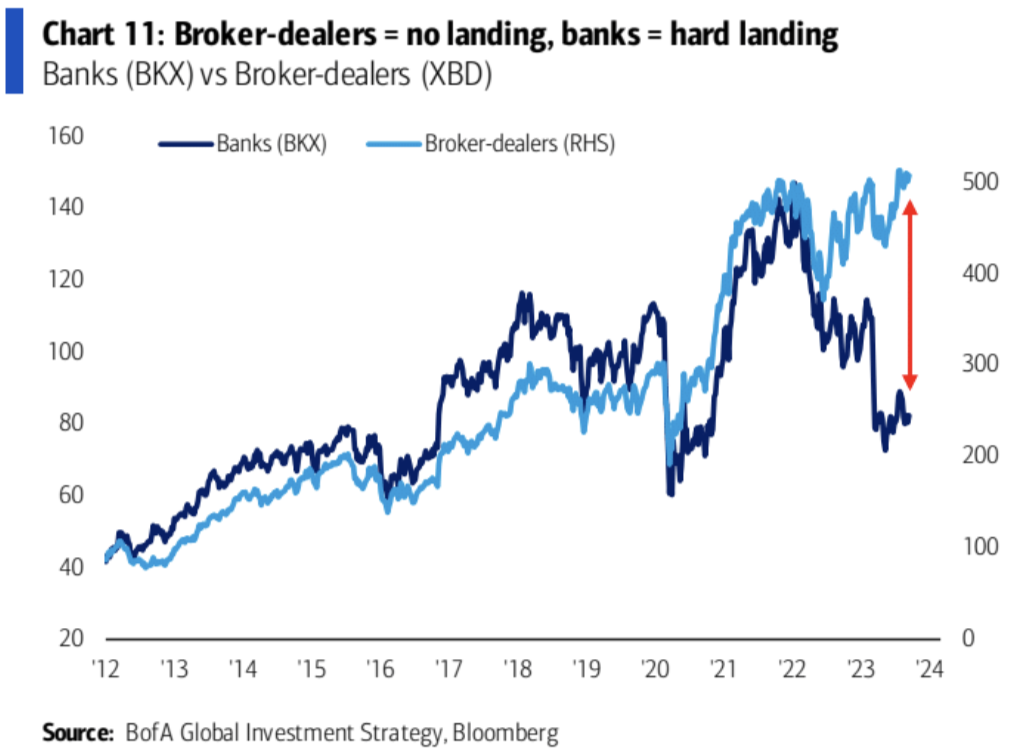
Bank stocks represent hard landing, while brokerage stocks represent no hard landing
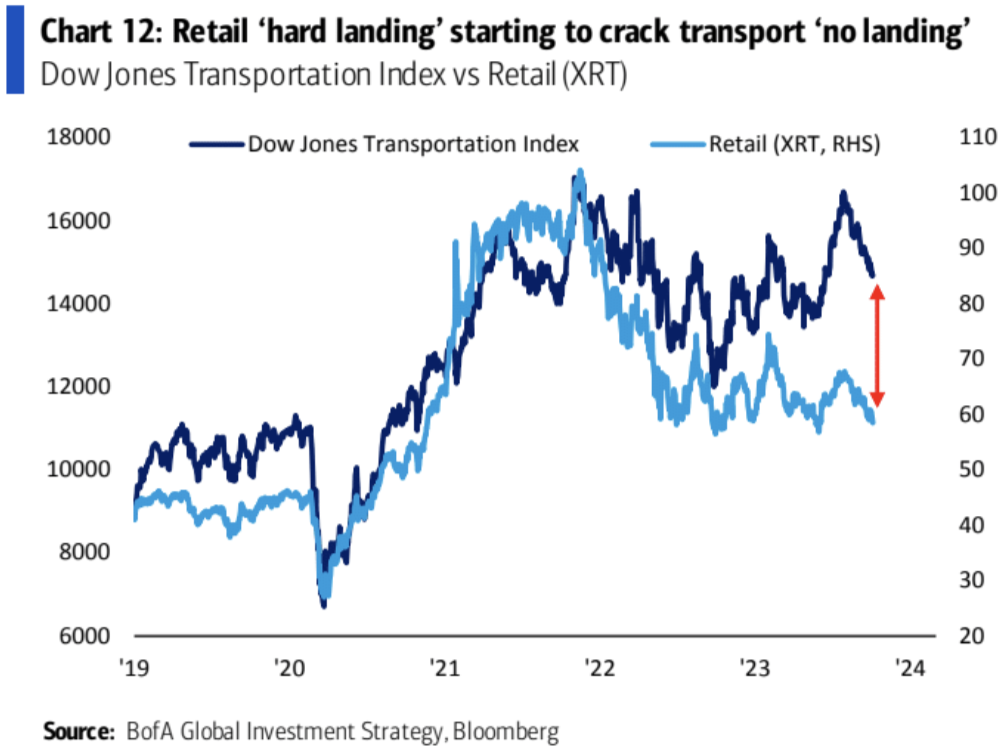
Transportation stocks represent no hard landing, while retail stocks represent hard landing. The former has begun to catch up with the latters decline.
Small-cap stocks are sending signals of recession in the United States. Once a recession is confirmed, they should actively sell the concept of no hard landing and buy the concept of hard landing.
While waiting for a recession, it is more important to focus on these mismatch trading opportunities rather than just looking at the absolute value of individual stocks or sectors.
Dalio says the U.S. will be in debt crisis
This country is going to have a debt crisis, the founder of hedge fund Bridgewater Associates told CNBC. The two spoke during a fireside chat with the Association of Managed Funds. I think how quickly it happens will depend on supply and demand issues, so Im watching that very closely.
Dalio worries that the headwinds facing the economy are more than just high debt levels, saying growth could drop to zero, plus or minus 1% or 2%.
I think the economy is going to slow down significantly, Dalio said.
Who is the main force in the bond market?
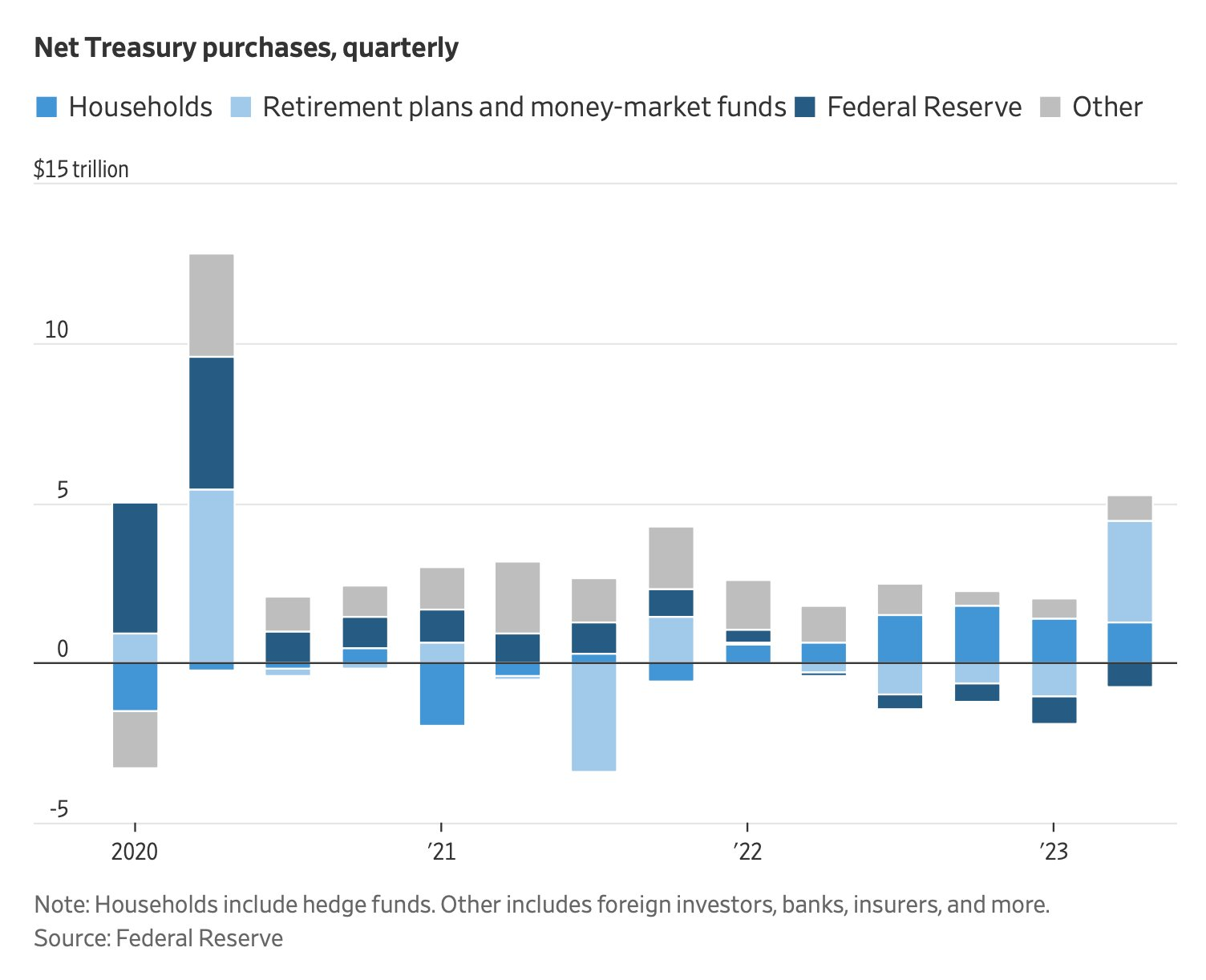
Affected by increased supply and changes in demand structure, U.S. bond yields are likely to remain at a high level. This comes against a backdrop of rising government issuance - $1 trillion more in the past three months - as the Fed stops buying, demand from commercial banks has fallen and institutional investors have less risk appetite for bonds. These factors mean that Treasury bonds need to offer higher yields to attract buyers, making it difficult for the 10-year Treasury yield to fall significantly.
Evidence for the optimists
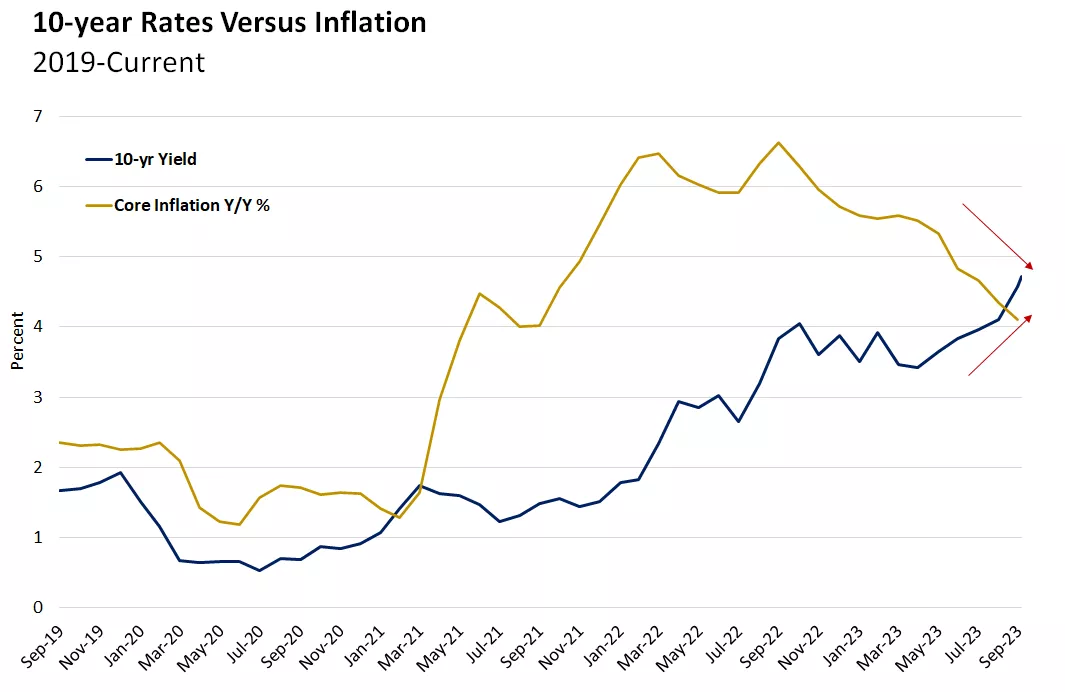
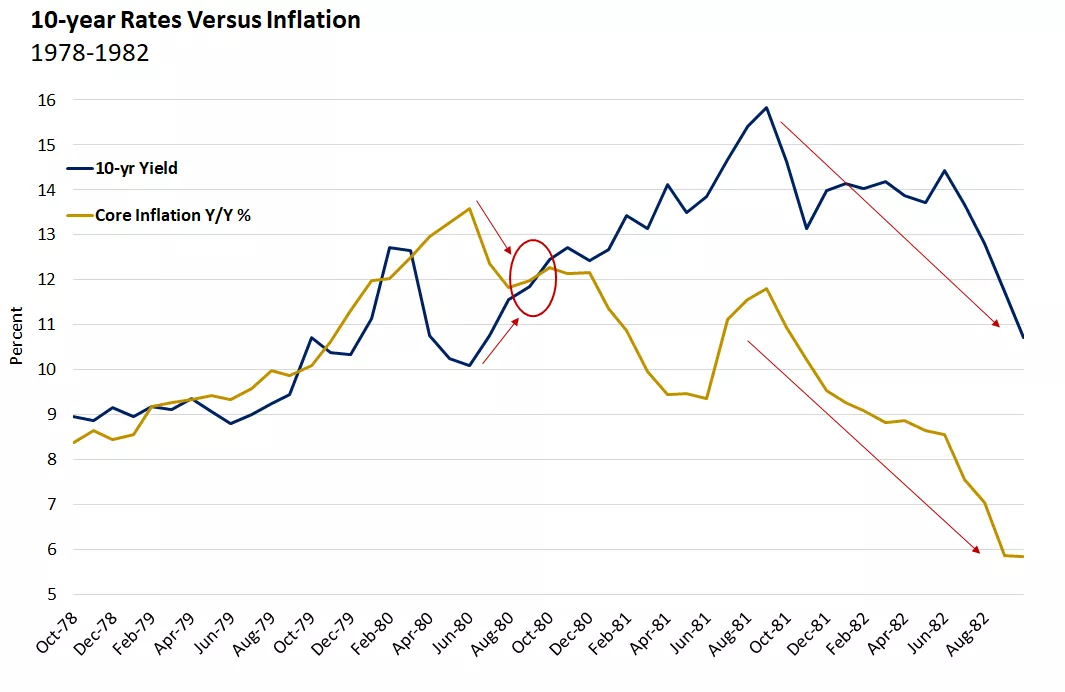
Optimists believe that inflation is falling which will eventually help curb rising interest rates in the secondary market. In the early 1980s, when inflation peaked and fell below 10-year yields, 10-Y rates also peaked and fell, but with a lag of approximately 1 year.
Consumption enthusiasm is rising
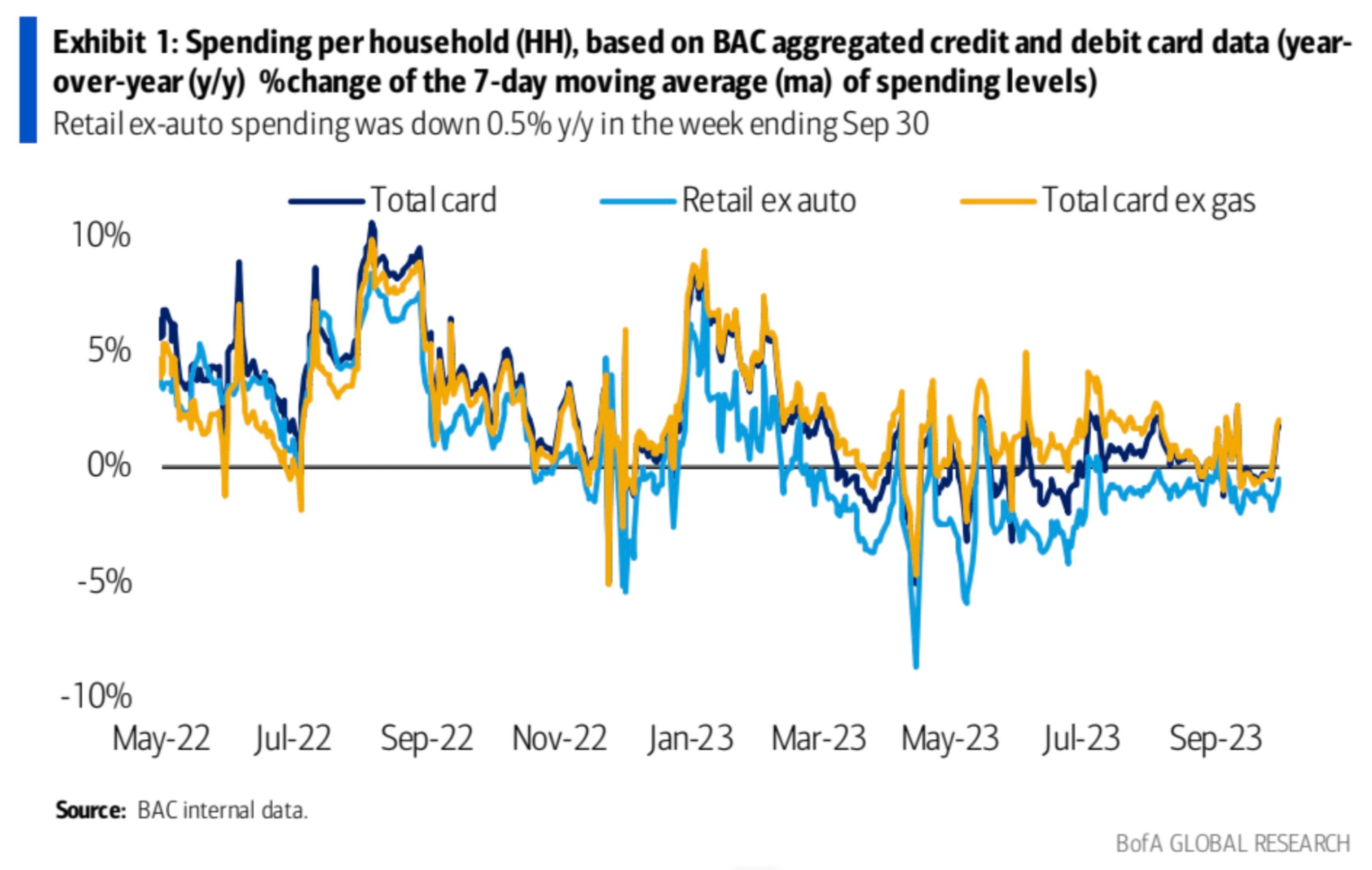
U.S. high-frequency consumption data rebounded sharply in the past two weeks to 1.8% YOY, an increase of 2.0% after excluding fuel: It can be seen that when fuel consumption is excluded from total consumption, the consumption growth is more obvious. This could mean that although energy prices are rising, this is not preventing consumers from spending more on other goods and services
The price of partying
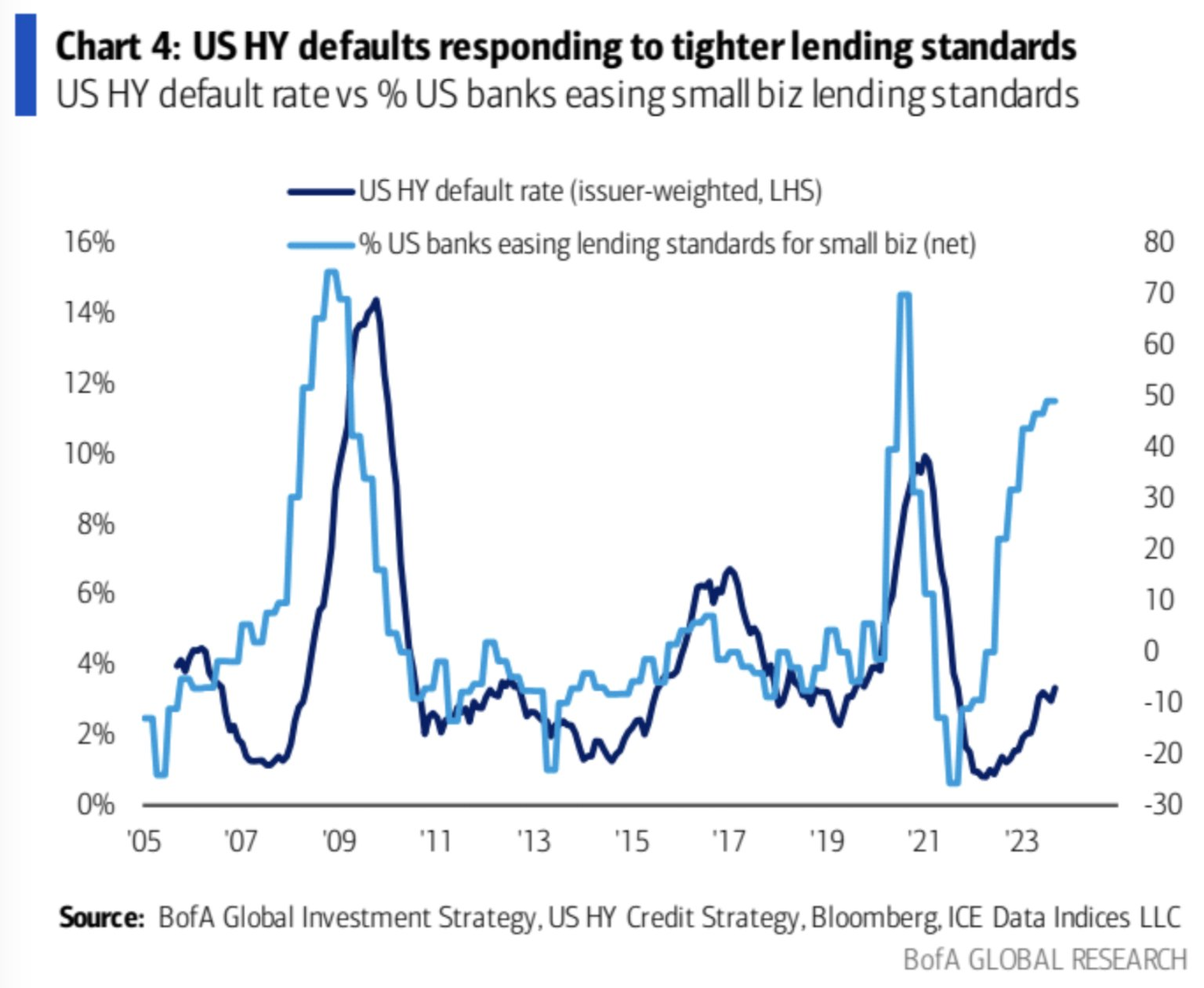
The light blue line shows that banks lending standards to enterprises have been significantly relaxed since 2022. Historically, the club with relaxed standards has ushered in a wave of rising defaults. This time it may be extremely difficult. The high-yield bond default rate that favors dark blue has accelerated its rebound: