


LD Capital: Undoubtedly more hawkish September FOMC


Summarize
This was a more hawkish FOMC meeting in almost every way, despite keeping rates on hold.
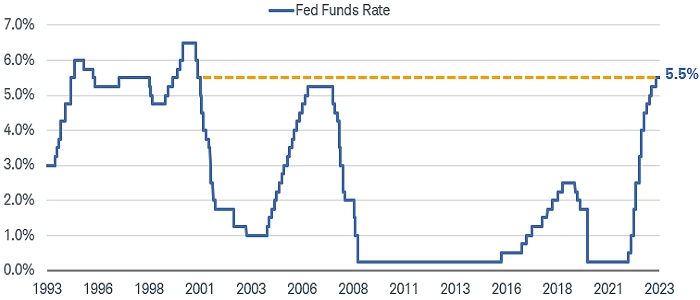
On September 20, Federal Reserve Chairman Jerome Powell emphasized the strength of recent economic activity and despite lowering his core inflation forecast for this year, as mentioned in our Monday report, this was expected and not enough to be considered a dovish sign. The hawks raised their outlook for GDP and employment data. If you have to find a dovish surprise, it could be Powells admission that a soft landing was not what he expected. This can give many aggressive left-side traders more room for imagination.
The gossip is that when Powell took to the podium to read out the Feds latest prepared policy statement, everyone quickly noticed something different. His binder was gone and replaced by... an iPad. Needless to say, social media which prompted a series of vitriolic comments:
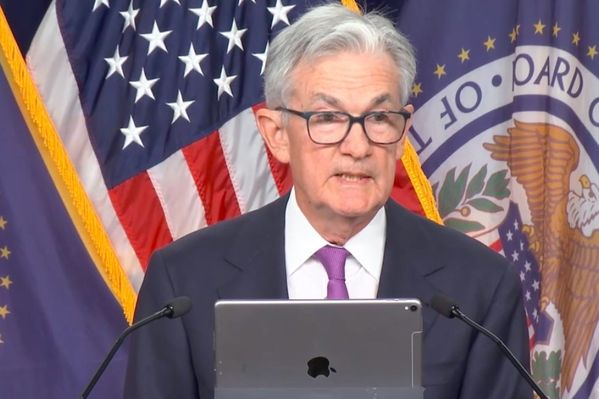
In addition, Powell said at the press conference that a government shutdown that may begin after September 30 may affect economic data. If that happens, the Fed will have to deal with it, he said.
Generally speaking, we believe that credit pressure will become more obvious as time goes by. As long as the Federal Reserve remains on hold, it is equivalent to imposing tighter constraints on the economy. This is because it has been less than two years since we entered the interest rate hike cycle, and companies The average duration of debt is definitely about 5 years, so only new financing and refinancing will face high interest rate constraints. As time goes by, the cost of funds for the overall economy is destined to continue to increase, rather than as the Federal Reserve suspends interest rate increases. Considering that the excess savings on the consumer side have bottomed out, the most difficult time for the entire economy has yet to come.
Therefore, when the current valuation of risky assets is not cheap (SPX 25 times, historical average 16 times), it is not a good time to enter the market on the left. As institutional cover-up has peaked, the popularity of technology concepts has gradually cooled down. By the end of the year, European and American stock markets are expected to gradually enter a stage of volatility and downward pivoting.
However, optimistic news may come from Asia, or specifically Hong Kong and mainland China. After all, the Asian cycle is completely different from that of the United States. Recently, U.S. stocks have been mainly technology stocks adjusting their overly high valuations. Hong Kong stocks A, which are already very low valuations, Can stocks rebound under the stimulation of continuous policies? At this time, the price/performance ratio on the left side is higher than that in Europe and the United States.
Crypto-assets now lack independent themes and hot spots, so the main market drivers should be similar to the non-interest-bearing asset gold. However, considering that gold has clear global de-dollarization central bank buying support, the downside space is limited and the demand for crypto assets is unstable. , poor liquidity, so may be more volatile.
Next, let’s take a look at the latest interest rate forecasts and economic forecasts announced at the FOMC meeting. Such forecasts are updated every quarter and will bring relatively larger repricing to the market.
interest rate forecast
The central banks updated dot plot shows that most Fed officials still expect to raise interest rates again this year, and the federal funds rate forecast for 2024 and 2025 has been raised by half a percentage point.
The so-called dot plot is what the 19 members of the Federal Open Market Committee (FOMC), which sets interest rates, think respectively, is the midpoint of the federal funds rate range at the end of each year over the next three years and over the long term. The forecast for the end of this year is still 5.6, unchanged from June, meaning that the policy rate should be raised to 5.5 to 5.75%.
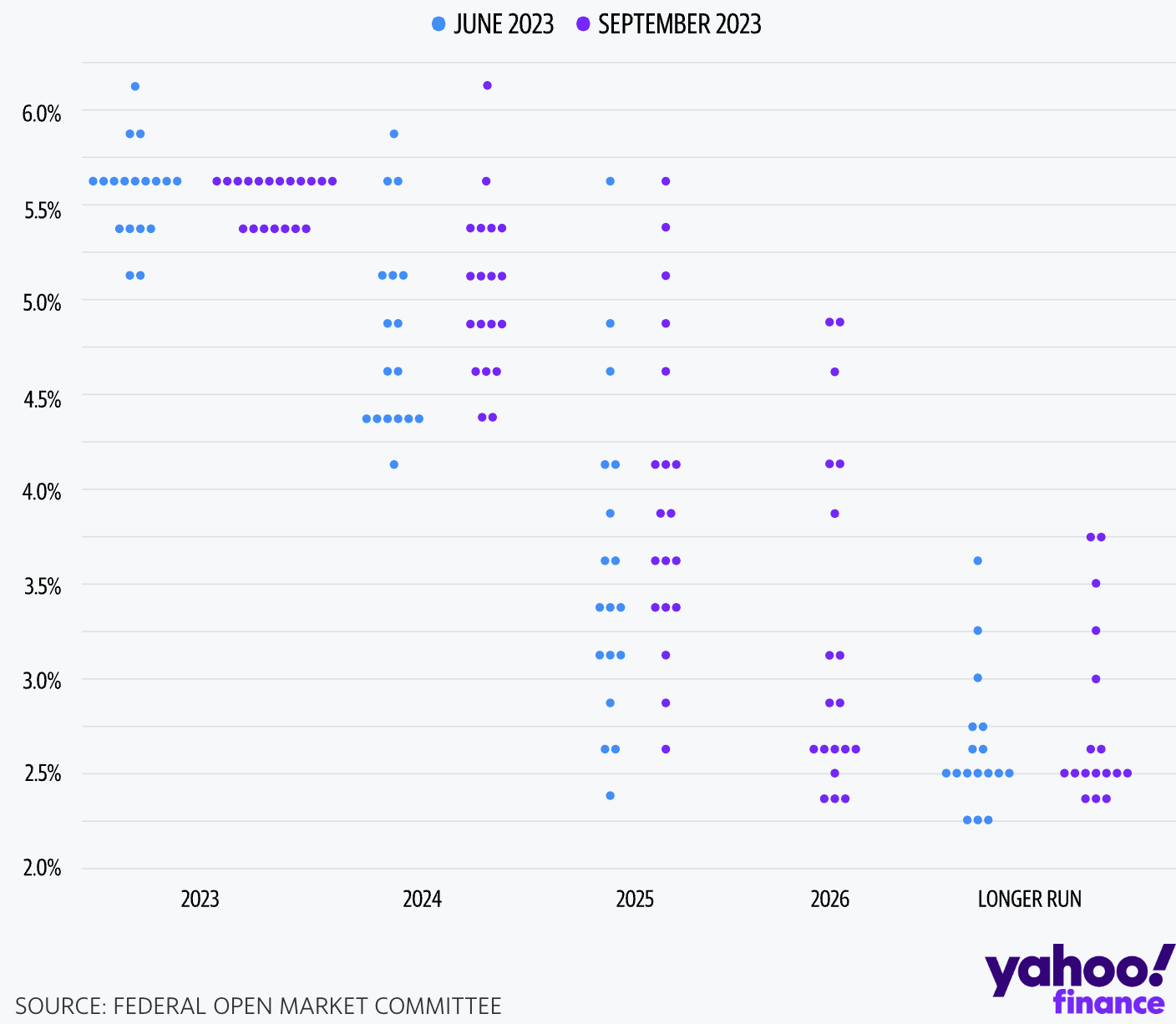
2023: 5.625%, vs. previous 5.625% and expected 5.625%
2024: 5.125%, previously 4.625%, expected 4.875%
2025: 3.875%, previous 3.375%, expected 3.875%
2026: 2.875%
Long term: 2.50%, previously 2.50%
Thereafter, the rate is expected to fall to 5.1% in 2024 (from 4.6% in June), with the midpoint also rising 50 basis points to 3.9% in 2025. The long-term view remains at 2.5%. Such a result is consistent with our concern at Monday morning meeting that there is a high probability of an upward adjustment in interest rates, and the 50 bp increase is a high-level increase. If the increase is only 25 bp, the market can still find some reasons to comfort itself.
Therefore, the focus will obviously shift upward next year, and the focus on long-term interest rates will shift slightly upward after 2026. It is also worth mentioning that this time there is actually a Fed member who predicts that interest rates will be 6.125% by the end of 2024...
One change this resulted in is that the updated dot plot implies only a 50 basis point rate cut next year. This is in stark contrast to the previous 100bp rate cut. 3 months ago, the December 2024 federal funds rate in the futures market was 2.86%. Today, those federal funds rates trade at 4.8% and, over time, could continue to rise toward the Feds 5.1% target, a difference of more than 200 basis points.
The final long-term expectation remains unchanged at 2.5%. We have said before that this number is unlikely to change, because this value minus the inflation target of 2% yields the so-called equilibrium interest rate R* that neither restricts nor boosts the economy, which is 0.5%. This is According to long-term market consensus, if this target changes even 0.1%, it may trigger a tsunami in the financial market. However, if you look carefully at the dot plot this time, you can see that the center of gravity has moved slightly upward. Although it is not enough to change the median value, this is undoubtedly a sign of hawks.
economic forecast
In terms of economic expectations, Fed officials are more optimistic. Fed officials have significantly raised their GDP growth forecast for this year, raised their GDP forecast for next year, lowered their unemployment rate forecast for this year and the next three years, and slightly raised the personal consumption expenditure price index for this year and the year after. (PCE), slightly raised the core PCE inflation forecast for the following year, but lowered the core PCE forecast for this year.
Specifically:
GDP is expected to grow by 2.1% in 2023, twice the 1.0% expected in June. The expected GDP growth in 2024 is raised to 1.5% from the 1.1% expected in June. The expected growth in 2025 is unchanged from the 1.8% in June. , the same growth rate of 1.8% in 2026, and the longer-term expected growth rate is also unchanged from Junes 1.8%.
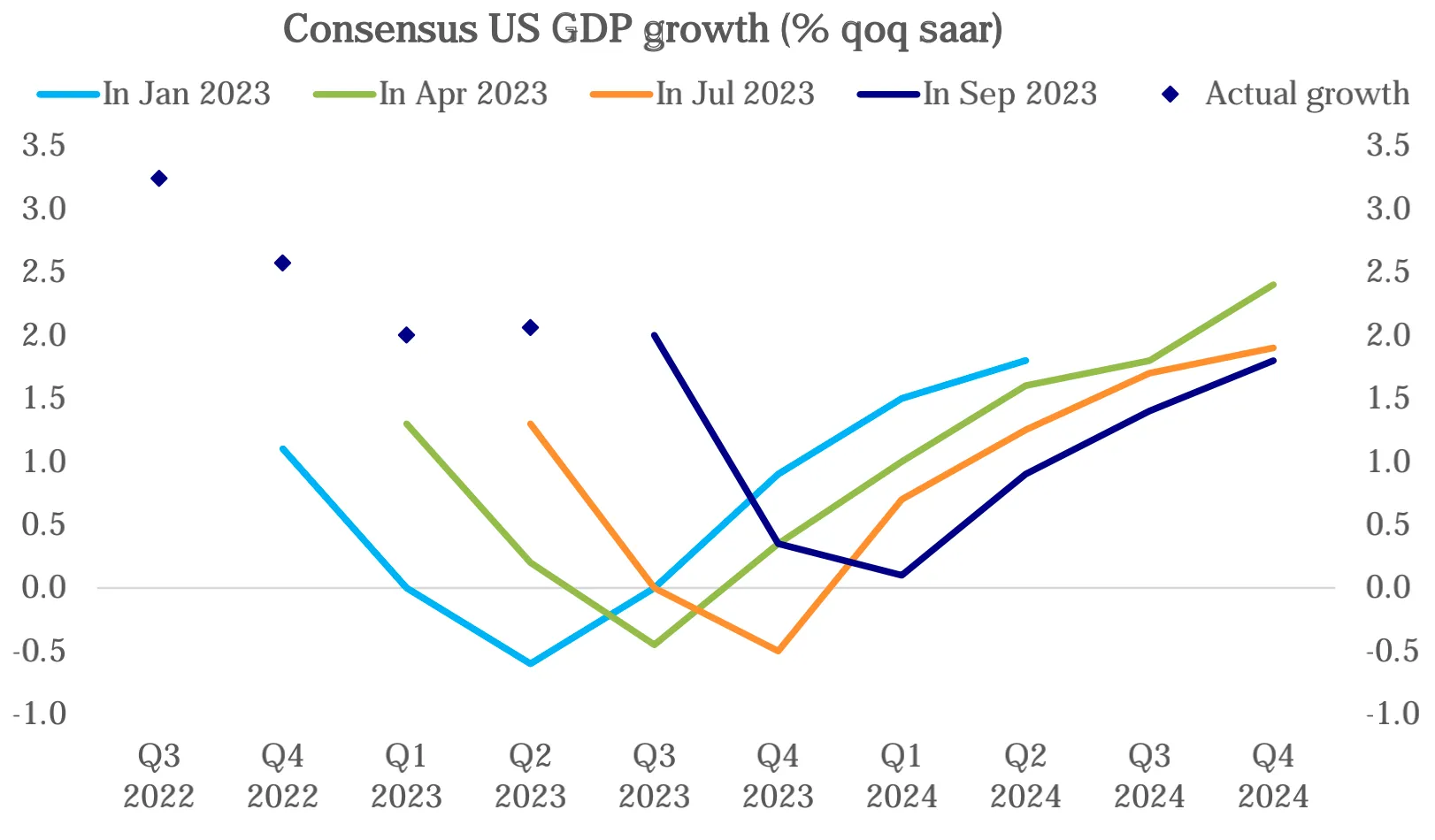
Comparing the chart below is the current Wall Street expectations, we can see that the Fed and the latest market expectations are aligned, and market expectations are constantly predicting a recession, and the recession has been delayed, which is an important background for the previous market rebound. Therefore, if the economy does slow down rapidly in the third and fourth quarters this time, and interest rate expectations remain high, it may be difficult for the market to find an optimistic point; but for optimists, market expectations are still low and will continue to exceed expectations. The data is also based on.
The unemployment rate forecast for 2023 was revised down to 3.8% from the 4.1% forecast in June, and the forecast for both 2024 and 2025 was revised down to 4.1% from 4.5%, with the longer-term unemployment forecast unchanged from Junes 4.0%. Officials seem more confident that we will only see a drop in demand through vacancies and not an increase in layoffs
The PCE inflation forecast for 2023 was raised to 3.3% from the 3.2% expected in June, the forecast for 2024 was unchanged from June, still 2.5%, the forecast for 2025 was raised from 2.1% to 2.2%, and the longer-term forecast was unchanged from June 2.0%.
The 2023 core PCE forecast is lowered to 3.7% from the 3.9% expected in June, the 2024 forecast is unchanged from Junes 2.6%, the 2025 forecast is raised to 2.3% from the June forecast of 2.2%, and the longer-term forecast is 2.0% .
Market Reaction
Initially we saw interest rates move higher and stocks move lower. But during the press conference, both reversed, then reversed again, with yields returning to session highs, and ultimately, stocks refreshed session lows to close with a tumble, while the more rate-sensitive 2-year Treasury yield The rate refreshed the highest level since 2006.
The Dow Jones Industrial Average, which earlier rose 0.7% on IBMs bullish rating from RBC Capital, ended down 0.22% at 34,440.88 points.
The benchmark SP 500 index fell 0.94% to close at 4,402.25 points, while the Nasdaq Composite was the worst performer, falling 1.53% to close at 13,469.13 points.
Among the 11 SP sectors, 7 closed in the red, with heavyweight growth sectors communications services and technology being the two largest decliners. Consumer staples and real estate were among the top gainers.
U.S. Treasury yields rose, with the 2-year yield, which is more sensitive to interest rate decisions, showing a larger reaction. The instrument rose 3 basis points to 5.14%, having previously hit its highest level since 2006. The 10-year long-term Treasury yield rose 2 basis points to 4.39%.
The 10-year real yield broke out sharply today, clearing two resistance levels and ending a month-long period of consolidation. The 2-year Treasury rate also broke out, ending a nearly six-month period of consolidation at 5.1%. It closed at 5.17% and looks set to rise to 5.25%
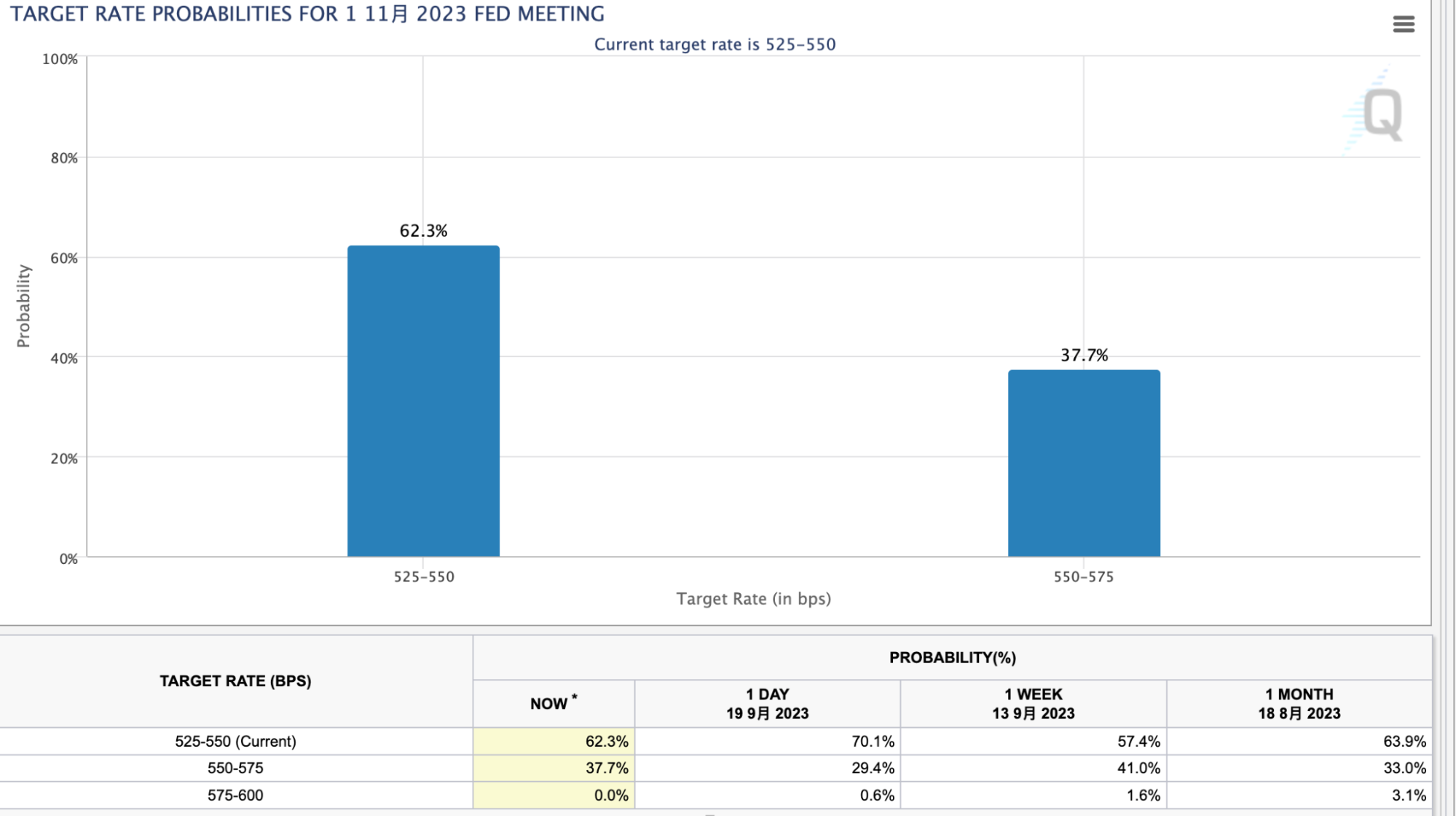
Fed funds futures still indicate that traders expect the Fed to keep its benchmark interest rate at current levels this year, despite forecasts released by the Fed on Wednesday that suggest another rate hike is likely.
There isnt much in todays Fed policy decision or policy statement that might deter USD bulls in the short term, so that means USD yields are attractive right now. The U.S. dollar index rallied after the resolution, closing at a one-week high of 105.33 but failing to break above the previous high of 9.14. As long as the dollar does not fall below this price, it will achieve ten consecutive weeks of gains.
Gold is similar to digital currencies. It rose before the meeting and fell back after the meeting. However, digital currencies experienced significant rebound and shock, and gold, like the stock market, hovered at intraday lows. Given that trading volumes have not rebounded recently, we suspect that such price action could prove that the crypto market is more resilient. Structurally, BTC was strong throughout September, reflecting that BTC dominance increased by 1 percentage point to 49.25%, and the market share of Ethereum and defi coins declined, which showed that the markets enthusiasm for hot topic speculation has further declined. The current BTC dominance is equivalent to April 2021 (BTC reached the top for the first time, when it was still in the middle of the bull market, and Defi is in the bubble rising period and is far from the top), and exceeds the level in June 2022 (the market is at its most pessimistic). Based on the previous experience of bull-bear conversion, if BTC dominance can rebound by another 5% this time, it can be said that the bubble has been relatively completely eliminated. The peak market share in the first major cycle from 14 to 17 is 90 to 95, and the peak value from 18 to 21 is 70, which is approximately 55% based on the linear decline rate.
More comments
As real interest rates began to rise in mid-May, the Earning/makertcap ratio of U.S. stocks fell, resulting in lower and lower risk compensation. Stock market investors are relatively optimistic and have been betting on multiple interest rate cuts in 2024 and a corresponding decline in real yields. Todays central bankers and bond markets are proving that was a wrong bet. For months, the Fed has hinted that its policies will continue for longer. This suggests a rate cut is not coming anytime soon. If interest rates are cut, they will only be in response to lower inflation, while real interest rates will remain capped.
The earning ratio of U.S. stocks is already negative when compared with the 10-year interest rate. If compared with the real interest rate excluding inflation, the interest rate difference between the Nasdaq price-earnings ratio and the 10-year real yield in May this year was 2.7%; now, this The spread has narrowed to just 1.7%, a difference of 100 basis points. Consider that the Nasdaqs yield would need to increase from its current 3.7% to 4.7% to return to the May spread. That would require the Nasdaqs price-to-earnings ratio to fall to 21.3 from its current level of 27.0, or about a 20% drop, a drop that would take the index back to its lows last seen on March 13.
So if market interest rates continue to rise, its logical to expect that Nasdaqs yields will need to increase accordingly, leading to lower valuation multiples, although this wont necessarily happen as earnings expectations for the stock market continue to improve. . The whole thing will be dynamically balanced.
In addition, optimists can believe that the combination of rising economic growth expectations and falling unemployment rates shows that the Fed is increasingly confident that it can achieve a soft landing and that the economy can withstand higher interest rates for a longer period of time.
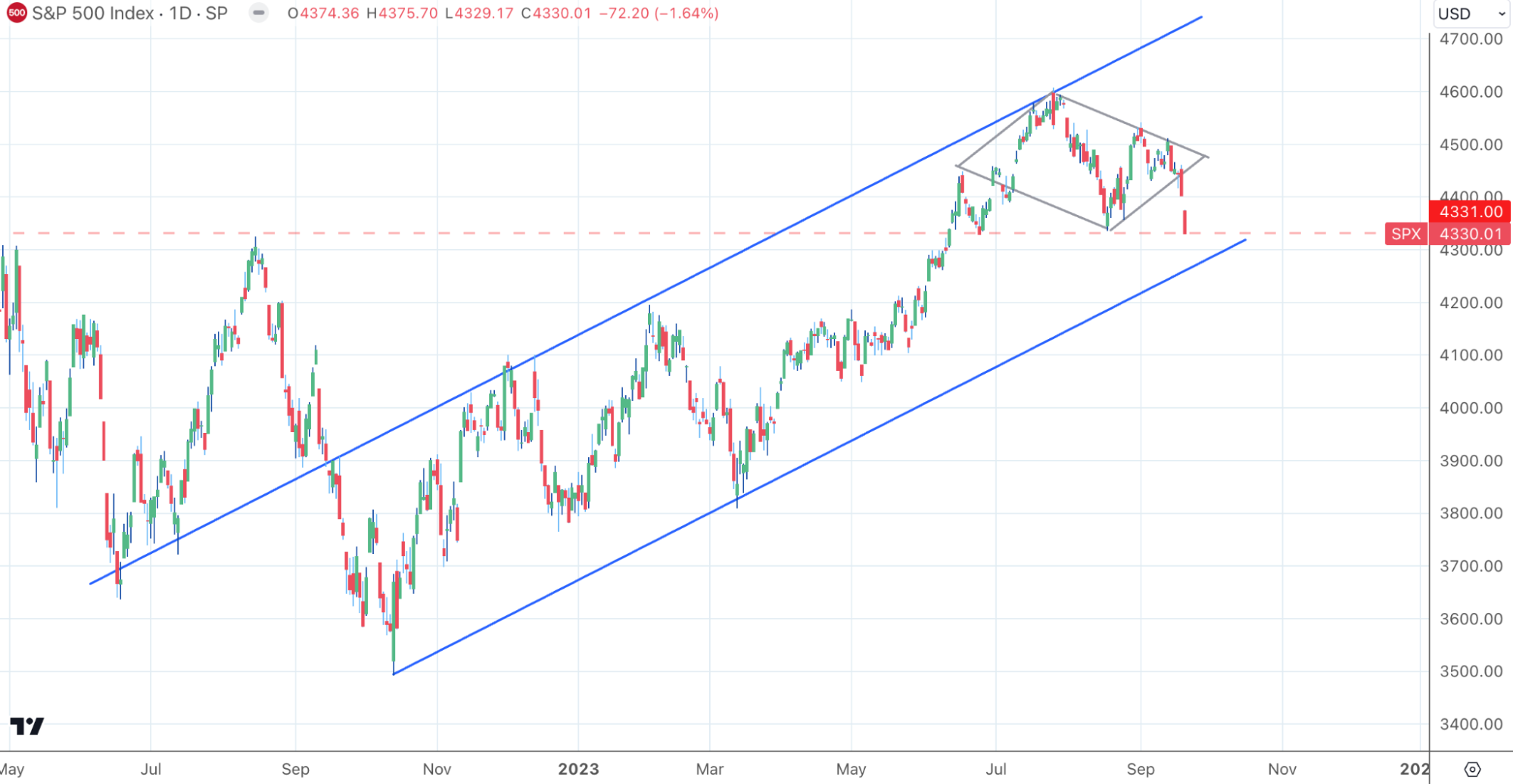
From a technical analysis perspective, the SP 500s diamond pattern has been broken. If it breaks through 4330 points, it may also mean that the neckline of the head and shoulders pattern has been broken, indicating a worse short pattern.
In terms of market commentary, most professionals undoubtedly believe that this content is hawkish. The difference is that some people think that a few months from today, maybe not even a year from now, this judgment will be completely Incorrect.
Among them, this sentence is the biggest surprise in Powell’s press conference?
Powell said at the press conference that a soft landing for the U.S. economy was not his basic expectation. This obviously contradicts the FOMCs forecast, so he hesitated and did not explain clearly why he made such a judgment.
Its evidence that skeptics welcome, bolstering skepticism about forecasts that the Fed will raise interest rates again this year as the economy looms to slow.
UAW strikes, rising oil prices and the threat of a government shutdown are reminders that the economy may face more bumps on the road to 2% inflation.
This means that he will be very cautious in the future, not only on raising interest rates, but also on how long he will keep interest rate limits. Radical people will bet that the fourth quarter is the best entry point.





