


friend.tech’s thoughts on breaking the circle: Has SocialFi found a new way out?


Foreword
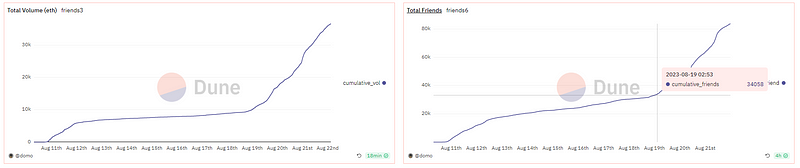
On August 10, the decentralized social application friend.tech based on the emerging Layer 2 network Base launched its beta version. Within just one day, it had over ten thousand registered users and a transaction volume exceeding 6000 ETH.
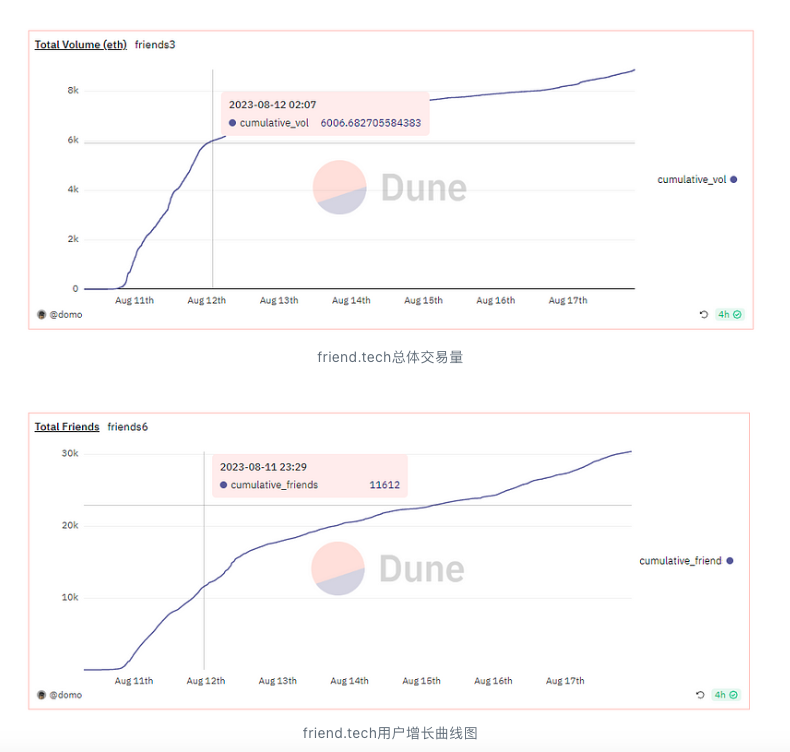
The model of friend.tech is actually very simple, which is to tokenize individual social influence. Fans or other users can purchase shares of KOLs and have the chance to private chat with them. At the same time, the value of these shares will increase as more people buy, creating profit opportunities for the holders.
So, how does friend.tech work? What is the reason behind its popularity? Is it just a short-term success or a genuine new path for decentralized social networks? This article will explore these questions in detail.
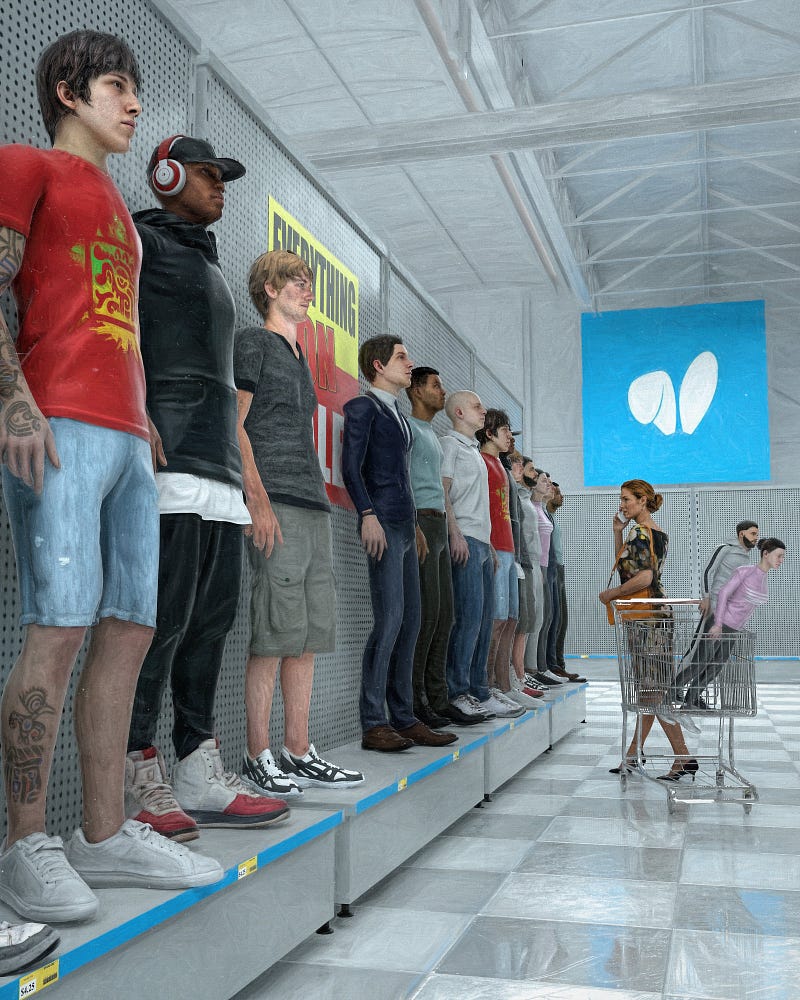
How to use friend.tech
Obtaining the APP
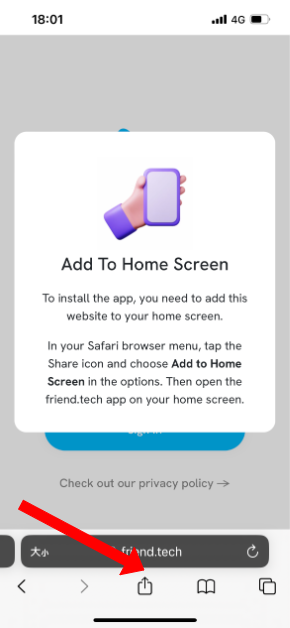
The current beta version of friend.tech can only be used on the IOS system. Follow the instructions, go to the Safari menu in your Apple device, click on the "Share" icon, and select "Add to Home Screen". This way, you can open friend.tech from your home screen.
Obtaining an Invitation Code
After opening friend.tech on your home screen, you can choose to register using your Google account or App Store.
After completing the registration, you still can't use the app because friend.tech, like other Web3 social products, requires an invitation code for access.
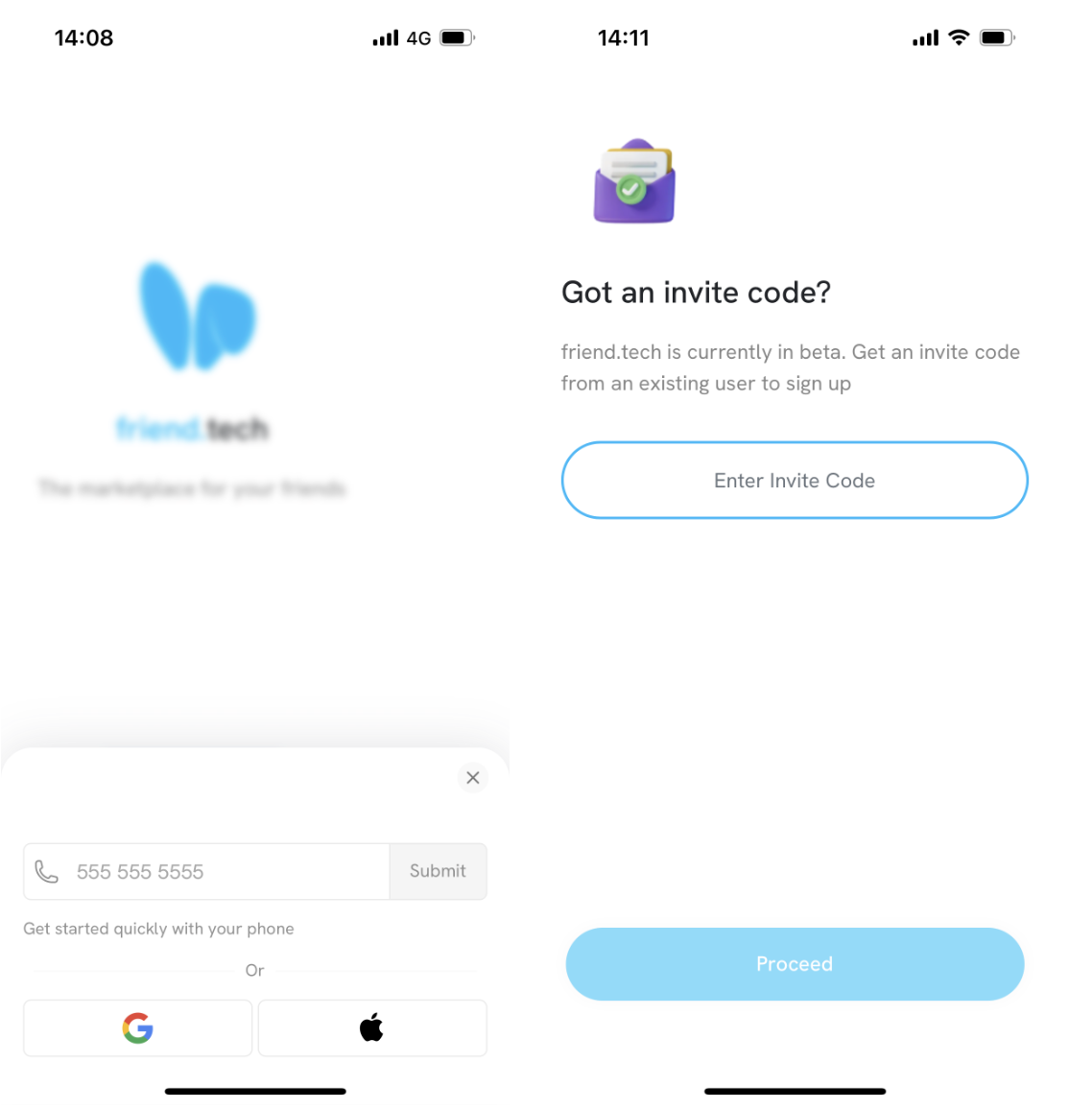
According to the rules, a logged-in user can share three invitation codes with friends, but each code can only be used once. Those who want to obtain invitation codes can ask their friends or search for keywords like "friend.tech" on X (formerly Twitter) platform to find invitation codes.
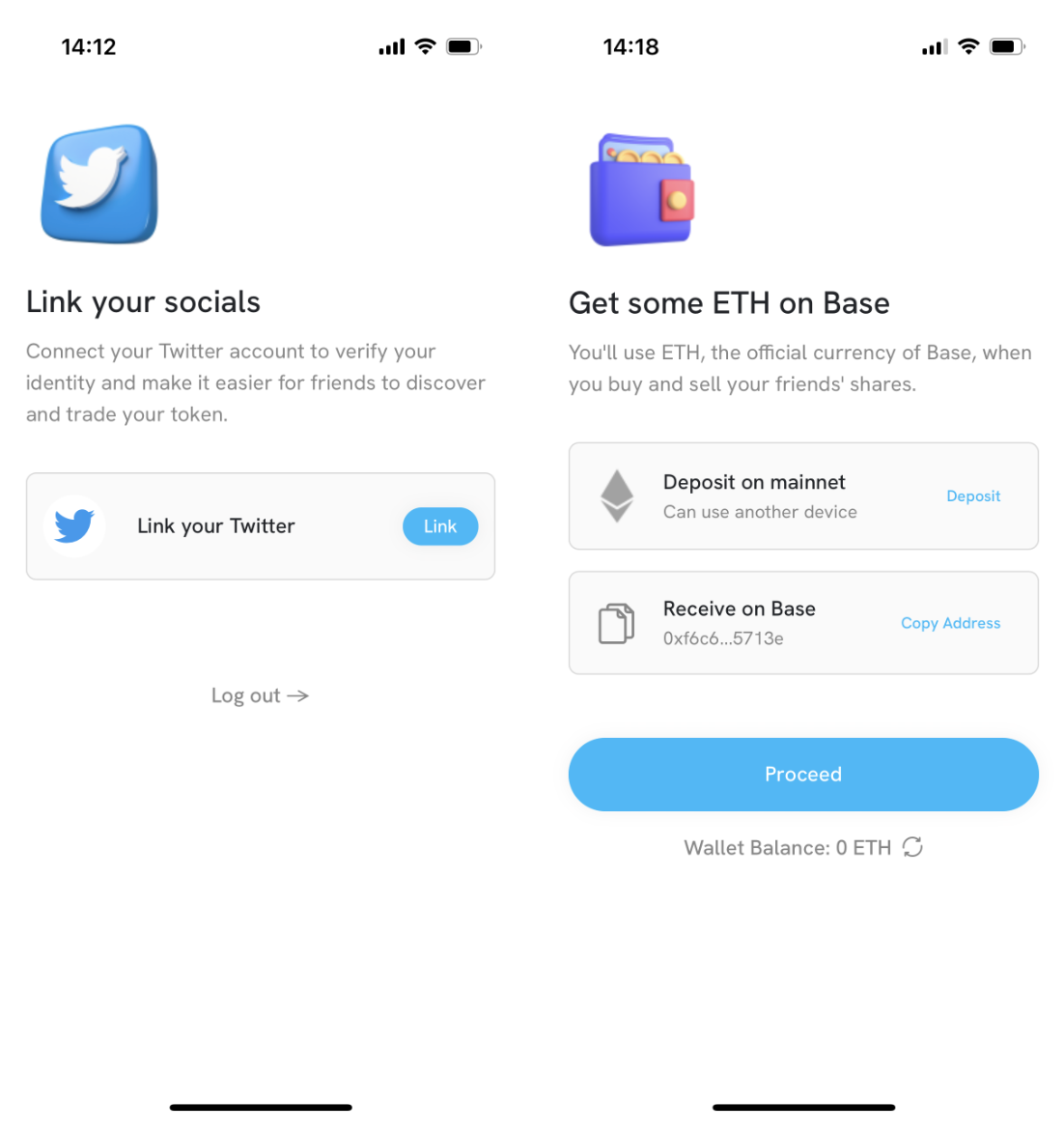
Binding an X account and activating the account
After filling in the invitation code, in order to activate the account, users also need to bind their X account and transfer 0.01 ETH to the provided address. This step may be taken by the official to prevent too many fake accounts and witch attacks.
Buying and selling personal shares
After completing the above three steps, you can officially enter the APP to buy and sell personal shares. At the beginning, you need to use the free share given by the system to purchase your own shares. Then, enter the APP, where the homepage will display the rankings of the most popular users. You can choose to buy their shares or use the search function to find your favorite KOL accounts.
However, please note that there are currently many fake KOL accounts that use the same profile picture and name as famous individuals to confuse people. Therefore, it is recommended to click on the icon to redirect to the X platform and verify the authenticity before purchasing shares.
After successfully purchasing KOL shares, you can unlock the private chat function with the KOL. However, in order to prevent spam messages, each shareholder can only send three messages at a time. The message limit can be reset after receiving a reply from the KOL.
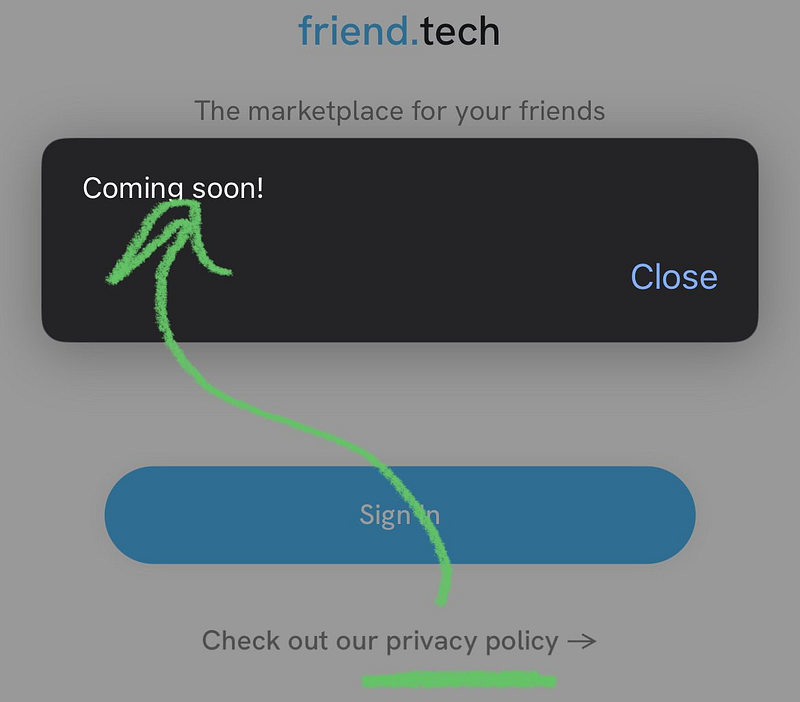
Furthermore, it is worth mentioning that the privacy policy of friend.tech is currently unknown, and users cannot know where their data will be sent. Therefore, when registering on friend.tech, it is recommended to use a wallet with less funds or a new wallet for investment to minimize risks.
Decomposition of Core Assets
Due to the heavy financial nature of blockchain, some Web3 projects are essentially centered around assets. Therefore, when analyzing a project's actions, we can often start with its core assets. Currently, the core assets of friend.tech can be broken down into KOL shares and points:
KOL Shares
The ownership of KOL is the core of the operation of friend.tech. We can analogize each KOL account bound to platform X as a liquidity pool, where each fan's buying and selling can be seen as injecting and withdrawing funds from this pool. At the same time, for each transaction, 5% flows into Friend.tech's treasury and 5% is transferred to KOL's wallet account.
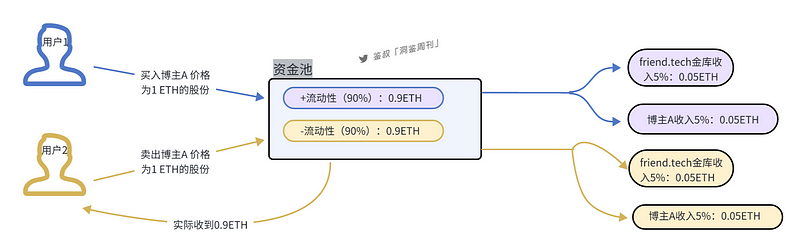
This ownership structure is attractive to both KOLs and fans:
For KOLs: Because 5% of the transaction fees flow to KOLs, this offers a great opportunity for KOLs to monetize their influence. Moreover, the cost of opening an account is relatively low, and most people will not have an issue with money.
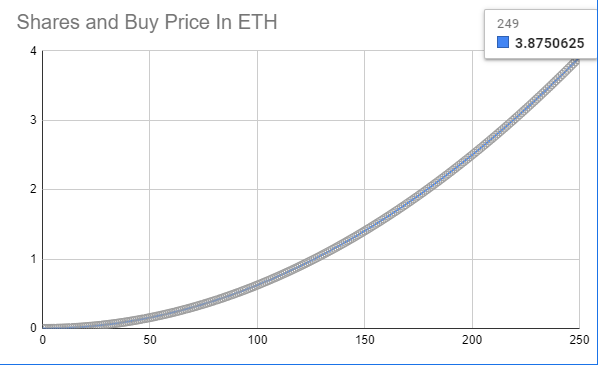
For fans: According to the rules, when fans acquire KOL ownership, they gain the right to have private conversations with them. Of course, this is only one aspect of the attraction. The price model for KOL ownership is "next share price = sold shares * 2/16000 ETH". Therefore, the price of KOL ownership is directly proportional to the number of buyers and inversely proportional to the number of sellers. This creates opportunities for early buyers to profit and forms a community of interests, leading to spontaneous promotion of KOLs on social media.
Points
Those who have a bit of knowledge about finance may recognize that the KOL ownership price model designed by friend.tech has a "Ponzi" characteristic, where old players profit from new entrants. If new player growth stalls, the entire economic system will collapse, leading to a panic sell-off by users.
friend.tech seems to be aware of this, and in order to incentivize relatively latecomers, they have released an expectation of an airdrop. They have stated that they will airdrop a total of 100 million points to users participating in product testing over the next six months, with the specific use of the points undisclosed. The effect of this strategy is significant as well. After the initial airdrop on August 19th, it has once again boosted the growth curve of total transaction volume and users (also likely due to the disclosure of seed round financing).
Decoding the Causes of Explosion
Reliance on Big Tree
The "big tree" here refers to the Base chain. Although Coinbase has explicitly stated that Base will not issue coins, due to its wide user base and early development stage, the market has high expectations for it. The previous hot dog project BALD is a proof of this. From the overnight multiplier legend of BALD to the current friend.tech, it's hard to deny the boost provided by Base.
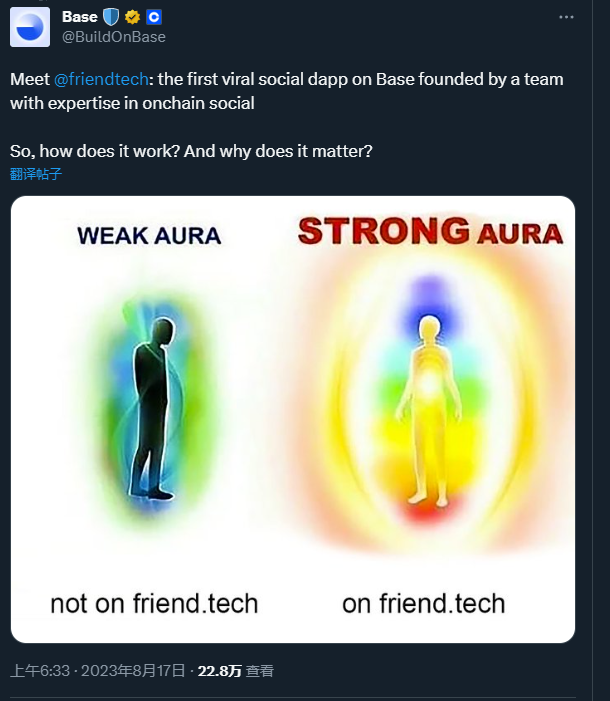
At the same time, friend.tech cleverly attracted attention and completed cold start by causing abnormal movements in the data on the Base chain.
Reliance on the Web2 Social Graph
We all know that for Web3 products, accumulating users is a difficult and lengthy process. Therefore, some projects try to attract users by binding their Web2 accounts and providing rewards. For example, game projects usually choose to bind with Steam, and social projects usually choose to bind with X. friend.tech also used this tactic by binding users, especially KOLs, to their X accounts, thus completing the first wave of user publicity and accumulation.
Viral Spread through Invitation System
In the social field, the invitation system always attracts people's attention, such as the popular Monaco and Clubhouse a few years ago. Why is the invitation system so appealing? The fundamental reason is that it artificially creates scarcity and restricts the massive influx of ordinary users. It takes advantage of people's curiosity and vanity, and combined with commission rewards for the inviter, it achieves viral spread. It also saves a considerable amount of marketing expenses for the project party.
This is one of the reasons why friend.tech exploded in a short period of time.
Creating a Sense of Mystery and Relaxation
Discard the strong operating model, abandon community operations, and discard the white paper, maintaining the mystery and relaxation of the project, I think this is also the internal reason why friend.tech can explode. friend.tech currently does not disclose team information or project information systematically, there is not even an official document, all information can only be obtained through the official account of X platform and the founder's X account, which is different from what Web3 projects often advocate as "community-centered."
But it is also this sense of mystery that allows early users to focus more on the product rather than its background.
Funding and Team Situation
As the project becomes more popular, more and more people are paying attention, and team information cannot be hidden.
Funding situation
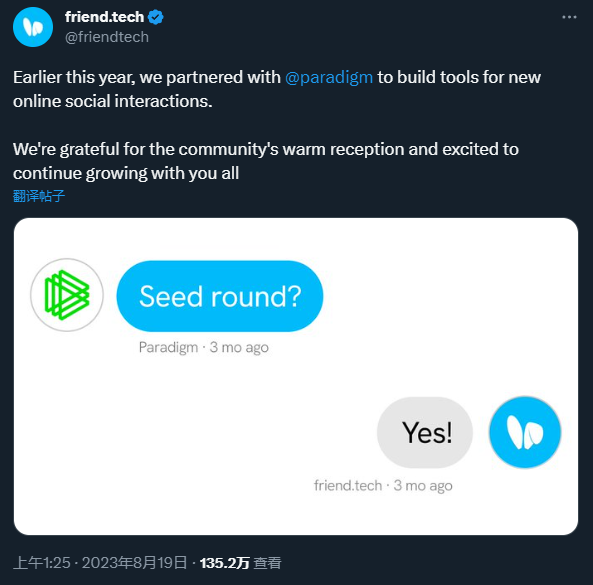
On August 19, friend.tech announced the completion of seed round financing on its official account. The investor is Paradigm, and the amount has not been disclosed. Paradigm's main business is venture capital and private equity. It has invested in many well-known projects such as Uniswap, Opensea, dYdX, and Optimism.
Team situation
Currently, four team members can be queried. One is the founder Racer, who was the chief developer of TweetDAO before friend.tech. The basic principle of TweetDAO is similar to friend.tech, where users can purchase an NFT and publish a tweet from the DAO's Twitter account. As more NFTs are sold, the floor price of the NFT will also rise, but the project has currently ceased operations.
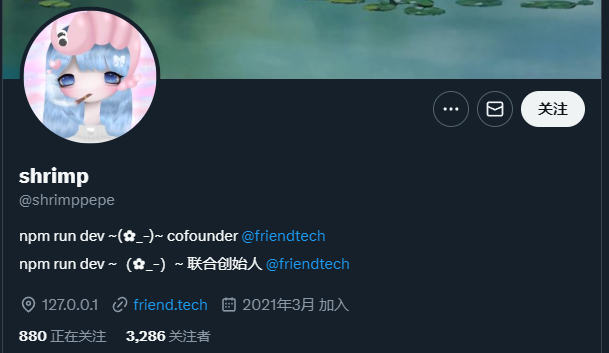
 The second member is shrimp, who is the co-founder and user-side engineer of friend.tech. Before friend.tech, he also built a picture social sharing application called Stealcam with Racer in March this year. The basic principle of Stealcam is that users can upload pictures to the platform, but other users need to pay to access them, and the access rights are not permanent. When the next visitor pays a higher price, the access rights will be transferred. However, the project is currently in a state of stagnation.
At the same time, the other two team members that can be found are basic engineer Rodion and Pancakesbrah.
How long can friend.tech stay popular?
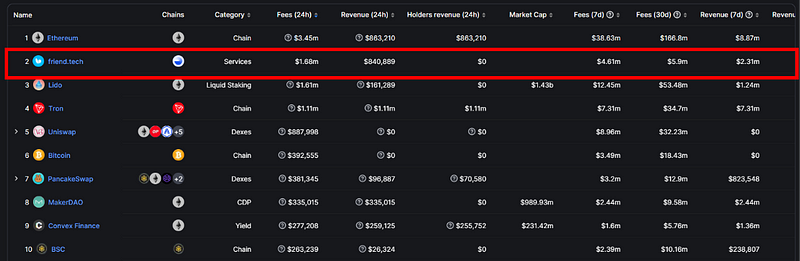
As of August 22, the total number of user addresses for the friend.tech test version, which has only been online for more than ten days, is 84,820, with a total trading volume of 35,000 ETH. According to DefiLlama data, it ranks second in on-chain fees generated within 24 hours, surpassing Lido, Uniswap, and the BTC network, which shows that its popularity has not diminished since its launch.

So, how long can friend.tech stay popular? Since it gained attention, "Pang Shi", "Passing the Drum", "Consuming Fans", "Who Runs Faster Game", and other clouds have been looming over friend.tech.
Frankly speaking, I believe that the "game of taking over" does exist on friend.tech at present, but this does not mean that it lacks potential for future development. In the early stages of development, most social applications actively or passively touch upon gray areas in order to achieve viral growth. For example, WeChat's early "drift bottle" feature, KuaiShou's early vulgar and tasteless videos, TikTok's edge-border bloggers, etc. However, after accumulating a user base, most of them will explore new value creation and business models, forming a positive cycle.
Therefore, whether friend.tech can exist in the long term and get rid of the shadow of Ponzi schemes depends on whether it can solve the problem of value creation based on the continuously growing user resources.
Since it is a private domain, attracting users and increasing fans' stickiness for KOLs is nothing more than making promises or providing unique value, such as cutting-edge alpha information, professional one-on-one consulting services, other emotional values, or even issuing dividends to shareholders. Only in this way can shareholders not rush to sell their KOL shares, and once user stickiness is truly established, it will form an intangible safety net for KOLs.
Of course, this is just the author's imagination. As for which direction friend.tech will develop in the future? Will it choose to rug or seek a breakthrough when there is insufficient new users? All of this depends on the team's actions and guidance, after all, the current friend.tech is only a recently appeared test version.
Where is the way out for Web3 social applications?
The DeSocial platform has always been highly regarded in this field, and macro narratives such as "data ownership," "decentralization," "breaking platform data monopolies," and "asset ownership" have been repeatedly mentioned by entrepreneurs and idealists.
These things are certainly important, but when we truly think from the user's perspective about the actual needs of using a social application, the answer cannot be whether it is decentralized or not, but rather the ultimate user experience and the ability to perceive tangible differentiation. Can a social application that emphasizes decentralization and on-chain but blatantly copies the UI of platform X be successful? In my opinion, the possibility is unlikely. For most users, data ownership is a relatively abstract concept. These applications give data ownership to users but do not bring obvious differences to users. Then what is the difference between trusting a company and trusting blockchain? What is the meaning of data in the hands of users? It not only fails to bring significant differentiation but also requires users to pay.
In light of the success of friend.tech, it does not promote its decentralization, and users can even use Web2 account methods to log in. However, because it accurately targets the recent demand for monetizing personal influence (which is essentially the composition of platform X's data), it has become a hit recently.
Therefore, the problem that Web3 social products may face is not how to achieve better decentralization, but how to use blockchain to bring users a truly differentiated experience and internet value. Web3 Social needs to change.
Disclaimer: All content on this site may involve project risks and is for educational and reference purposes only, not constituting any investment advice. Please take a rational view and establish the correct investment concept and enhance risk awareness. It is recommended to consider various factors comprehensively before interacting and holding, including but not limited to personal purchasing purposes and risk tolerance. Copyright Notice: The copyright of the quoted information belongs to the original media and author. Without the consent of Uncle Jian J Club, other media, websites, or individuals are not allowed to reproduce articles from this site, and Uncle Jian J Club reserves the right to pursue legal liability for the above acts.





