






A3S Protocol Team: Deeply cultivating the account abstraction track, promoting the development of intent abstraction.


Source: A3S Protocol Medium column
Introduction
The snowball game launched by A3S will make its debut on the zkSync Era and provide the A3S incentive token $AA as a reward. This article explores the considerations behind the team's design of the Mint-Queue-Earn game and reviews the use of A3S V1 product features in the game. Finally, it outlines our long-term vision, from exploring account abstraction to implementing intent abstraction.
Mint-Queue-Earn
The first phase of the Mint-Queue-Earn incentive token distribution on the Arbitrum chain has ended, and we finally have the opportunity to talk to more users about our understanding of what we have done.
Promoting infrastructure is not easy, especially when there are not enough use cases to adapt to this type of infrastructure.
When we talk about account abstraction, there are actually many industry players who are working with us. However, to this day, we have not seen its large-scale application. Industry professionals are more committed to promoting the corresponding standards, such as the previously mentioned ERC-4337. Similarly, there are now proposals to use NFTs as address management controls, giving NFTs more functionality, such as the recently proposed ERC-6551. However, all of this is still niche in the industry.
When the scenario has not appeared and the demand cannot be perceived, users are unable to abstract the necessity of this type of infrastructure in advance. In other words, it is difficult for us to leave specific scenarios and appreciate the value that such products can bring.
Therefore, we designed Mint-Queue-Earn, which allows users to perceive the significance of A3S's product design in advance through a gamified gameplay and an attached incentive mechanism, before more diverse scenarios appear in the industry.
Mint-Queue-Earn is a social experiment aimed at the future blockchain world, allowing users to catch a glimpse of the future before it truly arrives.
We will explore from different aspects of the game to explain the changes brought by A3S v1.
Transferability of Intransferable Assets/Equity
In the M-Q-E game, the estimated earnings of players before they leave the queue are intransferable and non-negotiable (technically speaking, we only record and present the earnings that will be obtained on this address once it leaves the queue, and in fact, these tokens displayed in the front end have not yet been minted.) What if players want to transfer these illiquid assets or "points"? The only way is to transfer the wallet that is participating in the game. However, transferring wallets is not secure because it involves sharing private key information, which poses security risks to both parties.
A3S addresses control the address through NFT, so transferring wallet control can be achieved by trading NFT, and at the same time, transferring all assets, points, and interaction records within the wallet, thereby giving liquidity to these assets and points.
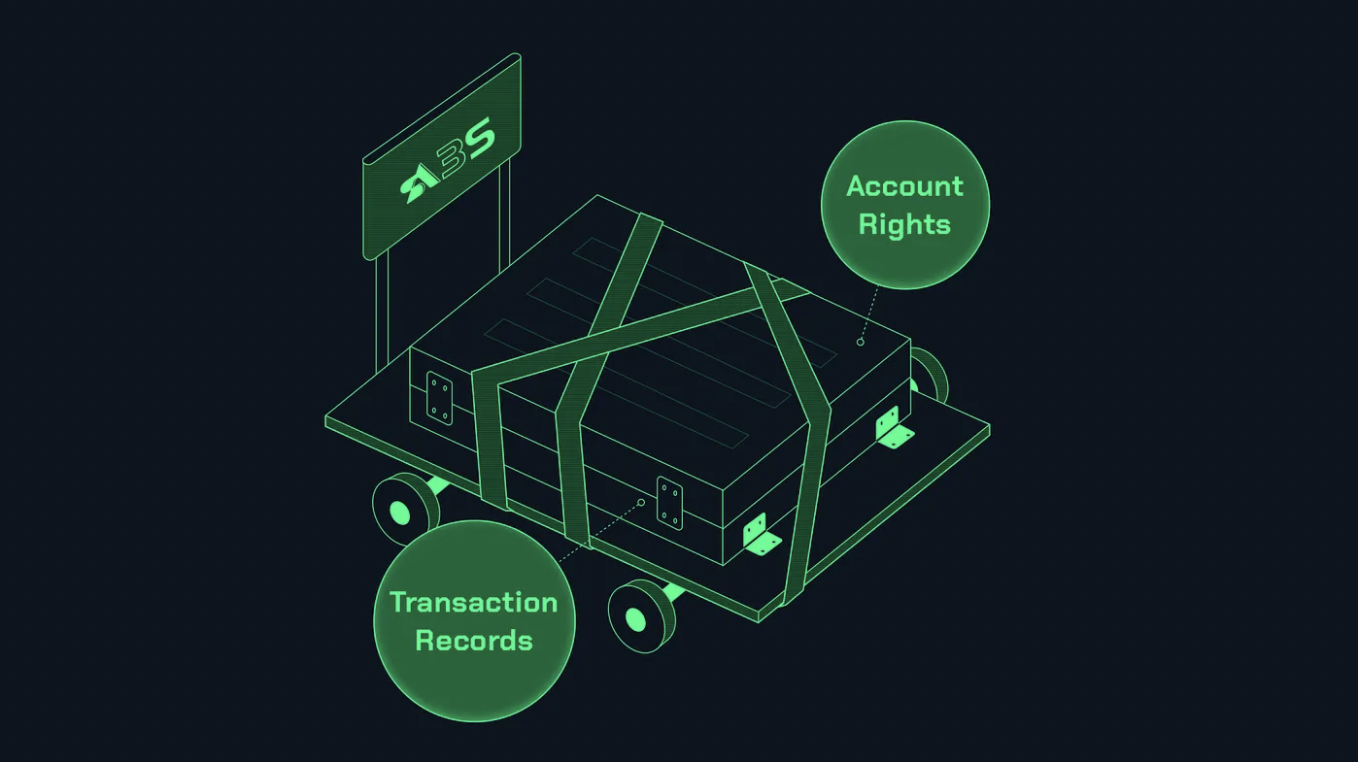
A3S Product Illustration: Transfer of Non-Transferable Assets
In this game, we can see that some users purchase rare addresses that have not yet participated in the queue, and some users cash out by selling the queuing NFT in advance. Last year, we published a tutorial that explained how to interact with the $XEN protocol using the A3S wallet, which allows trading to be done at the stage when XEN is not yet unlocked (through A3S, achieving the same effect as the subsequent official issuance of XENFT by XEN). However, after a year, the protagonist has changed to our own game scenario M-Q-E.
Sub-Account Management
In the game, players need to pay $AA tokens to extend their queue time. $AA tokens are paid through an EOA wallet (such as Metamask). At the same time, players will also find that when they claim game rewards in $AA, the tokens are directly deposited into the A3S address instead of the EOA wallet. However, since the EOA wallet controls the Owner NFT, $AA can be withdrawn from the contract address. In simple terms, this contract address is like an independent sub-wallet inside the EOA wallet, where 1 EOA address can contain multiple A3S addresses. It acts as a master account or parent account that can collectively pay $AA for all its sub-accounts, as well as gas fees, and freely extract funds from the sub-accounts.
We have built this system of parent and sub-accounts on the blockchain, which also facilitates users in large-scale blockchain interactions in the future, eliminating the hassle of paying gas for each individual address. It also allows for modular isolation of various types of assets, providing users with a better experience.
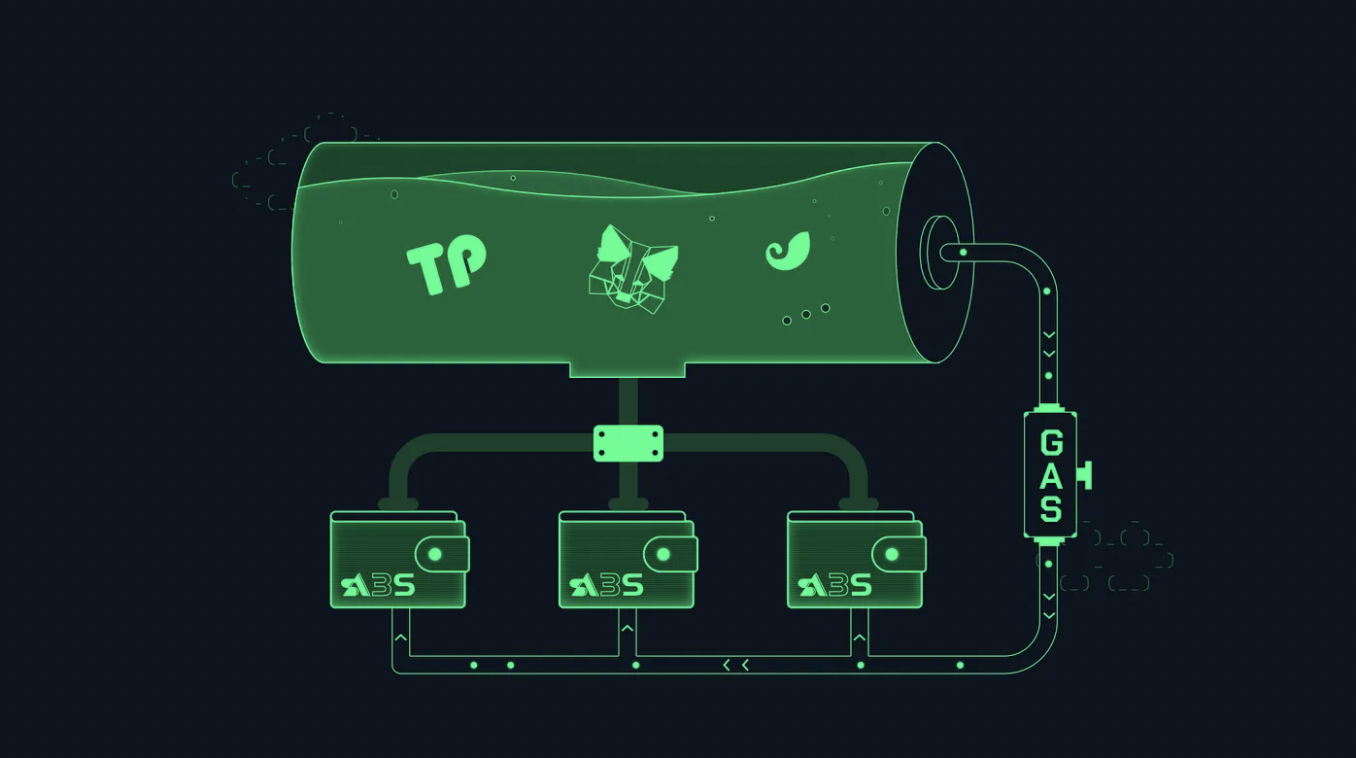
A3S Product Illustration: One parent account pays gas for multiple sub-accounts
The team will also further optimize and upgrade according to the ERC-4337 standard in the future, to achieve the experience of making payments in any currency with or without gas. Please stay tuned.
Non-Custodial Account Management
In the game, the A3S address in the queue will be pushed to the front due to the entry of a new address. To increase the waiting time, users can choose to return to the end of the queue to avoid being pushed out. This process keeps many users awake, constantly monitoring their position in the queue. Some users choose to entrust their wallets to trusted scientists for automated operations. This feature of address transferability is unique to A3S user scenarios. And because the management authority of these addresses is controlled by NFTs, we can consider the A3S address as a safe deposit box and the NFT as the key to this safe deposit box. By giving the key to a trusted person, they can manage the address on behalf of others. But can we eliminate the uncertainty of trust? The answer is yes. We can build an independent contract to accomplish the management action through smart contracts. In the past, it was difficult to clearly explain the positioning of this feature to users, but in the game scenario we have constructed this time, users can easily perceive this aspect of demand.
Secondary Accounts
As described in the above two scenarios, A3S addresses can be freely combined into a main account or managed by others. Although the series of wallet transfers and combinations are currently mostly completed by users through our official website, this architecture actually depends on smart contracts, so all operations can be completed through pure on-chain interaction. Even if one day our team no longer exists, users can still enjoy this infrastructure, and developers can also use our contracts to develop different frontend products and bring different interactive experiences. In the future, the team will continue to work on promoting the standardization of this architecture.
From the beginning to the end, we never wanted to be another Metamask, or even a similar product to the existing contract wallets on the market that can be registered by email or recovered through social methods. At this stage, A3S, as users metaphorically describe it in the community, is embedded in various wallets, on various EOAs as secondary addresses.
What are we trying to achieve?
If building wallets is not our goal, then what are we trying to achieve?
A3S hopes to solve the pain points of on-chain interaction, create an efficient, flexible, and modular interaction paradigm, and lead users towards a future of abstract intent.
The most commonly used on-chain account system is based on EOA, which is simply a storage container for assets such as tokens and NFTs and does not support any custom logic or smart functions.
Ethereum innovatively introduced smart contract functionality to the blockchain, allowing developers to build various DApps and creating a brand new Ethereum ecosystem.
However, for ordinary users, achieving a certain final goal in interaction may require complex and tedious operations across multiple DApps. In fact, such interactions can be simplified by deploying a smart contract that runs simple code.
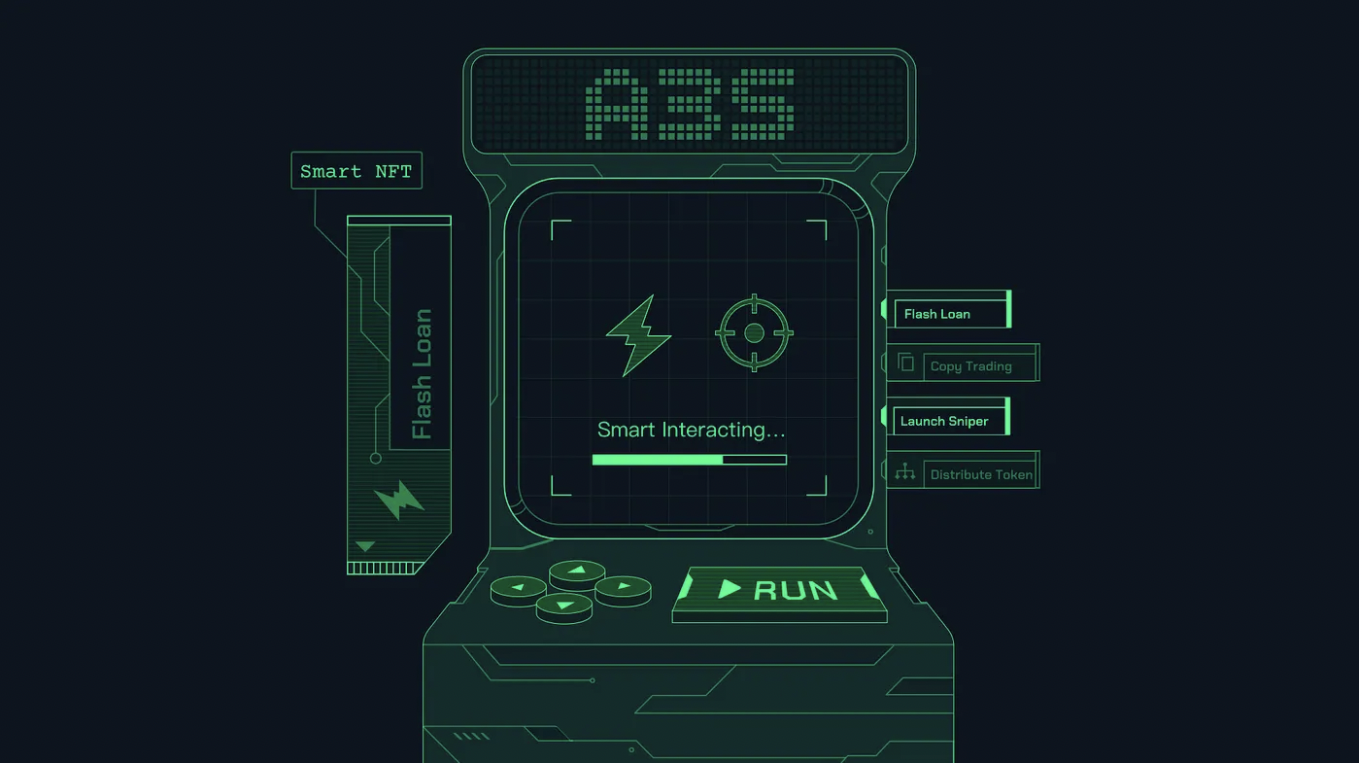
A3S product illustration: Smart NFT, interaction abstraction layer
Even ordinary users without coding knowledge cannot achieve multi-platform interaction through smart contracts, let alone some "advanced" functions that can be implemented through smart contracts, such as flash loans, conditional orders, sandwich attacks, etc. These have always been tools that seem to be available only to developers, scientists, and hackers.
On the one hand, ordinary users are unable to directly enjoy the convenience of smart contract functionality due to lack of coding ability and other reasons. On the other hand, developers also lack the motivation or resources to achieve such convenience for ordinary users. This strong imbalance between developers and ordinary users, to some extent, hinders the vision of Ethereum to "Grow Ethereum until it's powerful enough to help all of humanity."
A3S ideal future
When AI crosses the singularity, the changes it brings will amaze us. We believe that in a future where various AI, biometric recognition technologies, and quantum computing are more advanced, users' exploration paths in the blockchain world can reach a far more elegant state than now.
The concept of private keys will be discarded, and users will be able to secure ownership of their accounts through various more secure and convenient methods such as biometric recognition and social recovery. This is also the direction that excellent smart contract wallet products in the market are focusing on.
And the A3S Protocol will focus on making the interaction between users and on-chain businesses simpler, achieving an ultimate future of Intent Abstraction. Users don't need to pay attention to which chain their assets are on, whether they have enough gas fees, or learn which protocols to use for certain operations. They only need to abstract their intention, and the account will automatically plan the implementation path and execute it.
In A3S V1, we have designed a highly abstract and composable account service, and then added business logic into the highly abstract account model.
The A3S Protocol wraps the advanced functions of contract accounts into individual NFTs. Currently, the A3S NFT in V1 does not have functionality but serves as the basis for acquiring functions. This process is like developing an operating system first and then embedding various applications onto the system, forming a large yet intelligent application marketplace. (Interestingly, even though this NFT currently lacks functionality and only abstracts the control of the account, it already has some of the aforementioned use cases).
In the future, developers can use A3S to abstract the interaction process/functionality into different Smart NFTs, which users can directly purchase and freely combine to achieve complex functions and simplify on-chain interactions. This will also break down the barriers between developers and ordinary users, forming an open market. The "interaction abstraction" provided by A3S will reshape the current Ethereum account system, truly transforming accounts from "calculators" to "smart computers," making interactions modular, efficient, and intelligent.
A3S will go through three abstraction stages: from the basic Account Abstraction to the functional Interaction Abstraction, and ultimately combining with cutting-edge technologies to achieve Intent Abstraction.
In this ultimate ideal mode, A3S will ultimately eliminate the barriers to on-chain interactions, and users' imaginations will be completely liberated. The world of blockchain will become more free, equal, and efficient.
For more updates on the upcoming incentive game, please follow the official announcements:





